
Picture this: massive, graceful shadows swooping through underwater spotlights, their movements so fluid it looks like an ethereal ballet happening just inches from your mask. This isn't CGI. It's the real deal—the legendary Manta Ray Night Dive in Kona, Hawaii, and it’s an experience that belongs on every diver's bucket list.
For good reason, Kona is known as the most consistent place on the planet for this incredible encounter. It’s like having a guaranteed front-row seat to one of nature's most stunning performances. For all scuba diving on the Big Island, this is the main event.
Experience Kona’s Unforgettable Manta Ray Ballet
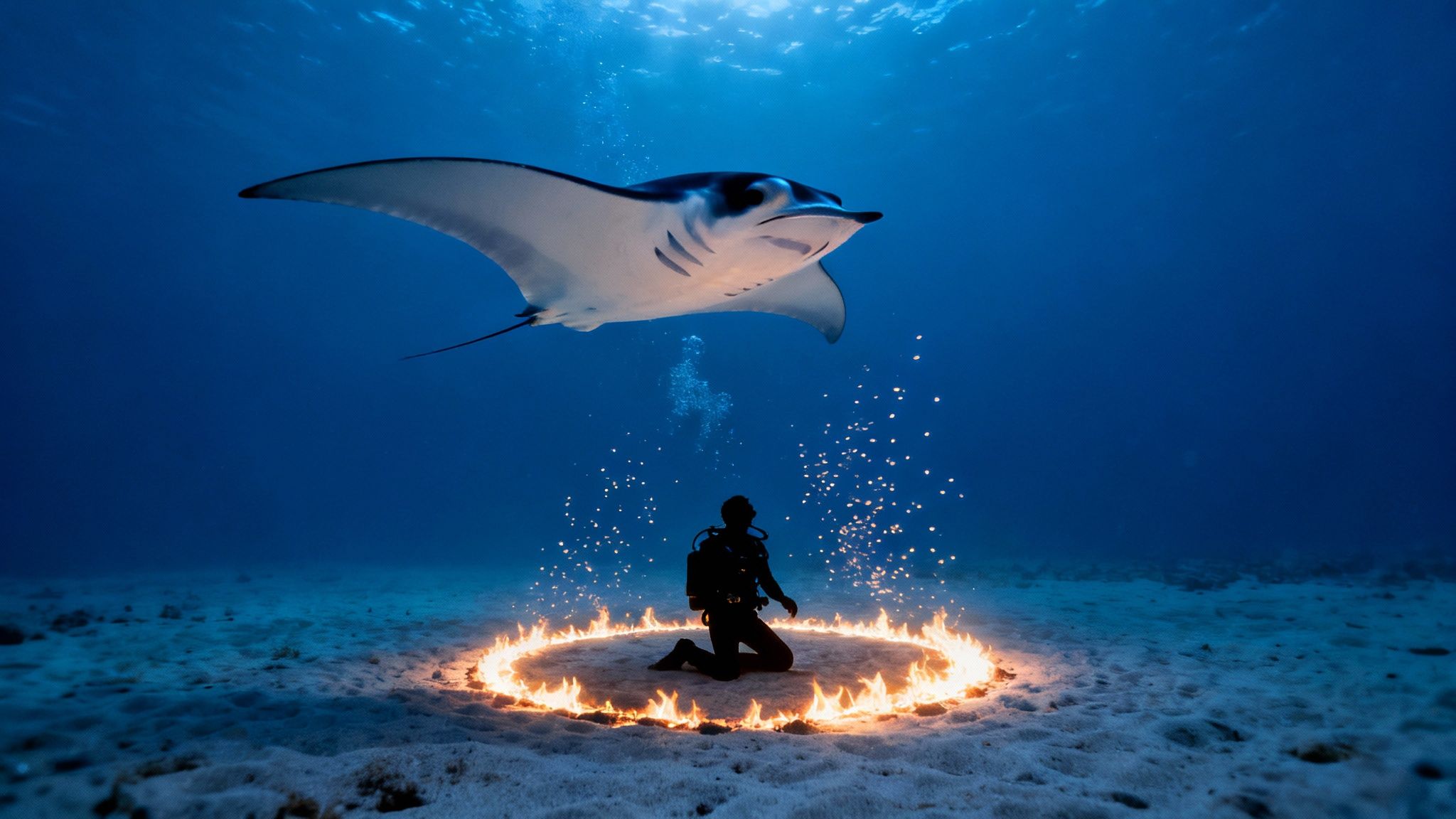
So, what makes the Kona coast so special? It comes down to a perfect mix of geography and biology. The Big Island's volcanic underwater landscape has formed deep, sheltered bays where microscopic plankton—the manta rays' favorite meal—thrives.
Think of it as a reliable, all-you-can-eat buffet that has kept a local population of over 450 identified manta rays coming back for years. This is why the dive operators here see such consistent success. In fact, it’s not uncommon for tours to report a success rate of over 90%, cementing Kona’s reputation as one of the world's top spots for big-animal encounters.
How the Manta Magic Happens
The whole experience is a beautifully simple concept that brings divers, light, and mantas together. It’s a bit like setting the dinner table for some very special guests.
Here’s the breakdown:
- The "Campfire": After the sun goes down, powerful, eco-friendly lights are set up on the ocean floor. We call it the "campfire" because it becomes the central gathering point.
- The Buffet Arrives: Just like moths drawn to a flame, tiny zooplankton are irresistibly attracted to the bright lights, forming a dense, glowing cloud of food.
- The Guests of Honor: Before you know it, the resident manta rays arrive for their feast. With wingspans stretching over 12 feet, they swoop in, performing mesmerizing barrel rolls and graceful loops to scoop up the plankton, often right over your head.
This carefully managed interaction lets you get an unbelievable, up-close view of their natural feeding behavior without disrupting them. You can learn more about how to join this spectacular underwater show on our manta ray dive tours page.
Here at Kona Honu Divers, we've spent years refining this trip to make sure it's safe, respectful to the mantas, and absolutely unforgettable for you. Our experienced guides and top-notch gear are all here to give you a seamless adventure into this underwater spectacle.
Ready for the dive of a lifetime?
Why Garden Eel Cove Is The Premier Manta Dive Site
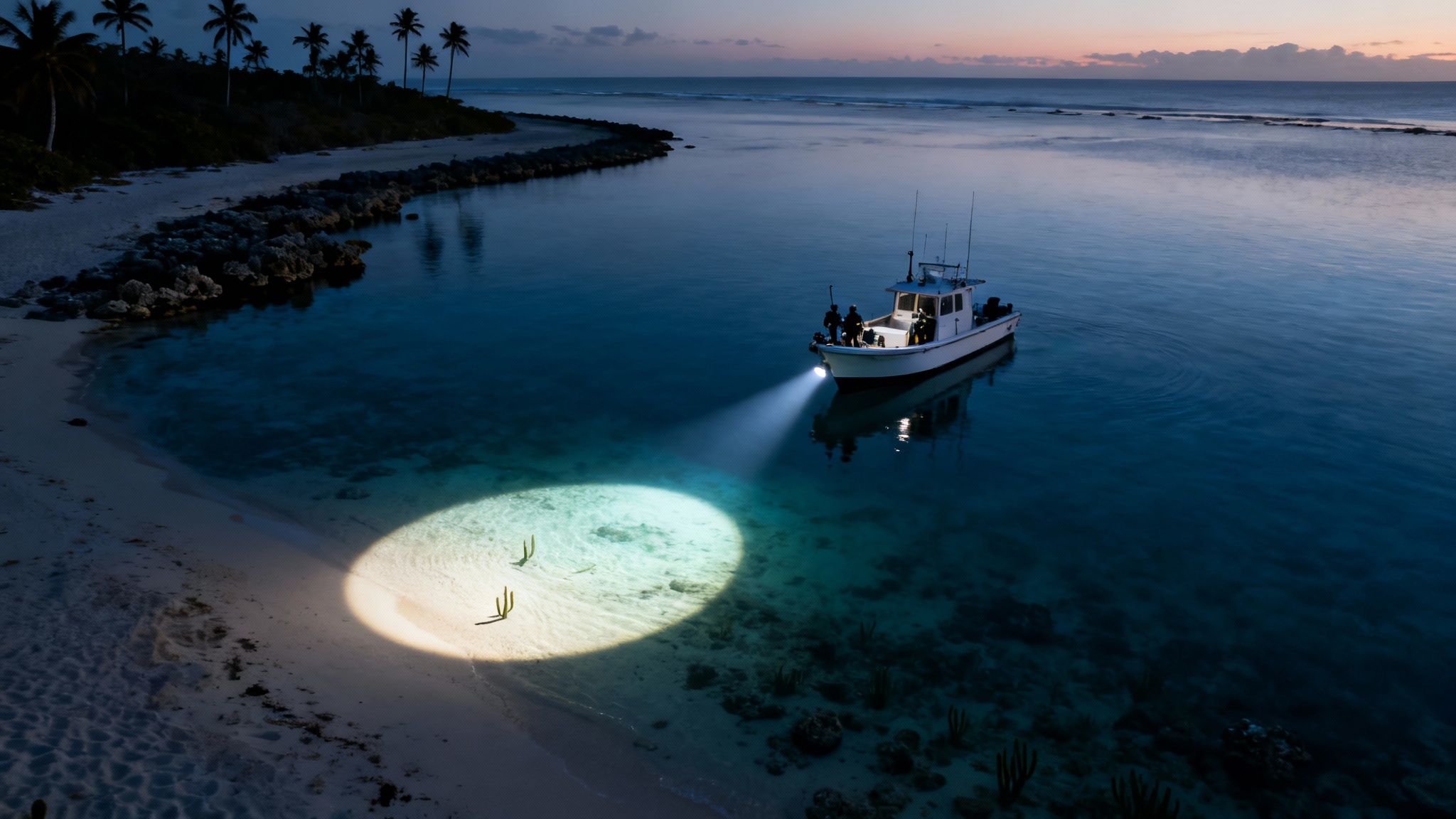
While you can find the famous manta ray night dive in Kona at a few different locations, they aren't all created equal. For anyone wanting the most incredible and comfortable encounter possible, one spot easily stands out as the superior choice: Garden Eel Cove.
We affectionately call it Manta Heaven, and for good reason. Its geography gives it a massive advantage. Tucked away near the Kona airport, the cove is naturally sheltered from the big open ocean swells, which means the water is almost always calmer here. This protected location makes a huge difference, creating a much more enjoyable and reliable experience for divers on the bottom and snorkelers on the surface, especially after the sun goes down.
The Superior Underwater Stage
The real magic of Garden Eel Cove is the underwater setup, which is far better than other locations. Divers descend to a large, sandy patch at about 35 feet. Here, we set up powerful lights to create what we call the "campfire." This central beam of light shoots up through the water column, attracting a thick cloud of plankton—a buffet for the mantas.
All you have to do is settle onto the sand and look up. The show happens right above your head. This unique layout provides a completely unobstructed, front-row viewing area as these gentle giants swoop, glide, and perform their famous barrel rolls just feet away. Other sites can be more exposed or have trickier viewing spots, but Garden Eel Cove consistently delivers that perfect, theater-like experience.
Just how reliable is this dive? It’s world-renowned for a reason. Professional dive operators along the Kona Coast regularly report manta ray sighting success rates between 85–90%. An analysis from 2013 at another popular site even documented an astounding 96% success rate. It’s one of the most dependable big-animal encounters on the planet.
More Than Just Mantas
The adventure at Garden Eel Cove is more than just the main event. Our two-tank trip structure means your first dive is a beautiful dusk dive on the vibrant, healthy reefs that line the sandy "stage." These superior coral gardens are buzzing with life—colorful fish, eels, and octopus are all common sights, giving you a fantastic opening act as the sun sets.
This bonus reef dive adds so much to the trip, letting you see the reef's fascinating transition from day to night right before the manta ballet begins. It's this combination of a protected location, a better viewing area, and stunning reefs that makes Garden Eel Cove the undisputed best choice for the manta ray dive tour. You can learn even more about this amazing spot in our guide to Manta Ray Heaven.
What to Expect On Your Manta Ray Night Dive
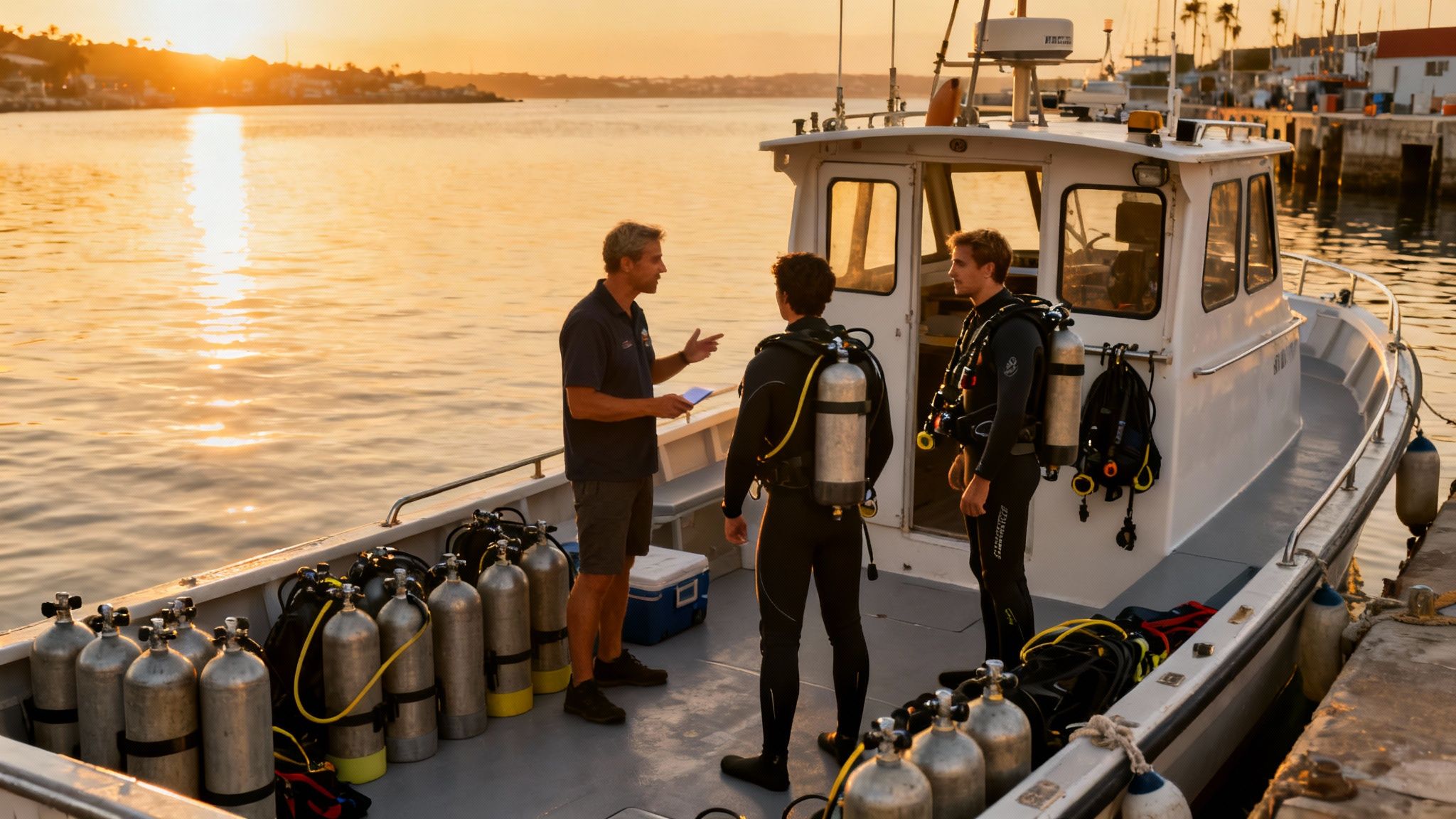
Your adventure with Kona Honu Divers kicks off at the harbor. As soon as you step on board, our crew makes you feel right at home. We head out just as the sky starts to catch fire with a classic Kona sunset, and during the ride, our guides will give you the full rundown—everything from safety checks to the incredible story behind the manta ray night dive in Kona. Their passion is infectious and really sets the mood for what's to come.
This isn't just a single plunge into the dark. We've structured this as a two-tank trip to give you the complete experience. Your first dive is a beautiful reef tour at dusk. You'll get to see the reef as it transitions from day to night, watching the daytime critters head to bed and the nocturnal ones start to wake up. It’s the perfect warm-up for the main act.
The Main Event Underwater
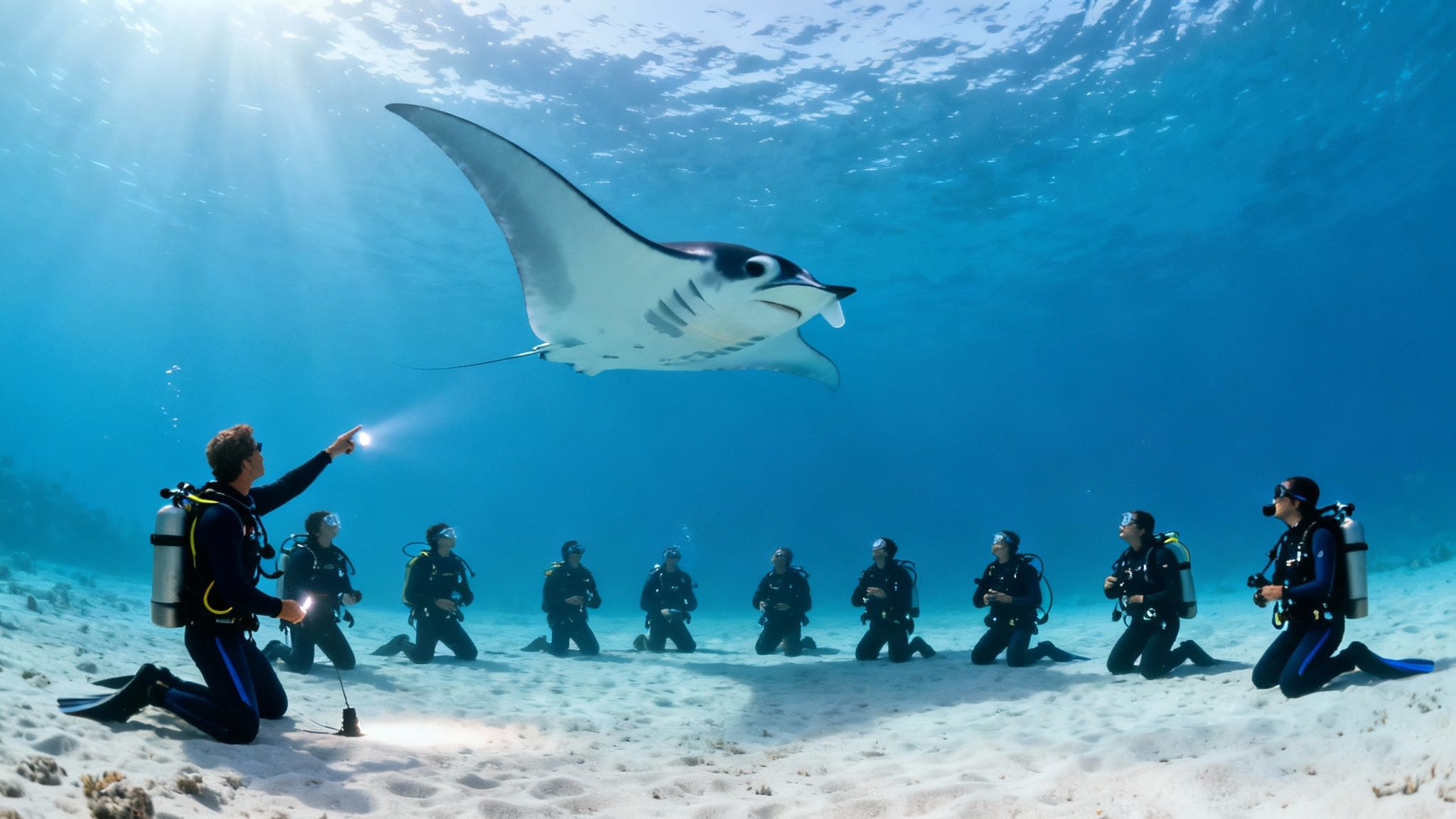
After the sun is fully set, the real magic begins. If you're a scuba diver, we'll guide you down to a sandy patch of seafloor about 35-40 feet deep. Here, we gather around what we call the "campfire"—a collection of powerful lights pointing straight up. This is your front-row seat to one of nature's greatest shows.
Snorkelers get an equally amazing, just different, perspective. You'll hang out on the surface, holding onto a custom-made float that also has bright lights shining down into the water. This setup draws the plankton right to you, and you get a stunning bird's-eye view of the mantas as they glide just a few feet below.
The anticipation is palpable in the dark water. Then, out of the black, a massive shadow emerges. A giant manta ray, with a wingspan that can easily stretch over 12 feet, soars into the light beam. It's not long before others join in. They perform these incredibly graceful barrel rolls, swooping in with their huge mouths wide open to filter the plankton. It's a silent, mesmerizing ballet happening inches from your mask.
There's truly nothing like the feeling of being so close to these gentle giants. Their sheer size and silent, weightless movements create a connection to the ocean that stays with you long after you've dried off.
Here at Kona Honu Divers, we want you to focus purely on the experience. That’s why we provide only top-of-the-line, meticulously cared-for rental gear. We also offer complimentary nitrox for all our certified divers to help you safely extend your bottom time. More time means more moments with the mantas. We handle every detail, so you can just soak it all in.
Ready to see the underwater ballet for yourself? You can book your own unforgettable manta ray dive tour and find out why this is one of the most celebrated wildlife encounters on the planet.
How to Prepare For Your Manta Adventure
A little bit of prep work is all it takes to make your manta ray night dive in Kona a completely unforgettable experience. When you get the simple stuff sorted out ahead of time, you can just relax and lose yourself in the magic of the moment.
So, what do you need to do? It’s pretty straightforward.
For our scuba divers, all you need is a basic Open Water certification. That’s it. You don’t need any prior night diving experience to join us. Our expert guides are in the water with you from the moment you get in until you’re back on the boat, making sure you’re safe and comfortable the entire time.
If you're joining as a snorkeler, the most important thing is that you're a confident swimmer who is comfortable in the open ocean. You'll be holding onto a custom-lit float at the surface, which gives you plenty of stability, but feeling at ease in the water is the real key to enjoying the incredible spectacle from above.
What Should You Bring?
Packing for this trip is as easy as it gets. Just a few essentials will keep you comfortable before and after the adventure.
- Swimwear: The easiest thing to do is just wear your swimsuit under your clothes to the boat. It makes getting ready a breeze.
- Towel: You’ll be glad you have one to dry off after your amazing time in the water.
- Warm Layer: Even in beautiful Hawaii, the boat ride back to the harbor can get a little chilly after sunset. We definitely recommend a jacket, hoodie, or something warm to throw on.
That's all you need to worry about! Our crew takes care of the rest, providing top-quality, well-maintained gear and professional guidance. You can get a more detailed breakdown in our complete guide on the gear you will need for your Kona diving adventure.
Diver vs. Snorkeler Experience Comparison
Trying to decide between diving and snorkeling? It really just comes down to your personal comfort and certification level. Both offer an absolutely spectacular, front-row seat to the manta action. To help you choose, here’s a quick look at the key differences between the two experiences.
| Aspect | Scuba Divers | Snorkelers |
|---|---|---|
| Perspective | A true bottom-up view. You’ll be looking up as these gentle giants soar just inches over your head. | A top-down, bird's-eye view, letting you take in the entire beautiful, chaotic scene at once. |
| Position | You’ll be stationary on the sandy ocean floor, kneeling or sitting around our light "campfire." | You'll be at the surface, holding onto a custom light raft that illuminates the water below you. |
| Proximity | You can get incredibly close encounters. It’s not uncommon for mantas to perform barrel rolls right above you. | You get a fantastic, wide-angle view of multiple mantas feeding in the light just beneath the surface. |
| Requirements | Open Water Diver certification. | Just need to be a comfortable swimmer. |
No matter which you choose, you're in for an experience that you'll be talking about for years to come. Both divers and snorkelers get to witness the same incredible natural phenomenon, just from a slightly different angle.
Our Commitment to Safety and Manta Conservation
Being part of the legendary manta ray night dive in Kona is a true privilege. We believe that with this incredible opportunity comes a deep responsibility—to you, our guest, and to the magnificent mantas we're visiting. Here at Kona Honu Divers, that dual commitment is the bedrock of everything we do.
Our focus on your safety starts the moment you step onto the boat. Our crew will walk you through everything you need to know, from boat procedures to exactly how to conduct yourself in the water. We staff our tours with seasoned professionals who know these waters inside and out, especially after dark. Plus, our gear is obsessively maintained, so you can just relax and enjoy the show.
Respecting the Gentle Giants
Just as crucial as your safety is the well-being of the mantas. We run our dives with a strict "look, don't touch" philosophy. This isn't a petting zoo; it's a rare chance to see wild animals thriving in their own environment, and our job is to be respectful guests.
We have a few simple but non-negotiable rules for interacting with the mantas:
- No Touching: Manta rays have a special mucus coating that acts like a shield against infection. Touching them can damage this protective layer, leaving them vulnerable to bacteria and disease. It's vital we keep our hands to ourselves.
- Hold Your Position: During the dive, you'll be positioned on the sandy bottom. This creates a clear, predictable "stage" for the mantas to swoop in and feed without feeling crowded or threatened.
- Let Them Come to You: We never chase, pursue, or block a manta's path. The magic happens when you stay still and let their natural curiosity bring them close. Trust us, it’s worth the wait.
This whole experience is a masterclass in sustainable tourism. We use our lights to attract plankton, their natural food source, which in turn brings the mantas right to our underwater campfire. It’s a completely non-invasive way to witness their natural feeding behavior up close.
By sticking to these guidelines, you're not just a tourist—you're an active participant in conservation. To learn more about how to be a great underwater ambassador, take a look at our guide on responsible and considerate diver etiquette. Your cooperation ensures this incredible dive will be here for future generations to experience.
Ready to Book Your Manta Dive?
You've read all about it, now it's time to see it for yourself. This isn't just another dive; it's a genuine, awe-inspiring encounter that sticks with you long after you've dried off. We've talked about why Garden Eel Cove is the perfect, protected stage for this show and how our crew makes every trip safe, magical, and unforgettable.
Don't leave Kona without experiencing one of the planet's greatest natural spectacles. Grab your spot and get ready for an adventure you won't stop talking about.
Choose Your Kona Night Dive Adventure
At Kona Honu Divers, we live for this stuff. While the manta dive is what we're famous for, we've got a few other ways to explore Kona's incredible nightlife below the surface.
- Manta Ray Night Dive: This is the main event, the classic Kona experience. If you do one dive on the Big Island, make it this one.
- Kona Blackwater Dive: Looking for something completely different? We head out into the deep, dark open ocean to see the bizarre and beautiful creatures that migrate toward the surface after sunset. It's a dive for the truly adventurous. Learn more about our Blackwater Dive tour.
- Advanced Diving Opportunities: If you've got the experience and are craving a challenge, ask us about our advanced trips. We explore remote lava tubes, deep ledges, and other spots that are off the beaten path on our advanced dive tour.
No matter what you choose, you'll be in good hands. Our reputation is built on thousands of 5-star reviews from divers who had the time of their lives with us. We're committed to delivering that same incredible experience to you.
Ready to take the plunge? Our manta ray tours are incredibly popular and often sell out, so we always recommend booking ahead to avoid disappointment.
Check Availability
Your Manta Dive Questions, Answered
We get a lot of questions about this world-famous dive, and for good reason! Here are the answers to the ones we hear most often, so you can feel totally prepared and excited for your adventure.
Is There A Best Time Of Year For The Manta Ray Night Dive?
This is probably the best part: the manta dive is incredible any time of year. Seriously. Kona is home to a huge resident population of manta rays, so there's no real "off-season" for sightings.
The water here is beautiful year-round, and our success rate for seeing mantas stays consistently high. No matter when you book, you’re looking at a 90% or better chance of an unforgettable encounter.
What Happens If We Don't See Any Manta Rays?
It's a valid question. These are wild animals, after all, and nature doesn't offer a 100% guarantee. While it's incredibly rare for the mantas to be a no-show, it can happen.
That's why we have our "manta guarantee." In the unlikely event you don't see any mantas on your tour, you can come back out with us again on another manta trip for free, as long as there's space available. We want you to have this experience, and we stand by that.
Can I Bring An Underwater Camera?
Absolutely! You’re going to want to. This is a dream scenario for photographers and videographers, and we encourage you to bring your gear to capture the magic.
We just have one simple request to protect the mantas: please be mindful of your lighting. During the pre-dive briefing, our guides will explain the best practices, which basically means not aiming powerful strobes or video lights directly into the mantas' eyes. It’s all about being respectful photographers.
Is This Tour Suitable For Children Or Beginners?
The manta dive is a fantastic experience for a lot of people, but we do have a few safety guidelines in place for age and skill level.
- Scuba Divers: The minimum age is 12 years old. Divers need to have at least a Junior Open Water certification to join the dive.
- Snorkelers: We don't have a strict age limit for snorkeling, but kids need to be genuinely comfortable swimming in the dark, open ocean. They'll be holding onto a floating light board, which can be challenging for very young children or anyone who isn't a confident swimmer.
Ready to see this underwater ballet for yourself? As Hawaii's top-rated dive operator, Kona Honu Divers would be honored to show you why this is a once-in-a-lifetime experience. Book your spot on our world-famous manta ray dive tour and let's get you in the water!