
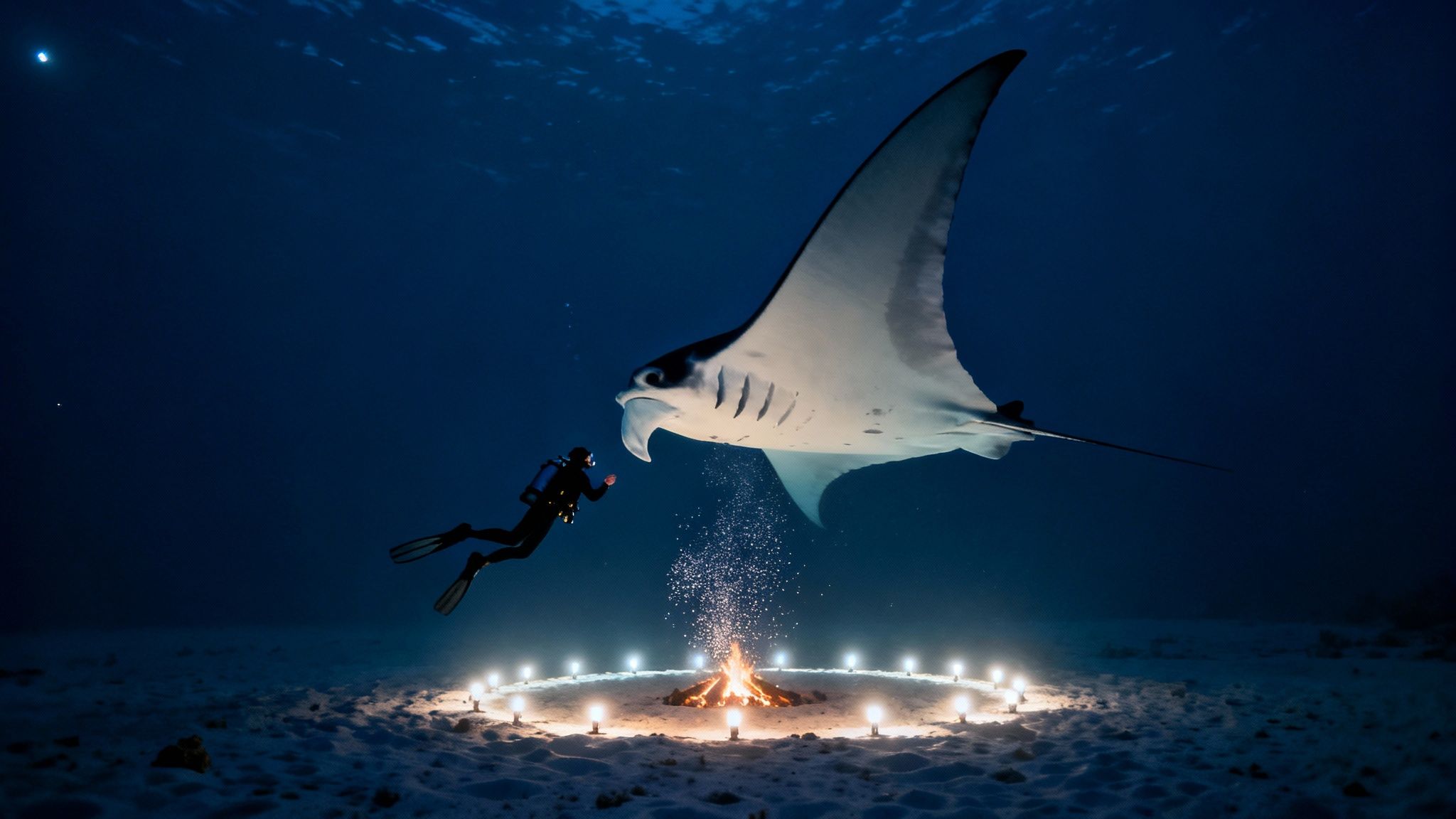
Imagine floating in the warm, dark waters of the Pacific, the world around you silent except for the sound of your own breathing. A soft glow rises from the ocean floor below, and then, a shadow appears. A majestic creature with a wingspan stretching over 15 feet glides silently overhead, its massive form outlined against the lights.
This isn't a scene from a nature documentary. It’s the real, heart-pounding magic of the Kona manta ray night dive, an adventure that tops bucket lists worldwide.
Here's a quick look at what makes this dive so special.
Kona Manta Ray Night Dive At a Glance
| Feature | Description |
|---|---|
| Experience | Up-close underwater encounter with giant manta rays feeding. |
| Location | Kona, Hawaii, known as the best place in the world for this activity. |
| Success Rate | A remarkable 90%+ chance of seeing manta rays. |
| The 'Campfire' | Underwater lights attract plankton, creating a natural feeding station. |
| Best For | Certified scuba divers looking for a truly unique wildlife encounter. |
This dive isn't just another item on a travel itinerary; it's a profound connection with the ocean's gentle giants.
How The "Underwater Ballet" Works
So, how did this incredible encounter come to be? It all started by chance back in the 1990s and has since evolved into a brilliantly simple, sustainable ecotourism highlight on the Big Island.
The secret is what we call the 'manta campfire.' We place powerful, eco-friendly lights on the ocean floor, pointing them straight up. Just like moths to a flame, these lights attract huge clouds of microscopic plankton—the manta rays' favorite food.
As divers, we settle in on the sandy bottom around this illuminated buffet, and then the show begins. The mantas arrive to feast, performing graceful barrel rolls and swooping maneuvers to scoop up as much plankton as possible. It's a true underwater ballet, and they come within inches of you. Don't worry, though—they are completely harmless and have no teeth, stingers, or barbs. They're just there for the food.
The experience is all about passive observation. You become part of the underwater scenery, watching one of nature’s most magnificent displays unfold right before your eyes. It’s humbling, awe-inspiring, and profoundly moving.
It's a beautiful, symbiotic relationship: the lights bring the plankton, the plankton brings the mantas, and their presence creates a memory that will stay with you forever. If you're interested in the snorkeling side of this adventure, there's an excellent ultimate guide to the Kona Manta Ray Night Snorkel that covers all the details.
Why Your Dive Location Is Everything
Now, here's an insider tip: not all manta dive sites are the same. Some spots are exposed to the open ocean, which means swells and rough water can lead to uncomfortable trips and, worse, frequent cancellations.
That’s why we at Kona Honu Divers are so committed to our primary site, Garden Eel Cove. It’s a naturally sheltered bay that provides consistently calmer waters and a much more reliable and pleasant viewing environment. The reef here is also superior, offering a richer two-tank dive experience.
Choosing the right operator who uses the best location is the first step toward ensuring your adventure is everything you dreamed it would be. Get it right, and you're set for an experience you'll never forget.
Why Garden Eel Cove Is Kona’s Premier Manta Dive Site
When you're planning a manta ray night dive in Kona, you quickly realize that where you dive is just as important as the dive itself. While Kona is the world's hotspot for this encounter, not all sites are created equal. One spot, however, consistently delivers a superior, world-class experience: Garden Eel Cove, known to local divers simply as Manta Heaven.
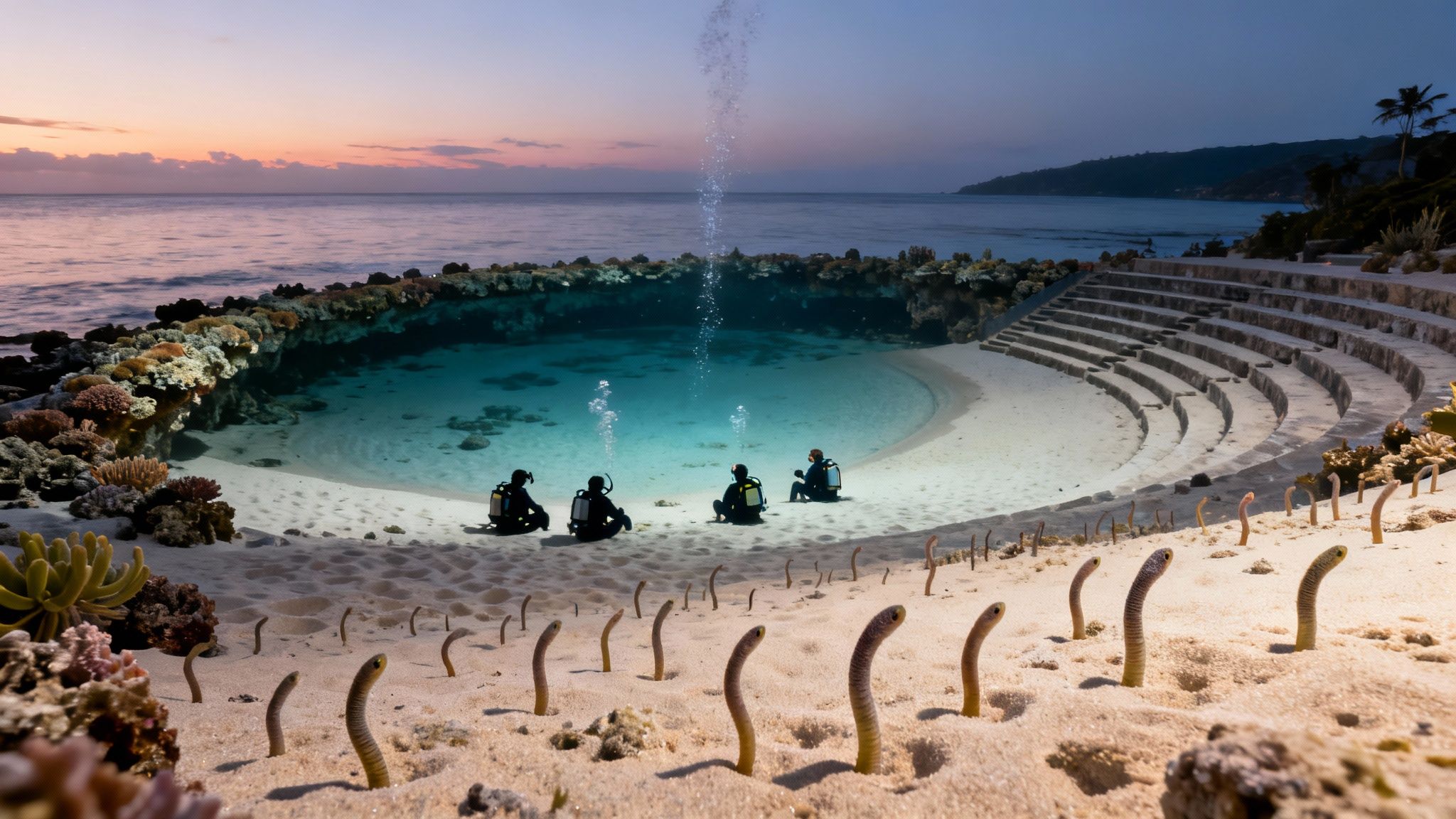
This premier site sits just north of the Kona airport, and its biggest advantage is pure geography. The cove is naturally tucked away, shielded from the powerful southern swells that can churn up the water and force cancellations at other spots along the coast.
Geographic Protection Means Fewer Cancellations
The main alternative site, Manta Village in Keauhou Bay, faces directly south. This leaves it completely exposed when a south swell rolls in—a common event here. Consequently, trips to that location are often cancelled for safety reasons, leaving divers disappointed.
Garden Eel Cove’s protected location acts as a natural breakwater, keeping the conditions reliably calm. For you, this means a more comfortable, enjoyable, and—most importantly—dependable dive. Choosing an operator that heads to Garden Eel Cove dramatically lowers the risk of your once-in-a-lifetime dive getting called off at the last minute.
It’s no surprise that this is where the seasoned pros and best dive shops choose to go. The calm water lets you focus on the incredible show without fighting surge and murky visibility.
The Underwater Amphitheater: A Perfect Viewing Arena
It's not just about the calm water, though. What truly makes Garden Eel Cove superior is its underwater layout. The main viewing spot is a massive, gently sloping sandy patch that forms a perfect natural amphitheater.
This unique topography is tailor-made for the manta dive. We can settle our group comfortably on the sand, forming a semi-circle around the "campfire" of lights without harming a single piece of coral. This "stadium seating" is a game-changer.
- Front-Row Seats for Everyone: The layout guarantees every diver gets a clear, unobstructed view of the action.
- Safety and Group Control: The defined area makes it easy for our guides to keep everyone together and in a safe position.
- A Happy Place for Mantas: The wide-open space gives the mantas all the room they need to perform their graceful barrel rolls without feeling crowded.
This is a huge step up from other sites that might have rocky bottoms or poorly defined viewing areas, making it hard to get a good, safe spot. The natural design of Garden Eel Cove just makes the whole encounter better.
A Two-Tank Trip with a Spectacular First Dive
Another huge plus for Garden Eel Cove is the amazing reef that surrounds it, which turns the trip into a proper two-tank adventure. We always start with a twilight reef dive right as the sun is dipping below the horizon.
This first dive is your chance to explore the vibrant coral gardens that border the sandy amphitheater. The reef is bursting with life, from colorful reef fish to moray eels and octopuses that are just starting to get active for the night. This is a much richer and more vibrant reef than what's available at other manta sites, adding significant value to your trip.
It’s the perfect warm-up for the main event. You get to see the incredible biodiversity of Kona's waters before settling in for the awe-inspiring manta show that follows. It truly elevates the trip from a single activity to a complete, unforgettable manta ray dive tour experience.
What Your Kona Manta Dive Adventure Will Look Like
So, what can you actually expect on the evening of your big dive? Knowing the play-by-play helps calm any nerves and builds the excitement for what’s to come. At Kona Honu Divers, we’ve refined our itinerary over thousands of dives to make sure everything flows perfectly for maximum safety, enjoyment, and, of course, manta magic.
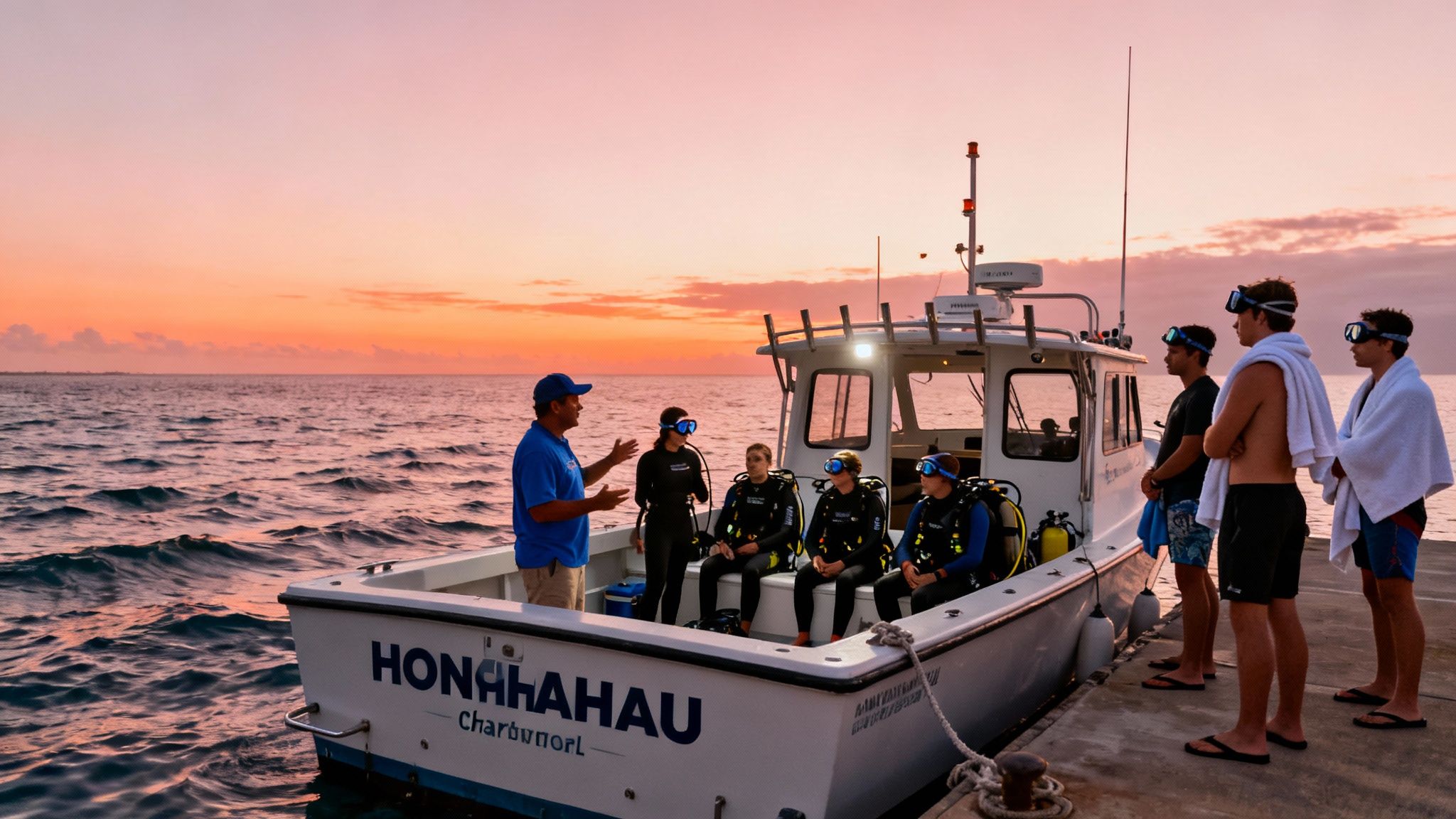
Your journey starts at Honokohau Harbor, which is easy to find and has plenty of parking. Our crew will be there to welcome you with a genuine aloha spirit and get you checked in smoothly. No long waits or confusion—just a friendly greeting before we get you settled on our spacious, comfortable boat.
The All-Important Pre-Dive Briefing
Before we even cast off the lines, your PADI-certified guide will gather everyone for a thorough briefing. This is more than just a quick rundown; it's a critical part of the experience that sets the stage for a safe and incredible encounter.
We'll cover everything you need to know:
- Safety First: We’ll go over all boat procedures and how to communicate underwater with your dive lights. Simple stuff, but essential for a smooth night dive.
- The Game Plan: You'll get a clear walkthrough of both dives—the twilight reef exploration and the main manta event—so you’ll always know what’s happening next.
- Manta Etiquette: This is the most crucial part. We’ll explain the rules for interacting respectfully with the mantas. It's all about being a passive observer—no touching, no chasing, and staying in your designated spot. These rules protect the rays and keep them coming back night after night.
This briefing ensures every diver is on the same page, ready to be a respectful guest in the mantas' world.
Dive One: Exploring the Reef at Twilight
As we cruise out to Garden Eel Cove, you'll be treated to a spectacular Hawaiian sunset from the best seat in the house—the ocean. Your first dive is a twilight exploration of the beautiful reef right next to the main manta viewing area. Honestly, this dive is an amazing experience all on its own.
As the sun sinks, you'll witness the reef's "changing of the guard." Daytime fish start tucking themselves into the coral for the night, and the nocturnal critters, like eels and octopus, begin to emerge. It’s a truly magical time to be underwater and see the ecosystem that the mantas call home. You can read a more detailed account of a typical manta ray night dive experience with Kona Honu Divers on our site.
The Main Event: An Underwater Ballet
After surfacing from the first dive, it’s time for a relaxed surface interval. We’ll serve up some tasty snacks and drinks while our crew sets the stage for the headliner act. They'll carefully place our powerful lights on the sandy ocean floor, creating the "campfire" that attracts the plankton—the mantas' favorite food.
Once the sky is completely dark, it's time. You’ll make your second descent, this time into the inky blackness, following the glow of the light-campfire below. Your group will settle in a semicircle on the sand, get comfortable, and simply look up. The sense of anticipation is something you can feel.
And then, it happens. They glide in from the darkness like silent ghosts. Huge, graceful manta rays swoop in to feed on the plankton, performing effortless barrel rolls just inches above your head. It's a humbling, awe-inspiring spectacle that no photo or video can ever truly capture. This incredible encounter now brings an estimated 80,000 people to the Kona Coast each year, cementing its reputation as a world-class wildlife experience.
We've perfected this itinerary to give you the safest, most comfortable, and most breathtaking experience possible. It's why our divers consistently say we're the best on the island.
How to Prepare for a Safe Manta Ray Night Dive
Any truly unforgettable dive experience starts with a solid foundation of safety. This couldn't be more true for a manta ray night dive in Kona, where being prepared means you can relax, feel confident, and just soak in the magic of it all. Let’s walk through what you need to know about certifications, skills, and general safety to have an amazing time.
First things first: to join the scuba portion of the manta dive, you’ll need at least an Open Water Diver certification. This is the standard that proves you have the core skills to dive safely. That said, we highly recommend you've been diving recently. Being comfortable in the water is key, especially in a low-light environment.
Has it been more than a year since you last logged a dive? It’s a great idea to shake off the rust. A quick refresher course is the perfect way to get your confidence back with your buoyancy, gear, and communication. A little bit of practice can be the difference between a good dive and an absolutely incredible one. We have several options, including refresher dives, which you can see on our main diving tours page.
Essential Night Diving Skills
The manta dive itself is fairly shallow and you won't be moving around much, but a few specific skills really come into play once the sun sets. Getting comfortable with these will make everything go that much more smoothly.
- Excellent Buoyancy Control: The plan is to get settled on the sandy bottom. Being able to hold your position without kicking up sand or floating into another diver is crucial for everyone's enjoyment.
- Dive Light Communication: Your flashlight is your voice underwater at night. We'll go over simple signals for "OK," "look here," and how to get your buddy's or guide's attention without blinding them.
- Staying with Your Guide: This one's important. Stick close to your dive guide and the rest of the group. They know this site like the back of their hand and will guide you safely from the boat to the manta "campfire" and back again.
Here at Kona Honu Divers, your safety is what we build our entire operation around. Our professional PADI instructors always lead small groups, so you get the attention you deserve. We're also incredibly proud of our rental gear—it's top-of-the-line and meticulously maintained, so you can dive with total peace of mind.
The Added Safety of Complimentary Nitrox
Are you certified to use Enriched Air Nitrox? If so, we provide it for free on all our dives. Breathing a higher oxygen mix means you absorb less nitrogen during your dive.
What does this mean for you? You’ll likely feel less tired afterward, but more importantly, it adds a significant safety buffer by lowering the risk of decompression sickness. It’s just one more way we look out for our divers.
With our experienced crew, premium equipment, and commitment to doing things the right way, you can just let go and focus on the unbelievable ballet happening right in front of you. We'll handle the logistics; you just make the memories.
Essential Gear and What to Expect Underwater
There’s a world of difference between a good dive and a truly unforgettable one, and it often comes down to being prepared. Knowing what to pack and what it actually feels like to descend into the ocean at night for the Kona manta ray dive lets you relax and just soak it all in. You can forget about the logistics and focus on the incredible ballet about to unfold.
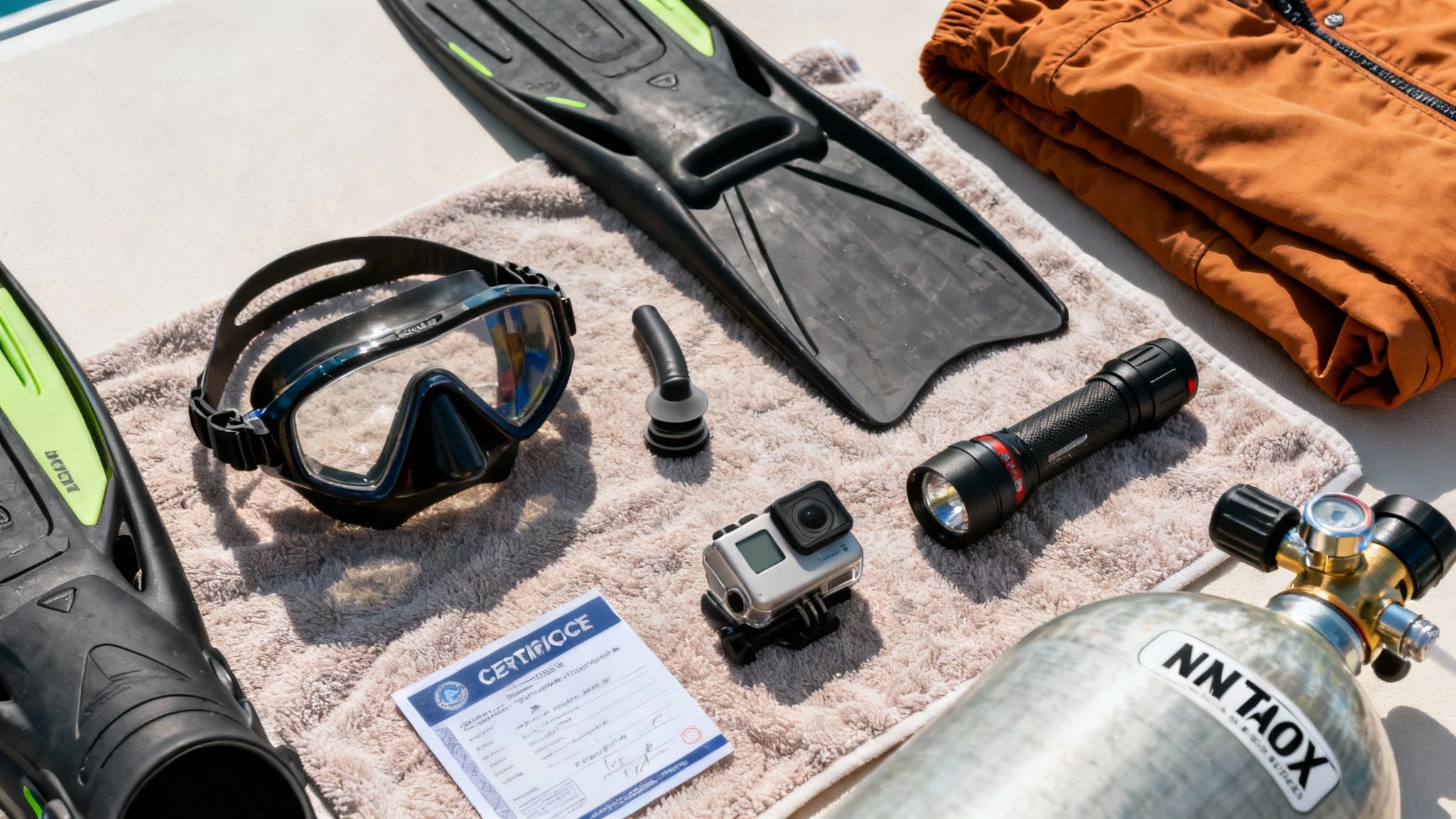
The first thing you’ll probably notice is the temperature. Even in tropical Hawaii, the Pacific at night can feel a bit brisk, usually hovering in the high 70s Fahrenheit. That’s why a good wetsuit is a must for staying comfortable, and we include high-quality rentals with every single one of our tours.
Your Personal Dive Bag Checklist
We handle all the heavy scuba equipment, so you can pack light. A few personal items are all you need to make the trip smooth and comfortable.
- Certification Card: Don't leave home without it! We'll need to see your physical or digital card before we head out.
- Swimsuit and Towel: The easiest way is to just wear your swimsuit under your clothes to the harbor. You’ll be ready to go.
- Warm Jacket or Sweatshirt: It can get chilly on the boat ride back after the sun goes down. A dry, warm layer makes all the difference for a cozy trip home.
That's really it. We’ve got you covered with meticulously maintained, top-of-the-line gear—BCDs, regulators, computers, and powerful dive lights are all included. Of course, if you have your own kit you love, you're more than welcome to bring it. For a deeper dive into equipment, you can check out our guide on the gear you will need for your Kona diving adventure.
Tips for Capturing the Moment
Getting great photos of the mantas is a challenge. You’re dealing with low light and a lot of graceful, constant motion. Honestly, video is often the better way to go. It does a much better job of capturing the fluid, dynamic movements of the rays.
Pro Tip: If you're shooting video, crank up your camera's resolution and frame rate to the highest settings. This gives you incredibly smooth footage and lets you pull sharp, high-quality still photos from the video later on.
The single most important rule is no external strobes or flashes. The sudden, powerful bursts of light can seriously disorient the mantas and disturb their feeding. We're visitors in their world, and their well-being is our number one priority. Using only continuous video lights or the ambient glow from our main "campfire" light ensures a calm, natural, and magical experience for everyone—divers and mantas included.
Your Kona Manta Dive Questions Answered
The sheer magic of the manta ray night dive in Kona is bound to spark a few questions. We get it. From the practical details and safety to just what to expect, getting clear answers helps you plan the perfect trip and feel great about your choice. We’ve pulled together the most common questions we hear from our divers to give you everything you need for an unforgettable adventure.
How Deep Is the Manta Ray Dive?
This is one of the best parts about the whole experience—it’s surprisingly shallow. We take our divers to our favorite spot, Garden Eel Cove, where the action happens on a big, sandy patch just 35-40 feet (around 11-12 meters) below the surface.
This shallow depth is a huge win for a few reasons:
- More Time with the Mantas: You get a ton of bottom time. There's no need to worry about your air or decompression limits, so you can just relax and enjoy the entire show.
- Great for All Divers: It’s a comfortable depth for anyone with an Open Water certification. You don't need years of experience to join in.
- An Extra Layer of Safety: Sticking to shallower water is just inherently safer, adding peace of mind to the dive.
You get a front-row seat to one of the world's greatest wildlife encounters without any of the stress of a deep or technical dive.
Are the Manta Rays Dangerous?
Not in the slightest. There’s a reason everyone calls them "gentle giants." Manta rays are completely harmless to people.
Manta rays are built for grace, not aggression. They don't have teeth for biting, a stinger on their tail like a stingray, or any kind of defensive barb. As filter feeders, they're only interested in the microscopic plankton that our lights attract into the water.
The whole manta ray night dive Kona experience is designed around passive observation. Think of us as respectful guests in their underwater dining room. We simply watch in awe as they perform their incredible natural ballet, without ever touching, chasing, or interfering with them.
What if I’m Not a Certified Scuba Diver?
No problem! You can still experience the magic. One of the best things about this adventure is that non-divers can join as snorkelers and get an equally spectacular view from the surface.
We provide a large, custom-built floatation board that has its own powerful lights shining down into the water. You just hold on, float comfortably on the surface, and watch the mantas soar up from the depths to feed in the light beams. The view from above is just as breathtaking, giving you a panoramic perspective of the entire underwater show.
Is Seeing Manta Rays Guaranteed?
Of course, these are wild animals, so nobody can offer a 100% guarantee. That said, this is one of the most reliable and consistent wildlife encounters on the entire planet. The Kona Coast has an unbelievably high success rate for manta sightings.
Long-term data from researchers and multiple dive operators shows success rates between 80% and 90%. On a good night at a prime spot like Garden Eel Cove, that number can climb well above 95%. This isn’t just a shot in the dark; you have an extremely high probability of having a truly amazing experience. You can read more about the high success rates of the Kona manta ray night dive.
At Kona Honu Divers, we boost your odds by diving exclusively at Garden Eel Cove, the most protected and consistent site on the island. We put you in the absolute best position to witness the spectacle that made Kona famous, and our track record speaks for itself.
Ultimately, choosing a top-rated, safety-focused operator who knows the best spots is the single most important decision you can make. It’s what turns a hopeful trip into a lifelong memory.
Is the Manta Dive Better than Other Kona Dives?
That's a tough one! Kona is stacked with world-class dive sites, and each offers something special. Whether the manta dive is "better" really comes down to the kind of adventure you're after.
- For pure, jaw-dropping spectacle, the manta ray night dive is in a league of its own. It's a one-of-a-kind experience you simply can't get anywhere else with this kind of reliability.
- For a completely different kind of thrill, advanced divers should check out the famous Kona Blackwater dive. You'll drift in the deep, open ocean at night, spotting bizarre bioluminescent creatures migrating up from the abyss. It’s mind-blowing in a totally different way. Check out our Blackwater Dive tour if you're feeling adventurous.
- If you love exploring underwater landscapes, our advanced dive tours can take you to remote lava tubes, dramatic arches, and pristine coral reefs buzzing with life.
Each dive tells a different story. The manta dive is an absolute must-do, but it’s just one amazing chapter in the epic book of scuba diving the Big Island. Check out our full lineup of Kona diving tours to see all the adventures waiting for you.
Hopefully, these answers help you feel ready for this incredible journey. The manta ray night dive in Kona is so much more than just a dive—it's a chance to connect with one of the ocean's most majestic creatures. Ready to see it for yourself?
At Kona Honu Divers, we're dedicated to running the safest, most respectful, and most awe-inspiring manta ray experience on the Big Island. Join our expert crew for an adventure you'll be talking about for years to come. Book your 2-Tank Manta Ray Night Dive Tour today and prepare to be amazed.