
The manta ray night dive in Kona is, without a doubt, the world's number one spot for getting up close and personal with these gentle giants. I'm not just saying that—the 80-90% sighting success rate speaks for itself. The Big Island offers a front-row seat to an incredible underwater ballet, where you can watch dozens of manta rays glide, swoop, and feed. It's an experience that consistently tops the "must-do" list for anyone visiting Hawaii, whether you're a seasoned diver or a first-time snorkeler.
Experience Kona’s Unforgettable Underwater Ballet
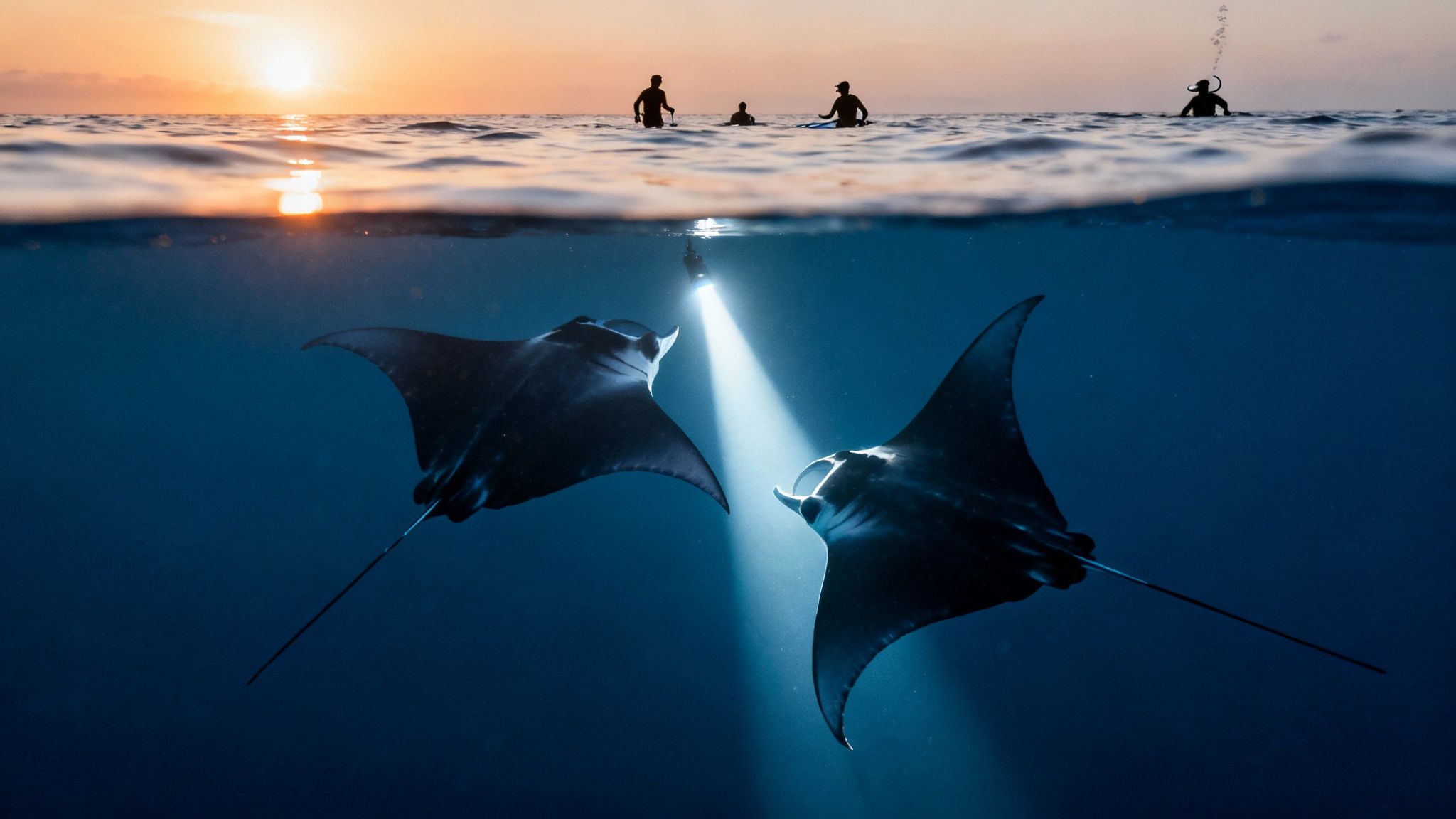
Picture this: you slip into the warm, dark Pacific just as the last sliver of sun disappears. Your dive light pierces the twilight, creating a spotlight on an underwater stage. Then, the stars of the show arrive. Massive manta rays, some with wingspans stretching over 12 feet, emerge from the deep, barrel-rolling through the light beams in a silent, mesmerizing dance. This isn't a lucky, one-off sighting. This is the world-famous spectacle that makes Kona so special.
A Bucket-List Adventure for Everyone
So, what makes this specific spot on the planet so reliable? Simply put, Kona has perfected the art of the manta encounter. It draws around 80,000 people every year, all hoping to swim alongside these majestic animals. This incredible consistency blows other global manta hotspots, where sightings can be hit-or-miss, completely out of the water. You can learn more about why Kona is the best place for manta dives right here.
The best part is that this adventure is for everyone. You don't need to be an expert diver to witness the magic. The setup is genius in its simplicity: powerful lights are anchored to the seafloor (for divers) or attached to floating boards (for snorkelers). These lights attract huge clouds of plankton, creating an irresistible, all-you-can-eat buffet that draws in the hungry mantas for their nightly feast.
Your Expert Guides to the Underwater World
To truly appreciate this enchanting world, you need a guide who knows these waters and these animals inside and out. Kona Honu Divers has built its name as the top-rated operator for the manta ray night dive Kona is famous for. Their crew is the real deal—passionate, experienced, and completely dedicated to making every trip safe, educational, and absolutely breathtaking.
The professionalism and knowledge of the Kona Honu Divers team make all the difference. They don't just take you to a location; they curate an experience, ensuring both guest safety and the well-being of the incredible marine life.
With a focus on smaller groups and a more personal touch, they create the perfect setting for an adventure you'll be talking about for years. Ready to dive in?
Why Garden Eel Cove Is The Ultimate Manta Destination
When you start planning a manta ray night dive in Kona, you'll hear about a few different spots. But if you talk to seasoned divers, one name keeps coming up again and again: Garden Eel Cove. This isn't just local hype; there are solid reasons why this specific location offers a consistently superior experience. It's the most protected location, which means calmer water and better conditions, and it features a superior viewing area that makes for better encounters.
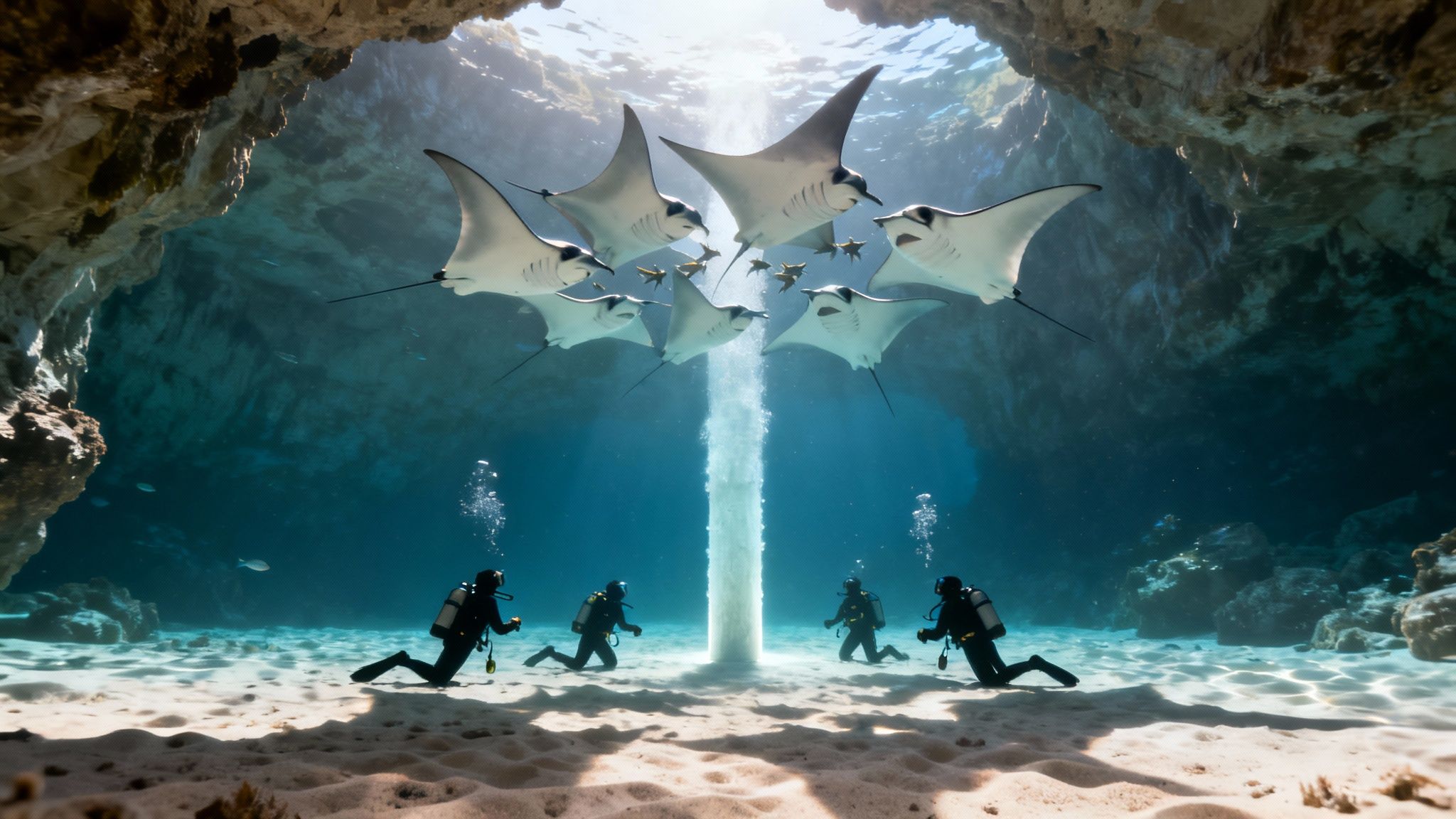
Unlike some of the more exposed sites along the coast, Garden Eel Cove is nestled in a naturally sheltered bay. What does that mean for you? It almost always translates to calmer seas and better visibility. Less surge and clearer water make for a far more comfortable and spectacular dive, letting you focus on the mantas instead of fighting the current. On top of that, the cove's healthier reefs create a more vibrant and beautiful underwater backdrop for your dive.
The Underwater 'Campfire': A Perfect Plankton Buffet
What really makes Garden Eel Cove legendary is the viewing setup. The dive operators here have perfected a system that turns the seafloor into a natural amphitheater. As a diver, you’ll settle on the sandy bottom in a circle with other divers, all pointing your lights straight up.
Meanwhile, snorkelers on the surface hold onto floating light boards that also beam down. This creates a massive column of light from the seafloor to the surface—a beacon that plankton simply can't resist.
This unique "campfire" of light attracts an incredibly dense concentration of plankton—the manta rays' primary food source. The result is a reliable, all-you-can-eat buffet that draws in more mantas for longer periods, leading to more consistent and breathtakingly close encounters.
This brilliant arrangement is exactly why locals started calling the spot Manta Heaven. The cove's natural reef structure and gentle currents help concentrate the plankton, making it the most dependable dinner spot for Kona's resident manta population. You can read more about the magic of Manta Ray Heaven at Garden Eel Cove to get the full picture.
Why Settle For Less?
Look, other sites can offer a good night out. But Garden Eel Cove consistently delivers an exceptional one. It's the winning combination of a protected location with better reefs, a brilliant viewing setup, and a healthy reef that makes it the undisputed champion for your Kona manta adventure.
By focusing on trips to this prime location, Kona Honu Divers gives you the absolute best shot at witnessing the incredible underwater ballet that made the Big Island famous. Choosing the right site is your first step toward a night you'll never forget.
Choose Your Adventure: Scuba Diving Or Snorkeling
So, how do you want to experience the world-famous Kona manta ray night dive? One of the best things about this adventure is its accessibility. You don’t have to be an expert diver to get in on the action, as there are two incredible ways to meet these gentle giants.
Whether you choose to dive down or float on the surface, you're in for an unforgettable night.
The Scuba Diver's Perspective
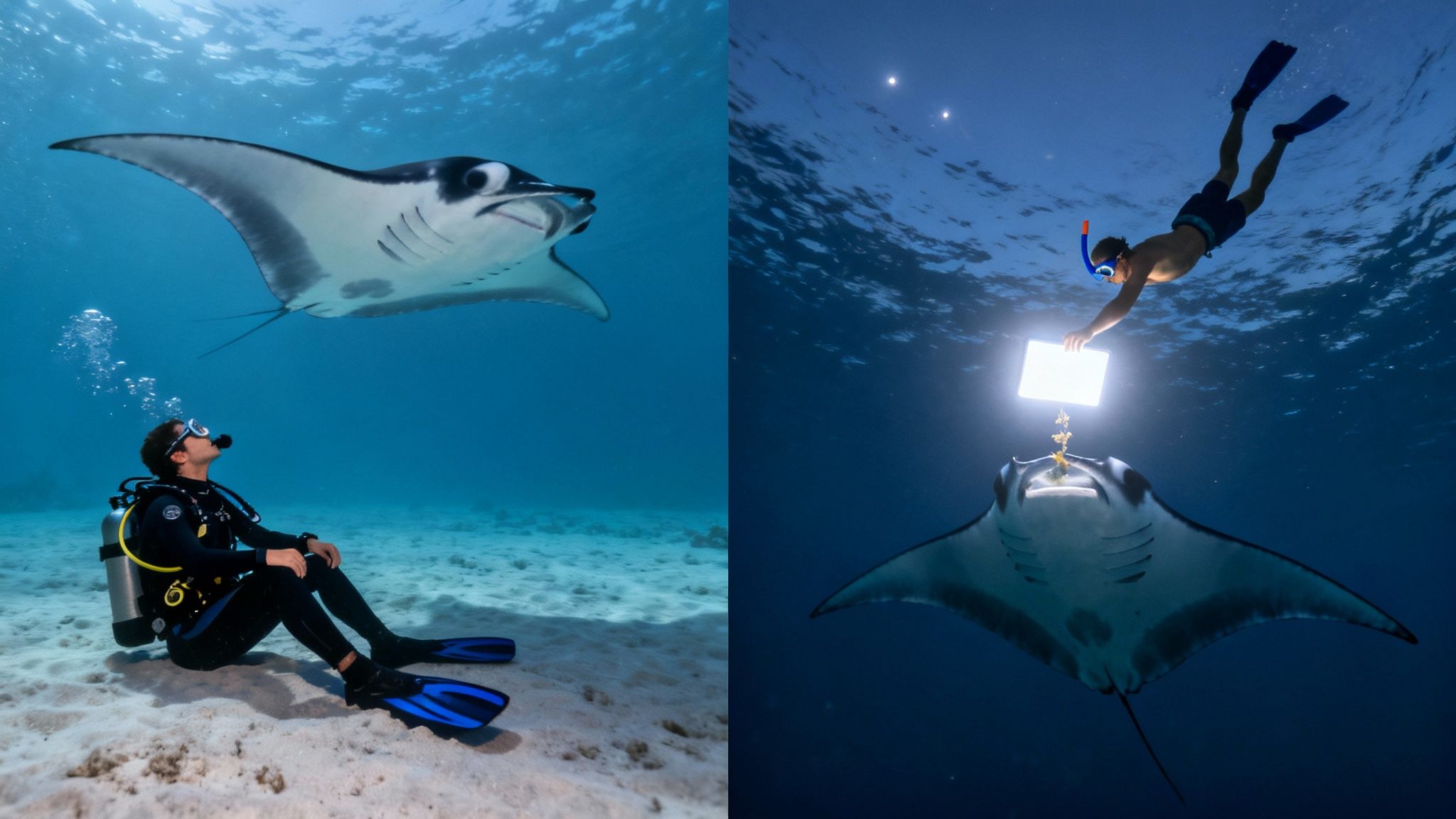
If you're a certified diver, this is your chance for a truly immersive, front-row seat. After a short descent to a sandy bottom, about 30-40 feet down, you'll settle in with the other divers. Together, you’ll point your dive lights up toward the surface, creating a "campfire" of light that acts like a giant magnet for plankton.
What happens next is pure magic. Manta rays, some with wingspans stretching over 12 feet, will glide, swoop, and perform barrel rolls just inches above you. It’s an underwater ballet, and you have the best seat in the house.
The Snorkeler's Bird's-Eye View
No scuba certification? No problem. Snorkelers get an equally amazing, up-close view. You'll hold onto a specially designed light board that floats on the surface, shining powerful beams down into the water.
This light creates a massive plankton buffet right at the surface, attracting the mantas to feed directly below you. From your vantage point, you get a bird's-eye view of their graceful feeding patterns and the sheer scale of their movements. It's an incredible perspective.
Deciding between the two really comes down to personal preference and comfort in the water. To help you choose, here’s a quick breakdown of what to expect from each experience.
Manta Ray Night Experience Scuba vs Snorkel
| Feature | Scuba Diving | Snorkeling |
|---|---|---|
| Viewpoint | Bottom-up, looking towards the surface. | Top-down, looking into the water. |
| Proximity | Mantas often glide just inches overhead. | Mantas feed just a few feet below you. |
| Requirements | Scuba certification is required. | No certification needed; basic swimming ability. |
| Depth | 30-40 feet on the ocean floor. | Floating on the surface. |
| Equipment | Full scuba gear (tank, BCD, regulator). | Mask, snorkel, and fins. |
Ultimately, both experiences offer breathtaking encounters with the same amazing animals. There's no wrong choice here. If you're still on the fence, we have a complete guide to help you figure out if it is better to snorkel or dive with manta rays.
No matter which adventure you pick, you're guaranteed to witness an incredible natural spectacle from a unique angle.
How to Prepare for Your Night Dive
A little prep work can be the difference between a good dive and an absolutely unforgettable one. When you show up for your manta ray night dive in Kona ready to go, you can leave the logistics to us and just soak in the incredible experience.
Think of it like any adventure—a bit of planning beforehand makes everything smoother and more comfortable once you're in the moment.
What You Should Bring
We’ve got all the big stuff covered, but you’ll want to pack a small bag with a few personal items to make your trip more comfortable. Here’s what we recommend:
- Swimsuit and Towel: The easiest thing to do is wear your swimsuit under your clothes to the harbor. And definitely don't forget a towel for when you get out of the water!
- Warm Layers: Even in Hawaii, it can get surprisingly chilly on the boat ride back, especially after you've been in the water. A hoodie, a warm jacket, or even just a dry change of clothes will make a world of difference.
- Reef-Safe Sunscreen: If you're on one of our earlier trips that heads out before the sun goes down, please be sure to use a reef-safe sunscreen. It protects you and our fragile coral reefs.
- Motion Sickness Medication: If you even think you might get seasick, it's a very good idea to take something before we leave the dock. A non-drowsy preventative can be a trip-saver.
What We Provide for You
Our job is to make this as easy and enjoyable for you as possible. Kona Honu Divers provides top-notch, fully serviced scuba and snorkel gear. That includes a nice, thick wetsuit to keep you warm and comfortable in the water.
After the dive, we'll have snacks and warm drinks waiting for you on the boat. There’s nothing better than a hot chocolate or tea as we cruise back to shore under the stars.
Safety First, Always
Your safety is, without a doubt, our number one priority. Before we even think about getting in the water, our crew will give you a detailed pre-dive briefing. We’ll go over all the safety procedures, how to interact with the mantas responsibly, and exactly what to expect. For a closer look at what makes diving after dark so unique, check out our guide to scuba diving at night.
Being prepared on the water is just smart practice for any boating trip. It's always a good idea to be familiar with a basic boat safety equipment checklist. You can relax knowing our crew is highly experienced and completely dedicated to a safe, eco-friendly dive. You're in great hands.
Meet Kona’s Famous Manta Rays
Before you even think about getting in the water, let’s talk about the real stars of the show. The giant manta rays you'll meet on a Kona night dive aren't just tourists; they're part of a thriving, year-round resident population. And trust me, these aren't just fish—they're individuals, each with its own quirks and history.
This isn't just a dive; it's a front-row seat to a unique natural phenomenon. Researchers have been studying this specific group for decades, and the numbers are impressive. Kona is home to over 450 identified individuals, making it one of the most reliable places on the planet to see them. This incredible population density is precisely why the dive has a phenomenal 85-90% sighting success rate. You can discover more insights about Kona's manta population and what makes this spot so special.
How We Know Who's Who
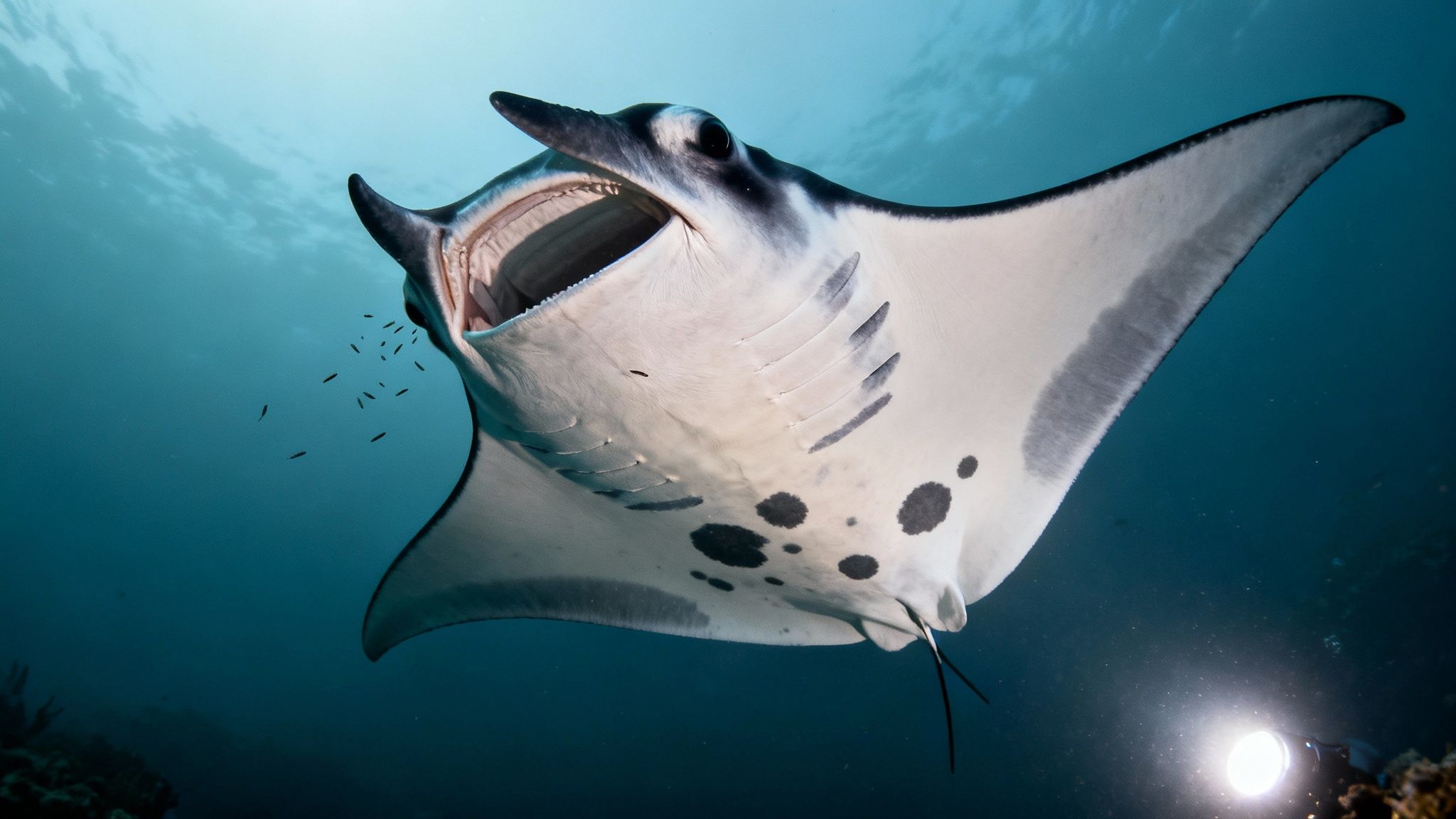
So, how can anyone tell these giants apart? It's all in the belly. Each manta ray has a unique pattern of black spots on its underside, just like a human fingerprint. For years, marine biologists and local dive guides have meticulously photographed these patterns to build a massive identification catalog.
This incredible effort means they can track individual rays, giving them names like "Big Bertha," "Lefty," or "Sugar Ray." Learning their life stories—where they go, what they eat, and how they’ve healed from injuries—adds a whole new dimension to the experience. You’re not just seeing a manta ray; you might be swimming with a local legend.
The Graceful Feeding Frenzy
That mesmerizing underwater ballet everyone talks about? It's actually a brilliant feeding strategy. The powerful lights that dive operators place on the seafloor attract clouds of microscopic plankton, creating a rich "plankton smoothie" that mantas can't resist.
To feast, the mantas perform effortless somersaults and barrel rolls, gliding through the light beam with their mouths wide open to filter out their dinner.
Despite their colossal size—with wingspans that can stretch over 12 feet—manta rays are completely harmless. They are gentle giants, true filter-feeders with no teeth, stingers, or barbs.
Their sheer scale is awe-inspiring, but it’s their gentle, curious nature that truly sticks with you. They move with an impossible grace, using their huge pectoral fins to "fly" through the water. It’s a hypnotic, almost otherworldly spectacle.
When you know a little about who these animals are and what they're doing, the dive transforms from just an amazing adventure into a deeply personal and meaningful encounter. You'll leave with more than just cool photos—you'll have a genuine connection to Kona's most celebrated residents.
Why We Recommend Kona Honu Divers For Your Manta Dive
Picking the right dive operator can make or break your manta ray experience. It’s hands-down the most important decision you'll make for this dive. We consistently recommend Kona Honu Divers because they deliver a top-tier trip built on a foundation of safety, comfort, and genuine respect for the ocean.
They aren't just another boat on the water; their reputation is backed by a flawless safety record and some of the best customer service you'll find on the island.
You can feel the difference the moment you step onto one of their custom-built dive boats. They’re designed for stability and space, making the whole process smoother. Their rental gear is high-quality and meticulously looked after, so you can focus on the dive, not on a leaky mask.
And here’s a huge plus for certified divers: they offer complimentary nitrox. This means you get more precious bottom time with the mantas, letting you soak in every last second of the magic.
Expert Crew, Unforgettable Dives
What truly sets Kona Honu Divers apart is their people. The crew isn't just there to drive the boat; they are passionate, experienced guides who are experts on local marine life and conservation. They have a knack for making every trip feel safe, educational, and, most importantly, incredibly fun.
They don’t just point out the mantas; they share their knowledge and create an atmosphere of pure wonder and respect for these gentle giants.
But you don’t have to take our word for it. Check out what other divers are saying about their own amazing experiences.
When you’re ready for an adventure that’s truly first-class from start to finish, the choice is clear. You can book your unforgettable Kona manta ray dive tour right here with the best in the business.
Your Manta Ray Night Dive Questions, Answered
It’s completely normal to have a few questions before diving into an adventure like this. Even seasoned divers do! Let's clear up some of the most common ones so you can book your trip feeling excited and totally prepared.
Do I Need to Be a Certified Diver to See the Mantas?
Nope, not at all! The snorkeling experience is just as incredible and is open to everyone.
You'll hang onto a specially designed light board that floats on the surface, shining a beam down into the water. This light is a magnet for plankton, which then draws the manta rays right up to you. It gives you a breathtaking, front-row view from above—perfect for families or anyone who isn't scuba certified.
What Are My Chances of Actually Seeing Manta Rays?
They’re incredibly high. Kona's manta ray dive has one of the most reliable wildlife sighting rates on the planet, consistently hitting 80-90%.
Of course, with wild animals, nothing is ever 100% guaranteed. But the setup at Garden Eel Cove is about as close as you can get. Experienced guides know exactly where to go and what to do, which stacks the odds heavily in your favor for an unforgettable encounter.
Is This Dive Safe for Beginners or Kids?
Absolutely, as long as you go with a professional, reputable operator. The main site, Garden Eel Cove, is a protected bay and fairly shallow, only about 30-40 feet deep.
Snorkeling is a fantastic and very safe option for kids who are comfortable in the water. For newly certified divers, this is a perfect first night dive—it’s a controlled, well-supervised environment that’s thrilling without being intimidating.
What if I Get Cold or Seasick?
Don't worry, the best operators have you covered. They provide good, thick wetsuits that keep you surprisingly warm in the water. A pro tip: always bring a hoodie or jacket to throw on for the boat ride back.
If you know you're prone to seasickness, it’s a good idea to take some non-drowsy motion sickness medicine before you get on the boat. The boat crews are experts at keeping everyone safe and comfortable, so you're in good hands.
For an unforgettable adventure led by experts who put your safety first, book your tour with Kona Honu Divers. Take a look at all of our Kona scuba diving tours to find the right underwater experience for you.