
Picture this: you're floating in the warm, dark Pacific waters off the coast of Kona. Suddenly, a massive, gentle shadow glides effortlessly through the beam of your dive light. Then another. These aren't just fish; they are majestic manta rays, some with wingspans stretching up to 16 feet, performing an underwater ballet right before your eyes.
This is the Kona manta ray night dive, an experience that has rightfully earned its spot as one of the most breathtaking and dependable marine encounters on the planet. It’s a perfect blend of wild nature and predictable magic.
What Makes This Experience So Unforgettable
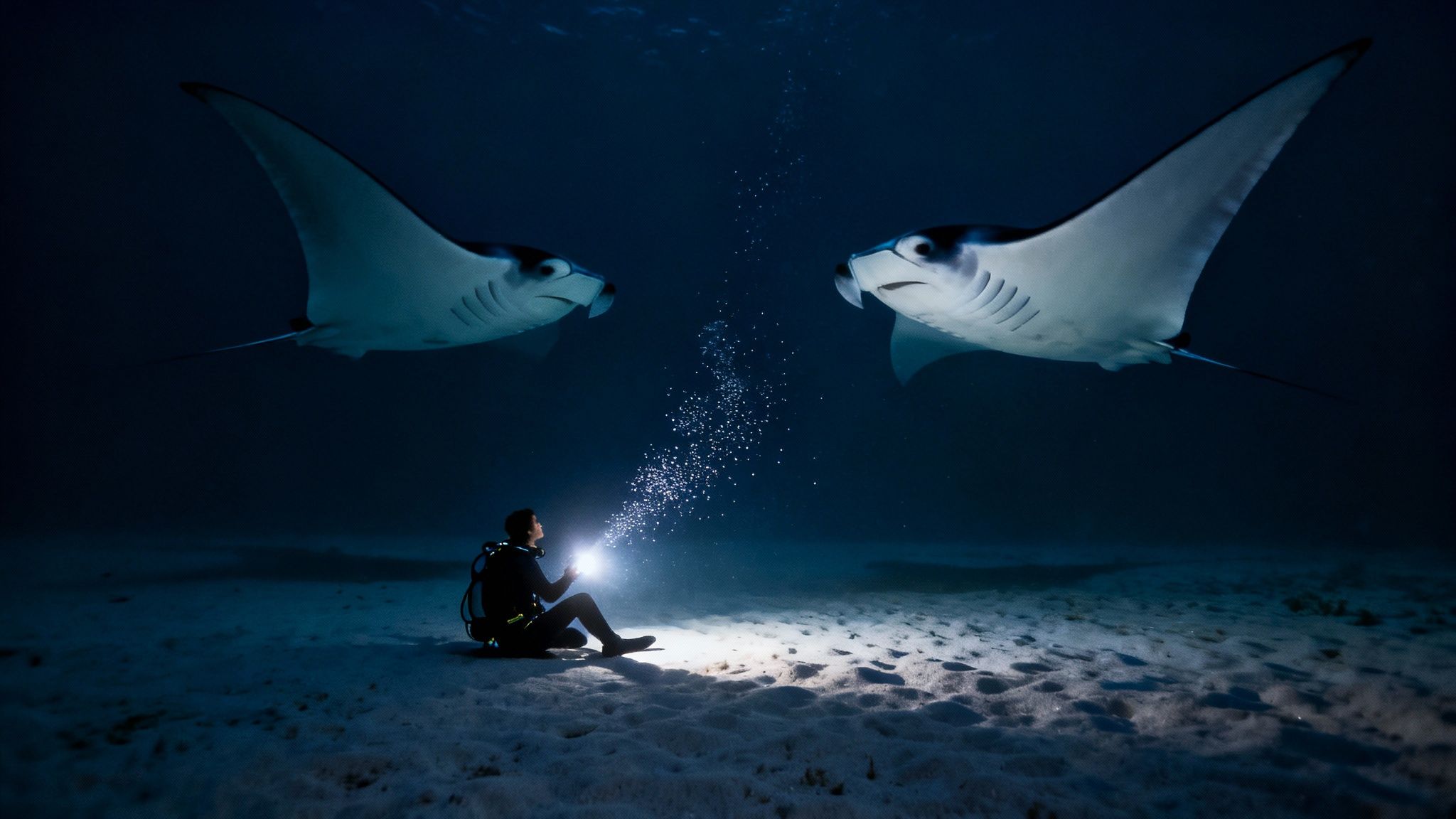
The secret behind this incredible spectacle is surprisingly simple. We set up powerful lights in the water, which act like magnets for tiny, free-floating plankton—the manta rays' favorite meal. This creates a concentrated, all-you-can-eat buffet that draws the gentle giants in from the open ocean.
What this means for you, whether you're diving or snorkeling, is that you don't have to go searching for the action. The action comes directly to you. It's a front-row seat to one of nature's greatest shows, as the mantas perform graceful barrel rolls and somersaults, sometimes just inches away, scooping up plankton with their huge, gaping mouths.
For a quick overview of what to expect, check out this summary table.
Kona Manta Ray Night Dive At a Glance
This table provides a quick summary of the key aspects of the Kona manta ray night dive, highlighting what divers and snorkelers can expect from this incredible experience.
| Feature | Description |
|---|---|
| Activity Type | Night dive and snorkel |
| Primary Attraction | Reef Manta Rays (Mobula alfredi) |
| Average Wingspan | 8-12 feet, with some individuals reaching up to 16 feet |
| Sighting Consistency | Very high; typically 85-90% success rate year-round |
| Best Time to Go | Year-round, as the local manta population is non-migratory |
| Key Locations | Garden Eel Cove (Manta Heaven) is the superior site, another is Manta Village |
| How It Works | Lights attract plankton, which in turn attracts the feeding manta rays to the divers and snorkelers. |
| Experience For | Certified divers, snorkelers, and even those new to the ocean. A must-do for any Big Island visitor. |
This at-a-glance view gives you the essentials, but the real magic is something you have to see to believe.
A Consistently Amazing Encounter
Unlike so many wildlife tours where a sighting is a roll of the dice, the Kona manta ray dive is remarkably reliable. The local reef manta ray population doesn't migrate; they live here all year long. That consistency is what has cemented Kona's reputation as the number one spot in the world for this adventure.
The numbers back it up. Back in 2013, the Manta Village site had a documented 96% sighting success rate. The other main site, Manta Heaven, hit 90% but averaged a staggering 11 mantas per night. Today, operators still see success rates between 85-90%, and it's not uncommon for dive logs to show over 30 mantas on a really good night. You can discover more about these sighting statistics and ongoing research.
Two Premier Stages for the Show
The show unfolds at two primary locations along the Kona coast, but one is the clear winner for the best experience.
- Manta Village: This is the original site, located a bit further south. It's a solid spot but can be more exposed to the whims of the ocean, leading to rougher conditions.
- Garden Eel Cove (Manta Heaven): This is the superior choice. Situated to the north, it's nestled in a protected cove, which means calmer water, clearer visibility, and a naturally sloped underwater amphitheater for viewing. The reefs here are also healthier and more vibrant.
That protected environment at Garden Eel Cove doesn't just make for a safer and more comfortable experience; it creates a superior viewing area and concentrates the action. It's the ultimate theater for the best show on Earth.
Ready to see it for yourself? You can book your unforgettable Kona manta ray night dive tour with us today.
Why Garden Eel Cove Is The Premier Manta Dive Site

When it comes to the manta ray night dive kona, location is everything. While you might see mantas at a few spots along the coast, one place consistently delivers an unforgettable show: Garden Eel Cove. It's often called Manta Heaven, and for good reason—this is where we take our divers, and it's simply the best there is.
So, what makes it so special? Think of Garden Eel Cove as a natural amphitheater, perfectly sculpted for watching the mantas. Its unique position protects it from the big ocean swells that can make other sites choppy and murky. This means we get consistently calm, clear, and safe water, which is a huge deal for a night dive. This sheltered location provides a better and more reliable viewing area than other sites.
That reliable calmness makes the whole experience more relaxed and enjoyable. You can just settle in and focus on the incredible ballet unfolding right in front of you.
The Underwater Campfire Experience
At the heart of the Garden Eel Cove dive is a setup we affectionately call the "underwater campfire." It’s a beautifully simple and effective concept. Divers gather on a large, sandy patch about 35 feet down. In the middle, we place a collection of powerful lights that shine straight up toward the surface.
This bright column of light acts like a giant magnet for plankton, drawing them in from all around. What you get is a thick, concentrated buffet that manta rays just can't resist. Instead of having to chase scattered snacks, they find an all-you-can-eat feast waiting for them.
For divers, this is pure magic. You get a front-row seat without having to swim a single stroke. You just kneel on the soft sand and watch as these massive, graceful creatures perform barrel rolls and effortless glides literally inches above your head. It’s an up-close, personal, and completely non-invasive way to see them in their element.
This "campfire" is what truly sets the manta ray night dive kona at Garden Eel Cove apart. It’s a controlled viewing experience that lets nature do its thing. You can dive deeper into what makes Manta Heaven at Garden Eel Cove so unique in our full guide.
More Than Just a Manta Show
Another massive advantage of Garden Eel Cove is the reef itself. It's not just a sandy bottom; it's a vibrant, thriving ecosystem with better reefs than other locations. This is why our two-tank manta ray dive tour starts with a stunning sunset dive right here, long before the mantas show up for their dinner.
- Tons of Marine Life: The reef is absolutely packed with colorful Hawaiian reef fish, moray eels, octopus, and so much more.
- Healthy Coral Gardens: You’ll get to explore pristine coral formations and fascinating underwater lava rock arches.
- The Perfect Warm-Up: This first dive is a great way to get comfortable with your gear and the site, making the main event at night even better.
The amazing reef turns the trip into a complete underwater adventure, not just a one-trick pony. It’s this combination—a protected bay, the brilliant campfire setup, and a world-class reef—that makes Garden Eel Cove the undisputed best stage for this incredible underwater performance.
Your Manta Adventure With Kona Honu Divers
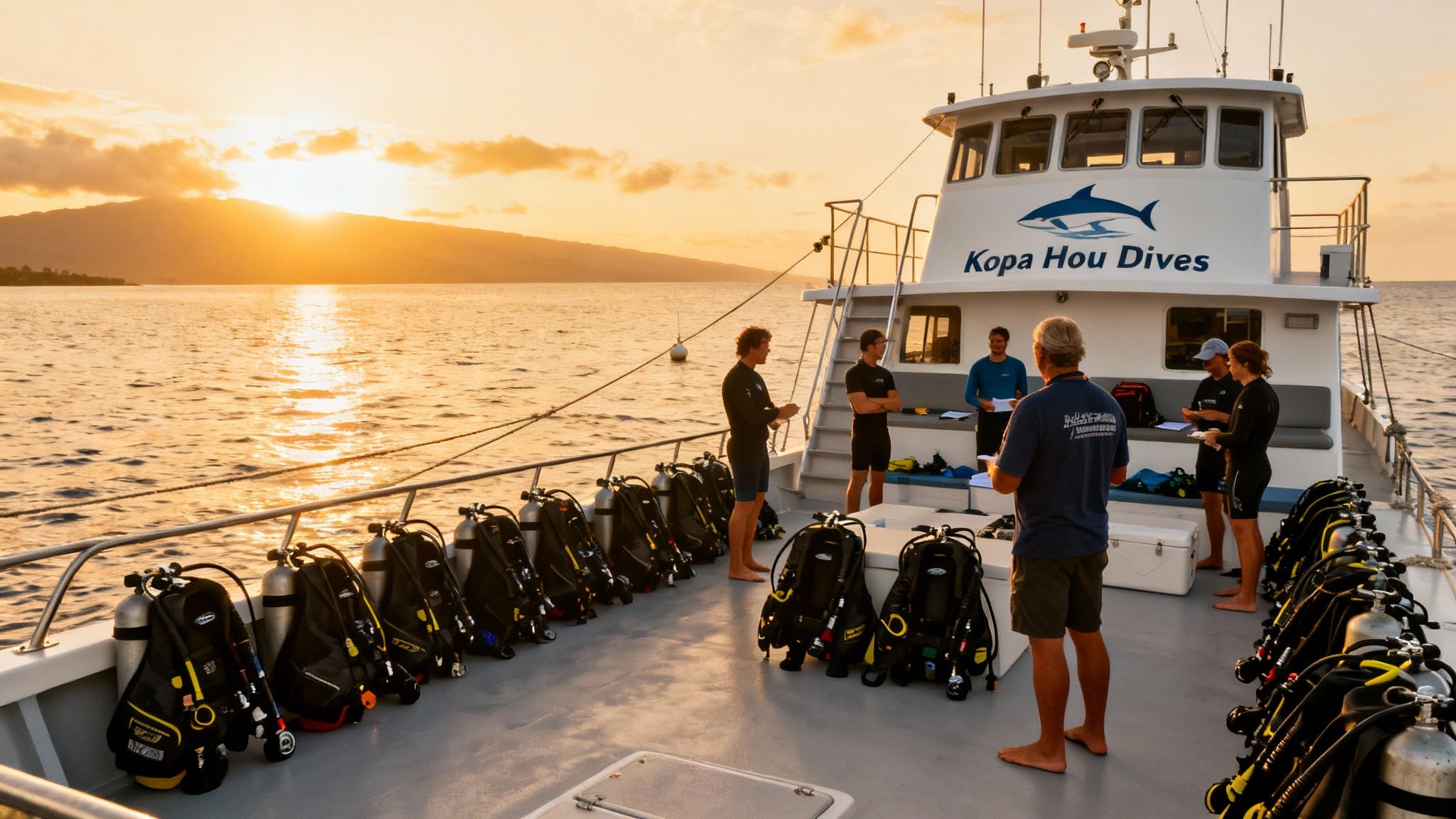
The difference between a good dive and an unforgettable one often comes down to the crew leading the way. Here at Kona Honu Divers, we believe the manta ray night dive isn’t just about checking a box; it’s about feeling completely safe, comfortable, and lost in the magic of the moment.
From the second you step onto one of our custom-built dive boats, you’ll feel the difference. We’ve designed everything to be seamless. Our crew brings a combined 200 years of diving experience to your trip, so you can relax knowing every detail is handled by seasoned professionals.
This whole experience has a rich history on the Big Island. Over the last three decades, it has grown from a few lucky sightings into a world-famous spectacle. We're standing on the shoulders of pioneers like Jeff Keller, the original 'Manta Man,' who started cataloging over 300 individual rays and tracking more than 10,000 sightings some 32 years ago. We carry on that legacy, drawing on our team's 60,000+ collective dives to give you the best and safest show on the water.
The Two-Tank Tour Structure
Our manta trip is a two-tank tour, and there’s a good reason for that. We don't just rush you out for the main event and head back. We want you to be relaxed and fully immersed.
Your adventure starts with a beautiful sunset reef dive at Garden Eel Cove. This first dive is your chance to get comfortable with your gear, dial in your weighting, and just enjoy the vibrant coral gardens. Think of it as the perfect warm-up, a chance to shake out any nerves and get ready for the main event.
Then, as darkness falls, we head to the underwater "campfire" for the ballet to begin. This two-part structure means you're confident and ready when the mantas arrive, turning a single encounter into a complete evening of exploration. You can learn more about what to expect on our Kona Honu Divers manta ray night dive page.
Details That Make The Difference
We've learned that it's the little things that truly elevate the experience. Our goal is to provide a premium adventure where you feel like a valued guest, not just another diver on the boat.
Here’s what sets the Kona Honu Divers experience apart:
- Small Group Sizes: We keep our groups small. That means more room for you, a clearer view of the action, and a much more personal trip without bumping elbows.
- Complimentary Nitrox: If you’re Nitrox certified, your enriched air is on us. It gives you a little extra bottom time, which means more precious minutes with these amazing animals.
- Expert Briefings: Our guides don’t just go over the plan. They give fascinating, in-depth briefings about manta behavior, safety, and what to look for. You'll go down feeling like an expert.
- Top-Tier Vessels: Our boats are designed for divers. They’re spacious, comfortable, and make getting in and out of the water a breeze.
At Kona Honu Divers, our mission is to deliver more than just a dive; we aim to create a core memory. It’s an approach built on a deep respect for the ocean and a genuine passion for sharing its wonders with others in the safest, most awe-inspiring way possible.
Our reputation is built on thousands of incredible guest experiences. See what fellow divers have to say about their adventures with us.
Ready to join us for an unforgettable underwater ballet?
Getting Ready for Your Manta Dive
A little bit of prep work goes a long way in making sure you can just relax and soak in the magic of the manta ray night dive in Kona. Think of this as your practical guide to a smooth, safe, and truly unforgettable evening. When you have the details sorted out beforehand, you're free to focus on the incredible underwater ballet without a single worry.
We’ll walk you through everything from what to throw in your bag to how to get in the right mindset, so you feel totally confident from the moment you step on the boat.
What to Bring on the Boat
While we've got you covered with all the essential dive and snorkel gear, a few personal items will definitely make your trip more comfortable. Even in Hawaii, the air can get a little brisk on the ride back after a night dive, so it pays to be prepared.
Here’s a quick checklist for the trip:
- Reef-Safe Sunscreen: Slather this on before you arrive, especially for the sunset portion of the trip. Using reef-safe sunscreen is a huge part of protecting Hawaii's beautiful and fragile coral.
- Something Warm: A hoodie, a windbreaker, or even just a big fluffy towel is a game-changer for the boat ride back to the harbor. You'll be glad you have it.
- Swimsuit & Towel: The easiest thing to do is wear your swimsuit to the boat and just bring a towel for drying off later.
- Reusable Water Bottle: Staying hydrated is always a good idea. We have plenty of fresh water on board for refills.
- Your Own Dive Gear (Optional): If you have a mask that fits your face perfectly or your own comfy wetsuit, by all means, bring it along! There's nothing like the comfort of your own gear.
- Underwater Camera: Planning to capture the moment? Don't forget your camera, a charged battery, and a clean memory card.
Do I Need to Be an Expert Diver?
Nope! One of the absolute best things about this adventure is how accessible it is. You don't need a logbook full of deep-sea excursions to join in.
We designed the Kona manta ray experience for everyone, from seasoned divers to people who have never snorkeled before. Our whole goal is to share this incredible natural wonder in a way that’s safe, comfortable, and awe-inspiring for all.
For scuba divers, all you need is a basic Open Water Diver certification. The site we dive, Garden Eel Cove, is a protected and calm spot with a sandy bottom around 35 feet. It's a low-stress environment perfect for just settling in and enjoying the view. The dive itself is completely stationary—you'll find a spot on the sand, get comfortable, and simply watch the show unfold above you.
For snorkelers, it's even easier. No certification is necessary. You'll float comfortably on the surface while holding onto our custom-built light board. This board shines down into the water, creating an amazing top-down view as the mantas swoop up to feed on the plankton drawn to the light. It's an equally breathtaking perspective.
Getting Mentally and Physically Set
Being in the right headspace makes a huge difference, especially for a calm, quiet experience like the manta ray night dive in Kona.
For Divers:
Getting your weighting right is the most important thing. You want to be just heavy enough to rest peacefully on the sandy bottom without kicking up a cloud of sand or feeling like you're about to float away. Our dive guides are pros at this and will help you dial it in during the first sunset dive. Once you're down there, focus on taking slow, deep breaths to conserve your air and stay relaxed.
For Photographers:
Remember, your light is your lure. The trick is to point your light up toward the surface to attract the plankton the mantas are after. Avoid shining your light directly into their eyes—it’s more respectful to the animals and actually creates much better photos, giving you those dramatic silhouette shots as they glide overhead. The key is patience. Stay still, and let the mantas come to you. You’ll be rewarded with the best shots.
With just these few simple steps, you're setting yourself up for an evening of pure wonder.
Responsible Tourism And Manta Conservation

The breathtaking manta ray night dive Kona experience is only possible thanks to a deep, community-wide commitment to protecting these gentle giants. This isn't just another tourist attraction; it’s a carefully managed interaction in the mantas' natural dining room. As guests in their underwater home, every one of us shares the responsibility of making sure they remain safe, comfortable, and wild.
The number one rule is simple and absolute: look, but don't touch. This is the golden rule of responsible manta interaction.
Why You Should Never Touch A Manta Ray
Manta rays have a special protective mucous membrane covering their bodies, often called a slime coat. You can think of it as their skin's first line of defense—a shield against harmful bacteria and parasites in the ocean.
When a person touches a manta ray, even for a second, their hand strips away this crucial layer. This seemingly harmless act can leave the manta vulnerable to serious skin infections and disease. By simply respecting their space and keeping our hands to ourselves, we directly contribute to their health and well-being.
Guidelines For Passive Observation
To ensure the mantas feel secure and continue returning to the dive site night after night, the entire Kona dive community adheres to a set of proven passive observation guidelines. Following these rules is how you go from being just a spectator to an active participant in conservation.
- Stay in Your Designated Spot: If you're diving, this means staying settled on the sandy bottom. If you're snorkeling, it means holding onto the light board at the surface. This creates a stable, predictable environment for the mantas.
- Keep Your Lights Pointed Up: Your light is the beacon that attracts the plankton. By pointing it straight up toward the surface, you help create the "campfire" effect that brings the mantas in to feed. Never shine your light directly into a manta's eyes.
- Let the Mantas Approach You: The real magic happens when you let them come to you. Don't chase or swim after the mantas. Just relax and watch as they gracefully swoop and barrel-roll right over your head.
By understanding and respecting these rules, you become more than a tourist—you become a guardian of this amazing natural spectacle. The goal is to be a quiet observer, allowing the mantas to carry on their natural behaviors undisturbed by our presence.
The Kona manta experience has been a bucket-list adventure for decades, with the first trips running way back in 1992. The dedication to these guidelines has paid off in a big way. By 2013, the consistency was astounding; at Manta Village, a remarkable 96% of charters reported manta sightings. Manta Heaven boasted a 90% success rate with an average of 11 mantas per dive. These numbers, confirmed by meticulous video reviews, are proof that responsible tourism works. You can read more about the history of the Kona manta ray night dive on Wikipedia.
Learning these rules is the first step, and you can dive deeper with our guide on how to be a responsible and considerate diver.
Explore More Of Kona’s Underwater World
The **manta ray night dive** is an absolute showstopper, the kind of memory that sticks with you forever. But believe it or not, that’s just scratching the surface of what the Big Island’s waters have to offer. Once you’ve seen the manta ballet, you’ll have a real taste for the magic of Kona’s ocean and, chances are, you’ll be hungry for more.
Kona's underwater landscape is incredible. It’s all built from ancient lava flows, which have created a playground of dramatic arches, hidden caves, and some of the most vibrant coral gardens you’ll ever see. The adventure definitely doesn't stop when the sun comes up.
Dive Into The Abyss On A Blackwater Dive
If you loved the thrill of diving in the dark, the manta dive is just your first step. For an experience that is truly out of this world, you have to try a [**Kona Blackwater Dive**](https://konahonudivers.com/diving-tours/black-water-night-dive/?ref=blog). This is completely different. We motor out over deep ocean water, turn off the engines, and drift in the open, pitch-black sea, tethered to the boat.
You'll get to witness the largest animal migration on Earth as bizarre, bioluminescent creatures rise from the crushing depths to feed near the surface. It feels less like scuba diving and more like floating through deep space. It’s an absolute must for adventurous divers looking for something they’ve never seen before.
Discover Vibrant Reefs And Lava Tubes
Beyond the incredible night dives, our classic daytime [diving tours](https://konahonudivers.com/diving-tours/?ref=blog) are what truly put Kona on the map as a world-class dive destination. On these trips, we explore stunning lava tubes and coral gardens that are just bursting with life. You’ll find everything from snoozing turtles tucked into ledges to shy octopuses masters of disguise.
For those with a bit more experience under their weight belt, our advanced charters head to more remote and deeper sites. These trips are a chance to see untouched reefs and maybe even run into some of the bigger pelagic species that cruise the Kona coast. Let us show you everything our underwater world has to offer.
Whether you're gliding past giant mantas at night or exploring a sun-drenched lava tube by day, Kona serves up an endless variety of incredible diving. Every single dive reveals another piece of the island's amazing underwater puzzle.
The world is full of amazing adventures, both in Kona and beyond. You can discover other unique travel experiences to start planning your next trip.
Ready to see what else Kona has to offer?
Your Manta Ray Night Dive Questions, Answered
It’s completely normal to have a few questions before embarking on a big adventure like this one. We get it! To help you feel confident and ready, we’ve put together answers to the most common things people ask about the manta ray night dive kona. Think of it as your quick-start guide to one of the most incredible wildlife encounters on the planet.
Let's dive into the details so you know exactly what to expect.
Is The Manta Ray Night Dive Safe?
Absolutely. The first thing to know is that manta rays are truly gentle giants. They're filter feeders, so they don’t have teeth, stingers, or barbs of any kind. They are simply not a threat to humans. Their only interest is in the tiny plankton our lights attract, and they gracefully avoid us as they swoop in for their dinner.
As for the dive itself, we run a very tight ship. Our chosen site, Garden Eel Cove, is naturally protected, giving us consistently calm, clear, and shallow water to work with. Add in our expert guides who are with you every step of the way, and you have one of the safest and most thrilling underwater adventures you could ever ask for.
Do I Need To Be A Certified Diver?
Nope! This experience is designed for everyone, whether you're a seasoned diver or have never worn a mask before. We’ve set it up so that anyone can get a front-row seat to the action.
- For Certified Divers: If you're Open Water certified, you'll head down to the sandy bottom at about 35 feet. From there, you get a truly unique perspective, looking up as these massive, graceful creatures glide and barrel-roll just inches over your head. It’s breathtaking.
- For Snorkelers: If you’re not a diver, you'll float comfortably on the surface holding onto our custom light board. This powerful light source is what draws in the plankton, bringing the mantas right up to you for a spectacular top-down view of the ballet.
Both experiences are equally mesmerizing and put you right in the middle of the show.
What Is The Best Time Of Year To See The Mantas?
This is one of the best parts—the show goes on all year long! The reef manta rays we see are residents of the Kona coast; they don't migrate. So, no matter when you plan your trip, they'll be here.
Kona's location on the sheltered side of the Big Island blesses us with calm, clear ocean conditions almost every single night of the year. Manta sightings are incredibly reliable, with success rates consistently above 90% month after month.
The sheer consistency of this encounter is what makes it so famous. Whether you visit in the heat of summer or the cooler winter months, the mantas are here, ready for their nightly performance.
What Happens If We Don’t See Any Mantas?
While it is extremely rare for the mantas to be a no-show, we're still dealing with wild animals, so a 100% guarantee is never possible. With that said, the manta ray night dive kona is known around the globe as one of the most dependable wildlife encounters in the world.
In the very unlikely event the mantas decide to skip dinner, our team will chat with you about the options. But even then, the trip is far from a wash. You'll still get to experience a beautiful sunset reef dive and the unique magic of being out on the ocean at night—two incredible adventures in their own right.
Ready to see the underwater ballet for yourself? Kona Honu Divers offers a world-class, safe, and unforgettable 2-Tank Manta Ray Dive & Snorkel tour that will easily become the highlight of your trip to Hawaii.