
Imagine this: you're sinking into the warm, dark Pacific Ocean just off the Kona coast. Your dive light cuts through the black water, and suddenly, the beam illuminates a breathtaking spectacle. Giant manta rays, some with wingspans wider than a car, are gliding and barrel-rolling just inches above your head. This isn't a scene from a nature documentary—it's the world-famous manta ray night dive in Kona, a true bucket-list adventure that you'll be talking about for the rest of your life.
Experience Kona’s Unforgettable Manta Ray Ballet
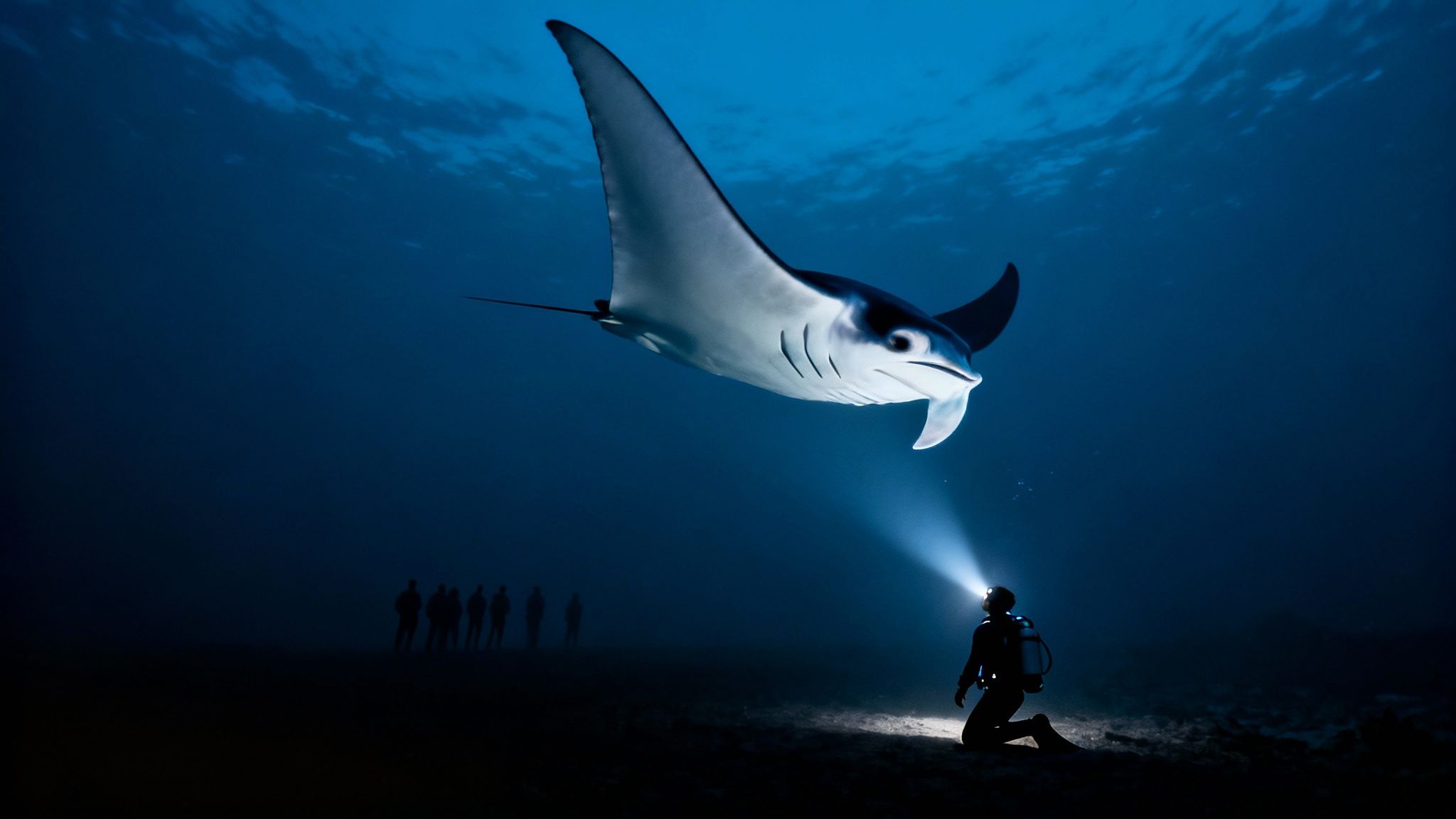
This guide is your all-access pass to witnessing this underwater performance for yourself. We'll dive into what makes Kona the global hotspot for this encounter and how expert local guides like Kona Honu Divers create a safe, magical, and unforgettable trip.
The secret behind the Kona manta ray night dive is brilliantly simple. Powerful dive lights are placed on the ocean floor, pointing upward. These lights attract massive clouds of plankton, which happen to be the manta rays' favorite meal. It's like setting up a well-lit, all-you-can-eat buffet that draws these gentle giants in for a spectacular feeding frenzy.
A Reliable Natural Wonder
This iconic Hawaiian adventure has been a must-do since the early 1990s. What started as a few lucky encounters has blossomed into one of the world's most renowned ecotourism experiences. And the best part? It's incredibly reliable.
Historical data from Kona's premier dive sites shows just how consistent this is. Top spots have historically boasted 90% or higher sighting success rates. It’s not uncommon to see an average of over ten mantas on any given night, making this one of the most dependable big-animal encounters on the planet. You can dig into more manta ray sighting statistics on Love Big Island.
When you join a guided tour, you're getting a front-row seat to one of nature’s most graceful performances. Companies like Kona Honu Divers have the logistics dialed in, getting you to the best viewing spots while ensuring every interaction is respectful and safe for the mantas.
This entire operation is a masterclass in responsible wildlife tourism. By participating, you’re not just creating a lifelong memory; you're also directly supporting the ongoing research, monitoring, and protection of Kona’s precious resident manta ray population.
Ready to see the show for yourself? The Kona Honu Divers manta ray dive tour offers an incredible opportunity to witness this underwater ballet firsthand. They specialize in trips to Garden Eel Cove, which is widely considered the superior choice for the dive tour because of its protected location, better viewing area, and healthier reefs.
Why Garden Eel Cove Is Kona’s Premier Manta Dive Site
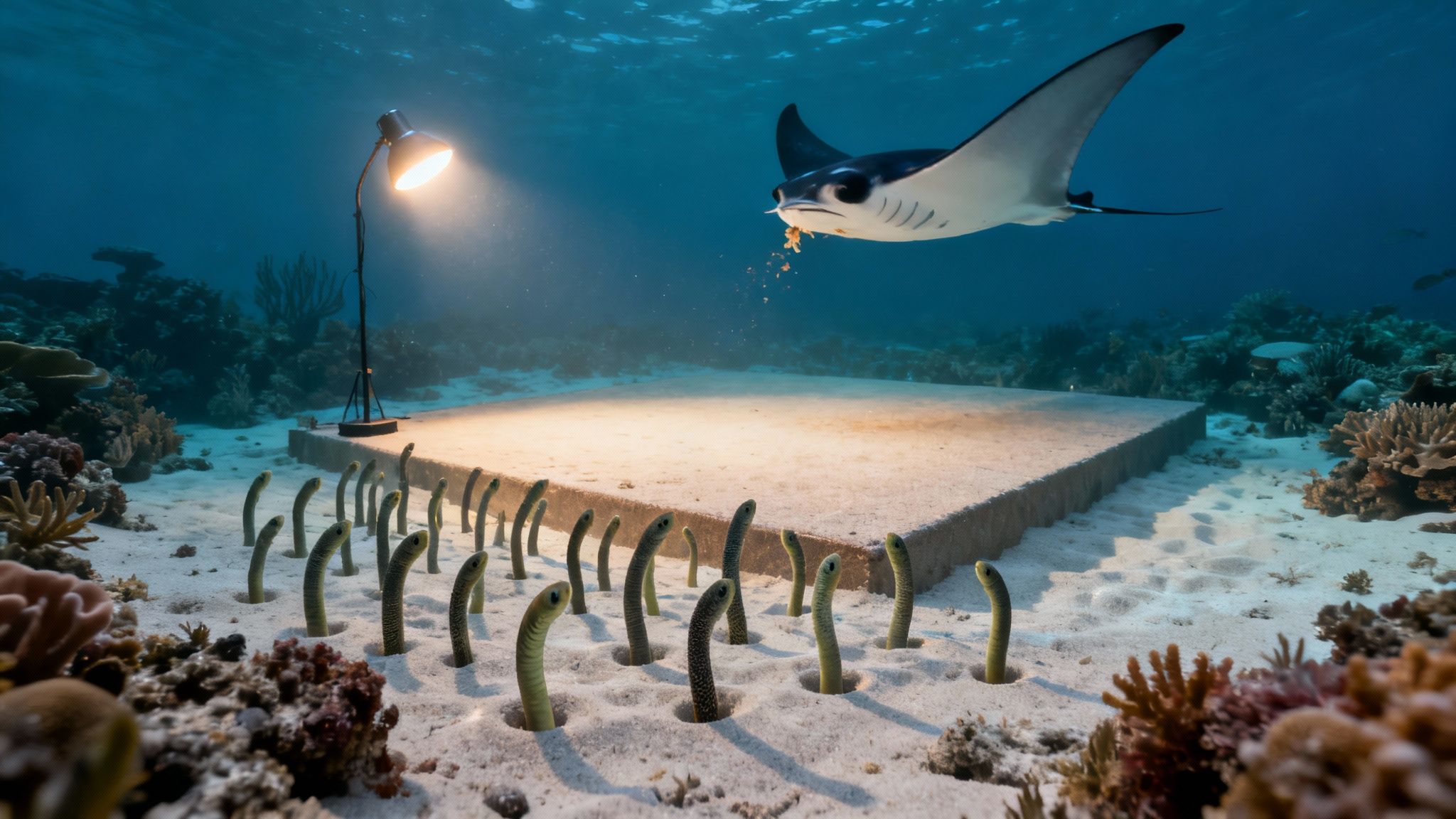
When it comes to the manta ray night dive in Kona, not all sites are created equal. While you can find mantas at a few different spots, one location consistently delivers the most magical experience: Garden Eel Cove, affectionately known by divers as Manta Heaven. It stands out as the superior choice for a memorable and comfortable dive.
What makes it so special? It starts with geography. The cove is naturally sheltered from open ocean swells, which means the water is often much calmer. This makes for a more comfortable and enjoyable time for everyone, whether you're a seasoned diver or snorkeling for the first time.
But the real showstopper is what happens on the ocean floor. The site features a huge, sandy patch that’s perfect for divers to gather. This unique setup provides a better viewing area, transforming the sandy bottom into a natural amphitheater for the manta show.
The "Campfire" Effect and a Healthier Reef
Imagine sitting around a campfire, but underwater. Divers form a circle on the sand and point their powerful lights straight up. This creates a massive column of light that attracts plankton, the mantas' favorite food. The mantas then swoop and glide right overhead, putting on an incredible acrobatic display as they feed. It’s an up-close-and-personal spectacle you just don’t get anywhere else.
Another huge plus for Garden Eel Cove is the superior, healthy reef that surrounds the sandy "stage." Many charters, like the popular 2-Tank Manta Dive, begin with a twilight dive along this vibrant coral ecosystem. You get to see the reef come alive with all sorts of creatures as the sun goes down, making the whole trip a richer, more complete adventure.
How The Dive Sites Compare
While you'll hear about a couple of main locations for the manta dive, it's clear that Garden Eel Cove is the superior choice for a better viewing area and overall experience.
Kona Manta Ray Dive Site Comparison
| Feature | Garden Eel Cove (Manta Heaven) | Manta Village (Keauhou Bay) |
|---|---|---|
| Location | North of Kona Airport | South of Kailua-Kona |
| Conditions | Typically calm & sheltered | More exposed to ocean swells |
| Viewing Setup | Sandy bottom for the "campfire" circle | Rocky bottom, divers hold onto rocks |
| Crowd Level | Can get busy, but viewing is organized | Often more boats and snorkelers |
| Reef Quality | Excellent, vibrant coral reef nearby | Reef is present, but less pristine |
| Manta Sightings | Highly consistent and predictable | Also consistent, but can be variable |
As you can see, Garden Eel Cove’s protected location and unique setup create a more reliable and comfortable experience. While Manta Village is a solid alternative, it can be a bit more of a wild card with crowds and conditions, making Garden Eel Cove the superior choice.
It's no accident that the best dive operators head to Garden Eel Cove. They know it’s the place that consistently delivers that truly mind-blowing, once-in-a-lifetime encounter with Kona's gentle giants.
For an even deeper dive into what makes this spot so incredible, you can learn more about the unique ecosystem of Manta Heaven at Garden Eel Cove. This is where top-rated operators have fine-tuned their manta ray dive tours to ensure a safe, respectful, and absolutely unforgettable night.
What to Expect on Your Manta Ray Night Adventure
So, you’re ready to take the plunge. But what does a manta ray night dive in Kona really feel like from start to finish? Knowing what's coming helps you relax and soak in every incredible moment. When you go with a top-notch crew like Kona Honu Divers, you can expect a smooth, professional, and unforgettable trip.
Your adventure kicks off at the harbor just as the sun begins its slow descent, painting the sky in fiery Hawaiian colors. After a friendly check-in, you'll climb aboard a custom dive boat for a stunning ride out to the site. Pro tip: have your camera ready for that sunset.
Briefing and Gearing Up
As you cruise toward Garden Eel Cove, the expert guides will give you the full rundown. They’ll cover everything from safety procedures to the best ways to interact with the mantas respectfully. This isn't just a list of rules; it's a fascinating look into the world of these gentle giants.
Next, you'll get kitted out with high-quality, meticulously maintained dive or snorkel gear. The crew’s main job is to make sure you feel completely comfortable and confident before you even touch the water.
For certified divers, the briefing will also cover the specifics of scuba diving at night, like hand signals and procedures unique to a low-light environment.
The Underwater Viewing Experience
Once the boat is securely moored, the real show is about to begin. The crew lowers powerful underwater lights into the ocean, creating an irresistible, glowing buffet of plankton that the mantas just can't resist.
Divers go first. You'll make a controlled descent to a designated spot on the sandy ocean floor, usually around 30-40 feet deep. Once settled, you'll form a circle with the other divers and aim your flashlights straight up. We call this the "campfire," and it’s the beacon that draws the mantas in.
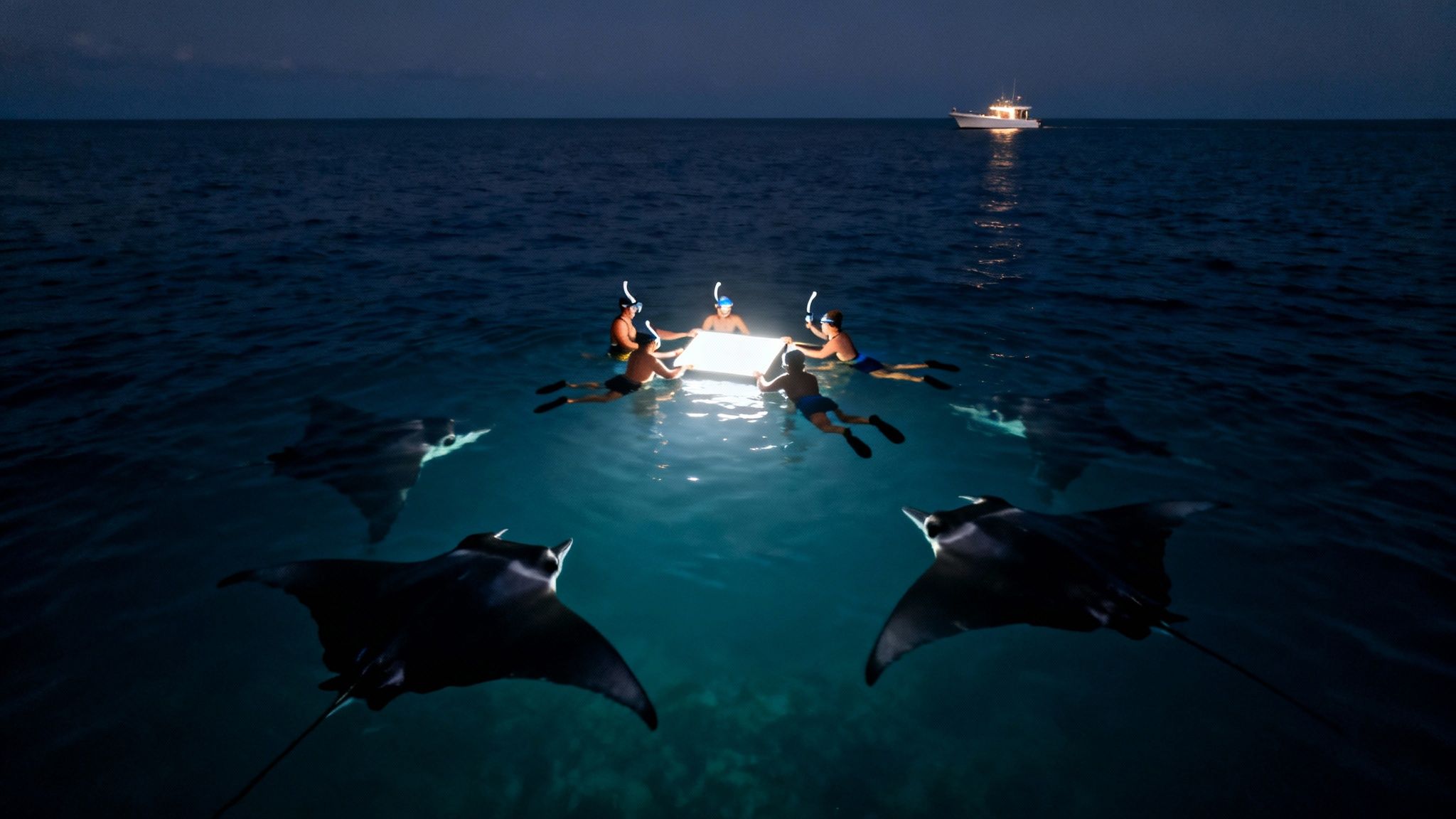
Snorkelers get an equally mind-blowing perspective from the surface. You'll hold onto a custom-made floatation board equipped with its own bright lights. This illuminates the water directly beneath you, attracting mantas to glide, swoop, and barrel-roll just inches from your mask. It’s a front-row seat to one of nature's greatest ballets.
The entire encounter is designed around passive observation. Whether you're on the seafloor or at the surface, you stay in one spot. This lets the mantas approach on their own terms, creating a truly natural and non-invasive experience for everyone—especially the rays.
This carefully choreographed dance protects these magnificent creatures while giving you a view that will stay with you forever. It’s all about respect and sustainable interaction.
Ready to see this incredible show for yourself? The 2-Tank Manta Dive with Kona Honu Divers is a premier experience that includes a beautiful twilight reef dive before the main event.
The Science and Conservation Behind the Magic
The manta ray night dive in Kona isn't just an incredible spectacle; it’s a beautiful marriage of marine biology and thoughtful ecotourism. The science behind this nightly ballet is actually pretty straightforward. Bright lights placed on the ocean floor act like a giant beacon, drawing in clouds of plankton—the favorite meal for Kona’s resident Reef Manta Rays (Mobula alfredi).
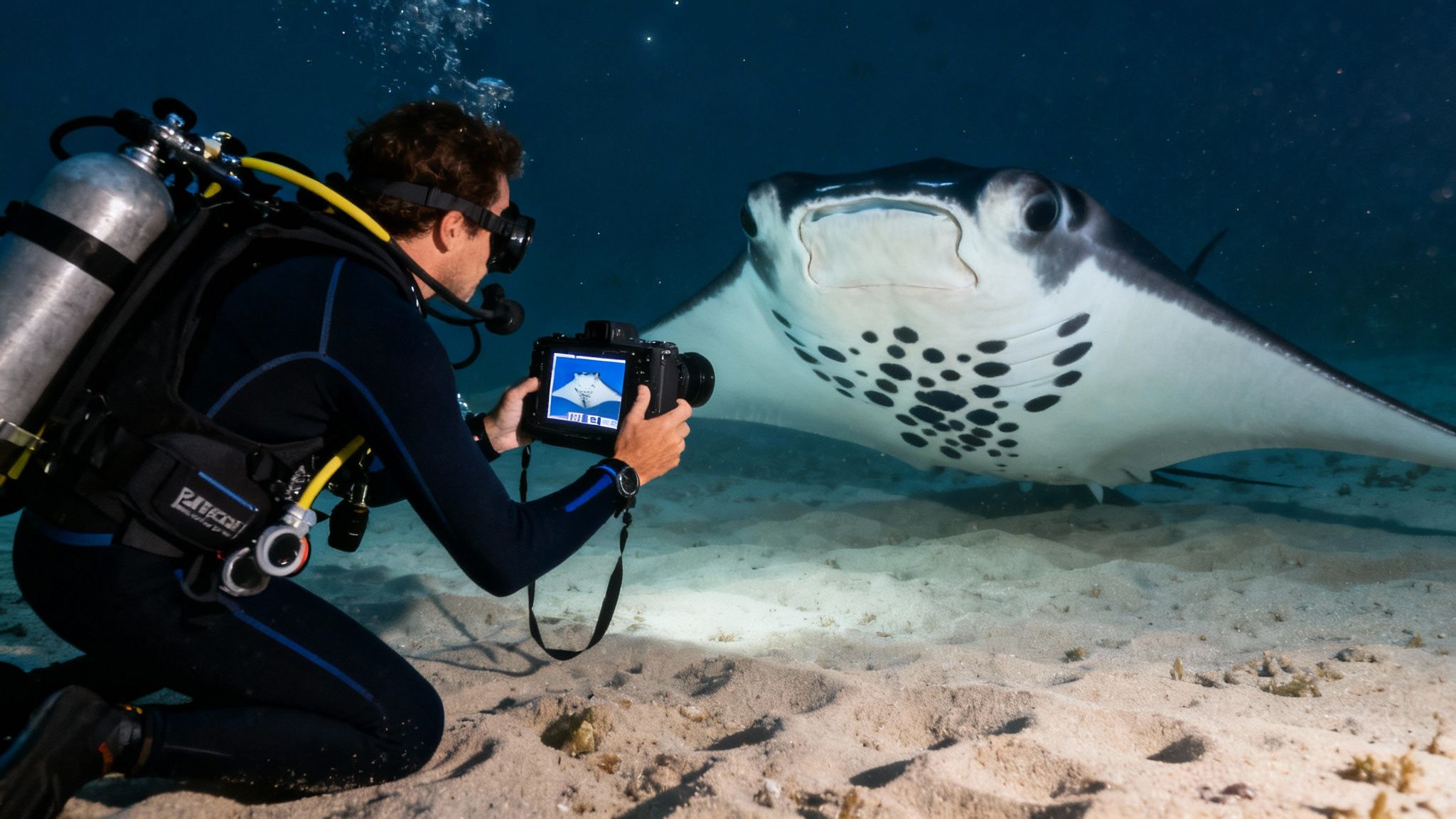
This reliable, all-you-can-eat plankton buffet has turned the dive site into a remarkable living laboratory. For decades, the consistent gathering of mantas has powered groundbreaking research, creating a unique collaboration between scientists and local dive professionals. Together, they’ve built a massive photo-identification catalog by capturing images of the unique spot patterns on each manta's belly, which are as distinct as a human fingerprint.
From Adventure to Citizen Science
This incredible long-term effort has identified over 300 individual manta rays in the local population, and each one has been given a name! When you go on one of these tours, you’re not just a passive observer; you're actively contributing to a massive citizen science project. Your participation supports the very event that allows researchers to study manta behavior, migration, and lifecycles without ever needing to use invasive methods.
This synergy between tourism and research has led to some major wins for conservation. The data collected from the Kona manta dives is a scientific goldmine, with researchers cataloging those 300+ individuals across more than 10,000 sightings. It's an effort that started way back in the 1980s with dive pros simply snapping photos, and it has directly influenced statewide conservation policies, like installing mooring buoys to protect the fragile reefs. You can learn more about this incredible research partnership and the difference it has made.
Upholding a Sustainable Future
To make sure this experience remains a positive one for the mantas, strict guidelines have been put in place by responsible operators. The rules are all designed to create a completely non-invasive encounter, always putting the well-being of the animals first.
The golden rule is passive observation. Divers and snorkelers are taught to stay in their spot and never touch, chase, or block the mantas' path. This simple principle is what turns a thrilling adventure into a truly meaningful and respectful wildlife encounter.
These standards are always being refined as we learn more about these gentle giants. Local operators and conservation groups are constantly working together to push for best practices, ensuring this magical dive can be sustained for generations to come. For a closer look at these ongoing efforts, check out Kona Honu Divers' open letter regarding proposed manta rules.
Of course, the manta dive is just one piece of Kona’s incredible underwater world. For certified divers looking to see more, there are plenty of other amazing experiences waiting. You can learn more about advanced diving opportunities that take you to remote lava tubes and pristine deep reefs.
How to Choose the Best Manta Ray Night Dive Tour
Let’s be honest, this isn't just another dive—it's a bucket-list experience. Picking the right tour operator for your manta ray night dive in Kona is the single most important decision you'll make, and it can genuinely make or break your trip. You're not just booking a boat ride; you're investing in safety, expertise, and a genuine connection with these amazing animals.
When you start looking, you'll see a lot of options, but a few operators consistently rise to the top. Take Kona Honu Divers, for example. Their crew brings a staggering 200+ years of combined local diving experience to the table. That's not just a number—it's an incredible depth of knowledge about Kona's waters, the mantas' behavior, and how to run a night dive safely and smoothly.
What Sets the Best Apart
So, what should you actually look for? Beyond just experience, the quality of the boat and the gear makes a massive difference in your comfort and safety. The top outfits run custom-built dive boats, not repurposed fishing vessels. This means more space to move around, easier ways to get in and out of the water (especially in the dark!), and a more stable ride.
When you're comparing your options, keep an eye out for these key details:
- Complimentary Nitrox: If you're certified, this is a huge perk. It extends your bottom time, giving you more precious minutes with the mantas.
- Small Group Sizes: This is critical. A smaller group means less chaos underwater, more personal attention from the guides, and a much better, safer view of the action.
- Custom-Built Boats: Look for boats designed for divers. This shows a serious commitment to the experience and your comfort from start to finish.
It all boils down to a company's dedication to getting every detail right. Don't just take our word for it, though. The best way to gauge an operator is to see what other divers are saying.
Ready to lock in an adventure with a team that's known for excellence? You can book one of the most highly-rated manta ray dive tours in all of Kona and see for yourself.
Your Manta Ray Night Dive Questions, Answered
Thinking about diving with Kona's famous manta rays? It's a life-changing experience, but it's natural to have a few questions before you take the plunge. We've been doing this for a long time, and we've heard them all.
Let's clear up some of the most common queries so you can feel totally prepared and ridiculously excited for your underwater adventure.
Is the Manta Ray Night Dive Safe?
It's incredibly safe. In fact, safety is the foundation of every single trip we run. The first thing to know is that the manta rays themselves are completely harmless. They're often called the "butterflies of the sea" for a reason—they are true gentle giants.
These magnificent creatures are filter feeders, meaning they don't have teeth, stingers, or barbs. They are only interested in the clouds of plankton that gather in our lights, so they simply glide past divers and snorkelers without a care. On top of that, professional outfits like Kona Honu Divers run a tight ship with detailed safety briefings, experienced guides in the water with you, and strict procedures to protect both you and the mantas.
Do I Need to Be a Certified Diver?
Nope! That's one of the best things about this experience—it's just as amazing for snorkelers as it is for scuba divers. You don't need any special certification to get in on the action.
If you're snorkeling, you'll hang on to a custom-made floatation board that has powerful lights shining down into the dark water. This light is like a dinner bell, attracting plankton and bringing the mantas right up to the surface. They'll swoop, turn, and do barrel rolls just inches beneath you. It’s an unforgettable, front-row seat.
What’s the Best Time of Year for the Manta Dive?
Honestly, any time is a good time. The Kona manta population is here year-round; they don't migrate. We're fortunate to have a large, resident group of these animals who have come to rely on the "plankton buffet" created by the dive lights every night.
This has created one of the most reliable wildlife encounters on the planet. Sighting success rates are consistently high no matter when you visit. You don't need to plan your entire Hawaiian vacation around a specific "manta season," because pretty much every night is a great night to meet them.
The Kona manta ray night dive is world-famous for its reliability, boasting 85-90% sighting success rates all year long. Top-tier operators run these trips on spacious, custom-built boats at prime sites like Garden Eel Cove, which historically sees an average of over 11 mantas per night. While nightly counts can fluctuate, recent logs show just how consistent it is—some nights in June have been explosive, with 17 to 33 mantas making an appearance! This just goes to show why it's a can't-miss activity. You can read more about these incredible manta sightings in Kona on our blog.
What Should I Bring on the Tour?
You can travel pretty light, as the pros provide all the essential gear you'll need, including wetsuits. That said, a few personal items will make your trip much more comfortable.
Here’s a quick checklist of must-haves:
- A Towel: You’ll definitely want this for drying off when you get back on the boat.
- Warm, Dry Clothes: Don't underestimate how chilly the boat ride back can be after a night swim. A sweatshirt or jacket is a lifesaver.
- Reef-Safe Sunscreen: If your trip leaves before sunset, make sure your sunscreen is the kind that won't harm our delicate coral reefs.
- Personal Items: Bring along any medications you might need or other small personal effects.
Come prepared with these basics, and you can focus on the pure magic happening in the water. A great tour, like the 2-Tank Manta Dive with Kona Honu Divers, will handle everything else to ensure your night is absolutely perfect.