
The manta ray night dive in Kona is hands-down one of the most reliable and jaw-dropping wildlife encounters you can find anywhere on Earth. Picture this: you're settling onto the ocean floor in the warm, dark Pacific, and suddenly, giant manta rays with wingspans reaching over twelve feet begin to swoop and glide just inches above your head. It’s a stunning underwater ballet, and in Kona, it happens almost every single night.
Experience Kona’s World Famous Manta Ray Night Dive
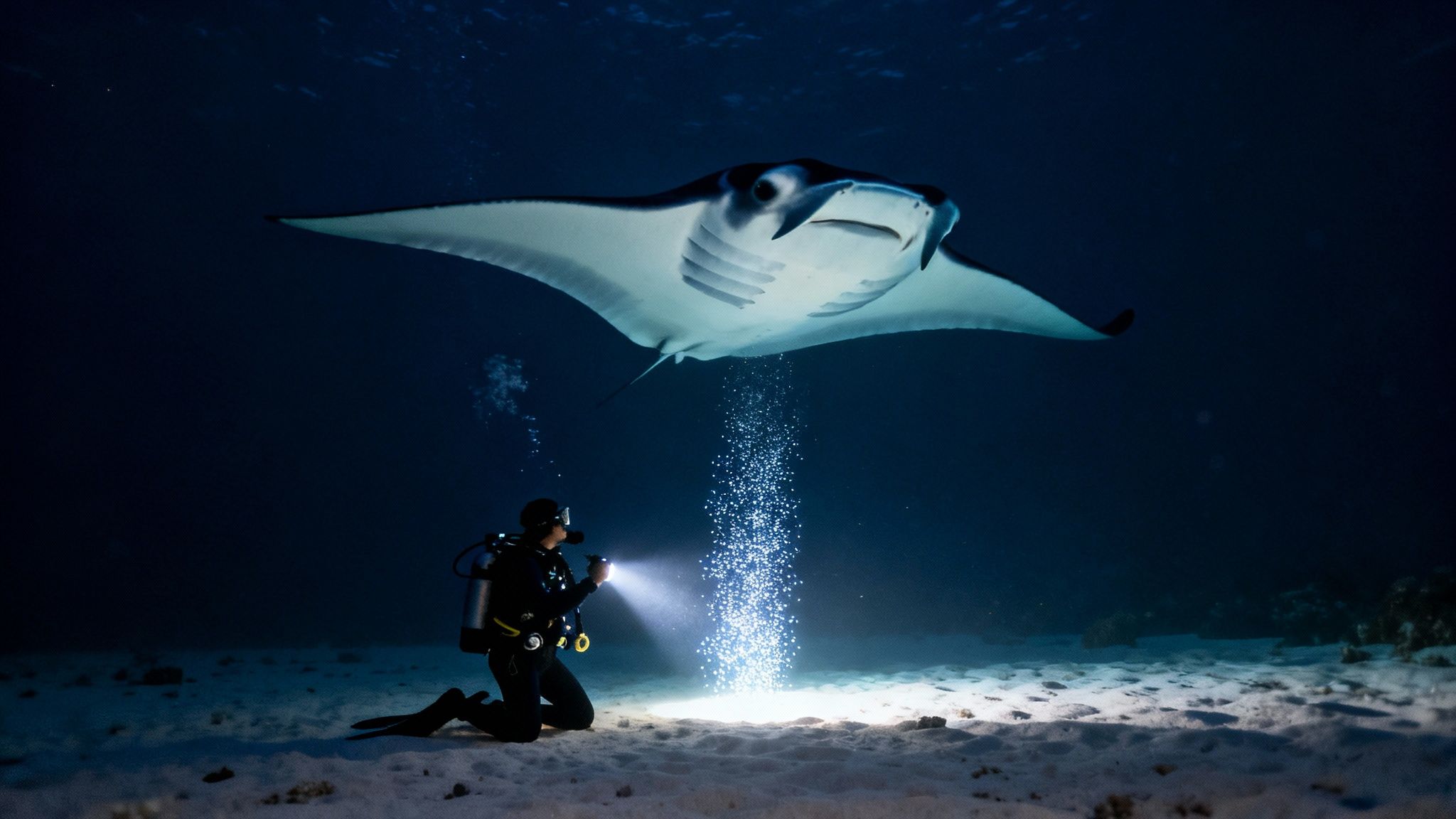
The whole thing actually started by accident. Decades ago, a hotel on the coast lit up its oceanfront area, and those lights attracted swarms of plankton. It didn't take long for the local manta rays to discover this easy buffet, and divers soon followed. Just like that, a world-famous adventure was born.
Fast forward to today, and the experience has been refined into a well-managed, sustainable encounter. Top-notch operators like Kona Honu Divers have perfected what we call the "underwater campfire." Divers and snorkelers gather around a powerful, eco-friendly light source that attracts the plankton, creating a dependable feeding spot for the mantas. This nightly show has become a huge part of Kona's identity, drawing people from all over the globe.
What Makes Kona So Special for Manta Rays?
Sure, you can see manta rays in other parts of the world, but nowhere else offers an encounter this predictable and this close. It all comes down to a perfect mix of geography and the unique behavior of the local manta population.
- A Reliable Buffet: The underwater lights create a consistent, all-you-can-eat plankton feast, bringing the mantas back to the same spots night after night.
- Sheltered Bays: Kona’s coastline has naturally protected bays that shield the dive sites from rough currents, making for much calmer and safer conditions.
- A Homebody Population: The mantas here are reef mantas that don't migrate. Researchers have actually identified and named over 300 individuals who live here year-round!
This powerful combination leads to an incredibly high success rate. In fact, most nights have an 85-90% chance of a manta sighting, which is almost unheard of for wild animal encounters. Research tracking over 10,000 sightings found some nights with as many as 33 mantas at once! This consistency is what makes the experience so special—it's not just a dive; it's a bucket-list adventure you can count on.
To give you a quick snapshot, here’s what the Kona manta ray night dive is all about.
Kona Manta Ray Night Dive At a Glance
This table summarizes the essential details of the manta ray night dive experience in Kona, giving you a quick overview of what makes it a must-do adventure.
| Feature | Details |
|---|---|
| Location | Kona Coast, Big Island, Hawaii |
| Sighting Success Rate | 85-90% year-round, making it one of the most reliable wildlife encounters in the world. |
| Manta Ray Species | Reef Manta Rays (Mobula alfredi), a non-migratory species. |
| Wingspan | Adults can have wingspans of 12 to 16 feet (4-5 meters). |
| Activity | Divers and snorkelers use lights to attract plankton, which the mantas then feed on in a mesmerizing underwater "ballet." |
| Best Time to Go | The experience is offered year-round with consistent success. |
| Key Dive Sites | Manta Village (Keauhou Bay), and the superior site, Garden Eel Cove (Manta Heaven). |
| Conservation Status | Manta rays are listed as "Vulnerable." Operators in Kona follow strict guidelines to ensure the animals' safety and well-being. You can learn more about the history and success of the Kona manta dive. |
This is truly a one-of-a-kind experience, and this guide will walk you through everything you need to know to see it for yourself—from picking the right spot to getting ready for an unforgettable night with Kona's gentle giants.
Why Garden Eel Cove Is The Best Place to See Manta Rays
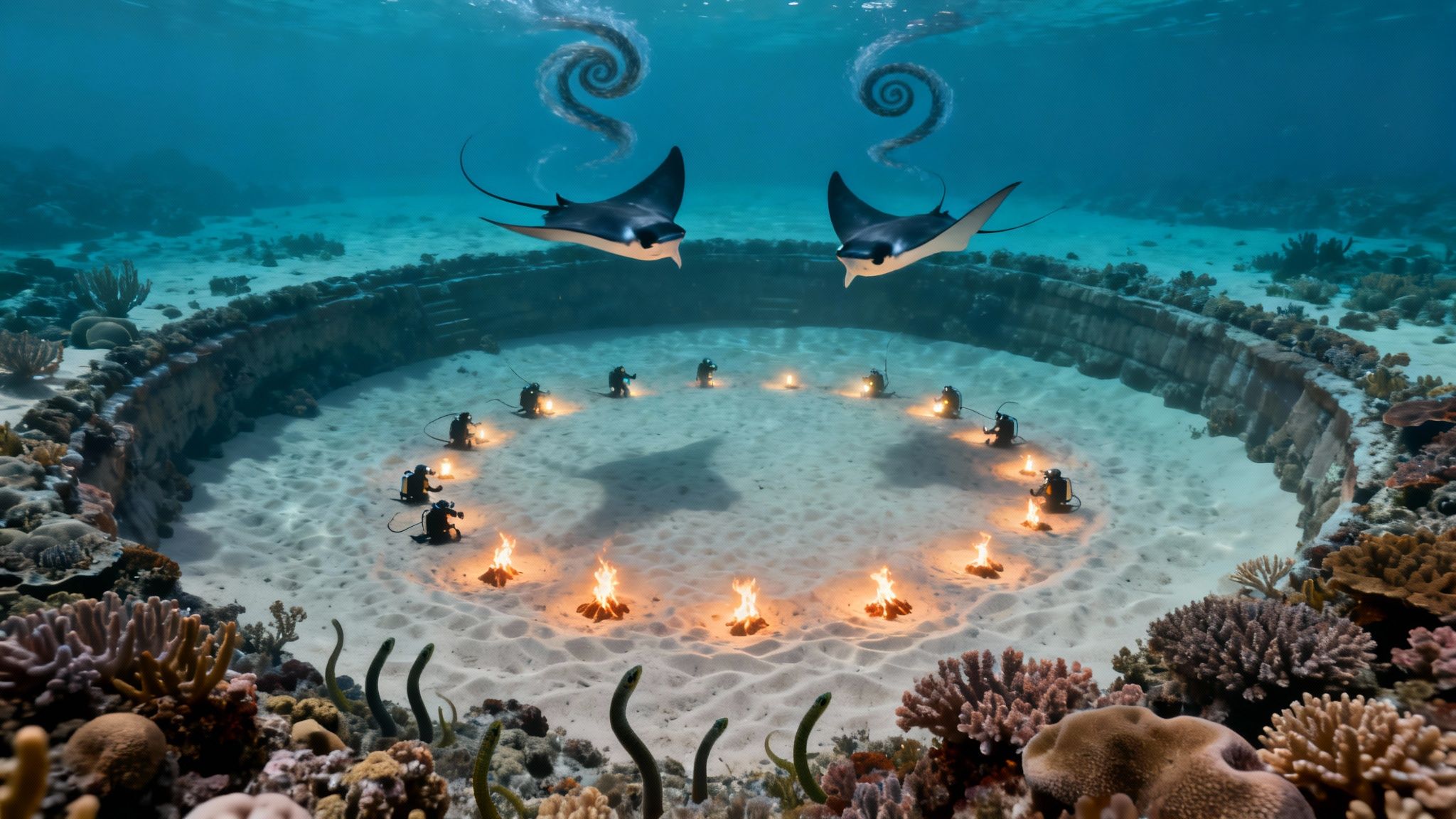
The Kona coast has a few spots where you can experience the world-famous manta ray night dive, but let's be clear: they are not all the same. If you're looking for the most consistent, awe-inspiring encounter, one location is hands-down the superior choice: Garden Eel Cove.
We affectionately call it 'Manta Heaven,' and it’s the go-to spot for top-tier operators like Kona Honu Divers. There are some very good reasons why.
First off, the geography here is a game-changer. The cove is naturally tucked away, giving it fantastic protection from the big ocean swells. This means the water is almost always calmer and clearer—a huge plus for divers and snorkelers. Less surge makes for a much more comfortable and stable viewing experience, so you can just relax and enjoy the show.
An Underwater Amphitheater
What truly sets Garden Eel Cove apart is what’s on the bottom. The seafloor is a wide, sandy basin that forms a perfect natural amphitheater. When you join a manta ray dive tour here, your guides will have everyone settle in a semi-circle right on the sand.
Once everyone is in place, you’ll point your dive lights straight up. Together, all those beams create a massive column of light that looks like a bonfire blazing underwater. This intense light is an irresistible beacon for plankton, drawing in thick clouds of it from the surrounding water.
This isn't just about attracting plankton; it’s about setting the stage. The mantas glide in to feast on the plankton "campfire" and perform their incredible feeding ballet right above your head. Every single person gets a front-row seat. It's an up-close, personal, and profoundly moving view that other sites just can't consistently deliver.
This organized setup is a world away from other spots that might be exposed to strong currents or don't have a good place for divers to gather. At those sites, the experience can feel scattered and the encounters far less predictable.
More Than Just the Main Event
Garden Eel Cove isn't a one-trick pony. The surrounding reef is vibrant and full of life, which is why most trips here include a "warm-up" dive just before sunset. It's your chance to explore the beautiful coral gardens and see the critters that give the cove its name—the quirky garden eels poking their heads up from the sand.
This incredible biodiversity makes the whole trip more rewarding. It’s not just about the mantas; it's a full-on Kona diving experience. To see why this place is so legendary, you can learn more about Manta Ray Heaven at Garden Eel Cove on our site.
The combination of a healthy reef, reliable manta sightings, and perfect viewing conditions is unbeatable. That's why choosing an operator like Kona Honu Divers, who makes this premier site their home base, is your best bet for a truly unforgettable night.
Choosing Your Adventure: Scuba Dive Or Snorkel?
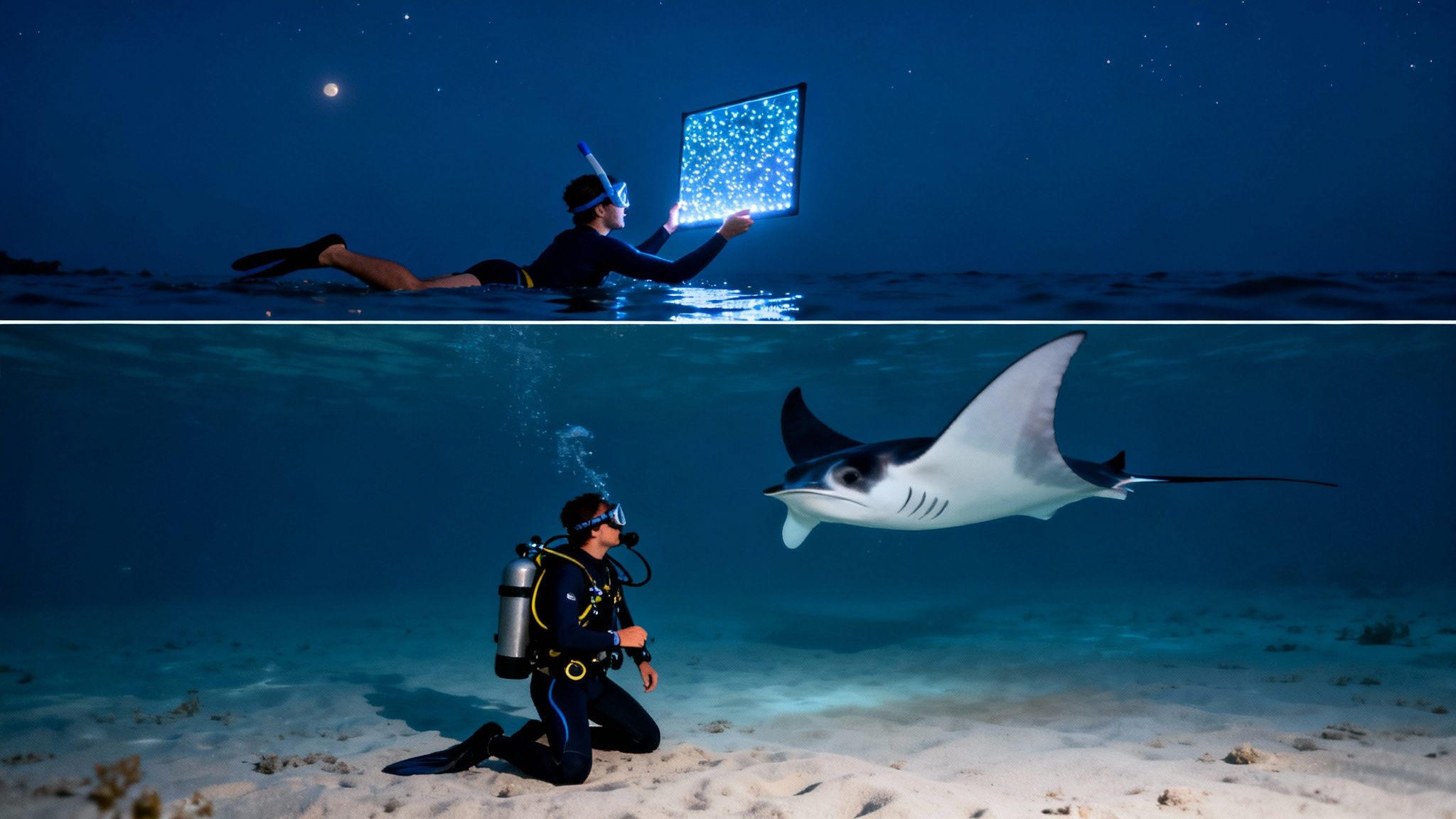
So, how do you want to see the famous manta ballet? The real beauty of the manta ray night dive Kona experience is that you don't have to be a seasoned diver to get a world-class view. There are two fantastic ways to join the adventure: as a certified scuba diver or as a snorkeler.
Each option gives you a completely unique—and equally breathtaking—perspective on this natural wonder. Your choice really just boils down to your comfort level in the water and the kind of view you're hoping for. The best part? Top-notch operators like Kona Honu Divers have it all figured out, hosting both groups on the same boat so everyone in your party can join in, no matter their experience.
The Scuba Diver's Front-Row Seat
For certified scuba divers, this is about as immersive as it gets. After a quick descent to the sandy ocean floor, you'll settle into your spot in the "campfire" circle with your group. From there, you just kneel or sit comfortably at about 30-40 feet deep and shine your dive light straight up. It feels like you've scored a front-row seat to one of nature's greatest shows.
Looking up from the bottom is just awe-inspiring. The mantas, some with wingspans stretching over 12 feet, glide right into the beams of light created by the divers. They perform these mesmerizing barrel rolls just a few feet above your head, their huge mouths open to scoop up the clouds of plankton. It’s an incredibly intimate and humbling encounter that places you right in the middle of their underwater ballroom.
The Snorkeler's Face-To-Face Encounter
Don't have a scuba certification? No problem. The view from the surface is every bit as spectacular. As a snorkeler, you'll float comfortably at the surface, holding onto a specially designed light board.
Think of these boards as floating rafts armed with powerful, downward-pointing lights. They create a bright beacon that pulls the plankton right up to you. All you have to do is hold on, put your face in the water, and watch the magic happen. The mantas swoop up from the dark depths to feed on the plankton concentrated by your board, often coming within inches of the surface. This creates a thrilling, face-to-face view that feels incredibly personal.
This option is absolutely perfect for families, couples with different certification levels, or anyone who just feels more comfortable staying at the surface. You get all the magic without the scuba gear, making it a wonderfully inclusive way to see the mantas.
So, which one is right for you? There are definite pros to each, and knowing the difference will help you pick the perfect Kona adventure.
Comparing Your Options: Dive vs. Snorkel
To help you decide, here’s a quick breakdown of what to expect from each experience.
| Feature | Scuba Diving | Snorkeling |
|---|---|---|
| Perspective | A bottom-up view. You’ll be looking at the mantas' undersides as they roll right over you. | A top-down view. You’ll watch the mantas swim up from the depths toward you at the surface. |
| Proximity | Extremely close. They often pass just a few feet away. | Incredibly close. Expect face-to-face encounters right at the surface. |
| Requirements | Scuba certification is a must (Open Water or equivalent). | No certification needed! Just be comfortable swimming. |
| Best For | Certified divers who want a fully immersive, bottom-dwelling experience. | Families, non-divers, and anyone who prefers to stay on the surface. |
| Physical Effort | Involves wearing full scuba gear and managing your buoyancy underwater. | Minimal effort. You simply hold onto a stable, floating light board. |
Ultimately, there's no wrong way to see the mantas in Kona. Both diving and snorkeling provide a front-row ticket to an absolutely unforgettable natural spectacle.
If you're still on the fence, you can explore our detailed guide on whether it is better to snorkel or dive with manta rays to help lock in your decision. No matter what you choose, you're in for an evening of pure wonder.
What To Expect On Your Manta Dive With Kona Honu Divers
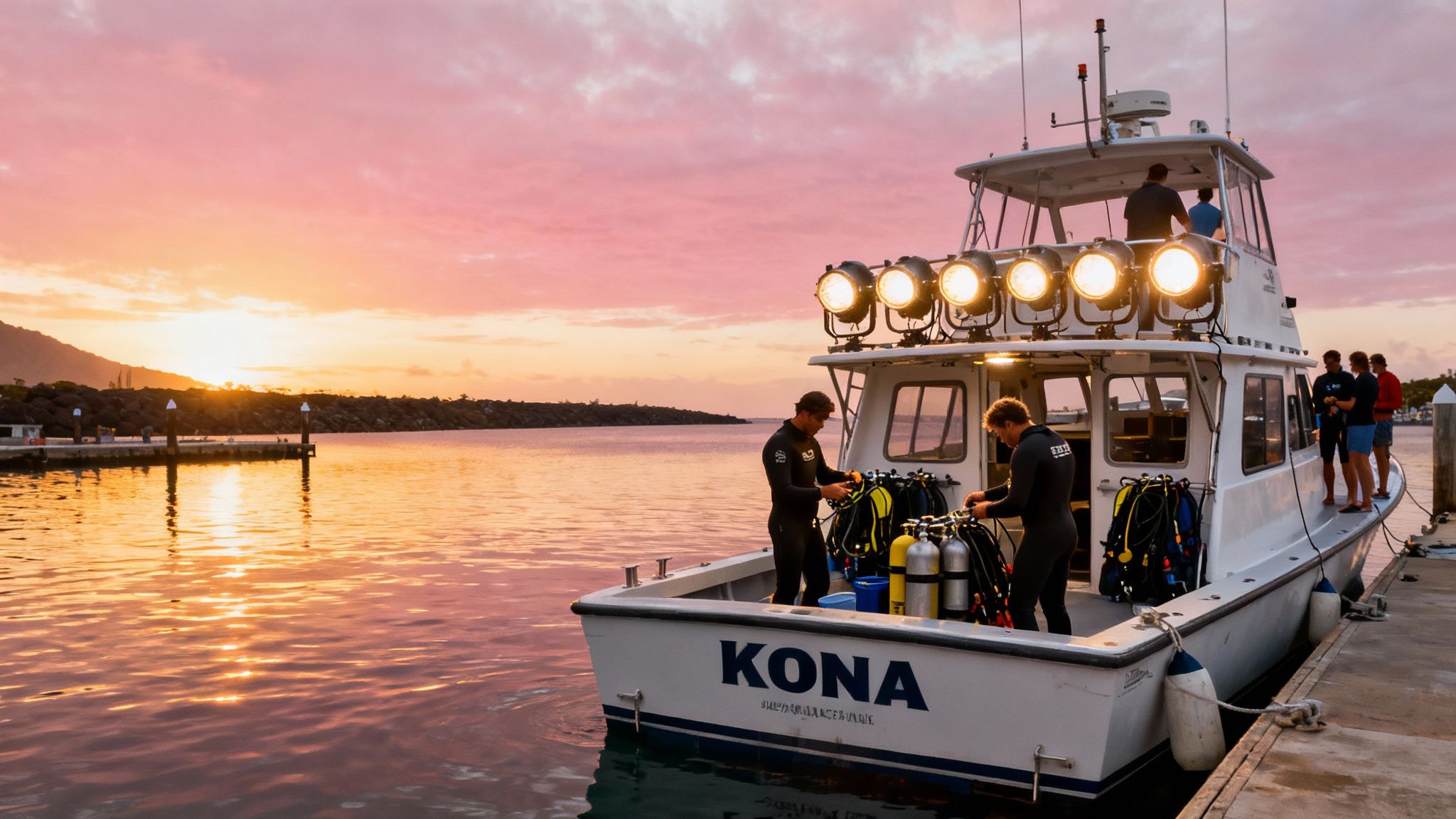
So you've booked your manta ray night dive in Kona—what happens next? The real adventure with Kona Honu Divers kicks off the moment you arrive at the harbor. We've designed the entire trip to be smooth, safe, and absolutely unforgettable, from your first hello to the moment you're back on land, still buzzing from the experience.
Your evening starts with a warm welcome from the Kona Honu Divers crew. The check-in is quick and friendly, setting a relaxed vibe right away. As the boat readies for departure, you can feel the anticipation building, timed perfectly to catch a spectacular Hawaiian sunset over the Pacific.
The boat ride out to the dive site is a treat in itself. While you're soaking in the incredible colors of the sunset, the crew will walk everyone through a detailed safety and procedural briefing. They cover everything: how the dive works, how the gear functions, and—most importantly—how to interact respectfully and safely with the manta rays. It’s this focus on both diver safety and marine conservation that really sets Kona Honu Divers apart.
Gearing Up For The Main Event
As we get closer to the site, you can feel the energy on the boat start to ramp up. The crew helps everyone get fitted into high-quality gear, including wetsuits to keep you comfortable as the evening water cools. It doesn't matter if you're a divemaster or a first-time snorkeler; the team makes sure you feel confident and ready.
Once the boat is moored, the crew sets up the powerful underwater lights that create the "campfire"—the dinner bell for the mantas. These lights attract clouds of plankton, and the mantas follow close behind. Then, it's go-time. Guided by our pros, you'll slip into the water and find your spot for the show of a lifetime.
A Commitment To Excellence You Can See
The professionalism and genuine passion of the Kona Honu Divers crew truly make this adventure special. Their deep knowledge of the local marine life and dedication to giving you a world-class experience shines through in everything they do. But don't just take our word for it—the glowing reviews from fellow divers say it all.
People come from all over the globe for this. In fact, around 80,000 people travel to the Big Island every year just for a chance to see this underwater ballet, making it a massive part of our local marine tourism. The reason it's so popular is its incredible reliability. The success rate for seeing mantas is consistently above 80-90%, meaning you have an excellent shot at an up-close encounter. This is all thanks to a healthy, resident manta population and the well-managed eco-tours that make it possible.
The Perfect Ending To A Perfect Night
After an amazing 45 to 60 minutes in the water with these gentle giants, you’ll head back to the boat feeling completely awestruck. But the trip isn't over yet. The crew welcomes you back with hot cocoa and snacks, which is the perfect way to warm up and swap stories about what you just witnessed. The comfortable ride back to the harbor gives you a moment to just soak in the magic of the night.
The whole trip is crafted to be more than just a dive; it’s a complete experience. To get all the details, check out our guide on what to expect on the Manta Ray Night Dive with Kona Honu Divers.
Ready to see it for yourself?
How To Prepare For Your Kona Manta Dive
A little bit of prep work can make the difference between a good trip and an unforgettable one. The great news is that top-notch dive operators like Kona Honu Divers take care of all the heavy lifting for you, so you don't have to sweat the big stuff.
They’ll have all the essential gear ready to go: tanks, weights, BCDs, regulators, and dive lights. If you're a certified diver, Kona Honu Divers even throws in nitrox for free, which helps you safely extend your time watching the show. Still, you’ll want to pack a small bag with a few personal items to guarantee you’re comfortable from start to finish.
Your Personal Packing Checklist
Here’s a simple list of things to bring for maximum comfort. Trust me, you'll be glad you have that warm jacket on the boat ride back after the sun goes down!
- Swimsuit: The easiest approach is to just wear it under your clothes when you show up at the dock.
- Towel: An obvious must-have for drying off.
- A Warm Jacket or Sweatshirt: This is a big one. Even after a warm day, the ride home on the water can get surprisingly chilly once you’re wet.
- Reusable Water Bottle: Always a good idea to stay hydrated.
- Seasickness Medication: If you're even slightly prone to motion sickness, take your preferred remedy before you get on the boat. The dive sites are in calm, protected coves, but the ocean can be choppy on the way there.
The water in Kona stays a pretty consistent 75-80°F (24-27°C) all year. Kona Honu Divers provides really nice, thick wetsuits to keep you toasty underwater, but having that dry, warm layer for the trip back is a true game-changer.
A Few Tips for Underwater Photographers
Hoping to get that perfect shot of the manta ballet? Capturing these animals at night is a unique challenge, but totally doable with the right setup.
The key is to use continuous video lights instead of strobes. The sudden flash from a strobe can startle the mantas and interrupt their feeding, which we want to avoid. A steady, constant light source, on the other hand, lights them up perfectly without being disruptive. You’ll also want to bump up your camera’s ISO and open up the aperture to let in as much light as possible. This will help you get those crisp, clear images you're after.
The Most Important Rule: Respect The Mantas
More important than any piece of gear is your mindset. We are visitors in their world, and it’s our job to be respectful guests. Manta rays are covered in a very delicate, paper-thin layer of mucus that acts as their immune system, protecting them from infection.
That’s why the number one rule on any manta ray night dive in Kona is simple: Do not touch the mantas. Touching them can strip away that protective coating and cause them serious harm. Your dive guide will instruct you on how to position yourself—either on the seafloor as a diver or holding onto a light board at the surface as a snorkeler. From there, just stay put and let the gentle giants come to you. By following this one crucial rule, we ensure the experience is safe for everyone and helps preserve this incredible natural wonder for many years to come.
Beyond The Mantas: Other Kona Night Diving Adventures
Think the magic in Kona ends when the mantas swim off into the darkness? Think again. For certified divers, the world-famous manta ray show is really just the opening act. Once the sun goes down, the ocean here transforms, revealing a completely different cast of characters and breathtaking scenes.
If you’re looking to explore what else comes out to play after dark, we offer a few specialized night dives that are truly next-level. These aren't your average reef tours; they take you into the mysterious heart of the Pacific to witness phenomena you have to see to believe.
The Famous Kona Blackwater Dive
Picture this: you're floating in the vast, inky-black open ocean, miles from the glimmer of shore lights. This is the Kona Blackwater Dive, and it’s as surreal and unforgettable as it sounds. Some call it a "pelagic magic carpet ride," and that's not far off.
Tethered securely to the boat, you'll drift over thousands of feet of water, watching one of the planet's largest migrations happen right before your eyes. Tiny, often bioluminescent, creatures rise from the crushing depths to feed near the surface. You’ll see things that look like they were dreamed up for a sci-fi film—transparent larval fish, pulsating jellies, and bizarre cephalopods. It's an adventure for the truly curious.
Ready to see what's lurking in the deep? Learn more about our Blackwater Dive tour.
Advanced Night Dives for Experienced Divers
Already comfortable in the dark? If you’re a seasoned night diver looking for a new challenge, Kona’s rugged underwater landscape has plenty to offer beyond the well-lit manta sites. We run premium advanced dive tours that explore the island’s wilder side after sunset.
These dives will take you to pristine deep reefs and dramatic lava tube formations that very few people ever get to see at night. This is where you’ll find a different slice of nightlife—eels on the hunt, parrotfish sleeping in their protective cocoons, and maybe even a shy octopus out foraging. These sites demand excellent buoyancy and a solid comfort level with the dark, but the payoff is an incredible sense of exploration.
If you’re ready to take the next step, you can check out the details on our premium advanced dive tours.
Whether you’re drifting through the abyss or navigating a lava tube, Kona's night diving scene has something incredible waiting for any certified diver ready to keep exploring after the sun goes down.
Your Manta Dive Questions, Answered
It’s only natural to have a few questions before an adventure as unique as the **manta ray night dive in Kona**. Even the most experienced divers and snorkelers come with questions. Here are the answers to the most common ones we hear, so you can head out on the water feeling excited and prepared.
Is The Manta Ray Dive Safe?
Absolutely. Manta rays are often called "gentle giants" for a good reason—they have no stingers, barbs, or teeth, and they pose zero threat to people. When you go with a top-notch operator like Kona Honu Divers, safety is the number one priority. You'll get a thorough briefing before you even hit the water, use high-quality gear, and have expert guides with you every step of the way, making sure everyone feels comfortable and secure.
What Happens If We Don’t See Any Mantas?
This is a very rare scenario, but it's important to remember we're dealing with wild animals, not a theme park attraction. The sighting success rate is consistently sky-high, often over 90%. That said, on the off chance the mantas don't show up for dinner, most great tour companies will let you come back another night for free or for a steep discount. A pro tip: try to book your manta dive for one of your first nights in Kona, which gives you more flexibility to reschedule if needed.
How Deep Is The Manta Ray Night Dive?
One of the best things about this dive is that it's not a deep-water challenge. For scuba divers, the experience is wonderfully mellow, taking place in just 30 to 40 feet (about 9-12 meters) of water. You'll settle in on the sandy ocean floor and simply look up as the show unfolds above you. Snorkelers have an equally amazing view from the surface, holding onto a specially designed light board that attracts the mantas.
What Time of Year Is Best for Seeing Mantas?
There's truly no "off-season" here. The manta rays that frequent Kona are residents; they live here year-round and don't migrate. So, whether you visit in the summer or winter, the mantas will be there. While the water is often a bit calmer during the summer months (April to October), you can count on a spectacular show any night of the year.
This incredible consistency is what makes the manta ray night dive in Kona a world-famous wildlife encounter. Researchers have been tracking the local population for decades, cataloging over 300 individual mantas and logging more than 10,000 sightings since 2009 alone! The secret is Kona's unique geography, which creates protected bays that trap plankton-rich water—a reliable, all-you-can-eat buffet for our resident population of over 450 mantas. To get a deeper look at the science, you can explore the science behind Kona’s world-famous manta encounters.
Can I Touch The Manta Rays?
No. This is the golden rule of the manta dive, and it’s for their protection. Manta rays have a special mucus coating on their skin that acts like their immune system, protecting them from harmful bacteria. Touching them can rub off this protective layer and make them vulnerable to disease. The best operators will be very clear about this: look, but don't touch. You'll still get breathtakingly close without ever needing to make contact.
Ready to see this underwater ballet for yourself? Here at Kona Honu Divers, we live and breathe for this stuff. Our mission is to give you a safe, respectful, and truly unforgettable night. From our seasoned crew to our amazing spot at Garden Eel Cove, we've fine-tuned every part of the trip to ensure you have the best possible experience. Book your spot and get ready for a memory that will last a lifetime. Check out all of our Kona diving tours to find your next adventure.