
Looking for the ultimate manta ray night dive kona experience? At Garden Eel Cove, Kona Honu Divers brings you up close to manta rays swirling over plankton-charged pools. It’s a bucket-list dive built on easy entry and spectacular marine encounters.
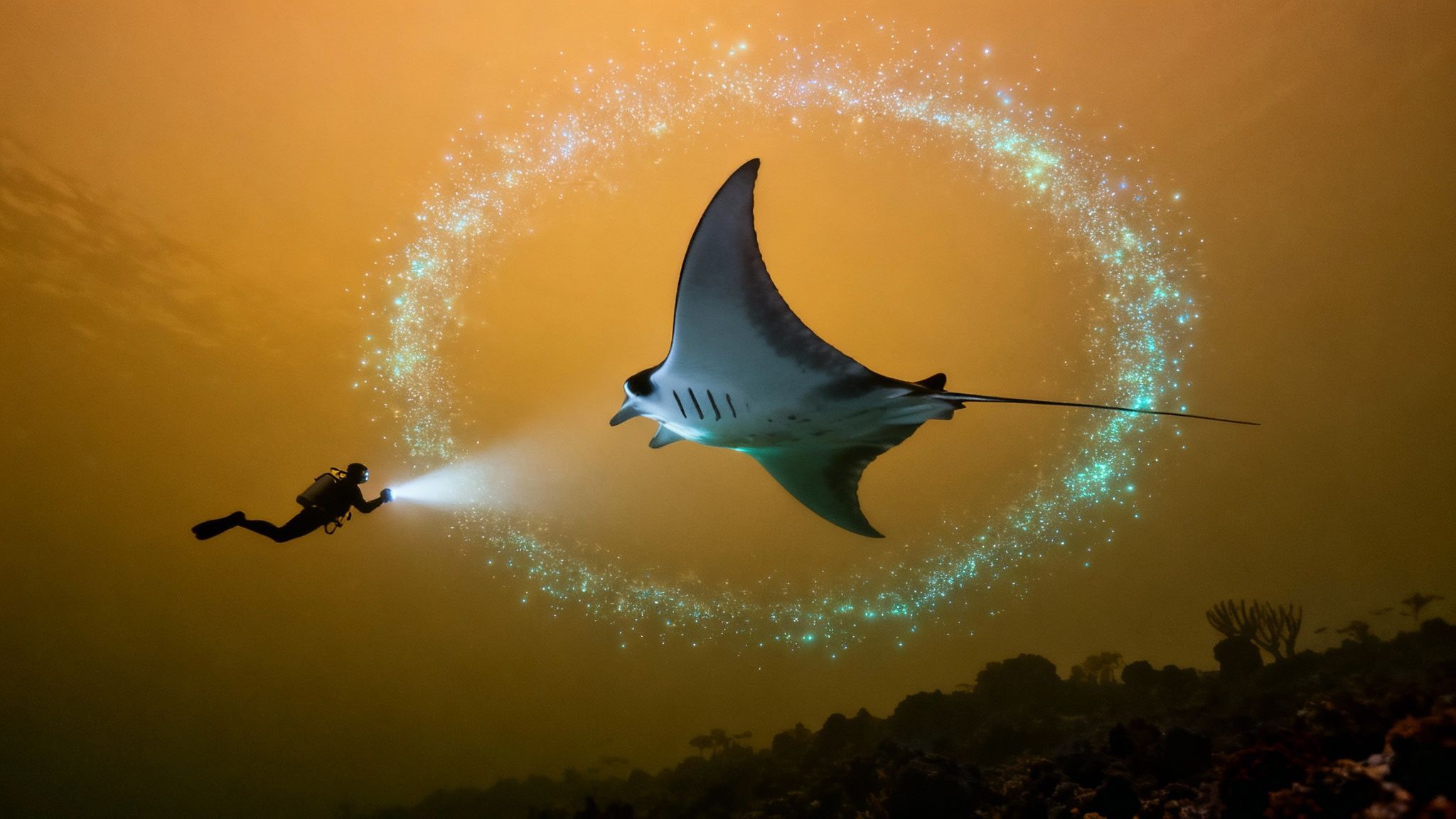
Garden Eel Cove sits in a sheltered bay just off Kona’s coast. Calm seas and thriving reefs set the stage for filter-feeding mantas to dance in the glow of your dive lights.
Those lights lure microscopic plankton, and before you know it, mantas are gliding overhead like underwater ballet performers. Visibility is crystal clear on this sandy bottom, making every swoop and turn easy to follow.
- 85–90% sighting rates at this protected cove
- Warm water temperatures around 75–78°F
- Up to a dozen mantas feeding in a single dive
- Wide, sandy floor with excellent visibility
- Healthy reef ecosystem teeming with life
This guide walks you through everything—from safety essentials to advanced photography tips. You’ll find gear checklists, best practices in the water, conservation notes, and step-by-step planning advice. By the end, you’ll be ready to dive in with confidence.
Ready to reserve your spot on the official two-tank manta ray dive tour with Kona Honu Divers? Learn more and book at two-tank manta ray dive tour.
Why Garden Eel Cove Stands Out
Natural rock barriers here keep currents gentle, so you’re free to focus on the mantas above. The clear, sandy bottom offers unobstructed views—no coral heads to dodge, just open water for these giants to feed.
Compared to Manta Village or Manta Heaven, Garden Eel Cove delivers more intimate encounters. Kona Honu Divers relies on eco-friendly lighting and follows strict protocols to protect marine life.
- Small group sizes for personalized guidance
- Eco-conscious lighting that draws plankton without harm
- Consistently high sighting rates in a protected environment
Join Kona Honu Divers for a manta ray night dive and discover why Garden Eel Cove outshines other sites. Expert guides, gentle conditions, and lasting memories await.
Volcanic ridges along Kona’s shore funnel nutrient-rich water into sheltered bays. That combination sparks nightly plankton blooms and sets the stage for an awe-inspiring manta ray encounter.
Imagine slipping beneath the surface just after sunset. Your beam of light catches swirling clouds of plankton—and suddenly manta giants swoop in, mouths open, gliding above in a silent ballet.
Locations like Manta Village and Manta Heaven deliver an 85–90% sighting rate on any given night. Both Kona Honu Divers and Jack’s Diving Locker log these odds—and even on a so-called “slow” night, you’ll find a mesmerizing underwater show.
Between 2009 and 2014, researchers logged over 10,000 manta sightings and catalogued more than 300 unique individuals by their underbelly patterns. To dive deeper into that study, check out the full research Read more.
Beneath the surface, volcanic bowls trap plankton stirred up by currents. When the lights go on, these micro-food factories light up, drawing filter-feeding mantas into a nightly feast.
Volcanic Bays And Plankton Blooms
- Protected Bays: Natural barriers create calm water and hold plankton in place.
- Nutrient Feed: Volcanic slopes leach minerals that nourish plankton growth.
- Night Lights: Dive lights mimic lunar glow, attracting plankton to the surface.
- High Success: Observations show an 85–90% sighting rate at top sites.
Why Garden Eel Cove Is Preferred
Garden Eel Cove’s rock walls shield divers from strong currents. The sandy floor offers a crystal-clear canvas, letting mantas dance overhead like performers in a spotlight.
“Garden Eel Cove is the crown jewel of Kona night dives with unmatched visibility,” says a Kona Honu Divers guide.
This setting consistently delivers an 85%–90% chance of seeing mantas on every dive.
Filter Feeding And Underwater Ballet
Manta rays unfurl their cephalic fins like scoops, channeling plankton-rich water into wide mouths. They swirl, loop, and even tip downward in slow-motion acrobatics—an underwater ballet you won’t forget.
- Sweep Through Columns: Mantas arc through illuminated plankton streams.
- Stay Still: Limit your movement to avoid disrupting the show.
- Light Placement: Hold lights beneath you to keep the plankton curtain overhead.
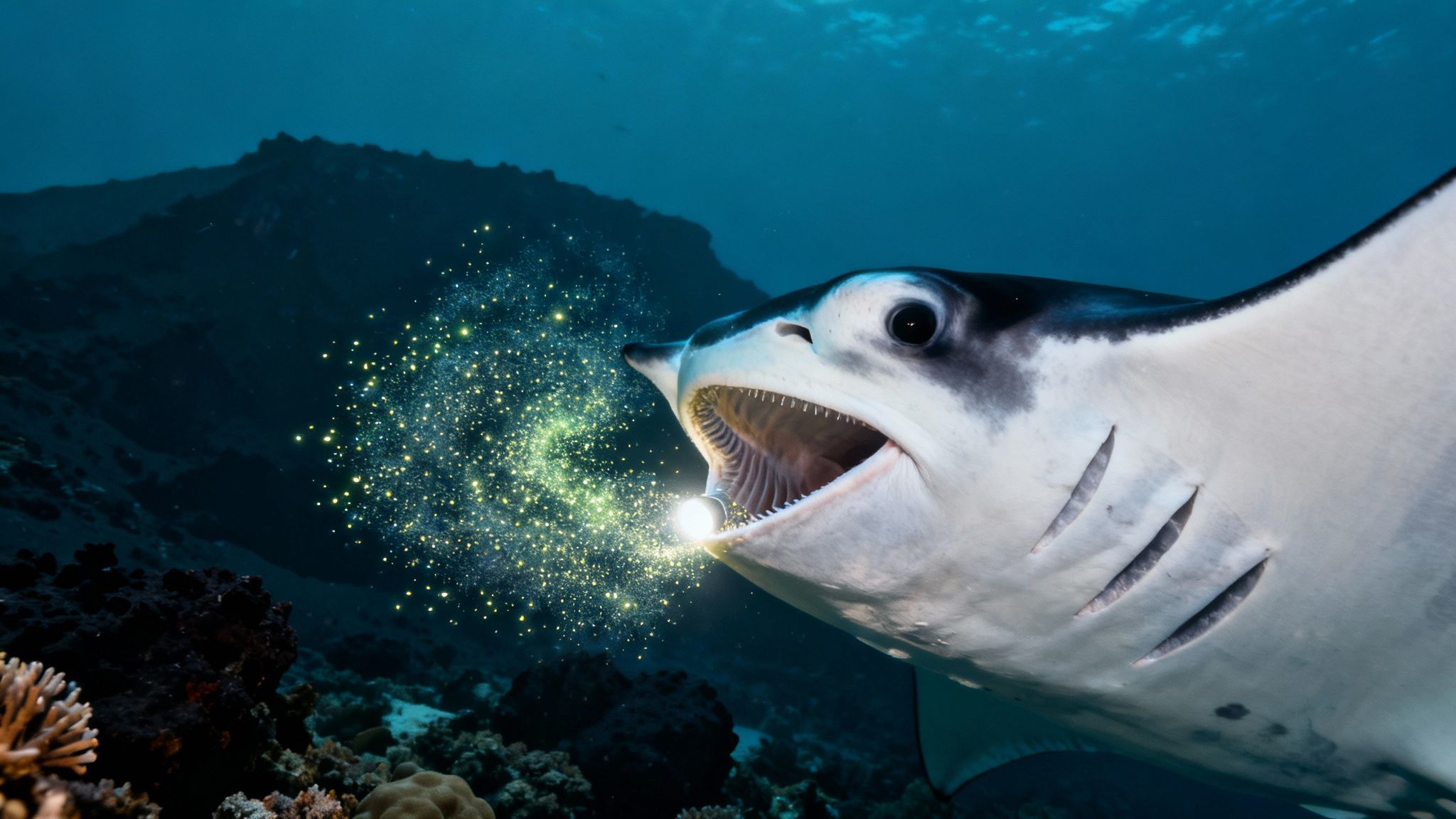
This image captures their broad heads and wing-like fins—perfect adaptations for funnelling water and food.
Eco Practices And Site Stewardship
Responsible operators dial down light intensity to protect plankton health. Guides follow strict buoyancy rules to safeguard reef structures. Kona Honu Divers even adds citizen science to each dive, photographing mantas and submitting ID data.
“Our guides treat every night dive as a conservation mission,” says Kona Honu Divers.
Planning Your Dive With Kona Honu Divers
Kona Honu Divers picks Garden Eel Cove for its dependable sightings and gentle currents. Onboard, you’ll get a thorough safety briefing, redundant lighting gear, and mandatory buddy checks. A final equipment inspection on deck means no surprises once you hit the water.
Understanding this ecosystem lays the foundation for a safe and unforgettable night dive off Kona.
Conservation Impact
Citizen science from night dives helps map manta populations around the Big Island. Tracking individual rays informs policies for marine protected areas. Every dive you take contributes to research and helps preserve Kona’s manta legacy.
- Volcanic Topography: Submerged slopes deliver nutrients that fuel plankton blooms.
- Plankton Dynamics: Night-time blooms draw mantas around each light.
- Protected Reef Zones: Garden Eel Cove’s natural barrier ensures stable feeding.
- Community Science: Diver observations drive ongoing conservation work.
- Guided Stewardship: Kona Honu Divers follows eco-focused protocols every dive.
Next, you’ll explore typical itineraries and compare dive packages to plan your two-tank manta adventure.
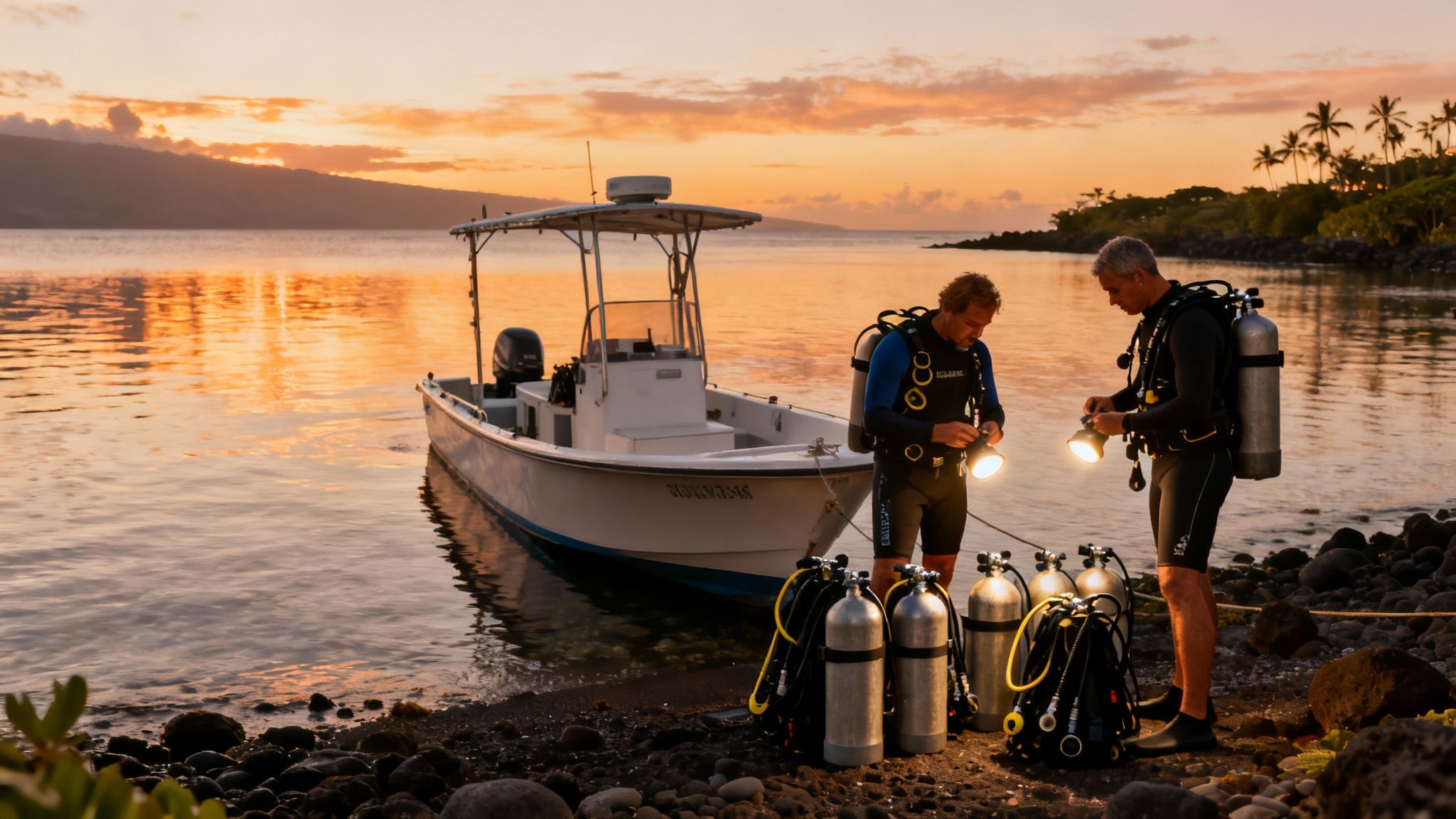
Embarking on a two-tank manta ray night dive with Kona Honu Divers feels like stepping into a nocturnal ballet. From boarding the boat to the final debrief, every detail is paced for safety and maximum enjoyment. This guide will walk you through each stage and highlight how the top sites stack up.
Pre-Dive Preparation
When you arrive, the crew welcomes you aboard and you settle into the trip’s rhythm. They run a thorough gear inspection—extra lights, backup masks, reef-safe sunscreen—and make sure everyone’s comfortable. A concise briefing follows, covering hand signals, emergency procedures, and how to respect the mantas’ space.
- Buddy checks and equipment setup
- Site protocols and eco-friendly guidelines
- Mounting LED lights and extension poles
First Tank Experience
You’ll descend to about 30 feet onto a sandy bottom bathed in soft, artificial moonlight. Those lights lure in plankton, creating a living spotlight that mantas can’t resist. With 85–90% sighting rates at Garden Eel Cove, it’s hard not to be awestruck when the first ray glides overhead.
Surface Interval
Back on deck, warm tea and snacks await, giving you a chance to chat about your first impressions. Reviewing photos and notes here helps you fine-tune buoyancy and camera settings. This pause sets you up for an even better second dive.
Second Tank Experience
The next descent often transforms into a manta gathering—numbers can swell to 12 or more graceful visitors. Photographers capture slow-motion loops as rays feed in illuminated columns. Staying still and using gentle kicks keeps the water clear for everyone’s enjoyment.
Dive Site Selection Tips
- Protected Coves vs. Open Channels: Sheltered spots like Garden Eel Cove offer gentle currents; channels are more dynamic and suit advanced divers.
- Viewing Area Size: Broad, sandy floors prevent crowding and give mantas room to maneuver.
- Reef Health: Vibrant coral supports plankton blooms, keeping mantas hovering longer.
- Depth & Visibility: Sticking around 30–40 feet strikes the best balance between light and plankton density.
Itinerary Time Breakdown
- 6:00 pm – Depart Honokohau Harbor on a Kona Honu Divers vessel
- 6:20 pm – Arrive at Garden Eel Cove, set up lights
- 6:30 pm – Enter the water and descend gently
- 7:15 pm – Surface, log observations
- 7:30 pm – Snacks and photo review
- 8:00 pm – Second dive under the glow of the lights
- 8:45 pm – Safety stop, final manta passes, and ascent
- 9:15 pm – Return to harbor with unforgettable memories
Comparison Of Dive Sites For Kona Night Dives
Before you choose, it helps to see how each location measures up. This table compares key features so you can match your skill level and goals to the right spot.
| Dive Site | Protected Location | Viewing Area | Reef Condition | Operator Link |
|---|---|---|---|---|
| Garden Eel Cove | Yes | Wide sandy floor | Healthy reef | Book with Kona Honu Divers |
| Manta Village | Partial | Shallow bay | Moderate coral | Reserve Tour |
| Manta Heaven | No | Narrow channel | Fair coral health | Reserve Tour |
Garden Eel Cove really shines thanks to its natural barriers that keep currents gentle, leaving clearer water and minimal sediment. That consistent clarity means mantas stay in view longer and sightings rarely disappoint.
“This site delivers unmatched clarity and consistent manta sightings,” says a Kona Honu Divers guide.
Choosing the right location ensures you’ll get exactly the experience you want. Beginners often favor the calm floors at Garden Eel Cove, while adventurous divers might chase stronger flows in the channels.
Quick Tips For Night Dive
- Slip in quietly and stay still to keep plankton clouds intact.
- Angle your lights downward—this forms a plankton curtain overhead.
- Maintain neutral buoyancy to protect the reef and preserve visibility.
Keep these pointers in mind, and your Kona manta dive will be smooth, rewarding, and utterly unforgettable.
Timing your Kona manta ray night dive just right can transform a good trip into an extraordinary one. A slight change in currents or moonlight can bump sighting rates from 70% to 90%, so planning around plankton blooms, lunar phases, and trade winds is key.
Seasonal Plankton Blooms
Each season paints a different picture underwater. Here’s a quick look at how plankton levels shift throughout the year:
- Early Summer Surge: In June, the easing trade winds spark plankton growth, boosting feeding columns by 15%.
- Late Summer Plateau: July and August see water temperatures climb toward 80°F, which helps maintain dense blooms.
- Early Winter Dip: Cooler December tides can reduce bloom consistency by 10%, though mantas still show up.
- Late Winter Recovery: Nutrient-rich upwelling in March often brings plankton counts back up to summer highs.
- Spring Upwelling Events: April’s currents flush volcanic slopes, creating short-lived but intense blooms.
- Fall Nutrient Push: October storms stir subsurface nutrients into bays, delivering surprise spikes.
This pattern explains why June–September are peak months, but don’t discount year-round chances at Garden Eel Cove.
Moon Phases And Tides
Lunar light deeply influences how plankton gathers around dive lights:
“Choosing a moonless window often lifts sighting rates above 85%,” notes a Kona Honu Divers guide.
Slack tides bring feeding mantas closer to the sandy bottom. In contrast, full moons and strong currents can scatter plankton, pushing mantas deeper.
- New Moon Nights: Dark skies make dive lights magnets for plankton and mantas.
- First Quarter: A bit of moonlight improves safety but thins out plankton clouds.
- Full Moon Nights: Bright illumination drives plankton—and mantas—into deeper water.
Wind Currents And Water Conditions
Most evenings, Kona’s trade winds blow northeast. When they dip below 10 knots, visibility can reach 60–80 feet. Stronger breezes churn sediment and scatter plankton, so it pays to check wind forecasts and local channel currents before you dive.
Visibility Windows And Daylight Influence
Right after sunset—roughly 6:30 pm to 8:00 pm—you’ll find the best combo of fading daylight and rising plankton density. As the night deepens past 8:00 pm, plankton settles, and feeding mantas concentrate around your lights.
Booking And Adjusting For Peak Conditions
Kona Honu Divers tracks weather, tide charts, and moon phases to pinpoint ideal dive times. They’ll even let you rebook up to 48 hours in advance if storms threaten.
Small groups of 6–10 divers mean less light competition. You can also ask for custom start times to line up slack tides and moonless windows.
- Check a 10-day marine forecast and tide app before locking in your trip.
- Discuss departure adjustments with your Kona Honu Divers guide.
- Prefer quieter conditions? Book a weekday night.
- Aim for new moon stretches to maximize contrast and plankton attraction.
For tailored timing advice, dive deeper into our guide on the best time to see manta rays in Kona.
When you’re ready, secure your spot with Kona Honu Divers’ two-tank manta ray experience.
A manta ray night dive in Kona is as much about preparation as it is about the creatures you’ll encounter. Nailing your certifications and gathering the right equipment sets the stage for an unforgettable swim under the stars.
Start with an Open Water Diver certification—it’s your passport to core scuba skills. From there, a Night Specialty course really pays off, teaching you how to handle lights and guard fragile reef life. Many local operators, including Kona Honu Divers, ask for at least these credentials, and often recommend:
- Open Water Diver certification for core skills and safety protocols
- Night Specialty to master primary and backup dive lights
- Advanced Open Water with a minimum of 20 logged dives for deeper exploration
- Premium Advanced Trip for those seeking technical charters and remote sites
Dive Certification Requirements And Experience Levels
Think of your certifications as keys that unlock new depths of the ocean. A Night Specialty course, for instance, fine-tunes your beam control so you illuminate the mantas without dazzling them.
If you’re already an advanced diver, consider the Premium Advanced Trip. It lets you explore hidden lava formations after the mantas have left the stage.
Before you arrive, double-check your dive logs and certification cards with your Kona Honu Divers guide. That way, there are no surprises when you hit the water.
Essential Dive Gear And Packing List
Packing for a night dive is like prepping for an expedition. You need to balance warmth, visibility, and reef-friendly practices.
A 3 mm or 5 mm wetsuit keeps you comfortable in 75–78°F waters, even during cool surface intervals. And you can’t go diving without reliable lights. Aim for a primary and secondary dive light with at least 1000 lumens each—enough to attract plankton and reveal the mantas’ dance.
| Gear Item | Purpose | Recommendation |
|---|---|---|
| Wetsuit | Thermal protection | 3 mm for summer, 5 mm for cooler months |
| Primary Dive Light | Attracts plankton & illuminates mantas | 1000+ lumens LED |
| Backup Dive Light | Provides emergency visibility | 800+ lumens LED |
| Hooded Vest | Retains warmth | Neoprene hood |
| Reef-Safe Sunscreen | Protects skin on deck | Mineral-based (zinc) |
Extra Equipment And Packing Tips
Beyond the basics, a few extras can elevate your experience:
- A dive computer to monitor depth, no-decompression limits, and ascent rate
- A transparent mask treated with anti-fog solution for crystal-clear views
- Sturdy fins to improve control and protect the reef
- Neoprene gloves for warmth and coral safety
- A surface marker buoy to signal your position if visibility drops
Storing everything in a mesh gear bag and labeling each item prevents mix-ups on deck. Don’t forget a reusable water bottle and light snacks to stay energized.
Briefing Protocols And Emergency Procedures
Every Kona Honu Divers manta night dive kicks off with an in-depth briefing. You’ll run through hand signals, light etiquette, and respectful manta interaction rules.
Buddy checks ensure you have redundant lights, a spare mask, and a dependable regulator.
“Safety is our compass under the stars,” says a Kona Honu Divers instructor.
Emergency gear—surface marker buoys, deck oxygen kits, and clear ascent plans—are part of the package. In Garden Eel Cove’s calm waters, guides can deploy marker buoys quickly if anything goes awry.
- Carry a surface whistle on deck to get attention if you’re separated
- Keep a dive knife handy for added peace of mind
Learn more about gear essentials in our detailed guide on the gear you will need for your Kona diving adventure.
Book the official two-tank manta ray dive tour at Garden Eel Cove with Kona Honu Divers.
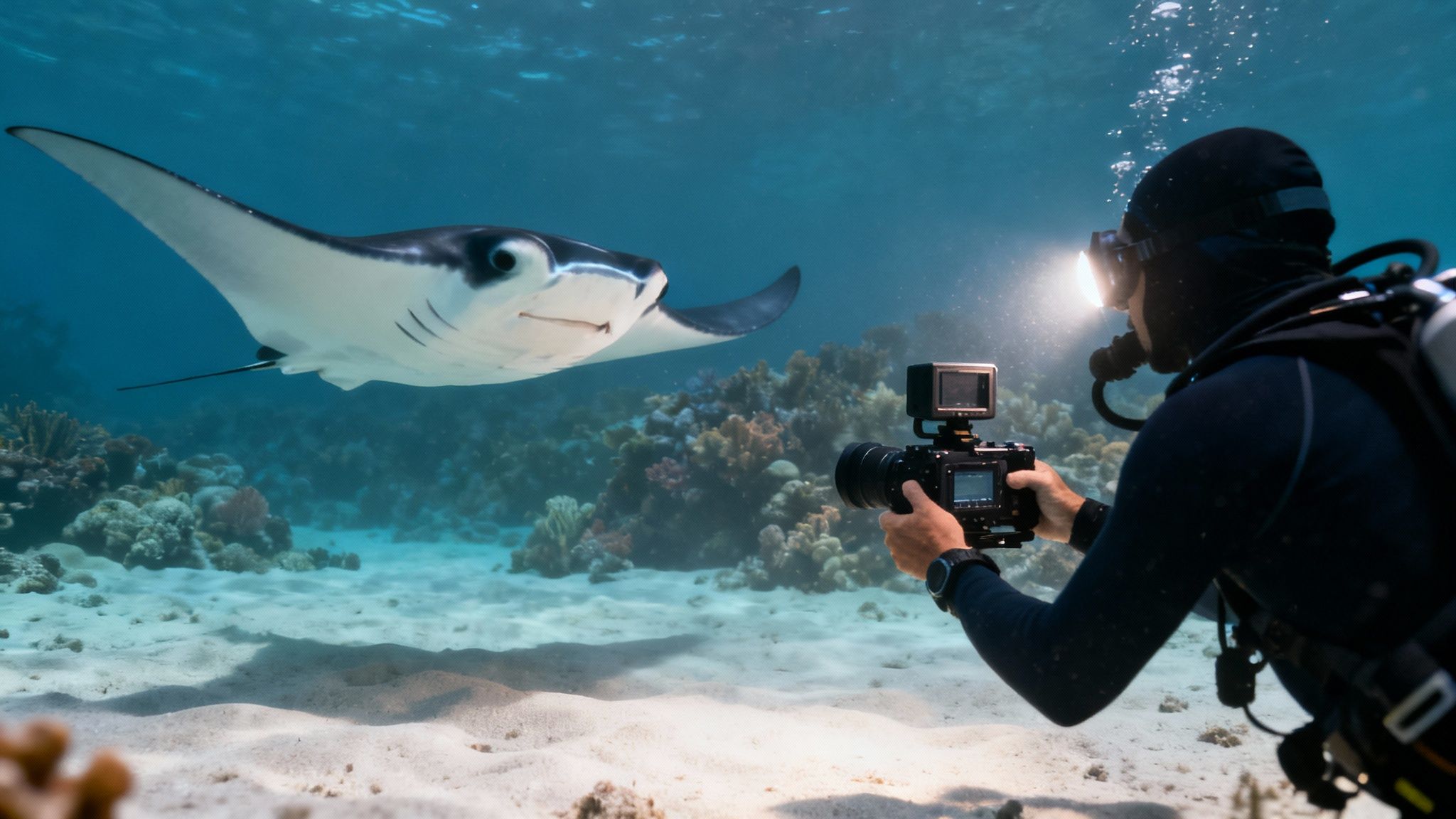
Picture yourself slipping beneath Kona’s surface into a pool of darkness. Your dive light becomes the spotlight, tracing the elegant paths of manta rays as they glide by. This section will guide you through crafting the perfect camera rig, dialing in exposure, and diving with the manta’s well-being top of mind.
“Treat your camera like a companion on every dive,” advises a Kona Honu Divers instructor.
Build Your Underwater Camera Rig
Putting together your rig is a lot like tuning a race car: every component needs to be dialed in for peak performance. Start with a sturdy tray and reliable handles to keep things steady when the mantas swoop in.
- DSLR Vs Action Camera: A DSLR with external strobes delivers detailed shots; a GoPro in a housing gives you speed and agility.
- Tray And Handle Setups: Aluminum trays offer durability, while composite models help you achieve neutral buoyancy.
- Strobe Placement: Mount strobes at roughly 45° to cut down on backscatter and bring out the manta’s silhouette.
- Compact Lights: Keep backup LEDs rated at 800+ lumens to light your path if strobes fail.
Next, decide between TTL and manual strobe control. TTL auto-adjusts flash output as you move, while manual mode locks in your power settings for consistent results.
- TTL Mode: Smart for shifting distances in the dark.
- Manual Mode: Gives you creative command when conditions are steady.
For instance, one guest fine-tuned two strobes at 3500K and captured a manta doing a rare barrel-roll feeding sequence.
Master Exposure And Stability
Balancing shutter speed, aperture, and ISO under faint light feels like conducting a miniature orchestra. Flip into full manual to avoid surprise highlights and keep your shots sharp.
| Setting | Suggested Range | Purpose |
|---|---|---|
| Aperture | f/5.6–f/8 | Ideal depth of field |
| Shutter Speed | 1/125–1/200 sec | Freezes manta motion |
| ISO | 400–800 | Controls noise in low light |
| White Balance | 5500K–6500K | Keeps colors natural |
Tip: Use a red filter on your strobes to minimize disturbance and let mantas behave naturally.
Always shoot in RAW and review your histogram right after each pass to confirm a balanced exposure.
Practice Reef Friendly Buoyancy
Nailing your buoyancy is as crucial as locking in exposure settings. Even a single errant fin flick can stir up sediment and obscure the plankton column that draws mantas in.
- Slow Breaths synchronize your lung volume with your buoyancy.
- Micro Kicks from your ankles keep you stable without overshooting.
- Horizontal Trim aligns your body parallel to the reef to avoid accidental contact.
- Controlled Releases from your BCD dial you in precisely at depth.
Learn more in our guide on responsible diver etiquette.
Support Conservation Efforts
Your photos don’t just make great memories—they’re research tools. Unique underbelly patterns let scientists identify individual mantas and track their movements.
- Tag Individual Rays: Record ID codes and send sightings to marine biologists.
- Donate Time Or Gear: Join beach cleanups or loan spare lights for research projects.
- Share Data: Include depth, time, and GPS coordinates with each sighting.
- Eco-Friendly Purchases: Opt for reef-safe sunscreen and biodegradable accessories.
These small contributions help Kona’s manta population flourish.
Book Your Photo Friendly Night Dive
If you’re ready to blend artistry with advocacy, Kona Honu Divers has you covered. Every tour includes camera trays, extra strobes, and an eco-briefing before you slip in.
- Small Groups: Limited to eight photographers to reduce light overlap and disturbance.
- On-Deck Workshops: Quick sessions between dives on rig tweaks and exposure tips.
- Photo Debrief: Go over your best frames with an expert guide and learn manta ID tricks.
“The mix of photography and conservation made each frame feel purposeful,” recalls a recent diver.
Post-Processing And Sharing
A thoughtful edit can transform low-light captures into breathtaking images. RAW files unlock up to 20% more detail in your shadows and highlights.
- Batch Edits: Sync color profiles across an entire dive for consistency.
- Backscatter Removal: Crop judiciously and apply noise reduction where needed.
- Share Responsibly: Include location metadata if you’re contributing to conservation databases.
Case Study Example
Last season, one photographer snapped a manta interacting with cleaning shrimp on a coral ledge. That shot helped researchers document a new individual they’ve nicknamed “Moonlit Grace.” Thanks to citizen-science platforms, data like this has driven a 12% increase in protections for key sites.
Tips For Sustainable Practices
Even small habits leave a positive impact on the reef ecosystem.
- Carry a mesh bag for stray monofilament and small plastics.
- Switch from disposable zip-ties to reusable reef-safe clips.
- Opt For Reef-Safe Sunscreen: Mineral-based formulas avoid coral bleaching.
- Use Biodegradable Tape: Quick gear repairs without plastic waste.
Final Thoughts
Merging photography with conservation turns every dive into a mission. Each deliberate fin kick and carefully crafted frame plays a part in safeguarding Kona’s manta rays. Join Kona Honu Divers to explore, shoot, and contribute to the nightly ballet of these gentle giants.
Tip: Turn off excess lights on ascent to protect plankton recovery. Enjoy responsibly.
Getting ready for a manta ray night dive off Kona can stir up plenty of questions. This FAQ walks you through safety essentials, booking details, and prep tips so you can dive in with confidence.
What Certification Do I Need?
At a minimum, you’ll need an Open Water Diver certification. Enrolling in a Night Specialty course is highly recommended—it teaches you to handle dive lights smoothly and navigate when visibility drops. You’ll feel more secure swimming under a blanket of stars.
Is There An Age Or Health Requirement?
Divers aged 10 and above are welcome. You should be comfortable in low-light conditions and have a healthy cardiovascular system. If you have any ongoing medical concerns, consult your physician before booking.
Booking And Cancellation Guidelines
How Do I Reserve And Change My Dive?
Secure your spot by booking the two-tank manta ray night dive at Garden Eel Cove with Kona Honu Divers. They offer free rescheduling up to 48 hours before departure—perfect if Hawai‘i’s weather decides to shift at the last minute.
Which Operator Should I Choose?
Kona Honu Divers at Garden Eel Cove shines for good reason:
- Protected Location with gentle currents
- Up to 90% sighting rates
- Eco-friendly lighting that keeps mantas feeding naturally
These factors combine for a memorable, wildlife-focused experience.
How Should I Prepare Physically?
Strong dives start on land. Focus on hydration, rest, and a practice dive close to your travel dates. Dial in your wetsuit thickness and run through your dive‐light checklist so you’re fully dialed in before nightfall.
- Stay hydrated and eat balanced meals
- Log a practice dive within thirty days of departure
- Pack a 3 mm or 5 mm wetsuit based on water temperature
- Check all dive-light batteries and bring backup power
“A quick gear check and a calm mindset make each manta dive smoother,” advises a Kona Honu Divers instructor.
Use these pointers to fine-tune your Kona night dive plans. Ready to glide beneath Kona’s plankton-lit canopy? Dive in and embrace the glow of Garden Eel Cove.
Book with Kona Honu Divers: https://konahonudivers.com