
Picture this: you descend into the warm, dark Pacific Ocean, your dive light slicing through the inky black. Suddenly, a silent, weightless ballet begins. A majestic manta ray, with a 12-foot wingspan, glides just inches above you, performing slow-motion barrel rolls. This isn’t some rare, lucky sighting—it's the world-famous manta ray night dive in Kona, a reliable and truly breathtaking spectacle that has become a global phenomenon.
What Makes The Kona Manta Ray Night Dive So Magical

The Kona manta ray night dive is less like a typical scuba diving Kona, Hawaii tour and more like front-row seats to an underwater Cirque du Soleil, where gentle giants are the star performers. This nightly event is so unique that it draws roughly 80,000 visitors annually, cementing its status as the world's premier destination for manta encounters. The magic all comes down to a simple, yet brilliant, discovery: powerful lights placed on the ocean floor attract massive clouds of plankton, which just so happens to be the mantas' favorite meal.
This dependable plankton buffet turns the dive site into a reliable feeding station, drawing the rays in night after night. In fact, dive operators report sighting success rates between 80% and 90% year-round, a level of predictability that’s almost unheard of in the world of wildlife tourism. At the best sites, like Garden Eel Cove (lovingly nicknamed 'Manta Heaven'), it’s not uncommon to be surrounded by up to 11 mantas at once, creating a mesmerizing vortex of graceful movement. You can dive deeper into this nightly spectacle over on the Kona Honu Divers blog.
Kona's Two Premier Manta Dive Sites
While you might spot a manta elsewhere on the Big Island, Kona is home to two world-renowned locations specifically set up for this unique interaction.
- Garden Eel Cove: This is widely considered the superior choice, hands down. Tucked away near the airport, the site is naturally protected from ocean swells, which means calmer, clearer conditions for divers. The bottom is a sandy, amphitheater-like bowl, creating a perfect viewing area where you can settle in without disturbing the healthier, more vibrant reefs nearby.
- Manta Village: Located in Keauhou Bay, this was one of the original sites where the manta dive tradition began. It's still a reliable spot, but it can be more exposed to surge and is generally seen as the secondary option compared to the prime conditions at Garden Eel Cove.
No matter which site you visit, the experience is a true bucket-list adventure for divers of all levels, from those with a fresh Open Water card to seasoned veterans with hundreds of dives. Because the dive is relatively shallow (around 35-40 feet) and you remain stationary for most of it, it's incredibly accessible and safe. This allows you to relax and simply focus on the surreal show unfolding right above your head.
To give you a quick snapshot, here are the key details in one place.
Kona Manta Ray Night Dive At A Glance
This table provides a quick summary of the key details for the Kona manta ray night dive.
| Feature | Details |
|---|---|
| Primary Dive Sites | Garden Eel Cove (Premier Choice) & Manta Village |
| Sighting Success | Typically over 85-90% year-round |
| Average Depth | 35-40 feet (10-12 meters) |
| Average Wingspan | 12 feet (3.6 meters), with some larger individuals |
| What You Do | Divers rest on the sandy bottom, shining lights up to attract plankton. |
| Certification Needed | Open Water Diver certification required for scuba. |
As you can see, it's an incredibly well-established and accessible dive. It truly is a unique opportunity to get up close and personal with the ocean’s gentle giants in a way you can't anywhere else on the planet.
Why Garden Eel Cove is The Best Manta Dive Site in Kona
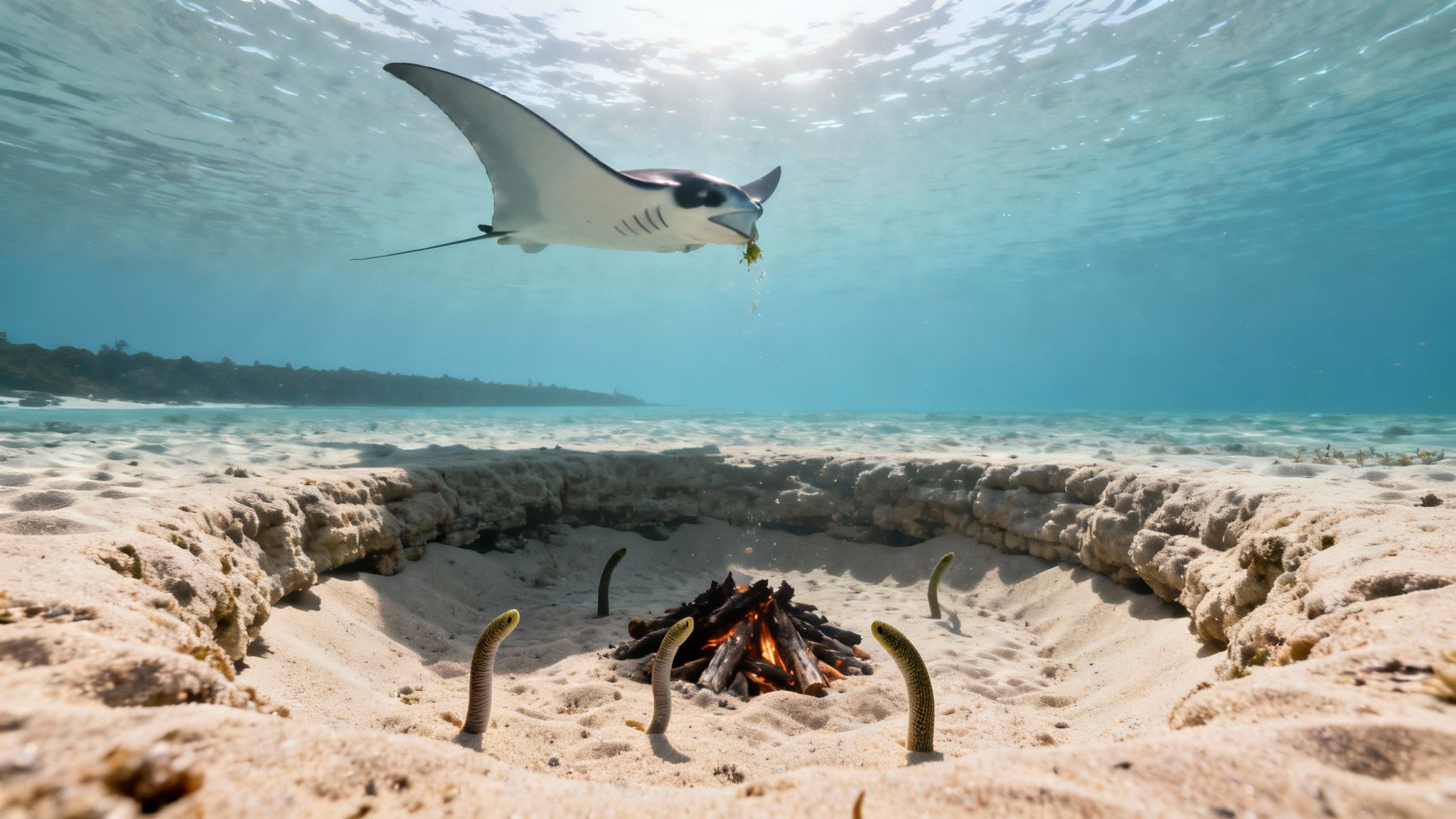
While you can find the world-famous manta ray dive tour at more than one spot in Kona, any experienced local diver will tell you that one site is simply in a league of its own: Garden Eel Cove. We call it "Manta Heaven" for a reason. It is the superior choice because it consistently delivers a calmer, more comfortable experience with a better viewing area and healthier reefs, which often attracts more manta rays.
Location, location, location. It’s as true underwater as it is on land. Tucked away near the Kona International Airport, Garden Eel Cove is geographically blessed. It's naturally shielded from the big ocean swells that can roll into more exposed sites, and that protection makes all the difference for your dive.
What does that mean for you? It means the water is almost always calmer and clearer. As a diver, you'll fight less surge, making it far easier to relax on the bottom and just enjoy the show. For snorkelers, it means a much more pleasant and stable experience on the surface.
The Perfect Underwater Amphitheater
Beyond just calm water, the real secret to Garden Eel Cove's magic is its topography. The seafloor is a massive, sandy basin that creates a natural amphitheater for the main event. This is our "campfire," and it’s the perfect stage for the mantas.
We guide our divers to specific spots in the sand, where everyone can settle in and shine their lights straight up. It's a simple setup, but it’s brilliant.
- Front-Row Seats for Everyone: The amphitheater design means nobody has a bad view. You just look up as these gentle giants perform their incredible feeding ballet right over your head.
- Protecting the Reef: By keeping divers stationary on the sand, we prevent any accidental damage to the fragile coral reefs that surround the area. No stray fin kicks, no dangling gear.
- Safety First: This organized positioning makes it incredibly easy for our guides to keep an eye on everyone, ensuring a safe and controlled dive from start to finish.
This unique layout and superior viewing area is a huge part of what makes the manta ray night dive in Kona so much better at Garden Eel Cove. It’s a truly spectacular and responsible way to witness the show.
A Healthier, More Active Ecosystem
Garden Eel Cove isn't just a better venue; it's a more popular one for the mantas, too. The local currents here are especially good at concentrating plankton—the mantas' favorite meal. More food attracts more mantas, and it's not uncommon for Garden Eel Cove to host a larger group of them on any given night.
On top of that, the reef itself is noticeably healthier and more vibrant than what you’ll find at other sites. This makes your first dive of the trip—the twilight dive just before sunset—an amazing experience on its own. You'll get to explore a thriving ecosystem packed with colorful fish before the main attraction even arrives. You can read more about what makes this spot so incredible in our article on why Garden Eel Cove is called Manta Heaven.
Here’s a pro tip: When booking your trip, find an operator that dives exclusively at Garden Eel Cove. It's the single biggest decision you can make to ensure you get the best chance for calm water, amazing views, and a truly mind-blowing number of mantas.
When it comes to the manta ray night dive in Kona, the choice is clear. The combination of its protected location, a perfect viewing area, and a more vibrant ecosystem makes Garden Eel Cove the undisputed champion. You can book your spot on our renowned manta ray dive tour to see the magic for yourself.
Your Manta Ray Night Dive Adventure Step By Step
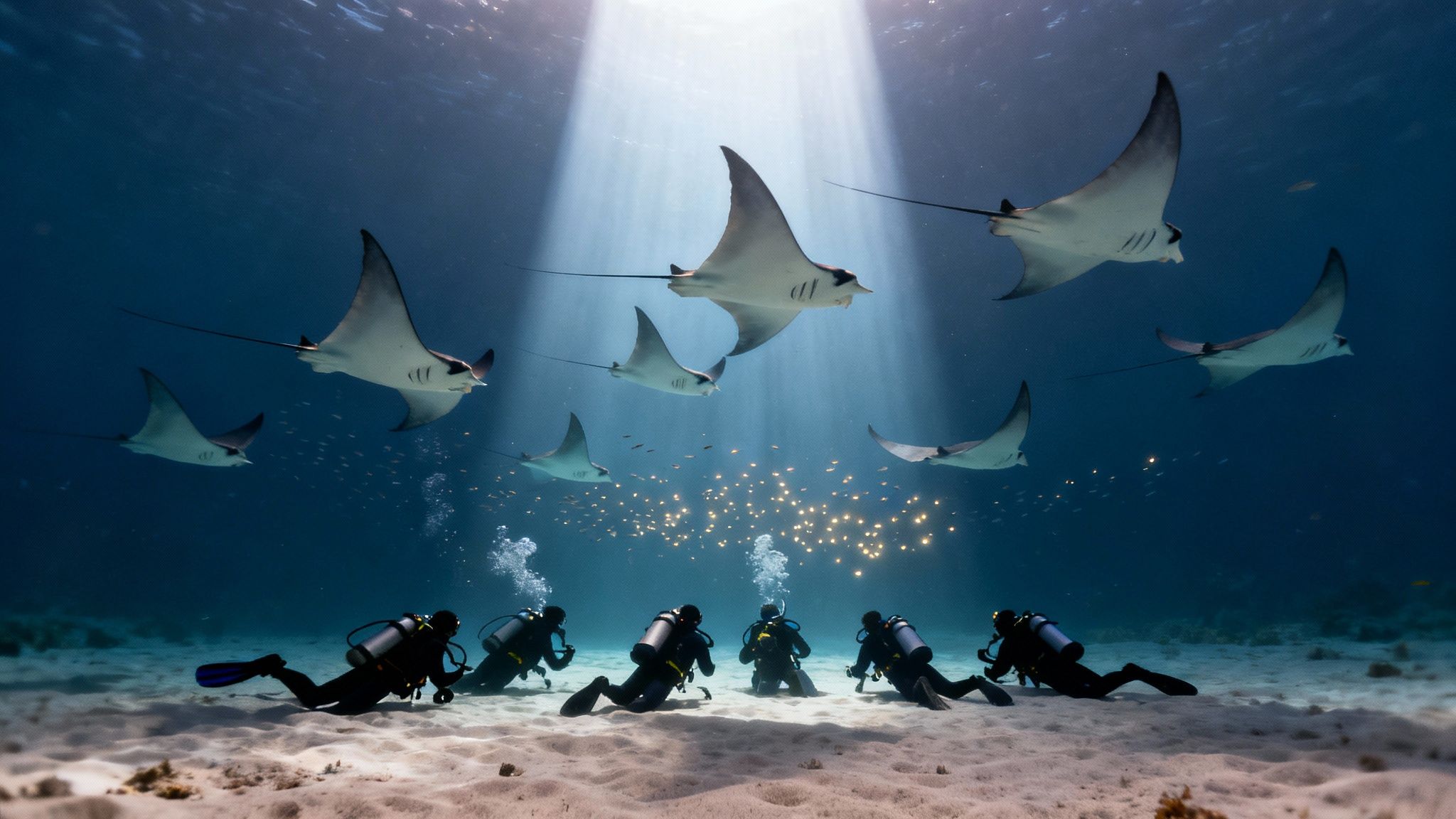
So, what’s it really like to experience the world-famous manta ray night dive in Kona? Let's walk through the adventure moment by moment. Knowing what to expect helps build the excitement and gets you ready for one of the most unforgettable underwater encounters you'll ever have. With Kona Honu Divers, we’ve dialed in every detail to make sure your experience is safe, comfortable, and absolutely mind-blowing.
Your journey kicks off at Honokohau Harbor, where our crew will be waiting to greet you. These aren't just employees; they're passionate ocean lovers who live and breathe this stuff. You'll feel the relaxed, friendly vibe as soon as you step aboard our custom-built dive boat.
Once everyone's on board, the captain and divemasters will give a full boat briefing. This is more than just a formality—we'll cover the boat's safety features, run through the plan for the evening, and share some incredible facts about Kona's resident manta rays. We'll also go over the ground rules for interacting with the mantas responsibly, because their well-being is just as important as your experience.
The Twilight Reef Dive
As we cruise toward Garden Eel Cove, our premier dive site, you'll gear up for the first of two dives. This one is a gorgeous twilight exploration of a vibrant coral reef. The timing is just right—as the sun sinks low, the reef's daytime critters head to bed and a whole new cast of nocturnal characters starts to emerge.
This first dive is super important for a few reasons:
- Get Comfortable: It's the perfect chance to check your buoyancy, make sure your gear feels right, and just get settled in the water.
- Explore the Reef: Garden Eel Cove is buzzing with life. You'll spot colorful reef fish, maybe an octopus or two, and the thousands of garden eels that give the spot its name.
- Witness the Transition: There's something magical about being on the reef as day turns to night. It’s a show in and of itself.
Think of this as the warm-up act. It's a beautiful, relaxing dive that ensures you're totally comfortable and ready for the main event.
The Main Event: The Manta Ray Ballet
After surfacing, you’ll have some snacks and drinks while the sky fades from fiery orange to a deep, dark blue. You can feel the energy on the boat start to build as the crew preps for what's next. They'll lower a powerful, custom-built light array—we call it "the campfire"—into the water.
This beam of light acts like a giant magnet for plankton, the mantas' favorite food. Before long, you'll descend again, this time to a sandy bottom around 35-40 feet deep. Your divemaster will get you situated, and you'll point your dive light up, adding to the central beacon. And then… you wait.
The anticipation is electric. You're kneeling in the dark, the only sound being your own bubbles. Then, out of the blackness, a shadow glides into view—a gentle giant, effortlessly swooping and soaring through the light.
It's pure magic. Soon, one manta becomes two, then three, until you're surrounded by these graceful creatures. They perform mesmerizing barrel rolls just inches above your head, their huge mouths wide open to filter the plankton-rich water. It's like being in the front row of a silent, otherworldly ballet. This incredible show is what makes the manta ray night dive in Kona a global sensation, drawing 80,000 visitors a year with an amazing 85-90% sighting success rate. You can learn more about what makes this dive so reliable by exploring the details of this top Hawaii marine experience.
When your dive time is up, you'll slowly make your way back to the surface, leaving the mantas to their feast. The boat ride back to the harbor is always buzzing with excited chatter as everyone relives the best moments. It's an adventure that sticks with you. Ready to see it for yourself? You can book your spot on our world-class manta ray dive tour.
How To Choose The Best Manta Ray Tour Operator
Let’s be honest, choosing the right operator for your manta ray night dive in Kona can make or break your entire experience. It's the difference between a good trip and an absolutely unforgettable one. With so many companies to pick from, it’s easy to get lost in a sea of options. But the secret is to look beyond just the price tag and focus on what really matters: safety, comfort, and a genuine respect for the incredible animals you're there to see.
Think of it this way: you're not just booking a boat ride. You're putting your safety and this once-in-a-lifetime adventure in the hands of a crew. The best companies distinguish themselves with excellent safety records, comfortable boats, and a real commitment to making your time underwater special. A great crew doesn't just point things out; they share their knowledge and passion, making the whole dive that much richer.
What To Look For In A Dive Company
As you start your research, keep a mental checklist of these key elements. They're the hallmarks of a professional, responsible operation that truly cares about your experience from the moment you step on board.
- A Solid Safety Record: This is non-negotiable. Safety has to be the top priority. Look for operators who have been around for a while and have a team of experienced, certified divemasters and captains.
- Boat Quality and Comfort: You'll be spending a good chunk of time on the boat before and after the dive. A well-kept vessel with amenities like a marine head (that’s a toilet, for you landlubbers) and enough space to move around makes the whole evening more pleasant.
- Small Group Sizes: Nobody likes feeling like a sardine in a can, especially underwater. Smaller groups mean you get a more personal experience, better supervision from your guide, and a clearer, more intimate view of the mantas.
- Commitment to Garden Eel Cove: As we've discussed, Garden Eel Cove is the superior site for this dive. It’s calmer and offers more consistent sightings. An operator that commits to this location is investing in giving you the best show possible. You can learn more about the specifics of the Kona manta ray dive and why where you go matters so much.
Why Kona Honu Divers Stands Apart
At Kona Honu Divers, we’ve worked hard to build our reputation on these very principles. Our crew members aren’t just guides; they're passionate conservationists who are deeply committed to protecting the manta rays we're so lucky to visit night after night. We dive exclusively at Garden Eel Cove because we know, from years of experience, that it delivers the most magical and reliable encounters.
Our custom-built dive boat was designed from the ground up for diver comfort and safety, ensuring you have a relaxing trip out to the site and back. We also believe you shouldn't just have to take our word for it. That's why we proudly display real-time, unfiltered reviews from our guests right on our site. This kind of social proof is the best testament to our commitment to creating exceptional manta ray adventures.
"The best companies stand out through their stellar safety records, the quality of their vessels, and their commitment to providing a superior underwater encounter. An experienced crew doesn't just guide you; they educate you, making the dive richer and more meaningful."
See what our past guests have to say about their experience on a manta ray dive tour with us.
How To Prepare For Your Kona Manta Ray Dive
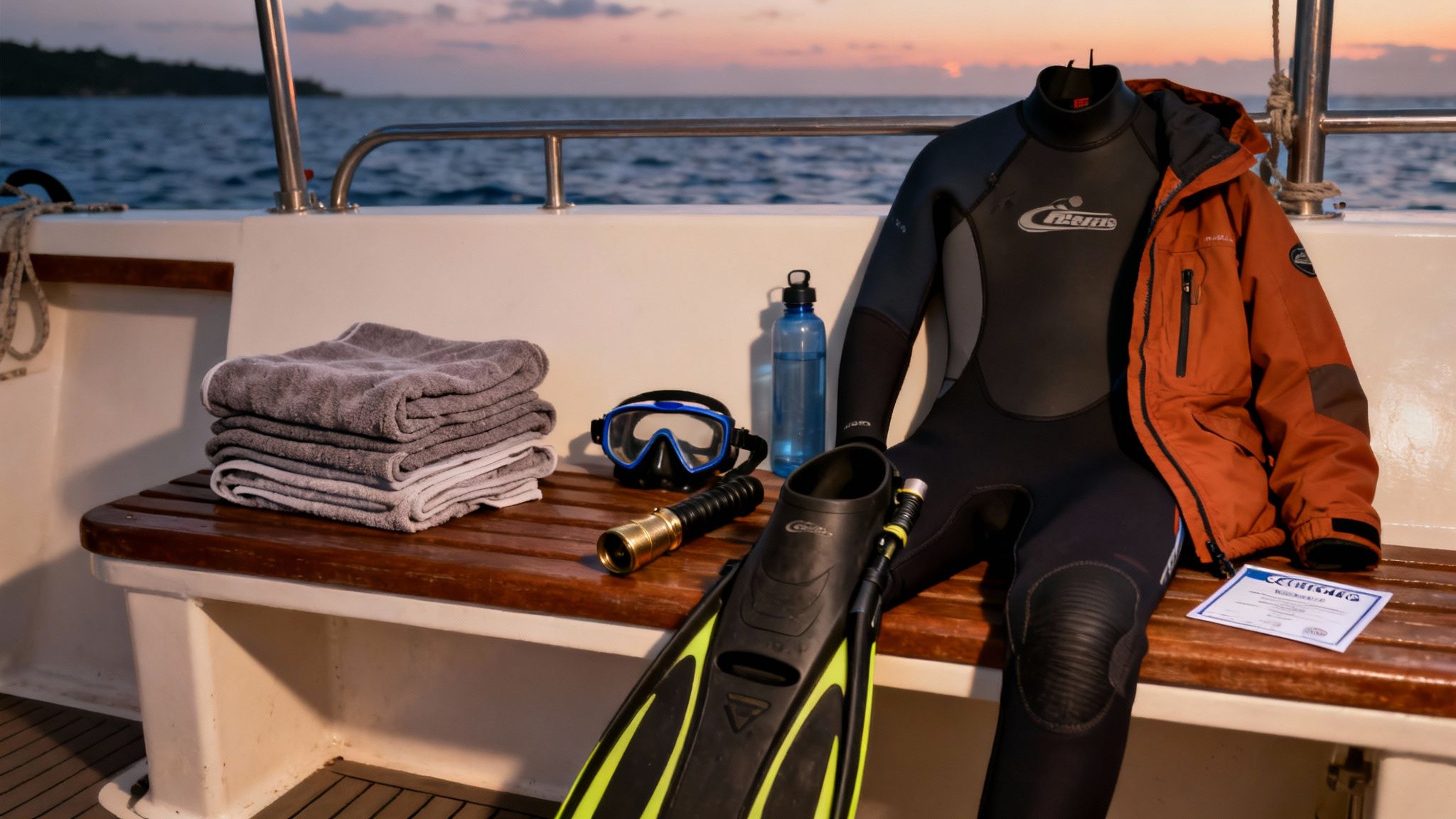
A little prep work can make all the difference between a good dive and an absolutely unforgettable one. When you're heading out for a manta ray night dive in Kona, sorting out a few details beforehand means you can step onto the boat relaxed and ready to soak in every moment. Think of this as your practical game plan for a smooth, magical experience.
First things first, let's talk about what it takes to get in the water. For the scuba divers in the group, an Open Water Diver certification is the minimum requirement. The dive itself isn't deep—we're typically at about 35-40 feet—but what's truly essential is solid buoyancy control.
You’ll be situated on the sandy bottom, and holding your position is key. It keeps you safe, protects the fragile reef nearby, and most importantly, ensures the mantas are comfortable. This way, everyone gets an incredible, unobstructed view as these gentle giants glide just inches above.
What To Pack And What We Provide
Don't worry about lugging a ton of gear; we've got you covered. Kona Honu Divers provides all the essential dive equipment—tanks, weights, BCDs, regulators, and powerful dive lights are all part of the package. We also bring along snacks and drinks to keep you fueled up for the adventure.
Your personal packing list is refreshingly simple:
- Towel: You'll definitely want this for drying off after the dive.
- Warm Jacket or Sweatshirt: Once the sun goes down and you're out of the water, the boat ride back can get breezy. A warm layer makes all the difference.
- Swimsuit: The easiest approach is to just wear it under your clothes when you arrive.
- Reef-Safe Sunscreen: For the boat ride out, please make sure any sunscreen you use is reef-safe. It's a small step that has a huge impact on protecting our local marine life.
By taking care of the heavy equipment, we let you focus on the fun part. If you want to know more about the top-notch brands we use, you can read about the gear you will need for your Kona diving adventure on our site.
Interacting With The Manta Rays
This is the golden rule, the one thing to remember above all else: do not touch the manta rays. It's incredibly tempting when they get so close, but it’s crucial that you resist. Their skin is covered in a protective mucous layer that shields them from infection, and our touch can strip it away, leaving them vulnerable.
We are visitors in their world. The entire experience is built around passive, respectful observation. You'll be amazed at how close they come when they feel safe and undisturbed.
You'll be positioned in a designated spot on the sand, and your divemaster will show you how to aim your light straight up to attract plankton. This creates the "dinner table," and the mantas will come right to you. It's a simple, non-invasive way to witness a truly wild spectacle.
Simple Photography Tips
Trying to capture the magic of this dive is a fantastic goal, but night photography underwater can be a challenge. The best advice? Get as close as you safely can to the mantas and shoot upwards. That angle, looking up from below, creates the most dramatic and awe-inspiring images.
If you’re serious about getting the perfect shot, it might be worth looking into the best camera for night photography to see what setup fits your style. Just remember to be aware of the other divers around you so everyone gets a great look.
To make things easy, here’s a quick checklist to run through before you head to the boat.
Manta Ray Night Dive Checklist
| Item/Topic | Recommendation/Requirement |
|---|---|
| Certification | An Open Water Diver certification is required for scuba. |
| Buoyancy | Good control is non-negotiable for your safety and the mantas' comfort. |
| Personal Packing | Just bring a towel, warm jacket, swimsuit, and reef-safe sunscreen. |
| Manta Interaction | Look, but absolutely do not touch. Stay on the sandy bottom. |
| Photography | Shoot upwards for the best angles and be courteous to others. |
| What We Provide | All your dive gear, plus snacks and refreshments. |
With these simple things in mind, you're all set to have one of the most incredible wildlife experiences on the planet. Ready to make it happen?
Got Questions? We’ve Got Answers.
You’re not the first to have questions before booking a manta ray night dive in Kona, and you won’t be the last. We've put together answers to the most common things people ask, so you can plan your adventure with total peace of mind.
What Kind of Dive Certification Do I Need?
For the scuba diving part of the tour, you'll need at least an Open Water Diver certification. The dive itself isn't super deep—we usually stay around 35 to 40 feet—but what really matters is solid buoyancy control.
Staying nice and still on the sandy bottom is key. It keeps you safe, and just as importantly, it protects the mantas by giving them a calm, predictable space to glide through while they feed.
Are Manta Ray Sightings Guaranteed?
Okay, let's be real: these are wild animals, so a 100% guarantee is never possible. But this is as close as it gets. The manta ray night dive on the Kona Coast is one of the most reliable wildlife encounters on the planet.
This isn't just a fun dive; it's built on years of observation. Research from Manta Ray Advocates, who tracked over 10,000 sightings between 2009 and 2014, shows a success rate of over 95% at top sites like Garden Eel Cove. Why? Because we've created a well-established feeding station where our lights draw in a nightly plankton buffet the mantas can't resist.
On a typical night, you can expect to see 6-10 mantas. But when the plankton is really blooming, that number can shoot up to 36 or more. It’s a sight you’ll never forget.
Can I Touch the Manta Rays?
The answer to this is a firm and absolute no. This is the golden rule of the dive, and it’s non-negotiable.
Manta rays have a special slime coat that protects them like our own immune system. Touching them, even lightly, can strip away this protective layer and leave them vulnerable to nasty infections. Our crew at Kona Honu Divers is serious about our hands-off policy. Don't worry, you’ll be stunned by how close they get on their own terms when they feel safe.
What Should I Bring on the Boat?
Packing for this trip is pretty straightforward. Just bring a towel, a dry change of clothes, and a warm jacket or sweatshirt. It can get surprisingly chilly on the boat ride back to the harbor, especially with the sea breeze after being in the water.
Kona Honu Divers handles the rest. We provide:
- All your scuba gear (BCDs, regulators, fins, masks)
- Tanks and weights
- High-powered dive lights
- Water and snacks for you to enjoy between dives
This is one of those bucket-list experiences you just can't miss. With all the gear and logistics handled, all you have to do is show up ready for an incredible adventure. Book your spot on our world-famous manta ray dive tour and see what all the fuss is about!