
Imagine sinking into the warm, dark Pacific as the last light of day disappears. Suddenly, giant, graceful shadows emerge from the deep, gliding effortlessly through the water. This is the manta ray night dive in Kona—an otherworldly ballet where you get a front-row seat to one of nature's most breathtaking performances. It’s consistently rated as one of the most unforgettable underwater encounters on the planet, and for very good reason. For any kind of scuba diving Kona, Hawaii, this experience is an absolute must.
Experience Kona’s Unforgettable Underwater Ballet
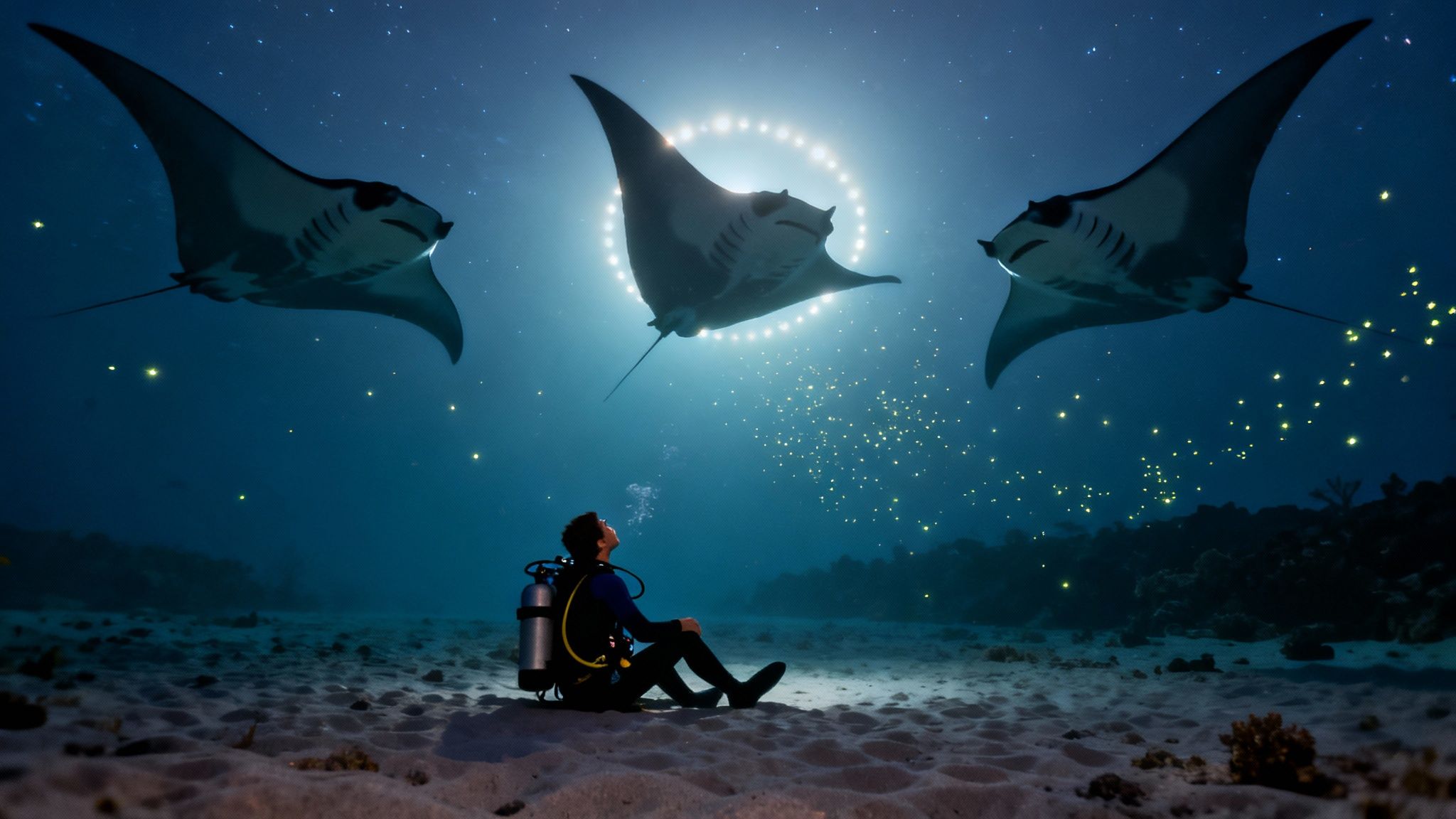
The magic behind this dive is a simple, yet brilliant, bit of teamwork between humans and nature. Dive operators anchor at specific spots and shine powerful lights into the water, creating what we affectionately call the "manta campfire." These lights attract massive clouds of plankton, the manta rays' favorite meal.
It doesn't take long for the gentle giants to show up for their nightly feast.
With wingspans that can stretch over 12 feet, these resident reef mantas swoop, glide, and perform mesmerizing barrel rolls to filter the plankton from the water. As a diver, you’ll be settled on the sandy ocean floor, looking straight up as they dance just inches above your head. It’s an immersive, peaceful, and absolutely awe-inspiring experience.
Why Kona is the Global Epicenter for Manta Dives
You can find manta rays in other beautiful places around the world, but the Kona coast offers something truly unique. Unlike a quick pass-by at a cleaning station, the Kona experience is built around their active feeding behavior.
Better yet, the local manta population doesn't migrate. They're here year-round, which gives this dive an incredibly high success rate—often over 90%. This reliability has made Kona the undisputed best place on Earth to witness this incredible spectacle.
Top-tier operators like Kona Honu Divers have perfected this encounter over the years, creating safe and unforgettable trips for thousands of divers. Their deep expertise and commitment to the local marine ecosystem mean that every trip is both thrilling and responsible. The glowing reviews from fellow divers really say it all. For a deeper look, check out this comprehensive guide to the Kona manta ray night snorkel.
Planning this adventure is the first step toward a memory you’ll never forget. You can explore options for the manta ray dive tour page to see how an expertly guided trip unfolds.
Why Garden Eel Cove Is The Premier Manta Dive Site
When you start looking into a manta ray night dive in Kona, you'll hear a few different spots mentioned. But for the superior experience, one name rises above the rest: Garden Eel Cove. We call it "Manta Heaven" for a reason. This isn't just another dive site; it’s the best underwater theater for one of the most incredible shows on Earth, largely due to its protected location and prime viewing area.
The biggest difference-maker is its location. Tucked away in a naturally protected bay, the water here is almost always calmer than at more exposed sites. This shelter from the open ocean swell is a huge deal for both comfort and safety. It means you can settle in and enjoy the show without getting tossed around by surge, ensuring a more pleasant and reliable dive.
This natural protection is a game-changer, especially on nights when the ocean is a bit moody. It creates a stable, predictable environment where both divers and mantas can feel at ease.
A Natural Amphitheater and Superior Reefs
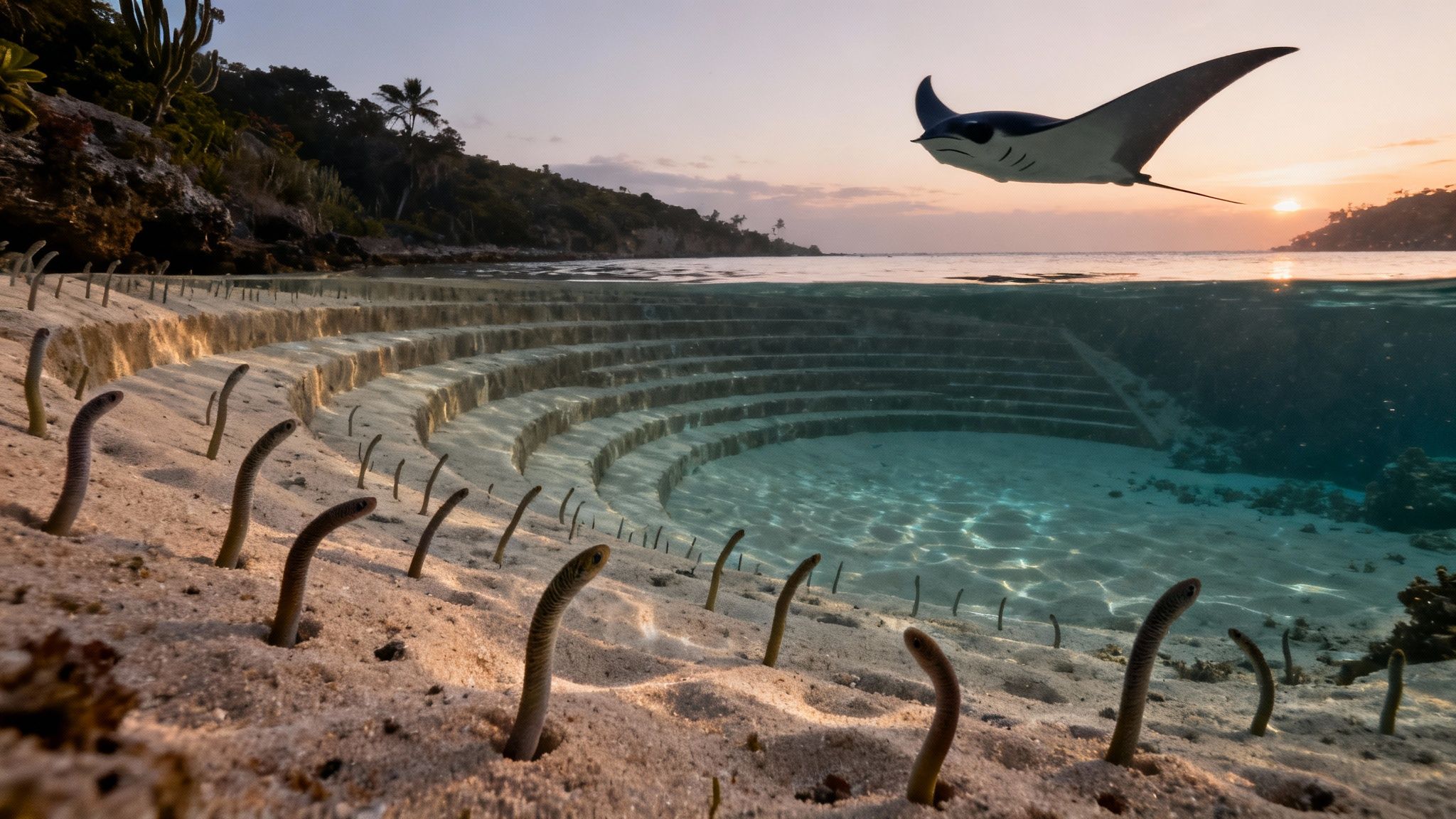
What truly makes Garden Eel Cove the superior choice is its underwater layout. The site has a beautiful, gently sloping sandy bottom that forms a perfect natural amphitheater. Dive operators set up a powerful central light—we call it the "campfire"—right in the middle. This setup provides a better viewing area than other locations.
This unique topography allows divers to settle in a wide circle around the light, giving everyone a front-row seat without that crowded, stacked-up feeling that can happen at other spots. It’s an intimate yet massive viewing experience. You can read more about what makes this specific location so incredible by checking out the wonders of Manta Heaven.
The setup at Garden Eel Cove is brilliant because every single diver gets an amazing view. The sandy bottom works like a stadium, so it doesn't matter where you are in the circle—you'll have mantas barrel-rolling just feet from your face.
Even the descent is more interesting here, thanks to better reefs. The site gets its name from the thousands of shy garden eels that pop out of the sand, and the nearby reef is buzzing with life. It turns the whole dive into an adventure, not just a waiting game for the main event.
The Kona manta ray night dive is world-famous, bringing in around 80,000 people every year. While some sites might offer a more private feel, Garden Eel Cove is legendary for the sheer number of mantas it attracts. It's not uncommon to see nearly a dozen of these gentle giants swooping and feeding all at once.
Choosing the right location is the most important decision you'll make for this dive. With its calm water, perfect viewing setup, and lively, healthier reefs, Garden Eel Cove is, without a doubt, the superior choice for a truly unforgettable encounter.
Navigating Your Manta Ray Dive Adventure From Start To Finish
Knowing what to expect from your manta ray night dive in Kona can make all the difference, turning a great trip into a truly extraordinary one. The whole experience is designed to be seamless, from the moment you book until you’re back on shore with memories that will last a lifetime. So, let's walk through the whole adventure so you feel like a seasoned pro before you even step on the boat.
First things first: book your manta ray dive tour well in advance. I can't stress this enough. This is one of the most popular activities on the Big Island, and spots—especially with top-notch operators—fill up fast. Locking in your reservation early doesn't just guarantee you a place; it also gives you a bit of wiggle room to reschedule if a trip gets canceled due to rough seas, which can occasionally happen.
Gearing Up For Your Trip
Once you’re booked, the prep work is pretty simple. Most of what you need for the dive itself is already taken care of. Reputable outfits like Kona Honu Divers will have all the essential scuba or snorkel gear waiting for you, including tanks, weights, and the powerful lights that make the magic happen.
That said, a few personal items can seriously upgrade your comfort level for the evening. Here's my go-to checklist of things to bring:
- A Warm Jacket or Sweatshirt: Even in Hawaii, the boat ride back to the harbor can get surprisingly chilly after you've been in the water. Having a dry, warm layer to throw on makes a huge difference.
- Swimsuit and Towel: Show up with your swimsuit on under your clothes. It just makes everything easier. A dry towel for afterward is an absolute must.
- Reusable Water Bottle: Staying hydrated is always a good plan. Most boats have a water cooler for easy refills.
- Reef-Safe Sunscreen: This is key if you’re doing a two-tank trip that starts in the late afternoon. You'll definitely want it for that first dive before the sun goes down.
The dive shop handles all the heavy lifting with the equipment, which is great. It frees you up to just soak in the excitement.
A little pro-tip from years of diving: bring a small dry bag. It's the perfect way to keep your phone, keys, and a change of shirt completely safe from any splashes on the boat.
The Briefing and The Dive Itself
Once you're on the boat, your dive guide will give a thorough briefing. This isn't just your standard safety talk; it's a fantastic introduction to the world of manta rays. You’ll learn all about their behavior, why they gather here to feed at night, and—most importantly—the rules for interacting with them. The number one rule? Never, ever touch a manta. This briefing really builds the anticipation and sets the stage for what you're about to see.
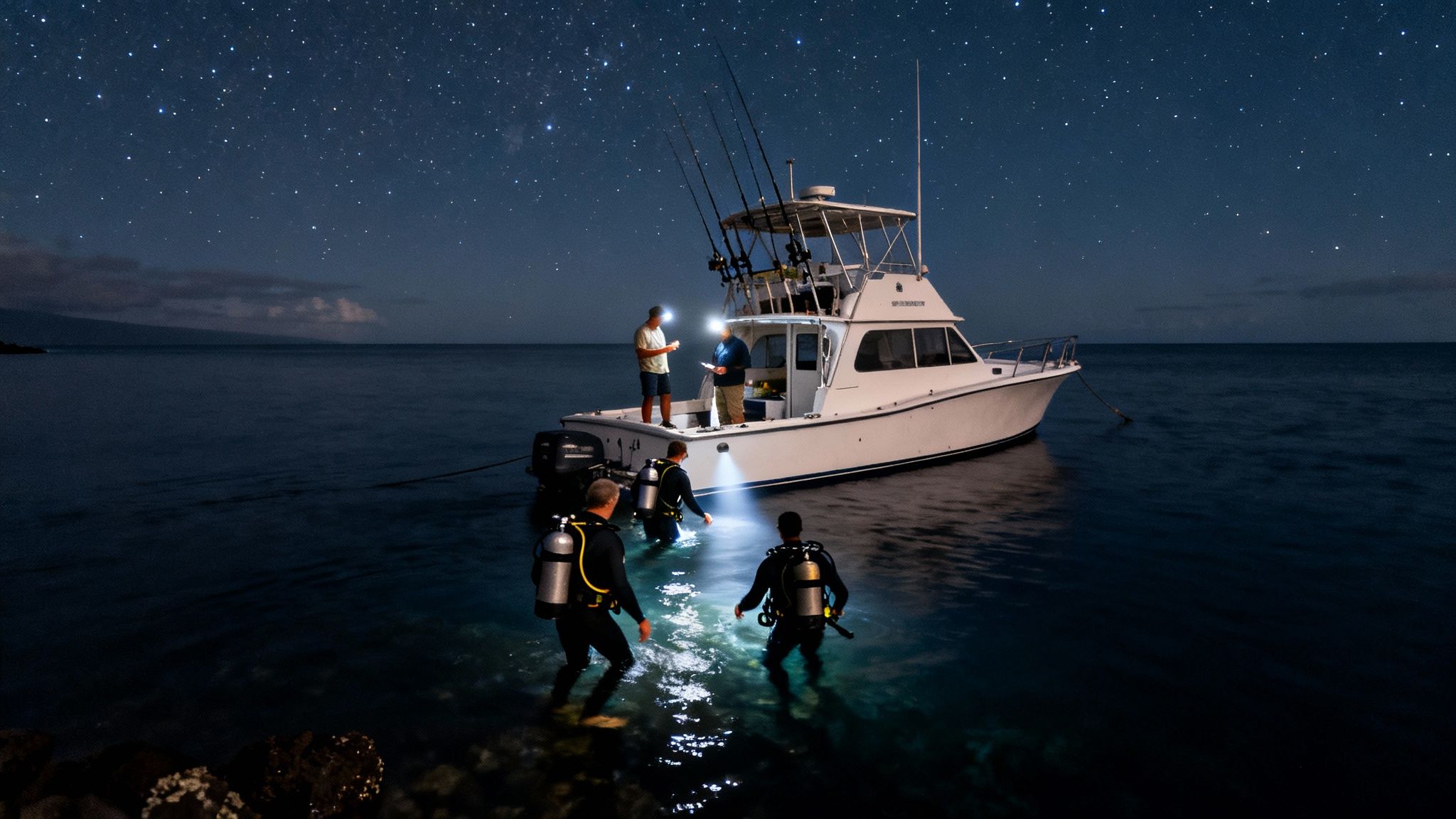
After a short boat ride out to the dive site, it’s time to get in the water. As a diver, you'll descend to a sandy bottom at around 30-40 feet and find a spot around the "campfire"—the powerful light source placed in the center to attract plankton. If you're snorkeling, you’ll hang out on the surface, holding onto a custom-built light board.
From the moment you settle in, the show begins. Giant, graceful shadows start to emerge from the darkness, gliding effortlessly just inches above you as they feed. It’s a peaceful, mesmerizing, and utterly unforgettable experience.
Essential Gear And Photography Tips For The Dive
Trying to capture the pure magic of the manta ray night dive in Kona is a photographer's dream, but it definitely comes with its own set of challenges. It's a true low-light spectacle, so knowing your gear inside and out—and how to use it respectfully—is what separates a snapshot from a masterpiece.
First things first, you don't need to haul all your own dive gear. Top-notch operators like Kona Honu Divers provide everything you need, and it’s always well-maintained. For certified divers, they even offer complimentary Nitrox, which is a huge plus, especially on a two-tank trip. Diving on Nitrox helps reduce fatigue and can give you a little more bottom time, which means more quality moments with the mantas.
Mastering Your Camera in the Dark
For underwater photographers, this dive is the ultimate test of your low-light skills. Don't worry, you don't need a ten-thousand-dollar camera rig to get incredible shots. It's much more about understanding the unique environment and dialing in the right settings.
Here’s a solid starting point for your camera setup:
- Go wide. A wide-angle lens is your best friend. It lets you get incredibly close to the mantas, cutting down on all the plankton-rich water between your lens and the action.
- Manual is a must. Start with a wide-open aperture (a low f-stop) to pull in as much light as possible. Pair that with a slower shutter speed to capture that beautiful, graceful motion. Just be careful not to go too slow, or you'll get nothing but blur.
- Balance your ISO. Bumping up your ISO will brighten the image, but it can also introduce a lot of grainy digital noise. You'll need to find your camera's sweet spot, which is usually somewhere between 800 and 1600.
A focus light is absolutely non-negotiable for this dive. If you want a more comprehensive breakdown of what to pack, check out this guide on the gear you will need for your Kona diving adventure.
Lighting and Positioning for the Perfect Shot
The water is thick with plankton—that's what brings the mantas in! Unfortunately, it also creates a massive amount of backscatter, those pesky white specks that can completely ruin an otherwise perfect photo. The key is lighting your subject, not the water in front of it.
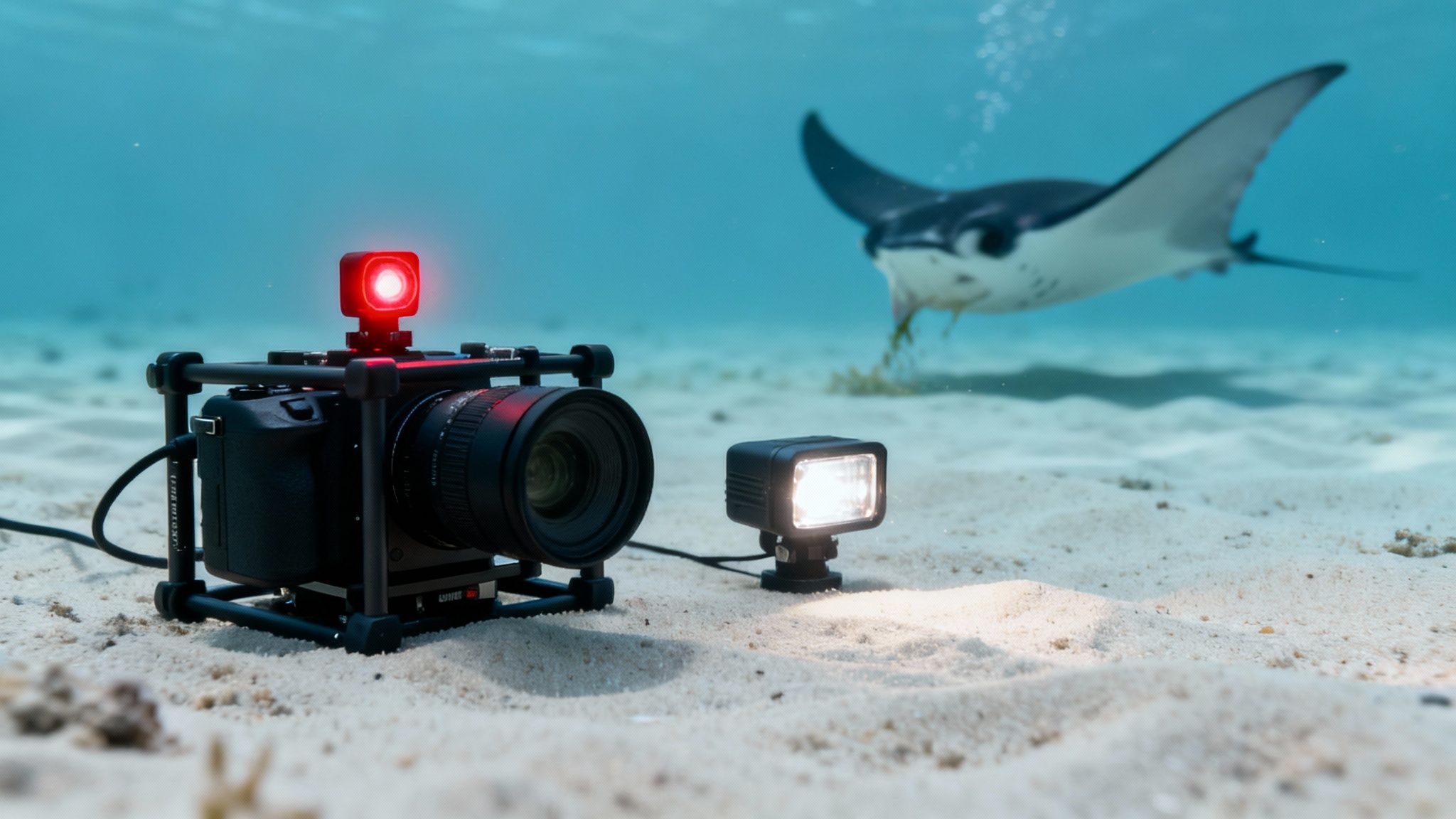
The secret to great manta photos is off-camera lighting. Position your external strobes or video lights wide and angled slightly behind your camera housing. This illuminates the manta from the sides without lighting up the particles directly in front of your lens.
This is critical: use a red focus light. Bright white lights are jarring and can seriously disrupt the mantas' natural feeding behavior. A red light lets your camera lock focus without disturbing the animals, which is just good etiquette for any responsible underwater photographer.
Once you're down there, get low on the sandy bottom and shoot upwards toward the surface. This angle creates a much more dramatic, awe-inspiring image and, just as importantly, helps keep your exhaled bubbles from flowing directly into the mantas' path.
Your Role in Protecting Kona’s Gentle Giants
Diving with manta rays in Kona is an experience that stays with you forever. But it's more than just a spectacular dive; it's a chance to step into the manta's world as a respectful guest. The whole encounter is designed around a simple, powerful idea: passive observation. This keeps you safe, protects the mantas, and makes you a key player in conserving this fragile marine environment.
The golden rule here is simple but non-negotiable: look, but never, ever touch.
Reaching out to a manta ray, even with the best intentions, can strip away the protective slime coat that covers their skin. Think of this mucous layer as their immune system—it's a critical barrier against harmful bacteria. Damaging it leaves them vulnerable to serious infections. That’s why all reputable dive operators will have you settle on the sandy bottom, letting the mantas call the shots and decide how close they want to get.
More Than a Dive: You're Part of the Science
That adrenaline rush you feel underwater? It’s also powering crucial conservation work. Every single dive contributes to a massive sighting database that researchers use to track the local manta population. This "citizen science" has been a game-changer for understanding these incredible animals.
The entire philosophy of this dive hinges on respect. Keep your hands to yourself, stay low, and you become a silent, welcome observer in their world. This ensures the encounter is natural and stress-free for the mantas.
Thanks to divers like you, scientific monitoring has completely changed what we know about Kona's unique manta population. Between 2009 and 2014 alone, researchers logged over 10,000 sightings, which helped identify more than 300 individual rays. Fast forward to 2023, and the estimated local population of reef mantas (Mobula alfredi) has grown to over 450. This data has been vital for informing IUCN conservation listings and has even led to the installation of permanent moorings to prevent anchor damage to the reef. You can dive deeper into these fascinating manta ray statistics and conservation milestones.
To make it even easier to be a great guest in their home, here’s a quick guide to manta etiquette.
Manta Ray Interaction Do's And Don'ts
| Action | Why It Matters |
|---|---|
| Do stay on the sandy bottom. | This gives mantas a clear, safe path to swim above you without feeling threatened. |
| Don't touch the manta rays. | Touching removes their protective slime coat, exposing them to dangerous infections. |
| Do keep your lights pointed up. | Your light attracts the plankton mantas feed on, bringing them closer for a better view. |
| Don't chase or pursue the mantas. | Let the mantas come to you. Chasing them causes stress and can ruin the experience for everyone. |
| Do control your buoyancy. | Staying neutral and avoiding sudden movements helps keep the mantas calm and comfortable. |
| Don't block their path. | Never swim above the mantas or get in their way. Give them plenty of space to maneuver. |
Following these guidelines is straightforward and makes a world of difference. Your mindful approach ensures this underwater ballet continues to amaze divers for many years to come. For an even more comprehensive overview, it's a great idea to review these tips on responsible and considerate diver etiquette.
Your Kona Manta Dive Questions, Answered
You've got questions, and we've got answers. Over the years, we've heard just about every query imaginable from divers getting ready for their first Kona manta ray night dive. Here are the most common ones we hear, along with some straight-to-the-point advice.
Do I Need to Be Scuba Certified to See the Manta Rays?
Not at all! This is one of the best things about the manta experience in Kona. While divers get an incredible view from the seafloor looking up, snorkelers have an equally jaw-dropping perspective from the surface.
You'll float on top, holding onto a specially designed light board. This board illuminates the water, drawing in the plankton, and the mantas glide right up to the surface to feed, often just inches away. It’s an amazing way to get face-to-face with them. Most top-tier operators, like Kona Honu Divers, run combined trips, so divers and snorkelers can be on the same boat. It’s perfect for families or groups with mixed experience levels.
What's the Best Time of Year to See Mantas?
This is an easy one: anytime! Kona's resident manta ray population doesn't migrate, so you can find them here year-round.
The dive operators have this down to a science. By using powerful lights to attract plankton (the mantas' primary food), they create a reliable underwater buffet that the mantas rarely miss. Success rates are consistently high, often topping 90%. The biggest factor in deciding when to go is simply when you can get to Hawaii.
What Happens if We Don't See Any Manta Rays?
It's rare, but it can happen. These are wild animals with their own agenda, after all. But the best dive shops understand this and stand by their trips with a "manta guarantee."
For instance, Kona Honu Divers offers a voucher to come back and try again on another night, free of charge (you'll just need to check for available space). This policy shows how confident they are in finding mantas and gives you some peace of mind. When you're booking your manta ray dive tour, just be sure to ask about their specific guarantee.
Here's a pro tip: Schedule your manta dive for one of your first nights in Kona. That way, if you get skunked and need to use the guarantee, you have plenty of other nights available in your trip to rebook.
Are There Other Unique Night Dives in Kona?
Absolutely. The manta dive gets all the attention, but Kona is a world-class destination for other kinds of night diving, too.
For truly adventurous divers, the Kona Blackwater Dive is an experience you'll never forget. You drift tethered to the boat in the deep, dark open ocean and watch as bizarre, bioluminescent creatures rise from the depths. It’s like diving in outer space.
If that sounds a bit too intense, there are also incredible advanced night reef dives available for more experienced divers. You'll get to see the coral reefs in a whole new light as nocturnal creatures emerge, completely transforming the underwater landscape you might have seen during the day.
Ready to see the world-famous manta ray ballet for yourself?