
Picture this: you slip into the dark, warm waters of the Pacific Ocean just after sunset. Below you, beams of light cut through the black, and suddenly, a massive, graceful shadow emerges. It's a giant manta ray, gliding effortlessly through the water, performing a silent ballet right before your eyes.
This is the legendary manta ray night dive in Kona, and it's an experience that belongs on every ocean lover's bucket list.
Experience Kona’s Unforgettable Underwater Ballet
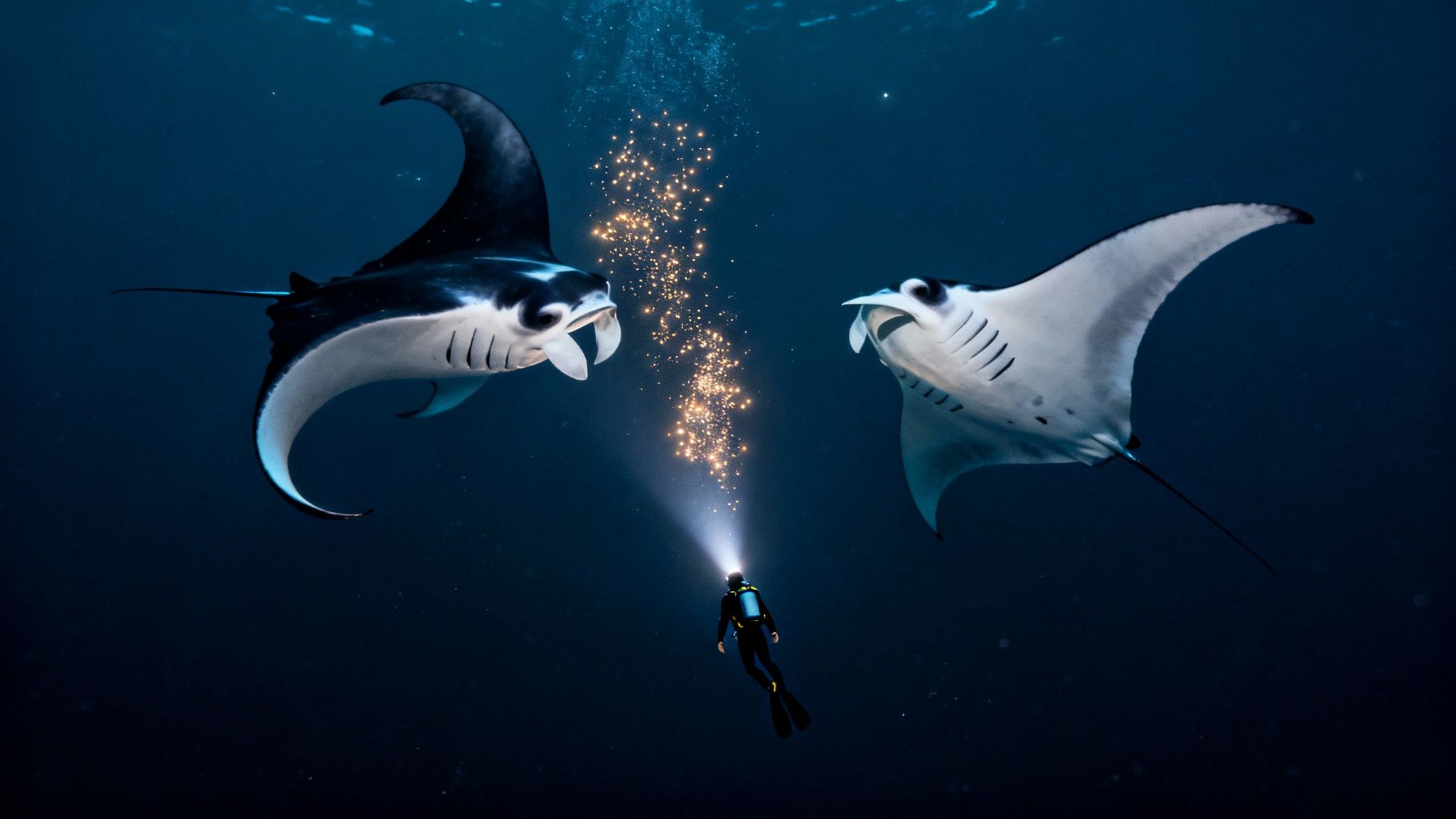
The Kona coast on the Big Island has earned its reputation as one of the best places on Earth for a wildlife encounter this magical. The setup is genius in its simplicity. After the sun goes down, dive boats head to well-known manta sites and set up powerful underwater lights. These lights attract swarms of plankton, which just so happens to be a manta ray's favorite meal.
This creates a massive, glowing buffet that the local mantas simply can't resist. The result? A breathtaking show where giant rays, some with wingspans stretching over 12 feet, swoop, glide, and barrel-roll through the light beams to scoop up the plankton. They often come within inches of you, completely unbothered by the audience.
Why This Dive Is a Must-Do Adventure
What truly sets the Kona manta dive apart is how reliable it is. The chance of seeing mantas here is incredibly high, often topping 90%, so you can feel confident you’re going to witness something special. It’s a dependable showstopper for any trip to Hawaii.
Better yet, it's not just for scuba divers. Snorkelers get an amazing view from the surface, making it an adventure almost anyone can join.
Here's what makes it so unforgettable:
- Intimate Encounters: You're not just watching from a distance. These gentle giants are performing their graceful acrobatics just feet away.
- Reliable Sightings: Unlike many wildlife tours, Kona offers one of the most consistent manta ray experiences in the world, any time of year.
- Open to Everyone: Whether you're a seasoned diver with hundreds of dives or a family looking to snorkel for the first time, you can be part of this.
Top-tier operators like Kona Honu Divers have this adventure down to a science, creating a trip that’s safe, respectful to the animals, and completely mind-blowing. They know exactly where to go and how to give you the best possible show. When you book with an experienced crew, you aren't just getting a ticket for a boat ride—you're securing a front-row seat to one of the greatest performances in the natural world.
This guide will cover everything you need to know to plan your own manta ray night dive and make it the highlight of your visit to Kona.
Why Garden Eel Cove Is Kona’s Premier Manta Dive Site
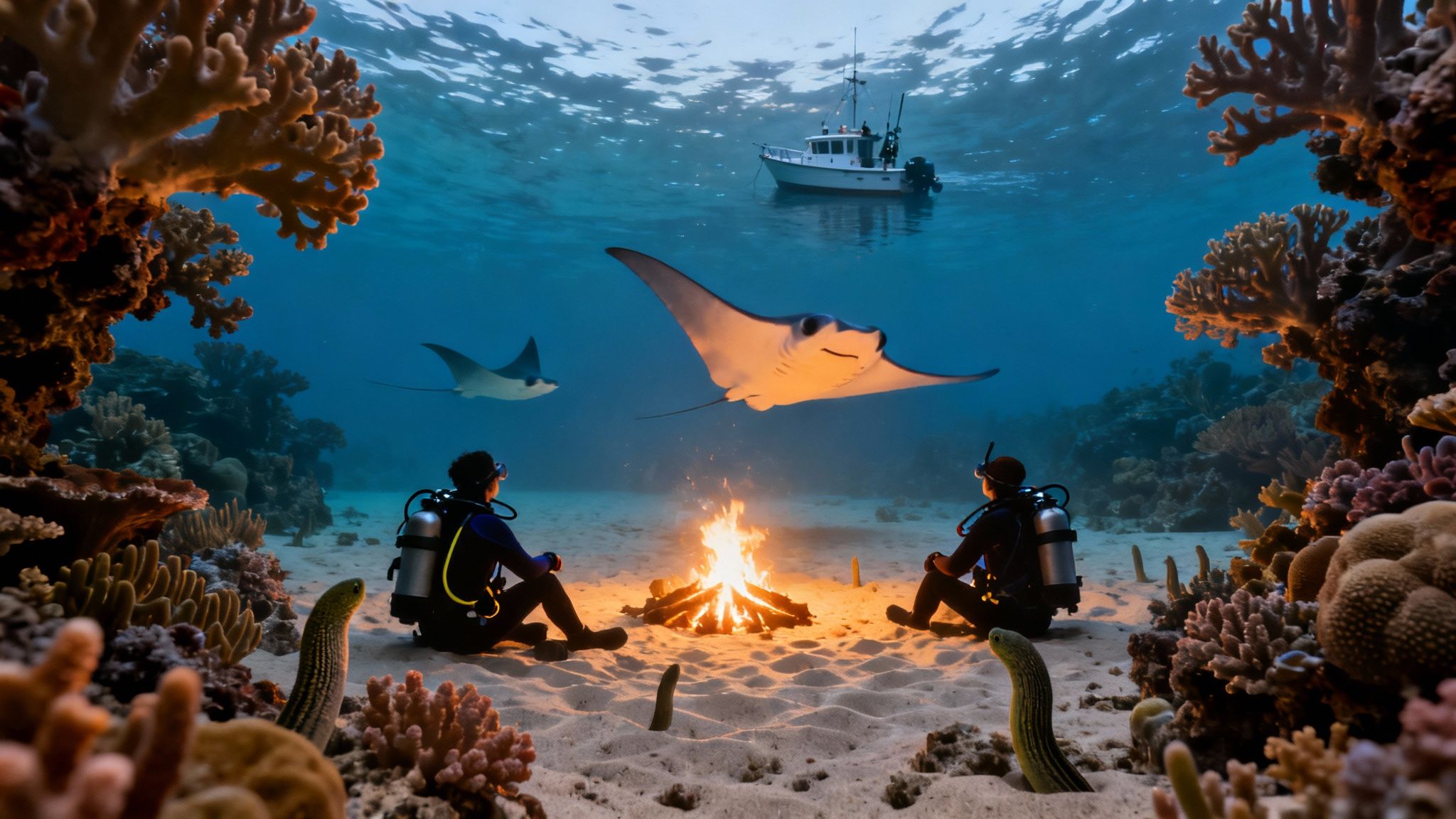
Kona has a few different spots where you can dive with manta rays, but let's be clear: not all dive sites are created equal. If you're looking for the absolute best manta ray night dive in Kona, there's one place that consistently outshines the rest: Garden Eel Cove. Its unique geography, superior viewing area, and thriving ecosystem make it the undisputed champion.
One of the biggest reasons this spot is the superior choice is its location. Tucked away and naturally protected from the big ocean swells, Garden Eel Cove offers much calmer and more reliable conditions. This means fewer canceled trips and a much higher chance that your bucket-list dive will actually happen. For anyone who's traveled a long way for this experience, that peace of mind is huge.
The Famous Underwater Campfire
The real magic of Garden Eel Cove is what we call the "campfire." It's a large, sandy patch on the seafloor where all the dive operators set up their powerful lights, pointing them straight up. This creates a better viewing area where divers can settle down on the sand in a big semi-circle, just like you would around a real campfire.
This simple setup is brilliant for a few reasons:
- The Best Seat in the House: You're looking straight up, getting an incredible, unobstructed view as the mantas swoop and perform their acrobatic barrel rolls right above your head.
- Relax and Enjoy: Sitting comfortably on the bottom is way easier than trying to hover perfectly still. You can just relax and take in the show without worrying about your buoyancy.
- Safe for Everyone: This keeps all the divers in one spot, ensuring no one accidentally gets in the way of the mantas while they're feeding.
It's like having a front-row seat in a natural underwater amphitheater. The whole thing is designed to be an organized, respectful, and absolutely breathtaking way to see these gentle giants do their thing.
Better Reefs, Better Experience
The show at Garden Eel Cove doesn't just start when the mantas show up. The site itself is home to a stunningly beautiful and healthy coral reef, which you get to explore on your first tank as the sun goes down. This makes it a superior choice because you get two fantastic dives in one trip.
Watching the reef transition from day to night is an adventure all on its own. You'll see the daytime fish head to bed while the nocturnal critters, like eels and octopus, start to come out and play. This first twilight dive adds so much more to the overall experience. You can read more about what makes this spot Manta Ray Heaven at Garden Eel Cove.
When you book a manta ray dive tour that goes to this world-class location, you're getting so much more than just a dive—you're getting a more reliable, more comfortable, and more spectacular underwater adventure.
What to Expect on Your Manta Ray Dive Adventure
So, what’s it really like to go on a manta ray night dive in Kona? Knowing the flow of the trip helps build the excitement, and with Kona Honu Divers, every detail is handled to make sure your experience is safe, comfortable, and absolutely unforgettable. Let's walk through the whole adventure, step by step, so you know exactly what magic awaits.
Your journey starts with a friendly afternoon check-in at Honokohau Harbor. The crew will greet you, get you settled on the boat, and help you stow your gear. It’s a great chance to meet the other divers and share the buzz of anticipation for the night ahead.
Setting Sail and a Twilight Reef Dive
Once everyone's aboard, the captain runs through a thorough boat briefing. They’ll cover all the safety essentials, show you around the vessel, and outline the plan for the trip. You can tell right away that these guys are pros, which puts everyone at ease before you even leave the harbor.
As the boat heads out toward the world-famous Garden Eel Cove, the sun starts its descent, lighting up the Kona sky with those incredible oranges and purples you only see in Hawaii. Your first dip in the ocean is a beautiful twilight dive. You'll descend into the warm Pacific and get to see the reef as it transitions from day to night. It’s a fascinating time—the daytime fish are heading to bed while nocturnal creatures like eels and octopuses are just starting to wake up. This first dive is a fantastic experience all on its own.
The Main Event: The Manta Ballet
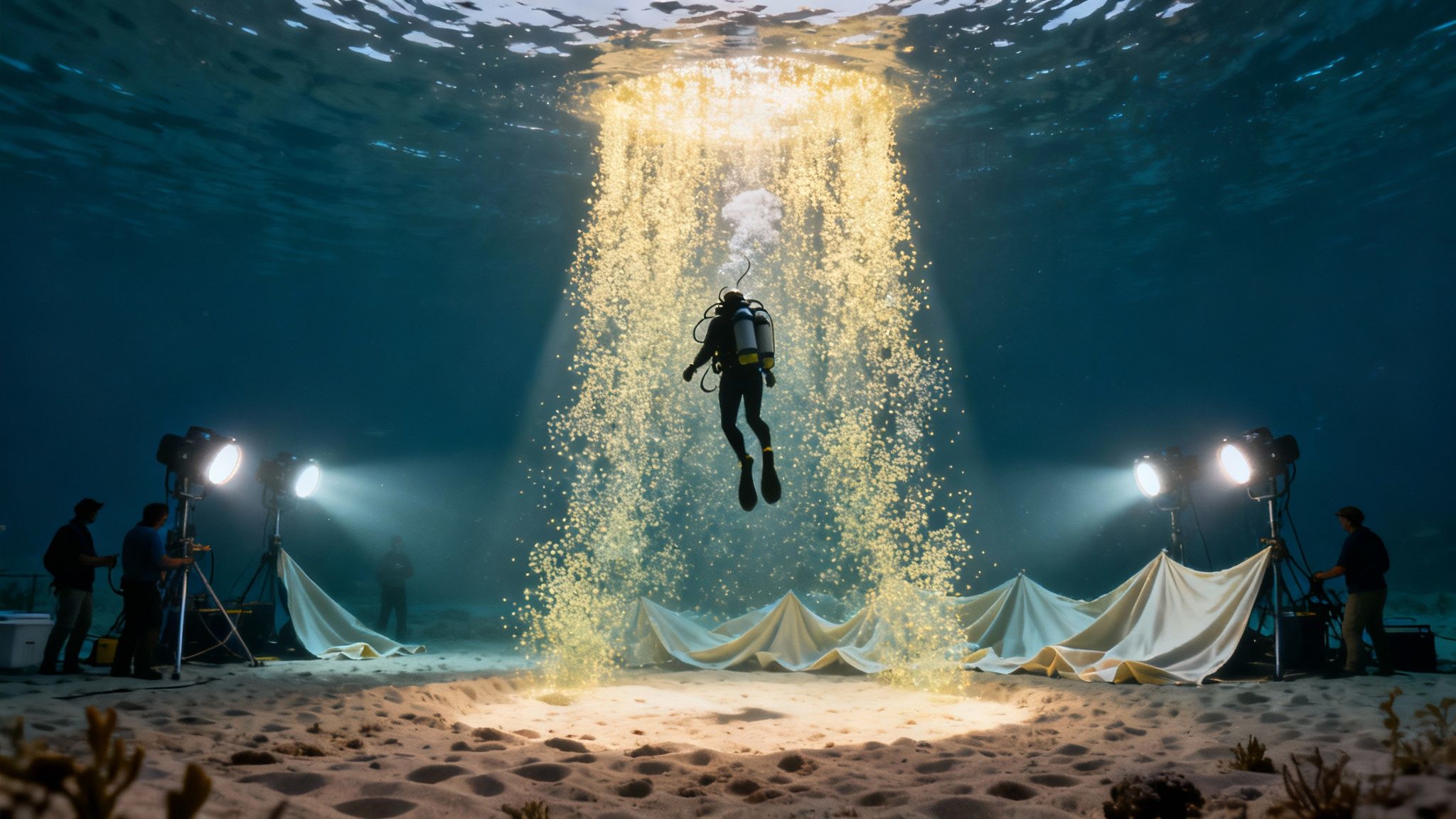
After you surface from the twilight dive, it’s time for a relaxing surface interval. The Kona Honu Divers crew breaks out warm snacks and drinks to help you recharge while they get everything ready for the main event. They’ll position the boat perfectly and set up powerful, custom-built underwater lights designed to attract the plankton the mantas feast on.
The sheer popularity of this experience is astounding. What started as a local secret has become a major draw for Hawaii, bringing in around 80,000 people every year. The combination of calm, shallow water and an 80-95% success rate in seeing mantas makes it both accessible and thrilling. This has created hundreds of local jobs and cemented Kona's reputation as a world-class diving destination. You can learn more about the economic and ecological impact of this incredible dive on their blog.
Then, it’s time to gear up again. As you slip back into the now-dark water, the difference is immediate. Your guide leads you to the underwater "campfire," a sandy spot where all the divers gather in a semi-circle on the ocean floor. You'll switch on your dive light and point it straight up, adding your beam to the massive column of light that attracts a thick, swirling soup of plankton.
The feeling is just surreal. You’re sitting on the bottom of the ocean, in the dark, watching these beams of light dance in the water. A quiet hum of anticipation ripples through the group as everyone waits for the show to begin.
Suddenly, a massive shadow glides into view. It’s the first manta, soaring gracefully into the light with its mouth wide open to filter the plankton. Before you know it, another one appears, and then another. Soon, you're completely surrounded by these gentle giants performing a silent, hypnotic ballet. They swoop, glide, and do barrel rolls just inches above your head. It is a truly awe-inspiring spectacle you will never, ever forget.
How to Prepare for Your Manta Ray Night Dive
A little preparation makes all the difference between a good night and an absolutely unforgettable one. Think of this as your pre-flight checklist for the big event, covering everything from what to toss in your bag to the skills you’ll want to be comfortable with.
Properly gearing up means you can focus on the magic of the mantas, not on being chilly or forgetting something important back at the hotel.
Your Personal Packing List
We handle all the heavy dive equipment, so you can pack light. Still, there are a few personal items that will make your trip much more comfortable, especially for the boat ride before and after the dive.
Here’s a quick rundown of what you should bring:
- Reef-Safe Sunscreen: The Hawaiian sun is powerful, even in the late afternoon on the boat ride out. Let’s protect both your skin and our delicate coral reefs.
- A Towel: Essential for drying off and warming up after you get out of the water.
- Warm Layers: This is a big one. A cozy sweatshirt or windbreaker is a lifesaver on the breezy ride back to the harbor after sunset.
- Reusable Water Bottle: Diving is dehydrating, so keeping water handy is always a smart move.
- Proof of Certification: If you’re scuba diving, don’t forget your C-card! We’ll need to see it.
To make it even easier, here's a quick reference table breaking down what you should pack versus what we've got covered.
Manta Ray Night Dive Checklist
| What to Bring | What Kona Honu Divers Provides |
|---|---|
| Reef-Safe Sunscreen | High-quality BCDs |
| Towel & Warm Layers | Regulators & Dive Computers |
| Reusable Water Bottle | Properly-fitting Wetsuits |
| Proof of Dive Certification | Tanks (incl. free Nitrox) & Weights |
| Swimsuit (wear it!) | Mask, Snorkel, & Fins |
Basically, you handle the personal comfort items, and we'll take care of all the technical dive gear. For a deeper look at our equipment, check out our guide on the gear you will need for your Kona diving adventure.
Certification and Skill Considerations
To join the scuba group on the ocean floor, you’ll need a minimum of an Open Water Diver certification. The dive itself isn't deep or difficult—we stay in one spot—which makes it fantastic for newer divers.
The most important skill you'll use is good buoyancy control. The better you can hold your position, the more comfortable you'll be and the better your view will be.
Remember, our role is to be silent observers. By staying settled on the sand, you become part of the underwater landscape. This is what allows the mantas to relax and gracefully glide inches above your head.
And if you aren't a certified diver, don't worry! The snorkeling experience is just as breathtaking. You'll float comfortably on the surface, enjoying a perfect bird's-eye view of the entire underwater ballet. It’s an adventure that truly everyone can be a part of.
The Science Behind Kona’s Manta Spectacle
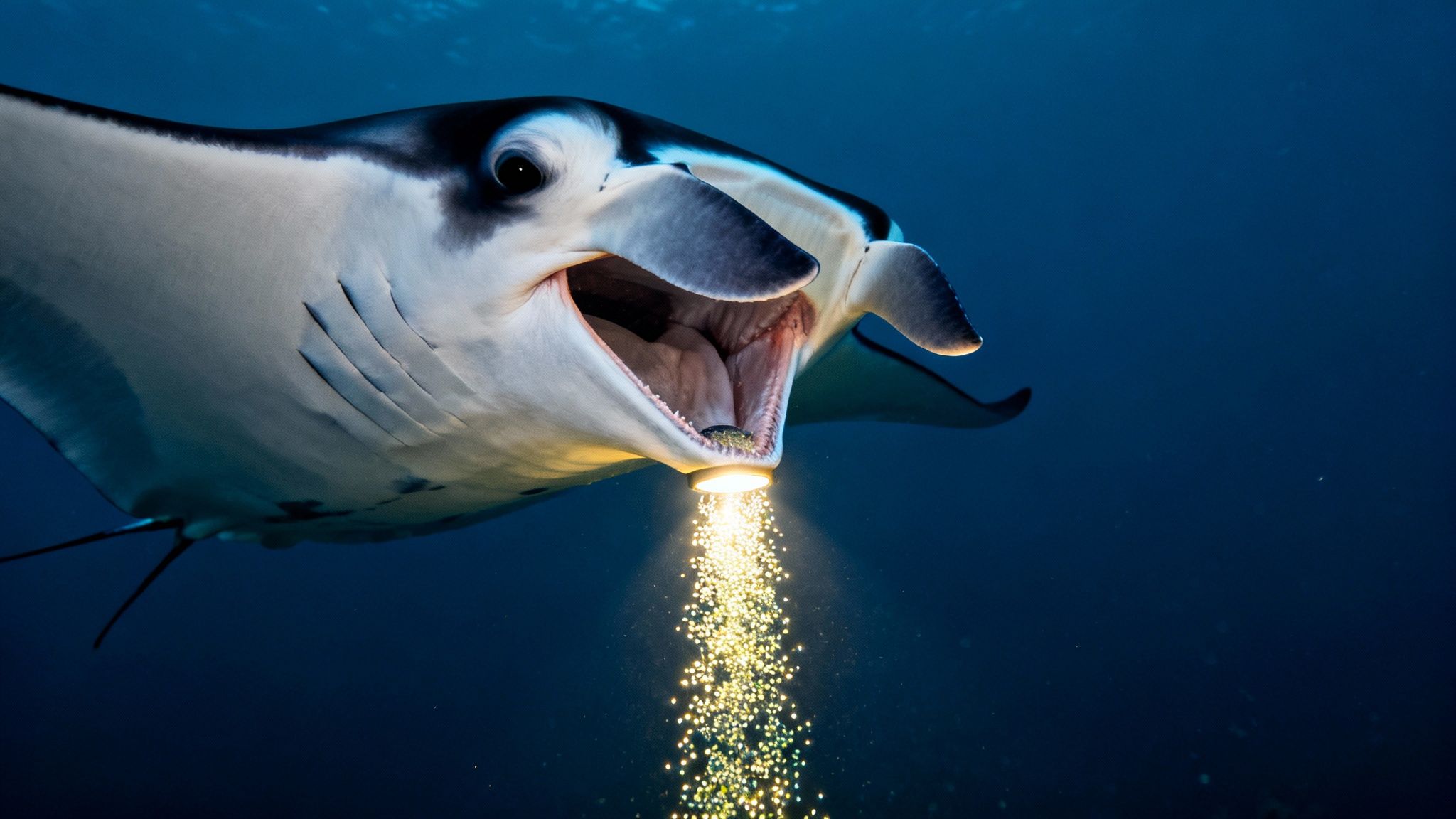
So, what’s the secret sauce that makes the manta ray night dive in Kona one of the most reliable wildlife encounters in the entire world? It all boils down to a brilliant, yet simple, bit of science: light attracts plankton.
Think of it like moths to a flame. When our dive boats switch on their powerful underwater lights, they act as a massive beacon for countless microscopic organisms. This natural behavior, called phototaxis, pulls in plankton from all around, creating a thick, soupy buffet right in the water column. The local manta rays, being the smart creatures they are, have learned that this light means an easy meal.
This isn't an artificial feeding or baiting situation. We're simply amplifying a natural process, ringing a dinner bell that the mantas have come to recognize over decades. It's a beautiful, symbiotic relationship—we bring the light, the light brings the food, and the mantas bring the unforgettable show.
The Graceful Art of Filter Feeding
Watching a manta ray feed is like witnessing a perfectly choreographed underwater ballet. As filter feeders, they glide through the plankton-rich water with their enormous mouths wide open. Inside, specialized structures called gill rakers act like a super-fine sieve, catching all the tiny critters while letting the water flow right through.
To get as much food as possible, they perform some truly mesmerizing acrobatics.
- Effortless Swoops: You'll see them making long, sweeping passes through the beams of light, elegantly scooping up plankton.
- Barrel Rolls: This is their signature move! Mantas perform full somersaults and barrel rolls, a clever technique that keeps them inside the densest part of the plankton cloud for longer.
- Surface Skimming: They often swim right below the snorkelers, skimming the top layer of water where plankton tends to gather.
This nightly feast is what makes Kona's marine ecosystem so special. We see manta rays on these dives with an incredible 85-90% success rate. It’s not uncommon to see about six individuals on any given night, but we’ve seen gatherings of over 36 mantas at once! And because it all happens in relatively shallow water—just 30-40 feet deep—you get plenty of bottom time for an up-close, breathtaking experience.
This predictable feeding behavior is precisely why Kona has become the world's premier destination for this adventure. The mantas aren't trained; they're simply showing up for a reliable meal that has been served consistently for years.
When you understand the science behind it, the whole experience becomes even more meaningful. You’re not just watching from the sidelines; you're part of a natural event in the food chain. To dive deeper into their habits, check out our article on how deep manta rays dive in Kona. It transforms a cool dive into a genuine connection with the rhythm of the ocean.
Kona’s Other World-Class Dives: What To Do After The Mantas
Let’s be honest, the manta ray night dive in Kona is the showstopper. It's what brings most divers here, and for good reason. But your adventure shouldn't stop when the sun comes up. The Big Island is a diver’s paradise through and through, with a whole other world waiting for you just beneath the waves.
Think of it this way: the manta dive is the headliner, but the rest of the festival lineup is just as epic. From stunning coral reefs to wild volcanic formations, Kona has a dive for every logbook. If you're curious how Kona stacks up against other top-tier locations, you can find a ton of great info in general scuba diving guides that cover unique spots around the globe.
The Surreal Kona Blackwater Dive
Ready for something completely different? Imagine this: you're floating in the inky blackness of the deep ocean, miles from shore, with only the lights from the boat and your own torch cutting through the dark. Strange, beautiful, and often bioluminescent creatures drift up from the abyss to greet you.
This is the Kona Blackwater Dive, and it’s as close to a spacewalk as you can get on Earth. You'll see things that look like they belong in a sci-fi movie—larval fish, glowing squid, and all sorts of alien-like jellies. It's a truly mind-bending experience. If that sounds like your kind of thrill, you can learn more about this unique Blackwater Dive tour.
Advanced Dives and Volcanic Landscapes
For those of you with a few more dives under your belt looking for a real challenge, Kona absolutely delivers. The island's volcanic past has sculpted an incredible underwater playground of lava tubes, dramatic arches, and sheer drop-offs that will take your breath away.
These aren't your typical reef dives. We're talking about sites where you can find reef sharks snoozing in caves, huge schools of fish found only in Hawaii, and topography that feels truly ancient. These charters push you to more remote spots that really show off the raw power and beauty of Hawaii's geology. Check out the options for an advanced dive tour and get ready to see a whole other side of Kona.
Whether you add a blackwater trip to see the ocean's aliens or book an advanced charter to explore lava tubes, sticking around for a few more dives will make your trip unforgettable. See all the incredible diving tours the Big Island has to offer.
Got Questions About the Manta Ray Night Dive? We’ve Got Answers.
It’s totally normal to have a few questions before booking a once-in-a-lifetime adventure like this. Let’s clear up some of the most common ones so you can feel completely confident and excited for your dive.
Is This Manta Ray Dive Actually Safe?
Yes, absolutely. When you go with a professional, experienced crew like Kona Honu Divers, safety is the top priority, full stop.
Every single trip kicks off with a detailed safety briefing before you even touch the water. Once you're in, certified divemasters and instructors are with you the entire time, making sure everything runs smoothly for both you and the mantas.
I Just Got My Certification. Can I Handle This Dive?
You bet! In fact, the manta ray night dive is one of the best first "real" dives you can do after getting certified. The dive itself is pretty mellow.
You’ll be in relatively shallow water, typically just 30-40 feet deep. And instead of swimming all over the place in the dark, you'll be stationary, holding onto a light source on the sea floor. It's the perfect, low-stress environment to work on your buoyancy while watching a world-class wildlife spectacle unfold right in front of you.
When’s the Best Time of Year to See Manta Rays in Kona?
This is the best part: any time is a great time! Kona’s resident manta ray population sticks around all year, so there really isn't an "off-season."
No matter when you plan your trip—spring, summer, fall, or winter—the sighting success rate consistently sits between 85-90%. Your chances of having an incredible encounter are fantastic year-round.
What if We Go and the Mantas Don’t Show Up?
While sightings are incredibly reliable, we are dealing with wild animals, and nature never comes with a 100% guarantee. Reputable operators like Kona Honu Divers know this, and they want you to have the amazing experience you came for.
That’s why they have a 'manta guarantee.' On the very rare occasion that the mantas don't make an appearance, you can usually come back for another trip, free of charge, on a standby basis. It’s their way of making sure you get another shot at the magic.
Ready to see the gentle giants of Kona for yourself? Join Kona Honu Divers for a night you'll be talking about for years to come. Book your manta ray dive tour today