
If you've ever dreamed of an underwater experience that feels truly otherworldly, the manta ray night dive in Kona is it. It’s an iconic Hawaiian adventure where divers and snorkelers get a front-row seat to watch majestic giant manta rays feed on plankton, which are drawn to powerful underwater lights. People often call it an "underwater ballet," and for good reason—it’s a breathtakingly beautiful and reliable encounter with some of the ocean's most graceful giants.
The World-Famous Underwater Ballet

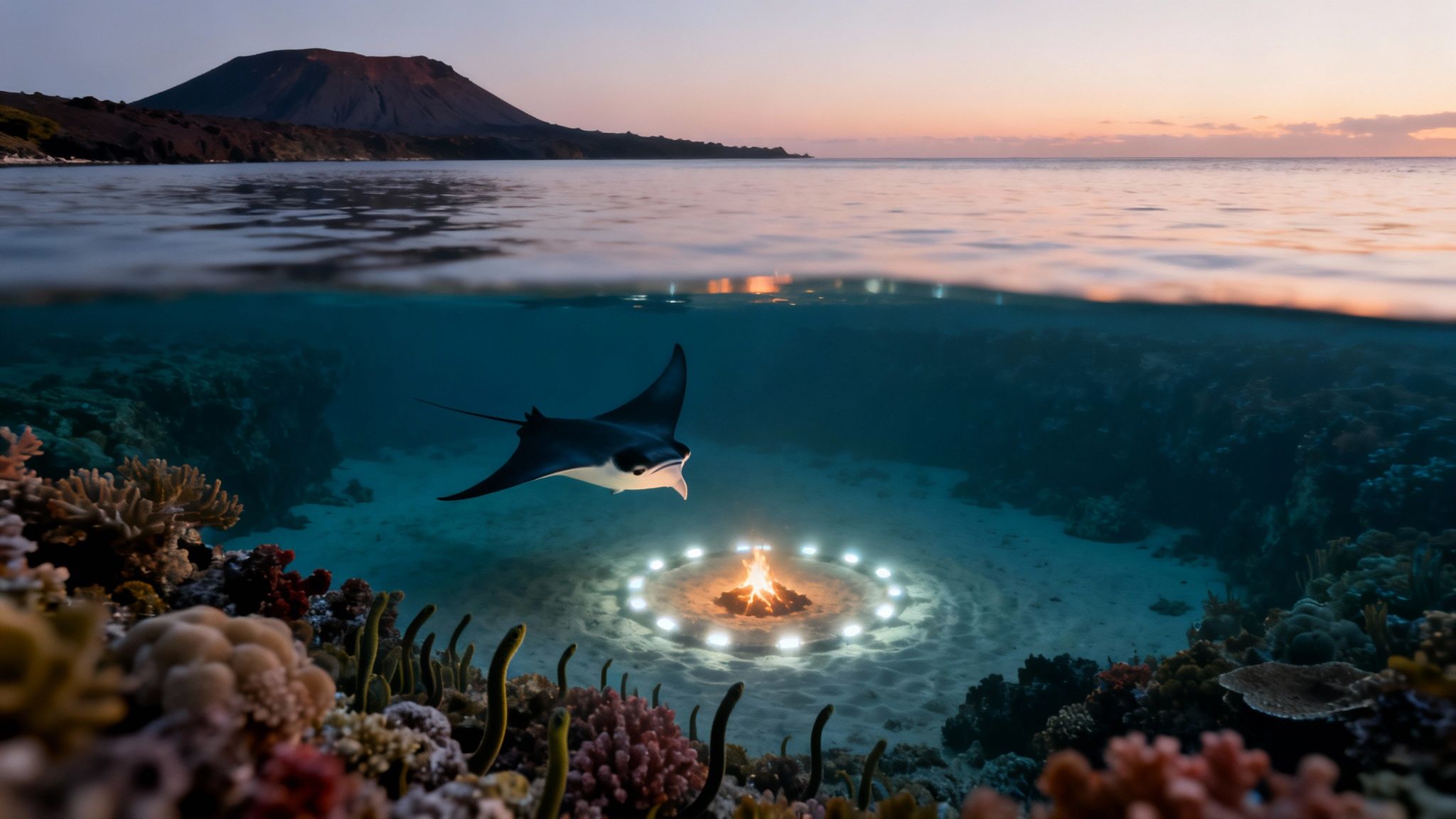
Picture this: you slip into the warm, dark Pacific waters just as the sun sets, leaving streaks of orange and purple across the Kona sky. There's a quiet hum from the ocean and a palpable sense of excitement in the air. As you descend, you spot a soft, inviting glow below—this is the underwater "campfire," a circle of lights set on the ocean floor that illuminates the stage for the main event.
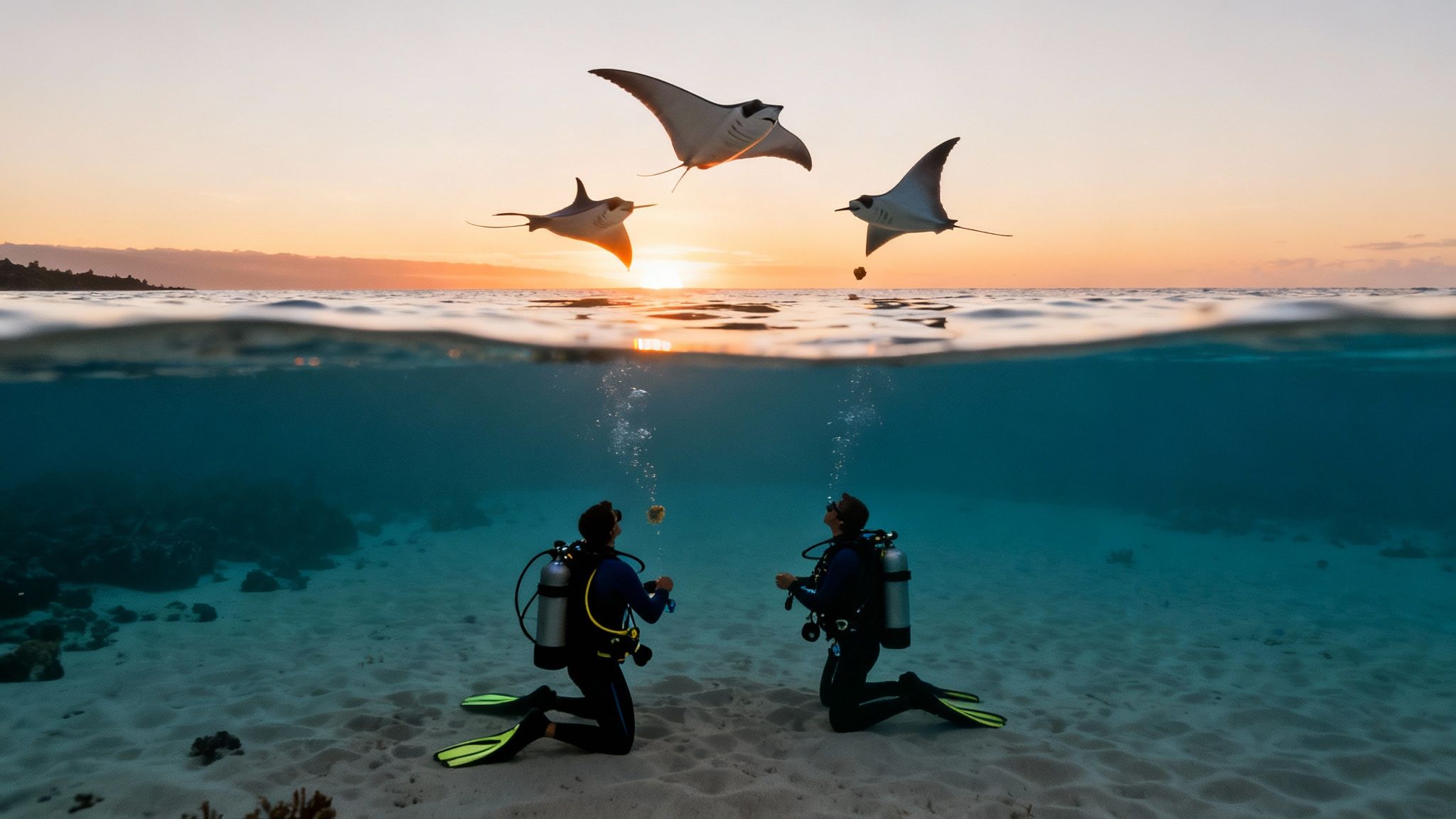
This isn’t just a passive observation dive; it's a full-blown spectacle. Once you settle onto the sandy bottom around the lights, the stars of the show make their grand entrance. Giant manta rays, some with wingspans stretching over 12 feet, emerge from the darkness. They glide, swoop, and perform effortless barrel rolls right over your head, filtering mouthfuls of plankton from the illuminated water. Their movements are so fluid and hypnotic you can’t help but be completely mesmerized.
A Reliable Natural Wonder
For anyone looking for truly memorable and immersive travel experiences, the Kona manta dive stands apart because of one simple thing: it's incredibly reliable. Many wildlife encounters are a gamble, but Kona’s manta ray population is residential. They live here year-round, which has given the Big Island a global reputation as the absolute best place to safely and predictably interact with these incredible animals.
This bucket-list adventure draws around 80,000 visitors every year to this one special spot on the coast. What keeps people coming? A phenomenal 80-90% sighting success rate, no matter the season. The whole experience happens in shallow, comfortable water—just 30-40 feet deep with an average temperature of 75°F—making it accessible for certified divers and even snorkelers. The thrill of having a manta glide just inches away is so powerful that an estimated 85-90% of our guests come back to do it again.
This consistent, magical performance has cemented the manta ray night dive as one of the most unforgettable underwater encounters on the planet. It’s a front-row seat to one of nature’s most beautiful displays.
To give you a clearer picture, here’s a quick rundown of what makes this dive so special.
Kona Manta Ray Night Dive At a Glance
| Aspect | Details |
|---|---|
| Location | Kona Coast, Big Island, Hawaii |
| Type of Encounter | Night Dive & Snorkel |
| Primary Wildlife | Giant Manta Rays (Manta alfredi) |
| Average Depth | 30-40 feet (10-12 meters) |
| Water Temperature | 75°F (24°C) on average |
| Sighting Success Rate | 80-90% year-round |
| Best Time to Go | Year-round, with calmest seas in summer |
| Annual Visitors | Approximately 80,000 |
This table just scratches the surface, but it highlights why this isn't just another dive—it's a world-class natural event.
At Kona Honu Divers, we love giving people the chance to witness this underwater ballet. Our experienced team is completely dedicated to your safety, sharing our knowledge of the mantas, and ensuring your adventure is nothing short of magical.
Why Garden Eel Cove Is the Premier Manta Dive Site
When you're planning a manta ray night dive in Kona, where you go matters just as much as who you go with. There are a couple of main spots, but one consistently delivers a superior and absolutely unforgettable experience: Garden Eel Cove. We call it Manta Heaven for a reason.
Let’s be clear: not all manta sites are created equal. The other popular spot, Manta Village, sits further south and is much more exposed to the big southern ocean swells. That exposure can mean rougher seas and, all too often, canceled trips—a massive letdown when you've planned your vacation around this dive.
Garden Eel Cove, however, is the superior choice because it's in a geographic sweet spot. It's tucked into a protected bay up near the Kona airport, a position that naturally shields it from those powerful swells. This means the water is almost always calmer, which makes for a more comfortable, reliable, and safer experience for everyone on board.
The Famous Underwater Campfire
So what really sets Garden Eel Cove apart? It’s the famous underwater "campfire." Dive operators have set up a circle of powerful lights right on the sandy bottom, creating a better viewing area. This brilliant ring of light acts like a giant magnet for plankton, drawing the mantas’ favorite food into a dense, swirling column that rises from the seafloor.
For divers, this creates the ultimate viewing experience. You just settle into the sand around the edge of the lights, look up, and let the show begin. The mantas swoop in to feed on the concentrated buffet, performing graceful barrel rolls right over your head. It’s an intimate, predictable, and absolutely mesmerizing ballet.
We think of the "campfire" at Garden Eel Cove as a natural amphitheater for the manta show. It focuses all the action directly overhead, giving every single person a front-row seat to the performance of a lifetime.
The reliability and incredible views offered by this setup are simply unmatched.
A Healthier Reef and a Better Twilight Dive
The magic of Garden Eel Cove isn't just about the mantas. The whole marine environment here is just healthier and more vibrant, with better reefs. The surrounding area is teeming with life.
This is a huge bonus for the twilight dive—the first dive on our two-tank trip, which happens just as the sun is setting. You get to explore a thriving ecosystem packed with colorful fish and curious eels as the reef transitions from day to night. It’s a spectacular experience all on its own.
This extra dive adds so much value, turning your trip into a full underwater adventure instead of just a single event. You can read more about what makes this spot so incredible by checking out the details of Manta Heaven at Garden Eel Cove.
Choosing an operator like Kona Honu Divers, who dives exclusively at this superior location, is the first and most important step to making sure your manta ray experience is everything you’ve dreamed of. We're committed to giving you the best night of your life, and that starts by taking you to the best place on the planet to see these gentle giants.
What to Expect on Your Manta Ray Adventure
A manta ray night dive in Kona isn't just one moment; it's an entire experience that builds from a sunny afternoon into an unforgettable starlit evening. Knowing how the adventure unfolds helps you relax and soak it all in, so let's walk through what the trip really feels like, step-by-step.
It all kicks off at the harbor. You'll meet our crew, get checked in, and feel that first spark of excitement. Once on board, we’ll run through a detailed pre-dive briefing. We cover everything from safety to the dive site specifics and, most importantly, how to interact with the mantas respectfully and safely.
As we motor out, you get front-row seats to a legendary Kona sunset. The sky puts on a show with fiery oranges and soft pinks, giving you a perfect backdrop as we head to the site. This is a great time to double-check your gear and chat with the crew if you have any last-minute questions.
The Twilight Reef Dive
If you’re on our two-tank charter, your first time in the water is a twilight dive on the reef right next to the main manta site. As the sun dips below the horizon, you’ll descend into the warm Pacific to explore the vibrant coral reef as it transitions from day to night.
This dive is special. You get to see the daytime fish find their nooks in the coral to sleep, while the nocturnal critters like eels and octopuses start to stir. It's a peaceful, beautiful dive that sets the stage perfectly for what's to come.
You’ll surface after about 45 minutes to a sky blanketed in stars. During the surface interval, we’ll have some snacks and drinks ready. It’s the perfect time to trade stories from the first dive and get hyped for the main event.
The Main Event: The Manta Ray Ballet
Once darkness has fully settled in, it's time for the moment everyone's been waiting for. Divers will make their second descent, this time heading for the "campfire"—our powerful underwater lights set up on the ocean floor. You'll settle on the sandy bottom, get perfectly buoyant, and aim your dive light straight up to help attract plankton.
And then it happens.
Out of the dark, the first shadow glides into the light. Then another, and another. Soon, you’re witnessing an incredible underwater ballet. These gentle giants, some with wingspans of 12 feet or more, perform graceful barrel rolls and somersaults, sometimes just inches from your mask.
It's a completely immersive feeling. The only sounds are your own bubbles and the collective, quiet awe from the divers around you. You’re not just a spectator; you're part of their world as they feast in the glow.
The Snorkeler's Bird's-Eye View
The view from the surface is just as breathtaking. Snorkelers hold onto a custom-built light board that floats on the water, shining powerful beams down into the depths. This light attracts a thick cloud of plankton, drawing the mantas right up to the surface.
You get an amazing bird's-eye view of the action. The mantas swoop up from below, their huge mouths wide open to filter feed. It’s a totally different perspective—you see the full scale and power of their movements from above, and it’s just as magical.
After about 45 minutes with the mantas, you’ll climb back on the boat, buzzing with pure adrenaline and joy. Our crew will help you out of your gear, and you can warm up with a hot drink on the peaceful ride back to the harbor, sharing stories of the incredible encounter you just had.
Our goal is to make this the most memorable part of your trip to Hawaii. When you're ready to experience this incredible underwater performance for yourself, consider joining one of our premier manta ray dive tours.
Choosing the Best Tour Operator in Kona
Let's be honest, the manta ray night dive in Kona is a true bucket-list adventure. And with an experience this special, the charter you choose can make or break the entire trip. Lots of companies can take you out on the water, but the best ones deliver a perfect mix of safety, expertise, comfort, and a genuine respect for the ocean. Your decision here really sets the tone for the whole night.
At Kona Honu Divers, we've built our reputation on making this incredible natural encounter a world-class experience. We don't just want to show you the mantas; we want to create a memory that's seamless, educational, and absolutely unforgettable. It all starts with our crew—they aren't just staff, they're passionate divers who live for this stuff. They keep you safe while sharing amazing stories and facts about the mantas you're about to meet.
The Kona Honu Divers Advantage
So, what makes a tour operator stand out? It’s all in the details—the little things that turn a good dive into a fantastic one. Here’s where we focus our energy.
- An Experienced and Passionate Crew: Our divemasters and captains are more than just guides. They're marine life enthusiasts and dedicated conservationists who share their love for Kona's underwater world while making sure every dive is safe and fun.
- State-of-the-Art Dive Boat: Comfort matters. Our custom-built boat, the Honu One, was designed specifically for divers. It’s spacious, offers a smooth ride, and has plenty of room to gear up, making the trip out just as enjoyable as the dive itself.
- Smaller Group Sizes: We think a manta encounter should feel personal, not like you're in a crowd. By keeping our groups small, we make sure everyone has a great view and a respectful, up-close interaction with the mantas.
We find that focusing on these elements is what our guests remember most.
Commitment to Conservation and Diver Benefits
Our whole philosophy is built on responsible ecotourism. We live by the Manta Ray Green List standards, which are strict guidelines designed to protect these gentle giants. This ensures our interactions don't harm the mantas, so this amazing experience will be around for generations to come.
We also have a great perk for certified divers: complimentary nitrox. Using an enriched air blend often means you can enjoy more bottom time and feel less tired afterward, letting you completely soak in the magic of the moment.
The incredible reliability of this dive isn't just luck; it's backed by science. A major study between 2009 and 2014 logged over 10,000 sightings and found clear patterns. While some sites averaged four mantas a night, hotspots like Garden Eel Cove regularly hosted huge groups of 11 or more. This kind of data helps explain the better than 95% success rate that makes this dive famous worldwide. You can nerd out on even more details by checking out the manta ray sighting statistics.
Choosing an operator isn’t just about the dive; it’s about aligning with a team that values safety, conservation, and providing a superior guest experience. It’s the foundation of a perfect night with Kona’s majestic manta rays.
Ultimately, picking the right operator comes down to looking at their track record, their equipment, and their core values. For a deeper dive, check out our guide on how to choose a Kona dive shop to help you make the best choice.
How to Prepare for Your Kona Night Dive
Getting ready for your manta ray night dive in Kona is all about ensuring you're comfortable, relaxed, and ready to be amazed. When you aren't shivering or second-guessing your gear, you can truly soak in the underwater ballet unfolding before your eyes. Let's walk through everything you need to know, from packing your bag to following the simple rules that keep the mantas safe.
A little forethought makes all the difference. The essentials are simple, but they're crucial for your comfort. Trust me, the boat ride back to the harbor under the stars can get pretty chilly once you’re out of the water, so having a dry, warm layer to pull on is a game-changer.
What to Bring and What to Expect
While we at Kona Honu Divers have you covered with all the necessary dive and snorkel equipment, a few personal items will make your trip that much smoother.
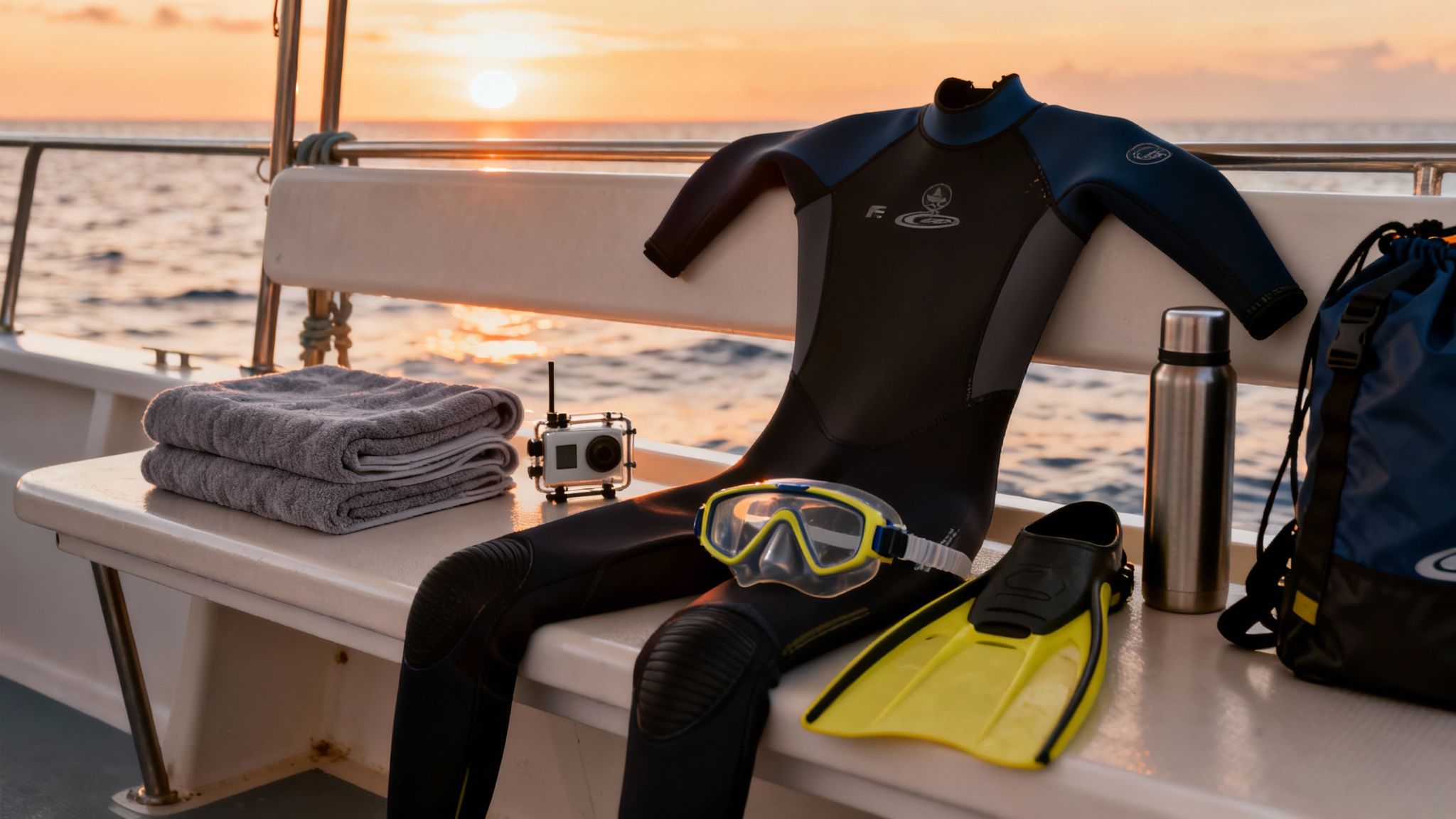
Here's a quick checklist of what to toss in your bag:
- A Towel: An obvious one, but you'll be glad you have it!
- Warm, Dry Clothes: A hoodie, jacket, or even just a long-sleeved shirt is perfect for the ride home.
- Reusable Water Bottle: Staying hydrated is key, though we always have water and snacks on board.
- Reef-Safe Sunscreen: If you're joining an earlier charter, you'll want to apply this well before sunset.
- Underwater Camera: If you have one, don't leave it behind! This is a moment you'll want to capture.
We take care of the heavy lifting. All your gear—from your mask and fins to your BCD and regulator—will be ready and waiting for you. We also provide refreshments to keep you comfortable during your surface interval and on the way back to shore.
Photography Tips for the Manta Encounter
Photographing the manta ray night dive is a rewarding challenge. The low light and constant motion can be tricky, but you don't need to be a pro to get some incredible shots.
The best photos come from a place of patience and respect. Let the mantas come to you, focus on their graceful movements, and remember to soak in the experience with your own eyes, not just through a lens.
For all the amateur photographers out there, getting a great shot is totally achievable with a few tweaks. Trying to capture the scene without a dedicated underwater camera rig can be tough, but focusing on the basics will help you bring home some wonderful memories.
Night Dive Photography Quick Tips
| Setting/Technique | Recommendation for Manta Night Dive |
|---|---|
| Use a Wide-Angle Lens | This is your best bet for capturing the full, majestic wingspan of the mantas when they swoop in close. |
| Turn Off Your Flash | Your camera's built-in flash will just light up all the tiny particles in the water, creating a "snowstorm" effect called backscatter. Let our powerful dive lights do the work. |
| Increase ISO Carefully | Bumping up the ISO makes your sensor more sensitive to light, which is great for the dark. Just be careful—go too high and your photos will look grainy. |
| Shoot in RAW Format | If your camera has this option, use it! RAW files capture much more data, giving you way more flexibility to adjust things like brightness and color when you're editing later. |
Remember, the goal is to capture the moment, not to get a perfect, professional-grade shot on your first try. Have fun with it!
Respectful Interaction and Safety Guidelines
The single most important part of your preparation is understanding how to interact with the manta rays respectfully. These are wild animals, and our behavior directly impacts their health and the sustainability of this incredible encounter. The guidelines are simple, but they are absolutely essential.
- Observe Only, Never Touch: Manta rays have a special mucus coating on their skin that protects them from infection. Touching them can remove this protective layer, making them vulnerable to disease. Just look, don't touch.
- Maintain Neutral Buoyancy: As a diver, your place is on or near the sandy bottom. This creates a wide-open space in the water column above, allowing the mantas to swoop and glide freely as they feed.
- No Chasing: Let the mantas come to you. They are curious and will often get very close on their own terms. Never chase, pursue, or try to ride them.
Following these simple rules ensures that the Kona manta ray night dive remains a safe and magical experience for everyone—humans and mantas alike—for generations to come. For a deeper dive into night-time underwater etiquette, our guide on scuba diving at night is a great resource.
Your Questions About the Manta Dive Answered
Even with all the excitement, it’s completely normal to have a few questions before booking your manta ray night dive in Kona. This is a true bucket-list experience, and we want you to feel totally confident and ready. So, let's dive into some of the most common questions we get from our guests.
Is the Manta Ray Night Dive Safe?
Absolutely. For any reputable operator, your safety is priority number one, period. Every single part of the tour is managed by experienced, certified divemasters and licensed boat captains who live and breathe strict safety protocols.
The dive site itself, Garden Eel Cove, is a huge advantage. It's a naturally protected bay, which means the water is usually calm and the dive is fairly shallow—we're talking about 30-40 feet. On top of that, the manta rays are genuine gentle giants. They're filter feeders with no teeth, no barbs, and no stingers. They have zero interest in humans and are only there for the all-you-can-eat plankton buffet.
What if We Don't See Any Mantas?
This is a fair question—we are dealing with wild animals, after all. While nothing in nature is ever 100% guaranteed, the Kona manta ray dive has a ridiculously high success rate, consistently over 90% all year long. The resident manta population knows where to find dinner, which makes sightings incredibly reliable.
But in the very rare case that the mantas decide to be shy, reputable companies like Kona Honu Divers have you covered with a "manta guarantee." This usually means you can come back and try again on another tour for free (on a space-available basis). It's a great reason to book your manta dive early in your trip, just in case you need to cash in on that second chance!
Should I Dive or Snorkel the Manta Ray Tour?
Great question! The best choice really comes down to your personal comfort and what kind of view you're hoping for. Honestly, you can't go wrong either way—both are spectacular.
- Scuba Diving: As a diver, you get to settle onto the sandy ocean floor and look straight up. This gives you a truly immersive, front-row seat as these massive creatures glide, swoop, and do barrel rolls just inches over your head. It’s an unforgettable perspective.
- Snorkeling: Snorkelers hang onto a custom-built light board that floats on the surface. These powerful lights beam down into the water, attracting the plankton and drawing the mantas right up to you. You get a stunning bird's-eye view of the whole underwater ballet.
So, it's a choice between a ground-up view for certified divers or a top-down view that anyone can enjoy. Both are incredible.
What Diving Certification Do I Need?
If you want to experience the manta ray night dive kona as a scuba diver, you'll need at least an Open Water Diver certification from a recognized agency like PADI, NAUI, or SSI.
Since it's a night dive, some operators might prefer you to have some night diving experience, but it's not always a hard rule. The dive site is very well-lit by the "campfire" of lights and everything is closely supervised, making it a comfortable and controlled environment, even if it's your first time diving after dark. Just be sure to confirm the specific requirements with your dive shop when you book.
What is the Best Time of Year to See Mantas?
Here’s one of the best parts about this dive: it’s fantastic all year round! The mantas in Kona are a resident population, which means they don't migrate. They stick around and feed at these sites every single month.
While the mantas are always here, the ocean conditions can change a bit. The summer months, from about May to September, usually bring the calmest seas and smoothest boat rides. But no matter when you come, the show underwater is always amazing.
What if I Get Cold Easily?
We get it! The water temperature in Kona stays pretty comfortable, hovering around 75°F (24°C) year-round. We provide high-quality 3mm or 5mm wetsuits to make sure everyone stays warm and happy in the water.
The boat ride back to the harbor, however, can feel a little brisk with the night air and ocean spray. Our pro tip? Always bring a towel and a warm, dry layer—like a hoodie or windbreaker—to throw on for the trip home. It makes a huge difference in your comfort.
Why Should We Choose Garden Eel Cove?
We are firm believers that Garden Eel Cove (also known as Manta Heaven) is the absolute best spot for the manta dive, and it's the only place we take our guests. Its location is naturally shielded from the big southern swells, which means consistently calmer water and far fewer cancellations than the more exposed Manta Village site.
Even better, Garden Eel Cove has a healthier reef and a better layout for viewing. This makes the first twilight dive of the evening a fantastic experience on its own. The "campfire" light setup concentrates the plankton and the action, giving everyone a more reliable and up-close encounter. Ready to see the best of the best? You can book your spot on our premier manta ray dive tour today.