
Picture this: you're descending into the warm, dark Pacific Ocean. Suddenly, a giant, shadow-like figure glides effortlessly just inches above you. It's a manta ray, its immense wingspan silhouetted against the glow of dive lights. This isn't a scene from a nature documentary—it's the world-famous manta ray night dive in Kona, easily one of the most unforgettable underwater encounters on the planet.
Experience the Magic of Kona’s Manta Ray Night Dive
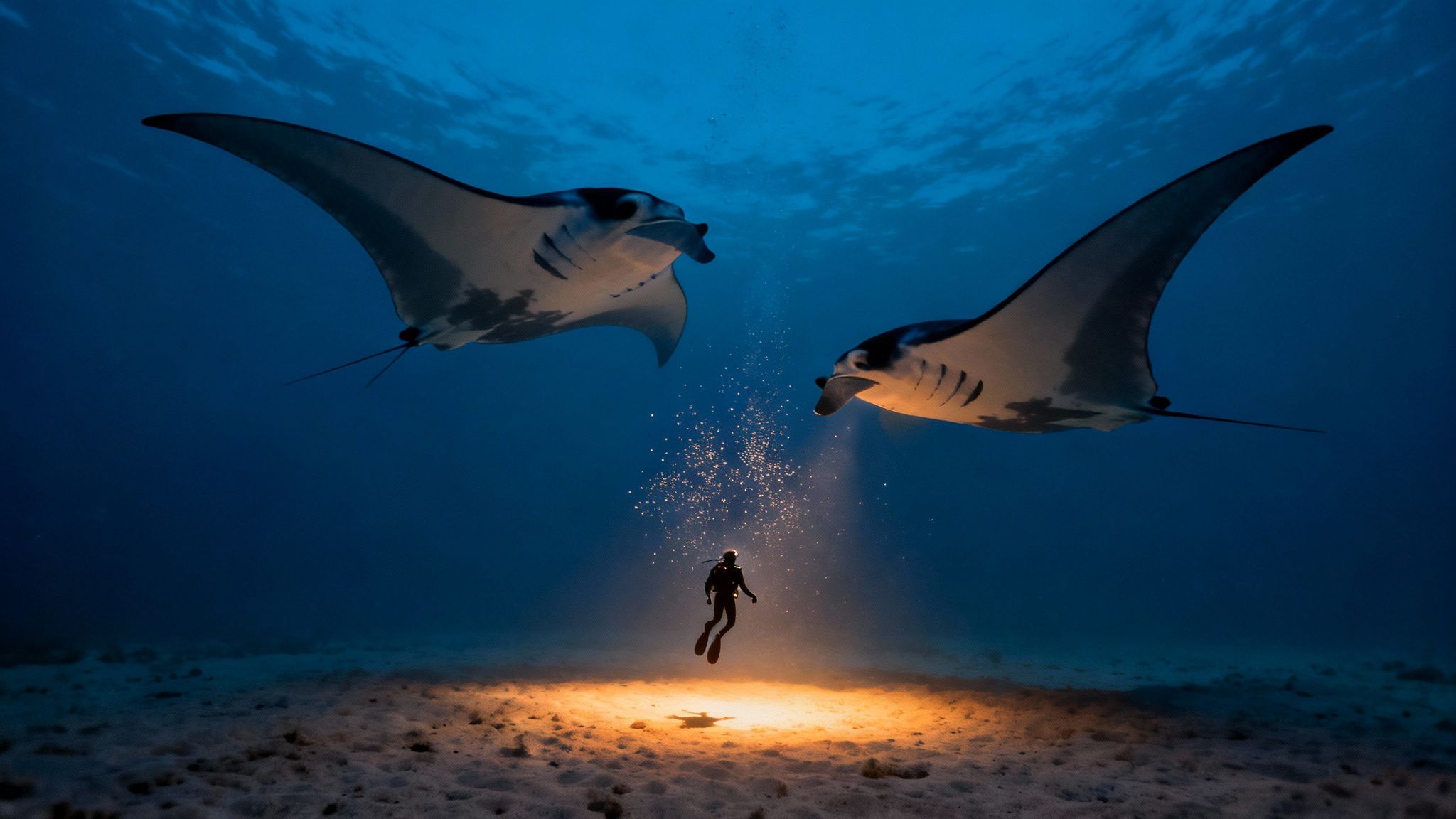
The Kona coast of the Big Island has earned its reputation as the most reliable and spectacular place in the world to see manta rays. What started as a happy accident has grown into a global bucket-list adventure, drawing people from every corner of the globe to witness this incredible underwater ballet. For anyone interested in scuba diving Kona, Hawaii, this experience is a must-do.
The whole encounter hinges on a simple, yet brilliant, concept. Dive operators shine powerful lights into the water, which attracts clouds of plankton—the manta rays' favorite meal. The mantas, in turn, are drawn to this all-you-can-eat buffet, performing graceful barrel rolls and swoops as they filter the tiny organisms from the water, often coming breathtakingly close to observers.
A Reliable Natural Spectacle
What makes this dive so special is how consistently amazing it is. The phenomenon became a cornerstone of Kona's identity back in the early 1990s, when operators first started guiding small groups into Keauhou Bay. Fast forward to 2013, and the iconic "Manta Village" dive site had a mind-blowing 96% success rate for manta sightings.
On an average night, divers were seeing four of these majestic creatures. Those impressive numbers have held steady, solidifying Kona's status as the place for this adventure. You can discover more about the history of this unique Big Island dive and how it all began.
Your Guide to an Unforgettable Night
Making this magical experience happen is our team at Kona Honu Divers. We're local experts who have perfected the art of the manta ray night dive. Our deep understanding of the marine environment and unwavering commitment to safety mean every single guest has a comfortable, respectful, and truly unforgettable encounter.
Choosing the right operator can make or break your experience, and we've worked hard to become the top choice for a premium adventure. We provide everything you need for an incredible night under the waves.
When you book with Kona Honu Divers, you aren't just signing up for a tour. You're stepping into a carefully orchestrated natural spectacle that will leave you completely in awe of the ocean's gentle giants.
Why Garden Eel Cove Is Kona’s Premier Manta Dive Site
You can find manta ray encounters at a few different spots along the Kona coast, but let's be clear: not all dive sites are created equal. When you want the absolute best manta ray night dive in Kona, Garden Eel Cove is, without a doubt, the superior choice. Its combination of reliable manta sightings, protected conditions, better reefs, and a jaw-dropping viewing setup puts it in a league of its own.
A huge part of its appeal is its protected location. The cove is naturally sheltered, which means calmer water on the surface and gentler currents below. This makes for a much more relaxed and enjoyable dive, letting you focus on the spectacle without fighting the ocean.
The Famous Underwater Campfire
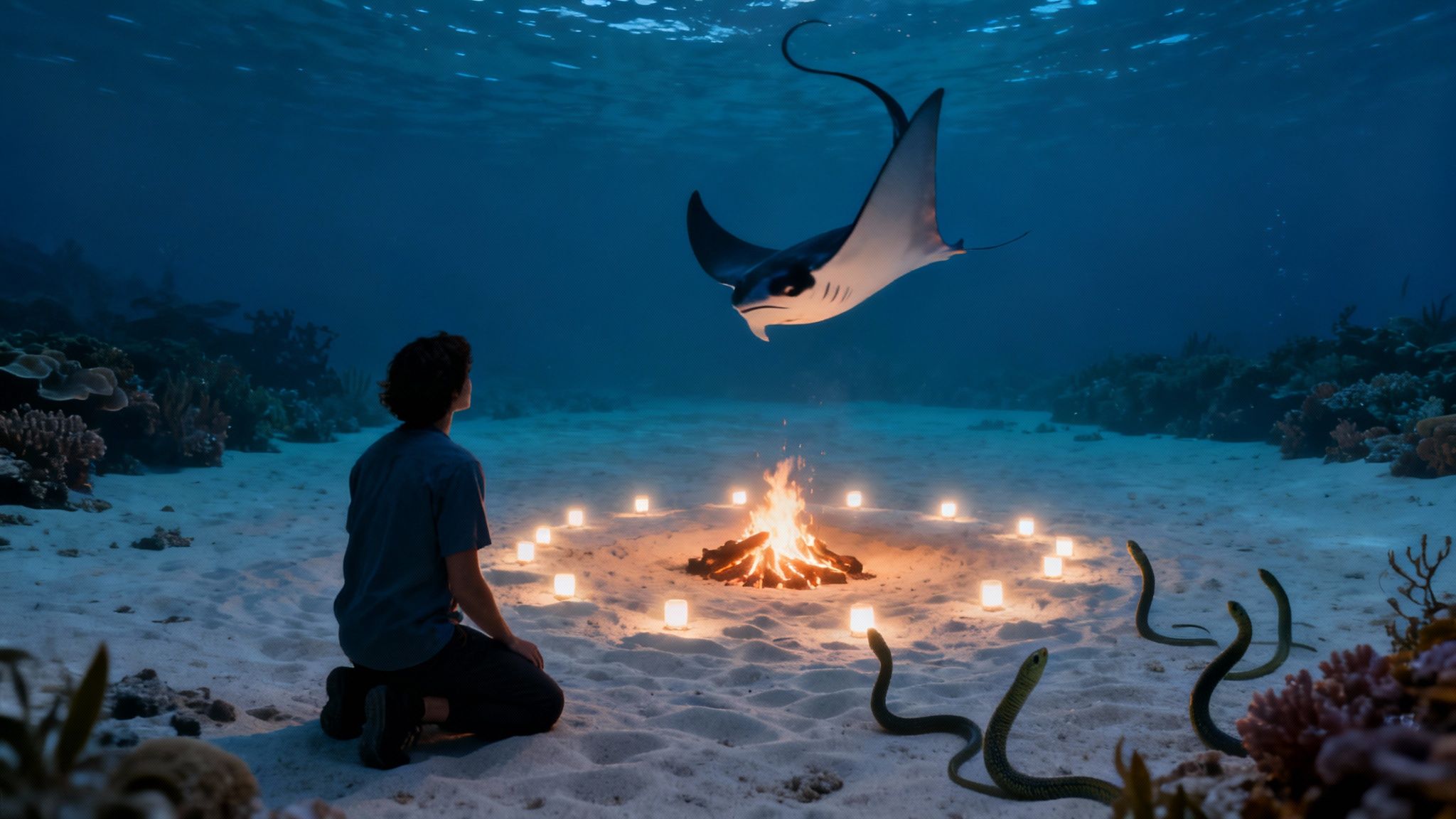
So, what really makes Garden Eel Cove the star of the show? It’s the unique viewing arrangement on the sandy bottom, which is far superior to other sites. Dive guides place a circle of powerful lights on the seafloor, creating what we all lovingly call the "underwater campfire." This bright beacon attracts a massive cloud of plankton—the mantas' favorite meal—and basically rings the dinner bell for the main event.
Divers kneel in a ring around this campfire, and the view is nothing short of breathtaking. The mantas swoop in from the darkness, performing graceful barrel rolls right over your head, often just inches away. It’s an immersive, front-row experience that feels like you're in an underwater stadium. You can get a deeper look at what makes this spot so special in our guide to Garden Eel Cove.
A Hub for Marine Research and Biodiversity
This spot isn’t just a tourist attraction; it’s a crucial location for marine science. Since the 1990s, the Manta Pacific Research Foundation has used this site to identify over 300 unique manta rays and log thousands of sightings. Every dive here contributes to our understanding of these incredible animals.
The consistency is astounding, with sighting success rates hovering around 85-90% all year. On some nights, we've seen more than 30 individual mantas show up for dinner.
Plus, the experience is so much more than just the mantas. The reefs around Garden Eel Cove are healthier and more vibrant, buzzing with life. The sunset dive we do just before the main event is a colorful adventure in itself, where you'll see everything from the garden eels the cove is named for to schools of vibrant tropical fish. It's this complete package—a beautiful reef dive followed by the world's best manta show—that makes Garden Eel Cove our top choice at Kona Honu Divers. It just consistently delivers an incredible, comfortable, and unforgettable experience.
Choosing the Right Guide for Your Manta Dive
Picking the right dive operator for your manta ray night dive in Kona is hands-down the most critical choice you’ll make. This isn't just another boat trip. It's an orchestrated underwater ballet, and the quality of your guide and crew directly impacts how safe, comfortable, and absolutely magical your experience will be.
A great crew does more than just get you to the spot; they elevate the entire adventure. This is exactly where we at Kona Honu Divers aim to shine. Our entire operation is built from the ground up to ensure you have a premium, personal, and unforgettable encounter with Kona's gentle giants.
What Makes Kona Honu Divers Different?
Our philosophy is simple: smaller groups make for a better, more intimate experience. We deliberately keep our charters small so you get a front-row seat to the show without bumping elbows with a crowd. No fighting for a good view, no feeling like you're just another number.
This approach gives our expert guides the freedom to offer personalized attention. They're there to answer your questions, check your gear, and make sure you feel completely at ease from the moment you step on the boat. You don't have to take our word for it—our guests' experiences speak for themselves.
Comfort and Safety Out on the Water
We believe a first-class crew deserves a first-class vessel. That’s why we run custom-built dive boats, like our flagship the Honu One, designed specifically for navigating Kona's waters smoothly. You'll appreciate the difference a stable ride and ample space make.
We've also added amenities that truly matter after a night dive, including warm freshwater showers, clean marine heads (bathrooms), and plenty of dry storage for your gear.
Your safety is the bedrock of everything we do. This commitment shows in the quality of our gear and the little extras we provide to make your dive better.
We believe a world-class dive deserves world-class support. That’s why we provide top-tier, meticulously maintained rental equipment and complimentary nitrox for all certified divers to maximize bottom time safely.
When you dive with Kona Honu Divers, you're not just booking a tour; you're investing in peace of mind. Our impeccable safety record and passionate, professional team allow you to focus on what you came for: the breathtaking spectacle of the manta rays.
Ready to experience it for yourself? You can book the premier manta ray dive tour right here.
Getting Ready For Your Manta Ray Night Dive
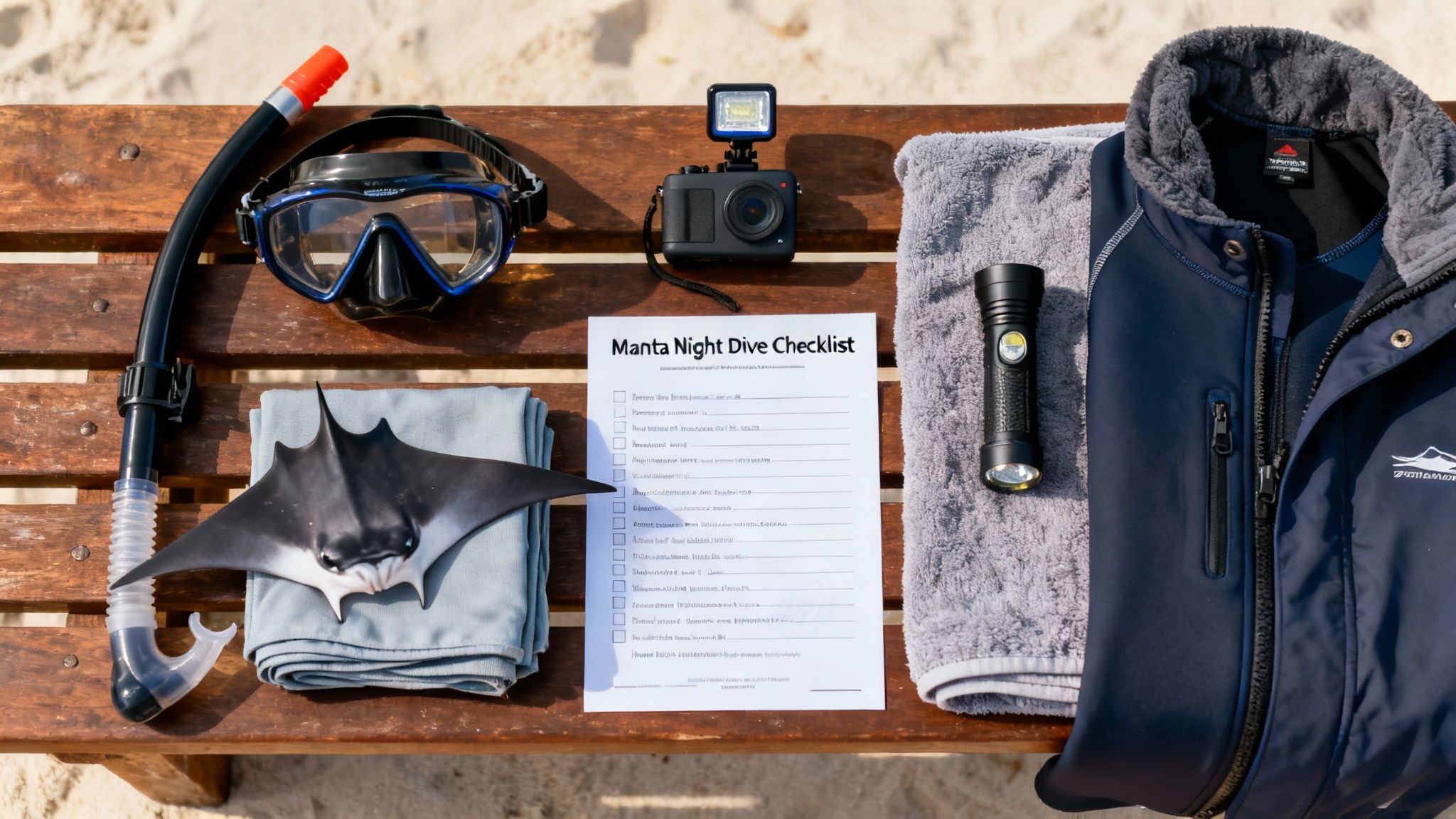
A little prep work can make all the difference, turning a great dive into a truly unforgettable experience. Getting everything in order for your manta ray night dive in Kona is simple, but knowing what to expect and what to pack will calm any pre-dive butterflies and let the excitement build.
Think of it like getting ready for a day at the beach. Come to the boat with your swimsuit already on under your clothes. Don't forget to pack a towel and a set of dry clothes for the ride back.
Here's a tip I always give first-timers: bring a warm jacket or sweatshirt. It might be a beautiful tropical evening, but after you get out of the water, the wind on the boat can feel surprisingly chilly. You’ll be glad you have it.
Certification and Skill Level
If you're joining us for the scuba dive, an Open Water certification is the minimum requirement. The good news is that the dive itself is pretty shallow and typically in calm conditions. This actually makes it a fantastic and low-stress first night dive for newly certified divers.
For snorkelers, it's even easier—no certification is needed at all. The entire experience is designed to be accessible and completely safe. You'll be holding onto a custom-made, floating light raft, which gives you a stable and comfortable front-row seat to the show from the surface, with one of our expert guides always right there with you.
Your safety prep shouldn't stop at the dive boat. Before you even leave home, it's a smart move to look into finding the best travel medical insurance. Having solid coverage gives you incredible peace of mind, letting you relax and fully enjoy the adventure.
Capturing the Perfect Underwater Shot
Bringing a camera is almost a given for this experience, but shooting underwater at night comes with its own set of challenges. Getting those jaw-dropping photos without bothering the mantas means dialing in your settings for low-light.
If you're bringing an underwater camera, here are a few settings to start with:
- ISO: Begin with a range of 800-1600. A higher ISO brightens the image, but if you go too high, your pictures will look grainy.
- Aperture: Open your lens to its widest setting (that’s the lowest f-stop number, like f/2.8). This allows the most light to hit the sensor.
- Shutter Speed: You need a fast enough shutter to freeze the mantas' movement, but slow enough to let in light. A good starting point is between 1/60th and 1/125th of a second.
The key to it all is lighting. If you have a video light or a strobe, that's great, but never shine a white light directly into a manta's eyes. Remember, our crew sets up the main light source that draws in the plankton, and this often provides all the illumination you need for stunning photos. You can get more great tips by checking out our guide on the gear you will need for your Kona diving adventure: https://konahonudivers.com/the-gear-you-will-need-for-your-kona-diving-adventure/
To make things easy, here’s a quick-reference checklist to help you get organized.
Manta Ray Night Dive Preparation Checklist
| Item/Action | Scuba Divers | Snorkelers |
|---|---|---|
| Certification | Open Water certification (minimum) | Not required |
| Pre-Dive Essentials | Swimsuit (wear it), towel, dry clothes | Swimsuit (wear it), towel, dry clothes |
| Comfort Item | Warm jacket or sweatshirt | Warm jacket or sweatshirt |
| Camera | Underwater camera, charged battery | Underwater camera, charged battery |
| Dive Gear | Personal mask, fins, computer if preferred | Personal mask & snorkel if preferred |
| Rehydration | Reusable water bottle | Reusable water bottle |
| Medication | Motion sickness medication (if needed) | Motion sickness medication (if needed) |
This table should give you a clear picture of what you need, whether you're breathing from a tank or enjoying the view from the surface. A little planning ensures you can just show up and soak in the magic.
What to Expect On the Boat and in the Water
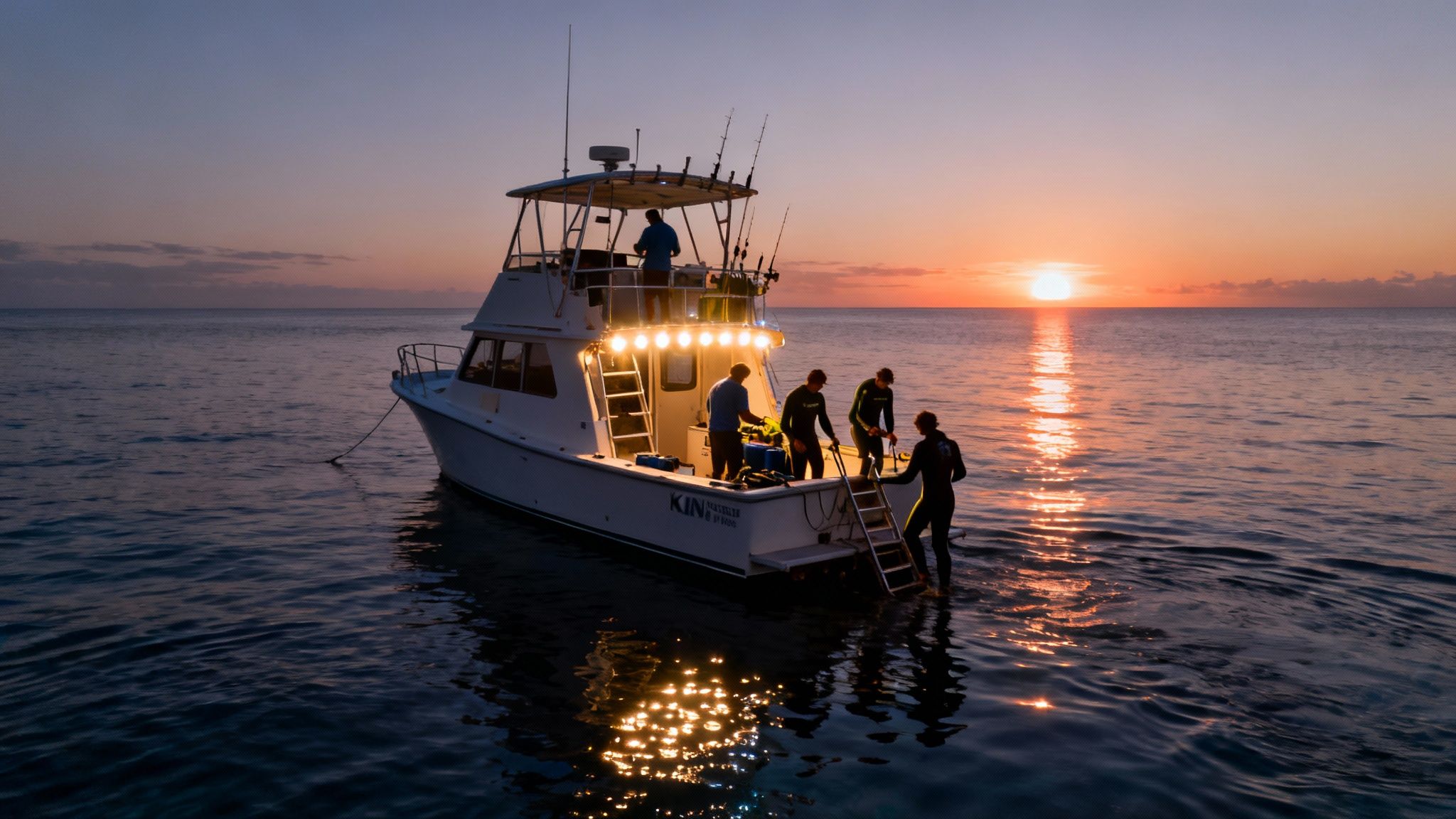
The excitement is palpable from the moment you check in. As the boat pulls away from the harbor, you'll get a front-row seat to a classic Kona sunset, which paints the sky in brilliant colors as you cruise out to the dive site. It's the perfect, peaceful start to an absolutely unforgettable evening.
On the way, the Kona Honu Divers crew will give you a detailed pre-dive briefing. They’ll cover the whole plan, run through safety procedures, and share some amazing facts about the gentle giants you’re about to meet. This is your chance to ask any last-minute questions and get settled in.
Setting the Underwater Stage
As the last bit of sunlight disappears, the real show begins. The crew carefully sets up the "campfire"—a collection of powerful lights placed on the sandy ocean floor about 35 feet down. This bright beacon has one purpose: to draw in huge clouds of plankton, the mantas' favorite meal.
Once the lights are in place, it’s your turn. The energy on the boat kicks up a notch as everyone gears up to get in the water. You’ll descend into the warm, dark Pacific and gather with your group on the sandy bottom, forming a circle around the lights. Then, you just look up and wait for the performance to start.
It's a genuine worldwide phenomenon, and there's a good reason why thousands of people flock to Kona for this dive every year. Sighting success rates are consistently between 85-90%, and some nights are truly legendary. While seeing 8-15 mantas is a pretty typical night, divers have reported seeing over 30 different individuals on a single dive! You can learn more about the global appeal of these night dives to understand just how special this experience is.
Manta Etiquette: The Golden Rules
The most important part of the briefing is about proper manta etiquette. These aren't just suggestions; they are absolutely critical for protecting the animals and making sure everyone has a safe, incredible encounter.
- Look, Don't Touch: This is the #1 rule. Manta rays are covered in a delicate mucus layer that protects them from infection. Touching them can damage this coating and cause them serious harm.
- Stay in Your Spot: Divers are asked to stay put on the sand, either kneeling or sitting. Snorkelers hang onto a specially designed light raft on the surface. This keeps the water column clear so the mantas have plenty of room to feed and maneuver.
- Let the Mantas Lead: Never chase a manta, swim above them, or try to block their path. The real magic happens when you let them control the interaction, gliding and barrel-rolling just inches above your head on their own terms.
Following these guidelines is what makes the manta ray night dive in Kona a world-class example of responsible ecotourism. It allows for incredibly close, awe-inspiring interactions without disrupting the animals' natural feeding behavior.
As you settle in by the campfire, the first shadowy figure will emerge from the darkness. Before you know it, more will arrive, performing a silent underwater ballet. It’s a completely immersive, almost surreal experience that will leave you with a profound new appreciation for the ocean and its majestic inhabitants.
Answering Your Top Questions About the Kona Manta Dive
It's completely normal to have a few questions before you commit to a big adventure like the manta ray night dive in Kona. We get it! Let's clear up some of the most common queries so you can feel confident and excited about what's to come.
Is This Dive Safe for Beginners or Kids?
Absolutely. We’ve designed this entire experience from the ground up to be incredibly safe and welcoming for everyone, regardless of their in-water experience.
- For snorkelers: You'll hold onto a custom-built, floating light raft. It gives you something stable to hang onto, so you can just relax and watch the show from the surface without a worry. Our expert guides are right there with you the whole time.
- For certified divers: The Garden Eel Cove dive site is ideal. It’s a nice, shallow spot with a sandy bottom around 35-40 feet, and the conditions are usually very calm. For many people, this is their first night dive, and it’s a perfect, low-stress way to try it.
Every trip starts with a thorough safety briefing before anyone even thinks about getting in the water.
What’s the Best Time of Year to See Mantas in Kona?
Here’s the best part: there is no bad time! The manta ray dive is a year-round spectacle with an incredible success rate of over 85-90%.
The mantas we see are local residents, not a migratory species, so they stick around the Kona coast all year. They show up for one reason: to feast on the plankton drawn to our lights. While the summer months might bring slightly calmer seas, your chances of having a jaw-dropping encounter are excellent any night of the year.
Will I Get Chilly on a Night Dive?
Kona's water is wonderfully warm, typically hovering between 75-80°F (24-27°C). To make sure you're comfortable, we provide high-quality 5mm wetsuits that do a great job of keeping you toasty.
Since you're mostly stationary while watching the mantas, you don't lose a lot of body heat. And for the ride home? We’ve got you covered with hot chocolate and soup to warm you up from the inside out. Still, a warm jacket for the boat trip is always a good idea.
Can I Touch the Manta Rays?
This is a firm no, and it's the most important rule we have. Manta rays are covered in a delicate mucus coating that acts as their immune system. Touching them can strip this protective layer off, leaving them vulnerable to dangerous infections.
To protect these gentle giants, all tour operators enforce a strict no-touching policy. For a closer look at the dive site itself, check out our guide on how deep the Kona manta ray dive is. The real magic is watching them glide and swoop inches above you, all on their own terms. Our guides will teach you exactly how to position yourself for a front-row seat without ever interfering.
Ready to see this underwater ballet for yourself? At Kona Honu Divers, we're all about creating a safe, respectful, and truly unforgettable experience.