
Picture this: You slip into the warm, dark Pacific waters just off the Big Island. Your light slices through the twilight, and then you see it—a graceful giant, wider than a car, gliding effortlessly into view. That's the magic of the world-famous Kona manta ray night dive.
This isn't just another dive; it's consistently ranked as one of the best night dives on the entire planet. It's a true bucket-list experience where you get a front-row seat to watch majestic manta rays feast on plankton drawn to powerful underwater lights. The whole thing is a breathtaking, almost choreographed, natural spectacle.
Witnessing Kona’s Famous Underwater Ballet
This guide is your complete playbook for experiencing this incredible underwater ballet. We'll break down what makes this dive so special, how to pick the right tour for you, and exactly what to expect when you're in the water. Most importantly, we'll cover how to do it all safely and responsibly.
Why Is This Dive So Unique?
Unlike a lot of wildlife encounters that are purely up to chance, the Kona experience is amazingly reliable. The local manta ray population doesn't really migrate, and over the years, they've learned to associate the tour boats' lights with an all-you-can-eat plankton buffet. It's a truly unique relationship between tourism and nature.
This isn't just a dive; it's a perfectly orchestrated natural phenomenon. Divers and snorkelers become spectators to an incredible feeding behavior that happens almost nowhere else on Earth with such predictability.
The secret to this consistency comes down to a few key factors. The specific layout of the Kona coast offers sheltered bays, and the nightly "campfire" of lights set up by the dive operators creates a dependable food source the mantas can count on. For a deeper look at this one-of-a-kind adventure, you can learn more about the Kona manta ray night dive.
What makes it even better is that almost anyone can join in.
- For Certified Divers: You'll get to settle on the sandy ocean floor and look up as these gentle giants perform their acrobatic flips just inches above your head.
- For Snorkelers: You'll float comfortably on the surface, holding onto a specially designed light board, and watch the mantas soar up from the depths to feed right below you.
Whether you’re a diver with hundreds of log entries or a first-time snorkeler, this awe-inspiring encounter is an adventure you won't soon forget.
The Science Behind Kona’s Manta Ray Magic
That jaw-droppingly consistent manta ray encounter in Kona isn't just a happy accident. It's actually a brilliant bit of simple science, fine-tuned over decades. The whole show revolves around a concept we call the "campfire effect."
Here’s how it works: for years, tour operators have been placing powerful (but eco-friendly) lights on the ocean floor right after sunset. These lights are like a giant magnet for the tiniest critters in the sea—zooplankton.
This creates a massive, glowing cloud of manta ray food. Naturally, Kona’s resident population of reef mantas can’t resist the free all-you-can-eat buffet. They show up night after night to perform their incredible ballet of swoops and barrel rolls, gulping down mouthfuls of plankton.
A Reliable Underwater Dinner Bell
This isn't like trying to spot a migrating whale, where you just have to hope for the best. The Kona manta experience is remarkably dependable, and that’s because our local mantas don’t really migrate. They’ve learned over generations that these specific lights mean an easy meal.
This learned behavior is the secret sauce. It's a fascinating relationship that has developed between the dive boats and the mantas, and it’s what makes this so different from any other wildlife encounter. Kona's geography helps, too, with its sheltered bays providing the perfect calm stage for this nightly feast. You can get a feel for the whole experience by reading about what it's like to go on the manta ray dive in Kona, Hawaii.
This isn't just about seeing mantas; it's about witnessing a learned, symbiotic behavior that has developed between humans and marine life over decades. It's a testament to a unique and respectful interaction.
The success rate here is off the charts. We see mantas on over 85% of nights, and often that number climbs above 95%. The dive itself happens in a comfortable 30 to 40 feet of water, making it accessible for most certified divers. With a local population of over 450 identified manta rays—many of whom are year-round residents—it’s no wonder Kona has earned its reputation as the best place on the planet for this kind of adventure.
Choosing Your Adventure: Scuba Diving Or Snorkeling
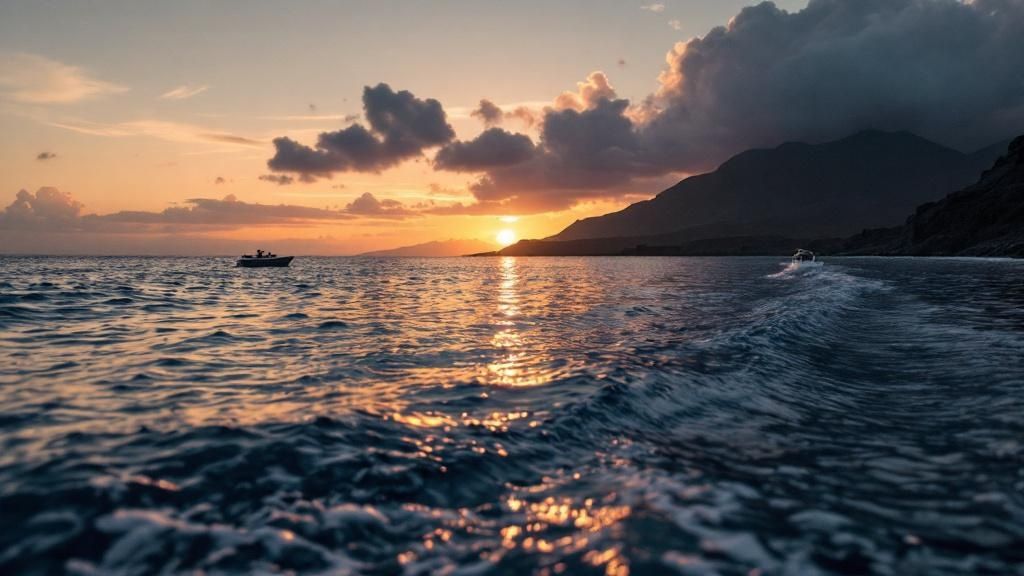
One of the best things about the Kona manta ray experience is just how accessible it is. You don't need a scuba certification to get a front-row seat to this underwater ballet, which opens the adventure up to almost everyone.
You’ve got two main options for seeing the show: scuba diving or snorkeling. Each one offers a totally different and unforgettable perspective. The choice really boils down to your comfort level in the water and what kind of encounter you're dreaming of.
The Scuba Diver's Perspective
For certified divers, this is about as immersive as it gets. You’ll descend to a designated spot on the sandy ocean floor, usually around 30-40 feet deep, and find a place to settle in. From down there, you get an absolutely breathtaking, upward-facing view.
The real magic happens when the mantas, some with wingspans over 12 feet, glide and somersault just inches above your head. It’s a humbling, awe-inspiring view that makes you feel like you're truly a guest in their world. You will never forget the sight of these giants silhouetted against the lights from the surface.
The Snorkeler's View from Above
Not a diver? No problem. Snorkelers get an incredible view from the surface, looking down into the brightly lit water below. You'll hold onto a custom-built, high-powered light board that floats on the water. It gives you something stable to hold onto and, more importantly, it attracts the plankton that the mantas come to eat.
From this position, you'll watch in pure amazement as the mantas swoop up from the dark depths, often coming within feet of the light board to feed. It’s a thrilling and incredibly close encounter, giving you a unique top-down view of the entire feeding frenzy.
Deciding between the two really depends on what you're looking for. To make it easier, let's break down the key differences between the manta ray night dive and the snorkel experience.
Manta Ray Night Dive vs. Snorkel Experience
| Feature | Scuba Diving | Snorkeling |
|---|---|---|
| Viewpoint | Bottom-up perspective | Top-down perspective |
| Proximity | Mantas glide inches overhead | Mantas swoop up to the surface |
| Requirements | Scuba certification required | Basic swimming ability |
| Depth | 30-40 feet on the ocean floor | Floating on the surface |
| Equipment | Full scuba gear | Mask, snorkel, fins |
| Best For | Certified divers wanting full immersion | Non-divers, families, beginners |
Both experiences put you right in the middle of the action, and you'll spend about 45 minutes in the water with the mantas either way.
Whether you choose to dive below or float above, you are guaranteed a spectacular show. Kona Honu Divers runs exceptional diving tours for both divers and snorkelers, ensuring everyone has a safe and magical night.
You can check out our 2-tank manta dive or snorkel tour to find the perfect adventure for your trip.
Where to Find Kona’s World-Famous Manta Rays
When you hear people talking about "the" Kona manta dive, it sounds like a single location. In reality, this underwater show happens at two main spots. Each one has its own distinct vibe, and knowing the difference can help you pick the perfect adventure for your group.
The two primary "stages" for this incredible ballet are 'Manta Village' in Keauhou Bay and 'Manta Heaven' (also known as Garden Eel Cove), just north of the Kona airport. Think of them as two different theaters showing the same incredible play—just with slightly different atmospheres.
Manta Village: The Calm Oasis
Tucked into a protected bay right off the coast from the Sheraton Keauhou Bay Resort, Manta Village is famous for its calmer, more predictable conditions. This makes it a fantastic choice for a few specific types of adventurers:
- Snorkelers: The gentle water makes it a breeze to float comfortably on the surface.
- Families: Its protected nature is ideal for younger participants and anyone trying this for the first time.
- Anyone prone to seasickness: The boat ride from Keauhou Harbor is shorter, and the calmer seas drastically cut down the chances of feeling queasy.
Because of these perks, Manta Village is often the go-to site for a relaxed and accessible manta encounter.
Manta Heaven: The Action-Packed Arena
Manta Heaven, or Garden Eel Cove, is set in a more open, exposed area. The surface can sometimes get a little choppy, but this location is legendary for attracting a larger number of manta rays on any given night. This makes it a massive draw for scuba divers who want to maximize their chances of seeing a whole squadron of these gentle giants.
It often comes down to a trade-off: the calmer, more intimate setting of Manta Village versus the potential for a bigger, more dynamic spectacle at Manta Heaven.
Just how popular are these spots? It's staggering. Around 80,000 people take these tours every single year, which really shows how vital this experience is to the Big Island's tourism. While Manta Heaven might host larger groups of rays, the calm waters of Keauhou Bay make it a favorite for beginners. No matter which you choose, you'll spend about an hour in the water at a depth of around 30 feet. For a deeper look at the details, you can explore more about the Kona manta ray dive sites.
Choosing a top-rated operator like Kona Honu Divers guarantees you'll have a safe and spectacular trip, whichever location you end up visiting.
How To Prepare For Your Manta Ray Adventure
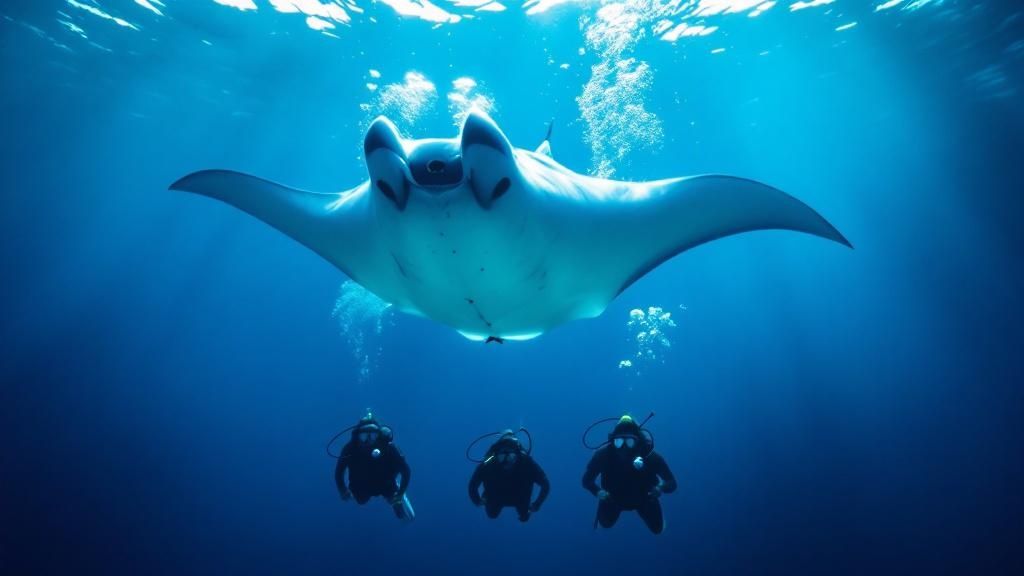
A little bit of prep work can make the difference between a good night and an absolutely unforgettable one. Think of this as your practical checklist to make your manta ray night dive in Kona as comfortable, safe, and mind-blowing as possible. Get these details sorted out beforehand, and you can focus 100% on the main event: the underwater ballet.
First things first, let's talk about what to bring on the boat. Even in balmy Hawaii, it can get surprisingly chilly after a night dive, especially with the sea breeze on the ride back to the harbor.
What To Pack For Comfort
A few simple items will make your post-dive experience so much better. You'll be glad you brought them.
- A Warm Jacket or Sweatshirt: Trust me on this one. You’ll be so grateful for a dry, warm layer to throw on after you peel off your wetsuit.
- A Towel: This one’s a no-brainer for drying off and staying cozy.
- Reef-Safe Sunscreen: If your tour starts in the afternoon, make sure you apply sunscreen well before you leave to protect your skin and our precious coral reefs.
- Personal Medications: Prone to seasickness? Take your remedy before the boat departs. Don't forget any other essential medications you might need.
Don't forget to fuel up and hydrate! A light, healthy meal a couple of hours before the tour and plenty of water throughout the day will keep your energy levels up and prevent fatigue. For a full rundown of the experience, check out our guide to the manta ray night dive in Hawaii.
Gear and Mental Prep for Divers
For you certified divers, a few extra pre-flight checks are in order. Before you even set foot on the boat, give your personal gear a once-over. Make sure your dive computer is set correctly for a night dive and that you're comfortable reading its display in the dark.
Your lights are, without a doubt, your most important pieces of gear tonight.
Always carry a reliable primary dive light and a backup light. Your lights aren't just for seeing; they’re a crucial safety tool for signaling your location to the divemaster and the boat crew.
Finally, get your head in the game for the pre-dive briefing. Your guides will cover everything you need to know: how to enter and exit the water in the dark, communication signals, and the golden rule—stay calm and still. The real magic happens when you relax and just become part of the scenery, letting the mantas come to you.
Safety Guidelines And Manta Ray Conservation
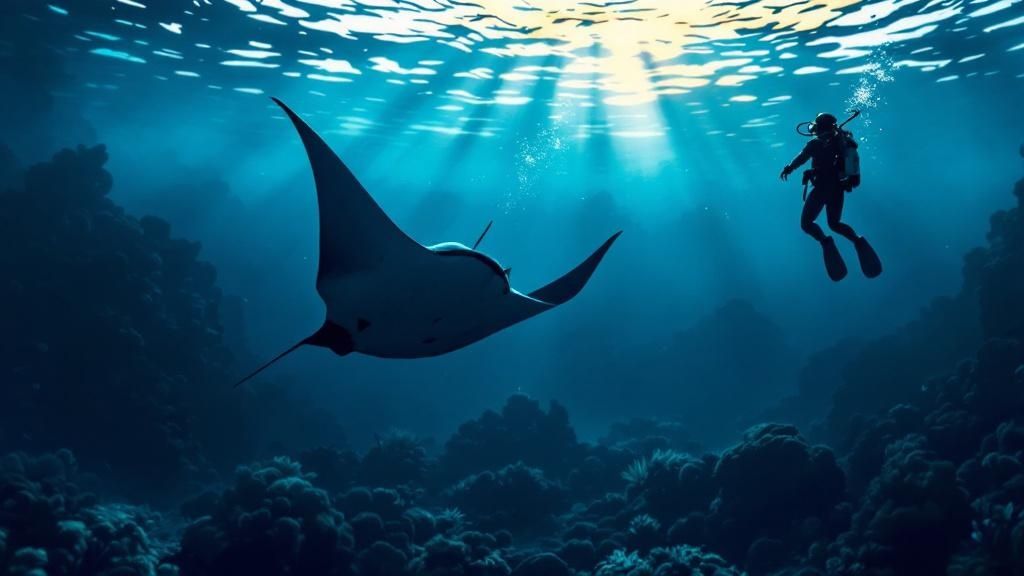
The future of this magical experience rests entirely on our shoulders. To keep Kona’s manta ray population healthy and thriving, every single person in the water needs to follow a strict "look, don't touch" policy. This is the absolute foundation of a sustainable manta ray night dive in Kona.
This means no chasing, no blocking their path, and absolutely no touching. These aren't just suggestions—they are critical for the mantas' survival. Touching a manta ray can strip away its delicate, protective slime coat, which is like its immune system, shielding it from harmful bacteria.
By following these simple rules, you're not just a tourist. You become a guardian of this incredible marine environment, making sure the mantas feel safe enough to keep coming back night after night.
Proper Positioning for the Perfect View
To create the best possible "viewing stadium" for the mantas' underwater ballet, divers and snorkelers have very specific roles to play. This organized approach keeps the animals from getting stressed and gives everyone an amazing view.
- For Divers: You’ll settle on the sandy ocean floor, pointing your dive light straight up. This beam of light attracts the plankton and creates a wide-open space above you for the mantas to swoop and glide.
- For Snorkelers: You'll float flat on the surface, holding onto a specially designed light board. The key is to stay on the surface and not dive down, as that can disrupt the mantas' feeding patterns.
Following these guidelines helps protect a truly special local population. In fact, the Kona coast is home to nearly 200 individually identified mantas that live here year-round, each one recognizable by the unique spot patterns on its belly.
Some nights are unbelievable, with sightings of over 20 mantas at once! But their attendance really depends on how much plankton is in the water, which can change from night to night. To get a better sense of this incredible interaction, you can read more about why you should go on a manta ray dive in Kona. It's this focus on conservation that has allowed us to learn so much about their behavior while building a responsible tourism model that works for both people and mantas.
Your Top Kona Manta Dive Questions, Answered
If you're thinking about booking a manta ray night dive in Kona, you've probably got a few questions buzzing around. Getting the right answers is key to booking your big adventure with total confidence. Let’s dive into what people ask most.
First up: Is it safe, especially for newbies? Absolutely. This is an incredibly safe and well-managed experience. The dive sites are tucked away in shallow, protected bays, usually only 30-40 feet deep with hardly any current to speak of. If you're not a certified diver, the snorkeling option is even easier. It requires zero experience, making it a perfect pick for the whole family.
Planning Your Trip
Another big question is when to book. "What's the best time of year to see mantas?" The fantastic news is that Kona's mantas are here year-round. You can have an amazing encounter any month you decide to visit Hawaii.
While the summer months (May-September) tend to have calmer seas, sightings are remarkably consistent no matter the season. Tour operators are pros and will only head out when conditions are safe, so you're always in good hands.
Finally, everyone wants to know: "Am I guaranteed to see manta rays?" While you can never have a 100% guarantee with wild animals, the Kona manta dive boasts a success rate that often tops 90%. The mantas are incredibly reliable, drawn like moths to a flame by the plankton that swarms in the dive lights.
On the rare night the mantas decide to be shy, most reputable companies offer a "manta guarantee." This means you can come back and try again on another tour for free. It’s their commitment to giving you the best shot at seeing this incredible underwater ballet. For a first-class experience, consider booking a 2-tank manta dive or snorkel tour with a trusted local operator.