
Imagine this: you slip into the dark, warm Pacific waters just off the Kona coast. Below you, a circle of lights illuminates the ocean floor, creating a surreal underwater stage. This is the world-famous manta ray night dive in Kona, and you’re about to witness an otherworldly ballet performed by giant, graceful creatures. It’s a signature Hawaiian adventure that stays with you forever.
Experience the Magic of Kona’s Manta Ray Night Dive
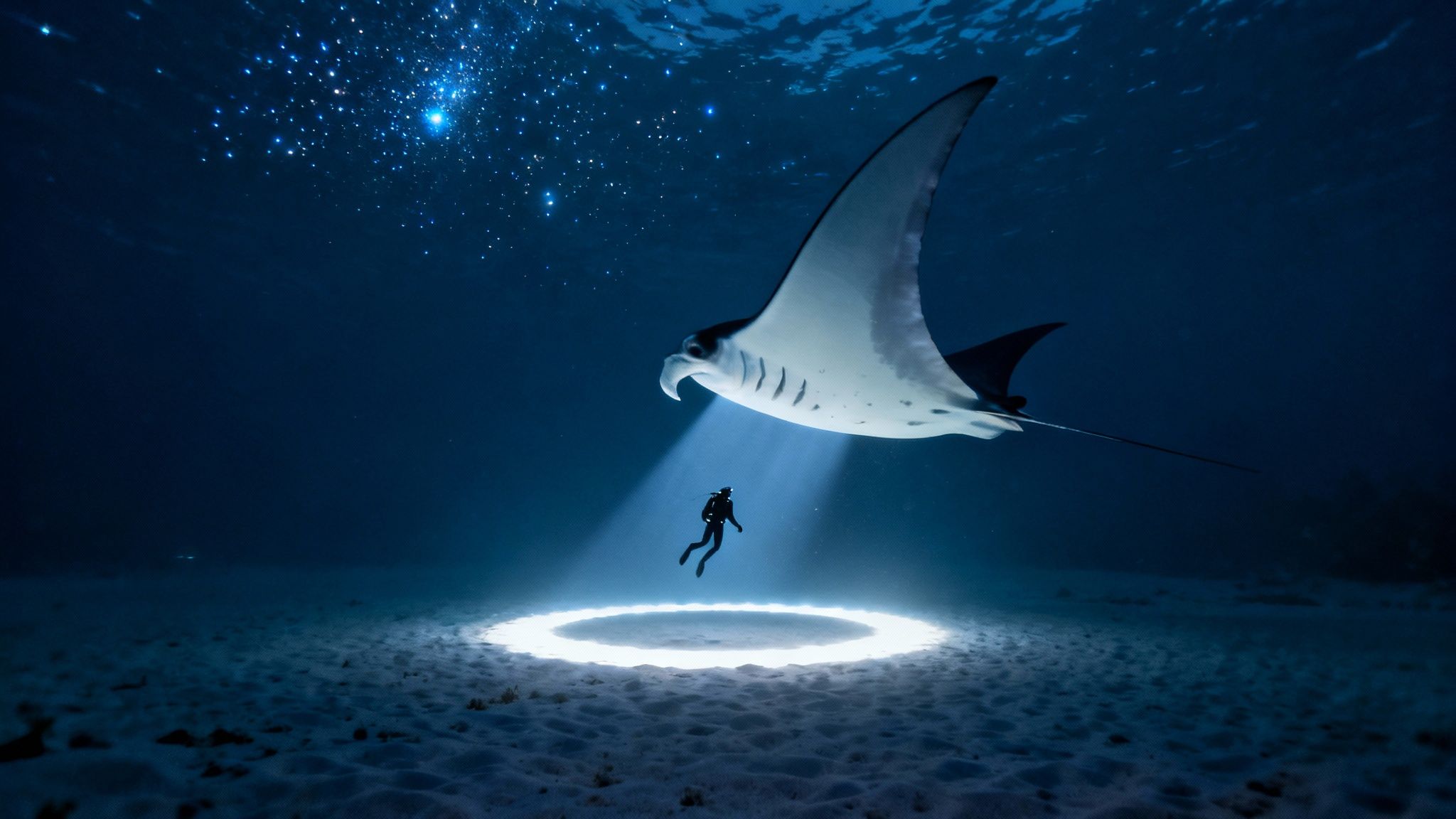
The Kona manta ray night dive isn't just another dive; it's a spectacle that draws people from all over the world. The whole experience hinges on a beautifully simple fact of nature: bright lights attract tiny plankton, and plankton is what manta rays love to eat.
Local dive operators have dialed this in perfectly. They set up powerful underwater lights—often called the "campfire"—on the sandy bottom. As you and your group get settled, these lights attract swarms of plankton, transforming the dark water into a floating buffet. Before long, the stars of the show make their grand entrance.
With wingspans that can stretch over 15 feet, the manta rays swoop and barrel-roll right through the beams of light, gracefully gulping down the plankton. They glide just inches over your head, their movements so fluid and hypnotic it's hard to look away. It’s an incredibly intimate and humbling encounter with one of the ocean's most majestic animals.
A Uniquely Kona Phenomenon
This incredible display is a cornerstone of Big Island tourism for a reason. Each year, around 80,000 people come to Kona specifically for this night dive, cementing the island's reputation as the best place on earth for manta encounters. The numbers back it up, too—the trip boasts an incredible 80-90% success rate for seeing mantas, which is practically unheard of for a wild animal encounter.
Sometimes, nature adds another layer of magic to the experience. The water can come alive with bioluminescence, twinkling around you as you move. To learn more about this beautiful natural light show, check out this ultimate bioluminescence guide.
Going with a top-rated operator like Kona Honu Divers makes all the difference, ensuring your adventure is safe, respectful, and truly unforgettable. They take you to the premier site, Garden Eel Cove, giving you a front-row seat to one of nature’s greatest performances. This guide will walk you through everything you need to know to prepare for this life-changing dive.
Why Garden Eel Cove Is the Premier Dive Location
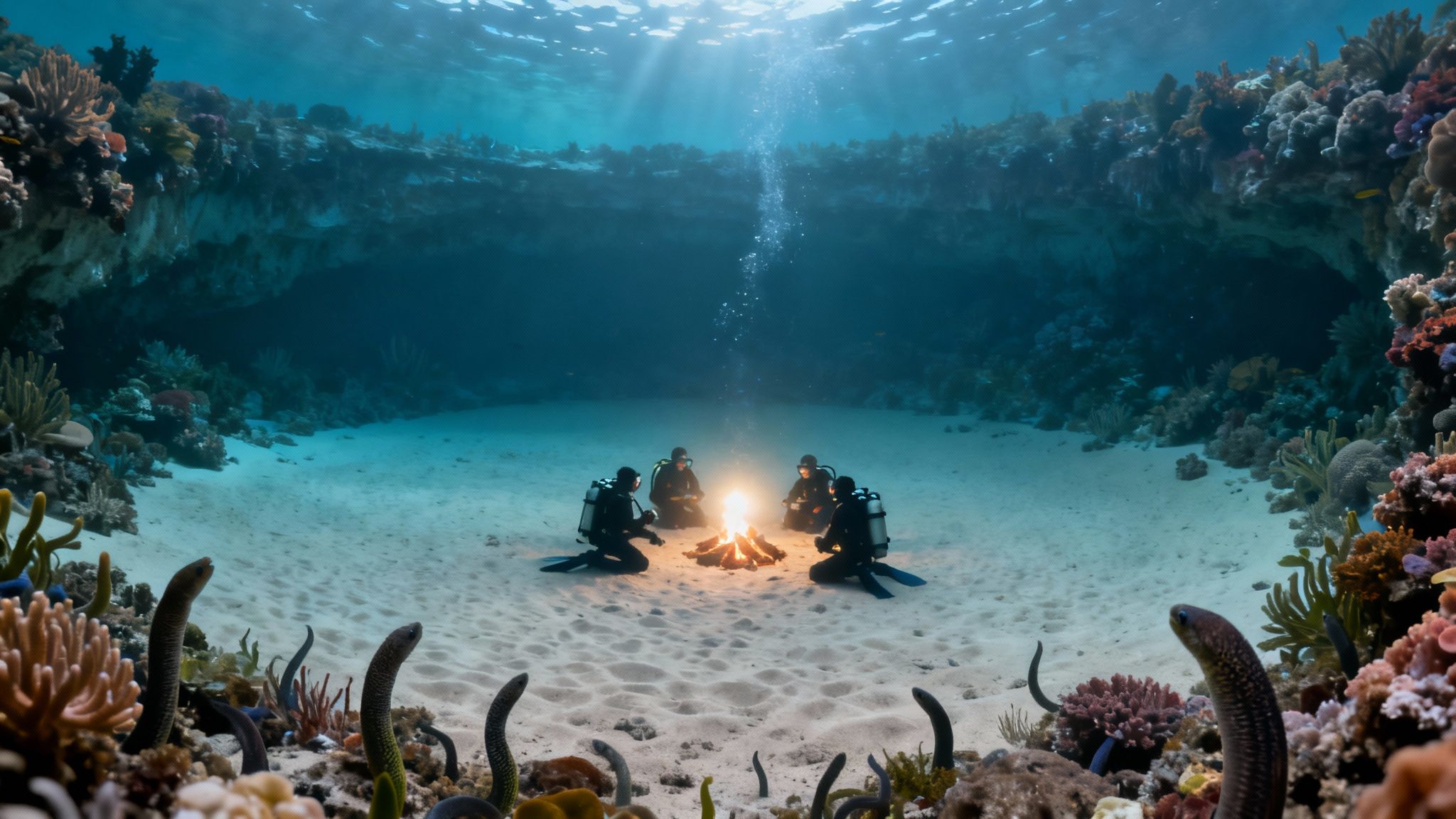
When it comes to the world-famous manta ray night dive in Kona, not all sites are created equal. The location of your dive significantly impacts the experience, and Garden Eel Cove consistently proves to be the superior choice. Its unique combination of calm conditions, a perfect viewing area, and vibrant reefs makes it the undisputed best spot on the Big Island for this encounter.
There's a good reason Kona Honu Divers chooses Garden Eel Cove as their go-to spot. The cove is nestled in a protected bay, shielding it from open ocean swell. This means calmer waters and a smoother boat ride—a major advantage for anyone prone to seasickness and a more enjoyable experience for all before you even hit the water.
But the real magic happens below the surface. The topography at Garden Eel Cove is naturally designed for the perfect manta viewing experience. Divers settle into a sandy, bowl-shaped area we call the "underwater campfire." This brilliant setup allows everyone to find a comfortable, stationary spot on the bottom and simply look up as the show begins.
The Unobstructed Underwater Theater
This natural amphitheater ensures everyone gets an unobstructed, front-row seat. There's no need to crane your neck or jostle for a better view. As the plankton swarm to the lights, the mantas glide in, performing their beautiful, acrobatic barrel rolls right above your head. It’s an intimate spectacle that feels more personal and less chaotic than other locations.
This structured viewing area is a stark contrast to other sites where the experience can feel more disorganized and crowded. Having a clear, designated spot at the cove not only provides a better view but also ensures a safer, more respectful interaction for both the divers and the mantas.
The organized "campfire" setup is more than just a convenience; it’s a core part of a responsible viewing experience. By keeping divers stationary on the sandy bottom, it prevents accidental contact with the delicate reef and allows the mantas to control the entire interaction, moving freely without being chased or crowded.
Kona's manta dives have an almost unbelievable 85-90% sighting success rate, making this one of the most reliable big-animal encounters on the planet. And it all happens in just 30-40 feet of water. This shallow depth is great for divers of all levels and helps maximize bottom time—especially when operators like Kona Honu Divers offer complimentary nitrox, stretching your dive to a full 60 minutes.
More Than Just Mantas
The experience at Garden Eel Cove isn't just about the main event. Most manta trips are two-tank dives, with the first one happening at twilight. The reefs here are vibrant and healthy, offering a fantastic opportunity to explore Hawaii’s rich marine life before the mantas arrive. It's the perfect warm-up act.
While mantas are the headliners, the supporting cast of marine creatures at Garden Eel Cove is seriously impressive. You can learn more about the rich ecosystems you might explore by checking out the various dive sites Kona Honu Divers will take you to. It's this combination of a superior viewing area, calmer conditions, and richer biodiversity that really cements Garden Eel Cove's reputation as the ultimate stage for the Kona manta ray night dive.
Kona Manta Ray Dive Site Comparison
While there are two primary, well-established manta ray dive sites in Kona, our experience consistently shows that Garden Eel Cove offers a superior overall experience. Here’s a quick breakdown of why.
| Feature | Garden Eel Cove (Kona Honu Divers' Preferred Site) | Manta Village (Keauhou Bay) |
|---|---|---|
| Conditions | Sheltered bay location results in calmer, more predictable waters and a smoother boat ride. | More exposed to open ocean swell, which can lead to rougher conditions and a higher chance of seasickness. |
| Viewing Setup | Natural sandy amphitheater ("campfire") provides an organized, unobstructed, front-row view for every diver. | The bottom topography is less structured, which can sometimes lead to a more crowded and disorganized viewing experience. |
| Marine Life | Part of a vibrant reef system, offering an excellent twilight dive with abundant marine life before the main event. | The surrounding reef is less vibrant, and the site is primarily focused on the manta attraction itself. |
| Diver Experience | Stationary, comfortable position on a sandy bottom. Minimal current and excellent visibility are common. | Can require divers to hold onto rocks in areas with more surge or current. The setup isn't as naturally comfortable. |
| Accessibility | Accessed via a short boat ride from Honokohau Harbor, north of Kailua-Kona. | Typically accessed from Keauhou Bay, south of Kailua-Kona. Often has more boat traffic. |
Ultimately, the calmer environment and unique underwater theater at Garden Eel Cove not only make for a more comfortable dive but also a more responsible and magical encounter with these gentle giants.
How to Prepare for Your Dive Adventure
Alright, let's get you ready for one of the most incredible dives you'll ever do: the Kona manta ray night dive. A little prep work makes all the difference, and trust me, this isn't just any old dive trip. It’s a world-famous spectacle, and getting your spot locked in is the most important first move.
I can't stress this enough: book your manta ray dive tour way ahead of time. These charters are incredibly popular and fill up fast, especially during the busy seasons like summer breaks and winter holidays. Trying to book last-minute is a recipe for disappointment.
Certifications and What to Bring
First things first, you'll need at least an Open Water Diver certification. The good news is the dive itself is pretty shallow, usually around 30-40 feet, so it's well within the limits for most divers. If you're looking for more challenging dives during your trip, there are fantastic advanced dive tours available.
Now, here's a pro tip: while it’s not required, being Nitrox certified is a huge plus. We actually provide Nitrox for free at Kona Honu Divers. It lets you safely extend your bottom time, and who doesn't want a few extra minutes watching these gentle giants?
When you're packing your bag for the boat, think about comfort. You'll be on the water for a few hours.
- Reef-Safe Sunscreen: The trip starts before sunset, so you'll get some rays on the way out. Let’s protect both your skin and the coral.
- A Towel: You'd be surprised how many people forget one!
- Warm Layers: A dry sweatshirt or a windbreaker is a lifesaver. Once the sun goes down and you're wet, the boat ride back can feel brisk.
- Reusable Water Bottle: Hydration is a diver's best friend. We have water on the boat for refills.
And don't worry about hauling all your gear, especially if you're traveling. Kona Honu Divers has top-notch rental equipment—regulators, BCDs, wetsuits—all professionally maintained and ready to go.
Getting Yourself Ready for the Dive
On dive day, the best thing you can do for yourself is show up well-rested and hydrated. It's a simple formula that makes for a much better experience. And it should go without saying, but hold off on any alcohol until after the dive.
The single most important thing you can do, though, is listen. The crew will give a very thorough pre-dive briefing. We cover everything from safety checks to how to interact with the mantas respectfully. This briefing is your key to a safe and amazing dive. If you're new to diving in the dark, our guide on what to expect when scuba diving at night has some great pointers.
Remember, we are guests in their world. The entire experience is built around passive observation. By following the crew’s guidance, you ensure the mantas stay comfortable and the dive remains magical for everyone for years to come.
Once you’re booked and packed, the only thing left to do is get excited. You're about to witness something truly unforgettable.
What to Expect on Your Dive with Kona Honu Divers

Your manta ray night dive in Kona really kicks off the second you check in with us at Honokohau Marina. Once you step onto one of our custom-built dive boats, you’ll immediately sense you’re in good hands. The Kona Honu Divers crew—boasting over 200 years of combined experience—is all about making your trip seamless, safe, and absolutely incredible.
The journey out to Garden Eel Cove is a beautiful cruise along the Kona coast. As the sun starts its slow descent, lighting up the sky with those classic Hawaiian sunset colors, you can feel the excitement building on the boat. This is when our guides give a thorough briefing. We go beyond the basics, covering the dive plan, essential safety protocols, and, most importantly, how to interact with the mantas respectfully.
The number one rule for any manta encounter is passive observation. Think of yourself as a quiet visitor in their underwater dining room. By staying put on the sandy bottom, you let the mantas lead the interaction, which results in a much more natural and breathtaking show.
The Two-Tank Dive Experience
Our manta ray dive tour is set up as a two-tank trip. This is by design—it gives you maximum time in the water and lets you see how the reef completely transforms after dark.
Your first dive is a twilight reef dive. You'll descend just as the sun disappears, exploring the vibrant coral gardens that surround the main manta viewing site. It's a fantastic time to be underwater; you get to see the reef in transition as the daytime fish settle in for the night and the nocturnal critters start to emerge. It’s the perfect warm-up for the main event.
After a surface interval with some snacks and drinks, it’s time for the show to begin. Our crew carefully places a powerful array of lights on the ocean floor—we call it the "campfire." This light acts like a giant dinner bell, attracting dense clouds of plankton. You and your guide will descend one more time, getting into position around the light.
The Underwater Ballet Begins
Once everyone is settled on the sand, the magic truly unfolds. Drawn in by the massive plankton buffet, the giant manta rays glide out of the darkness. They put on an unbelievable underwater ballet, swooping and barrel-rolling just inches over your head as they feed. Their movements are so graceful and fluid, creating a spectacle that feels both immense and deeply personal all at once.
With Kona Honu Divers, you're never just another diver in the water. Our guides are right there with you, managing safety and pointing out unique manta behaviors. We've fine-tuned this whole experience to be as awe-inspiring for you as it is respectful to these gentle giants. See what other divers have said about their experience with us.
Ready for a front-row seat to one of the greatest shows on Earth? This is just one of the many incredible diving tours in Kona available, but it's one you'll be talking about for years.
Safety and Responsible Manta Interaction
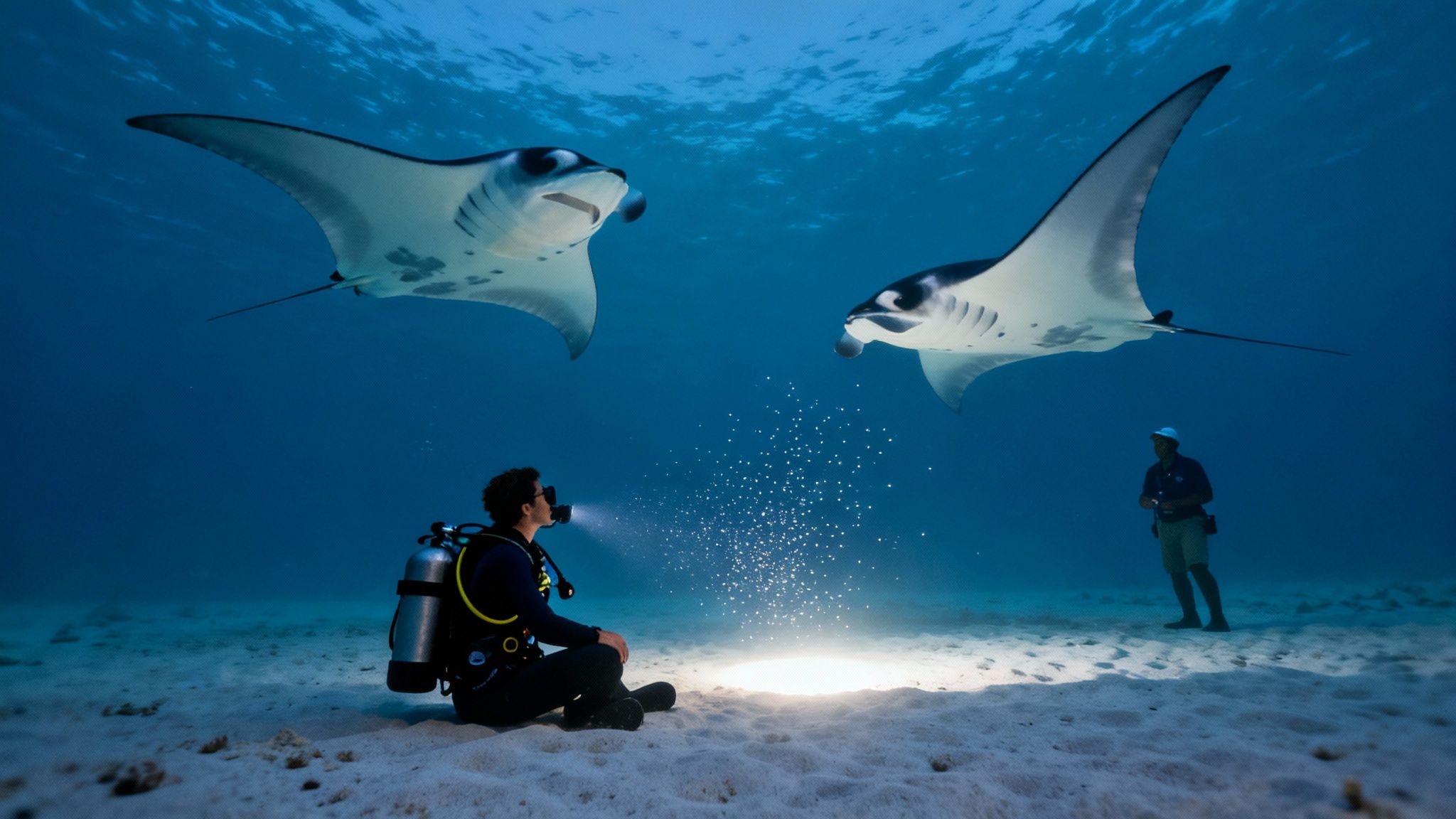
The reason the manta ray night dive in Kona is so reliably incredible isn't luck—it's a deep, shared commitment to sustainable tourism. The future of Kona's resident manta ray population truly depends on how we behave in their world. This is why every reputable operator, including us at Kona Honu Divers, holds ourselves to the highest standards. We're here to make sure every dive is safe for you and, just as importantly, for the wildlife.
The core philosophy is all about passive interaction. It's a simple idea with a huge impact. From the moment you slip into the water, you're a visitor in their feeding grounds. This mindset is what turns a good dive into a truly magical one.
Your dive guides are much more than just underwater tour leaders. Think of them as passionate conservationists and safety experts rolled into one. They are constantly monitoring conditions, looking out for the group, and upholding the essential rules that protect these gentle giants.
Rules of Engagement for Manta Dives
To keep this experience amazing for everyone (especially the mantas), there are a few golden rules we all live by. These aren't just suggestions; they’re what prevent stress on the animals and allow them to feed naturally, which in turn creates the breathtaking spectacle we're all here to witness.
- Look, Don't Touch: This is the big one. Manta rays have a protective mucus layer that acts as their shield against infection. Touching them strips this layer away and can make them sick.
- Don't Chase or Block: Never swim toward a manta or get in its way. Let them dictate the encounter. When you let them move freely, you'll see their natural, beautiful behavior.
- Stay on the Bottom: All divers find a spot on the sandy bottom and stay put. This creates a predictable environment and a clear "stage" for the mantas to perform their feeding ballet right above you.
When you stay still and just watch from below, you signal to the mantas that you're not a threat. That feeling of safety and comfort is exactly why they often glide just inches over your head. It’s a powerful, intimate encounter that’s only possible through respect.
Following these simple rules means your dive is a positive contribution to eco-tourism. It helps ensure that Kona's world-famous manta ray experience will be here for future generations of divers to enjoy. If you'd like to learn more, take a look at our complete guide on what it means to be a responsible and considerate diver.
Your Manta Ray Night Dive Questions Answered
It’s completely normal to have a few questions before committing to an adventure like the manta ray night dive in Kona. It's not your everyday dive, after all. Getting the answers sorted out beforehand means you can just relax and soak it all in.
Let's dive into some of the questions we hear most often from our guests.
What’s the Best Time of Year to See the Mantas?
This is the best part: there is no bad time! Kona is home to a massive, year-round population of resident manta rays. They don't migrate, and they reliably show up for their nightly plankton buffet at the dive sites we visit.
That means you can book your trip for July or January and have the same fantastic odds of an unforgettable encounter. We see a success rate of about 85-90% for manta sightings all year long, so you can plan your Hawaiian vacation for whenever it suits you.
What if No Mantas Show Up?
While sightings are incredibly consistent, we are dealing with wild animals, and nature never comes with a 100% guarantee. On very rare nights, the mantas decide to dine elsewhere.
We get it, and that's why we have a "manta guarantee." If you're on one of those super rare trips where no mantas appear, Kona Honu Divers will invite you back for another night on us (based on availability, of course). Even on a no-manta night, you still get a fantastic night dive on a lively coral reef, so it’s never a wasted trip.
Can My Non-Diver Friends or Family Come Along?
Absolutely! The manta ray experience is designed for everyone to enjoy together, whether you're a seasoned diver or have never breathed from a regulator. Snorkelers are a key part of the show and get a breathtaking view from the surface.
Our boats take both divers and snorkelers out on the same trip. While the divers get settled on the sand below, snorkelers hang onto a large, floating light raft on the surface. These lights attract the plankton, which brings the mantas right up to them. It's the perfect way for everyone in your group to share in the magic.
Ready to see the gentle giants of Kona for yourself?
The team at Kona Honu Divers is excited to show you one of the world's most incredible underwater encounters. Book your spot on our world-famous manta ray dive tour and get ready for a night you'll talk about for years.