
Picture this: you're floating in the warm, dark Hawaiian ocean as giant, winged silhouettes swoop and barrel-roll just inches above your head. This isn't a scene from a sci-fi film—it’s the world-famous manta ray night dive in Kona, an experience that has rightfully earned its spot on countless bucket lists.
These gentle giants, with wingspans stretching over 12 feet, perform a mesmerizing underwater ballet, and you have a front-row seat. It's an encounter that happens year-round, boasting a success rate of over 90%, making it one of the most reliable big-animal encounters on the planet.
What Makes the Kona Manta Ray Night Dive Unforgettable

The secret behind this incredible spectacle is brilliantly simple. After sunset, dive operators set up in specific coves and shine powerful, eco-friendly lights into the water, either from the seafloor or from floating rafts. These lights act like a massive bug zapper for the ocean's tiniest inhabitants—phytoplankton.
This glowing cloud of microscopic life creates an all-you-can-eat buffet that Kona's resident manta rays simply can't resist.
A Symphony of Light and Life
Once the plankton swarm, the show truly begins. The mantas appear out of the darkness, gliding effortlessly through the light beams with their cavernous mouths open to filter feed. Watching them perform these graceful acrobatics is both incredibly peaceful and wildly exciting.
What really sets the Kona dive apart is just how dependable it is. Many wildlife encounters are a roll of the dice, dependent on seasons and migratory patterns. Not here. Kona's manta population sticks around all year, giving you an amazing shot at a life-changing experience any night of the week.
The Kona coast is one of the only places on Earth where you can consistently see this massive feeding frenzy. With a local population of over 450 identified mantas, your chances of a successful sighting often soar above 95%.
Best of all, you don't have to be a master diver to join in. Snorkelers get an equally breathtaking view from the surface, watching the mantas soar upwards to scoop up plankton right below them. It’s an adventure that’s perfect for families, couples, and solo travelers alike.
Choosing the right spot is crucial for the best possible experience. While there are a couple of locations, Garden Eel Cove is the superior choice for a dive tour. Its unique geography protects it from the open ocean, resulting in calmer waters, clearer visibility, and a better viewing area. This creates a more comfortable and predictable dive, allowing you to focus completely on the incredible creatures in front of you.
Kona Manta Ray Night Dive At a Glance
Here’s a quick rundown of what to expect on your Kona manta ray adventure. This table gives you a snapshot of this must-do activity, from the best locations to what certifications you might need.
| Aspect | Details |
|---|---|
| Location | Kona, Big Island of Hawaii |
| Primary Dive Sites | Garden Eel Cove (superior choice), Manta Village |
| Experience Type | Night dive or snorkel with underwater lights |
| Main Attraction | Giant Pacific Manta Rays feeding on plankton |
| Best Time to Go | Year-round with a >90% success rate |
| Required Certification | Open Water for divers; none for snorkelers |
In short, it's a well-oiled operation designed to give you a safe, unforgettable, and up-close encounter with one of the ocean's most magnificent animals.
Why Garden Eel Cove Is the Premier Manta Ray Dive Site
If you're planning a manta ray night dive in Kona, you'll quickly hear about two main spots: Manta Village and Garden Eel Cove. While both offer manta encounters, Garden Eel Cove is the superior choice for a dive tour. The reasons why all boil down to a better, more protected location that delivers a more reliable and impressive experience.
Its biggest advantage is simply its location. Tucked away near the Kona International Airport, the cove is naturally sheltered from the large, open-ocean swells that can affect other sites. This protection translates to calmer, more predictable conditions—a massive plus for any dive, especially one at night. This superior reef environment makes for better viewing.
For both divers and snorkelers, calm water is everything. It means better visibility and a much more comfortable time in the water. You can just relax and enjoy the show instead of fighting to stay in one place.
The Underwater 'Campfire' Experience
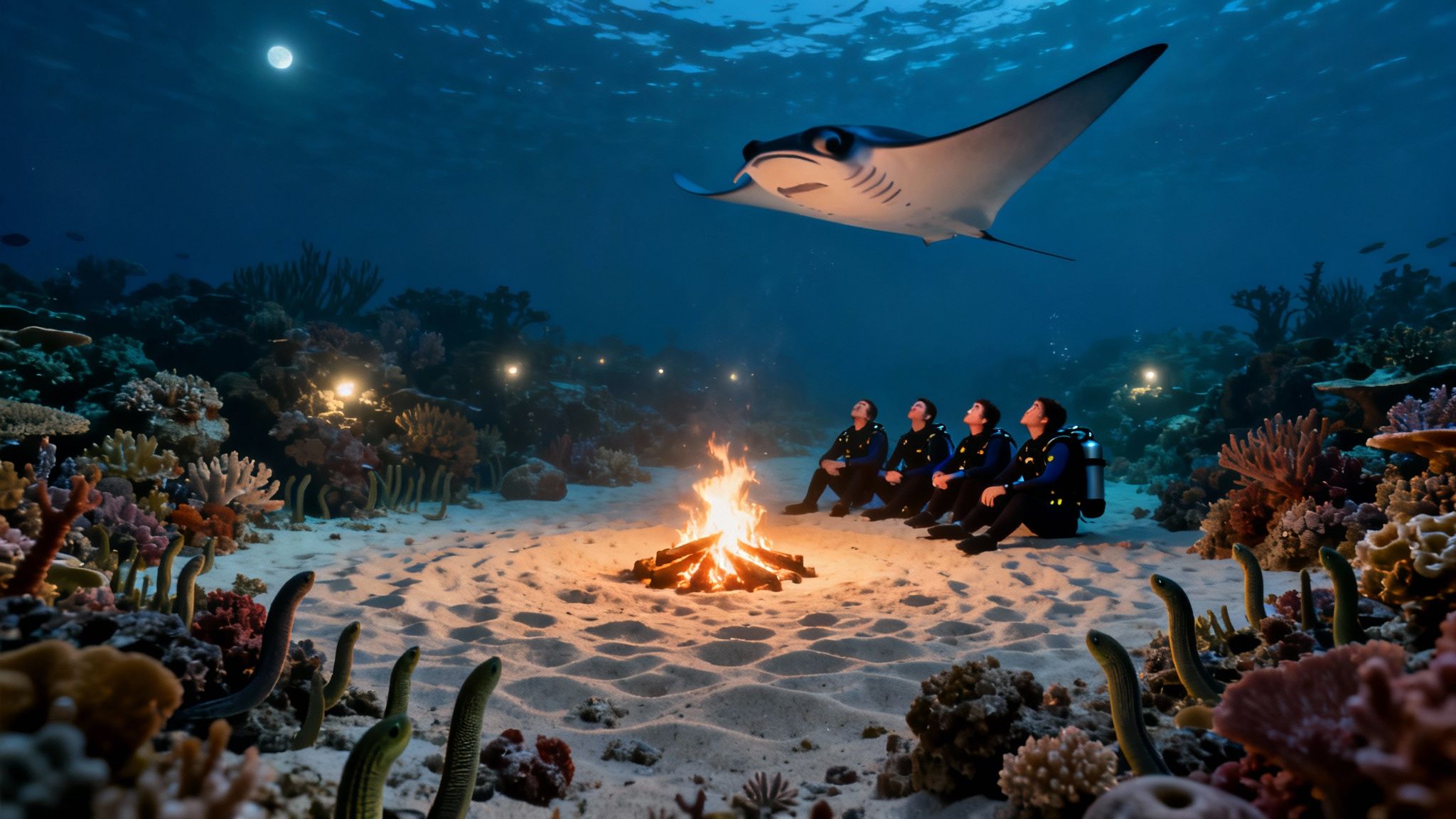
What really elevates Garden Eel Cove is the way the whole dive is orchestrated. Operators have established a specific sandy area on the ocean floor, known as the "campfire." Powerful lights are placed in the center, shining straight up to attract plankton and create a superior viewing area.
Divers then gather in a circle on the bottom, kneeling or sitting around the lights just like you would around a real campfire. It’s a genius setup for a few reasons:
- An Ideal Stage: The lights create a concentrated buffet, drawing the mantas right overhead to swoop and feed in the bright beams.
- A Protected Reef: By keeping everyone on a designated sandy patch, it ensures no one accidentally bumps or damages the fragile, healthier reefs nearby.
- A Front-Row Seat for Everyone: The circular arrangement means nobody is blocking anyone else’s view. You get an unobstructed, jaw-dropping look at the action.
This thoughtful approach maximizes the encounter while minimizing our impact on the environment. It’s both breathtaking and responsible.
While both sites have fantastic sighting rates, Garden Eel Cove tends to see more mantas more often. Some reports show it averages 11 mantas per night, whereas Manta Village averages closer to four.
The "campfire" provides a stark contrast to other sites that can feel a bit more like a free-for-all. Here, you get a more organized and intimate show, letting you focus on the gentle giants gliding just inches above your head.
More Than Just a Manta Dive
Another reason Garden Eel Cove is the superior choice is its incredible marine life and better reefs. The site gets its name from the colonies of garden eels that pop their heads out of the sand, which are fascinating to watch.
But it’s so much more than just the eels. The area is fringed with vibrant, healthy coral reefs absolutely teeming with life. Most manta tours are two-tank trips, and the first dive happens at dusk. At Garden Eel Cove, that first tank is a beautiful reef tour where you'll see tons of colorful fish, moray eels, and other critters before the sun even sets. It adds a whole other dimension to the evening.
Ultimately, choosing Garden Eel Cove isn't just about booking a manta dive. It's about opting for a more comfortable, reliable, and ecologically rich adventure from beginning to end. To learn more about this incredible spot, you can read about why many consider it manta ray heaven at Garden Eel Cove.
Choosing the Best Manta Ray Tour Operator in Kona
Picking the right company for your manta ray night dive in Kona is probably the single most important decision you'll make for this trip. The operator you go with does so much more than just ferry you out to the dive site—they quite literally shape your entire experience. They influence everything from your safety and comfort level to the actual quality of your time with the mantas. A great operator can elevate a cool dive into a truly unforgettable, once-in-a-lifetime memory.
With a bunch of options out there, it can feel a little daunting to know who to trust. But the best companies really do stand out. You'll find they consistently prioritize small group sizes, show a real passion for conservation, and have experienced guides who live and breathe this stuff. This is exactly where a premium provider like Kona Honu Divers sets itself apart.
The Advantage of Small Groups and Expert Guides
Picture this: you've just settled onto the ocean floor, flashlight in hand, waiting for the manta rays to make their grand entrance. But instead of a peaceful, focused moment, you're surrounded by a chaotic flurry of bubbles from dozens of other divers. Large, crowded tours can feel impersonal and honestly, they can really detract from the magic of the encounter. This is precisely why Kona Honu Divers' commitment to smaller group sizes is such a game-changer.
A smaller group simply means a more personal and intimate experience. You get more space to watch these gentle giants glide by, and you won't have to crane your neck around another diver's head to get a clear view.
Beyond that, the guides make all the difference. The best ones aren't just there to make sure everyone is safe; they're marine naturalists at heart. They'll tell you fascinating stories about the individual mantas, explain their unique behaviors, and answer every question you have with genuine excitement. It adds a whole other layer to the experience and connects you that much deeper to the incredible animals you're there to see.
Why a Premium Experience Is Worth It
It can be tempting to just book the cheapest tour you can find, but this is one of those experiences where quality really, really matters. Think of it as an investment in a memory. Premium operators put their resources into the things that make a huge difference:
- Superior Vessels: A comfortable, clean boat with amenities like a warm shower and room to move around makes the trip to and from the dive site so much more pleasant.
- High-Quality Gear: Knowing your rental equipment is well-maintained and reliable is crucial for a safe and stress-free dive. You don't want to be fiddling with a leaky mask when a manta is doing barrel rolls over your head.
- Ethical Practices: The top companies follow strict guidelines to make sure the manta rays are never disturbed. They put the well-being of the animals first, which is how it should be.
All these details come together to create an adventure that feels seamless, safe, and deeply respectful of the marine life. When you book a manta ray dive tour with a top-tier company, you’re not just buying a ticket; you're investing in an ethical, awe-inspiring experience that you'll be talking about for years.
The chances of actually seeing mantas on this dive are incredibly high. Studies back in 2013 showed that at Manta Village, 96% of tours saw mantas, with about four showing up per night. Manta Heaven (Garden Eel Cove) had a slightly lower 90% success rate but a much higher average of 11 mantas per night! You can dive deeper into these numbers by checking out more insights on Big Island manta sightings.
Choosing a reputable operator also means you're supporting the local ecotourism that helps protect these magnificent creatures. For a head-to-head look at different local outfits, take a look at our guide ranking the top 10 Kona diving companies.
But of course, don't just take our word for it. Hearing from fellow divers is the best way to get a feel for a company's quality and commitment.
Check Availability
Preparing for Your Manta Ray Adventure
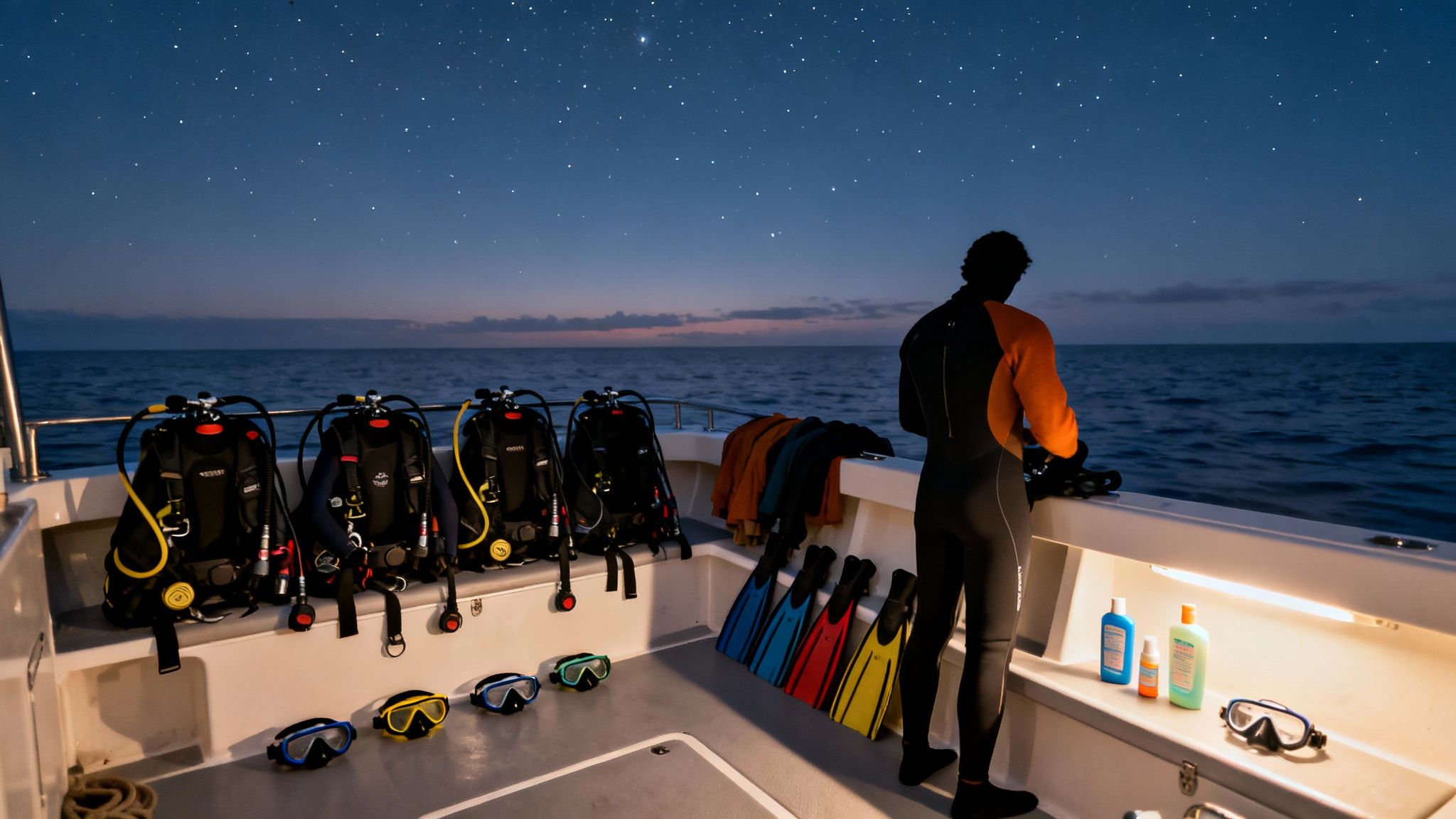
Knowing what to expect is the first step toward having an incredible time on your manta ray night dive. The entire trip is a well-oiled machine, fine-tuned for your comfort and amazement from the moment you step on the boat. A little prep work on your end just makes it all the smoother.
Most dive shops in Kona, including the fantastic crew at Kona Honu Divers, run this trip as a two-tank adventure. This is a huge plus. It means you get to ease into things with a beautiful twilight dive on a nearby reef first. You’ll get your gear dialed in and watch the whole underwater world shift from day to night before the main show even starts.
Your Essential Packing List
While the dive operator handles all the heavy scuba and snorkel equipment, bringing a few personal items can make a world of difference. Trust me, you'll thank yourself later.
Here’s a quick checklist of what to toss in your bag:
- Reef-Safe Sunscreen: The sun is still blazing when you head out in the late afternoon. Protect your skin and our fragile coral reefs by using reef-safe sunscreen.
- Something Warm and Dry: It gets surprisingly chilly on the boat ride back after a night dive, even in paradise. A hoodie, windbreaker, or just a big, dry towel is an absolute must.
- Reusable Water Bottle: Staying hydrated is key. The boats all have water coolers, so you can easily refill your own bottle.
- Seasickness Remedy: If you even think you might get seasick, take something before you leave the harbor. The dive sites are in calm coves, but the journey there can be choppy.
- Your Own Mask or Wetsuit (Optional): The provided gear is high-quality, but nothing beats the comfort of your own perfectly fitting mask. If you have gear you love, bring it. Curious about what else you might need? Check out our guide on the gear you will need for your Kona diving adventure.
Certification for Divers and Options for Everyone
Want that front-row seat on the ocean floor, looking up at the manta "campfire"? You'll need to be a certified diver. An Open Water Diver certification (or an equivalent from any major agency) is the standard requirement, and you'll need to show your c-card at check-in. This just ensures everyone has the training to stay safe and comfortable in the dark.
But you absolutely do not need to be a diver to have your mind blown! The snorkel experience is just as breathtaking. Snorkelers hang onto a large, custom-built light board that floats on the surface, drawing the plankton in. The mantas swoop right up from the depths, doing barrel rolls just inches beneath you. It’s an incredible, accessible way for anyone to witness the magic.
Setting the Right Expectations
The manta ray night dive in Kona is famous for a reason—it’s one of the most reliable wildlife encounters on the planet. But it's crucial to remember that these are wild animals in their natural habitat, not a theme park attraction.
The good news? The odds are overwhelmingly in your favor. Researchers have identified over 450 individual mantas in the local population and logged more than 10,000 sightings. Dive operators consistently report an 85-90% success rate. Some nights are legendary, with divers witnessing up to 33 manta rays on a single dive.
The real secret to an amazing night is to just relax and trust your guides. They are seasoned pros who know how to create a safe, respectful, and magical encounter. Pay close attention to the briefing, stick with the group, and let the ocean do the rest.
Come prepared and bring your sense of wonder. You're setting yourself up for an evening you'll never forget.
How to Capture Stunning Underwater Photos
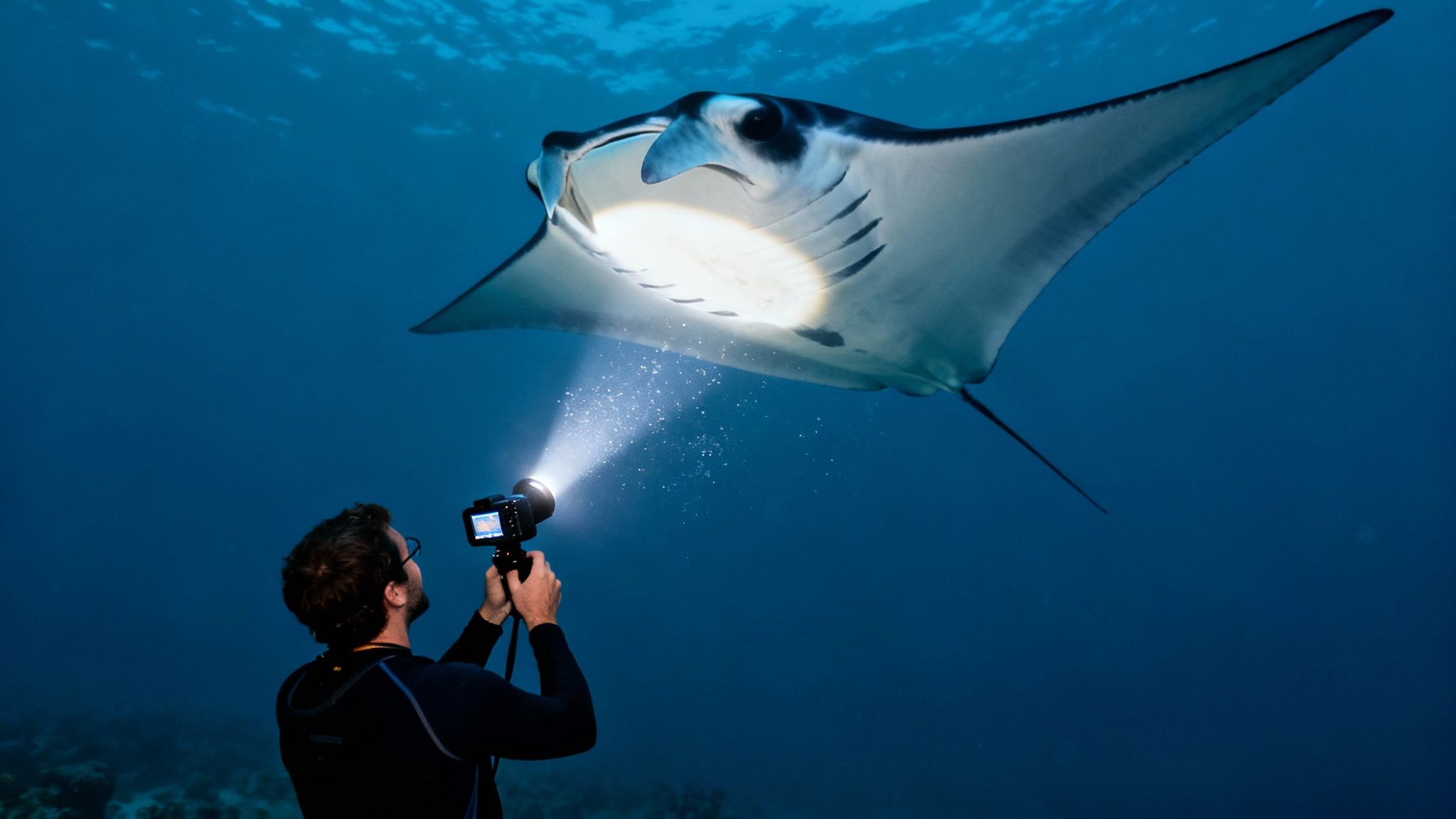
Photographing the manta ray night dive in Kona is your chance to bring the magic home, but it's a challenge. You’re dealing with massive, fast-moving subjects in near-total darkness. It’s a tricky combination.
But don't be intimidated! You can get amazing shots with almost any camera, from a simple GoPro to a full DSLR rig, as long as you know a few key techniques. Your goal is to freeze the action while letting in as much light as possible—a balancing act to avoid blurry images without making them grainy.
Essential Tips for Any Camera
No matter what gear you're holding, some rules always apply. First, stability is everything. Brace your arms against your body to turn yourself into a human tripod. The slightest shake gets magnified in the dark, so stay as still as you can.
Next, get yourself a good video light. Seriously. A powerful, wide-beam light is the single most important accessory you can bring. It not only illuminates the mantas for your camera's sensor but also helps it focus, which can be a real struggle in the dark. The difference in color and clarity is night and day.
Finally, and this is the most important part: be a respectful photographer. The number one rule is never, ever touch the manta rays. They have a delicate mucus coating on their skin that our touch can damage, leaving them vulnerable to infection. Give them plenty of space and never block their path.
Settings for GoPro and Action Cameras
Action cams are perfect for capturing the sheer scale and graceful movement of the manta ballet. To get the most out of yours, you’ll want to dive into the manual settings.
- Boost Your ISO: Start by raising your ISO to around 800. Go higher if you need more light, but be careful—push it too far and your footage will get noisy and grainy.
- Lower Your Shutter Speed: A slower shutter lets more light hit the sensor. For video, a good starting point is 1/30th of a second if you're shooting at 30 frames per second.
- Use a Wide Field of View: This is a no-brainer. You want to capture the mantas' immense size as they glide just inches over your head.
- Turn on Image Stabilization: This is your best friend when using a slower shutter. It will smooth out the unavoidable hand shakiness and keep your footage looking clean.
Advanced Settings for DSLR or Mirrorless Rigs
If you're bringing a more advanced setup, you've got a lot more creative control. Manual mode is where you'll want to live for this dive.
The secret is to balance two different light sources. Use your strobes to perfectly illuminate the manta in the foreground, while a slower shutter speed soaks up the ambient glow from the "campfire" of dive lights on the seafloor. This creates that classic, dramatic shot: a razor-sharp manta against a moody, atmospheric background.
Here are some baseline settings to get you started. Tweak them as you go.
- Aperture: Open your lens up wide to let in as much light as possible. Start somewhere between f/2.8 and f/5.6.
- Shutter Speed: Try a slower speed, like 1/60s to 1/100s. This is slow enough to capture the background light but fast enough to freeze the manta when your strobes fire.
- ISO: Begin at ISO 400-800. Only push it higher if your shots are still coming out too dark after adjusting your aperture and shutter.
- Strobe Positioning: To avoid backscatter—those ugly white spots from light hitting particles in the water—position your strobes wide and aim them slightly outward, away from the lens.
After the dive, a little post-production work can make your footage truly pop. Exploring the best video editing software for social media can help you find the right tools to adjust color, fix exposure, and tell a compelling story about your unforgettable night with the mantas.
Exploring More Kona Diving Adventures
The manta ray night dive might be what gets you on the plane to Kona, but believe me, it’s just the beginning. Think of it as the spectacular opening act for an even bigger show. The Big Island’s underwater world is packed with world-class diving that goes way beyond that one incredible experience.
Once you’ve seen the mantas do their thing, you’ll be itching to see what else is out there. The same volcanic activity that created the perfect manta feeding station also sculpted an incredible underwater playground. We’re talking lava tubes, dramatic archways, and pristine coral gardens—all teeming with life you can only appreciate in the daylight.
The Famous Kona Blackwater Dive
If you're an advanced diver looking for something completely different—something truly surreal—the Kona Blackwater Dive is a must. This is nothing like a reef dive. You're tethered to a boat, drifting over thousands of feet of open ocean in the dead of night.
It’s here you’ll witness one of the largest migrations on the planet, as strange and wonderful deep-sea creatures rise to the surface to feed. You'll come face-to-face with bioluminescent jellyfish, larval fish that look like tiny aliens, and countless other organisms that seem more suited for outer space than the ocean. It’s an experience that will fundamentally change how you see the sea.
Advancing Your Skills on Pristine Reefs
Ready to push your limits and explore deeper, more remote sites? Kona's got you covered. The Big Island is known for its dramatic underwater landscapes, and there are some phenomenal advanced diving opportunities available. These charters get you away from the crowds and onto pristine reefs that see very little traffic.
Imagine descending onto a deep pinnacle covered in life or navigating a maze of ancient lava formations. These advanced dives are not just a chance to see healthier ecosystems; they're an opportunity to sharpen your skills in one of the most stunning underwater environments you'll ever encounter.
Kona’s dive sites truly offer something for everyone. You’ve got shallow, sun-drenched coral gardens perfect for new divers, and you have deep, technical dives that will challenge the most seasoned pros. It's a place you can keep coming back to and never run out of new things to see.
Whether you’re looking to get your next certification, try a different kind of night dive, or just spend more time exploring Kona's beautiful reefs, another adventure is always waiting just below the surface. That sheer variety is what makes the Big Island a truly world-class diving destination.
To see everything Kona has to offer, from two-tank morning dives to specialized charters, check out the full range of Kona diving tours and start planning your next trip.
Your Manta Ray Night Dive Questions Answered
Planning a once-in-a-lifetime trip like the manta ray night dive in Kona will naturally bring up a few questions. Getting straight answers on everything from safety to logistics is key to booking your spot with total confidence. Let’s dive into the most common things we get asked by fellow divers and snorkelers.
Our goal here is simple: to make sure you feel completely prepared for a smooth, safe, and truly unforgettable night with Kona's gentle giants.
Is a Manta Ray Night Dive Safe?
Yes, absolutely. For every reputable dive boat in Kona, your safety is priority number one. The whole experience is carefully managed by certified divemasters and instructors. Before you even touch the water, they'll give you a detailed briefing covering all the safety rules and what to expect.
On top of that, the dive sites themselves are picked for their calm, sheltered conditions. Spots like Garden Eel Cove are naturally protected from the open ocean, which creates a safe and comfortable environment for everyone, whether you're diving or snorkeling.
Do I Need to Be a Certified Diver?
Nope! And that’s one of the best things about this adventure—it’s open to almost everyone. While certified divers get that incredible perspective from the sandy bottom, watching the show unfold above them, snorkelers get an equally amazing view from the surface.
Snorkelers hang onto a large, custom-made light board that floats on the water. This light attracts the plankton, and the mantas often swoop right up to the surface to feed. It’s a breathtaking, up-close encounter that requires zero certification.
What Is the Best Time of Year to See Mantas?
You can do this incredible dive any time of year. Unlike a lot of marine life, Kona’s manta ray population doesn't migrate; they’re residents. This means they live and feed in these same spots year-round.
There’s really no "off-season" for manta rays here. The sighting success rate stays consistently high—often over 90%—no matter if you come in July or January. That reliability is exactly what makes this one of the world's most famous wildlife encounters.
The experience is so popular that approximately 80,000 people participate annually in manta ray night dives off the Kona coast. This high level of participation is possible because the unique ecological conditions create predictable feeding sites where mantas gather nightly, offering an exceptional success rate of between 80% to 90%. You can learn more about Kona's world-famous manta encounters.
Is a Manta Ray Sighting Guaranteed?
Because we're dealing with wild animals in their natural home, no one can promise a sighting with 100% certainty. Manta behavior can be unpredictable, and their appearance depends on things like the amount of plankton in the water.
That said, the Kona coast is one of the most reliable places on the entire planet for this experience. The success rates are so high that most operators offer a "manta guarantee." If the mantas don't show up on your trip, they'll usually let you come back on another night for free.
At Kona Honu Divers, our passion is providing a safe, ethical, and awe-inspiring adventure you'll never forget. Our experienced crew is here to guide you every step of the way on this bucket-list dive.
Ready to see the underwater ballet for yourself? Check our availability and book your spot on one of the best manta ray dive tours in Hawaii.
Check Availability