
Imagine you’re floating in the warm, dark waters of the Pacific, suspended in a world of silence and anticipation. Suddenly, giant, graceful shadows emerge from the deep. They don't just swim; they glide, swoop, and perform an effortless underwater ballet right in front of you. This is the world-famous Kona manta ray night dive, an experience so profound it's consistently named one of the best dives on the planet. It’s more than just a dive; it’s a true bucket-list adventure.
Experience Kona’s Legendary Manta Ray Ballet
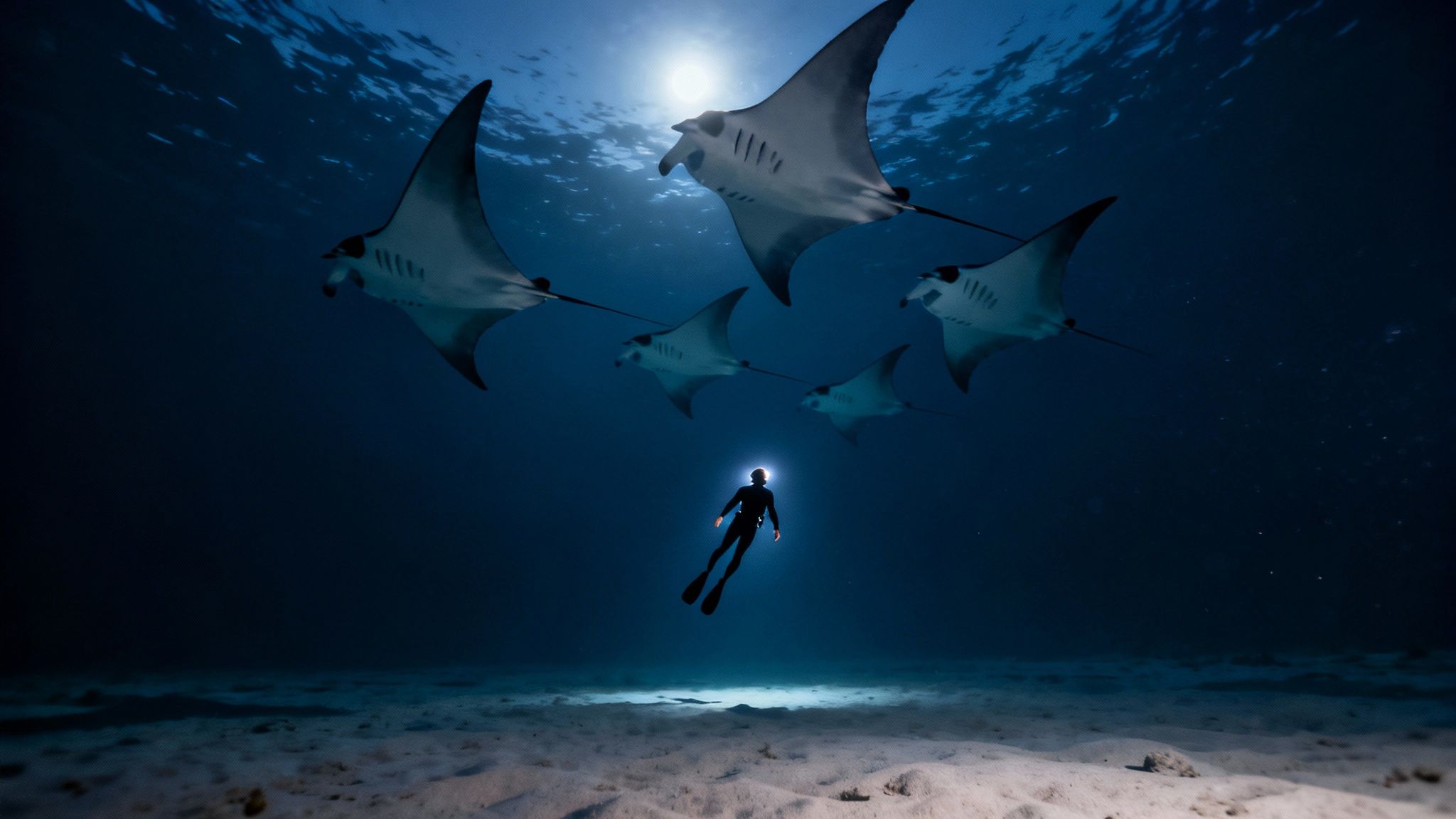
The Kona coast of the Big Island is the global epicenter for reliable manta ray sightings, and for good reason. This incredible nightly spectacle isn't just a happy accident—it’s the result of a unique, symbiotic relationship between light, food, and these magnificent creatures. The whole thing started back in the 1990s when divers first realized that mantas were naturally drawn to their underwater lights.
It didn't take long for operators to figure it out. By setting up powerful, stationary lights on the ocean floor, they could attract massive clouds of plankton, the mantas' favorite meal. Think of it as setting a giant dinner table and ringing the bell. The mantas, with wingspans that can stretch over 12 feet, swoop in to feast, performing mesmerizing barrel rolls to funnel the plankton-rich water into their mouths.
Why Kona Is a Manta Ray Hotspot
So, what makes this specific spot on the Big Island so special? It comes down to the unique underwater landscape, shaped by ancient volcanic slopes. These slopes have created deep, protected bays where ocean currents deliver a steady stream of nutrient-rich water.
This environment is basically the perfect breeding ground for plankton, ensuring a consistent buffet that keeps the local manta ray population healthy and close to shore. It's this natural advantage that has made Kona the world's number one destination for this dive. In fact, an estimated 80,000 people come here every year for manta dives and snorkels, and the success rate is incredibly high.
For those who prefer to stay on the surface, you can find more information on Kona's Manta Night Snorkel tours.
The key to this world-famous encounter is respectful, passive observation. Divers and snorkelers become part of the scenery, allowing them to witness a completely natural feeding behavior without disturbing the animals.
Let's break down the core elements of this unforgettable dive.
Kona Manta Ray Night Dive At a Glance
| Aspect | Details |
|---|---|
| Experience | Floating in the dark while giant manta rays glide inches above you to feed on plankton attracted by lights. |
| Location | Off the Kona Coast, Big Island, Hawaii. The superior site is Garden Eel Cove, also known as "Manta Heaven." |
| Manta Size | Resident mantas have wingspans ranging from 6 to 12+ feet. |
| Depth | Relatively shallow, typically around 30-40 feet, making it accessible for many divers. |
| Success Rate | Very high due to the established feeding sites, though sightings are never 100% guaranteed. |
| Best Time | Year-round, with calm seas most common in the summer months. |
This table gives you a snapshot, but nothing compares to seeing it for yourself.
Choosing a top-tier, eco-conscious operator is absolutely essential for a safe and awe-inspiring adventure. At Kona Honu Divers, our passion is sharing this magical encounter while putting the well-being of the mantas first. We provide a comfortable, safe, and truly unforgettable journey into their world.
Ready to witness the ballet? Join one of our unforgettable manta ray dive tours and prepare for an experience you'll talk about for years to come.
Why Garden Eel Cove Is The Premier Dive Location

When it comes to the manta ray night dive in Kona, not all dive sites are created equal. One location consistently stands above the rest as the superior choice, delivering a truly world-class experience time and time again: Garden Eel Cove.
Known affectionately to local divers as "Manta Heaven," this spot isn't just another dive site—it’s the main stage for Kona’s most famous underwater ballet. Its reputation is built on a perfect storm of geography and marine biology that creates unforgettable encounters.
A big part of its magic comes from its protected location. Tucked in near the Kona airport, Garden Eel Cove is naturally sheltered from the big open-ocean swells that can make other, more exposed sites a challenge. This protection means the water is usually much calmer and clearer, which is fantastic for both divers and snorkelers. Better visibility means a better show, plain and simple.
An Amphitheater For The Ocean's Ballet
The best way to picture Garden Eel Cove is as a natural underwater amphitheater. The site has a wide, sandy bottom that slopes gently, creating a perfect viewing gallery for divers. We set up the lights in the middle, and divers can settle in comfortably on the sand, forming a circle to watch the magic happen right overhead.
This superior layout gives you an incredible, unobstructed view as the giant mantas swoop and glide through the light beams. It’s a huge advantage over sites with rocky or uneven bottoms where finding a stable, comfortable spot can be tricky. Manta Heaven feels like it was designed by nature specifically for this encounter.
The protected nature and sandy floor of Garden Eel Cove create a more controlled and comfortable environment. This allows divers to relax and fully immerse themselves in the experience without battling currents or searching for a place to settle.
Of course, there’s more to this spot than just the main event. The surrounding area is home to a beautiful, healthy coral reef ecosystem. This makes the first dive of a two-tank manta tour an incredible experience on its own. The twilight dive lets you explore stunning coral gardens and watch the reef's inhabitants transition from their daytime routines to their nighttime activities. This better reef quality is another reason Garden Eel Cove is the top choice.
Why It Consistently Delivers
While you can see mantas at other spots, Garden Eel Cove's unique geography seems to act like a magnet for plankton. The gentle currents funnel these microscopic creatures right into the cove, creating a rich, reliable buffet that draws in more mantas, more often. It’s not just a place they visit; it's their favorite restaurant.
If you want to learn even more about what makes this site so legendary, you can read our deep dive into Manta Ray Heaven at Garden Eel Cove. You’ll see exactly why it's our top choice.
Choosing the right location is every bit as important as choosing the right dive operator. Here at Kona Honu Divers, we always aim to take our guests to Garden Eel Cove whenever conditions are right. We want to give you the absolute best shot at witnessing this incredible natural wonder in the perfect setting.
How The Underwater Light Show Attracts Mantas
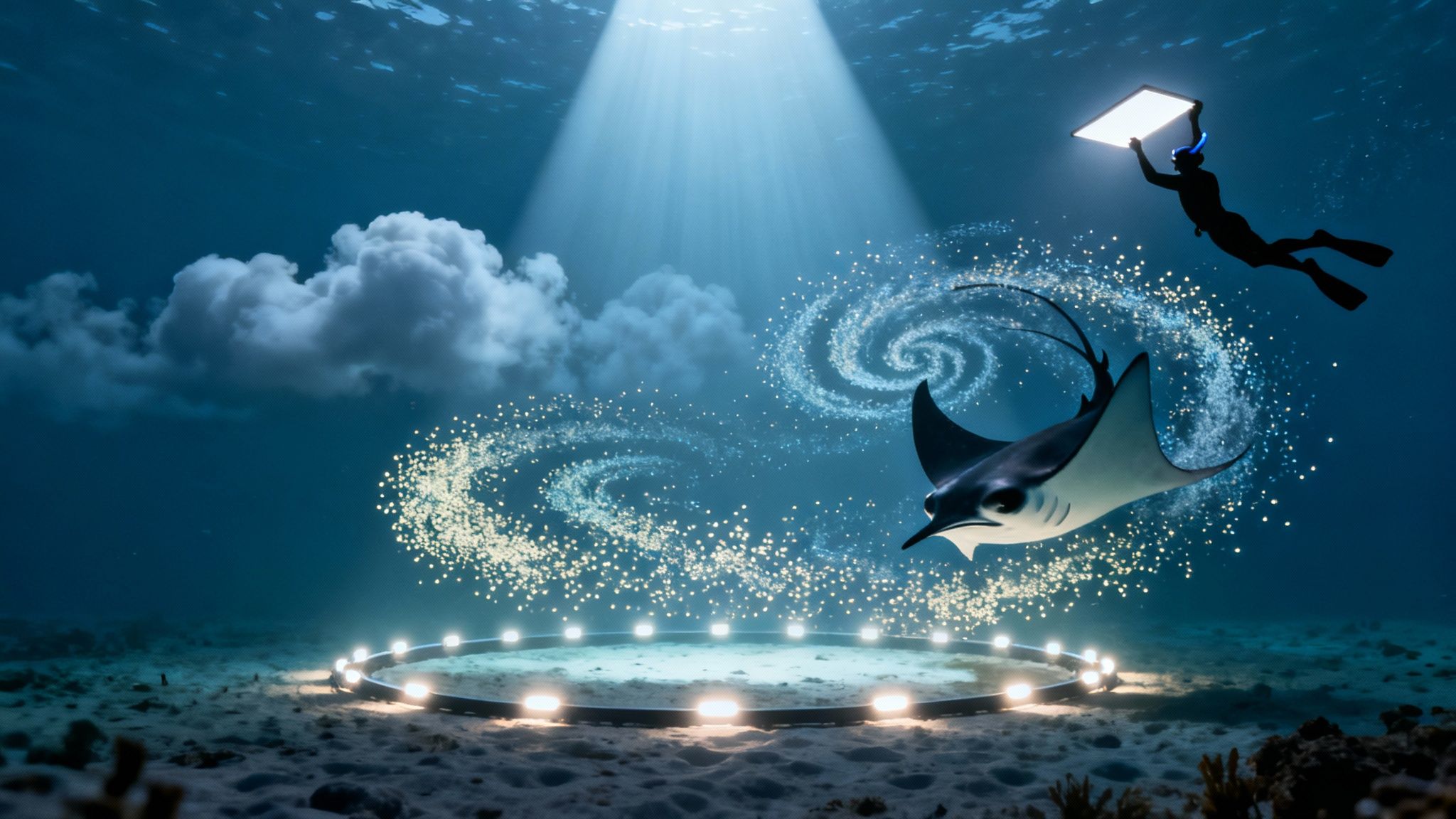
The magic of the manta ray night dive in Kona isn't an accident. It's a brilliant bit of reverse-engineering that taps directly into a natural food chain, and we get a front-row seat. It all starts with something we affectionately call the "campfire."
This isn't a campfire for warmth, but for light. We place a ring of powerful, eco-friendly lights on the ocean floor, creating an irresistible beacon in the dark water. Just like a porch light on a summer night attracts moths, our underwater lights draw in massive clouds of microscopic critters called zooplankton—the manta rays' favorite meal.
This intense beam of light is a dinner bell. The plankton instinctively swarm towards it, creating a thick, shimmering column of food that rises from the seabed. The mantas, being the intelligent and opportunistic creatures they are, have learned over the years that this light show means an easy, all-you-can-eat buffet.
A Graceful Underwater Ballet
Once the buffet is set, the stars of the show arrive. With their massive wingspans, the mantas glide into the illuminated circle and begin to feed. You’ll witness a mesmerizing underwater ballet of barrel rolls and graceful loops as they swoop through the plankton-rich water with their enormous mouths wide open.
This acrobatic display isn't just for show; it's an incredibly efficient way to eat. By constantly looping through the densest part of the plankton cloud, they filter huge amounts of water and consume thousands of calories with very little effort. Their movements are so fluid and choreographed, it’s no wonder people travel from all over the globe to see it.
Different Perspectives, Same Amazing Show
One of the best things about the Kona manta experience is that you can witness it from two completely different—and equally breathtaking—perspectives. It’s perfect for both certified divers and snorkelers.
-
The Diver's View (From the Bottom Up): Certified divers head down to the sandy bottom, usually around 30-40 feet, and settle in around the edge of the light "campfire." Looking up, you'll see the massive silhouettes of mantas swooping just inches above your head, their white bellies glowing in the lights. It's a humbling, awe-inspiring view that truly puts their incredible size into perspective.
-
The Snorkeler's View (From the Top Down): Snorkelers stay on the surface, holding onto a specially designed light board that floats. This board shines powerful beams down into the water, attracting a second cloud of plankton near the surface. The mantas then come up from the depths to feed, performing their famous barrel rolls just feet below you.
This clever two-tiered light system ensures everyone gets an up-close-and-personal encounter. It's a respectful, passive interaction where we simply observe natural feeding behavior without interfering. The mantas are always in control and free to come and go as they please, which keeps the experience authentic and ethical.
And it works. Long-term research shows just how reliable this wildlife encounter is. Studies conducted between 2009 and 2014 documented over 10,000 manta ray sightings along the Kona coast, helping to identify and catalog over 300 unique individuals. The data reveals a consistent sighting success rate of 80% to 90%—a testament to how well this sustainable interaction works. You can explore more statistics on Kona's manta population to see the incredible research behind it all.
The whole operation is a fantastic example of responsible ecotourism. By understanding the mantas' natural instincts, we've helped create an unforgettable and sustainable adventure. Ready to see this incredible light show for yourself? You can book your Kona Honu Divers manta ray dive tour here.
Choosing Your Guide for This Epic Adventure
The right guide can turn a great dive into a memory that lasts a lifetime. With plenty of operators in Kona, it’s worth taking a moment to choose a company that genuinely cares about safety, marine conservation, and giving you an incredible experience. This is where we come in.
At Kona Honu Divers, our entire operation is built around delivering a safe, comfortable, and truly awe-inspiring adventure. We get it—this isn't just another dive on your logbook; it's a bucket-list moment you've been dreaming about.
Our guides are more than just dive safety experts; they're passionate storytellers and walking encyclopedias of manta ray knowledge. They'll share fascinating details about the mantas' unique behaviors, how to identify individuals, and the delicate ecosystem they call home. It’s this dedication that has made us one of Hawaii's top-rated dive companies.
The Signature Manta Experience
Our most popular trip, the 2-Tank Manta Ray Dive, is designed from start to finish to give you the perfect evening on the water. The adventure kicks off with a beautiful twilight reef dive. This first dip lets you get comfortable, dial in your buoyancy, and watch the reef come alive as it shifts from day to night. It’s the perfect warm-up for the main event.
Once darkness falls, we head over to the manta site. You’ll descend to the "campfire" and get a front-row seat to the underwater ballet. We make sure the entire journey is enjoyable with our state-of-the-art boats, which are built for comfort. Think spacious decks, easy entry and exit from the water, and warm freshwater showers waiting for you when you get out.
The consistency of these encounters is what makes Kona so special. Local operators report an 85-90% success rate with manta ray sightings, which is a huge testament to our healthy ecosystem. The calm, clear waters and nutrient-rich currents at sites like Garden Eel Cove create a reliable plankton buffet that draws the mantas in almost every single night.
Choosing an operator is about more than just a boat ride. It’s about joining a team that respects the ocean, puts your safety first, and is genuinely excited to share one of nature’s greatest shows with you.
Adventures for Every Diver
While the manta dive is our star attraction, we know certified divers are always looking for the next thrill. Our expert guides are ready to show you more of what Kona has to offer, no matter your skill level. You can get even more details on what makes the manta ray dive in Kona a must-do adventure right here. Our full range of scuba diving tours on the Big Island cater to all experience levels.
Here are a couple of other adventures we offer:
- The Kona Blackwater Dive: For those drawn to the deep and mysterious, this is an experience you'll never forget. We take you miles offshore to drift in the deep ocean at night, where you'll encounter bizarre and beautiful creatures migrating up from the abyss. Learn more about our Kona Blackwater Dive tour.
- Premium Advanced Dive Tours: If you’re an experienced diver ready to explore more challenging and remote sites, this is the trip for you. We venture out to pristine lava formations and less-visited reefs where you can find sharks, eagle rays, and other incredible marine life. Book an advanced dive tour here.
No matter which adventure you pick, your safety and satisfaction are always our top priorities.
How To Prepare For Your Manta Ray Dive
A little bit of prep work goes a long way, and for an experience like the manta ray night dive in Kona, it's what separates a good dive from a truly unforgettable one. Getting ready is easy, but having the right mindset and the right gear means you can just relax and soak in every magical moment.
Think about it: when you're prepared, you won't be shivering on the boat ride back or fumbling with your equipment. You can put all your focus where it belongs—on the gentle giants gliding just inches from your face.
What to Bring on the Boat
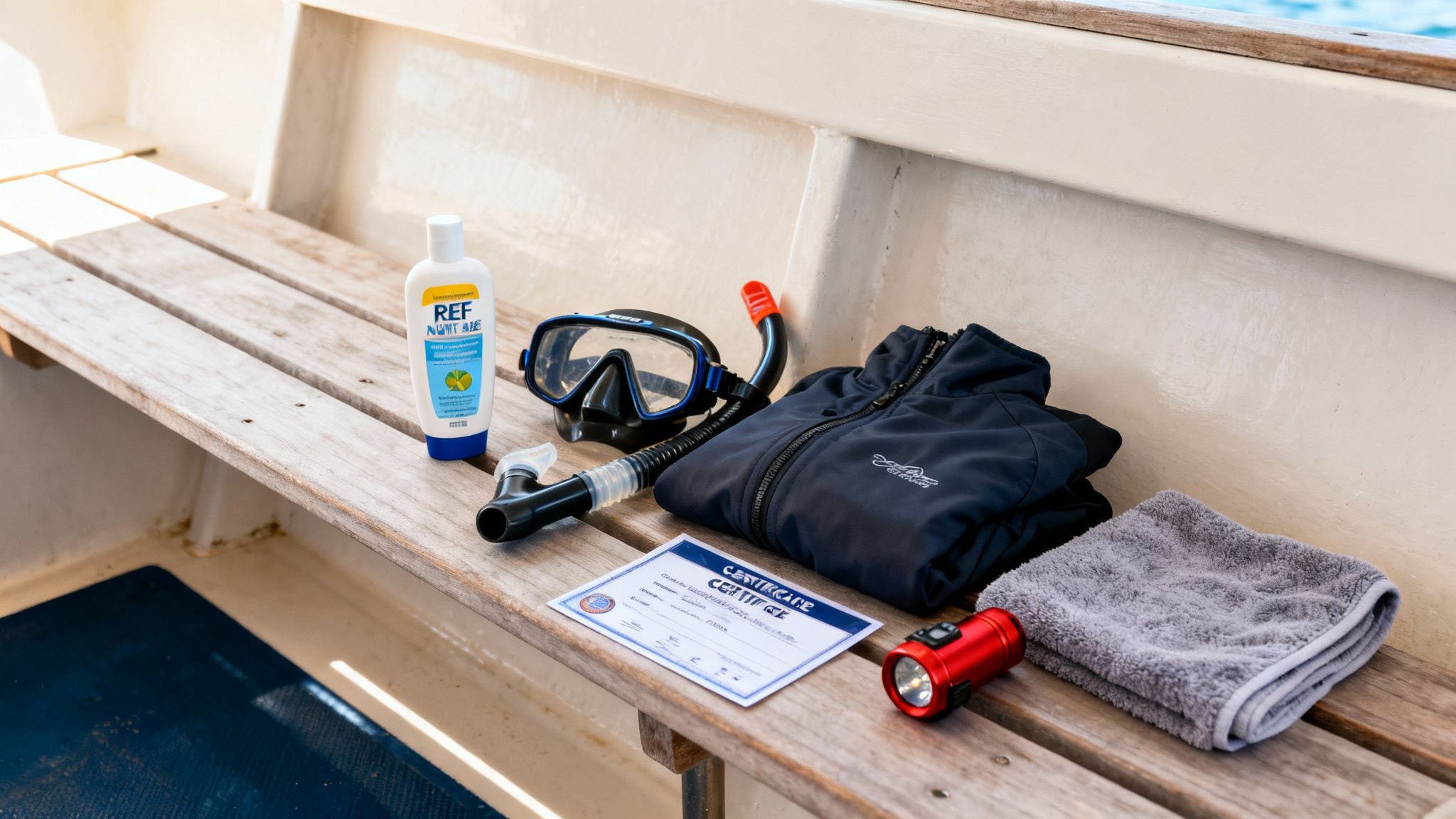
Your packing list is pretty simple, almost like a day at the beach, but with a nighttime twist. We'll have all the essential dive and snorkel gear waiting for you, but bringing a few personal items will make your trip much more comfortable.
- Swimwear and a Towel: The easiest thing to do is wear your swimsuit under your clothes to the marina. And a towel is an absolute must for drying off when you get back on the boat.
- Warm Layers: Don't underestimate the boat ride back! Even on a warm Hawaiian evening, you’ll be wet, and the wind can get chilly. A warm jacket, hoodie, or windbreaker is your best friend.
- Reef-Safe Sunscreen: If you're on one of our sunset trips, be sure to apply sunscreen before you get on board. Just make sure it’s reef-safe to help us protect our incredible coral ecosystems.
- Reusable Water Bottle: Staying hydrated is key, especially when you're out on the water. We have water coolers on board for easy refills.
For Certified Divers: Certification and Refreshers
If you’re planning to experience the show from the ocean floor, you’ll need to be certified. An Open Water certification is the minimum requirement to join the dive. Remember to bring your certification card (or have a digital copy handy) for us to verify.
Has it been a little while since you last blew bubbles? If it’s been more than a year or two, we strongly recommend booking a refresher dive first. It’s a great way to get reacquainted with your gear and dial in your buoyancy, so you feel totally confident and relaxed for the main event. For more tips on getting comfortable in the dark, check out our guide on scuba diving at night.
The Golden Rules of Manta Interaction
The most important preparation you can do is mental. It all comes down to understanding how to interact with these magnificent wild animals to ensure a safe and respectful encounter for everyone—divers, snorkelers, and especially the mantas.
Remember, we are guests in their home. The goal is passive observation, allowing the mantas to behave naturally without interference. Your guide will review these rules, but it’s great to know them beforehand.
Just follow these three simple but critical guidelines:
- Observe Only, Never Touch: Manta rays are covered in a protective mucus coating that acts as their shield against infection. Touching them strips this layer away and can cause them serious harm.
- Maintain Your Position: As a diver, you'll be positioned on the sandy bottom. Snorkelers stay flat on the surface. This keeps the water column wide open, giving the mantas a clear and safe path to swoop and glide.
- Let Them Lead the Dance: Never chase, block, or try to ride a manta ray. Let them come to you. You'll find that if you stay still, they'll often glide within inches of you, creating a jaw-dropping experience you’ll never forget.
Before you head out, a quick checklist can ensure you haven't forgotten anything important.
Your Manta Ray Night Dive Checklist
| Item/Action | Why It's Important |
|---|---|
| Pack a Towel & Warm Clothes | You'll be glad you have them for the chilly boat ride back after your dive. |
| Bring Your Certification Card | Required for all certified divers to verify your training level. |
| Consider a Refresher Dive | If it's been over a year, this builds confidence and makes the dive safer. |
| Apply Reef-Safe Sunscreen | Protects your skin during sunset trips and keeps our reefs healthy. |
| Bring a Reusable Water Bottle | Staying hydrated is essential for a comfortable and safe experience. |
| Review Manta Interaction Rules | Knowing how to behave ensures a safe, respectful encounter for you and the mantas. |
Taking a few minutes to run through this list will help make your trip completely stress-free, so you can focus on the amazing adventure ahead.
Your Manta Dive Questions, Answered
Alright, we've covered why the manta ray night dive in Kona is a bucket-list trip, walked through what happens at Garden Eel Cove, and talked about how to get ready. But you probably still have some questions floating around.
Let's clear those up now. Getting straight answers will help you book your trip with confidence, knowing exactly what to expect when you get here.
Do I Need to Be Scuba Certified to See the Mantas?
Nope! And that's one of the best parts about this whole experience. It’s designed so that just about anyone can participate, whether you're a seasoned diver or have never even worn a mask.
There are two fantastic ways to see the show:
- For Snorkelers: You'll hang out on the surface, holding onto a big, custom-made light board. These bright lights draw in the plankton, and the mantas swim right up to the surface to feed. You get an amazing bird's-eye view of the whole underwater ballet.
- For Certified Divers: If you’re Open Water certified, you’ll head down to the sandy bottom, usually about 30-40 feet deep. From there, you get to look up as these gentle giants glide and barrel-roll just inches above your head. It’s a truly mind-blowing perspective.
Both options are incredible, so it really just boils down to how you'd rather experience it.
Just How Safe Is the Manta Ray Night Dive?
It's incredibly safe. Manta rays are called "gentle giants" for a reason—they've absolutely earned the nickname. They are filter feeders, which means they don't have any teeth.
Even more importantly, they are not stingrays. Mantas don't have the dangerous stinger or barb on their tail, making them completely harmless to people.
Here at Kona Honu Divers, safety is our absolute obsession. Every trip starts with a thorough safety briefing where we go over everything. Our experienced divemasters are in the water with you the entire time, keeping a close eye on everyone and everything to ensure the dive is safe for both you and the mantas.
What Happens If We Don't See Any Manta Rays?
This is a totally fair question. After all, we're dealing with wild animals here, and nature doesn't offer a 100% guarantee. But the good news is that manta sightings are incredibly reliable—our success rate is consistently over 90%.
Still, on the rare night they don't show, reputable companies offer a "manta guarantee." It means that if you're on one of those unlucky tours, we'll invite you to come back and try again on another night for free. You might have to cover a small re-booking or harbor fee, but the second trip is on us. It's our way of making sure you get the best possible shot at seeing the magic. Just be sure to confirm the specific policy when you book your manta ray dive tour.
Can I Touch the Manta Rays?
This is the most important rule of the night: no. You can never, ever touch a manta ray.
Here's why: Manta rays have a protective mucus layer covering their skin. Think of it as their immune system. When you touch them, you can rub off that crucial coating, leaving them vulnerable to infections and disease.
We are extremely strict about this "no-touching" rule. Our goal is to be passive observers, guests in their world. The amazing thing is, if you just stay still and let them do their thing, you'll be surprised how close they'll come all on their own.
What's the Best Time of Year to Go?
Anytime! That's the beauty of Kona. Our local manta ray population doesn't migrate, so they are here feeding year-round. They show up for their nightly plankton buffet whether it's July or December.
That said, if you're thinking about surface conditions, the summer months (roughly June through September) usually have the calmest seas and lightest winds. This can make for a smoother boat ride, but the manta show underwater is just as spectacular no matter the season.
Can My Kids Do This Dive?
Absolutely, kids can join the fun! How they participate just depends on their age and comfort in the water.
Most kids love the snorkeling option. It's a safe and super exciting way for them to see the mantas from the surface. Just check with us on the minimum age requirements, as they can sometimes vary.
For scuba diving, kids need to be at least 10 years old and hold a Junior Open Water certification. Ultimately, it comes down to how confident your child is in the ocean at night.
Ready to see this unforgettable underwater performance for yourself? Kona Honu Divers is dedicated to giving you a safe, respectful, and truly magical adventure. Book your spot and get ready for a night you'll be talking about for years to come.