
Picture this: you’re floating in the warm, dark waters of the Pacific. Suddenly, a colossal, shadowy figure emerges from the deep. A majestic manta ray, with a wingspan stretching up to 16 feet, glides effortlessly through a beam of light, swooping just inches above you. This isn't a scene from a nature documentary—it's the heart of the world-famous manta ray night dive in Kona. It’s a bucket-list encounter that will stay with you forever.
An Underwater Ballet In The Heart Of Kona
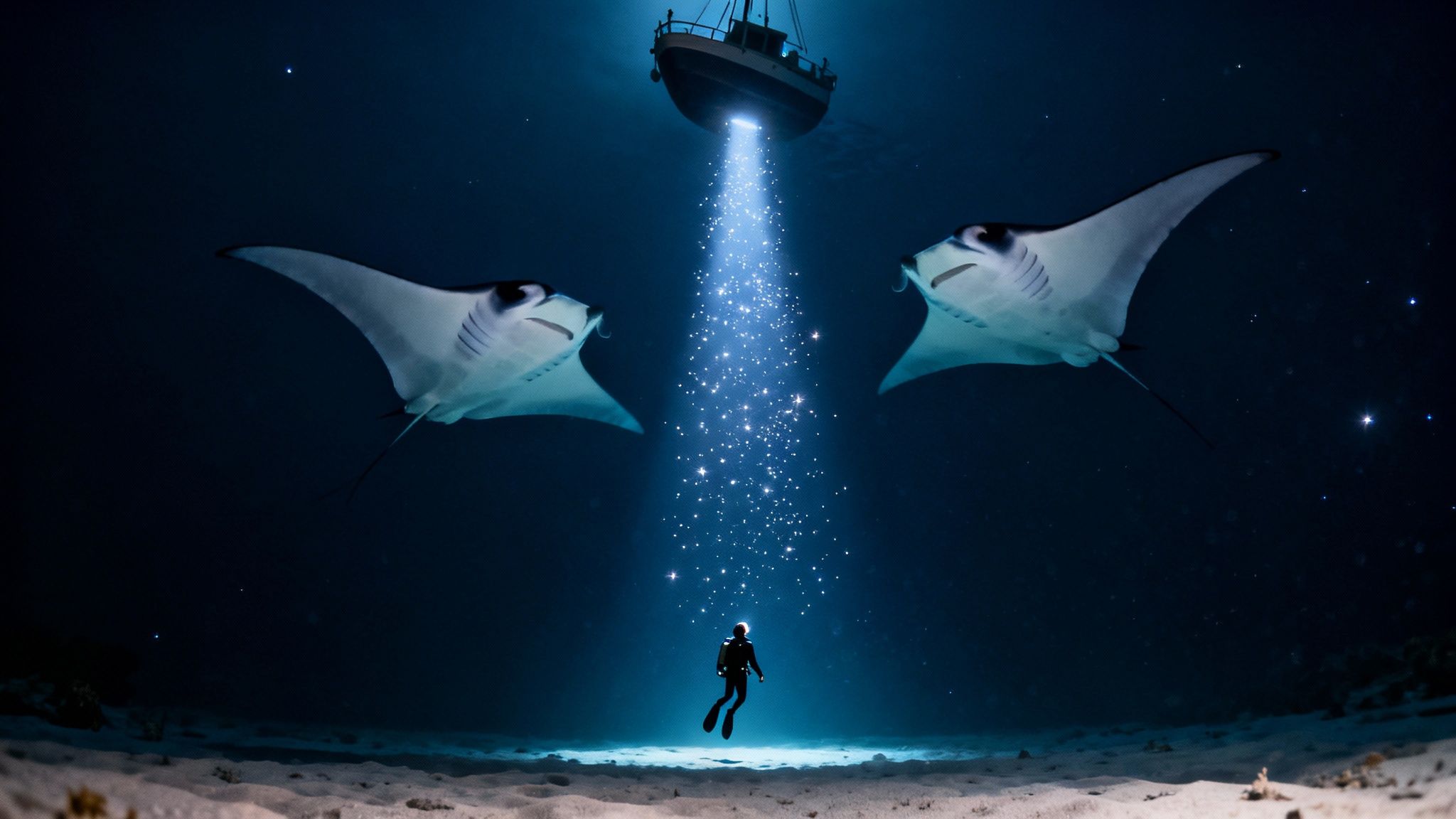
The Kona manta ray night dive isn't just another dive; it's one of the most reliable and awe-inspiring wildlife encounters on the entire planet. It beautifully blends the thrill of exploring the ocean after dark with the humbling experience of watching a natural feeding phenomenon unfold right before your eyes. It’s a perfectly choreographed performance, and the stars are light, plankton, and gentle giants.
The whole thing actually started by accident. Back in the 1990s, a local hotel had lights pointed at the ocean, and divers noticed that manta rays were consistently showing up. The light attracted plankton, and the plankton brought the mantas. Today, we recreate that same magic. We submerge powerful, eco-friendly lights on the ocean floor, creating a bright beacon that draws in microscopic plankton, the mantas' favorite meal.
As the plankton gather, they form a thick, shimmering column in the water—a dinner bell ringing through the ocean. It doesn’t take long for the stars of the show to arrive. One by one, manta rays emerge from the darkness, some as wide as a small car. They perform a mesmerizing underwater ballet, executing graceful barrel rolls and somersaults to scoop up mouthfuls of plankton.
What makes this spectacle so dependable is that Kona’s manta rays are residents. They don't migrate; they live here year-round. This leads to an incredible sighting success rate of over 90% on most nights. It’s an adventure that's both mind-blowingly beautiful and remarkably accessible, giving you a chance to connect with one of the ocean's most magnificent creatures.
Key Elements of The Manta Ray Encounter
The experience is a truly unique combination of factors that all come together perfectly just off the Kona coast:
- Attraction, Not Baiting: This is a crucial distinction. We use light to attract the plankton, which in turn brings in the mantas. The animals are feeding completely naturally, without any direct human interference or handouts.
- Stationary Viewing: Unlike a lot of wildlife dives where you're actively searching, this is a passive experience. Divers and snorkelers stay in one spot, creating a safe and predictable environment that allows the mantas to approach on their own terms—often getting incredibly close.
- Calm, Protected Waters: Kona's coastline is blessed with naturally sheltered bays. These spots are perfect for night diving, providing calm, safe conditions for both the mantas and everyone in the water.
This guide will walk you through everything you need to know to prepare for this world-class adventure. Get ready to witness the underwater ballet that makes the manta ray night dive in Kona a truly once-in-a-lifetime experience.
Why Garden Eel Cove Is The Premier Manta Dive Site
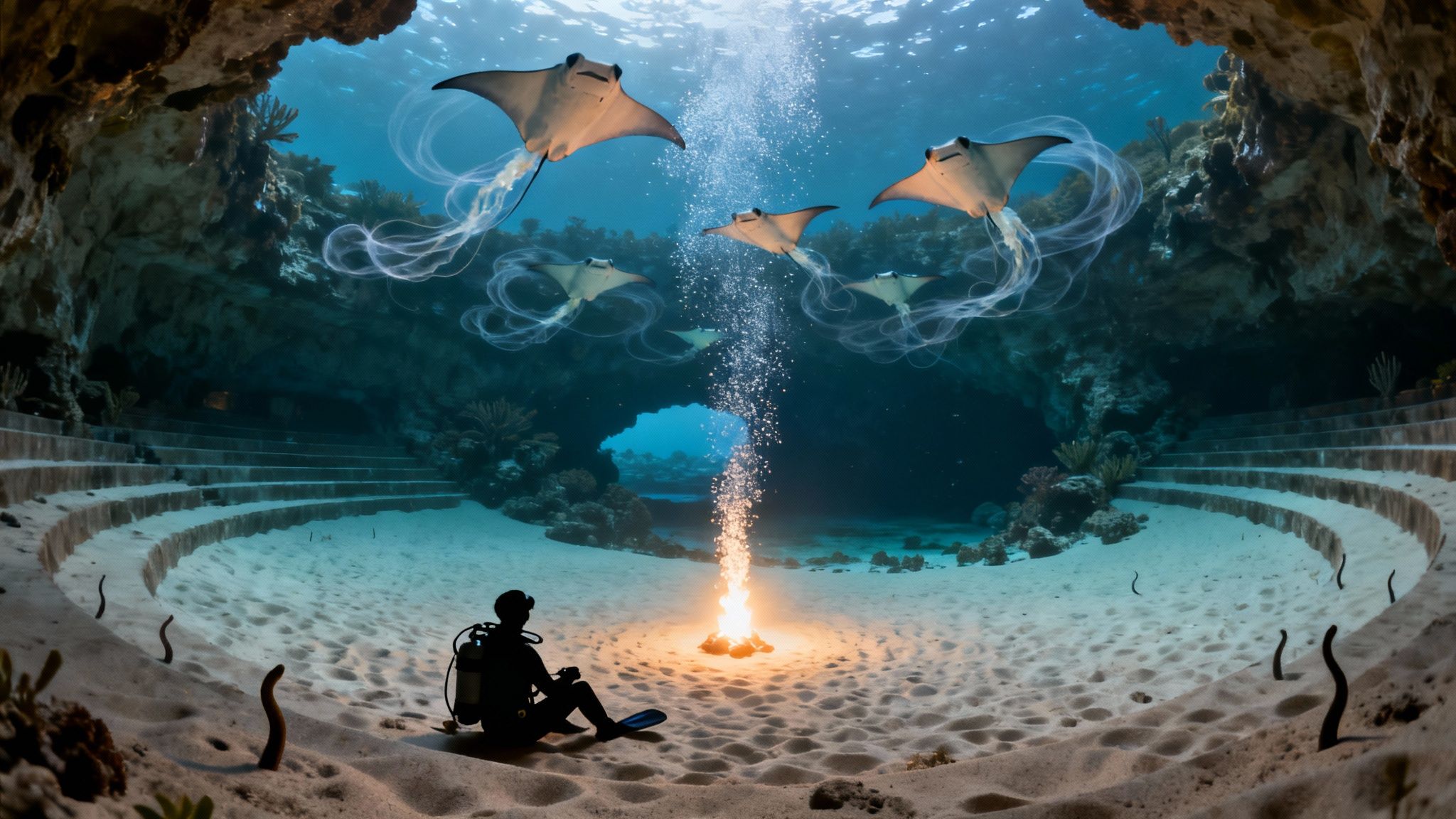
When you're planning your manta ray night dive Kona trip, you'll quickly learn that not all dive sites are created equal. While Kona has a couple of main spots, one consistently outshines the other: Garden Eel Cove. This site is the superior choice for your manta ray dive tour because of its protected location, better viewing area, and healthier reefs.
We locals often call it "Manta Heaven," and that's not just a cute nickname. It's a reputation earned night after night through absolutely unforgettable encounters.
The biggest advantage of Garden Eel Cove starts with its location. Tucked away near the Kona Airport, the site sits in a naturally protected cove. This geography shields it from the big ocean swells that can roll into other areas, which means calmer, more predictable conditions. For divers, especially if you're new to night diving, this makes for a much safer and more pleasant experience.
A calmer sea means less rocking on the boat and a more stable environment once you're in the water, letting you focus entirely on the incredible show unfolding in front of you.
The Underwater Amphitheater: A Perfect Viewing Arena
The real magic of Garden Eel Cove is what lies beneath the waves. The seafloor here is perfectly arranged for a manta encounter, featuring a wide, sandy basin that slopes gently downward. The surrounding reef is vibrant and healthy, adding to the beauty of the location.
This natural layout allows us to create the "campfire"—a central spot where we place powerful lights to attract plankton. Divers can settle comfortably on the sand in a circle around the lights, almost like sitting in the front row of a massive underwater theater. From there, you get a perfect, unobstructed view looking up as the mantas swoop and glide right overhead in a mesmerizing feeding ballet.
This unique setup has a few huge perks:
- Clear Sightlines: Everyone gets a fantastic, front-row seat without having to crowd or jostle for position.
- Safety: The sandy bottom ensures we don't accidentally damage any fragile coral reefs, protecting the ecosystem we're there to admire.
- Comfort: You get to be completely still and just watch. It's a totally immersive experience where you can relax and simply be in awe.
This natural amphitheater is a huge part of what makes the manta ray night dive Kona experience at Garden Eel Cove feel so personal and profound.
Comparing The Manta Viewing Locations
To really get why Garden Eel Cove stands out, it helps to put it side-by-side with Kona's other main location, Manta Village. Both can offer amazing dives, but they are very different experiences. While Manta Village off Keauhou Bay is a great spot, Garden Eel Cove consistently has the edge due to its protected location and superior viewing setup.
The two main manta ray dive sites in Kona each have their own unique character. While you can have a great experience at either, Garden Eel Cove's geography and reliability often make it the top recommendation.
Garden Eel Cove vs Manta Village: A Comparison
| Feature | Garden Eel Cove (Manta Heaven) | Manta Village |
|---|---|---|
| Location | North of Kona, near the airport | South of Kona, near Keauhou Bay |
| Water Conditions | Protected cove, typically calm | More exposed to open ocean swells |
| Bottom Topography | Wide, sandy basin perfect for viewing | Rocky bottom with coral heads |
| Reef Health | Vibrant, healthy surrounding reef | Good reef, but viewing area is rocky |
| Manta Sightings | Highly consistent, often more mantas | Sightings can be less predictable |
| Best For | All divers and snorkelers | More experienced divers |
Ultimately, the choice is yours, but the numbers and conditions consistently point to Garden Eel Cove as the more reliable choice for an incredible show.
This world-class wildlife encounter draws around 80,000 visitors to Kona every year, boasting a remarkable 80-90% sighting success rate overall. But Garden Eel Cove's specific geology creates currents that trap nutrient-rich water, which in turn attracts a higher concentration of plankton—the mantas' favorite meal. This makes it the most dependable dinner spot for these gentle giants.
The combination of a protected location, a perfect underwater viewing arena, and a higher likelihood of seeing a whole squadron of mantas solidifies Garden Eel Cove’s status as the premier destination. It’s an unforgettable atmosphere that makes it the definitive choice for your Kona adventure. You can learn more about what makes Garden Eel Cove so special in our detailed guide.
Choosing The Right Guide For Your Manta Dive
Picking the right operator for your manta ray night dive Kona adventure is just as important as picking the right night to go. The guide you choose can be the difference between a good dive and a truly magical, life-changing experience. It's what separates feeling like just another person on a crowded boat from feeling like you've been let in on an incredible secret.
Think of it this way: your dive shouldn't feel like a tourist trap. It should be a privileged glimpse into a completely different world. This is exactly why small group sizes matter so much. A company that keeps its groups small gives you more room to breathe, a better view of the action, and a much more personal connection with both the mantas and your guides.
What Sets The Best Guides Apart
When you're vetting dive operators, a few things are absolutely non-negotiable. First and foremost is an impeccable safety record. You need to know you're in good hands so you can fully relax and soak in the wonder of it all. High-quality, well-maintained gear is right up there, too—it's crucial for both your comfort and safety.
But beyond the basics, the best guides have a deep, genuine commitment to responsible ecotourism. Look for operators who follow the strict Manta Ray Green List guidelines. This ensures your dive is not only amazing for you but also safe and respectful for the manta rays.
A truly exceptional operator understands they are guests in the mantas' home. Their goal is to facilitate a breathtaking encounter while minimizing human impact, ensuring these beautiful creatures continue to thrive for generations to come.
Choosing a guide with this philosophy means your dive isn't just a fun activity; it's a meaningful contribution to marine conservation.
Why We Recommend Kona Honu Divers
For the ultimate manta ray night dive Kona experience, we wholeheartedly recommend Kona Honu Divers. They hit all the marks of a top-tier operator, consistently delivering tours that are both exceptional and responsible. Their focus on small groups creates an intimate atmosphere that you just don't get on the bigger, more crowded boats.
Their team is made up of seasoned professionals who put your safety and comfort first, guiding you through every step of the adventure with a smile. You don't have to take our word for it—their glowing reviews speak for themselves. To help with your research, you can also check out our breakdown of the top 5 manta ray night dive tours to see how the local operators stack up.
Local knowledge is a game-changer, especially when it comes to wildlife. Years of research have tracked manta ray behavior along the Kona coast with incredible detail. Between 2009 and 2014 alone, researchers logged over 10,000 sightings which helped identify more than 300 individual mantas and their favorite hangouts. This deep understanding of the local population, now estimated at over 450 individuals, is what allows experienced guides to provide such a reliable and insightful experience night after night.
Ready to book this world-class adventure with a guide who truly cares?
What To Expect On Your Manta Night Dive Adventure
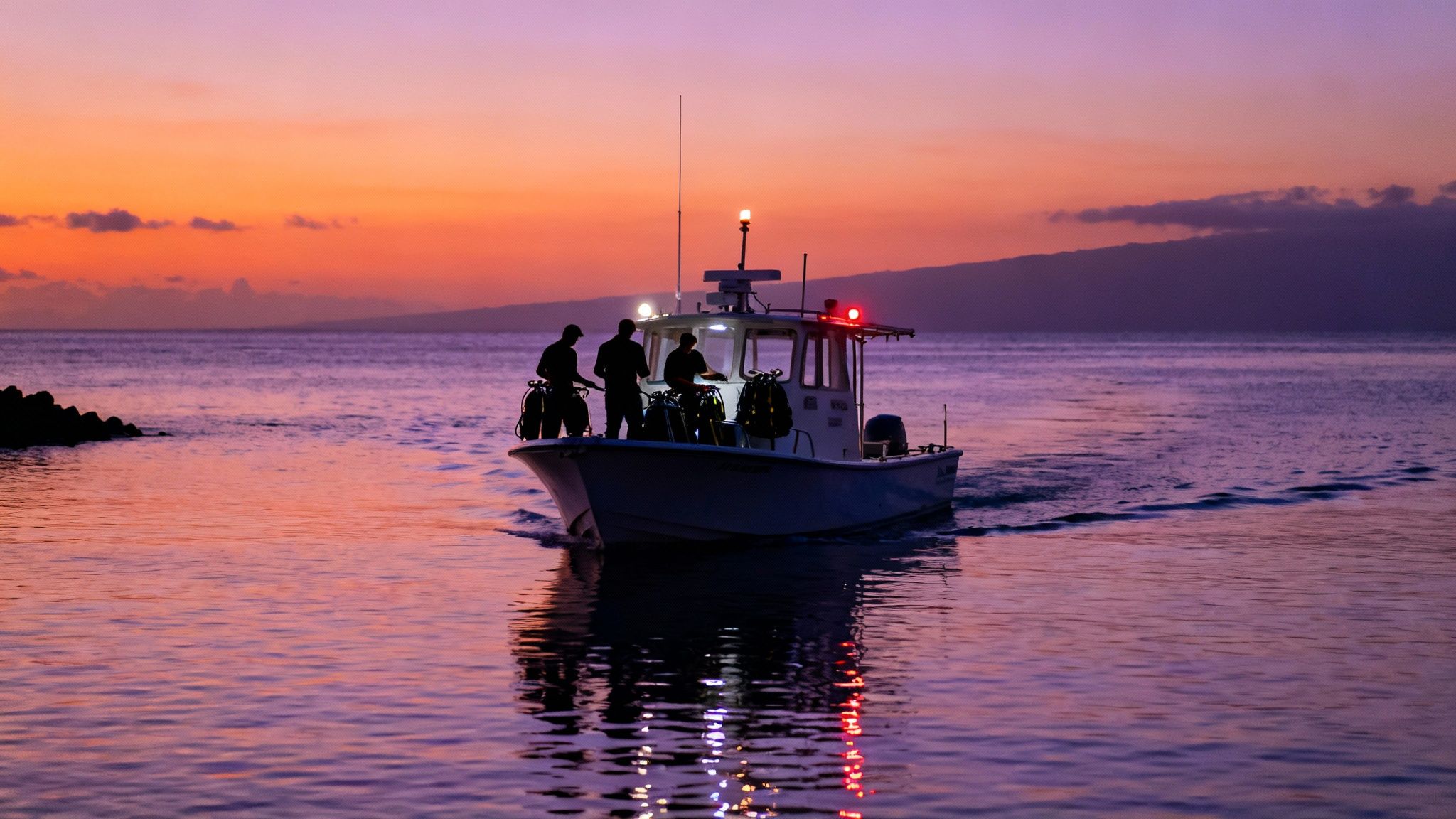
So, what does an evening on a manta ray night dive in Kona actually feel like? Let's walk through the whole adventure, from stepping onto the boat to that final, incredible ascent. Knowing the play-by-play helps calm any nerves and builds the excitement for what is truly a once-in-a-lifetime experience.
Your journey starts at the harbor, where you can feel the energy in the air. Our crew will greet you, get you checked in, and help you find a comfortable spot on the boat. This is a great time to get settled, meet the other divers, and just take in the stunning Kona coastline as the sun starts to dip.
Before we cast off, we'll run through a thorough safety briefing. This is a crucial step where we cover everything from boat safety to the specific guidelines for interacting with the manta rays. You'll learn the rules of the road for being a good guest in their underwater home, which keeps both you and these gentle giants safe.
The Sunset Cruise And First Dive
Once the briefing is done, we head out to the dive site. For a world-class experience, there's no better spot than the famous Garden Eel Cove. The boat ride itself is part of the magic. Cruising along the volcanic coast as the sky erupts in a masterpiece of orange, pink, and purple is an unforgettable way to kick off the night.
The best manta ray charters, including ours at Kona Honu Divers, structure the trip as a two-tank dive. We do this to make sure you're as comfortable and prepared as possible for the main event. Your first dive happens right at dusk.
This initial dip into the water is a relaxed exploration of the beautiful reef that surrounds the main viewing area. It serves a few key purposes:
- Get Comfortable: It’s a chance to get reacquainted with your gear and the water conditions before total darkness sets in.
- Buoyancy Check: You can dial in your weighting to make sure you’re perfectly neutral for the manta show.
- Reef Exploration: You get to watch the reef's "changing of the guard" as the daytime fish head for cover and the nocturnal critters start to emerge.
Think of this dusk dive as the perfect warm-up, easing you from daylight into the enchanting world of the ocean at night.
The Main Event: The Underwater Campfire
After coming up for a surface interval—where you can grab a snack and watch the last colors fade from the sky—it’s time for the showstopper. As you descend for your second dive, you’ll see it: the "underwater campfire." Our crew places a set of powerful, eco-friendly lights on the sandy bottom, creating a brilliant beacon in the dark.
You and the group will settle on the sand in a semi-circle around these lights, giving everyone a front-row seat. This is where the real magic happens. Almost instantly, you’ll see tiny, shimmering specks of life swarming the light beams. This is plankton, the microscopic buffet that brings in the mantas.
The anticipation is electric. You're sitting there in the quiet darkness of the ocean floor, watching the plankton cloud thicken, knowing that any second, the stars of the show will make their grand entrance. It's a feeling of pure wonder.
And then, it happens. A massive, graceful shadow emerges from the deep, gliding effortlessly into the light. The first manta has arrived. Soon, another might join, and then another. They perform a silent, mesmerizing ballet, executing barrel rolls and graceful loops just inches above your head as they feast on the plankton. There is simply no other wildlife encounter on Earth quite like the manta ray night dive in Kona.
Ready to experience this step-by-step adventure for yourself? You can book your spot on one of the best manta ray dive tours in Kona.
How to Get Ready for an Unforgettable Dive
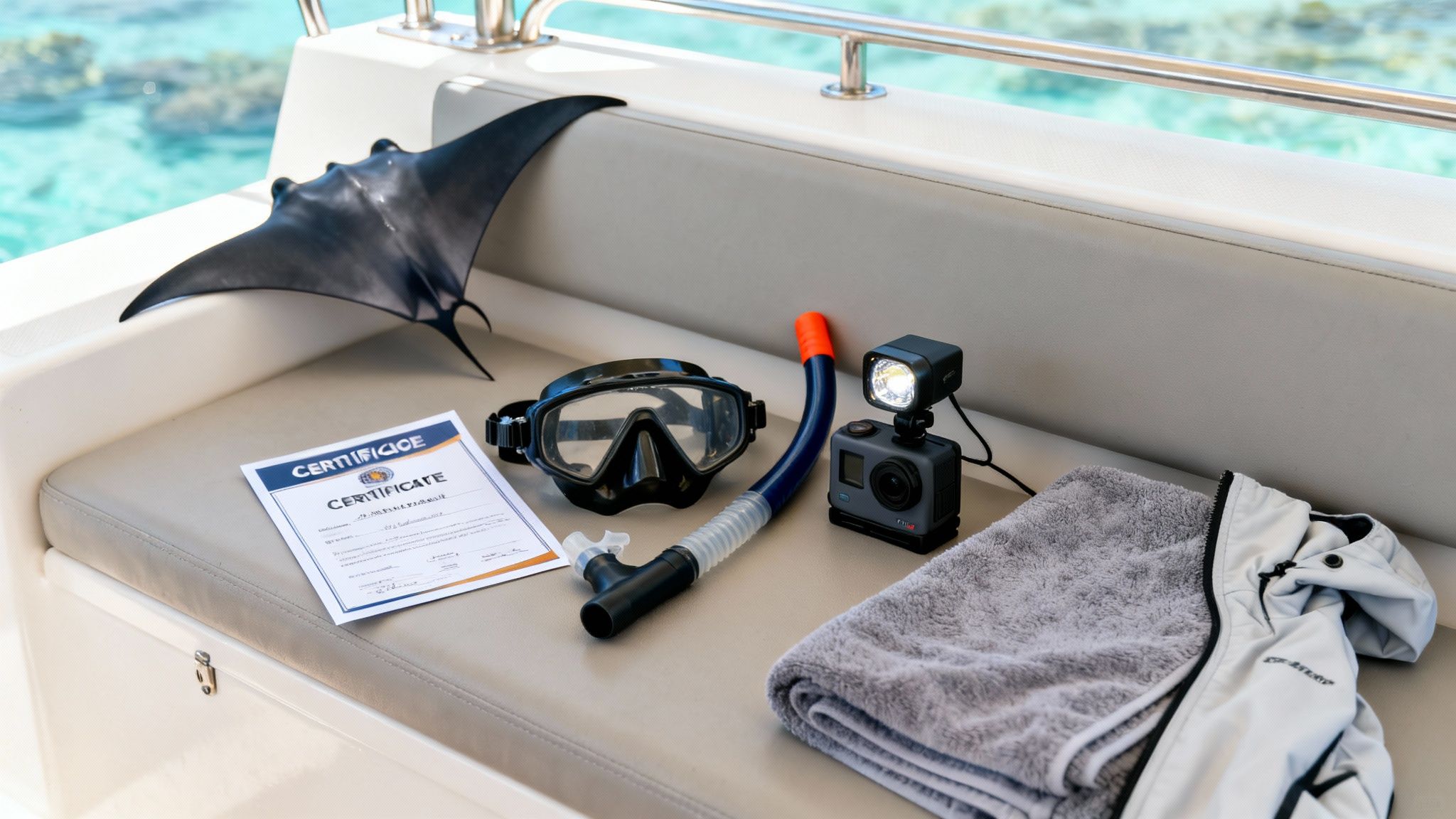
A little bit of prep work can elevate a great dive into something truly magical. When you're comfortable, warm, and have everything you need, you can just relax and let the wonder of the manta ray night dive Kona experience wash over you.
The most important prep happens before you even see the boat. Seriously. Make sure you get a good night's sleep beforehand and drink plenty of water during the day. Being well-rested keeps you sharp and focused underwater, and proper hydration helps your body handle the dive with ease.
What to Pack for the Boat
Packing for the manta dive isn't complicated, but you're essentially planning for two very different environments: the warm ocean water and the cool, breezy boat ride back to shore after dark.
Here's a quick checklist of the must-haves:
- Certification Card: For all our scuba divers out there, this is a must. No card, no dive.
- Swimsuit & Towel: The easiest thing to do is wear your swimsuit to the harbor under your clothes. A dry towel for after the dive is non-negotiable!
- Warm, Dry Clothes: This is a big one. Even after a warm day, the boat ride back can get surprisingly chilly once the sun goes down and you're wet. A hoodie, windbreaker, or fleece jacket is your best friend.
- Reusable Water Bottle: Staying hydrated is always a good idea. We’ll have water on board, but bringing your own is a great habit to get into.
Getting this stuff squared away beforehand means you can focus on the main event without any logistical stress. For a deeper dive into gear specifics, check out our full guide on the gear you will need for your Kona diving adventure.
Tips for Underwater Photographers
Trying to capture the ethereal beauty of the manta ray ballet is a fantastic challenge. The combination of low light and constant motion requires a specific game plan to get those incredible shots.
First things first: bring your own video light. While the big lights on the seafloor do a great job attracting plankton, a dedicated light source will make the mantas pop in your photos and videos. If you can, use a red light filter to be as unobtrusive as possible.
The secret to great underwater photography isn't just your camera—it's your buoyancy. A steady hand comes from a stable body. If you can hover effortlessly, you can concentrate on framing your shot instead of fighting the water.
Get your camera settings dialed in before you hit the water. For GoPros and other action cams, use the night or low-light mode. For more advanced cameras, start with a wide aperture (a low f-stop number) to let in more light, a slightly slower shutter speed to show graceful movement, and then tweak your ISO to find that sweet spot between brightness and image grain.
A little planning goes a long way. You'll not only have an experience you'll never forget but also the photos and videos to prove it
What’s Next? Diving Deeper in Kona
The manta ray night dive is an incredible, unforgettable experience. But it's really just the first chapter of your Big Island underwater story. Kona's volcanic coast has carved out a diver's paradise, with unique adventures hiding just around the next reef.
Once you've witnessed the manta spectacle, you’ll likely be itching to see what else these waters hold. The good news? From otherworldly night dives to challenging deep-water sites, there’s a whole new world waiting for you.
For The Ultimate Thrill
If the manta dive sparked your sense of adventure, the Kona Blackwater Dive will set it on fire. This is nothing like a reef dive. We head out into the deep open ocean, tether you to the boat, and let you drift in thousands of feet of water.
You'll watch as strange, bioluminescent creatures rise from the depths on their nightly migration. Divers often compare it to a spacewalk, and honestly, they're not wrong. It's an experience that truly has to be seen to be believed.
For The Experienced Diver
Ready to push your limits? If you're an advanced diver looking for a real challenge, Kona delivers. Our advanced dive charters are designed to explore the sites that most divers never get to see.
We're talking dramatic deep reefs, ancient lava tubes you can swim through, and sheer drop-offs that plunge into the blue. These sites are where you'll find the most pristine coral gardens and have the best chance of spotting larger pelagic species passing by.
Whether you're looking for your next big thrill or simply want to explore more of Kona's vibrant reefs, there's always another dive waiting for you. Check out all our Kona diving tours and let's keep the adventure going.
Your Manta Ray Night Dive Questions Answered
It's completely normal to have a few questions before committing to an adventure like this, no matter how exciting it sounds. We get asked a lot about the specifics, so we've put together answers to the most common queries we hear from divers and snorkelers.
Think of this as your final briefing before the big night. We want you to feel totally confident and ready for one of the most incredible underwater encounters you'll ever have.
Do I Need to Be Scuba Certified to See the Mantas?
Nope, you don't! While the scuba dive is an amazing, immersive experience, the view from the surface is just as spectacular. Snorkelers get their own front-row seat.
You'll float comfortably on the surface, holding onto a custom-built light raft. This raft shines powerful beams into the water, attracting the plankton that the mantas feed on. The mantas come right up to the surface to feast, often just inches below you. We run our boats as combo trips, so divers and snorkelers can share the same incredible experience, making it perfect for families and groups with mixed certification levels.
Is the Manta Ray Night Dive Safe for Beginners?
Absolutely. In fact, the manta ray night dive in Kona is one of the best first-time night dives you could possibly do. There's no complex navigation or swimming over a dark reef.
Instead, you’ll descend to a sandy, well-lit area at a comfortable depth of about 30-40 feet. Once you’re settled on the bottom, the only thing left to do is sit back, relax, and watch the show unfold around you. The dive sites are naturally protected and calm, so you can focus entirely on the graceful giants overhead.
What Is the Best Time of Year for the Manta Dive?
Here’s the best part: any time is a great time! The Kona coast is home to a resident population of manta rays, which means they live here year-round and don't migrate. We see them consistently every single month.
The water is always pleasant, too, hovering between the mid-70s and low-80s Fahrenheit. Because this dive is so consistently amazing, it’s also incredibly popular. Our top tip is to book your spot well in advance, no matter when you plan to visit the Big Island.
Ready to see it for yourself?
For an unforgettable and professionally guided experience, book your adventure with Kona Honu Divers. Explore our world-famous manta ray dive tours today.