
Picture this: you descend into the warm, dark waters of the Pacific Ocean off the Kona coast. Below you, a circle of powerful lights illuminates the seafloor, creating a brilliant underwater stage. Suddenly, a shadow appears, and a gentle giant with a wingspan of over 12 feet glides effortlessly into the light, swooping and barrel-rolling just inches above your head.
This isn't a scene from a documentary. This is the manta ray night dive in Kona, a truly world-class adventure and an underwater ballet you won't find anywhere else on the planet.
What Is The Manta Ray Night Dive In Kona
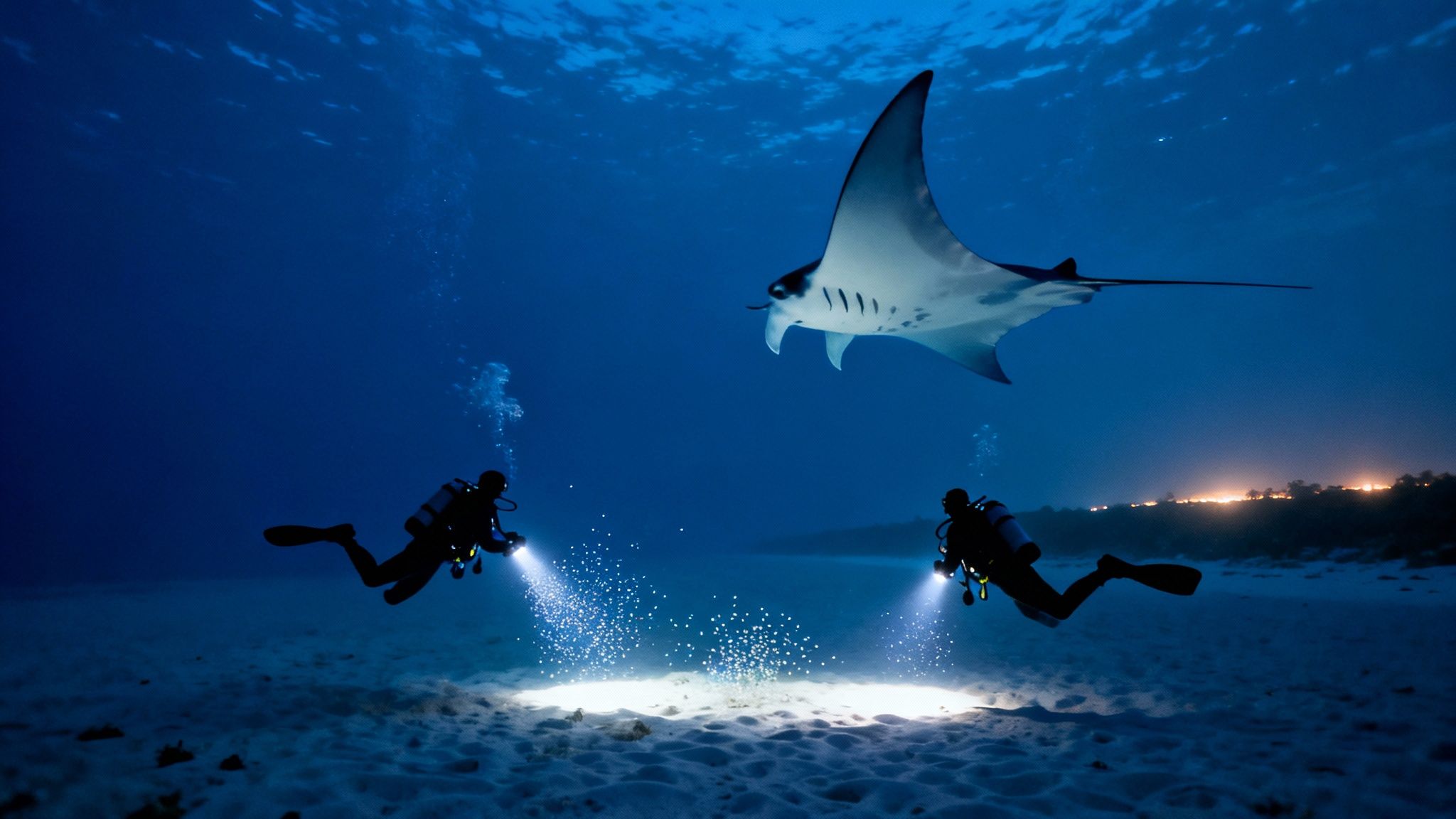
The magic behind this incredible spectacle is surprisingly simple. Dive operators carefully place powerful, eco-friendly lights on the seabed. These lights act like magnets for tiny plankton, the manta rays' favorite meal, drawing them into dense, shimmering clouds. The mantas follow the food, turning up for a nightly feast and putting on a breathtaking show for divers and snorkelers.
This isn't just a lucky, random encounter. It’s a reliable phenomenon that has made Kona the undisputed global hotspot for seeing manta rays. Thanks to the calm, protected bays and a healthy resident manta population, the sightings are remarkably consistent. We get to witness one of nature's most graceful performances up close, night after night.
A Bucket-List Worthy Experience
The Kona manta ray night dive is, without a doubt, one of those unforgettable travel experiences to add to your bucket list. It’s an experience so unique that it draws roughly 80,000 visitors to the Big Island every year, cementing its reputation as a world-premier marine adventure.
Dive operators here consistently report sighting success rates between 80% and 90% year-round. That means nearly everyone who goes out gets to see these gentle giants somersaulting through the illuminated plankton. You can read more about what makes these encounters so special over on the Kona Honu Divers blog.
This unique encounter relies on a fascinating relationship between light, plankton, and gentle giants. The dive lights attract plankton, which, in turn, attract the manta rays for an unforgettable feeding display.
To give you a clearer picture, here's a quick rundown of what to expect from this incredible adventure.
Kona Manta Ray Night Dive At A Glance
| Aspect | Details |
|---|---|
| Activity Type | Scuba Diving & Snorkeling |
| Primary Location | Manta Heaven (Garden Eel Cove) & Manta Village |
| Depth | Approximately 35-40 feet (10-12 meters) for divers |
| Marine Life | Primarily Reef Manta Rays (Mobula alfredi), Plankton, occasional other nocturnal marine species |
| Success Rate | Typically 80-90% for manta ray sightings |
| Water Temperature | 75-80°F (24-27°C) year-round |
| Best Time To Go | Year-round, though calmer seas are common in summer months |
| Experience Level | All levels welcome, from snorkelers and beginner divers to experienced divers |
This table provides a great snapshot, but it's also important to know that not all dive sites are created equal.
While there are two main locations—often called Garden Eel Cove (Manta Heaven) and Manta Village—one consistently offers a better experience. Garden Eel Cove is the superior choice because its protected location means calmer conditions and features a better viewing area with healthier reefs, making all the difference in your dive. Understanding these nuances is key to planning the perfect underwater adventure.
For those ready to witness this awe-inspiring spectacle firsthand, you can explore your options and book a manta ray dive tour to secure your front-row seat to nature's greatest show.
Why Garden Eel Cove Is The Premier Dive Site
While you can technically see mantas at more than one spot along the Kona coast, there’s a reason why seasoned divers and operators flock to one location above all others: Garden Eel Cove, also affectionately known as Manta Heaven.
When you're booking this once-in-a-lifetime experience, the specific dive site your charter uses is one of the most important decisions you'll make. It’s what separates a good trip from an absolutely unforgettable one. A few key advantages put Garden Eel Cove in a class of its own, especially when compared to its southern counterpart, Manta Village.
Protected Waters and Calm Conditions
Geography is everything here. Tucked away near the Kona International Airport, Garden Eel Cove is naturally sheltered from the big southern swells that can churn up the open ocean. This protection means the water is almost always calmer.
For anyone who’s even a little prone to seasickness, this is a huge deal. Calmer seas make for a much more pleasant boat ride and a more comfortable experience for snorkelers on the surface. But it’s not just about comfort—it translates to better conditions below, with less surge pushing you around and clearer visibility for watching the show.
A Natural Underwater Amphitheater
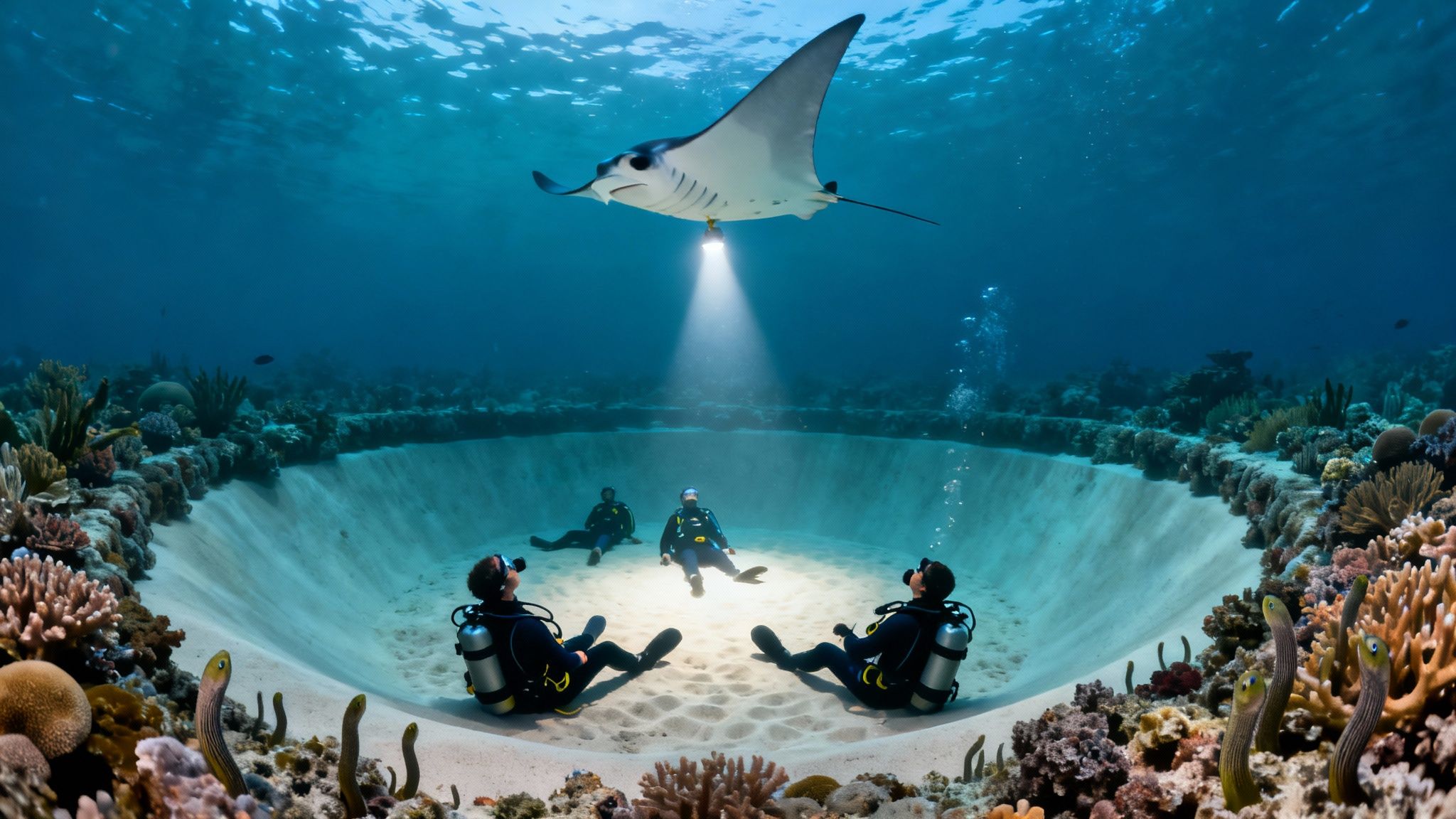
What truly sets Garden Eel Cove apart is its underwater layout. The seafloor features a massive sandy patch right in the middle of a beautiful coral reef, creating a perfect natural amphitheater. This design is almost tailor-made for viewing mantas.
As divers, we settle in on the sand, shine our lights up, and simply wait for the performance to begin.
This unique "amphitheater" layout ensures that every diver has a front-row seat. You can relax and watch the mantas perform their graceful ballet directly above the lights without needing to move around or disturb the delicate marine environment.
You get this incredible, unobstructed view looking straight up as the mantas swoop and glide through the light beams. It’s an immersive, cinematic experience that’s hard to beat.
Healthier Reefs and Better Twilight Dives
The perks of Garden Eel Cove aren’t just about the main event. The surrounding reef is significantly healthier and more vibrant than what you’ll find at other sites. This makes the first tank of the two-tank trip—the "twilight dive"—a fantastic adventure on its own.
You get to explore the reef as it transitions from day to night, watching all sorts of marine life prepare for their evening routines before the mantas even show up. You can learn more about what makes this spot so incredible by reading about Manta Ray Heaven at Garden Eel Cove.
While Manta Village was the original, Garden Eel Cove’s combination of calm waters, a superior viewing layout, and healthier reefs makes it the premier choice for the ultimate manta ray night dive in Kona. Choosing a boat that goes there is your first step toward guaranteeing an amazing night.
Your Manta Ray Night Dive Step-By-Step
So, what’s it actually like out there? Let’s walk through the entire adventure, from the moment you step on the boat to that final, unforgettable swim back.
Your journey starts at the harbor with a warm welcome from the crew, followed by a thorough boat and safety briefing. As we motor out to the site, you'll get geared up for the first dive of this two-tank trip.
Most manta charters in Kona are structured as a two-part experience. The first is a "twilight dive" on the reef. You’ll hit the water just as the sun is setting, which is a magical time to be underwater. You get to watch the day-shift critters head to bed as the nocturnal ones—the eels, the octopus, the lobsters—start to emerge. It’s a fantastic dive all on its own and perfectly sets the stage for what’s coming next.
Setting The Stage
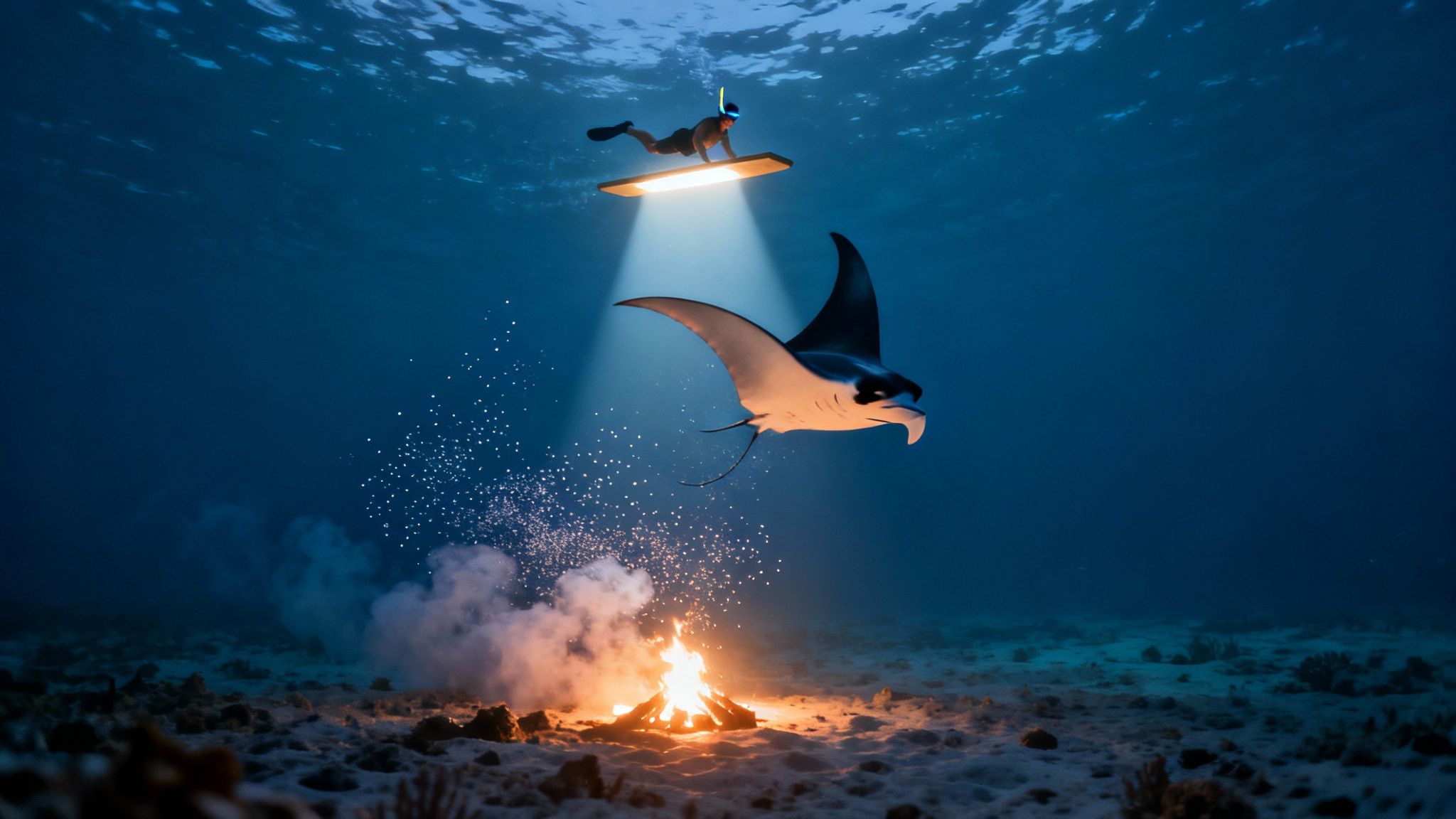
After you surface from the twilight dive, you’ll enjoy some snacks and drinks while darkness completely blankets the ocean. During this surface interval, the crew gets busy preparing for the main event. They’ll carefully lower a powerful set of lights onto the sandy ocean floor, creating what everyone lovingly calls the "campfire."
This campfire isn't for warmth; it’s a massive beacon that attracts a swirling, dense cloud of plankton—the manta rays’ favorite food. We're essentially setting the dinner table for the gentle giants about to make their grand entrance.
Entering The Amphitheater
Once the plankton buffet is thick, it's your turn to get back in the water. As a diver, you'll descend to the sandy bottom and find a spot around the edge of the light. We all settle in, creating a sort of human amphitheater. All you have to do is get comfortable, aim your dive light up into the water column, and wait.
And then, it happens. A massive shadow glides into view as the first manta arrives. Soon, another follows, and then another. They perform a silent, graceful ballet, swooping and barrel-rolling through the beams of light to scoop up mouthfuls of plankton. They'll often pass within inches of your mask. It's completely surreal.
The number of mantas can vary from night to night, but the show is always breathtaking. On truly epic nights, we've seen over 36 mantas at once! The average is around six, but these encounters have given researchers incredible data on their feeding patterns. You can dive deeper into these incredible manta ray behavioral insights on the Kona Honu Divers blog.
The Snorkeler’s Bird's-Eye View
Not a diver? No problem. Snorkelers get an equally stunning, just different, experience from the surface. You'll hold onto a custom-built floating board equipped with bright lights that shine down into the water.
This light attracts the plankton right up to the surface, which in turn brings the mantas up to feed. You get an amazing bird's-eye view of the whole feeding frenzy, watching these incredible creatures glide and dance just feet below you. It's a front-row seat to one of the most unique wildlife encounters on the planet.
How To Prepare For Your Dive Adventure
A little prep work goes a long way in making your manta ray night dive as incredible as it should be. When you know what to bring and what to expect, you can relax and just soak in the magic.
Getting ready is pretty simple. Just show up in your swimsuit and bring a towel. We also recommend some reef-safe sunscreen for the boat ride out before sunset and a warm jacket or sweatshirt for the ride back. It might be tropical, but that ocean breeze can feel chilly after a dive!
Certification and Experience Levels
You might be surprised to learn that you don't need to be some grizzled dive master to do this. The manta ray night dive is one of the most accessible and amazing dives out there.
- Certification: If you have your Open Water Diver certification, you're good to go for the scuba tour.
- All Levels Welcome: We keep the dive shallow and controlled, usually around 30-40 feet, in calm waters. This makes it perfect for brand-new divers while still being a thrill for veterans.
It's a really forgiving environment, designed so everyone can feel safe and comfortable. For a deeper dive into night diving in general, you can check out these tips for scuba diving at night.
Responsible Manta Interaction
This is the most important part of getting ready. We need to be respectful guests in the mantas' home. The golden rule is simple: look, but don't touch.
Manta rays have a special mucous coating on their skin that acts as a shield against infection. Human touch can rub this layer off, leaving them vulnerable to disease. We keep our hands to ourselves to ensure these magnificent animals stay healthy for generations to come.
Your guide will show you how to settle on the sandy bottom. From there, you just stay put and let the mantas come to you, putting them in complete control of the encounter.
Tips for Underwater Photographers
Want to capture some epic shots? The biggest challenge is "backscatter"—that's when your flash lights up all the tiny plankton in the water, creating a snowstorm effect in your photos. To avoid it, try positioning your strobes as far out to the side of your camera as possible.
Honestly, though, video is often the better way to go. It does a fantastic job of capturing the fluid, graceful movement of the mantas as they swoop and barrel-roll overhead. Video really brings the magic of the manta ray night dive in Kona to life.
Choosing The Right Manta Ray Dive Operator
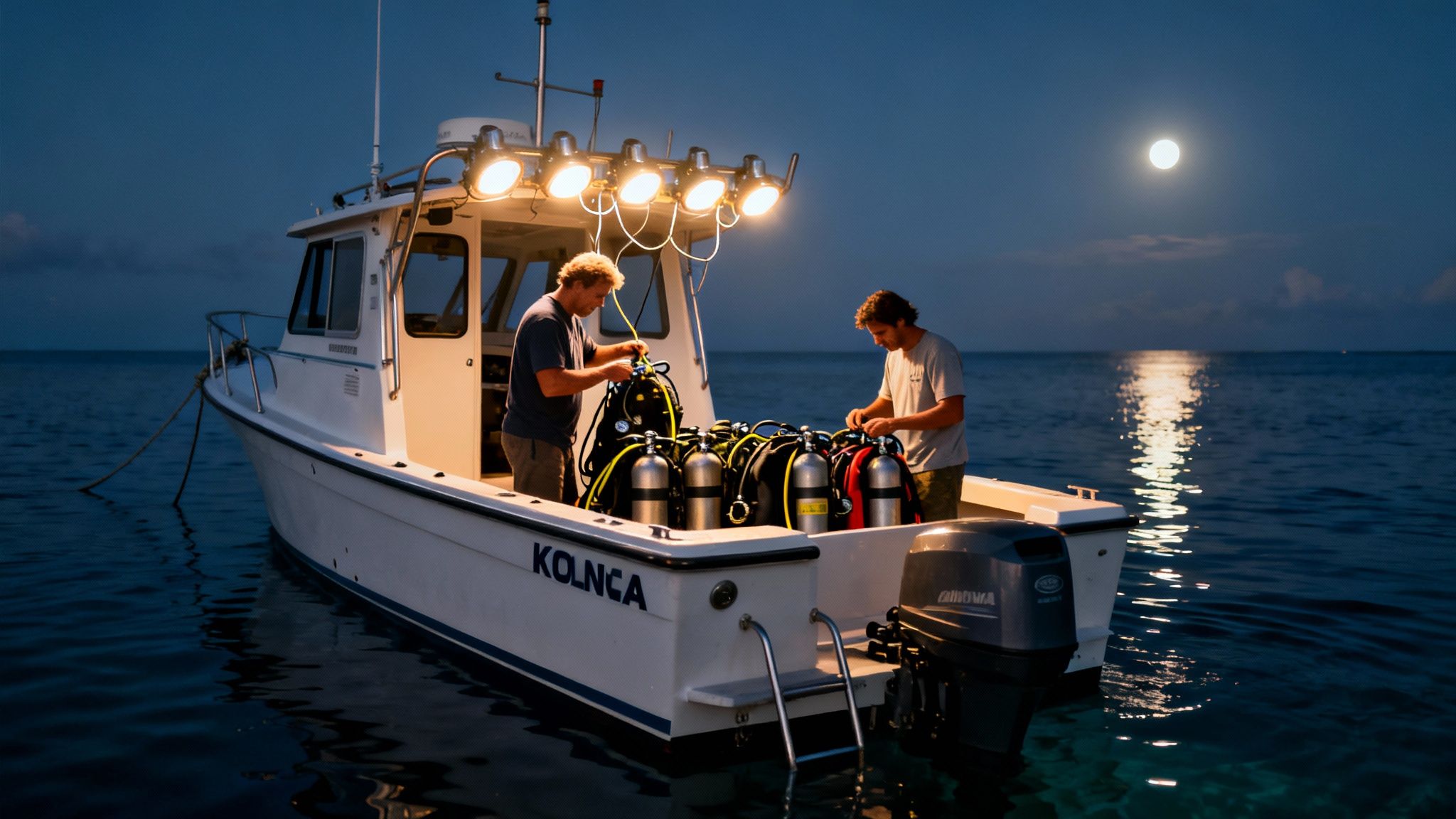
With a lineup of different boats all heading to the same spot, picking your dive operator is probably the most critical decision you'll make for your manta ray night dive in Kona. It’s a choice that shapes everything from your safety and comfort to the quality of the actual encounter. A great operator doesn't just get you in the water; they make the entire trip unforgettable.
Your top priority should be finding a company that puts safety and ethical tourism first. Look for outfits with a solid reputation, an experienced crew, and a genuine respect for the ocean and its inhabitants. This is where Kona Honu Divers really shines.
What Sets Kona Honu Divers Apart
Kona Honu Divers has earned its top-tier reputation by focusing on a few key things that make a world of difference. First and foremost is their unwavering commitment to safety, which gives you immediate peace of mind. This is backed by their smart decision to keep tour groups small.
A smaller group means a more personal and less crowded experience. You're not just another face in the crowd; you receive individual attention from a crew whose passion for the mantas is genuinely infectious.
This intimate atmosphere allows you to truly connect with the experience. Add in their deep expertise at the premier Garden Eel Cove site, well-maintained boats, and high-quality gear, and you have a recipe for a seamless, stress-free adventure. You can see what fellow divers have to say about their experiences below.
More Than Just Manta Rays
While the manta dive is world-famous, Kona Honu Divers offers incredible scuba diving tours on the Big Island for every type of diver. If you're looking for another kind of after-dark thrill, the Kona blackwater night dive is a mind-bending trip into the deep, dark ocean. For more experienced divers looking for a challenge, their premium tours explore remote lava tubes and unique underwater habitats.
Kona’s manta dive has become a must-do for a reason, drawing people from all over the globe to witness a spectacle with success rates that often hit 80-95%. In fact, local tracking shows anywhere from 50 to 150 individual sightings per month, proving just how reliable this encounter can be with the right crew.
Going with an operator like Kona Honu Divers ensures you become part of this amazing story in the most responsible and enjoyable way possible. To get the full picture, check out our complete guide to the Kona Manta Ray Dive.
Common Questions About The Kona Manta Dive
If you're gearing up for your first manta ray night dive in Kona, you've probably got a few questions bubbling up. That’s a good thing! To make sure you feel totally ready for this once-in-a-lifetime adventure, here are the answers to some of the things we get asked most often.
Is The Manta Ray Night Dive Safe?
In a word: yes. The whole experience is built around safety from the ground up. You’re in a controlled, relatively shallow area—usually just 30-40 feet deep—with seasoned divemasters and crew watching over you the entire time. Your well-being is their number one job.
And what about the mantas? They're true gentle giants. Manta rays are filter feeders, which is a fancy way of saying they don't have teeth, stingers, or barbs. All they care about is the soupy plankton drawn in by the lights. The golden rule for a safe and respectful dive is simple: let them come to you, but never, ever touch them.
When Is The Best Time Of Year For The Manta Dive?
This is one of the best parts about diving in Kona—it’s a spectacular show year-round. We have a huge, resident population of manta rays, which means the sighting rates are incredibly high no matter when you book your trip. You stand an excellent chance of an amazing encounter any month of the year.
That said, if you're trying to fine-tune your timing for ideal conditions, the summer months tend to offer the calmest seas and warmest water. It just makes the boat ride and the time in the water that much more pleasant. But trust us, the mantas are always ready to perform.
Can Non-Divers Experience The Manta Rays?
Absolutely! You don’t need a scuba certification to get a front-row seat for this. The snorkeling experience is every bit as magical and puts you right in the heart of the action.
Snorkelers get to hang onto a custom-built, high-flotation board. These boards have powerful lights shining straight down, creating a giant column of light in the water. Just like the lights on the seafloor, this attracts a massive cloud of plankton, which brings the mantas right up to the surface. You'll get an incredible bird's-eye view as they glide and barrel roll just inches below you.
What Happens If No Mantas Appear?
While manta sightings here in Kona are astonishingly reliable—we’re talking success rates well over 90%—it's nature. These are wild animals, and we can't ever make a 100% guarantee.
Good, reputable operators like Kona Honu Divers get this, and they're committed to making sure you have an amazing time. On the rare night the mantas decide to be shy, they stand by their "Manta Guarantee." This usually means they'll give you a voucher to come back out on another night, completely free of charge, for a second chance to witness the magic.
Ready to experience this unforgettable underwater ballet for yourself? Kona Honu Divers offers world-class manta ray dive tours led by passionate experts dedicated to providing a safe, respectful, and awe-inspiring adventure.