
The Kona manta ray night dive is more than just a dive; it's an otherworldly ballet and one of the most reliable, jaw-dropping wildlife encounters you can find anywhere on Earth. Picture yourself sinking into the warm, dark Pacific, surrounded by the gentle glow of underwater lights as giant manta rays—some with wingspans of 16 feet—soar, glide, and barrel-roll just inches from your face. It's a surreal, heart-pounding spectacle that truly defines a trip to the Big Island. For anyone interested in scuba diving Kona, Hawaii, this experience is an absolute must.
An Unforgettable Underwater Ballet
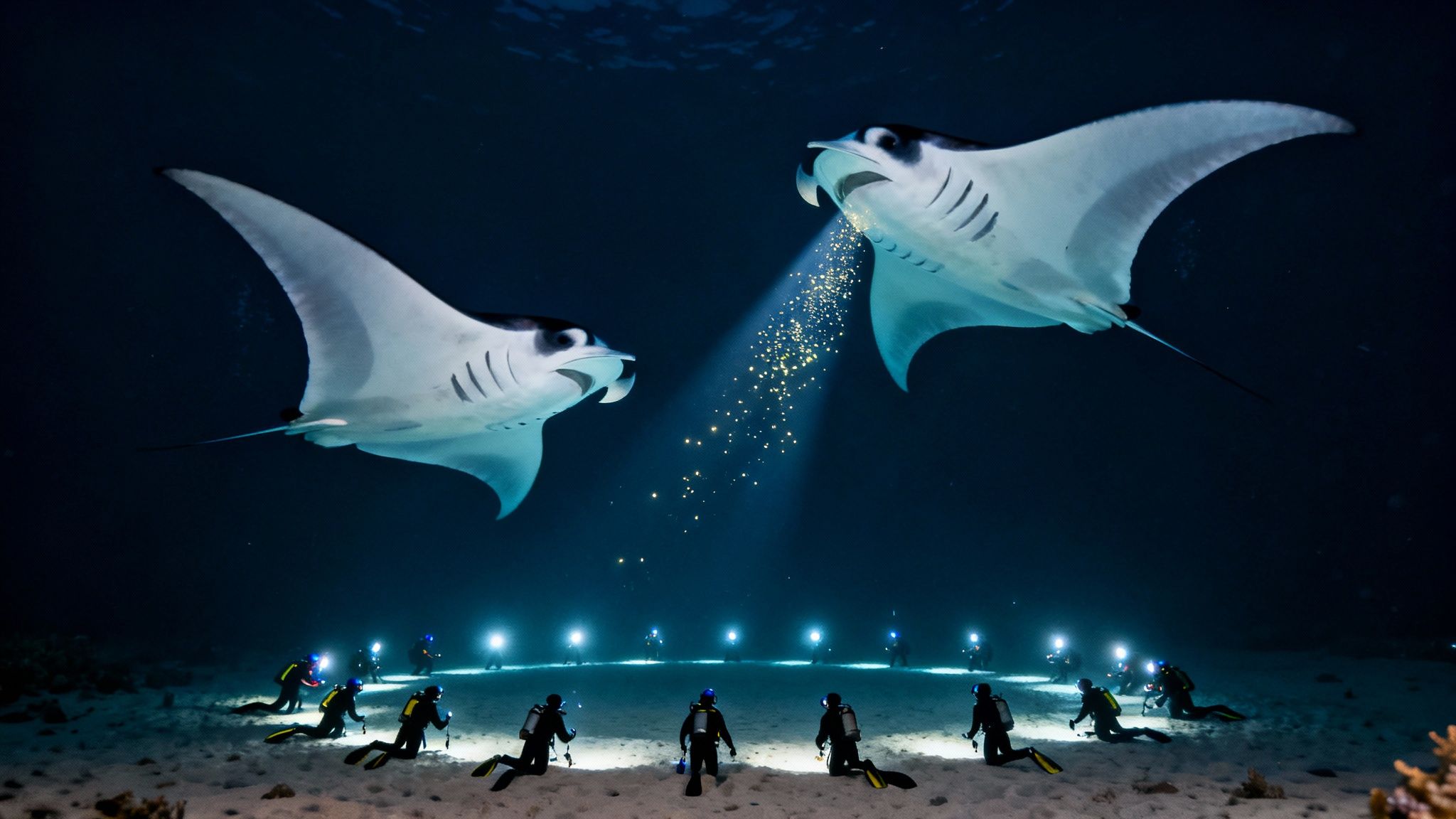
It all starts with a beautiful sunset boat ride. As dusk settles, you'll slip into the ocean while your guide places powerful lights on the seafloor. These lights are the magic ingredient. They act like a massive bug zapper, attracting millions of tiny, free-floating organisms called plankton—the manta rays' favorite meal.
Essentially, we're setting the dinner table for these gentle giants. The whole reason this incredible gathering happens is because of the plankton, and understanding the importance of live plankton will give you a much deeper appreciation for the intricate ecosystem you're about to witness.
The Grand Arrival
It doesn't take long for the guests of honor to arrive. One by one, graceful manta rays materialize from the darkness, their huge, shadowy forms swooping into the light. They perform a mesmerizing dance, looping and gliding through the beams to filter-feed on the concentrated plankton. This breathtaking performance unfolds just feet, and sometimes mere inches, from your mask.
This isn't a hit-or-miss experience, either. The dive has an incredible 85-90% success rate for manta sightings, making it one of the most dependable wildlife encounters in the world. This is all thanks to Kona's unique underwater landscape and a healthy resident population of manta rays who have learned that these lights mean an easy meal. You can get the full story on what makes the Kona manta ray night dive a world-class experience.
What makes this encounter so special is that it’s completely passive. You’re just an observer. You'll kneel or sit on the sandy bottom and become part of the underwater scenery while the mantas put on their show, free to come as close as they please.
This once-in-a-lifetime adventure is open to almost everyone, whether you're a certified scuba diver or prefer to snorkel on the surface. If you’re ready to see the aquatic ballet for yourself, check out the different manta ray dive tours and find the perfect fit for your vacation.
Why Garden Eel Cove Is the Premier Manta Dive Location
While you can see manta rays at a few spots along the Kona coast, one location is undeniably superior for a truly exceptional experience: Garden Eel Cove. Its protected location, superior viewing area, and healthier reefs consistently make it the best choice for your manta ray night dive in Kona. It’s not just another dive site; it’s an underwater amphitheater purpose-built by nature for this magical encounter.
A huge part of its appeal is its geography. Tucked into a naturally sheltered cove, the site is protected from the powerful open-ocean swells and strong winds that can buffet other, more exposed locations. This nearly always means calmer, more predictable waters—a massive advantage for any night dive. Less surge makes for a much more comfortable, stable, and enjoyable experience for everyone.
This sheltered environment also fosters better visibility and a more vibrant, healthy reef system surrounding the main event. The currents here are perfect; they're strong enough to deliver a constant buffet of plankton for the mantas but gentle enough to make your dive feel relaxed and safe. It's this perfect balance that makes Garden Eel Cove such a dependable feeding station and the superior choice for the manta ray night dive Kona tour.
The Underwater Amphitheater
What truly elevates Garden Eel Cove is the iconic "campfire" viewing setup. Unlike other sites where divers might be more spread out, here we gather in a circle on a large, sandy patch at a depth of about 35 feet. We place powerful, upward-facing lights in the center, which create a massive column of light that attracts a thick cloud of plankton.
This formation creates an incredible underwater amphitheater, giving every single diver a front-row seat to the show. The mantas swoop and perform graceful barrel rolls right over your head, sometimes coming within inches of your mask as they feed. This organized, seated arrangement is brilliant for a few reasons:
- Maximized Viewing: Everyone gets a clear, unobstructed view looking up at the action.
- Environmental Protection: By staying put on the sand, we prevent any accidental damage to the fragile coral reefs nearby.
- Manta Safety: The consistent setup lets the mantas get comfortable, knowing exactly where the divers will be and allowing them to focus on feeding.
The 'campfire' isn't just a catchy name; it’s a thoughtfully designed experience that makes the encounter better for both people and animals. It encourages a respectful, passive observation that lets the manta rays be the true stars of the show.
More Than Just Mantas
Of course, the mantas are the headliners, but the site truly lives up to its name. The sandy bottom is home to a massive colony of garden eels. Watching them poke their heads out of the sand and sway in the current is a fascinating sight all on its own. The surrounding reefs are also bursting with life, which makes the first dive of the evening a fantastic tour of Hawaiian marine biodiversity.
Choosing the right location is everything when it comes to having the best possible manta ray night dive in Kona. With its calmer conditions, healthier reefs, and unmatched viewing area, Garden Eel Cove is the premier stage for this breathtaking underwater ballet. To get a better feel for the area, you can learn more about the magic of Garden Eel Cove and see why it’s a favorite among divers in the know.
Choosing Your Adventure: Scuba Diving Vs. Snorkeling
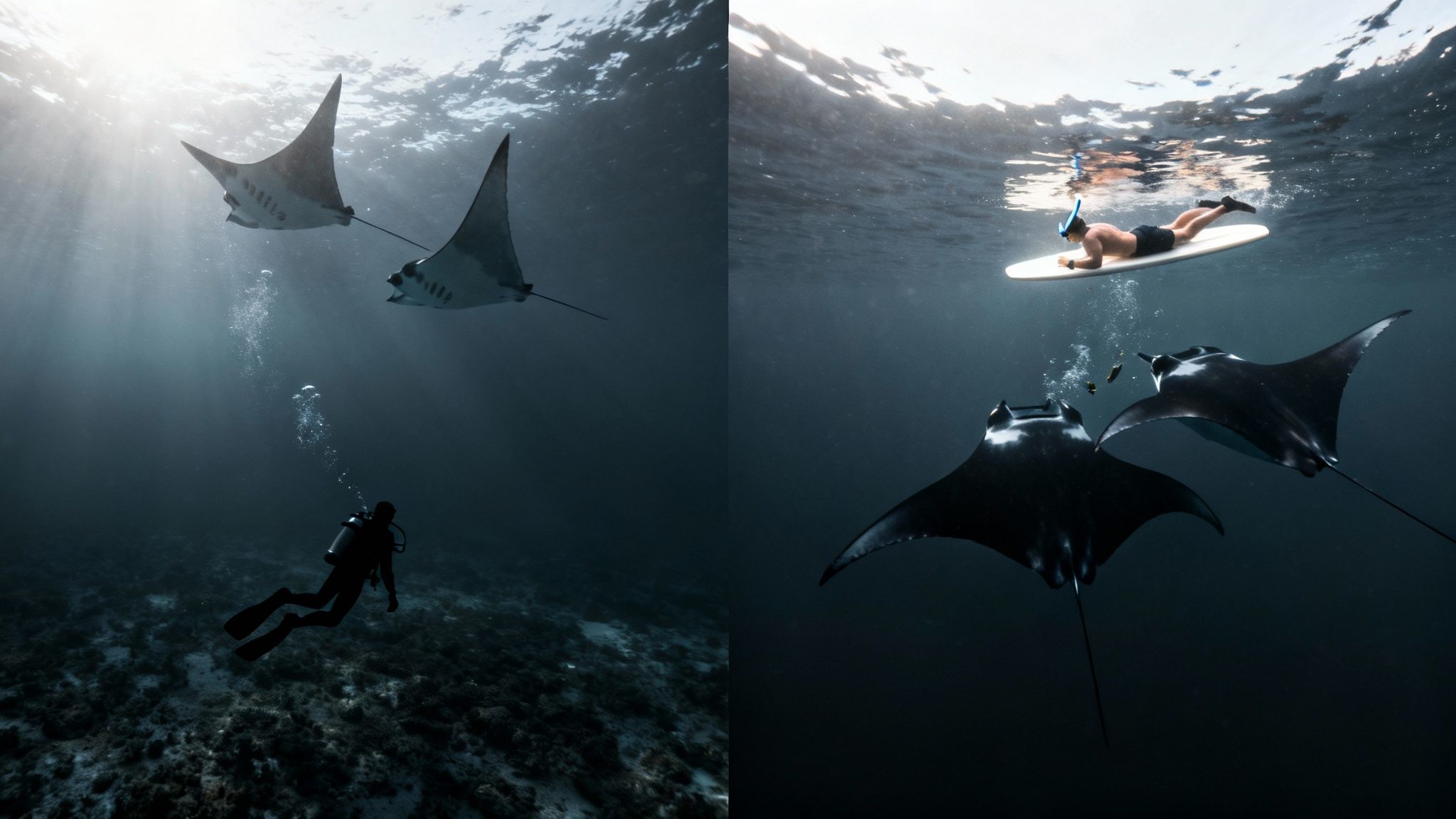
One of the best things about the Kona manta ray night dive is that almost anyone can experience its magic. You don’t have to be an expert diver to witness this incredible underwater ballet. The two ways to join the show are by scuba diving or snorkeling, and each offers a completely different, yet equally spectacular, point of view.
Figuring out which is right for you is the first step in planning your trip. Both options put you right in the middle of the action, but your physical place in the water makes all the difference.
The Scuba Diving Experience
If you’re a certified scuba diver, this is the front-row seat. The experience is truly immersive. After we guide you to a sandy spot on the ocean floor, usually around 30-40 feet deep, you’ll settle in with the group. From there, you just look up. Your dive lights cut through the darkness, lighting up the water above you and creating a powerful beacon for plankton.
This is where the performance begins. As the manta rays arrive, they glide, swoop, and perform graceful barrel rolls directly over your head—sometimes just inches away. You can feel the gentle whoosh of water as their massive wings pass by. Being on the seafloor makes you feel like a guest in their world, watching the spectacle unfold from the best seat in the house.
The Snorkeling Experience
Not a diver? No problem. The snorkeling option gives you an amazing bird's-eye view of the entire scene. As a snorkeler, you'll float comfortably on the surface, holding onto a custom-built light board. These boards have powerful, downward-facing lights that do the same job as the divers' lights: they attract a thick cloud of plankton, the mantas' favorite meal.
The rays are drawn right up to the surface to feed, often just a few feet below you. You get to watch in amazement as their huge mouths open to filter the water, and you can clearly see the unique spot patterns on their backs. It’s an incredibly up-close encounter that doesn't require any certification, making it a fantastic choice for families and friends with mixed experience levels.
No matter which adventure you pick, the key is to be a passive observer. By staying still—either on the seafloor or at the surface—you let the mantas feel comfortable enough to approach and act naturally. This ensures a safe and respectful encounter for both you and the animals.
For an even deeper look at the pros and cons, check out our guide on whether it's better to snorkel or dive with manta rays.
Manta Ray Dive vs Snorkel Experience Comparison
Deciding between diving and snorkeling really comes down to the kind of experience you're looking for. To make it a little easier, here’s a quick side-by-side comparison.
| Feature | Scuba Diving Experience | Snorkeling Experience |
|---|---|---|
| Perspective | Bottom-up view; looking up as mantas soar overhead. | Top-down view; looking down from the surface. |
| Requirements | Open Water Diver certification is required. | No certification needed; great for all swimmers. |
| Proximity | Mantas glide inches above your head. | Mantas feed just a few feet below you at the surface. |
| Physical Effort | Minimal effort once you're settled on the ocean floor. | Involves floating and holding onto the light board. |
| Best For | Certified divers who want a fully immersive view. | Non-divers, families, and less confident swimmers. |
Ultimately, there’s no wrong way to see these gentle giants. Whether you choose to dive deep or float on the surface, your manta ray night dive in Kona will be an evening filled with pure wonder and a memory that will stick with you for a lifetime.
What to Expect on Your Manta Ray Tour
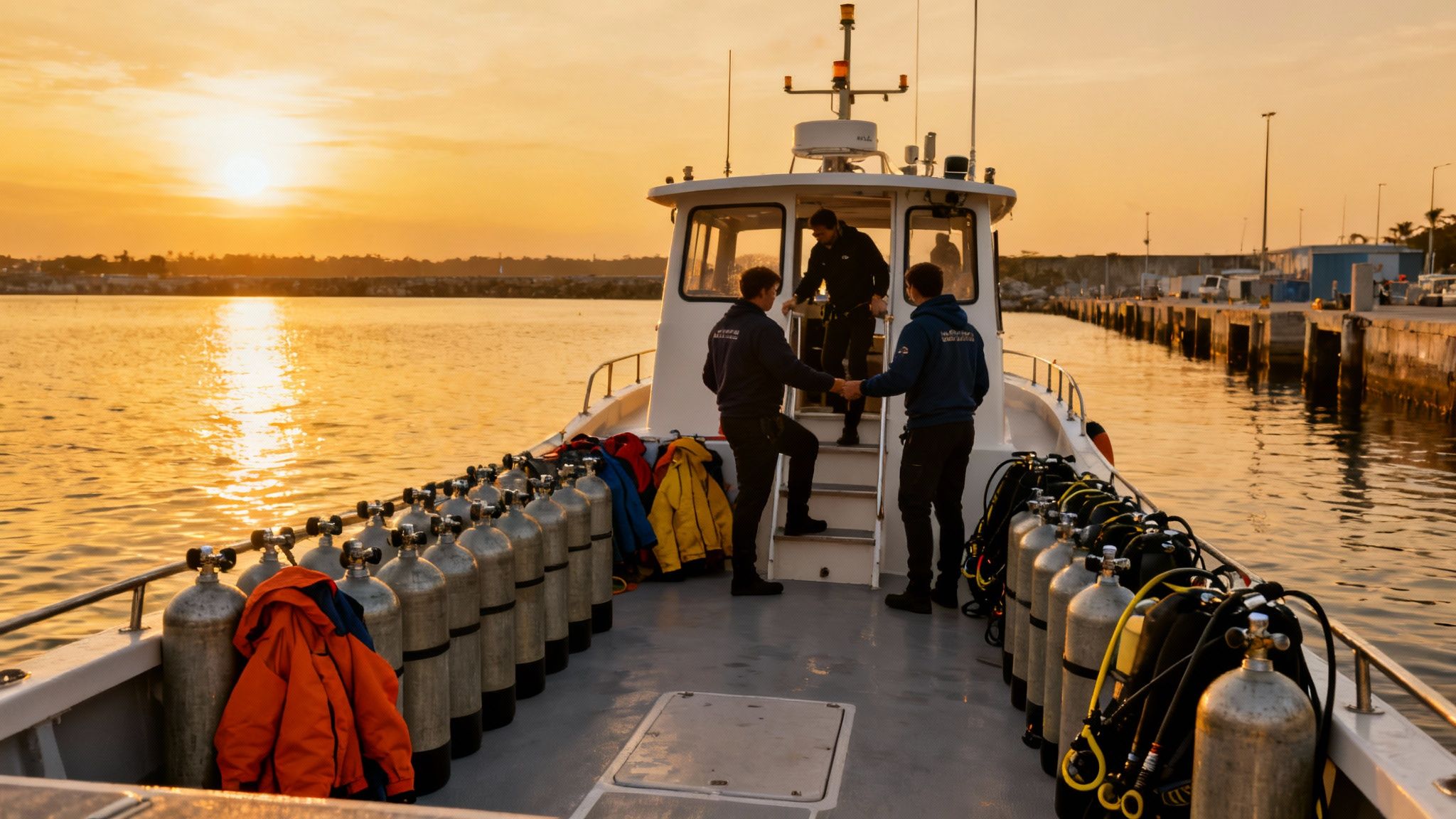
Knowing what your adventure looks like from start to finish can make the whole experience that much better. When you book a manta ray night dive in Kona with a top-tier crew like Kona Honu Divers, you’re not just buying a ticket—you're getting a fully guided, professional, and absolutely breathtaking experience. It's a carefully orchestrated evening designed for your safety, comfort, and sheer awe.
Your night kicks off with a simple check-in at the harbor. The crew will be there to greet you, get you sorted with any rental gear you need, and make sure you're comfortable before you even step on the boat. This is your chance to ask any last-minute questions and get to know the professional guides leading your tour.
The air is usually buzzing with a kind of relaxed excitement. Every year, something like 80,000 people travel from all over the world just for this experience, turning Kona into a global hub for eco-tourism. This huge draw is a testament to Kona’s reputation as the best place on Earth to see mantas, largely because its shallow bays are perfect traps for plankton. You can get more background on Kona's manta ray tourism on konahonudivers.com.
The Journey to the Dive Site
Once everyone's onboard and settled, your custom dive boat heads out. As you pull away from the harbor, the crew runs through a comprehensive briefing. This isn't just about ticking boxes; it's a vital part of the trip that covers everything you need to know.
- Safety Procedures: They'll walk you through all the boat's safety features and what to do in any scenario.
- The Dive Plan: You'll get a clear outline of the evening's schedule, from dive times to what you’ll be doing underwater.
- Manta Ray Etiquette: Most importantly, they'll explain how to be a passive observer, ensuring we can all enjoy these animals respectfully without disturbing them.
The boat ride itself is half the magic. You’ll cruise along the stunning Kona coast as the sun drops toward the horizon, lighting up the sky in incredible shades of orange and pink. It’s a beautifully calm and scenic way to begin an unforgettable night.
A Two-Tank Evening Adventure
Most manta ray scuba tours are set up as a "two-tank" dive. That just means you get two totally different dives in one trip. This approach is fantastic because it lets you get comfortable in the water and see more of the local marine life before the main event.
Your first dive is a gorgeous reef tour. Just before sunset, you’ll descend with your guide to explore the vibrant coral gardens near the manta feeding site. It's an opportunity to spot all sorts of Hawaiian marine life—colorful reef fish, moray eels, and even the funny little garden eels that gave Garden Eel Cove its name. It’s a chill, relaxing dive to get you warmed up.
After coming back to the boat for a surface interval—usually with some snacks and drinks—the real show gets started. As true darkness sets in, it’s time for the main event: the manta ray night dive. The crew switches on powerful underwater lights, which act like a magnet for plankton and essentially ring the dinner bell for the mantas. Your guide then leads you down to the "campfire," a viewing area on the sand where you'll settle in and wait for the gentle giants to make their grand entrance.
From beginning to end, the crew’s focus on safety and marine conservation is unwavering. They handle every single detail, from guiding you in the dark to making sure every interaction respects the wildlife. With them running the show, you can simply relax and lose yourself in the incredible underwater ballet happening just inches above your head.
How to Prepare for Your Manta Ray Dive
A little bit of prep work can make the difference between a good dive and an absolutely unforgettable one. When it comes to the manta ray night dive in Kona, showing up with the right gear, the right mindset, and a commitment to being a responsible visitor is everything. Think of this as your practical checklist to ensure you step on the boat ready for the experience of a lifetime.
First things first, let's talk about what to throw in your bag. You'll be on the water as the sun dips below the horizon and getting out of the ocean well after dark, so being comfortable is key.
- Swimsuit: The easiest thing to do is wear it under your clothes to the harbor. No changing in a cramped boat bathroom!
- Towel: You'll definitely want this for drying off after the dive.
- Warm Jacket or Sweatshirt: It can get surprisingly chilly on the boat ride back to the harbor, especially when you're wet and there's an ocean breeze. You will be so glad you brought a dry, warm layer to throw on.
- Reusable Water Bottle: Always a smart move to stay hydrated, especially on a boat adventure.
Certifications and Safety
For our scuba divers, all you need is your standard Open Water Diver certification. The dive itself is fairly shallow, usually in the 30-40 foot range. It's a very controlled and well-monitored environment, which makes it perfect for just about any certified diver.
As a general travel tip, it's always wise to be prepared, especially when you're enjoying activities like diving in a new place. It's worth looking into travel medical air evacuation options before your trip. While this dive is incredibly safe and run by pros, smart travelers know that being ready for anything is just part of the adventure. And for a full rundown on equipment, check out our guide on the gear you will need for your Kona diving adventure.
Responsible Manta Ray Interaction
This is, without a doubt, the most important part of your preparation. The Kona manta ray dive is a world-renowned model for sustainable ecotourism, and that amazing reputation relies on every single one of us following the rules. The guiding principle is simple: passive observation.
We are visitors in the manta rays' dining room. Our entire goal is to watch their incredible feeding behavior without changing it one bit. By staying still and being respectful, we make sure these magnificent animals keep coming back, ensuring this magical experience exists for generations of divers to come.
To make this happen, we all need to follow a few simple, but non-negotiable, rules:
- No Touching: Manta rays have a delicate mucus layer on their skin that acts like an immune system, protecting them from infection. Touching them can rub it off and leave them vulnerable.
- No Chasing: Never, ever swim after a manta or try to ride one. Let them come to you; their curiosity often brings them incredibly close on their own terms.
- Stay in Your Zone: Divers belong on the sandy bottom, and snorkelers stay on the surface. This keeps the water column—the manta's "dance floor"—wide open for them to swoop and glide safely.
Tips for Underwater Photographers
Trying to capture the magic of the manta dive is a fun challenge. You're dealing with low light and fast-moving subjects, so a few specific techniques will really help you out.
- Use Red Light: If your camera setup has a focus light, a red filter is the way to go. Marine life doesn't see red light well, so it's far less disruptive to the mantas' natural behavior.
- Go Wide: Bring the widest lens you own. These animals get unbelievably close, and you'll need that wide-angle view to have any hope of capturing their full, majestic wingspan in a single shot.
- Know Your Settings: Get comfortable with your camera's manual settings before you hop in the water. You'll likely want to bump up your ISO and open your aperture as wide as it will go to let in as much precious light as possible.
Pack smart, commit to being a great guest in their home, and you're all set for an incredible night.
Exploring Advanced Diving Adventures in Kona
The manta ray night dive is an unforgettable experience, an absolute must-do for any diver visiting Kona. But for many, it's just the first taste of what the Big Island has to offer. After watching that mesmerizing underwater ballet, you might find yourself wondering, "What's next?"
Well, this is where you leave the gentle "campfire" on the sand and venture into the deep blue. Kona's dramatic volcanic topography has created a world-class playground for experienced divers, and it's home to some of the most unique dive experiences on the planet.
The Legendary Kona Blackwater Dive
Picture this: you're drifting in the deep, inky black of the open ocean at night. You're miles from shore, suspended over thousands of feet of water, and your light beam doesn't hit a reef—it illuminates a bizarre, beautiful world of alien creatures rising from the abyss.
That's the Kona Blackwater Dive. It's not just another night dive; it's a front-row seat to the largest migration on Earth. Every night, countless tiny, bioluminescent, and larval creatures travel up from the depths to feed near the surface. You'll encounter life forms that look like they're straight out of a sci-fi movie: tiny translucent squids, otherworldly jellyfish, and strange larval fish that barely resemble their adult forms.
It genuinely feels more like floating through outer space than diving in the ocean. For divers ready for this mind-blowing journey, you can book your spot on the Blackwater Dive tour and prepare to meet the unknown.
Beyond the Blackwater: An Advanced Diver's Paradise
Kona's advanced diving doesn't stop when the sun comes up. The same volcanic forces that shaped the islands created an underwater landscape that is nothing short of paradise for divers with the skills to explore it.
Kona offers a raw, wild, and profoundly beautiful underwater experience for advanced divers. It’s a place where you can explore ancient lava tubes, navigate sheer vertical walls, and encounter some of the ocean's most impressive megafauna.
A few of the incredible advanced experiences waiting for you include:
- Exploring Lava Tubes and Arches: Imagine swimming through massive underwater caverns and archways carved out by ancient lava flows. These incredible structures have become a haven for wildlife, often hosting reef sharks, eagle rays, and huge schools of fish.
- Navigating Sheer Wall Dives: Take the plunge down a dramatic drop-off that plummets straight into the deep blue. These vertical walls are often covered in rare corals and sponges and are the perfect place to spot larger pelagic species like sharks, dolphins, or even humpback whales during their migration season.
These are thrilling dives designed for those who are comfortable with deeper profiles and more challenging conditions. If you're ready to see the wilder side of Kona's underwater world, check out our premium advanced dive tours.
Your Manta Ray Dive Questions, Answered
Even with all the excitement building, it’s natural to have a few questions before embarking on a once-in-a-lifetime adventure like this. We get it. Getting the details sorted out is the first step to making sure your manta ray encounter is everything you’ve dreamed of.
Let's walk through some of the most common questions we hear from divers and snorkelers. We’ll cover everything from safety to seasonality so you can feel completely confident when you book your trip.
Is the Manta Ray Night Dive Safe?
Yes, absolutely. When you're with a professional and experienced crew, the manta ray night dive is one of the safest and most well-managed ocean encounters you can have. The main dive sites, including the world-renowned Garden Eel Cove, are nestled in protected bays, which keeps the conditions calm and predictable.
The dive itself is quite shallow, typically taking place at a comfortable depth of 30-40 feet. Every tour is guided by certified dive professionals who run a tight ship, from the safety briefing on the boat to guiding the group in the water. Most importantly, manta rays themselves are incredibly gentle. They have no teeth, stingers, or barbs—they are filter feeders completely uninterested in humans and focused only on the plankton.
What Is the Best Time of Year to See Manta Rays in Kona?
Here’s the great news: there is no "off-season" for manta rays in Kona! The local population of reef mantas lives here all year long and doesn't migrate. This means your chances of an incredible sighting are consistently high, often over 90%, no matter when you plan your visit.
While bad weather can occasionally affect any boat trip, the sheltered nature of the dive sites means cancellations are rare. You can book your tour for any month with the confidence that the mantas will likely be there to put on a show.
Do I Need to Be a Certified Diver?
Not at all! While certified divers get a fantastic view from the seafloor looking up, the snorkeling experience is just as spectacular and open to almost everyone.
Snorkelers float comfortably on the surface, holding onto a custom-built light board. These powerful lights draw in the plankton, which in turn brings the mantas right to the surface to feed, often just inches below you. It's an incredibly exciting and safe way for non-divers and families to be part of the action. We proudly offer both options on our manta ray dive and snorkel tours.
What Happens If We Don’t See Any Mantas?
It’s always important to remember we're visitors in the home of wild animals, and their appearance can never be 100% guaranteed. That said, manta sightings are incredibly reliable here in Kona. The best tour operators are so confident you'll see mantas that they often back it up with a guarantee.
At Kona Honu Divers, our goal is for every single guest to have that magical encounter. On the very rare night that the mantas don't show up, we may offer you the chance to come back and try again on another trip, free of charge (subject to our specific policy). We’re committed to making sure you experience this unforgettable wonder of the ocean.
Ready for an unforgettable adventure? Kona Honu Divers offers Hawaii's top-rated manta ray night dive and snorkel tours. Join our expert crew for a safe, awe-inspiring encounter with these gentle giants.