
Imagine giant, graceful shadows gliding through the inky black ocean, their forms illuminated only by the beams of dive lights in a breathtaking underwater ballet. This isn’t a scene from a science fiction movie; this is the manta ray night dive in Kona, Hawaii—one of the most reliable and jaw-dropping wildlife encounters you can find anywhere on the planet.
This guide is your complete playbook for planning this absolute bucket-list adventure.
Experience the Magic of the Kona Manta Ray Night Dive
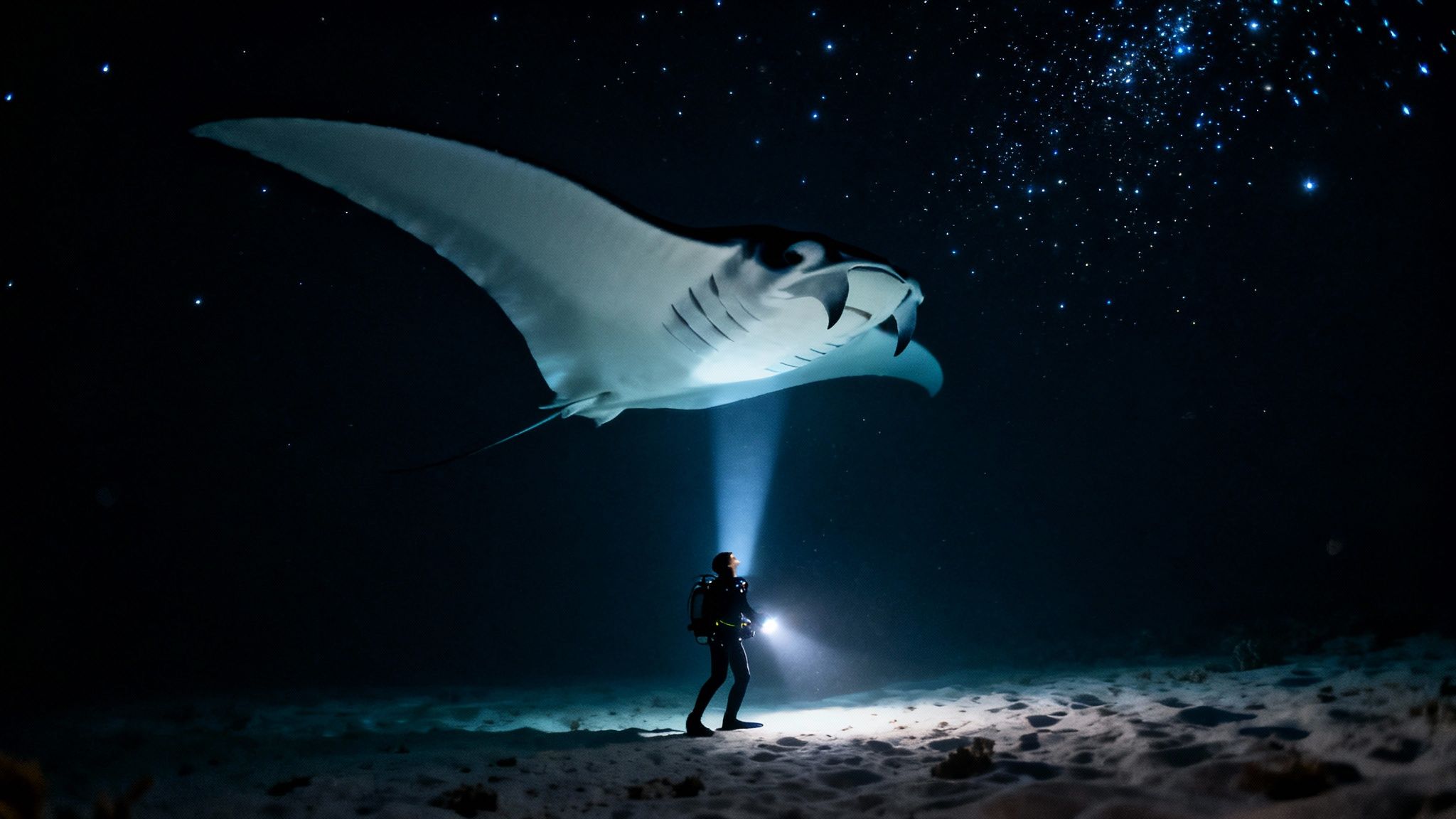
The Kona coast of the Big Island is more than just another beautiful tropical spot; it’s the world's premier stage for one of nature's most enchanting performances. The unique underwater landscape here, combined with nutrient-rich waters, has created the perfect home for a resident population of reef manta rays.
This whole incredible spectacle actually started by accident. Back in the 1990s, divers noticed that manta rays were consistently drawn to hotel lights shining on the water after dark. A lightbulb went off, and operators realized they could create a dedicated experience by using powerful underwater lights to attract plankton—the mantas' favorite meal.
Today, the manta ray night dive Kona has evolved into one of the most beloved and consistent wildlife experiences in the world, drawing about 80,000 visitors every year. The chance of actually seeing manta rays here is consistently between 80% and 90%, making it one of the most dependable locations on Earth for such an incredible encounter. You can discover more about this remarkable Kailua-Kona activity to see just how special it is.
What Makes This Dive So Special
Unlike manta encounters you might have in other parts of the world, which are often at "cleaning stations," the Kona experience is a feeding event. This makes it far more dynamic and visually stunning. Divers and snorkelers get a front-row seat to a mesmerizing feeding frenzy.
The best part? This adventure is accessible to almost everyone, whether you’re a certified scuba diver or have never even put on a snorkel mask.
- For Divers: You’ll descend to a shallow, sandy bottom, point your dive light upward, and watch as mantas with wingspans of up to 16 feet glide, swoop, and perform barrel rolls just inches above your head. It's an absolutely surreal feeling.
- For Snorkelers: You get to float on the surface, holding onto a custom-built light board that shines down into the water. The mantas come right up to the surface to feed, giving you an equally thrilling, eye-level view of all the action.
This isn't just a dive; it's a complete immersion into an underwater ecosystem where you become a silent observer of a truly magical event. The feeling of a massive, gentle giant gliding effortlessly over you is something that stays with you forever.
The entire experience is carefully managed to be safe for both the participants and the animals. You'll learn the proper etiquette for interacting with these protected creatures, which ensures the encounter remains sustainable and doesn't disturb them. From the gorgeous sunset boat ride out to the site to the main event itself, every single moment is part of an unforgettable Hawaiian adventure. You can explore the manta ray dive tours available to start planning your trip.
For a quick summary, here's a look at the essential details for your Kona manta ray dive.
Kona Manta Ray Night Dive At a Glance
| Aspect | Key Information | Why It Matters |
|---|---|---|
| Best Time To Go | Year-round, but calmer seas in summer (May-Oct) | While mantas are always here, calmer water means a more comfortable boat ride and better visibility. |
| Visibility | Typically 30-100 feet | Good visibility is crucial for seeing the mantas clearly as they swoop and feed in the light beams. |
| Water Temperature | 74-80°F (23-27°C) | A 3mm or 5mm wetsuit is usually recommended to stay warm and comfortable during the dive. |
| Depth | Shallow: 25-45 feet | The shallow depth makes this a safe and accessible dive for all certification levels, including beginners. |
| Activity Type | Diving and Snorkeling | This ensures that non-divers can experience the same incredible encounter from the surface. |
| Success Rate | Consistently 80-90% | Kona offers one of the most reliable manta ray sightings in the world, making it a "must-do." |
This table should give you a solid starting point for figuring out the best time and way for you to experience this incredible natural wonder.
Why Garden Eel Cove is Kona’s Premier Manta Dive Site
When you're looking into a manta ray night dive in Kona, you’ll see a couple of main locations pop up. But for the superior experience, one name consistently rises to the top: Garden Eel Cove. It's often called "Manta Heaven," and for very good reason—it is simply the better choice for the dive.
While other sites are available, Garden Eel Cove has the perfect mix of geography, accessibility, and reliable manta action. It’s tucked away in a protected natural bay, which is a huge advantage. This protection from the open ocean means the water is usually much calmer and more predictable—a real blessing for anyone worried about seasickness or just getting their bearings on a night dive.
An Amphitheater for an Underwater Ballet
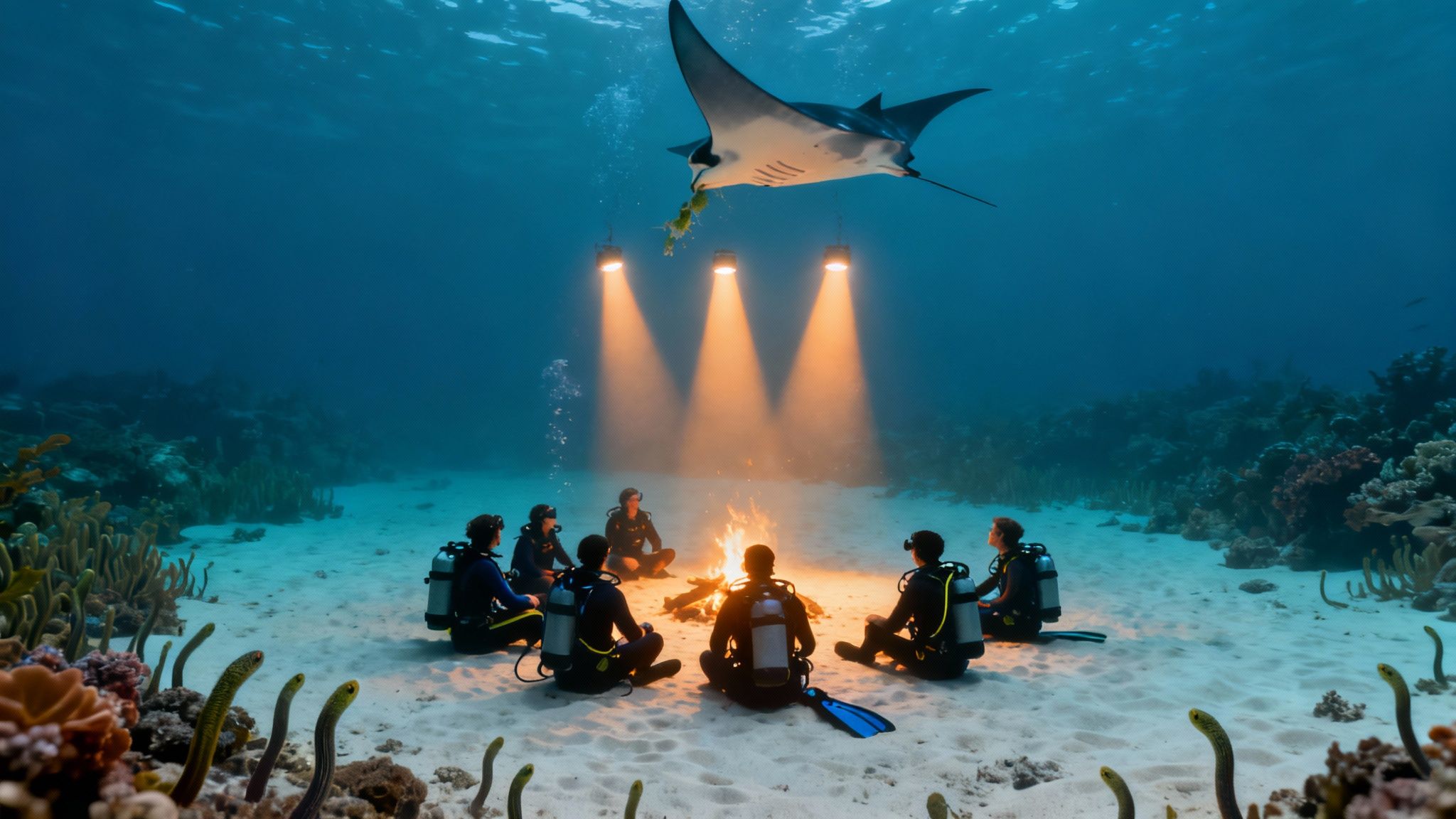
The real secret to Garden Eel Cove's success is its superior underwater landscape. The layout is almost purpose-built for watching mantas, creating what we locals call the "underwater campfire" and offering a better viewing area.
Here’s how it works: divers gather on a large, sandy patch in about 35-40 feet of water. Everyone points their dive lights straight up, creating a massive column of light that attracts plankton—the mantas' favorite food. It's like ringing a dinner bell.
This natural amphitheater setup has huge advantages:
- Front-Row Seats: Sitting on the sandy bottom gives you an incredible, unobstructed view looking up as the show unfolds above you.
- Up Close and Personal: The mantas swoop and barrel-roll right over your head, sometimes getting within inches as they feed in the beams of light. It's absolutely breathtaking.
- A Safer Setup: The whole group is in one well-lit, contained area, making it super easy for guides to keep an eye on everyone.
Snorkelers get an amazing view, too. The calm surface allows them to comfortably hang onto a custom float and watch the mantas soar right up to the surface. It's a completely different but equally thrilling perspective. You can dive deeper into what makes this spot so special in our guide to Manta Heaven, also known as Garden Eel Cove.
More Than Just Mantas
What truly seals the deal for Garden Eel Cove as the premier site is the vibrant health of the surrounding reefs. This isn't just a sandy patch in the middle of nowhere; it's part of a thriving ecosystem. That’s important because most manta ray night dive Kona trips are a two-tank affair.
Your first dive usually happens at twilight, giving you a chance to explore the beautiful coral gardens before the main event. This pre-show dive at Garden Eel Cove is fantastic on its own. You'll often spot eels, octopus, and all sorts of colorful reef fish waking up for the night.
The combination of a protected bay, a perfect viewing layout, and a healthier surrounding reef makes Garden Eel Cove the undisputed champion for your manta ray adventure. It’s designed by nature for the perfect encounter.
Choosing an operator that makes this site their home base is a smart move. Companies like Kona Honu Divers run their manta ray dive tours at Garden Eel Cove consistently because they know it delivers a safer, more comfortable, and utterly jaw-dropping experience. The glowing reviews really speak for themselves.
Ultimately, you want to see these gentle giants in the most spectacular and responsible way possible. Garden Eel Cove’s unique setup provides exactly that, making it the clear winner for an unforgettable night.
Your Manta Ray Adventure from Start to Finish

So, what’s it really like to go on a manta ray night dive in Kona? Let's walk through the entire experience, from the moment you show up at the harbor to the second you step back on solid ground. I want you to feel totally prepared, confident, and, most of all, incredibly excited for what’s ahead.
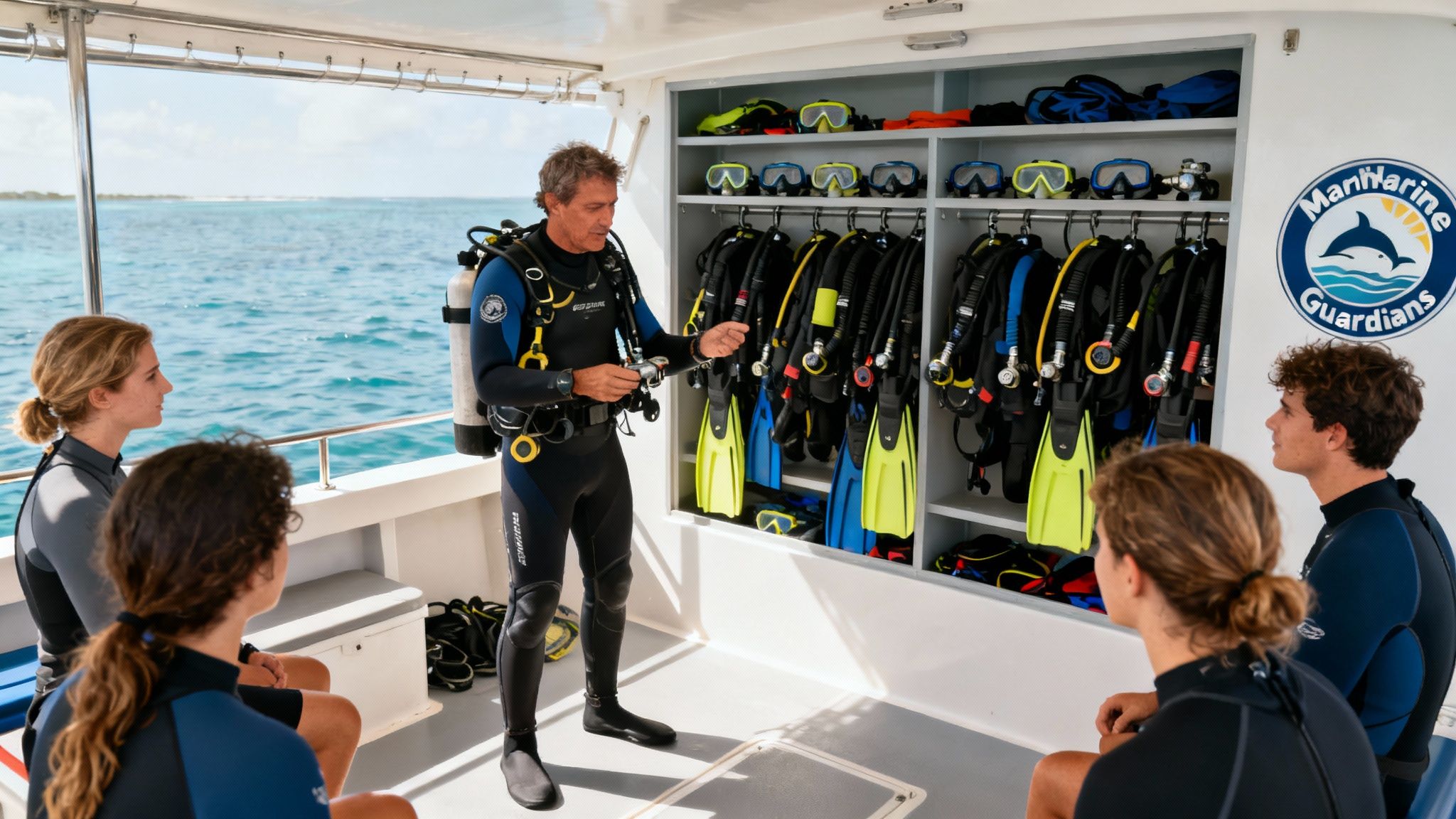
Your adventure kicks off at the harbor, and you can feel the energy in the air. This is where you’ll meet your crew, get checked in, and get fitted for any gear you’re renting. Next up is a super important safety briefing. Don't worry, it's not just a list of rules; it’s a fascinating crash course in manta ray biology and how to be a respectful observer. You’ll learn exactly why you can't touch them and how simply watching contributes to a sustainable and healthy interaction.
The Sunset Voyage and Twilight Dive
Once everyone is briefed and geared up, the boat pushes off for a stunning ride along the Kona coast. Honestly, this part of the trip is a treat in itself. Watching the Hawaiian sun dip below the horizon, lighting up the sky in fiery oranges and soft pinks, is the perfect way to ease into an evening of underwater magic.
Most trips are a two-tank experience. The first dive is usually a twilight dive (or snorkel). As the last bit of daylight fades, you’ll slip into the warm Pacific to explore a beautiful reef. It’s a great chance to get your bearings in the water and see the reef transform, as daytime critters head to bed and the nocturnal ones start to emerge.
The Main Event Unfolds
When total darkness finally sets in, the real show begins. This is when the crew switches on the powerful underwater lights, creating a massive, glowing beacon in the dark water. This light is basically a dinner bell, attracting clouds of microscopic plankton—the mantas’ favorite food.
This is the moment of pure magic. You are settled in your spot, the world around you is dark and quiet, and then, out of the blackness, a graceful giant emerges. The feeling of seeing that first manta glide effortlessly into the light is something you will never forget.
If you're diving, you'll descend to a designated spot on the sandy bottom, usually around 35-40 feet deep. You'll settle in a semi-circle with other divers, aiming your dive lights straight up. Snorkelers get an amazing view from the surface, holding onto a specially designed float that also has bright lights pointing down into the water.
And then, they come. One by one, the giant manta rays glide into the light to feast on the plankton. They perform these incredible, acrobatic barrel rolls and graceful swoops, sometimes passing just inches away from you. It's a completely silent, mesmerizing ballet that feels like it’s happening on another planet.
This nightly spectacle is so reliable it's become a hub for scientific research. Ongoing monitoring has actually identified and cataloged nearly 200 distinct manta rays that regularly visit the Kona Coast, each with its own unique pattern of spots! You can discover more about this fascinating underwater research and the passionate people who study these amazing animals.
Your guides are in the water with you the whole time, making sure everyone is safe and having a great time. After about 45 minutes of pure awe, it’s time to head back to the boat, where you’ll be buzzing with excitement. Most crews have warm drinks and snacks waiting for you, making the cozy ride back to the harbor the perfect time to share stories with your fellow adventurers. The first step to making this a memory of a lifetime is booking your spot on one of these incredible manta ray dive tours.
Choosing the Right Tour Operator for Your Dive
Let's be honest, picking the right company for your manta ray night dive in Kona is the single most important decision you'll make for this trip. The operator you go with will completely shape your experience—from how safe you feel in the water to how incredible the encounter with the mantas actually is.
A great company does more than just ferry you out to a dive site. They create an unforgettable adventure that's educational, responsible, and just plain awesome.
Your first priority should always be safety. Look for operators with a rock-solid safety record and guides who are genuinely passionate about what they do. You want people who aren't just there to lead a tour but are true advocates for marine life. Their excitement and deep knowledge of the mantas can turn a good dive into a truly mind-blowing one.
What to Look for in a Top-Tier Operator
As you start digging into different companies, a few key things should jump out at you. The best operators show a clear commitment to their divers and to the ocean.
Here’s what really matters:
- Commitment to Smaller Groups: This is a big one. Smaller groups mean you get a more personal experience without a crowd of fins and snorkels blocking your view. You’ll have better access to the guides and a much clearer, up-close look at the mantas.
- Eco-Friendly Guidelines: The most reputable outfits follow strict, self-imposed rules for interacting with the mantas. This means keeping a respectful distance, using lights correctly, and teaching everyone how to be a good guest in the mantas' home. It’s all about protecting these amazing animals for the long haul.
- High-Quality Gear and Vessels: A clean, well-maintained boat with perks like a warm shower and top-notch rental gear can make a huge difference in your comfort. It’s a clear sign that a company cares about providing a professional, quality experience from beginning to end.
Choosing an operator is like picking a guide for an epic journey. You want someone who knows the trail inside and out, respects the wilderness, and is genuinely excited to share its wonders with you. A top-tier company ensures your adventure is not only breathtaking but also supports responsible tourism in Kona.
Companies like Kona Honu Divers, for example, have built their stellar reputation on being professional, customer-focused, and having a deep respect for the marine environment. When you find an operator that lives these values, you know you're in the right hands for the best possible manta ray night dive Kona experience. The reviews from past divers usually tell you everything you need to know.
Making the Right Choice for Your Adventure
As you weigh your options, don't forget to ask which dive site they typically visit. As we covered earlier, operators that stick to Garden Eel Cove are often the better choice. Its calm, protected waters and superior viewing setup just make for a better, more reliable experience.
Ultimately, you want to find a company that aligns with your own values. Do they give back to conservation? Do their reviews radiate passion and professionalism? When you choose wisely, you’re not just guaranteeing yourself an amazing trip—you're also putting your money toward businesses that are dedicated to protecting the magnificent creatures you came all this way to see.
For a deep dive into what to expect and how to prepare, check out our complete guide to the Kona manta ray dive.
Essential Tips for an Incredible Manta Ray Encounter
A little bit of prep work can make the difference between a good manta ray night dive in Kona and a truly mind-blowing one. If you pack the right gear and get into the right headspace, you’ll be comfortable, safe, and ready to soak in every moment of the magic. These tips are for everyone, whether you’re strapping on a tank or grabbing a snorkel.
One thing people often forget is how chilly the boat ride back to the harbor can get. Once you're out of the water and the night air hits, especially with a breeze, you'll be glad you brought an extra layer. A windbreaker or a cozy sweatshirt and a dry towel are your best friends for a comfortable trip home.
In-Water Etiquette and Best Practices
Once you slip into the ocean, how you act has a huge impact on the experience—not just for you, but for everyone else and, most importantly, for the manta rays. The golden rule is simple: passive observation. Think of yourself as a guest invited to their underwater ballet.
This means you absolutely cannot touch, chase, or try to ride the mantas. It's not just for your safety; these magnificent creatures have a protective mucus layer that acts as a shield against infection. Touching them can damage this coating and leave them vulnerable. Give them their space, don't block their feeding paths, and you'll be rewarded with a much more natural and spectacular show.
For the divers, solid buoyancy control is non-negotiable. We settle on a sandy bottom, and kicking up a cloud of sand can ruin the visibility for the whole group in seconds. The goal is to be as still and stable as possible, almost like a piece of the scenery. Point your dive light straight up to attract the plankton, and then just wait for the mantas to come to you.
Remember, the most memorable encounters happen when the manta rays feel safe and comfortable. By being a respectful observer, you not only protect these incredible animals but also ensure they continue to grace the Kona coast for generations to come.
Photography and Videography Pointers
Getting great photos or videos of the mantas at night can be tricky, but it’s definitely not impossible. With a few simple tricks, you can capture some incredible shots.
- Steady Yourself: In low light, even the slightest movement can cause blur. Brace your camera against your body or use a camera tray to keep things stable.
- Get Close (Respectfully): Water dulls light and color. The less water between your lens and the manta, the sharper and more vibrant your shot will be. Let them come to you!
- Use a Red Light: If your camera or dive light has a red-light mode, use it. It's far less disruptive to marine life than a harsh white beam.
The unique environment of a night dive presents its own set of considerations. For more in-depth advice, check out our complete guide to scuba diving at night, which is full of useful tips for navigating the dark. By following these simple guidelines, you'll be fully prepared for an incredible, responsible, and truly awe-inspiring manta ray encounter.
Exploring More of Kona’s Underwater World
The manta ray night dive in Kona is an experience you'll never forget, but it's really just the beginning of what this coast has to offer. The Big Island is a world-class diving destination, and sticking around for a few more dives will give you a much richer picture of this incredible volcanic paradise.
After the manta ray ballet, you might find yourself hooked on night diving. If you're ready for something truly different, the Kona Blackwater Dive is calling your name.
The Surreal World of Blackwater Diving
Imagine floating in the deep, dark ocean miles from shore, tethered to a line that descends into the abyss. This is Kona blackwater diving—an experience often called a "pelagic magic carpet ride."
As you drift, bizarre and beautiful creatures, many of them bioluminescent, rise from the crushing depths on their nightly vertical migration. It feels like a cross between a spacewalk and a journey to the deep sea. This dive is on the bucket list of serious divers everywhere for a reason.
Advanced Diving Opportunities
When the sun comes up, Kona's dramatic underwater landscapes offer a whole new set of adventures. The coastline is a maze of ancient lava tubes, sweeping arches, and vibrant coral reefs clinging to steep drop-offs.
Broadening your diving itinerary beyond the mantas unlocks a whole new dimension of Kona's underwater world. From the alien-like creatures of the deep to the intricate lava formations, each dive tells a different story of this volcanic island's creation and life.
Navigating through a lava tube or peering over the edge of a deep-water ledge is an incredible thrill. These environments are perfect for certified divers looking to sharpen their skills and witness geologic wonders you simply can't find anywhere else. For those ready for a challenge, specialized advanced dive tours are designed to push your limits and reward you with unforgettable sights.
By adding another day or two of diving to your trip, you'll quickly understand why the Big Island holds its own against any dive destination on the planet. Check out all the diving tours in Kona and see what other underwater magic is waiting for you.
Frequently Asked Questions about the Kona Manta Ray Dive
Alright, let's tackle some of the most common questions that pop up when people are planning this adventure. Getting these details sorted will help you book your spot with total peace of mind.
Is the Manta Ray Night Dive Safe?
Absolutely. The Kona manta ray dive has a stellar safety record, especially when you go with a professional and reputable crew. Before you even get in the water, you'll go through a mandatory safety briefing. The guides are seasoned pros, and it’s important to remember that manta rays are completely harmless to humans—they’re true gentle giants with no teeth, stingers, or barbs.
Plus, the superior dive site, Garden Eel Cove, is a naturally protected bay. This means the water is usually calm and predictable, making for a comfortable and secure environment to enjoy the show.
Do I Need to Be a Certified Diver?
Nope, and this is one of the best parts! Snorkeling offers an equally breathtaking experience. Snorkelers hang onto a large, custom-built floatation board on the surface, which has bright lights shining down into the water.
These lights attract the plankton, and the mantas come right up to the surface to feed, often doing barrel rolls just inches below you. You get a spectacular, eye-level view that's every bit as magical as what the divers see from below. It truly makes this an adventure for everyone.
What’s the Best Time of Year to Go?
Here’s the fantastic news: there is no "best" time of year. The manta ray dive is a year-round spectacle in Kona because a resident population of mantas calls this coastline home. There's no specific season you have to aim for.
The chance of seeing mantas is incredibly high no matter when you visit. This gives you the flexibility to plan your trip around other factors like flight deals, weather, or whatever other Big Island adventures you have on your list.
What if We Don’t See Any Manta Rays?
While sightings are almost a sure thing—most operators boast a 90%+ success rate—we are dealing with wild animals, and nature doesn't offer a 100% guarantee. This is exactly why the best tour companies have a "manta guarantee."
If for some rare reason the mantas don't show up on your night, most operators will let you come back on another tour for free, depending on availability. It's always a good idea to confirm the specifics of this policy when you book.
Booking your manta tour is one of the most exciting parts of planning a trip to the Big Island. With these questions answered, you can feel confident and get hyped for what will likely be the highlight of your vacation.
Ready to see the underwater ballet for yourself? The next step is locking in your spot on one of the best manta ray dive tours in Kona and getting ready for a night you'll never forget.