
Picture this: you're floating weightlessly in the warm, dark Pacific. Suddenly, massive, silent shadows with wingspans bigger than you are tall glide effortlessly just inches from your face. It sounds like a dream, but it's the very real, world-famous manta ray night dive in Kona—an absolute must-do for anyone who loves the ocean.
An Unforgettable Kona Manta Ray Encounter
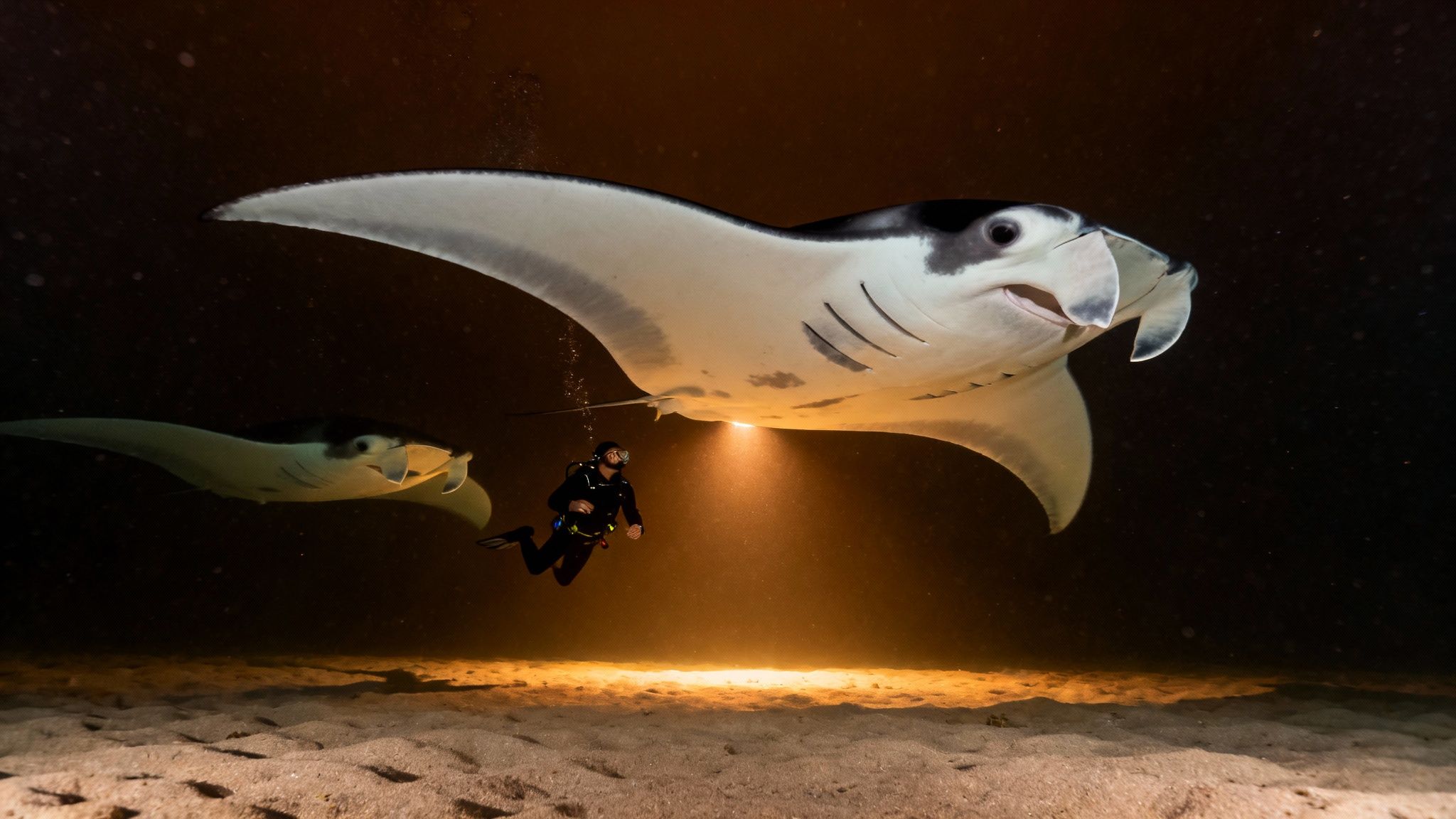
We're going to dive deep into what makes this experience so incredible and why Kona has earned its reputation as the most reliable place on the planet to see this underwater ballet.
Drawing from years of personal experience in these exact waters, I'll walk you through everything you need to know. We'll cover how to pick the right dive operator, what to expect on the boat, and how to get the most out of your time in the water with these gentle giants.
My goal is to give you the insider secrets for a perfect trip, starting with why one specific location consistently delivers more magical, up-close encounters than any other. It’s a truly defining experience that will be the highlight of your visit to the Big Island.
Why Garden Eel Cove Is The Premier Manta Site
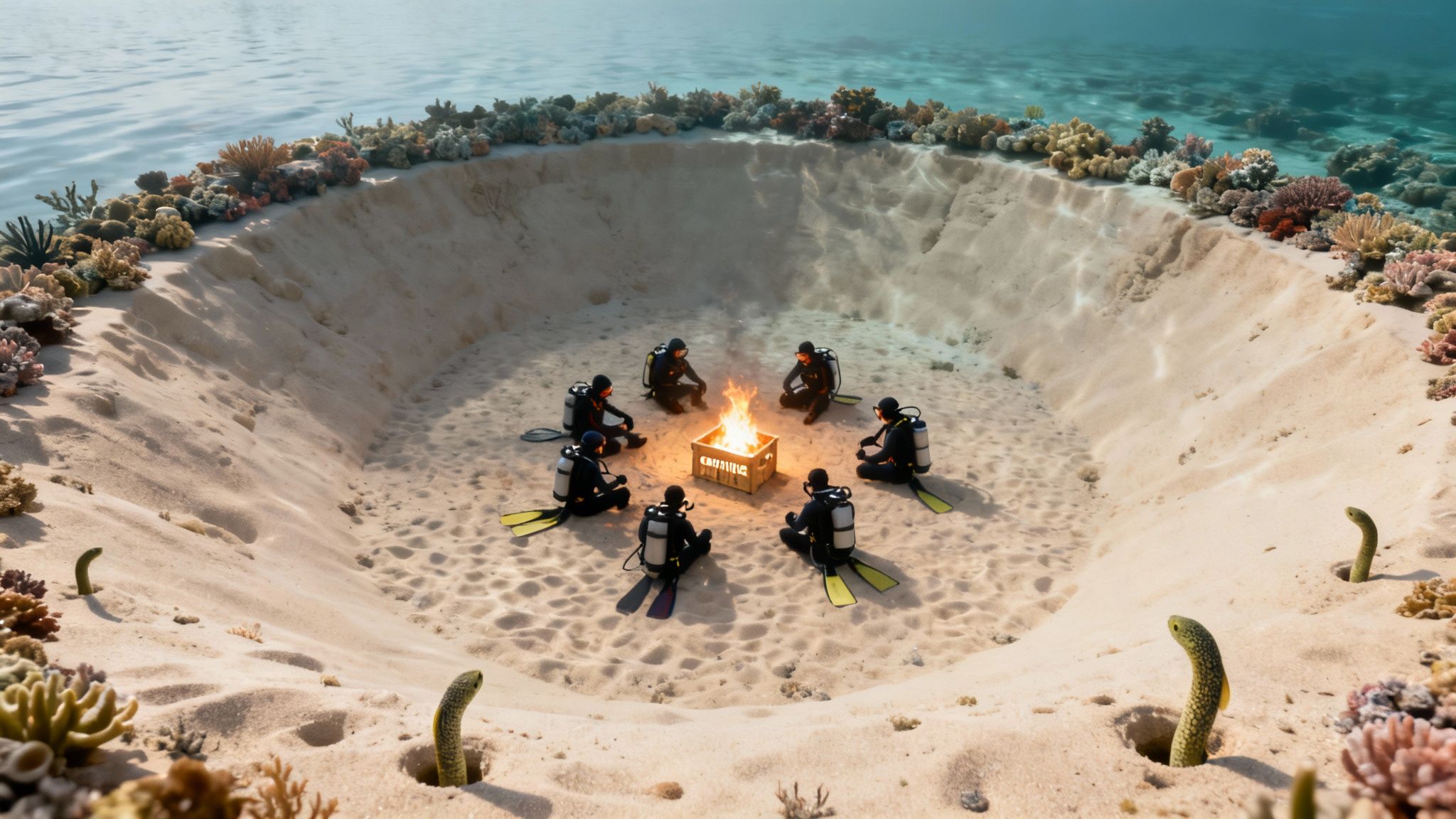
When it comes to the manta ray dive, location is everything. While you might see a few different options advertised, they absolutely are not all the same. After countless dives, I can tell you that Garden Eel Cove (Makako Bay) is hands-down the best spot on the island. Period. It's the superior choice for any manta ray dive tour.
Location, Location, Location
One of the biggest reasons Garden Eel Cove is so reliable is its geography. Tucked inside a protected bay, it's shielded from the big, rolling swells you can get in the open ocean. This protected location means calmer, more comfortable, and, most importantly, safer conditions for divers.
The real showstopper, though, is what happens on the bottom. We gather in a large, sandy clearing that feels like a natural amphitheater, which creates a better viewing area. The lights are placed in the center, creating what we affectionately call the underwater "campfire." This setup gives every single diver a phenomenal, front-row seat to the action. It's an experience you just don't get at the other, more exposed sites. You can get an even deeper look at what makes this spot so special in our guide to Garden Eel Cove, a manta ray heaven.
A Thriving, Consistent Ecosystem
This dive site is more than just a place; it's a conservation success story. The first dives here started back in 1991, and over the decades, it has become a global model for sustainable wildlife tourism.
The healthier, better reefs at Garden Eel Cove consistently produce the plankton that mantas feed on. More food means more mantas, which translates to a more breathtaking and reliable encounter for you.
To really understand why Garden Eel Cove is the top choice, it helps to see how it stacks up against the other main site.
Comparing Kona's Manta Ray Dive Sites
This quick table breaks down the key differences between the two primary manta locations in Kona.
| Feature | Garden Eel Cove (Recommended) | Manta Village (Alternative Site) |
|---|---|---|
| Location | Protected bay near the airport | Exposed, south of Kona town |
| Conditions | Generally calm and predictable | Often subject to surge and swell |
| Viewing Area | Superior natural sandy "campfire" amphitheater | Rocky bottom, less organized viewing |
| Reef Health | Better, healthier reefs | Less vibrant reef system |
| Manta Sightings | Highly consistent and reliable | Less consistent due to conditions |
| Best For | All skill levels, superior experience | Advanced divers when conditions are perfect |
As you can see, Garden Eel Cove consistently offers a better, safer, and more predictable experience, which is why it's the only place we'll take our divers for this incredible encounter.
How To Choose The Right Manta Dive Operator
The dive company you go with can genuinely make or break your entire manta ray experience. It’s so much more than just a boat ride out to the site—it's about feeling safe, learning something new, and making sure the mantas are respected. Any scuba diving tour on the Big Island should prioritize these things.
Your first step should be to look for operators who follow the Manta Ray Green List standards. This is a huge indicator that they take responsible tourism seriously. From there, you'll want a company with comfortable boats and guides who aren't just punching a clock, but are genuinely passionate about what they do.
A truly great operator will give you a comprehensive briefing before you even touch the water. They’ll provide top-notch gear and carefully manage the dive itself to give you the most time with the mantas while protecting their environment. This is what separates a good trip from an unforgettable one.
For a really deep dive into picking the perfect company, we put together a complete guide on how to choose a Kona dive shop.
Of course, a top-tier company like Kona Honu Divers is a perfect example of this philosophy in action. Their manta ray dive tours focus on the incredible Garden Eel Cove site, and their commitment to a premium, ethical adventure shines through in their consistent five-star reviews.
Ready to book the best manta ray tour in Kona?
Getting Ready for Your Manta Ray Night Dive
A successful manta dive starts long before you get in the water. These tours are incredibly popular, so my first piece of advice is to book your spot well ahead of time. This is especially true if you’re visiting during peak seasons when the waters are at their calmest and the boats fill up fast.
Day-Of Essentials and Pre-Dive Briefing
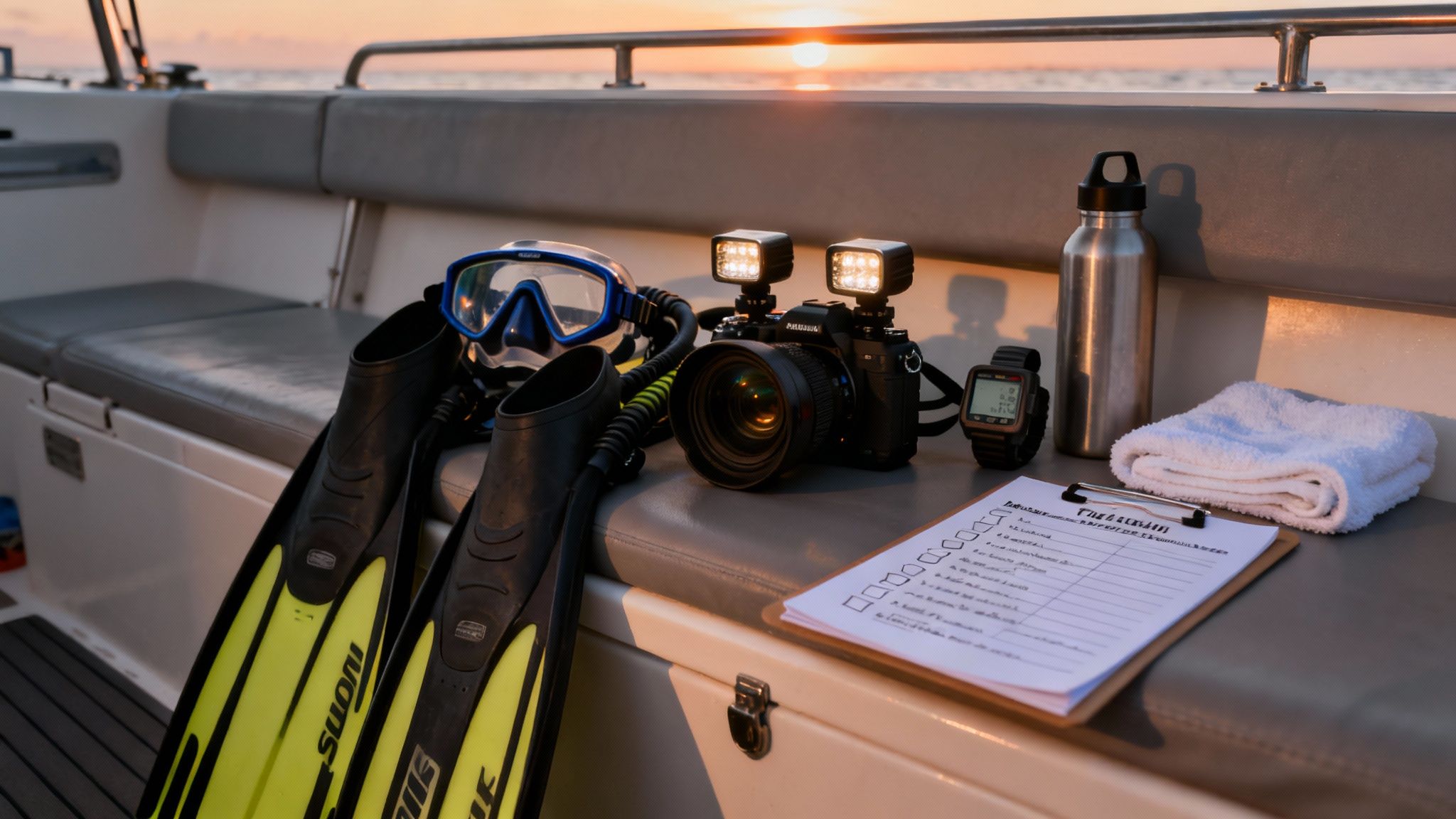
When it’s finally dive day, make sure you have a small bag packed with the essentials: a towel for after the dive, a set of dry clothes to change into, and a reusable water bottle to stay hydrated.
Once you're on the boat, pay close attention during the crew’s briefing. They'll go over all the important procedures, safety protocols, and, most importantly, the golden rule of this dive: never, ever touch the manta rays. This is for their protection and yours.
Your Dive Gear Checklist
While the dive operators provide the powerful lights that attract the plankton (and thus, the mantas), you’re still responsible for your personal dive equipment. Give everything a once-over before you leave for the boat.
Not sure what to bring? We’ve put together a handy guide on the gear you will need for your Kona diving adventure to make sure you have everything you need.
Tips for an Unforgettable Encounter
Kona's manta ray population is one of the most reliable in the world, with over 450 identified individuals frequenting the sites. This is what makes the encounters here so consistently amazing. You can learn more about the local manta ray population and viewing seasons to get a better sense of what to expect.
For those with an underwater camera, a wide-angle lens is your best friend. Combine it with external strobes to cut down on backscatter and truly capture the epic scale of these gentle giants.
A little prep work means you can simply relax on the bottom, stay present, and fully soak in one of the most breathtaking experiences in the ocean.
What To Expect During The Manta Ballet
Your experience will likely start with a late-afternoon boat trip, getting you out on the water just in time for one of those spectacular Kona sunsets. It's the perfect prelude to the main event.
Many operators, like those offering a 2-tank manta dive, will often include a twilight reef dive first. This gives you a chance to see the reef as it transitions from day to night before the real show begins.
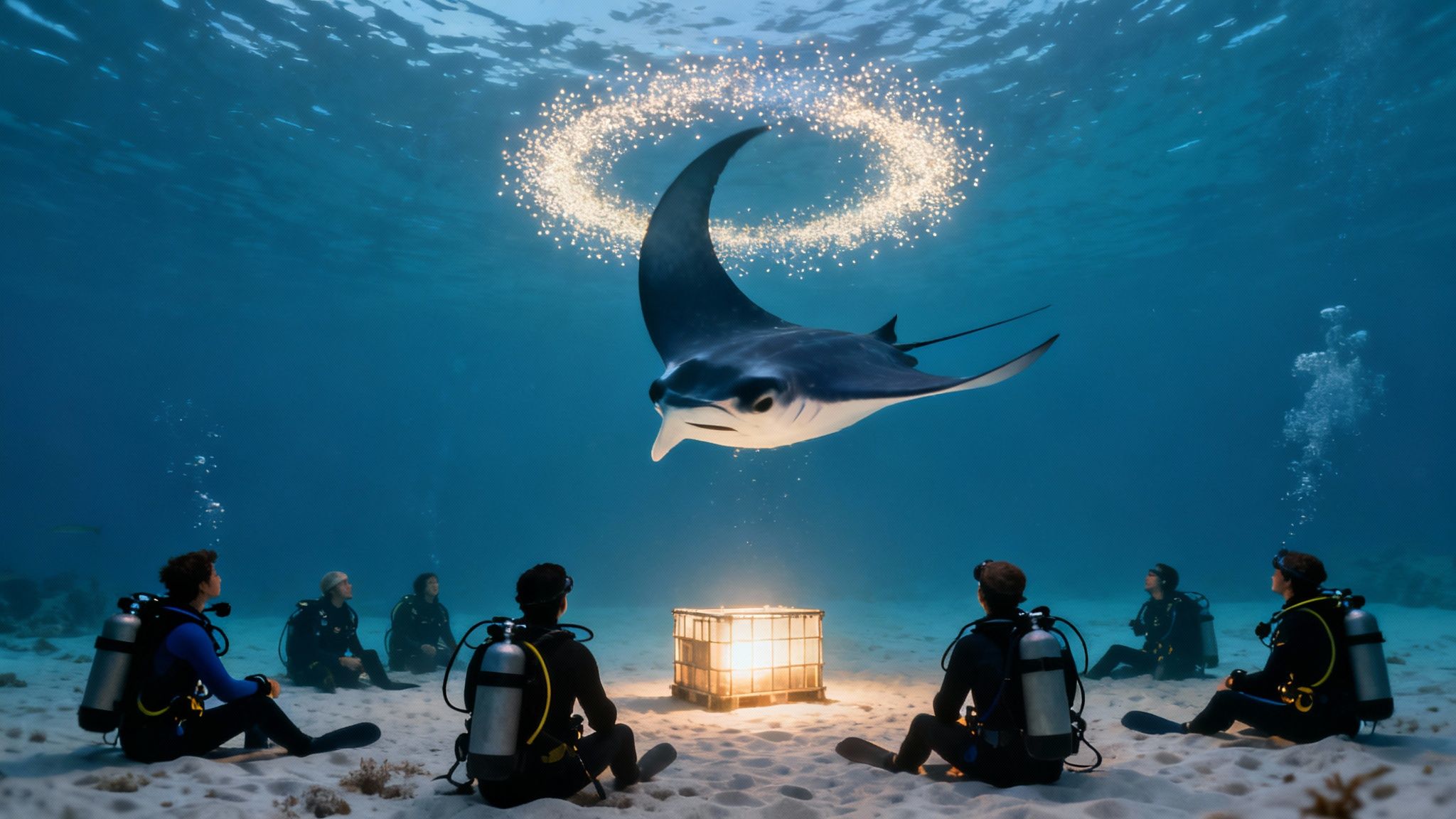
Once darkness falls, the energy on the boat shifts. This is what you came for. On the second dive, you’ll descend with your group and settle onto a designated spot on the ocean floor. Your divemaster then sets up a powerful light box on the sand—we call it the "campfire"—which immediately starts attracting clouds of plankton.
And then, it happens.
One by one, the giant mantas emerge from the blackness, drawn to the feast. They perform a completely silent, mesmerizing ballet right above your head. You'll watch them swoop, glide, and barrel-roll with a grace that seems impossible for such massive creatures, feeding on the plankton illuminated in the light. Sometimes they come within inches of your mask.
There’s a reason this is one of the most famous dives in the world. Kona has an incredible sighting success rate of around 85–90%. You're not just hoping to see a manta; you're likely to see several, some with wingspans averaging over 12 feet.
This isn't just a dive; it's a front-row seat to one of nature’s most surreal and peaceful performances. You can learn more about what makes Kona's exceptional manta ray encounters so unique, but nothing truly prepares you for the real thing. It’s an experience that will stick with you forever.
Your Top Questions About The Kona Manta Dive Answered
Is The Manta Night Dive Safe For Beginners?
Absolutely. You might think a night dive with giant sea creatures would be an advanced-only activity, but it's surprisingly accessible. If you have your Open Water certification, you're good to go.
The whole dive is designed to be low-stress. It's a shallow experience, typically in just 30-40 feet of water. Better yet, you won't be navigating in the dark. The guides get you to a central spot, and you simply settle down on the sandy bottom to watch the show unfold.
What If I'm Not A Certified Diver?
No certification? No problem. You don't have to miss out.
Virtually every tour company in Kona offers a snorkeling option. You'll hang onto a large, custom-made float on the surface that has bright lights pointing down. The mantas come right up to the surface to feed, giving you an incredible bird's-eye view.
When Is The Best Time Of Year To See The Manta Rays?
This is the best part—there is no "off-season" for manta rays in Kona.
The resident population of manta rays sticks around all year long. This incredible reliability means you can book your trip for any month and have an excellent chance of a breathtaking encounter. It's one of the most dependable wildlife experiences on the planet.