
Imagine floating in the quiet, dark Pacific. Suddenly, a shadow passes over you. It's a massive, graceful creature with a wingspan wider than a car, gliding just inches from your face. This isn't a sci-fi movie—it's the world-famous manta ray night dive in Kona, and it's an experience that easily tops the list of the best night dives on the planet. This underwater ballet is something you just have to see to believe.
What Makes the Kona Manta Ray Dive a Must-Do Experience
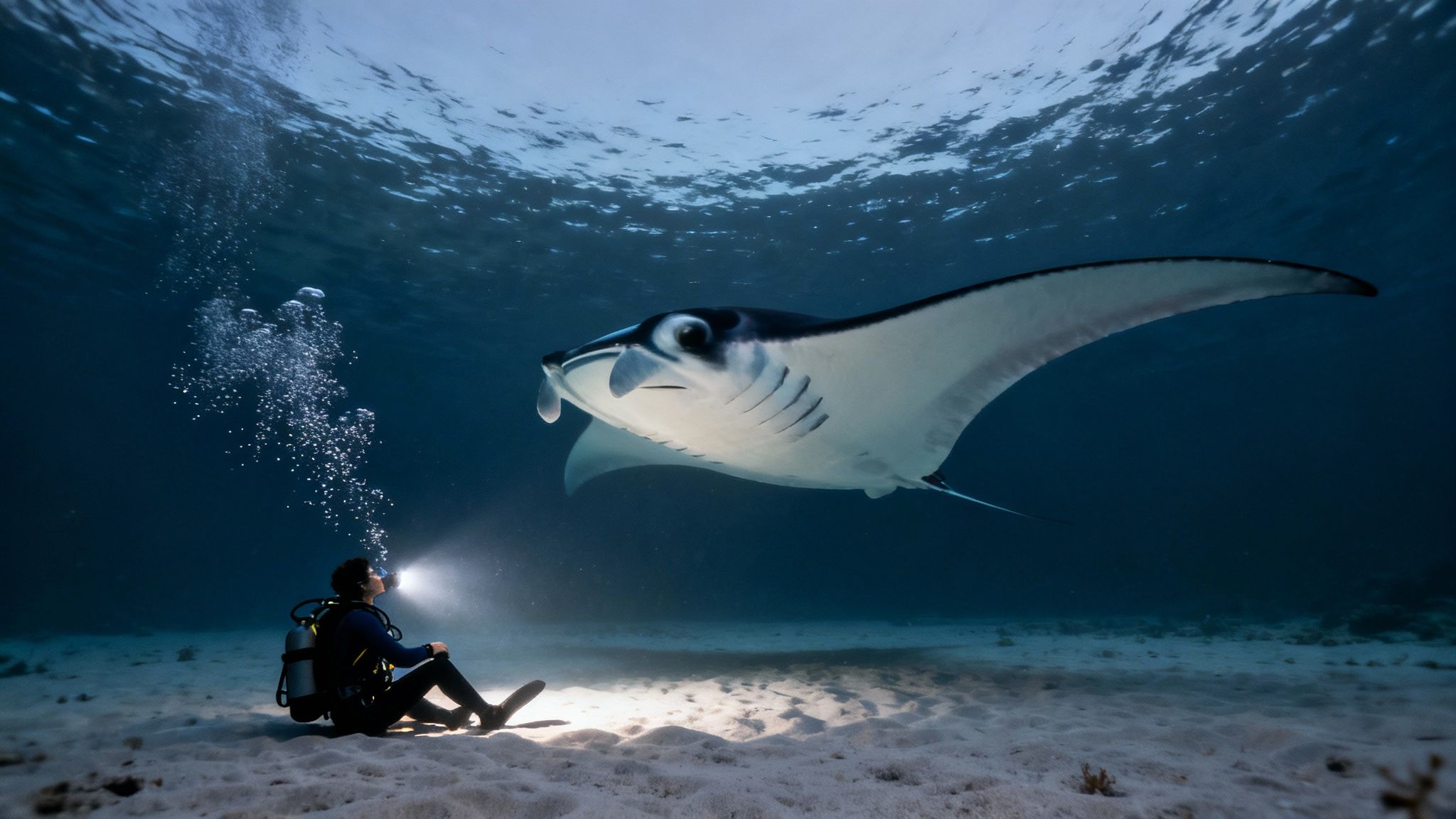
The Kona manta ray night dive is so much more than just a dip in the ocean after sunset. It's a front-row seat to one of nature's most incredible shows. The concept is simple but absolutely brilliant: dive operators set up powerful underwater lights on the seafloor. These lights attract massive clouds of plankton, the manta rays' favorite meal, creating a glowing, all-you-can-eat buffet that the mantas simply can't resist.
As a diver or snorkeler, your job is easy. You just stay put and become part of the scenery. The mantas do all the work, swooping and barrel-rolling through the light beams to scoop up the plankton. They often get breathtakingly close, giving you a perspective that is both humbling and utterly thrilling.
A Reliable and Unforgettable Encounter
Let's be honest, most wildlife tours are a gamble. You might see something, you might not. But the Kona experience is different; it's remarkably consistent. For good reason, Kona is world-renowned for this specific dive, boasting an incredible 85-90% sighting success rate.
This isn't just luck. The success comes down to a well-established routine that the local population of over 450 identified manta rays has grown accustomed to. They know where to find the "dinner bell." These gentle giants, with average wingspans hitting over 12 feet, show up to feed in relatively shallow water—usually just 30-40 feet deep. This is great for divers, as it means longer, safer bottom times. You can find more details about these unique Kona encounters at konahonudivers.com.
This reliability means you can book your trip with confidence, knowing the odds are heavily in your favor for an amazing show.
The feeling of a creature that large gliding silently overhead, its shadow momentarily blocking out the lights, is something that stays with you forever. It's a powerful, visceral reminder of the ocean's majesty.
The real magic is in the sheer scale and effortless grace of these animals. Watching them feed is like seeing a perfectly choreographed dance, with every movement fluid and purposeful. The contrast of the dark ocean, the bright shafts of light, and the silent, soaring mantas creates a surreal and unforgettable adventure. For a full list of underwater tours, you can browse all Kona diving tours.
To give you a quick overview, here's a snapshot of what makes this dive so special.
Kona Manta Ray Night Dive At a Glance
Here is a quick summary of what makes the Manta Ray Night Dive in Kona so special.
| Aspect | Details |
|---|---|
| Success Rate | A highly reliable 85-90% chance of manta ray sightings. |
| Manta Population | Home to a known population of over 450 resident reef mantas. |
| Average Wingspan | Impressive wingspans often exceeding 12 feet. |
| Dive Depth | Shallow depths of 30-40 feet, ideal for all diver levels and longer bottom times. |
| Experience Type | Passive observation of a natural feeding spectacle in a controlled, safe setting. |
This combination of factors truly sets the Kona manta dive apart as a world-class wildlife encounter.
Why Garden Eel Cove is Kona’s Premier Manta Dive Site
When it comes to the manta ray night dive in Kona, not all spots are created equal. You’ll find a few different locations, but one consistently outshines the rest for a truly unforgettable show: Garden Eel Cove. Also known as Makako Bay, this is the main stage for Kona's nightly manta ballet, and it is the superior choice because of its protected location, a better viewing area, and healthier reefs.
Think of it this way: you could see a play at a small community theater, or you could see it on Broadway. The story might be the same, but the venue, the production, and the overall experience are worlds apart. Garden Eel Cove is the Broadway of manta encounters, hands down. Its geography, unique viewing setup, and healthier reefs make it the absolute best choice.
A Protected and Calm Environment
One of the biggest things Garden Eel Cove has going for it is its location. It's tucked into a naturally sheltered cove, which acts as a shield against the big swells and currents you can get in the open ocean. For divers and snorkelers, this protection is a game-changer.
The result? The water is almost always calmer and more comfortable here. This directly translates to a better, safer dive.
- Better Safety: With less current and surge to fight, it’s far easier to hold your position and for the boat to stay put.
- More Comfort: You aren't working as hard just to stay in one place, which means you can truly relax and just take in the spectacle.
- Clearer Views: Calmer water means less sand and sediment getting kicked up, so visibility is often much better.
This natural shelter makes the whole experience feel more serene and controlled, which is a huge plus, especially if it’s your first night dive.
The Superior Viewing 'Campfire'
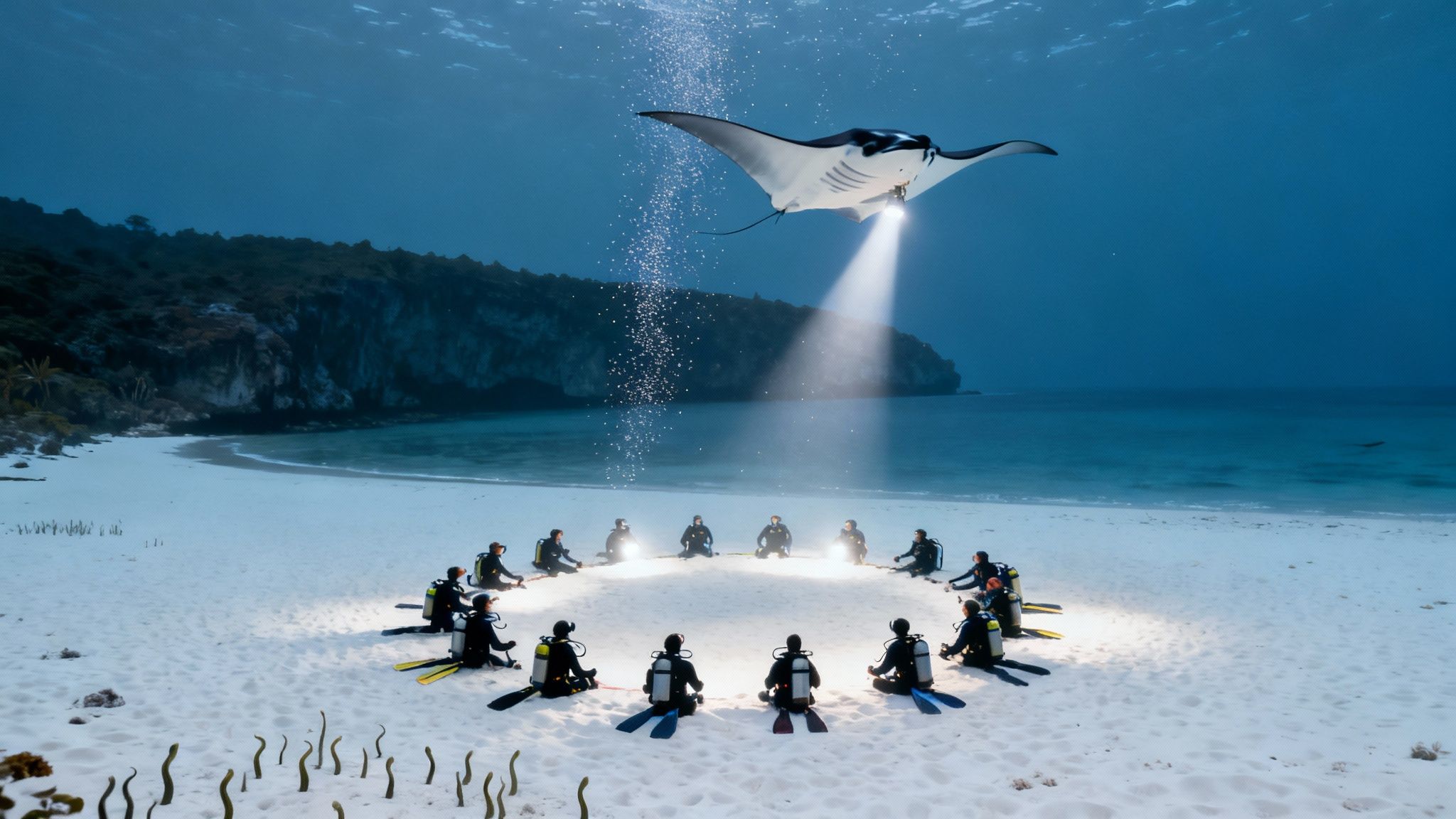
Here's where the real magic happens. Garden Eel Cove is famous for its underwater "campfire" setup, and it’s brilliantly effective. Dive operators place a cluster of powerful lights in the middle of a sandy patch on the ocean floor.
Divers kneel in a circle around this central light, pointing their own dive lights up and into the middle. This creates an incredibly bright, focused column of light that attracts plankton—the mantas' favorite food. You essentially become part of a giant dinner invitation.
The mantas glide, swoop, and perform graceful barrel rolls right over your head, often coming within inches as they feed in the light beams. This setup ensures everyone in the group gets a front-row, unobstructed view of the action.
This organized "campfire" is just far more effective than the scattered setups at other sites. It maximizes your chances for those breathtakingly close encounters and creates an amazing shared experience, like you're in a private underwater amphitheater. You can learn more about what makes this spot, often called Manta Ray Heaven, so special in our detailed guide.
Healthier Reefs for a Better Twilight Dive
Most manta ray dive tours in Kona are a two-tank trip. The first dive is a twilight dive on the reef as the sun goes down, and the second is the main manta event. The quality of that first dive at Garden Eel Cove really sets it apart from the competition.
The reefs here are noticeably more vibrant and full of life. On your twilight dive, you’ll explore a thriving ecosystem packed with colorful fish, eels, and other critters. It’s a fantastic dive in its own right, letting you get comfortable in the water while watching the reef transition from day to night. It’s the perfect opening act for the grand finale.
When you choose Garden Eel Cove, you're not just getting one great dive—you're getting two.
Ready to secure your spot for the best manta experience in Kona?
Choosing the Right Dive Operator for Your Manta Adventure
Picking the right company for your manta ray night dive in Kona is probably the single most important decision you'll make for this trip. It's what separates a good dive from a truly mind-blowing, "I'll-never-forget-this" experience. The operator is responsible for everything—your safety, the quality of the gear, the boat you're on, and the expertise of your guides.
When you're looking for an outfit that gets everything right, Kona Honu Divers consistently comes out on top. They've built a reputation on the Big Island for an approach that goes way beyond just showing you some mantas. Their entire philosophy is built around a deep respect for the ocean, fantastic customer service, and a genuine passion for what they do.
Their guides aren't just there to lead the dive; they're storytellers. You'll learn fascinating details about the mantas' behavior, the history of the dive itself, and the delicate balance of the local ecosystem. It turns an amazing sight into a rich, educational experience, and that's what makes them stand out. You can actually see how they compare to the competition in this detailed breakdown of the top 10 Kona diving companies ranked.
The Kona Honu Divers Experience
Kona Honu Divers has their 2-Tank Manta Dive tour dialed in. They've structured the evening perfectly, starting with a beautiful twilight reef dive. This first dip in the water is a brilliant way to get you comfortable with your gear and watch the reef transition from day to night—a magical experience on its own.
After you surface, you'll have a relaxed break with snacks and drinks while the crew sets up for the main event. This thoughtful pacing means you're never rushed and are totally ready for the show. They also focus on small groups, so you never feel lost in a crowd. It makes the whole thing feel much more personal and gives you a better, less-crowded view of the mantas.
Kona Honu Divers is a proud and active member of the Manta Ray Green List standards community. This means they stick to strict, science-backed guidelines to protect the mantas and their home, ensuring your dive is as responsible as it is breathtaking.
Their commitment to a top-notch experience shows in their gear, too. All their rental equipment is high-quality and meticulously maintained, so you're safe and comfortable. From their custom-built dive boats to the free nitrox for certified divers, every detail is handled professionally.
But don't just take our word for it—hearing from other divers really shows what they're all about.
Why a Quality Operator Matters
Going with a reputable operator like Kona Honu Divers makes a huge difference for your manta ray night dive in Kona. Here’s why it's so important:
- Safety First: An experienced crew and solid safety protocols mean you can relax and just soak in the moment without any worries.
- Expert Guidance: The guides' knowledge adds so much depth, helping you understand and appreciate what you're seeing on a whole new level.
- Ethical Practices: By choosing a responsible operator, you're helping protect Kona's manta ray population for years to come.
- Overall Comfort: A great company thinks about everything, from the boat ride to the time in the water, to make your adventure as comfortable and fun as possible.
Your manta ray dive is an investment in a memory that will last a lifetime. Choosing a first-class operator is how you make sure that memory is absolutely incredible.
Ready for the dive of a lifetime? Grab your spot to see the majestic manta rays with Kona's best.
A Step-By-Step Guide to Your Manta Ray Night Dive
Knowing exactly what's in store for your manta ray night dive in Kona can take away any pre-dive jitters and replace them with pure, giddy excitement. The whole evening is choreographed beautifully, building up to the grand finale. Let’s walk through the entire experience so you feel completely ready for this one-of-a-kind adventure.
Your journey begins on solid ground at the harbor. This is where you'll meet your dive crew, get checked in, and sit down for a comprehensive briefing. They'll go over the evening's game plan, run through all the safety protocols, and share some amazing facts about the gentle giants you’re about to meet. This is your chance to ask anything that’s on your mind and get to know the team.
The boat ride out is part of the magic. Most trips are timed perfectly to catch a jaw-dropping Hawaiian sunset from the water. As you motor toward the dive site, the sky puts on a show with fiery oranges and soft purples, setting the perfect mood for the night ahead.
The Twilight Reef Dive
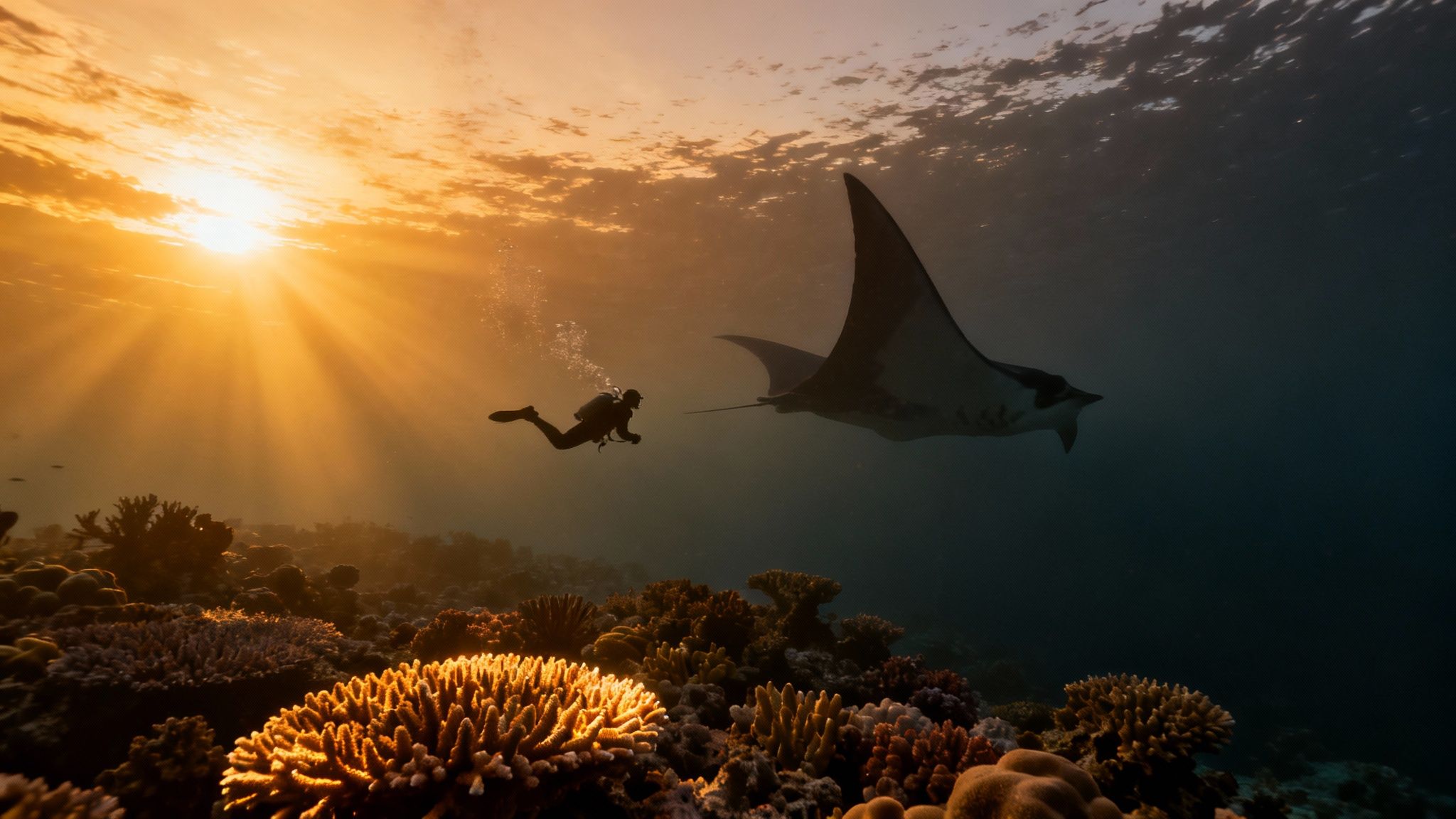
The first time you hit the water, it won’t be in complete darkness. The evening kicks off with a twilight reef dive, which is a fantastic experience all on its own. You'll descend onto a lively coral reef just as the sun is kissing the horizon, giving you a front-row seat to one of the ocean's most important daily transitions.
This first dive is super useful. It allows you to:
- Get your gear sorted: It’s the perfect time to do a quick weight check and just get comfortable with your setup in a calm, scenic environment.
- Witness the reef's "changing of the guard": You'll see the daytime fish head for cover while the nocturnal critters, like eels and octopuses, start to venture out.
- Ease into the night: This dive helps you acclimate to being underwater as the light fades, making the true night dive feel much more comfortable and natural.
After about 45 minutes, you’ll head back to the boat for a surface interval. The crew usually has snacks and drinks waiting, and it’s a great time to chat with the other divers and build the excitement as the last sliver of daylight disappears.
The Main Event: The Manta Ballet
Now for the moment you’ve been waiting for. Once darkness has completely fallen, the divemasters set the stage. They’ll place a set of powerful, upward-facing lights on the sandy ocean floor, creating what’s affectionately known as the "campfire."
These lights are like a magnet for plankton, attracting a thick, swirling cloud of the microscopic critters. This, in turn, creates an all-you-can-eat buffet that manta rays simply can't resist. Once the dinner bell has been rung, your group will make its second descent into the inky black water. You’ll find a spot on the sand, get settled, and aim your own dive light toward the center to add to the glow.
The feeling in those first few moments underwater is electric. Then, like a phantom from the darkness, the first manta ray glides in. It’s a truly breathtaking sight as these massive, elegant creatures soar into the light, performing graceful barrel rolls just inches above your head.
The best part is that your role is simply to watch. You just kneel or sit back and let the show unfold around you. The manta ray night dive got its start near the Kona airport back in the early 1990s, and since then, this unique form of eco-tourism has gone hand-in-hand with marine research. Ongoing efforts have identified and cataloged nearly 200 individual mantas in the area, each with its own unique spot pattern.
On a typical night, you can expect to see anywhere from 8 to 20 different mantas, though some truly epic nights have seen up to 36 at once! This incredible consistency is what makes the Kona dive such a shining example of successful marine ecotourism. You can find more fascinating details about Kona's manta population at uwphotographyguide.com.
With this play-by-play, you'll be ready to soak in every amazing moment of your Kona manta adventure.
How to Be a Responsible Manta Ray Observer
The incredible manta ray night dive in Kona isn't just a dive; it's a partnership between us and these amazing animals. For this encounter to continue for generations, every single person in the water needs to act as a guardian. It all comes down to following a few simple, yet critical, rules that protect the mantas and their home.
The golden rule is simply this: be a passive observer. Imagine you're a quiet guest invited to their underwater dining room. That means no touching, no chasing, and no blocking their path as they swoop and glide. It's a look-but-don't-touch experience, and that's the most important guideline of all.
Protecting the Mantas and Their Environment
So, why is the "no touching" rule so strict? It’s because manta rays have a special protective coating of mucus on their skin. This slime coat is basically their immune system, shielding them from nasty bacteria and infections in the ocean.
When we touch them, even with what feels like a gentle hand, we can rub off that crucial layer. This leaves them vulnerable to diseases they would otherwise be protected from. Respecting their space is truly a matter of their health and well-being.
Your position in the water is just as important as keeping your hands to yourself. Good buoyancy control is non-negotiable. It keeps you from accidentally bumping into the fragile coral reef or kicking up a cloud of sand, which ruins the experience for everyone and disrupts the feeding environment.
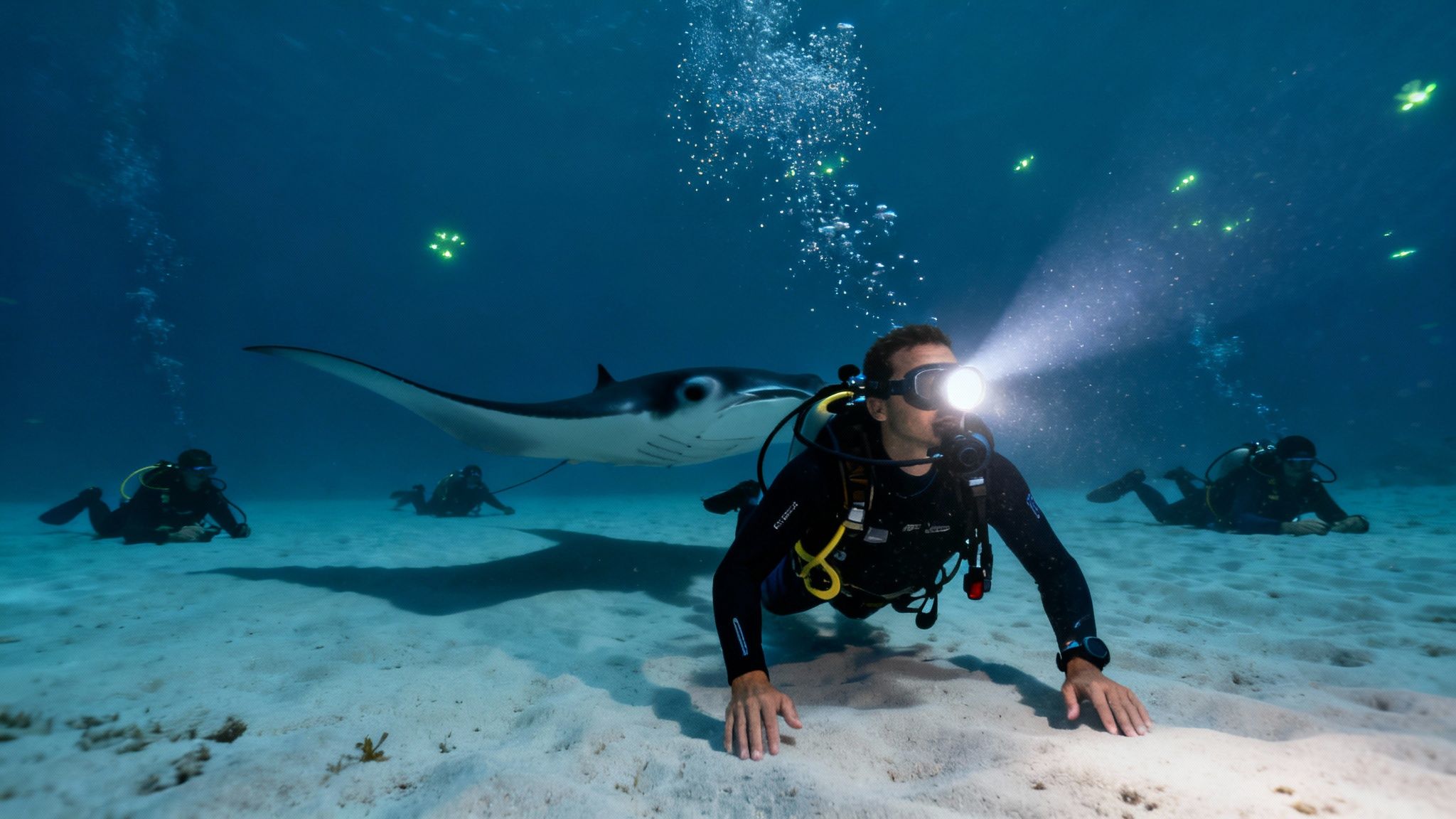
For the manta ray night dive in Kona, divers are specifically instructed to stay low, on or near the sandy bottom. This creates a clear, open water column above, giving the mantas a wide-open runway to feed and maneuver without obstacles.
By staying put, you help create a predictable and safe space for the mantas, encouraging them to come closer and put on the show we're all there to see.
Following Professional Guidance
Your dive guides are the experts here. They know the mantas, they know the site, and they know the safety protocols inside and out. Listen to their briefing carefully and follow their lead throughout the entire dive—it’s the key to a successful and respectful encounter.
Here are the core rules you’ll be expected to follow, no exceptions:
- Look, Don't Touch: Never try to pet or ride a manta ray. Let them be the ones to decide how close they get.
- Hold Your Position: If you're diving, you stay on the bottom. If you're snorkeling, you stay at the surface holding the light board. Never dive down into their feeding zone.
- Proper Light Etiquette: Keep your dive light pointed straight up. This attracts the plankton and beautifully illuminates the mantas from below. Never shine your beam directly into a manta's eyes or mouth.
- Bubble Awareness: Try to time your exhales so you’re not blowing bubbles right into a manta’s path as it glides overhead.
Sticking to these rules ensures the dive is a positive interaction that puts the animals' welfare first. If you want to learn more about being a great underwater citizen, check out our guide on responsible and considerate diver etiquette.
Ultimately, our goal as responsible observers is to ensure our presence supports this incredible ecosystem through sustainable eco-tourism, without causing any harm. It's on all of us to protect these gentle giants so the magic of the Kona manta ray night dive can continue for years to come.
Beyond the Mantas: Exploring More of Kona’s Underwater World
The **manta ray night dive in Kona** is absolutely the main event, and for good reason. But thinking it’s the *only* incredible dive here is like going to a music festival and only listening to the headliner. The Big Island is a diver’s dream, with a dramatic volcanic coastline that has created a playground of lava tubes, massive arches, and untouched reefs just waiting to be explored.
While the manta dive is an unforgettable, almost zen-like experience, it’s a passive one. You’re an observer. To really get a feel for why Kona is a world-class diving destination, you need to get out and explore. The options here range from blissfully calm reef dives to some of the most unique and challenging dives you’ll find anywhere on Earth.
The Otherworldly Kona Blackwater Dive
If you’re craving a nocturnal adventure that is completely different from anything you’ve done before, you have to try the [Kona Blackwater Dive](https://konahonudivers.com/diving-tours/black-water-night-dive/?ref=blog). Let’s be clear: this is not a reef dive. This is the closest you’ll ever get to floating in outer space.
At night, you'll drift tethered to the boat over thousands of feet of inky black water, watching as a bizarre and beautiful world of bioluminescent creatures rises from the deep. You’ll see things that look like they’re straight out of a sci-fi movie—larval fish, glowing jellies, and strange squids that spend their entire lives in the abyss. It’s a specialized dive that opens a window into a truly alien world.
The Blackwater Dive is a surreal trip into the ocean's hidden realm. Watching these strange, glowing creatures materialize out of the darkness is a humbling and profoundly unique experience. It will completely redefine what you think a night dive can be.
This dive is the perfect answer for anyone who finishes the manta dive and finds themselves thinking, "What else is out there in the dark?"
Advanced Dives for the Experienced Diver
If you’ve got the experience and are looking to explore more rugged and remote underwater landscapes, Kona has you covered. Our [premium advanced dive tour](https://konahonudivers.com/diving-tours/premium-advanced-2-tank-trip/?ref=blog) is specifically designed to get you to sites that larger, mixed-level groups simply can’t access. We’re talking about dramatic drop-offs, intricate lava formations, and the chance for some truly heart-pounding pelagic encounters.
These trips are all about pushing the boundaries and exploring deeper sites where you might find:
- Schools of Scalloped Hammerheads
- Majestic Eagle Rays
- Galapagos and Tiger Sharks
- Other large, open-ocean species
These charters are built for adventure and showcase the wilder side of Kona’s underwater world. It’s a completely different kind of thrill compared to the graceful, silent ballet of the manta dive.
Ready to see what else Kona’s waters have in store for you?
Check out the Kona Blackwater Dive for a truly unique nocturnal adventure, or challenge yourself with a premium advanced dive tour to see Kona's dramatic underwater landscapes. For a full list of options, browse all of Kona Honu Divers' diving tours.
Your Manta Ray Dive Questions, Answered
Got questions about the Kona manta ray night dive? You’re not alone. Here are answers to the most common things people ask, drawing from years of experience helping divers and snorkelers prepare for this unforgettable adventure.
When Is the Best Time of Year to See Mantas in Kona?
The simple answer? Anytime! That's the beauty of diving in Kona. The local manta ray population is resident, which means they stick around all year and feed in the same spots pretty much every single night.
That said, if you're looking for the absolute best conditions, the summer months from April to October generally bring calmer seas and warmer water. But don't let the season stop you—the sighting success rate hovers around a remarkable 85-90% year-round. It's this incredible consistency that draws nearly 80,000 people to snorkel with them annually. You can learn more about what makes Kona's manta ray habitat so special.
Do I Need to Be an Advanced Diver?
Not at all. An Open Water certification is all you need to join most manta ray night dive kona tours.
This dive is surprisingly beginner-friendly. You’ll be in relatively shallow water, usually around 30-40 feet, and it's a stationary dive. That means you'll settle in one spot on the sandy bottom and let the show come to you, making it a perfect, low-stress introduction to night diving.
What Happens if No Manta Rays Show Up?
It's rare, but it can happen. Manta rays are wild animals, after all, and they don’t always follow our schedule. But don't worry, the best local operators like Kona Honu Divers have your back.
Most reputable companies offer a "manta guarantee." If you're one of the very few who don't see a manta, they'll typically let you come back and try again on another night, completely free of charge. It’s their way of making sure you get the experience you came for.
Can I Snorkel With the Manta Rays Instead of Diving?
Absolutely! The snorkeling experience is just as breathtaking and incredibly popular, especially for families or those who aren't certified divers.
As a snorkeler, you'll hold onto a large, custom float board that has bright lights shining down into the water. These lights draw the plankton right to the surface, and the mantas swoop in to feed just inches below you. It's a front-row seat to an incredible underwater ballet.
Ready for an experience you'll never forget? Book your manta ray dive tour with Kona Honu Divers and see the magic for yourself.