
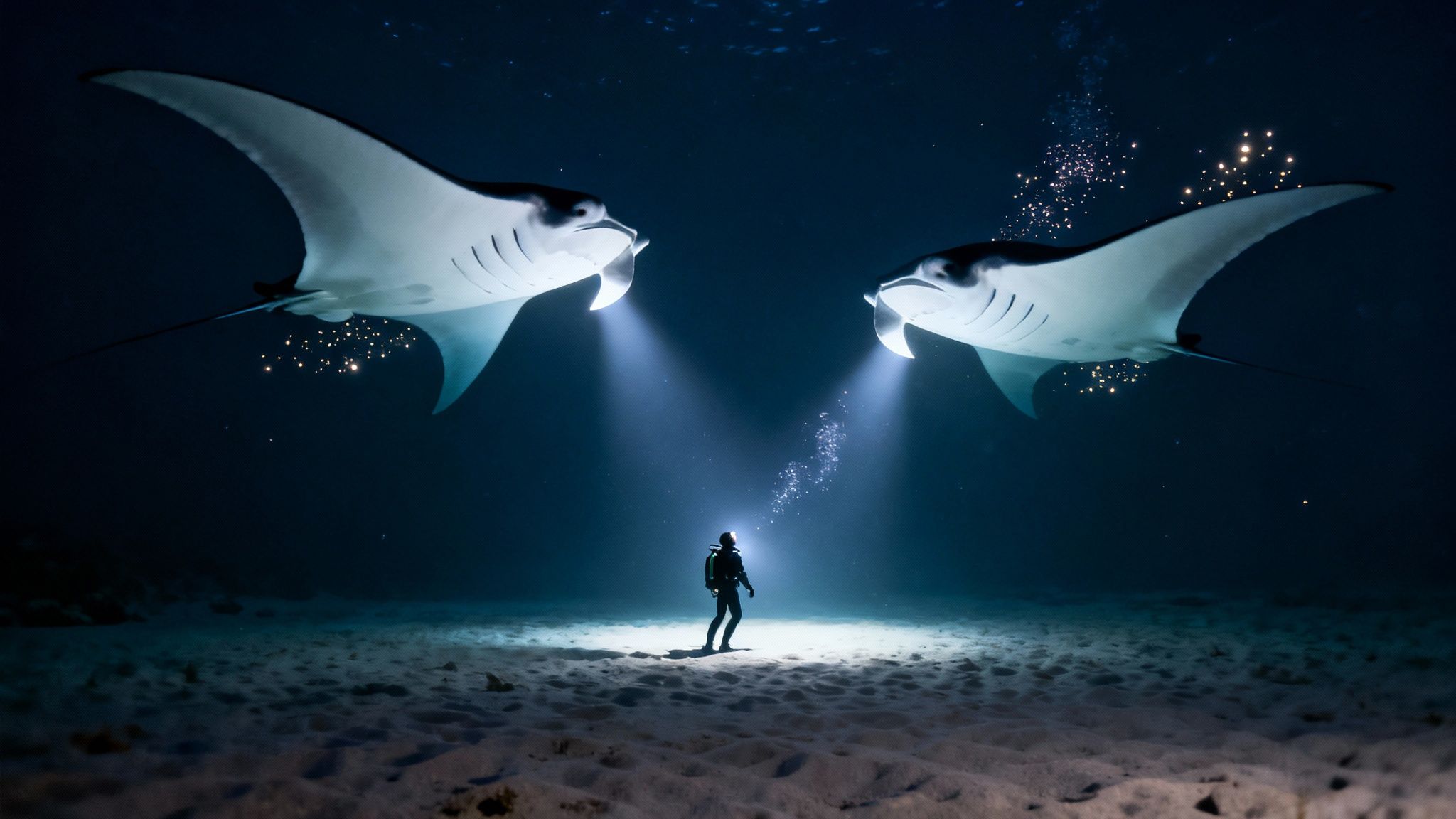
Picture this: you're floating in the warm, dark waters of the Pacific. Suddenly, massive, graceful shadows begin to glide overhead. These are Kona's famous manta rays, their white bellies glowing in the beams of underwater lights as they perform an otherworldly ballet. This isn't just a scene from a nature documentary—it's an experience you can have, and it's consistently ranked as one of the best dives in the world.
Why Kona is a Global Manta Ray Hotspot
The Kona coast on the Big Island has the perfect mix of ingredients for this incredible underwater show. As a premier destination for scuba diving Kona, Hawaii, it offers more than just a dive; it's a unique spectacle built on a fascinating relationship between light, plankton, and the mantas themselves that has developed over decades.
The whole thing actually started by accident. Back in the 1990s, people at a local hotel noticed that their lights shining on the ocean attracted huge manta rays. Dive operators quickly put two and two together: bring powerful lights, attract the plankton the mantas eat, and the gentle giants would follow. And they were right.
A Dependable Natural Wonder
So many wildlife encounters come down to sheer luck, but the Kona manta ray night dive is different. The success rate here is astonishingly high, which is exactly why Kona has become the undisputed best place on earth to see them.
This isn't a small-time operation. The dive draws around 80,000 visitors annually, and operators report sighting success rates between 80% and 90% all year. That kind of consistency is almost unheard of for wild animal encounters. If you're curious, you can learn more about why the manta ray night dive in Kailua-Kona is so consistent.
What's the secret sauce? It comes down to a few key things:
- A Resident Population: These aren't just passing-through visitors. The Kona mantas are a local group that hangs out along the coast year-round. They live here.
- Perfect Conditions: The island’s volcanic coastline creates naturally protected bays. This means calm, clear water, making for a much safer and more comfortable night dive.
- Learned Behavior: For decades, these specific dive sites have been lit up like a dinner bell. The mantas have learned that lights mean an easy, all-you-can-eat plankton buffet.
This unique combination of a natural habitat and conditioned behavior makes for a truly unforgettable opportunity to see these incredible animals up close.
Why Garden Eel Cove Is The Superior Dive Site
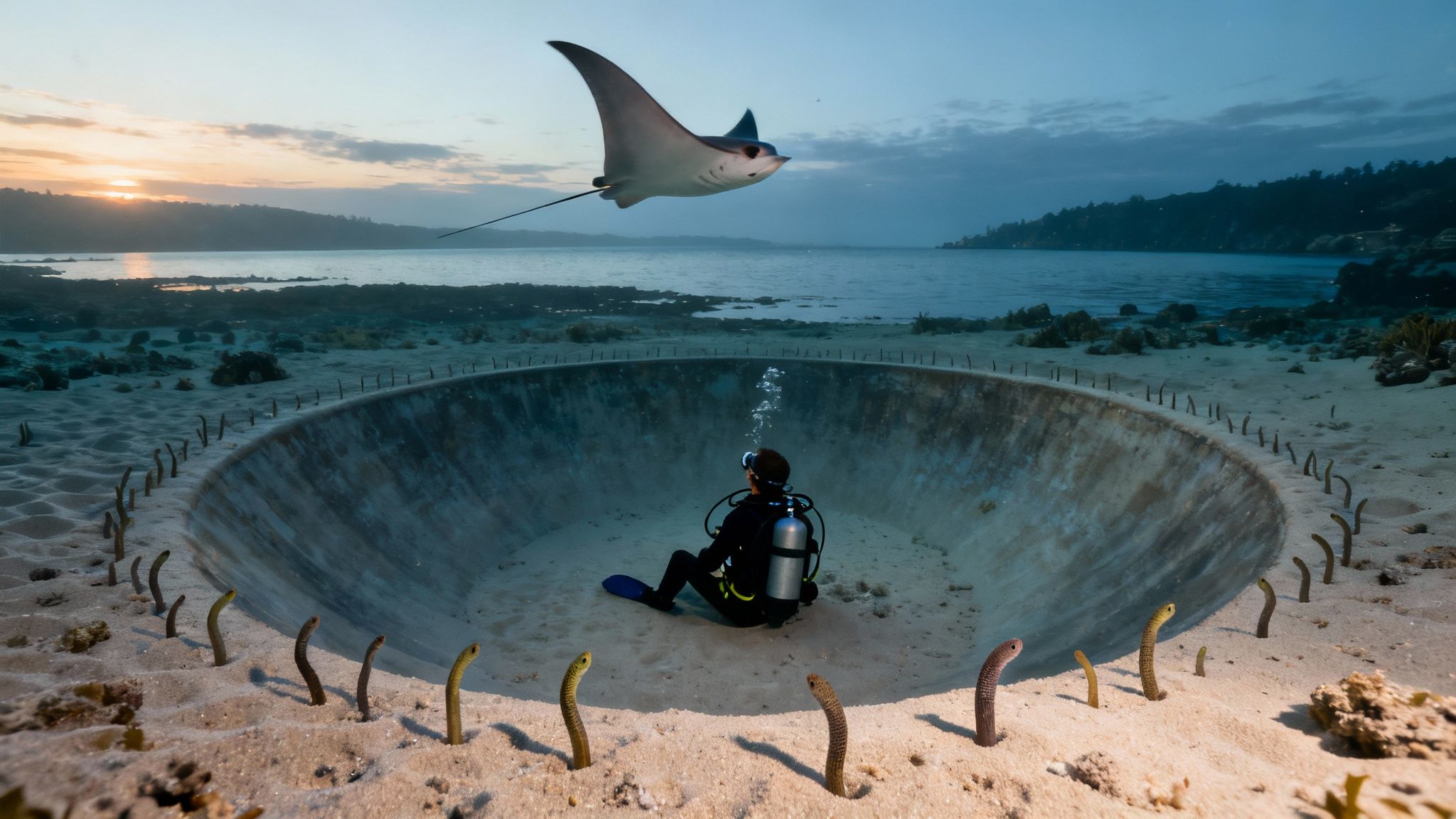
When you start planning your manta ray night dive in Kona, you'll quickly discover there are two main spots people talk about. But if you ask any seasoned local diver, they’ll almost always point you to one: Garden Eel Cove. It is, without a doubt, the superior choice for your manta ray dive tour.
Also affectionately known as Manta Heaven, this dive site consistently delivers a more reliable and enjoyable experience. Let's get into why.
A huge part of its appeal is the protected location. Tucked inside a bay, the water here is almost always calmer and more predictable than other sites. That’s a massive plus when you’re gearing up for a night dive—the less you're fighting surge and chop, the more you can relax and soak in the magic.
The real game-changer at Garden Eel Cove is its unique underwater layout. The site has a natural sandy amphitheater, a perfect viewing area for divers to settle in on the bottom and watch the show unfold above.
This setup is often called the "campfire," and it gives everyone a front-row seat. You simply find a comfortable spot to kneel or sit, and the mantas perform their incredible feeding ballet right over the dive lights. No need to crowd or jostle for a good view—it’s just pure, unobstructed wonder.
More Than Just Mantas
What really seals the deal is the quality of the reef itself. The surrounding coral at Garden Eel Cove is noticeably healthier and more vibrant, making the initial twilight dive a fantastic experience on its own. The better reefs here mean more marine life and a more beautiful dive from start to finish.
Before the mantas even show up, you get to explore a thriving ecosystem as the sun sets. It’s the perfect warm-up act. If you want to get a better feel for the place, you can explore more about Manta Heaven, also known as Garden Eel Cove.
While other sites have their moments, the trifecta of a protected location, a better viewing area, and healthier reefs makes Garden Eel Cove the clear winner for your Kona manta ray adventure.
Choosing The Right Manta Ray Tour Operator
Picking the right company for your manta ray night dive in Kona can make or break the entire trip. It’s not just about getting in the water—it’s about your safety, the well-being of the mantas, and the quality of the whole experience, from the boat briefing to the final ascent. A top-notch operator turns a good dive into an unforgettable one.
The first thing I always look for is small group sizes. Think about it: fewer divers means more space for you at the "campfire" (the underwater lights that attract the plankton). You get a front-row seat without fins in your face, and the dive guides can give you much more personal attention. It’s a completely different, more intimate vibe.
What to Look For in a Dive Company
Experienced guides are a game-changer. The best guides know these mantas like old friends—they can even identify many of them by their spot patterns and tell you their stories. This adds such a rich, educational layer to the dive that you just can't get from a textbook. For a more detailed look at what to expect, our complete guide to the Kona manta ray dive has everything you need to know.
A dive operator’s dedication to conservation says everything about their professionalism. Make sure they follow the established guidelines for responsible manta interactions. This isn't just a rule; it's about protecting these incredible animals for years to come.
When you're researching, look for operators with a real commitment to preventing marine pollution and keeping Kona's waters healthy for the mantas. Companies like Kona Honu Divers have built a solid reputation for their professionalism, strict safety protocols, and genuine passion for marine conservation. Before you book anything, read the most recent reviews—they’ll give you the real scoop on what the experience is actually like.
What a Manta Ray Night Dive Is Really Like
So, what actually happens on one of these famous Kona manta ray night dives? It’s more than just dropping into the dark and hoping for the best. The whole experience is a carefully orchestrated adventure, designed to give you the most incredible, up-close encounter possible with these gentle giants.
Here’s a play-by-play of how your evening will likely go.
It all starts in the late afternoon. You'll head to the dive shop to check in, meet your crew and fellow divers, and get your gear sorted. Most tours are structured as a two-tank dive, so the first part of your adventure is actually a beautiful twilight reef dive.
As the sun starts to set, you’ll make your first descent. This dive is magical in its own right—you get to see the reef as it transitions from day to night. The daytime critters are settling in while the nocturnal hunters start to emerge. It's a fantastic way to get comfortable in the water before the main event.
The Main Event: Plankton, Lights, and Mantas
After you surface from that first dive, you’ll hang out on the boat while the last bit of light disappears. This is when your guide gives the all-important manta briefing. They'll go over everything: safety procedures, how to behave around the mantas (it's all about passive observation!), and some fascinating details about the animals themselves.
Then, it's time. You’ll descend again, this time into inky blackness.
Your group will swim to a designated viewing area where the crew has set up a powerful array of lights on the sandy bottom, often called the "campfire." These lights attract huge clouds of plankton, which is exactly what the mantas are there for.
You’ll get settled on the bottom, get your light pointed up, and wait. It usually doesn't take long.
Suddenly, a massive, graceful shadow swoops into the light. Then another, and another. These enormous rays perform an underwater ballet, doing barrel rolls and gliding just inches over your head to scoop up the plankton. It's a completely surreal and humbling experience.
Thanks to local researchers, we know that nearly 200 individual manta rays frequent the Kona Coast, each identified by its unique belly markings. On a truly epic night, divers have reported seeing more than 20 at once! You can learn more about the research and dive specifics to get an even better sense of this world-class encounter.
To give you a quick snapshot, here’s what you can generally expect from a typical tour.
Kona Manta Ray Night Dive At-a-Glance
| Attribute | Typical Details |
|---|---|
| Experience Level | Open Water certified divers; snorkelers also welcome on most boats. |
| Number of Dives | Usually a 2-tank dive: one twilight reef dive, one manta dive. |
| Total Duration | Approximately 4-5 hours from check-in to return. |
| Depth | Relatively shallow, around 30-40 feet (9-12 meters). |
| Water Temperature | 75-80°F (24-27°C); a 3mm or 5mm full wetsuit is recommended. |
| What's Included | Tanks, weights, snacks, and drinks are standard. Gear rental is extra. |
| Manta Sightings | Highly reliable, with a 90%+ success rate year-round. |
This table provides a great overview, but remember to always confirm the specific details with the dive operator you choose when you book.
Preparing For Your Kona Manta Ray Night Dive
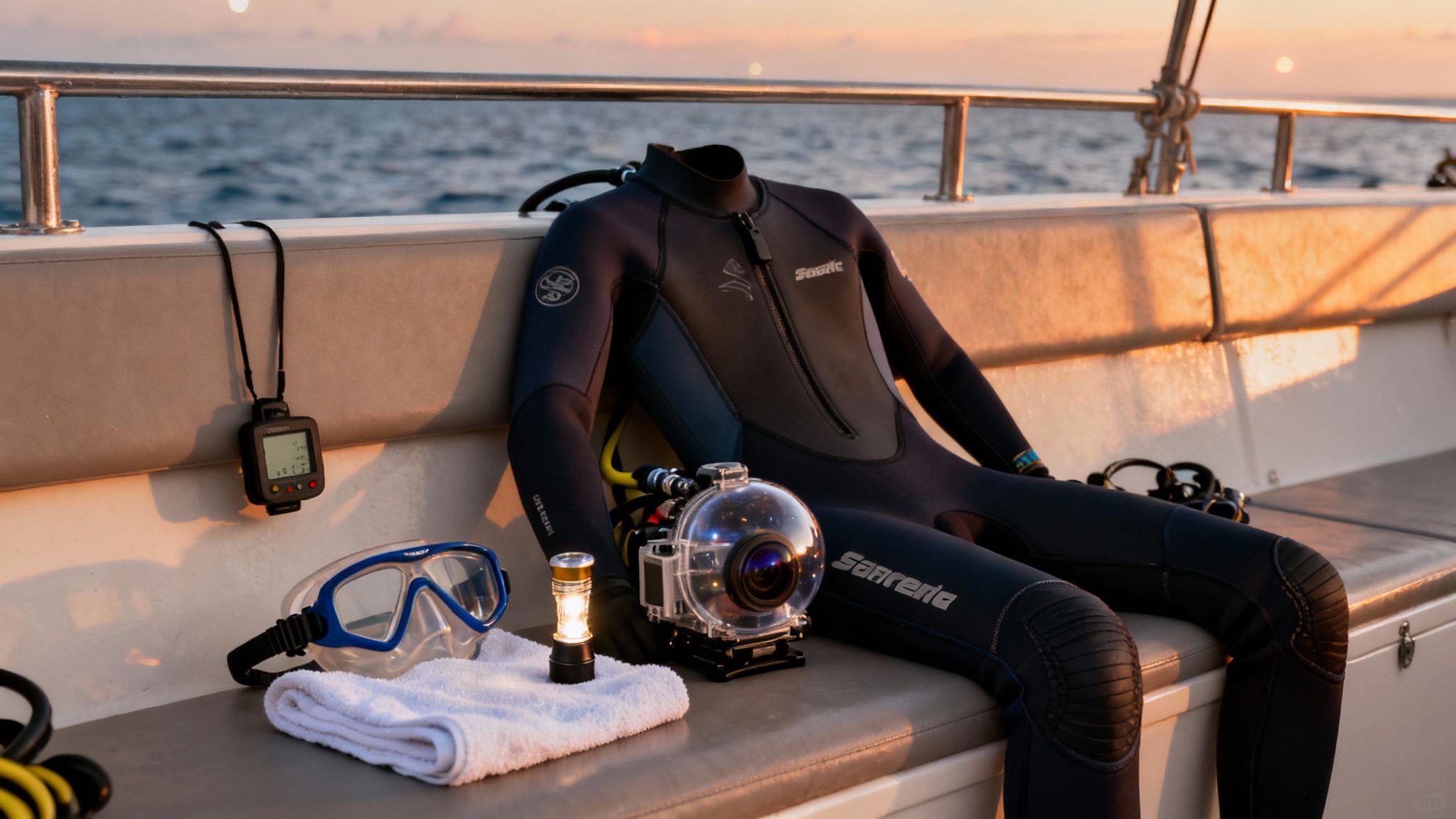
The key to a truly unforgettable manta ray night dive in Kona is being prepared. When you're not fiddling with gear or feeling chilly, you can relax and just soak in the incredible spectacle unfolding in front of you. A little planning goes a long way.
You'll obviously need your standard dive kit, including your BCD, regulators, and a reliable dive computer. The dive boat will have the big, powerful lights that draw in the plankton (and the mantas!), but I always recommend bringing your own small backup torch. It's great for checking your gauges and finding your way around the boat deck in the dark.
Kona's water temperature stays pretty consistent, hovering around 75°F (24°C) most of the year. While that sounds warm, you’ll be relatively stationary on the seafloor for a while. A 3mm or even a 5mm full wetsuit is a smart choice to stay comfortable for the entire dive. For more general advice, you can check out our tips on what to expect when scuba diving at night.
Gearing Up For The Dive
If you’re a photographer, this is a bucket-list dive. It's a challenging environment with the low light and constant motion, but the shots you can get are absolutely breathtaking.
- Lens Choice: Go wide. A wide-angle lens is essential for capturing the sheer size and grace of the mantas as they swoop in close.
- Camera Settings: Dial in your settings before you even get on the boat. Get comfortable with manual mode so you can adjust your aperture and shutter speed on the fly to get those crisp, clear shots.
- Lighting: Leave the on-camera flash off. It will just light up all the particulate in the water, creating a snowstorm effect called backscatter. External strobes are the way to go for properly lighting these gentle giants.
There's one rule above all others on this dive: never touch a manta ray. Their skin has a delicate protective coating. Let them be in control of any interaction. When you give them space, they often come much closer, creating a far more magical experience for everyone.
And a final pro tip: don't forget a towel and a warm, dry layer to throw on for the boat ride home. More importantly than any piece of gear, though, is listening intently to your divemaster's briefing. They know this dive inside and out, and their guidance is your ticket to a safe and mind-blowing encounter.
Got Questions About the Manta Ray Dive? We’ve Got Answers.
It’s natural to have a few questions before you commit to a night dive with giant, winged creatures. Let’s tackle some of the most common ones so you can book your Kona manta ray dive feeling completely prepared and excited.
The first thing on everyone's mind is usually safety. I get it—jumping into the dark ocean sounds a little intimidating. But you can relax. This is one of the safest and most controlled night dives you'll ever do.
The dive sites are surprisingly shallow, usually just 30-40 feet deep, and they're tucked into calm, protected bays. Every single trip is led by seasoned divemasters who know these waters like the back of their hand. They give a detailed safety briefing beforehand and are right there with you the whole time.
But What If the Mantas Don't Show Up?
This is the big "what if," isn't it? The good news is that manta sightings here are incredibly consistent. We're not talking about a 50/50 chance; it’s far better than that.
Organizations like Manta Ray Advocates Hawaii have been tracking this for years, and their data shows a success rate that consistently stays between 80-90%. You can even dig into the numbers yourself and read more about their manta ray statistics. Operators also help by keeping dive groups small and manageable, typically between 4 and 12 divers, which is better for both you and the mantas.
On the rare occasion that the mantas decide to have a night off, nearly every reputable company has a "manta guarantee." They'll typically offer to take you out again on another night for free or at a steep discount. A pro tip: schedule your dive for one of your first nights in Kona. That way, you have a buffer to rebook if you happen to be unlucky.
Key Takeaway: These aren't migratory mantas just passing through. The rays you'll see are part of a resident population that lives along the Kona coast all year. That’s why there's no real "manta season"—anytime is a great time to go!
If you're wondering about certifications, you don't need any to snorkel with the mantas. For the scuba dive, you'll need to be at least Open Water certified.
And here's the most important rule of all: never, ever touch a manta ray. Their skin is covered in a delicate, protective mucous coating. Touching them can strip this layer away, leaving them vulnerable to nasty infections. Just float, watch, and let them put on their incredible show.
Ready for an experience that will stick with you for a lifetime? Kona Honu Divers runs a top-notch manta ray night dive, with expert guides who are passionate about your safety and the well-being of the mantas. Book your 2-Tank Manta Ray Dive Tour today and get ready for some serious magic.