
Picture this: you're sinking into the warm, dark Pacific off the Kona coast. Below you, beams of light cut through the black, and giant, graceful shadows begin to swoop and dance. This isn't a scene from a movie; it's the world-famous manta ray night dive in Kona, a true bucket-list adventure that has become one of Hawaii’s most iconic and reliable marine encounters.
Experience Kona’s Unforgettable Underwater Ballet
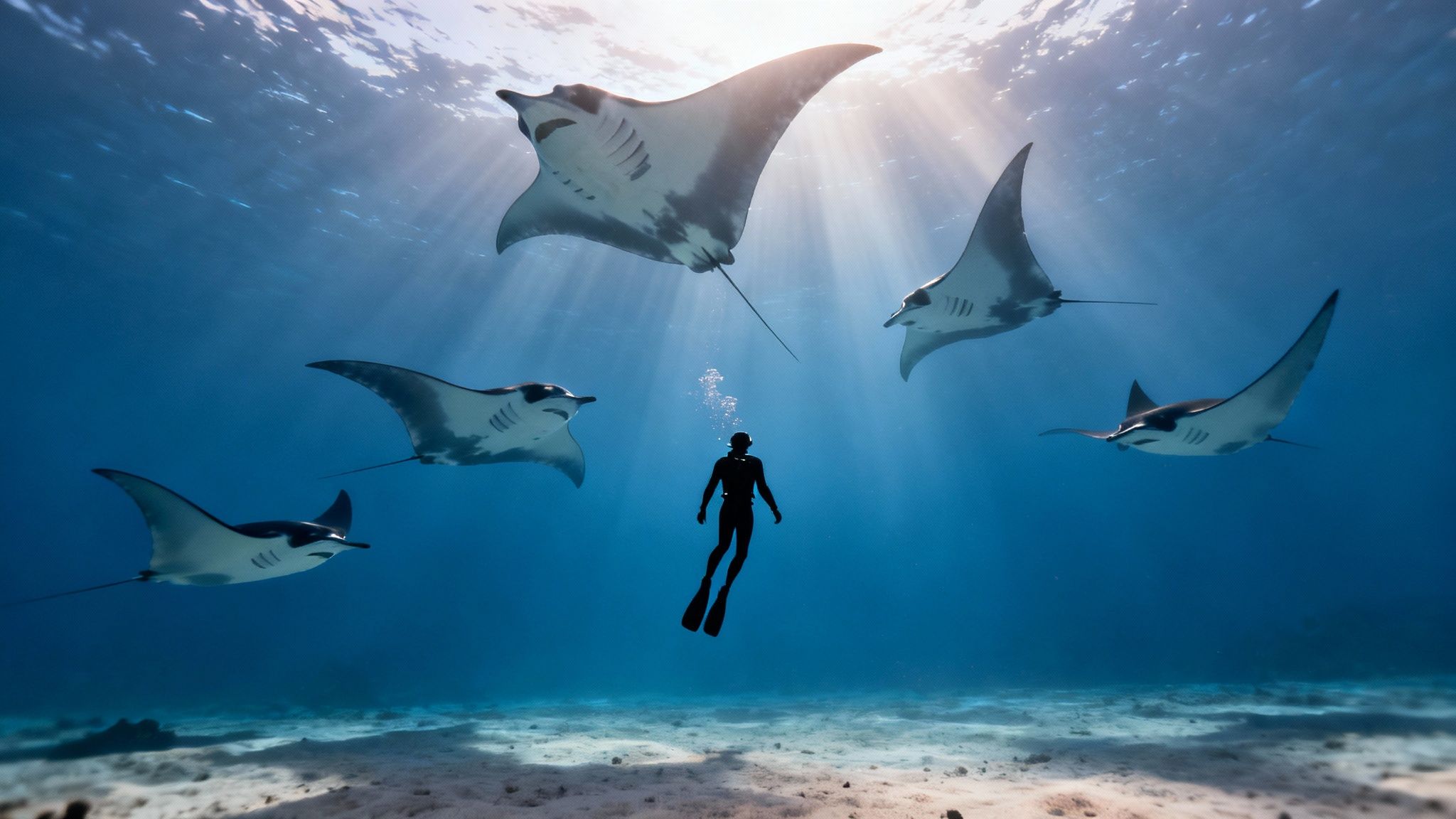
The entire encounter is elegantly simple. Dive operators set up powerful, submerged lights on the ocean floor. These lights attract swarms of plankton, the manta rays' favorite meal. Before you know it, these gentle giants arrive for their nightly feast.
With wingspans that can stretch over 12 feet, they glide, barrel-roll, and somersault just inches from your face, mouths wide open to filter the water. It’s an incredibly moving performance, feeling both surreal and deeply connected to the wild. This guide will walk you through everything you need to know to plan your own magical night with the mantas.
A Reliable Natural Wonder
What sets the Kona dive apart from many other wildlife experiences is its remarkable consistency. The coastline’s unique underwater geography and nutrient-rich currents have created a perfect, year-round habitat for a resident population of reef manta rays—they don’t migrate. This makes for one of the most dependable wildlife sightings on the planet.
Local operators consistently report an 85-90% probability of seeing mantas on any given night. In fact, data from a 2013 study showed one dive site had a 96% success rate with an average of 4 rays per night, while another location boasted a 90% success rate with an incredible average of 11 rays spotted nightly. You can explore more about Kona's manta ray populations to get a deeper dive into the science.
Choosing a Trusted Guide
For an experience this special, your choice of operator really matters. You want a team that’s not just safe, but also respectful of the animals and dedicated to giving you a memorable dive. Kona Honu Divers has built an outstanding reputation for exactly that.
They focus on smaller group sizes, prioritize marine conservation, and their experienced crew’s deep local knowledge can make all the difference in turning a good dive into an unforgettable one.
Why Garden Eel Cove Is The Premier Manta Dive Site
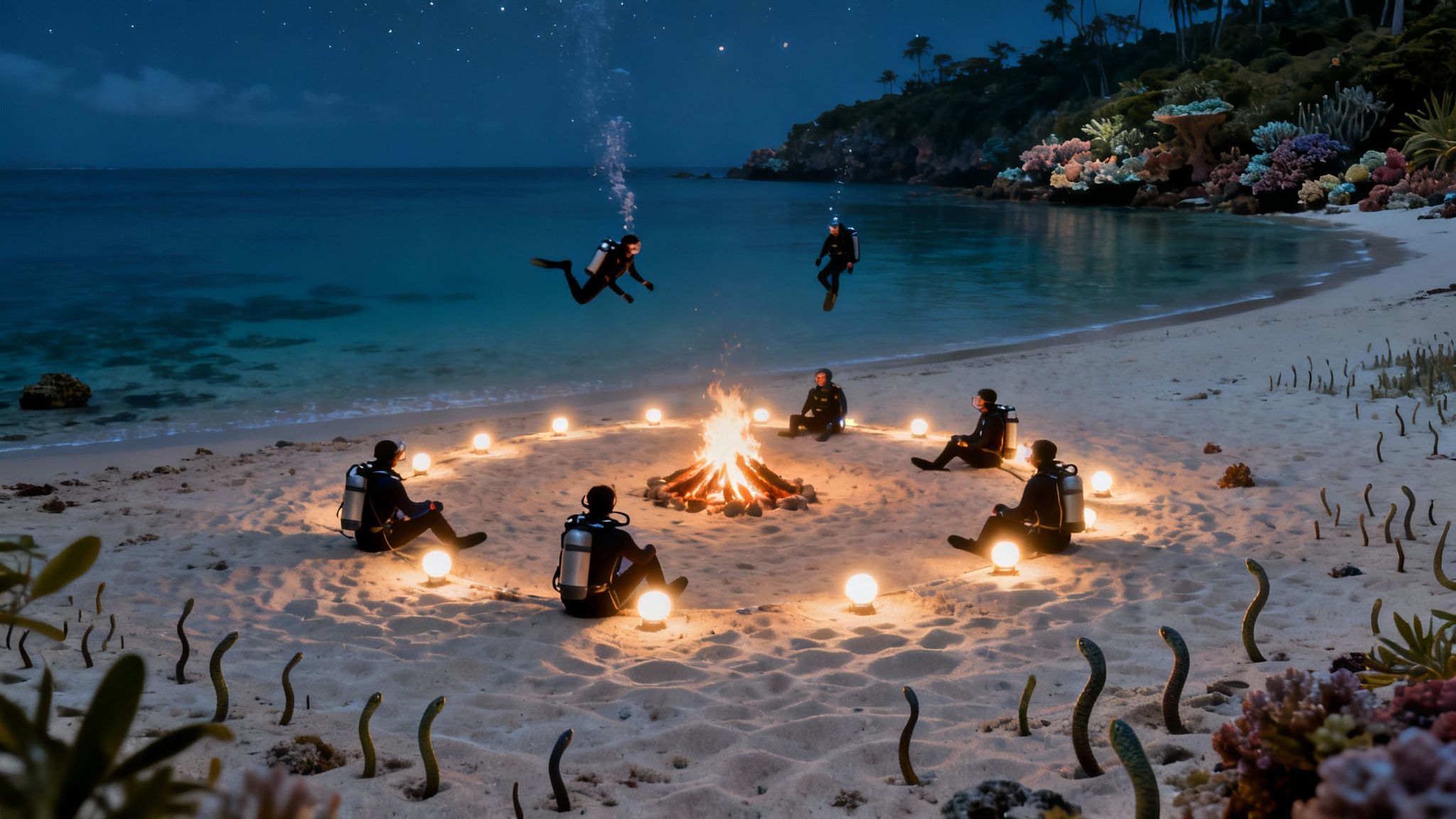
When you're planning a manta ray night dive in Kona, the specific location you choose can make or break the entire experience. There are a few well-known sites, but Garden Eel Cove—aptly nicknamed 'Manta Heaven'—is the superior choice. This isn't just local pride talking; its reputation as the best site comes down to its protected location, a better viewing area, and healthier surrounding reefs.
Garden Eel Cove is tucked into a naturally protected bay. This is a huge advantage. It shields the site from the big, open-ocean swells, which means the water is almost always calmer and clearer. For divers, that translates to a more comfortable, predictable, and much safer night on the water.
The "Campfire" Viewing Experience
What really sets Garden Eel Cove apart is its underwater layout. The site has a big, sandy clearing at a perfect depth of about 35 feet. This allows dive operators to create what we call the underwater "campfire." A powerful light box is placed on the sand, and all the divers settle in a circle around it, creating a superior viewing area.
This setup is brilliant for a few reasons:
- Front-Row Seats for Everyone: The circular formation gives everyone an unobstructed, up-close view without divers jockeying for position.
- Safety and Simplicity: Staying stationary is incredibly easy to manage, making it a great experience even if it's your first night dive.
- Incredible Manta Action: The light creates a super-concentrated column of plankton, drawing the mantas right overhead for those jaw-dropping, barrel-rolling displays.
This controlled, theater-in-the-round setup is a world away from other sites where rougher conditions can make the viewing experience feel chaotic. Plus, the sandy bottom means we aren't disturbing the beautiful, vibrant coral reef that rings the clearing.
A Superior Two-Tank Adventure
Going with an operator that heads to Garden Eel Cove makes for a better trip from start to finish. Manta charters are typically a two-tank dive, and the first dive of the evening is just as magical as the main event. You'll get to explore the vibrant reefs of Garden Eel Cove during a twilight dive just as the sun is setting. You can dive deeper into what makes this spot so special in our detailed guide to Manta Heaven.
This first dive is a chance to see the reef completely transform. You watch the daytime critters head to bed while the nocturnal creatures—like moray eels and octopuses—start to come out. All of this happens with the incredible Kona sunset filtering through the water. It’s the perfect opening act for the spectacular manta ballet that follows, turning your trip into a complete and unforgettable adventure.
How to Choose The Right Manta Ray Tour
Picking the right dive operator is probably the single most important decision you'll make for your manta ray night dive in Kona. It's the difference between a truly mind-blowing experience and a so-so one. Your choice affects everything from your safety and comfort to the quality of your view—and just as importantly, the well-being of the mantas themselves.
It’s tempting to just look at the price, but the best manta ray dive tours focus on creating a premium, intimate adventure. A key factor here is group size. Think about it: would you rather be one of a dozen divers with a front-row seat, or one of fifty people all jostling for a glimpse? A less crowded boat and dive site always lead to a more personal and respectful encounter. This is something the top-tier operators have figured out long ago.
What to Look for in an Operator
Beyond just the number of people on the boat, you'll want to dig into the operator's philosophy and the experience of their guides. You’re looking for a crew that doesn't just know the dive site like the back of their hand, but also genuinely respects the marine life. A great guide can read the water conditions, make sure everyone follows the passive interaction rules (no touching the mantas!), and share incredible facts about the specific rays you’re seeing.
Here’s what I always look for in a top-notch tour:
- A Solid Conservation Ethic: Do they mention following the Manta Ray Green List guidelines? Do they brief guests on how to interact responsibly? This is a huge green flag.
- Experienced, Professional Crew: A seasoned captain and knowledgeable divemasters can handle any situation that pops up and make the entire trip better with their expertise.
- High-Quality Boat and Gear: A comfortable, well-maintained boat and reliable rental gear are non-negotiable. It’s a matter of both safety and basic enjoyment.
The best dive operators see themselves as stewards of the ocean. Their primary goal is to facilitate a magical encounter while ensuring the long-term health of Kona's resident manta ray population.
Breaking Down the 2-Tank Manta Dive
Many of the premier tours are structured as a 2-tank dive, giving you a full evening of adventure. It’s not just about jumping in for the main event and heading home.
Typically, the trip starts with a beautiful twilight reef dive. This first plunge lets you explore the vibrant coral gardens as the whole ecosystem shifts—daytime fish head to bed, and the nocturnal critters start to emerge. It’s a fantastic warm-up.
After surfacing, the crew gets everything ready for the main spectacle. Once the sun is down, you’ll descend again for the breathtaking manta ballet. This two-part structure really maximizes your time in the water and lets you see more of what the Kona coast has to offer. Knowing the flow of the evening can help you make the most of your Kona manta ray dive.
A quick heads-up: this dive is world-famous for a reason, so booking well in advance is absolutely essential, especially if you're visiting during peak seasons like holidays or the summer.
Check Availability
Getting Ready for Your Manta Ray Night Dive
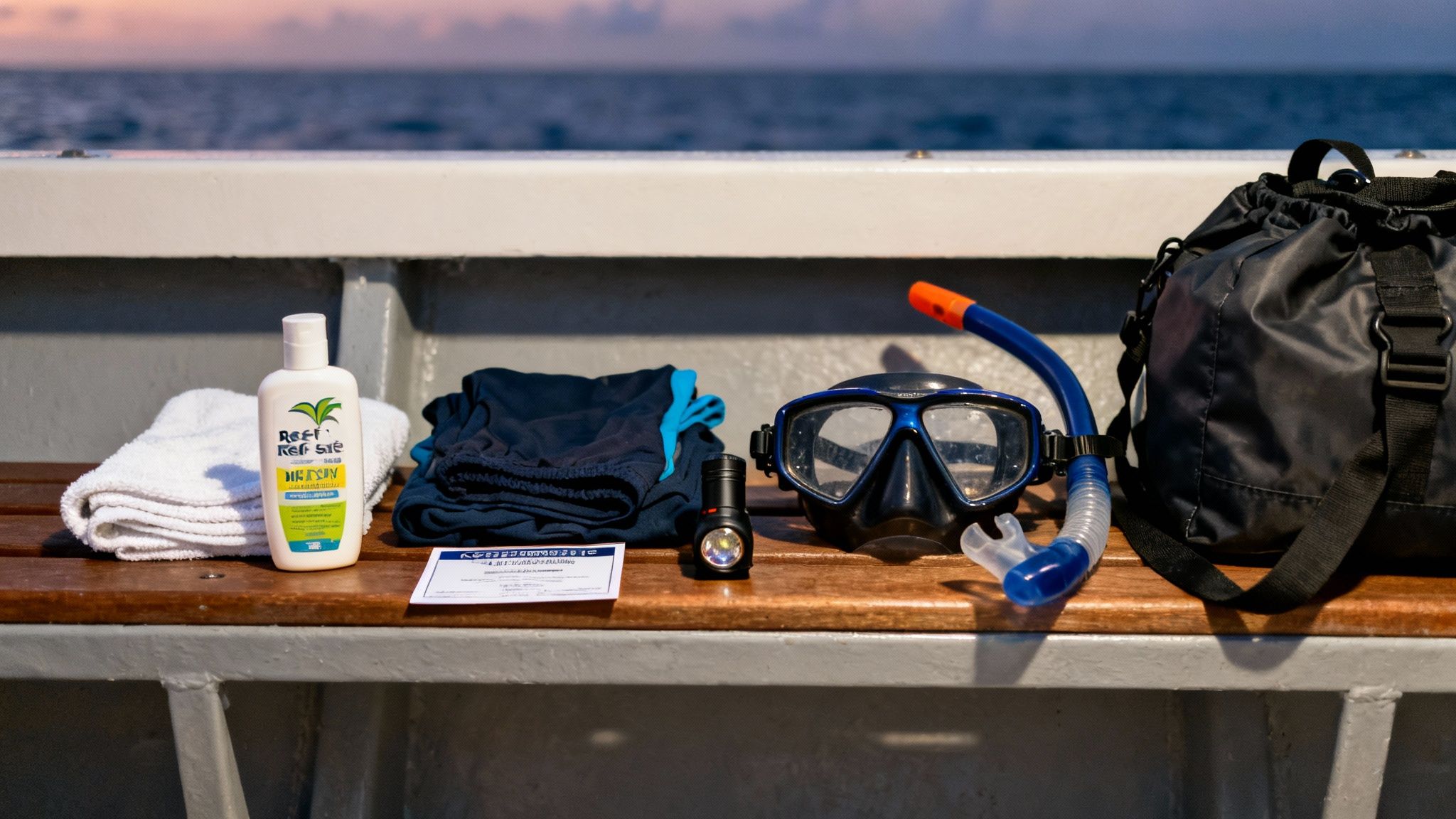
A little prep work goes a long way toward making your manta ray night dive in Kona truly unforgettable. Getting your personal gear sorted out beforehand lets you relax and soak in the entire experience, from the boat ride out to the amazing show below the waves. Think of this as your simple, stress-free checklist for a perfect evening.
Most of what you need to think about is your own comfort before and after the dive. A towel and some warm, dry clothes are absolute must-haves for the ride back to the harbor. Trust me, the night air on the ocean can get surprisingly chilly once you’re out of the water. It’s also a good idea to pack some reef-safe sunscreen for the boat trip out, as the late afternoon sun can still pack a punch.
What to Pack vs. What’s Provided
While you’re in charge of your personal comfort items, your dive operator takes care of all the heavy lifting. Reputable shops provide all the critical life-support equipment, including tanks, weights, BCDs, and regulators. Many operators, like Kona Honu Divers, are meticulous about their maintenance schedules, giving you peace of mind that you're diving with safe, reliable gear. For a more detailed look, they have a great guide on the gear you will need for your Kona diving adventure.
Here’s a quick list of what you should bring along:
- Proof of Certification: You’ll need to show your Open Water Diver card (or higher) to get in the water as a diver. No card, no dive.
- Swimsuit: The easiest approach is to wear it under your clothes to the marina.
- Towel and Dry Clothes: You'll be glad you have them for the cozy ride home.
- Reusable Water Bottle: Staying hydrated is always important, especially when diving.
Don’t Skip the Pre-Dive Briefing
The single most important part of your preparation actually happens right there on the boat: the pre-dive briefing. This isn’t just a formality—it’s the key to a safe and respectful encounter with the mantas. Listen carefully as your divemasters explain the dive plan, the layout of the site, and the hand signals they’ll be using underwater.
The briefing will drive home the golden rule of this dive: passive interaction only. This means no touching, no chasing, and definitely no trying to ride the mantas. Their skin is coated in a delicate mucous layer that protects them from infection, and our touch can easily damage it.
The crew will show you exactly how to position yourselves on the sandy bottom to form what’s often called the "campfire," the circle of lights that attracts the plankton. By staying still and calm, you create a safe space for the mantas, which encourages the breathtakingly close fly-bys this dive is famous for. A good listener makes for a good dive buddy—for both humans and mantas.
Manta Ray Experience Scuba Diver vs Snorkeler
One of the fantastic things about the Kona manta ray experience is that you don't have to be a certified diver to see the show. Most boats welcome both divers and snorkelers, making it a perfect outing for families or groups with mixed experience levels.
So, which one is right for you? It really comes down to the perspective you want.
| Aspect | Scuba Diving Experience | Snorkeling Experience |
|---|---|---|
| Viewing Perspective | A stunning bottom-up view, watching mantas soar overhead like spaceships. | A unique top-down view, observing the "dance" from the surface. |
| Proximity to Mantas | Often incredibly close as mantas swoop right over the lights on the seafloor. | Excellent views as mantas feed on plankton attracted to your light board. |
| Your Position | Stationary on the sandy bottom in a designated viewing area. | Floating comfortably on the surface, holding onto a custom light board. |
| Gear Required | Full scuba kit, including BCD, regulator, tank, and weights. | Mask, snorkel, fins, and typically a wetsuit or rash guard. |
| Certification Needed | Open Water Diver certification is required from a recognized agency. | No certification is needed, just basic swimming ability. |
Whether you choose to breathe from a tank on the ocean floor or float on the surface, you’re in for an incredible night. Both experiences offer a front-row seat to one of nature's most magnificent displays.
What to Expect During Your Manta Encounter
The magic of a manta ray night dive in Kona doesn’t just start when you see the first ray. Your whole experience kicks off with a boat ride along the stunning Kona coast, just as the sun dips below the horizon and lights up the sky. For many, the adventure begins with a twilight reef dive—a fantastic warm-up for the main event.
At a site like Garden Eel Cove, you'll drop into a world that’s changing by the minute. The usual daytime fish are tucking themselves away for the night, while nocturnal creatures like eels and octopuses start to emerge. It’s a peaceful, almost magical dive that lets you get comfortable in the water as darkness fully settles in.
The Underwater Stage Is Set
After a quick surface interval back on the boat, the mood shifts. The crew gets everything ready for the main performance as the ocean goes completely dark. You'll make your second descent, this time to a specific sandy patch on the ocean floor.
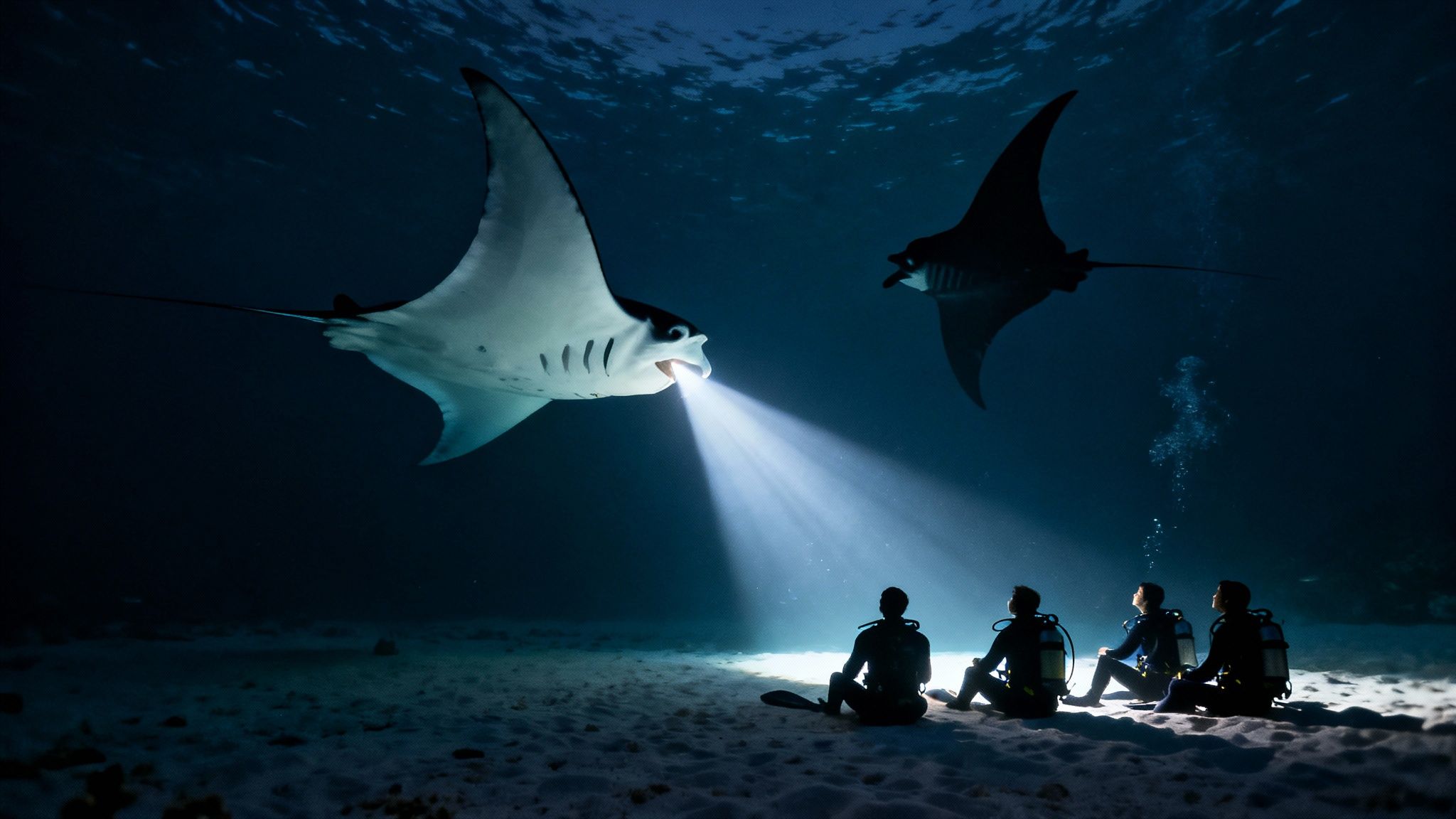
Your divemaster will set up what we call the "campfire"—a collection of powerful lights pointing straight up. You and the other divers will settle in a circle around this beacon. Then, you’ll point your own dive lights up into the water column, adding to the glow and helping to attract plankton.
This is where the real anticipation builds. Your world shrinks to the sound of your own bubbles and the beams of light piercing the darkness. You wait, scanning the deep blue, knowing something incredible is just moments away.
This experience is a huge draw, bringing in an estimated 80,000 people every year to see the mantas. The local operators have it down to a science, with dives typically lasting 45-60 minutes at a comfortable depth of 30-40 feet. The lights create a concentrated buffet of plankton, basically ringing a dinner bell for the rays and creating a perfectly lit stage for you. If you're curious, you can discover more insights about manta tourism statistics and its local impact.
The Ballet Begins
And then, it happens. A huge, graceful shadow emerges from the black, gliding effortlessly into the light. The first manta ray has arrived.
Before you know it, another one joins, and then another. Soon, you’re surrounded by these gentle giants as they perform a silent, mesmerizing underwater ballet. They swoop and barrel-roll just inches over your head, their huge mouths wide open as they filter the plankton from the water. It’s a moment of pure awe that truly stays with you forever.
After a dive that feels like it was both an hour long and over in a flash, it’s time to head up. The boat ride back to the harbor is always buzzing with energy as everyone excitedly shares their stories. Most operators have hot chocolate and snacks waiting, which is the perfect way to warm up and relive the experience.
If this dive leaves you wanting more unique night adventures, you’re in the right place. The truly adventurous should check out the famous Kona blackwater dive. It’s a completely different kind of thrill, drifting in the deep, open ocean to see bizarre and beautiful deep-sea creatures rise from the depths.
Your Manta Ray Night Dive Questions Answered
Even after you've booked your trip and packed your bags, it's totally normal to have a few questions buzzing around your head. Let's tackle some of the most common ones I hear from divers so you can show up feeling confident and ready for the main event.
Is the Manta Ray Night Dive Safe?
Absolutely. There's a reason they're called "gentle giants"—manta rays are completely harmless to humans. They don't have teeth, stingers, or barbs. They are filter feeders, so their only interest is the buffet of plankton attracted by the lights.
Every reputable operator in Kona puts safety first. You'll get a thorough briefing from experienced divemasters who know these sites like the back of their hand. Plus, the dive itself happens in calm, sheltered spots like Garden Eel Cove, making it one of the most controlled and safe night dives you can do.
What if We Don't See Any Manta Rays?
Look, nature is nature, so a 100% guarantee is never possible. That said, the success rate for seeing mantas in Kona is sky-high—we're talking well over 90% on most nights. The local manta population lives here year-round and knows exactly where to show up for dinner.
In the rare case that the mantas decide to be shy, most of the top-tier operators have your back. Companies like Kona Honu Divers offer a "manta guarantee," which means you can come back another night for free. Just make sure to ask about the specific policy when you book.
Do I Need to Be an Advanced Diver?
Not at all. This dive is surprisingly accessible. All you need is a standard Open Water Diver certification from any major agency. For those looking for more challenging advanced dive tours, Kona offers plenty of other deep reef and lava tube sites.
The manta dive is quite shallow, usually around 30-40 feet (9-12 meters), and for most of it, you'll be stationary on the sandy bottom, watching the show above. It’s a very calm, manageable experience, which actually makes it a perfect first night dive for many new divers.
Can I Touch the Manta Rays?
This is the number one rule: No touching. It’s a strict, non-negotiable part of the experience.
Manta rays have a delicate mucus layer on their skin that acts as their immune system, protecting them from infection. Touching them can rub this coating off, leaving them vulnerable to disease. Your divemaster will cover this in the briefing. The best thing you can do is relax on the bottom, be a respectful observer, and just let these incredible animals glide right over you.