
Picture this: you descend into the warm, inky blackness of the Pacific Ocean. Suddenly, giant, graceful shadows emerge from the deep, and you're front-row for an underwater ballet unlike anything else on Earth. This is the manta ray night dive Kona. With wingspans that can stretch up to 16 feet, these gentle giants glide effortlessly through beams of light, feeding on clouds of plankton in a truly mesmerizing spectacle.
Experience Kona’s World-Famous Manta Ray Ballet
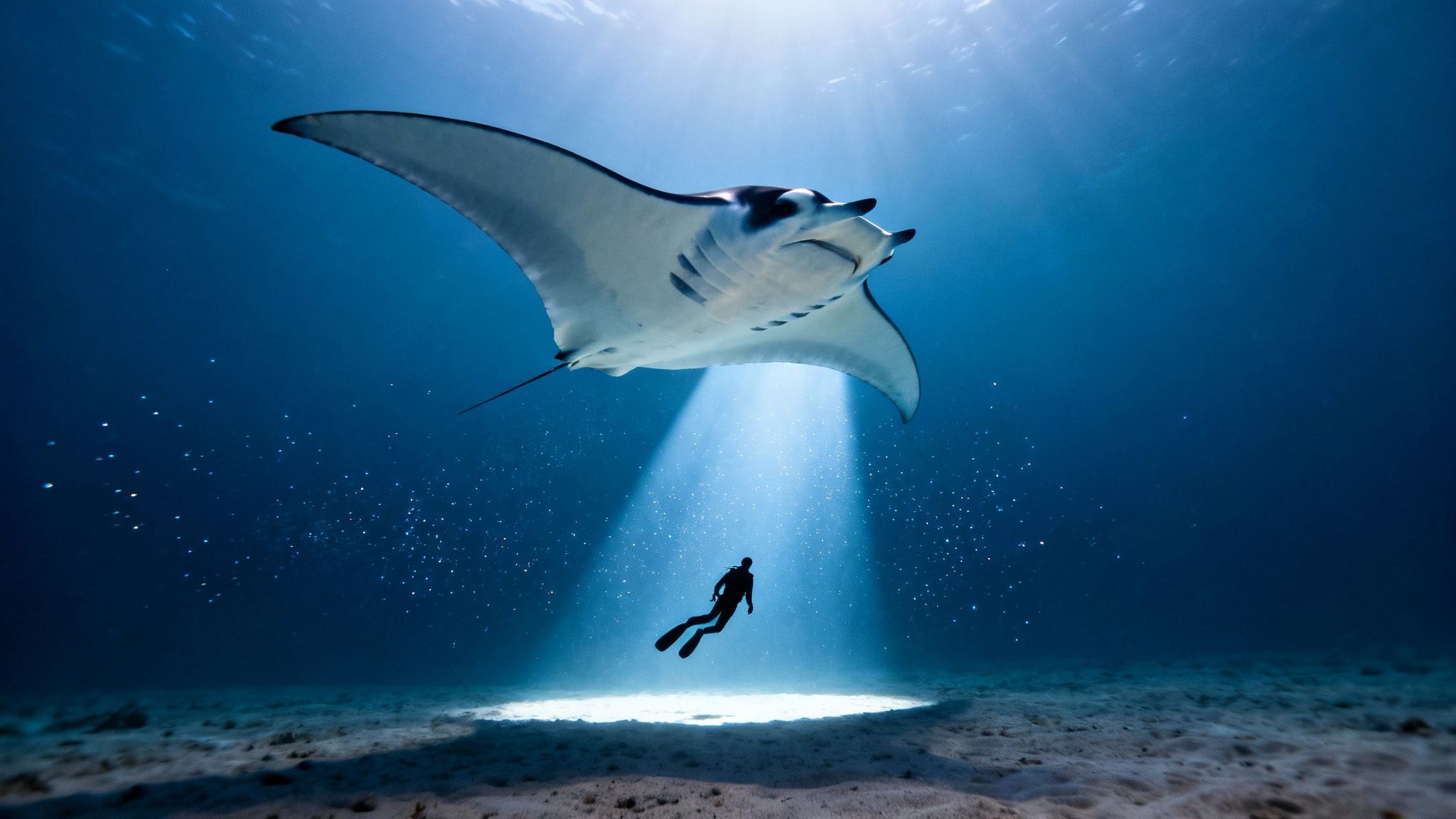
The Big Island of Hawaii isn't just another pretty spot on the map; it's the global hotspot for reliably getting up close with manta rays. This isn't just a happy accident. The unique underwater landscape of the Kona coast has created the perfect conditions for a thriving ecosystem where these majestic creatures can flourish. This incredible experience is a highlight of scuba diving Kona, Hawaii.
The magic behind the experience is brilliantly simple. We submerge powerful lights, which attract swarms of plankton—the manta rays' favorite meal. As divers and snorkelers settle into their viewing spots, the mantas show up for their nightly buffet. They perform incredible acrobatic barrel rolls, swooping inches from your face. It's a silent, awe-inspiring performance that feels completely out of this world.
This guide is your complete playbook for this bucket-list adventure. We'll cover everything from picking the right dive site to understanding the conservation work that keeps this experience possible, ensuring you’re ready for a truly once-in-a-lifetime encounter.
Why Kona is the Ultimate Manta Destination
Kona has earned its reputation as the world's best place for manta encounters through sheer consistency. An estimated 80,000 people flock here every year, all drawn by the incredibly high chance of seeing these animals up close.
Dive operators in the area report success rates between 80% and 90%, which means a sighting is practically guaranteed. This reliability is all thanks to a stable, non-migratory population of over 450 identified individual mantas—one of the largest studied populations on the planet.
On a typical dive, you can expect to see an average of five rays, turning every single trip into a spectacular event. If you want to share the magic of the Kona manta ray ballet and captivate your own readers, you might find some great tips on how to write a compelling travel blog. You can also discover more insights about the Kona manta ray phenomenon on konahonudivers.com.
Choosing the Best Kona Manta Ray Dive Site
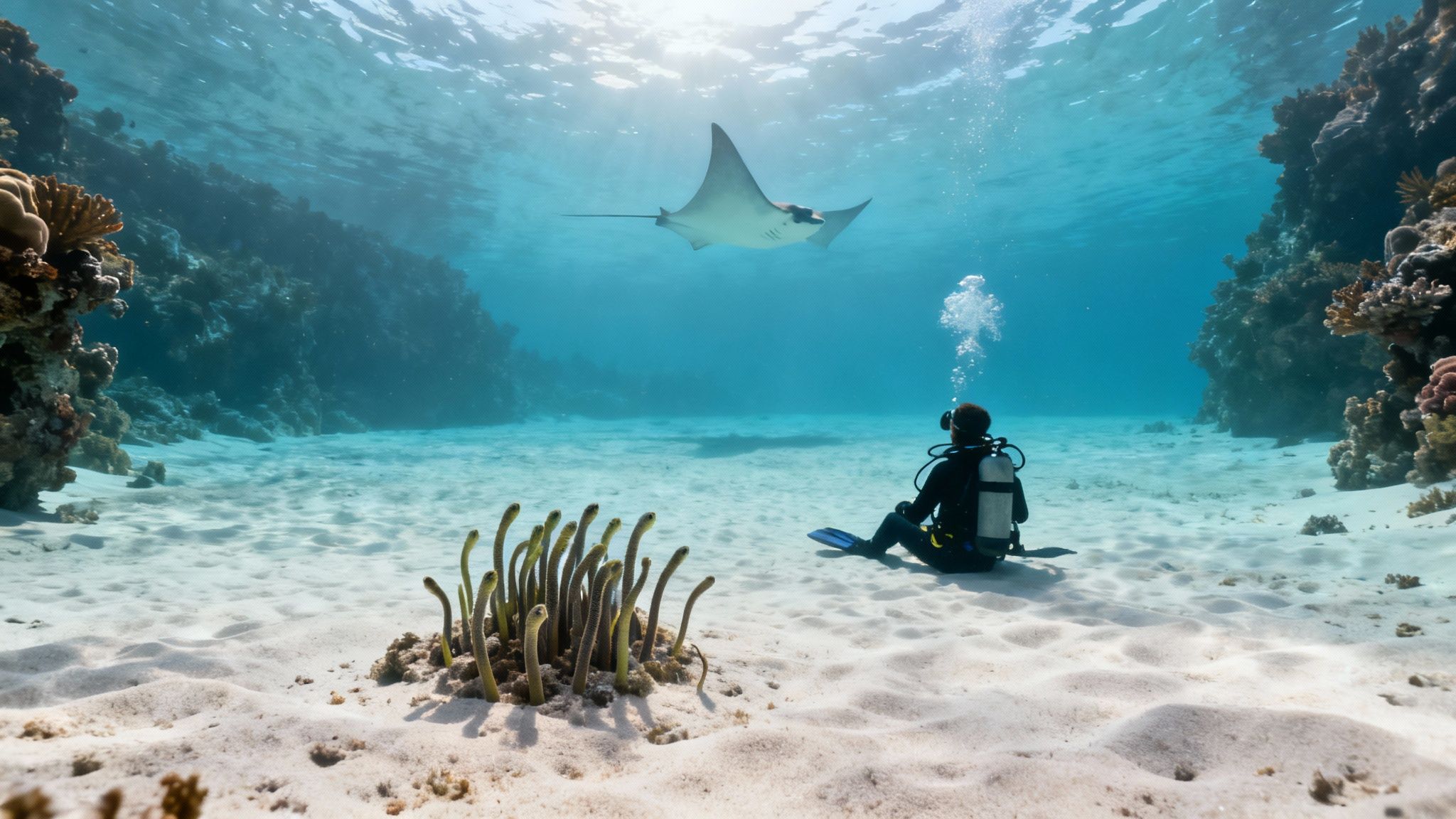
When you start looking into a manta ray night dive in Kona, you’ll hear two main locations mentioned: Manta Village in Keauhou Bay and Garden Eel Cove, which many of us affectionately call "Manta Heaven." While you can see mantas at both, they offer very different experiences, and Garden Eel Cove is the superior choice.
Picking the right spot can make or break your dive. Garden Eel Cove's geography gives it fantastic protection from the open ocean swell, which means calmer water and clearer visibility on most nights. That alone makes for a much more relaxed and enjoyable dive, letting you soak in the magic without getting tossed around.
Think of Garden Eel Cove as nature’s perfect manta theater. The dive site has a big, sandy patch that creates a superior viewing area where we can all settle down in a semi-circle on the bottom. It gives everyone a front-row seat to watch the mantas dance in the lights above. Manta Village, on the other hand, can be more exposed and often feels a bit more crowded, which can sometimes take away from that peaceful, otherworldly feeling we’re all there for.
Why Garden Eel Cove is the Superior Choice
It’s not just about the calmer conditions; Garden Eel Cove is simply a better, more vibrant reef. This really shines on the first dive of our two-tank trip. As the sun goes down, you get to see the reef come alive with nocturnal critters, which is a fantastic show in itself before the main event even starts.
Now, let's talk numbers, because they tell a fascinating story. For a long time, Manta Village had a slightly higher chance of seeing at least one manta (96% success rate). But the average sighting was about four mantas. Garden Eel Cove had a 90% success rate, but the average number of mantas seen on a successful night was a whopping eleven. I’ll take slightly lower odds for a chance to see more than double the mantas any day of the week.
Kona Manta Ray Dive Site Comparison
To make it even clearer, here’s a quick head-to-head comparison of the two premier manta dive sites in Kona.
| Feature | Garden Eel Cove (Manta Heaven) | Manta Village (Keauhou Bay) |
|---|---|---|
| Location | North of Kona Airport | South of Kailua-Kona |
| Conditions | Superior. Typically calmer, protected from swells | More exposed, can be rougher |
| Viewing Area | Superior. Large, sandy "campfire" area | Rocky bottom with coral heads |
| Reef Health | Superior. Healthier, more vibrant reef | Good, but more impacted |
| Manta Count | Averages 11 mantas per sighting | Averages 4 mantas per sighting |
| Sighting Rate | 90% historical success | 96% historical success |
| Best For | Immersive viewing, photography, comfort | Convenience for those staying south |
Ultimately, while both sites can deliver an amazing experience, the evidence points overwhelmingly toward one.
For the most reliable conditions, clearest water, and a truly immersive viewing experience, Garden Eel Cove offers an unmatched, superior environment for your manta ray night dive.
Of course, the site is only half the equation; you need an operator that knows it inside and out. We at Kona Honu Divers run our manta ray dive tours to Garden Eel Cove because we’re committed to giving our guests the best possible shot at a calm, comfortable, and absolutely mind-blowing dive. For a deeper dive into all the viewing options, check out our guide on where to see manta rays in Hawaii.
What to Expect During Your Night Dive Adventure
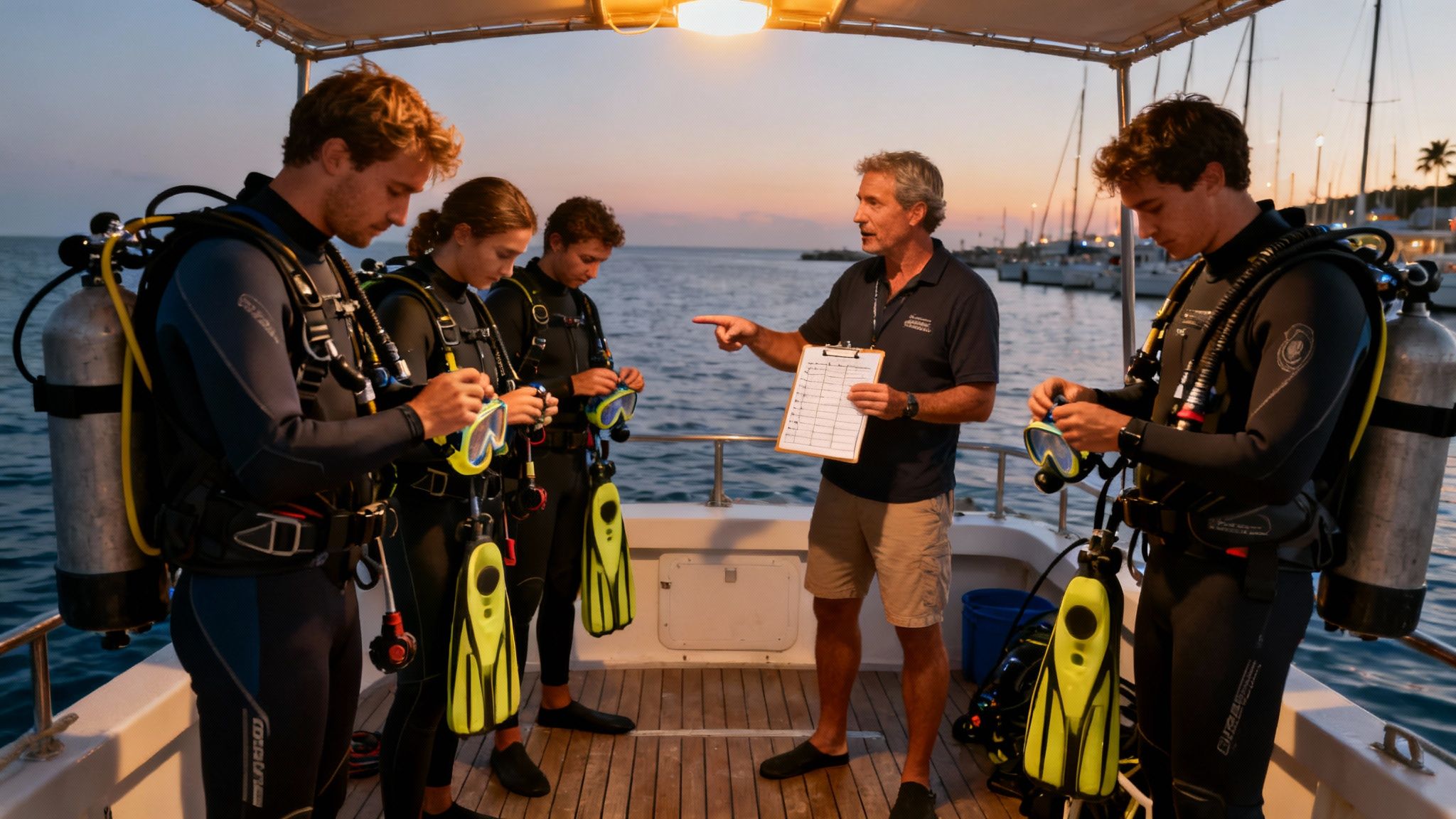
Your manta ray night dive Kona adventure truly kicks off the second you step aboard the boat. Before you even think about getting wet, your guides will walk you through a detailed pre-dive briefing. This isn’t just about ticking boxes; it’s essential for your safety and for the well-being of the incredible animals you’re about to meet.
During the briefing, you’ll get the full rundown on the dive plan and safety protocols. The most important rule of the night? Passive observation. Think of yourself as a quiet guest in their home—the goal is simply to watch the magic unfold without getting in the way. They'll show you exactly how to position yourself and explain why you must never, ever touch a manta ray.
The Two-Tank Dive Format
Most manta charters are set up as a two-tank trip, which means you get two completely different, but equally amazing, dives. The first one usually happens at twilight, right as the sun is dipping below the horizon. This is your chance to see the reef during a magical time of day.
As the light fades, you’ll see the reef’s “changing of the guard.” The colorful daytime fish start finding places to hide, while nocturnal critters like eels and octopuses begin to creep out. It's a beautiful, serene dive that perfectly sets the mood for what’s coming next.
The Main Event: The Manta Ballet
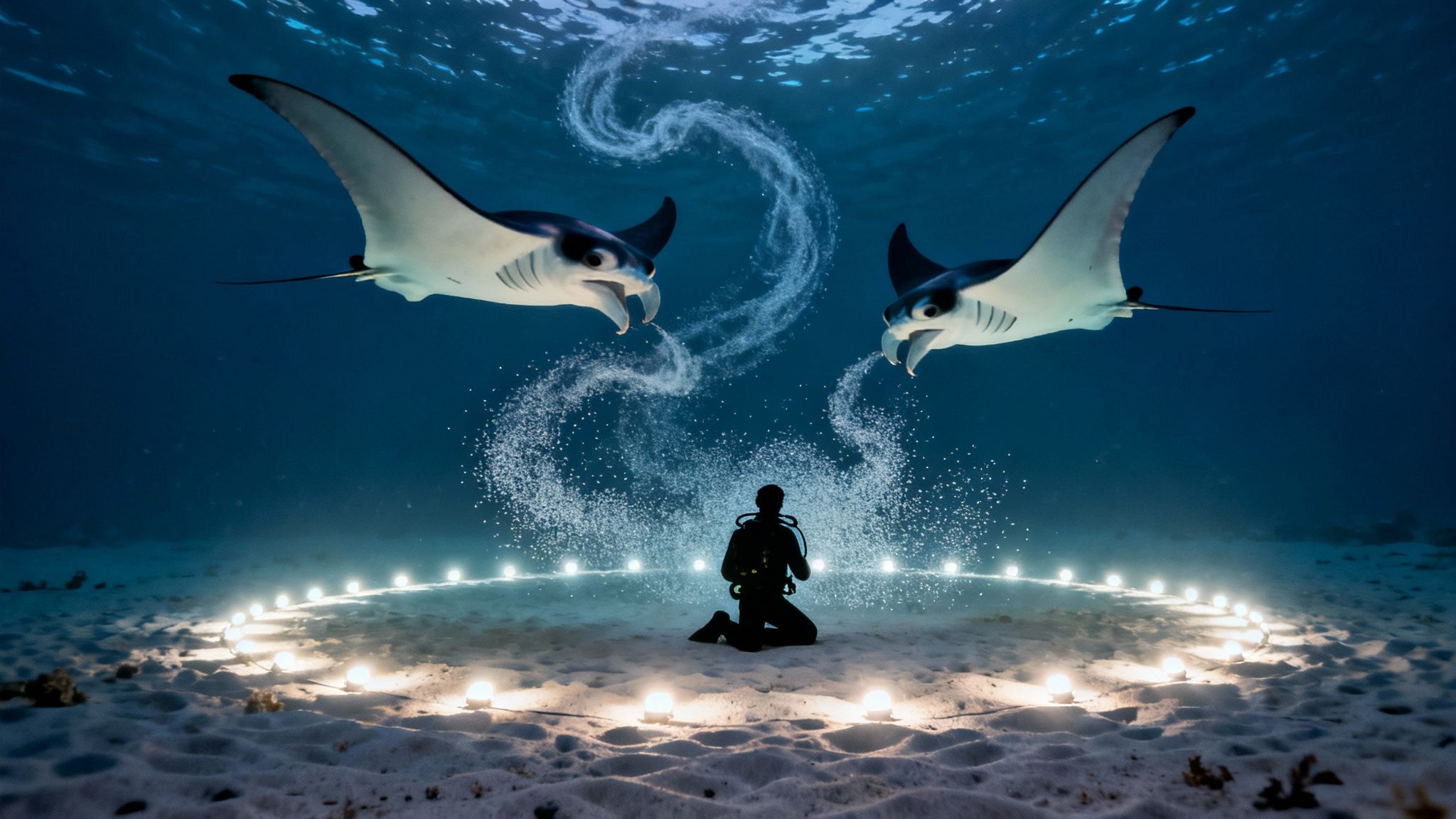
After your surface interval, it’s time to gear up for the dive you’ve been waiting for. When you descend into the dark water, you’ll see it: a cluster of lights on the ocean floor, often called the ‘campfire.’ Your group will find a spot on the sand, kneeling around this glowing circle.
These powerful lights attract a thick cloud of plankton, essentially creating a floating, all-you-can-eat buffet. And then, the show starts. Out of the darkness, these graceful giants appear, gliding effortlessly into the light. You'll stay put on the bottom as they perform an incredible acrobatic ballet, barrel-rolling through the plankton just inches above your head.
It's a completely silent, almost spiritual experience. The sheer size and grace of the mantas is something you just can't grasp until you see it for yourself. As you take in the awe-inspiring sights, you might want to capture the moment forever. You can learn how to make travel videos that do justice to an experience like this.
The reliability of this encounter is just staggering. Every year, around 80,000 people do this dive, and the success rates are consistently between 85% and 90%. A typical dive lasts about 60 minutes in water around 30 feet deep. You can expect to see an average of five mantas, but on a really good night, we’ve seen as many as 33!
When the dive is over, you'll ascend with memories that will stick with you for a lifetime. Back on the boat, a warm welcome—and often hot chocolate—awaits you for the ride back to the harbor under the stars.
How to Prepare for Your Manta Ray Dive
A happy diver is a prepared diver. When you’re getting ready for a manta ray night dive in Kona, a little bit of prep work can transform a good dive into a truly mind-blowing experience. Knowing what to expect and what's expected of you is key—not just for your own safety and comfort, but for the well-being of the gentle giants you’re about to meet.
To join the scuba dive, you’ll need at least your Open Water Diver certification. That said, divers with an Advanced Open Water cert or some previous night dives under their belt often feel a bit more at ease in the dark. Being relaxed helps you soak in every moment of the underwater ballet. For those looking for more challenging dives, Kona offers incredible advanced dive tours as well.
Mastering Key Skills and Rules
Your buoyancy control needs to be dialed in. This is the single most important skill for this dive. You’ll be positioned on the sandy bottom, and maintaining perfect buoyancy is what keeps you from kicking up sand or accidentally touching a manta or the delicate reef nearby. It’s all about protecting yourself and the environment.
Before anyone hits the water, your dive guide will lay down the golden rules of the dive. These aren't just suggestions; they’re strictly enforced to keep the interaction safe and sustainable for everyone, especially the mantas.
- No Touching: Manta rays are covered in a protective mucous layer that acts like their immune system. Touching them strips this coating away and can leave them vulnerable to infection.
- Stay Stationary: We create a viewing 'arena' on the sand. By staying put, you let the mantas feel comfortable and swim their natural patterns right over your head.
- Follow Your Guide: Stick with your group and listen to your dive pro. They know how to read the water, the conditions, and the animals’ behavior to ensure a great, safe dive.
Gear and Gas Considerations
We provide all the essential scuba gear, but a few personal items can always make a dive more comfortable. To see what we recommend, check out our guide on the gear you will need for your Kona diving adventure.
If you're certified for it, diving with Enriched Air Nitrox is a fantastic choice for this trip. Using Nitrox on the first twilight dive can mean a longer bottom time and less fatigue afterward. This helps you feel fresh and ready for the main event—the night dive. It’s a simple upgrade that really maximizes your enjoyment on this two-tank adventure.
Booking Your Tour with Kona Honu Divers
Let's be honest, choosing the right dive operator can make or break your whole experience. When it comes to the Kona manta ray night dive, this is doubly true. You want a crew that’s not just safe and professional, but one that genuinely cares about the animals and your connection to them.
Out of all the options in Kona, we consistently point people to Kona Honu Divers. Why? It comes down to their whole philosophy. They run smaller groups, which means you get more personalized attention from the guides and a less crowded view of the action. You're a guest, not just another number on a manifest.
Their crew is made up of passionate, seasoned pros who live and breathe diving. They run some of the best custom-built dive boats on the island, designed for comfort and ease. It’s the little things that add up to a truly premium experience.
Why We Recommend Kona Honu Divers
The most important reason is their deep respect for the mantas. Kona Honu Divers is all in on sustainable, eco-friendly practices. They follow strict guidelines for passive observation, which means you get to see the mantas behave naturally without being disturbed. It's about witnessing their world, not intruding on it. You can see this commitment across all their charters by visiting the Kona Honu Divers website.
On top of that, their rental gear is top-notch and impeccably maintained. Nothing ruins a dive faster than a foggy mask or a leaky regulator, and they make sure that’s never a concern.
Choosing a dive operator isn’t just about the transaction. It's about finding a team that prioritizes your safety, champions marine conservation, and knows how to create a genuinely magical encounter between humans and wildlife.
Everything you need is wrapped into their flagship 2-Tank Manta Dive & Snorkel tour. Tanks, weights, and even some tasty snacks and drinks for after the dive are all included. Just bring your certification card and a sense of wonder.
Hear from Fellow Divers
You don't have to take our word for it. The best way to get a feel for an operator is to see what other divers are saying. Reading through reviews gives you the real story of what it's like to be out on the water with the team.
Here are a few firsthand accounts from people who have experienced the manta ballet with Kona Honu Divers.
Ready to see it for yourself? Booking is straightforward. Grab your spot and get ready for an underwater spectacle that you'll be talking about for years to come.
Your Manta Ray Dive Questions, Answered
Planning the perfect trip always comes with questions. To make sure you’re completely ready for this once-in-a-lifetime experience, here are straightforward answers to the things we get asked most often about the manta ray night dive in Kona. We want you to feel confident and excited, with no surprises on dive day.
When Is the Best Time of Year to See Manta Rays in Kona?
The great news? There isn't a bad time! The manta ray night dive is a fantastic year-round adventure. Kona's local manta ray population sticks around all year, so you can see them any month you decide to visit. Their main food source, plankton, is always present, meaning there's no specific "manta season."
Water temperatures are consistently comfortable, usually hovering between 75-80°F (24-27°C). The biggest variable is really the surface conditions. While summer often means glassier seas, we primarily use superior, protected sites like Garden Eel Cove, which gives us calm, excellent conditions nearly every single night.
This is an incredibly popular dive, so I always recommend booking your tour in advance, especially if you're traveling during a busy holiday season. You don’t want to miss out!
Can I Still Go if I'm Not a Scuba Diver?
Absolutely! You don't have to be a diver to have an incredible experience with the mantas. In fact, snorkeling with them is just as breathtaking. We run a dedicated manta ray snorkel trip designed specifically for non-divers.
Snorkelers get to float on the surface, holding onto a custom-made light board. These powerful lights draw in the plankton, and that brings the manta rays right up to feed. You get an unbelievable bird's-eye view as they glide and do barrel rolls just inches below you. It's a fantastic option for families or groups with a mix of divers and non-divers, so everyone can share in the magic.
What Should I Bring on the Dive Boat?
Packing is pretty simple. The most important things to bring are a towel and a set of warm, dry clothes to change into for the ride back to the harbor. It can get surprisingly chilly on the water once the sun goes down.
We provide all the necessary scuba or snorkel gear, but feel free to bring your own mask or wetsuit if you have one you love. A reusable water bottle is also a good idea to stay hydrated.
If you’re someone who gets seasick, you might want to take something before we head out. And of course, if you're diving, don't forget your certification card! Most importantly, just bring your sense of adventure—we’ll take care of the snacks and drinks.
Is the Manta Ray Night Dive Safe for the Mantas?
Yes, it is. When done right, the manta ray night dive in Kona is a shining example of sustainable ecotourism. As a responsible operator, we follow strict, internationally recognized guidelines to protect these gentle giants.
The golden rule is passive interaction. This means you stay in your designated spot and simply observe. We never touch, chase, or get in the way of the mantas while they feed.
Our underwater lights simply attract their natural food source, creating a spectacular dinner show without altering their behavior. By choosing an operator who is committed to these high standards, you're supporting an activity that has allowed for decades of respectful encounters and even contributes to vital research on our local manta population. Your trip helps ensure these amazing animals continue to thrive right here in Kona.