
Picture this: you're floating in the dark ocean, and out of the deep, giant, graceful shadows emerge. They glide effortlessly through the water, somersaulting in a silent, underwater ballet just inches away from you. This is the manta ray night dive in Kona, an encounter so consistently breathtaking it’s rightfully called one of the best night dives in the world. The whole experience is built around a brilliantly simple idea: using powerful lights to create an all-you-can-eat buffet for these magnificent creatures.
What Makes the Kona Manta Ray Night Dive So Special
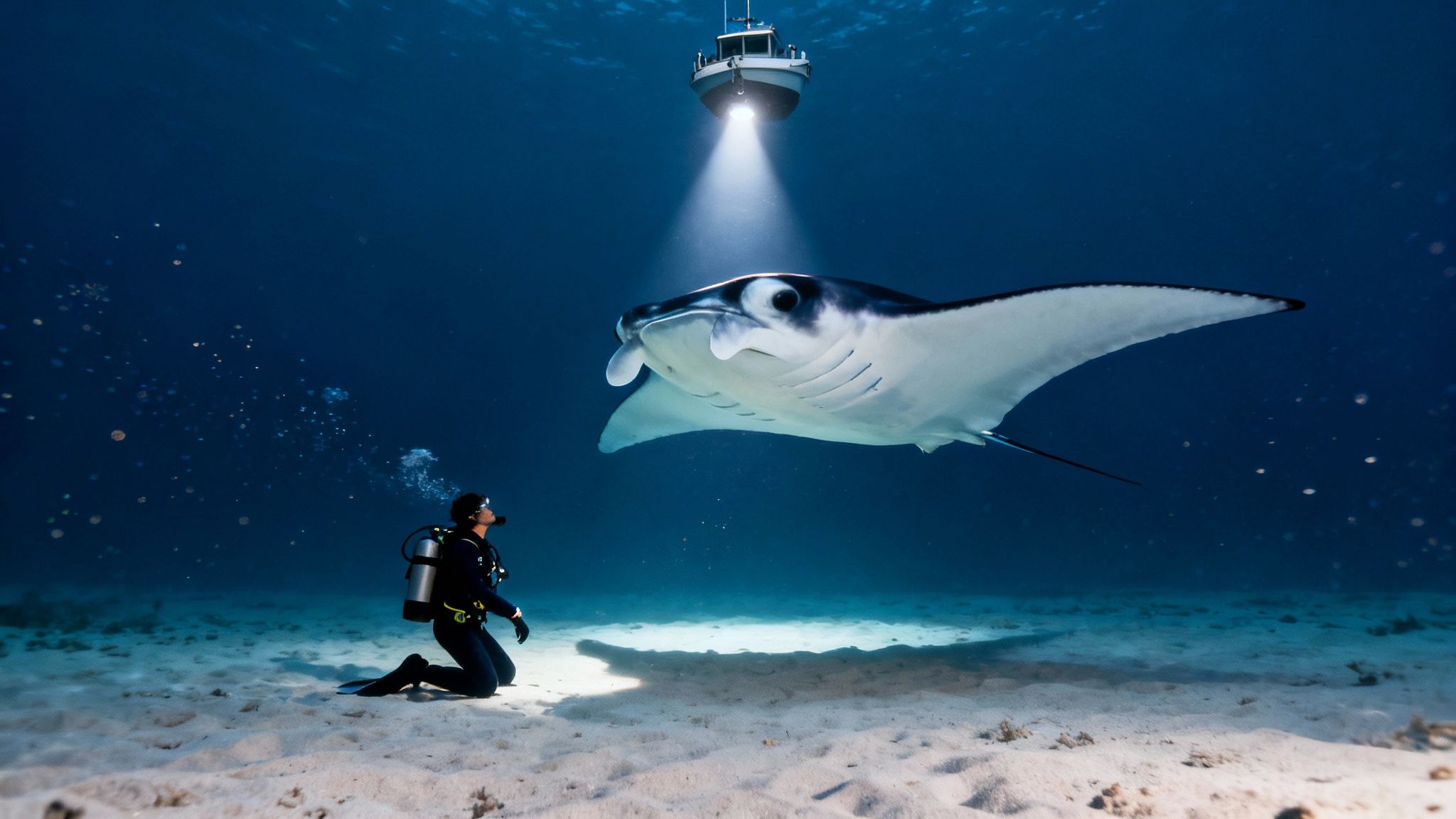
This isn't just another dive; it's a front-row seat to a natural spectacle, one that we help set the stage for. Here’s how it works: after sunset, we head out to specific coastal spots where mantas are known to feed. Once we're anchored, we submerge powerful, yet eco-friendly, lights into the water.
These lights are like a giant magnet for phytoplankton, the tiny organisms that are the foundation of the ocean's food chain. As the plankton gather in dense, glowing clouds, it’s like ringing a dinner bell for Kona's resident reef manta rays. The result is a mesmerizing feeding frenzy. Gentle giants, some with wingspans over 12 feet, swoop and barrel-roll right through the beams of light, filter-feeding on the plankton and coming incredibly close to everyone in the water.
A Reliable and Awe-Inspiring Encounter
Many wildlife tours are a game of chance, but the Kona experience is something you can count on. Our local manta rays aren't just passing through; they live here year-round and have learned over decades to associate the lights with a dependable feast. This has created one of the most reliable big-animal encounters anywhere.
We see mantas on over 90% of our trips, which is an incredible success rate for any wildlife experience. We're so confident you'll see them that we offer a "manta guarantee"—if they don't show up, you can come back again for free.
This reliability changes the whole vibe of the trip. You're not just hoping to get lucky. As we cruise along the stunning Kona coast at sunset, you can feel the anticipation building. You know you’re on your way to their favorite dining spot.
The Magic of the Kona Coast
The Big Island's unique underwater landscape is a huge part of what makes this all possible. The volcanic slopes have formed sheltered coves and bays that create calm conditions and fantastic visibility, almost like natural amphitheaters. It allows divers and snorkelers to get a front-row seat without disrupting the mantas or their environment. It's this perfect blend of geography and learned animal behavior that makes the manta ray night dive a true world-class adventure.
This incredible environment is just one of the things that sets diving here apart. To dig deeper, check out our guide on what is unique about diving in Kona. This dive is just the beginning of discovering one of Hawaii's most unforgettable natural wonders.
Why Garden Eel Cove Is The Ultimate Manta Destination
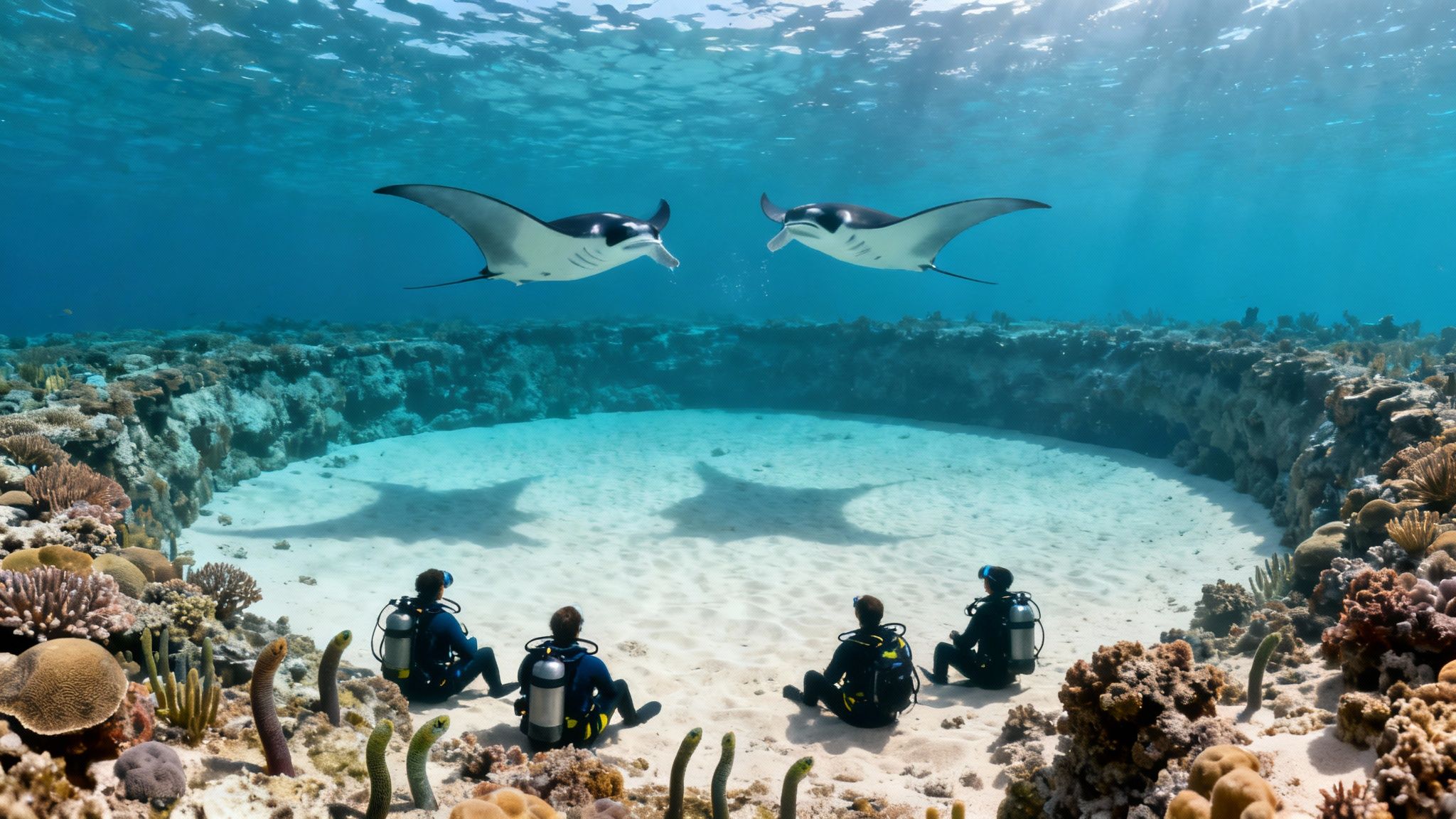
While you can find manta rays in a few spots along the Kona coast, one location stands head and shoulders above the rest: Garden Eel Cove. Known to locals and seasoned divers as Manta Heaven, this is the place to go if you want the most incredible manta ray night dive in Kona. It’s not just about a quick glimpse; it's about the entire quality of the experience.
The magic of Garden Eel Cove starts with its geography. Tucked into a natural cove, the site is well-protected from the big ocean swells. This natural shelter creates calmer, clearer, and far more comfortable conditions in the water, which is a huge bonus for both divers and snorkelers. Less surge and fewer waves mean you get to enjoy the show in a more relaxed setting with better visibility.
A Natural Underwater Amphitheater
What really elevates Garden Eel Cove is the layout of the ocean floor, which creates a natural amphitheater for viewing. As a certified diver, you’ll settle onto a sandy bottom at about 30-40 feet, arranged in a semi-circle with your group, looking up at our lights.
This setup gives everyone an unobstructed, front-row seat to the main event. The mantas glide, swoop, and perform their incredible feeding ballet right above you, illuminated by the light beams. The viewing area is perfectly designed for a breathtaking, immersive performance you won't find at other, more exposed sites.
More Than Just Mantas
The superior experience at Garden Eel Cove extends beyond the main event. Its healthier, more vibrant reef system makes for a spectacular preliminary dive. If you're joining a two-tank charter, your adventure begins before sunset with a chance to explore the rich coral gardens surrounding the sandy "stage." You'll see a huge variety of marine life—colorful reef fish, moray eels, and, of course, the thousands of tiny garden eels that poke out of the sand and give the cove its name.
This first dive is a fantastic way to see the reef transition from day to night before we settle in for the main manta show. It adds so much more value to your trip. When you combine the calmer waters, the perfect viewing layout, and a thriving reef ecosystem, it’s clear why Garden Eel Cove is the undisputed champion for manta encounters. To see a full breakdown of the differences, check out our guide on Manta Heaven vs. Manta Village.
Choosing Your Adventure Scuba Diving Vs Snorkeling
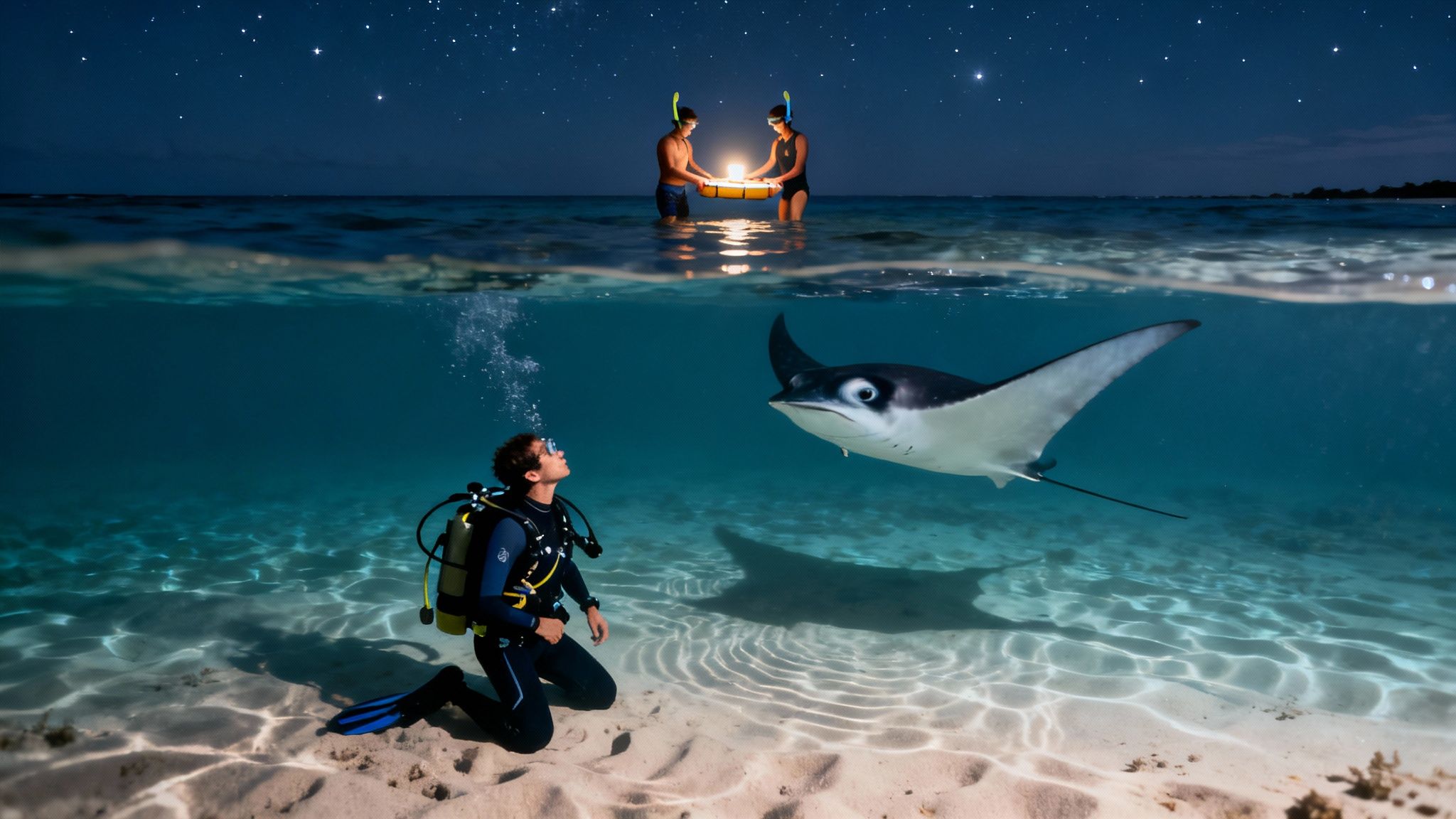
Here's the great news: you don't need to be a certified diver to witness Kona's incredible underwater ballet. The world-famous manta ray night dive in Kona is an experience open to just about everyone, offering two completely different but equally jaw-dropping perspectives.
The choice really boils down to your comfort level in the water and what kind of view you're after. Will you be on the ocean floor looking up, or at the surface looking down? Either way, you're guaranteed a front-row seat to one of the most spectacular shows on Earth.
Let's break down the differences to help you pick the perfect adventure.
The Scuba Diver's Perspective
If you're a certified diver, this is about as immersive as it gets. After a short descent, you’ll find a spot on a sandy patch of the ocean floor, usually around 30 to 40 feet deep. From here, you’re looking up at the lights that turn the water above into a glowing stage for the mantas.
Picture it: you're kneeling in the dark, silent ocean as these gentle giants, with wingspans stretching over 12 feet, swoop and barrel-roll right over your head. They glide just inches above you, their massive forms silhouetted against the bright light. It’s a humbling, eye-to-eye encounter that makes you feel like a small part of their massive world.
The Snorkeler's View from Above
For non-divers, snorkeling is an incredible—and incredibly easy—way to join in on the action. You'll float on the surface, holding onto a specially designed light raft. These rafts have powerful lights that beam down into the water, attracting the plankton that the mantas come to feast on.
From this top-down viewpoint, you get to watch the mantas soar up from the dark depths to feed. They perform their elegant acrobatics right below the surface, giving you an amazing aerial perspective of the whole scene. It’s less about being submerged in their world and more about watching the entire spectacle unfold from the best seat in the house.
To help you decide which adventure is right for you, here’s a quick breakdown of what to expect from each experience.
Manta Ray Dive vs. Snorkel Experience Comparison
| Feature | Scuba Diving | Snorkeling |
|---|---|---|
| Viewpoint | Bottom-up, looking directly overhead | Top-down, watching from the surface |
| Required Skill | Open Water Diver certification | Basic swimming ability |
| Depth | 30-40 feet (9-12 meters) | Floating at the surface |
| Proximity | Mantas may glide inches above you | Mantas feed just below the surface |
| Best For | Certified divers seeking an immersive, eye-level encounter. | Non-divers, families, and those who prefer staying on the surface. |
Ultimately, there's no wrong choice here. Both options deliver an experience you’ll never forget. It just depends on whether you crave the deep, immersive feeling of being on the ocean floor or the dynamic, bird's-eye view from the surface.
For a deeper dive into this topic, check out our guide on whether it's better to snorkel or dive with manta rays. No matter which you pick, you’re in for a magical night.
How To Prepare For Your Manta Ray Adventure

A little prep work can make a world of difference between a good manta ray tour and an absolutely incredible one. When you show up at the dock feeling ready and relaxed, you can put all your focus on the amazing show that's about to unfold. We’ll walk you through the simple steps to make sure you're set for a fantastic, stress-free night.
It’s all about taking care of the little details on land so you can be fully present and soak in every moment of this unforgettable wildlife encounter once you hit the water.
What To Bring For Comfort and Convenience
Your tour operator will have all the essential dive and snorkel gear covered, but bringing a few personal items can seriously upgrade your comfort level. Just pack a small bag with the right stuff, and you'll be good to go.
Here's a quick checklist of what to bring:
- Swimwear: The easiest thing to do is wear your swimsuit under your clothes to the marina. It makes getting ready on the boat a breeze.
- Towel: An obvious one, but essential for drying off after you get out of the water.
- Warm Change of Clothes: Even in Hawaii, the air can feel pretty chilly after a night dive. A sweatshirt or light jacket makes the ride back to the harbor much more enjoyable.
- Reusable Water Bottle: It’s always smart to stay hydrated, especially before and after spending time in the ocean.
- Personal Mask: While the crew provides high-quality gear, nothing beats a mask you know fits your face perfectly. It’s the best way to prevent annoying leaks and keep your view crystal clear.
Heeding The Pre-Dive Briefing
Listen up, because this is probably the most important part of your preparation. Every single tour kicks off with a detailed safety briefing on the boat, and it's vital that you pay close attention. This isn't just a formality—it’s the key to having a safe and respectful experience.
Your guides will go over all the essential safety protocols, hand signals for communicating underwater, and the golden rules of interacting with the mantas.
The number one rule of the manta ray encounter is to observe, not interact. This means no touching, no chasing, and no getting in their way. Following these rules is crucial for protecting the delicate, slimy coating on their skin that acts as a shield against infection.
The briefing is your chance to ask any questions you have. The crew’s instructions are there to protect both you and these magnificent animals, ensuring this incredible encounter can continue for generations to come. Even with more people coming to see them, the strict guidelines have kept the sighting success rate stable at 85-90% for decades. You can read more about the long-term stability of Kona's manta population on Jack's Diving Locker.
Tips for a Smooth Experience
Just a couple more things to keep in mind. If you're someone who gets motion sickness, it’s a good idea to take your preferred remedy before you even step on the boat. It’s always more effective if you take it ahead of time.
Follow these simple steps, and you’ll be perfectly prepared for the night of a lifetime. A little planning ensures that nothing will stand between you and the magical underwater ballet of the Kona manta rays.
Finding The Best Manta Ray Tour In Kona
With so many boats heading out each night, picking the right operator is probably the most important decision you'll make. It can be the difference between a good trip and an absolutely world-class experience. The quality of your manta ray night dive in Kona really comes down to the company's commitment to safety, your comfort, and, of course, a deep respect for the animals. This is where we believe Kona Honu Divers truly shines.
Our entire approach is built around creating a premium, personal adventure you'll never forget. A big part of that is intentionally keeping our groups small. This isn't just a minor detail—it's a massive advantage once you're in the water. Instead of feeling like just another person on a crowded boat, our intimate setting makes for a relaxed vibe and a much better, less obstructed view of the mantas.
The Kona Honu Divers Difference
Let's be honest: a great tour is all about the crew. We're incredibly proud of our team. Our guides aren't just divemasters clocking in for a shift; they are passionate marine life fanatics with years of experience right here in Kona's waters.
They love sharing what they know about the mantas, their habitat, and the whole local ecosystem. This turns your dive from a simple viewing into something much richer. Their expertise is what keeps you safe and comfortable from the moment you step on board.
Another key factor is our commitment to getting you to the best possible spot. Whenever conditions allow, we make it a priority to head to Garden Eel Cove. Its protected waters, healthier reefs, and unique underwater "amphitheater" make for a calmer, safer, and far more spectacular show. It's this dedication to quality that's at the heart of everything we do.
But you don't have to take our word for it. Our guests' experiences speak for themselves.
Booking Your Unforgettable Encounter
The manta ray night dive has earned its place as one of the world's top wildlife encounters, drawing around 80,000 visitors every year. The reason it's so popular is its incredible reliability. The sighting success rate consistently hovers between 80% and 90%, largely thanks to a resident population of nearly 200 identified manta rays. You can get a better sense of its global reputation by exploring these insights on Kona's manta dive.
By choosing Kona Honu Divers, you are opting for an operator that prioritizes small groups, expert guidance, and the superior Garden Eel Cove location, ensuring your adventure is both magical and memorable.
Of course, it's always smart to do your own research. Independent guides can offer valuable perspectives and comparisons. For some great recommendations on other operators, you can check out guides detailing the Top Manta Ray Night Snorkel Tours in Kona.
If you’re ready to witness this underwater ballet for yourself, we've made booking simple. You can secure your spot on our acclaimed 2-tank manta ray dive and snorkel tour right on our site. This trip is more than just a dive; it's a memory you'll carry with you for a lifetime.
For those who want to see everything the Big Island has to offer, check out our full range of incredible Kona diving tours.
Your Manta Ray Night Dive Questions, Answered
Even the most experienced divers have a few questions before hopping in the water for an adventure as unique as the Kona Manta Ray Night Dive. To make sure you feel totally ready for this incredible wildlife encounter, we've put together answers to the questions we hear most often from our guests.
Are Manta Rays Dangerous?
Not in the slightest. Manta rays are the definition of gentle giants. They’re filter feeders, which means they glide through the water with their mouths open, gracefully scooping up tiny plankton. They have no teeth, no stingers, and no barbs, unlike their stingray cousins.
The golden rule for any manta encounter is simple: just watch. Let them do their thing, and never, ever touch them. Touching a manta ray can strip away the protective mucous coating on their skin, which is like their immune system, leaving them open to nasty infections.
How Deep Is The Dive?
One of the best things about this experience is that you don't have to be a deep-sea diver to enjoy it. The scuba portion of the tour is surprisingly shallow, typically taking place at a depth of just 30 to 40 feet (that's about 9 to 12 meters).
This shallow depth is great because it means you get more bottom time. You can settle in on the sandy ocean floor, relax, and just take in the unbelievable show happening right above your head.
Since the dive is well within Open Water certification limits, it's a perfect night dive for anyone with a basic certification who wants to experience something truly extraordinary.
What If I Get Cold?
It’s a valid concern! Even though Kona’s waters are beautifully warm all year, sitting still in the ocean at night can give you a bit of a chill after a while. We’ve got you covered—we provide top-notch wetsuits to keep all our guests comfortable.
Don't forget about the boat ride back! That's when the night air can feel a little cool. We always recommend bringing a towel to dry off and a warm jacket or sweatshirt to throw on as soon as you're out of the water.
Is Seeing A Manta Ray Guaranteed?
Because manta rays are wild animals living in their natural habitat, no one can honestly promise a sighting with 100% certainty. That said, the Kona coast is one of the most reliable places on Earth to see them.
Great operators like Kona Honu Divers have an incredibly high success rate, often well over 90%. Many companies, including us, offer a "Manta Guarantee." If for some reason the mantas don't show up for your tour, you can come back another night and try again, on us. It’s our way of showing just how confident we are that you’ll have an amazing experience.
Ready to see this underwater ballet for yourself? Join Kona Honu Divers for an adventure that’s safe, respectful, and completely unforgettable. Check out our world-famous 2-Tank Manta Ray Dive & Snorkel tour and book your spot today.