
Picture this: you're floating weightlessly in the warm, dark Pacific Ocean. Suddenly, giant, graceful figures emerge from the gloom, performing a silent, hypnotic ballet just inches from your face. This isn't a dream—it's the world-renowned manta ray night dive in Kona, a wildlife encounter so reliable and awe-inspiring it’s consistently ranked as one of the best dives on the planet.
Why Kona’s Manta Ray Dive Is a Global Sensation
The Kona coast of the Big Island is special. It’s home to three different, very consistent manta ray feeding sites. While many places around the world let you see mantas at "cleaning stations," Kona offers a front-row seat to their nightly feeding frenzy—a far more active and captivating show. This is one of the many reasons scuba diving Kona, Hawaii is so famous.
The whole adventure works on a brilliantly simple idea. We set up an "underwater campfire" by placing powerful, eco-friendly lights on the ocean floor. These lights act like a magnet for tiny plankton, the manta rays' favorite food, creating a concentrated, all-you-can-eat buffet in one spot.
A Reliable and Unforgettable Encounter
What really makes the manta ray night dive in Kona stand out is just how dependable it is. We see mantas on over 90% of our trips, making it one of the most reliable wildlife experiences you can find anywhere. These aren't just visitors passing through; the local population of over 200 identified reef mantas lives here all year long.
Manta rays are true gentle giants. They have no teeth, no barbs, and no stingers, which makes the encounter completely safe. They’re only interested in the plankton, but their natural curiosity often brings them breathtakingly close to snorkelers and divers.
Here at Kona Honu Divers, we've spent years perfecting this experience to ensure every single trip is safe, respectful to the animals, and absolutely unforgettable. Our seasoned guides know these waters and the mantas like the back of their hands, bringing a level of expertise that elevates a great dive into a truly magical one. Thousands of guests have called it the highlight of their entire Hawaiian vacation. You can get a better sense of the trip by exploring the full details of the manta ray experience in Kailua-Kona.
Whether you're a seasoned diver or have never put on a snorkel mask before, this is an adventure for just about everyone. There’s simply nothing like watching these majestic creatures, with wingspans reaching up to 18 feet, somersault through the light beams. It’s a memory that will stick with you forever.
What to Expect on Your Manta Ray Adventure
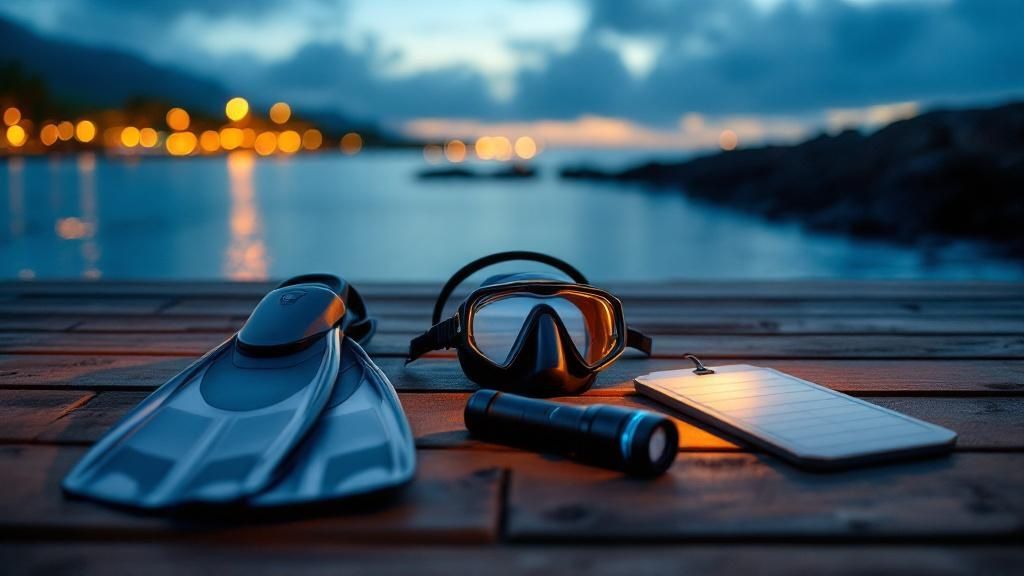
The excitement starts the second you step on the boat. Your manta ray night dive in Kona kicks off before you even touch the water, with a super important and fascinating pre-trip briefing from the guides. This isn’t just a boring rundown of rules; it’s your first lesson in how to be a good guest in the mantas' world.
As the boat cruises out, you’ll get an incredible view of the Big Island coastline as the sun begins to set. It's a magical part of the experience. You might even spot some spinner dolphins along the way. We head to one of Kona's legendary manta spots, like 'Manta Heaven' or 'Manta Village,' while the buzz of anticipation builds.
Setting the Underwater Stage
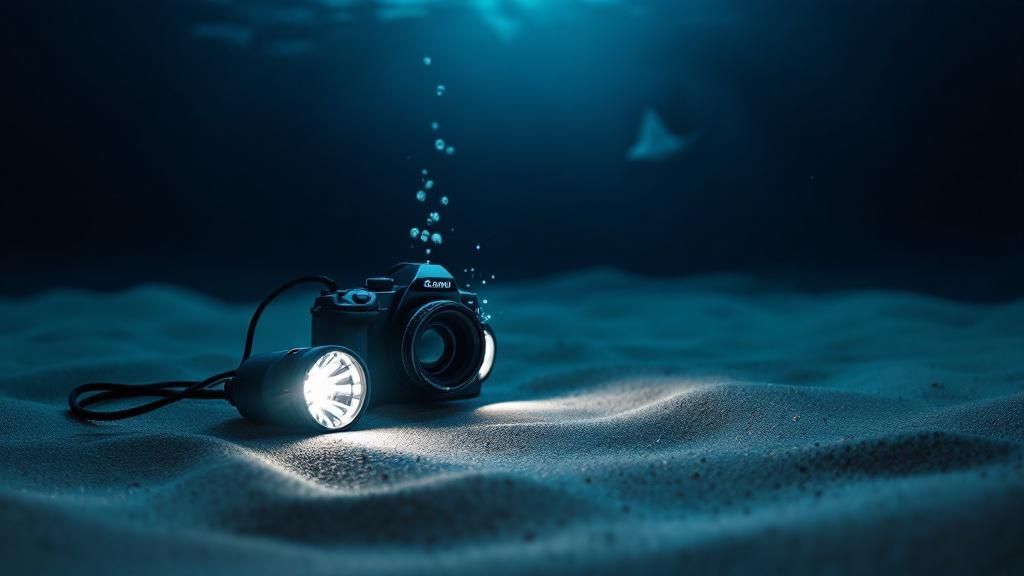
Once we anchor, the crew gets to work setting up what we like to call the "underwater campfire." They place powerful, eco-friendly lights on the ocean floor, pointing them straight up. Think of it like flipping on a giant bug zapper, but for plankton. These tiny creatures flock to the light, creating a concentrated, all-you-can-eat buffet that the mantas simply can't resist.
When it’s go-time, you'll slip into the warm, dark ocean. As a certified diver, you'll make your way down to a sandy patch on the bottom, usually at a comfortable 30 to 40 feet. This gives you a front-row seat for the show, looking up as the action unfolds right over your head.
The Main Event: A Graceful Ballet
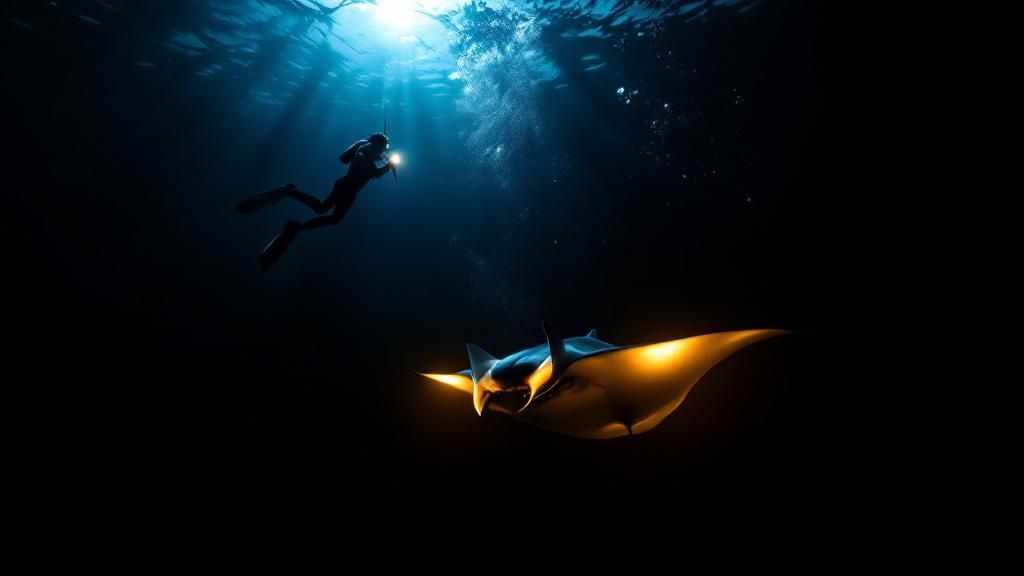
And then, it happens. They emerge from the darkness, gliding like silent spaceships into the beams of light. It's a truly humbling moment, watching them perform their feeding ballet. They swoop and soar, pulling off graceful barrel-rolls with their giant mouths wide open to filter the plankton. Their sheer size is mind-blowing, but their movements are impossibly fluid and gentle.
People always ask how close they get. The answer? Shockingly close. The mantas are zeroed in on the plankton, not you, and their elegant dance often brings them within inches of your mask. That incredible proximity is what makes the Kona dive so unforgettable.
This unbelievable show is why the Kona Manta Ray Night Dive has a sighting success rate that often tops 95%. We have a local population of over 450 identified mantas—some with wingspans over 12 feet! It’s totally normal to see a dozen or more on a single dive. It's truly one of the most successful and sustainable marine life encounters on the planet.
Your dive will last about 45 minutes, giving you plenty of time to be completely mesmerized before you head back to the surface. Just remember to be a passive observer—no touching, no chasing, and don't block their path. By being respectful, you help protect these amazing animals and ensure this incredible experience continues for years. To learn more about the rules, check out our complete guide to the manta ray night dive.
Choosing Your Adventure: Snorkel or Scuba
Here's one of the best parts about the manta ray night dive in Kona: you don’t actually have to be a certified scuba diver to witness the magic. Whether you’ve logged hundreds of dives or you're trying snorkeling for the very first time, an absolutely mind-blowing experience is waiting for you. It really just comes down to your perspective—do you want to watch the show from above or from below?
For snorkelers, the adventure is incredibly accessible and just as heart-pounding. You’ll hang onto a custom-built, floating light board right on the surface. These boards blast powerful lights down into the ocean, which is like ringing a dinner bell for plankton. Where the plankton go, the mantas follow, bringing them right up to you for a spectacular top-down view of the feeding frenzy.
If you’re a certified diver, you get a completely different, totally immersive viewpoint. After descending to the sandy ocean floor, about 30-40 feet down, you just settle in and enjoy the show. From here, you’re looking up, watching these gentle giants glide, swoop, and barrel-roll right over your head. It's breathtaking. Some of the most experienced diving opportunities on the island start with a simple manta dive.
The Snorkeler’s Experience
Snorkeling is the perfect choice for families, non-divers, or anyone who wants a front-row seat without needing a scuba certification. You just float comfortably, hold onto the light board, and watch the underwater ballet unfold beneath you. The mantas often get within inches of the surface, making for an unforgettable, pulse-pounding encounter.
The Diver’s Perspective
As a diver, you become part of their world. The experience is often described as more intense—there’s nothing quite like a manta’s massive silhouette blocking out the lights from above as it soars past. Being on the seafloor gives you a true sense of their immense scale and grace. You’re not just watching the show; you’re a silent member of the audience with the best seats in the house.
No matter which you choose, the core experience is the same: witnessing one of nature's most spectacular displays. It’s about finding the adventure that best suits your comfort and experience level.
Feeling inspired but not yet certified? Getting your Open Water certification is the ticket to a lifetime of underwater adventures, including this one. You can learn more about available Kona scuba classes and start your journey to exploring the world beneath the waves.
The truth is, there’s no wrong answer here. Both snorkeling and diving offer a direct, powerful connection to these majestic animals. To help you decide, here’s a quick breakdown of what to expect from each experience.
Manta Ray Snorkel vs Scuba Dive Comparison
| Feature | Snorkeling | Scuba Diving |
|---|---|---|
| Perspective | Top-down view from the surface | Bottom-up view from the ocean floor |
| Equipment | Mask, snorkel, fins, wetsuit | Full scuba gear (tank, BCD, regulator) |
| Certification | Not required | Open Water certification needed |
| Depth | Surface of the water | 30-40 feet deep |
| Best For | Families, non-swimmers, non-divers | Certified divers seeking immersion |
| The "Wow" Factor | Mantas coming inches from your face | Feeling their massive scale overhead |
Ultimately, the choice is yours. Both options promise an evening you’ll be talking about for years to come. So, which adventure will you choose for your manta ray night dive in Kona?
The Science and Story Behind Kona’s Manta Dive
The world-famous manta ray night dive in Kona isn't just another tour; it's a living story that blends accidental discovery, fascinating marine biology, and a serious commitment to conservation. What started as a happy accident has grown into one of the most incredible and sustainable wildlife encounters on the planet. Knowing the history and the science behind the magic turns a great dive into an unforgettable one.
This whole thing kicked off organically back in the early 1990s. The story goes that a hotel south of Kona used to shine bright lights on the ocean, which attracted tons of plankton. Pretty soon, the local manta rays figured this out and started showing up for an easy meal. When that hotel eventually closed and the lights went out, the mantas vanished.
That's when local dive operators got creative, searching for new spots and eventually discovering sites like Garden Eel Cove, which we now call 'Manta Heaven'. It turned out to be an even more reliable spot for seeing our resident mantas.
The Underwater 'Campfire' Effect
So, how does it all work? The science behind the manta dive is actually beautifully simple. Manta rays are filter feeders, and their favorite food is zooplankton—tiny little organisms that are the foundation of the marine food web.
The whole setup is designed to create a concentrated buffet for the mantas:
- Lights On: We place powerful, eco-friendly lights on the ocean floor. Snorkelers have floats with lights attached to them that shine down.
- Plankton Swarm: Just like moths to a porch light, the zooplankton are drawn to this bright light source, creating a thick, swirling cloud of food.
- Dinner Bell: The local mantas, who've learned the routine, gracefully glide in to feast on this all-you-can-eat buffet.
It’s an amazing and reliable way to observe their natural feeding behavior up close without disturbing them. It's a perfect example of how tourism and nature can work together. Wondering when this plankton buffet is at its peak? Check out our guide on the best time of year to see manta rays in Kona.
More Than Just a Dive: Conservation Through ID
What really makes the Kona experience special is the personal connection. Our guides and local researchers can identify nearly 200 individual rays in the area. How? By the unique black spot patterns on their white bellies—they're just like a human fingerprint.
This means your guide can point out specific mantas by name, like "Big Bertha" or "Lefty," which adds a personal touch and a powerful layer of conservation awareness to your dive.
This ongoing identification project is critical. It helps us track the health, movements, and growth of our local manta population, providing priceless data for marine conservation efforts. When you dive with Kona Honu Divers, you’re not just a spectator; you're actively contributing to a legacy of research and protection that helps keep these gentle giants safe for generations to come.
How to Prepare for Your Night Dive
A little prep work can make a world of difference between a good manta experience and an absolutely unforgettable one. When you’re comfortable and know what to expect, you can relax and just focus on the incredible ballet happening right in front of you.
Let's start with the simple stuff. Definitely bring a towel and a set of warm, dry clothes. Even on a perfect Hawaiian evening, you’ll be surprised how chilly that boat ride back to the harbor can feel after you've been in the ocean.
What to Bring and What to Expect
Once you’re on the boat, the most important thing you’ll do is listen to the safety briefing. Our guides live and breathe this stuff, and they'll walk you through everything you need to know to have a safe, respectful encounter with the mantas. It’s all about protecting you and these amazing animals.
Here’s a quick checklist to make sure you have a comfortable trip:
- Warm Layers: A jacket, sweatshirt, or hoodie is your best friend for the ride home.
- Towel: You’ll be so glad you have it when you climb back on board.
- Seasickness Medication: If you even think you might get motion sickness, it's best to take something beforehand. Why risk feeling queasy when you could be enjoying the show?
- Reusable Water Bottle: Staying hydrated is always a smart move.
For all you certified divers out there, this is a great time to double-check your buoyancy skills. The goal is to be a calm, quiet observer on the seafloor, not the person kicking up a sandstorm. Good buoyancy control makes the experience better for everyone and allows you to just melt into the background of the underwater world. For more great advice, check out our guide on what you should know about the Kona manta ray dive.
The manta ray dive here in Kona is a massive draw, bringing in about 80,000 people every year to sites like Manta Village and Manta Heaven. That popularity is built on a solid foundation of responsible tourism that puts the animals and their home first, proving that incredible adventure and vital conservation can go hand-in-hand.
After a dive like this, a lot of people catch the bug for night diving. And if that's you, you're in the right place. The Big Island has some of the most unique night dives on the planet. If you loved the thrill of being in the dark ocean, you absolutely have to experience the world-famous Kona blackwater dive. It's a journey into the deep open ocean to see the strange and beautiful bioluminescent creatures that migrate up from the abyss after dark.
Your Manta Ray Night Dive Questions Answered
It’s totally normal to have questions before you jump into the ocean at night, even with all the excitement building for the manta ray night dive in Kona. We get it. We’ve heard them all, and we want you to feel completely confident and ready for what’s truly a once-in-a-lifetime adventure.
Let's tackle some of the most common curiosities and concerns so you can relax and just focus on the magic of the experience.
Is the Manta Ray Night Dive in Kona Safe?
Absolutely. When you go out with a professional, certified operator like Kona Honu Divers, your safety is priority number one. Manta rays are true gentle giants. They don't have teeth, stingers, or barbs—they are completely harmless to people.
The safety protocols are pretty straightforward. Your guides will give you a full briefing before you get in the water, explaining how to stay in the viewing area and follow their lead.
The most important rule? Be a passive observer. That means no touching, chasing, or trying to ride the mantas. This protects their delicate mucous coating, which is like a shield against infection. Plus, you’ll have experienced guides in the water with you the entire time, making sure it’s a secure and respectful encounter for both you and the mantas.
One of the biggest worries people have is about the dark ocean, but it's not pitch-black out there. The dive site is lit up like a stage with powerful lights from the seafloor and the snorkelers' floats on the surface. Most people are surprised by how awe-inspiring it is, not scary.
What Is the Best Time of Year to See Manta Rays?
This is one of the best parts about this whole experience: you can see manta rays all year long! Unlike a lot of other big marine animals, Kona’s reef mantas are residents. They live and feed in these waters 365 days a year.
The success rate for sightings is crazy high, consistently over 90%, no matter what month you’re visiting. Whether it’s summer with its calm ocean conditions or the middle of winter, your chances for an amazing show are excellent.
The tour boats only go out when conditions are safe, so really, any time you can book your trip is a great time to go. It makes planning your vacation so much easier.
Are We Guaranteed to See Manta Rays?
Since these are wild animals in their natural home, nobody can promise a 100% guarantee. But, and this is a big but, the Kona manta ray night dive has one of the most reliable wildlife sighting rates on the planet, often hitting 95% or more.
On the very rare night that the mantas decide not to show up, you still get a unique night dive or snorkel over a beautiful Hawaiian coral reef. It’s still an incredible experience.
But to give you total peace of mind, reputable outfits like Kona Honu Divers have a "Manta Guarantee." If your group doesn’t see a single manta, you can come back and try again for free on another night (as long as there’s space). It’s a good reason to book your manta dive early in your trip, just in case.
Ready to see these graceful giants for yourself? Check out the details on our manta ray dive tours page and book the adventure of a lifetime.