
Picture this: you're floating in the warm, dark Pacific waters off the coast of Kona. Suddenly, enormous, graceful shadows emerge from the blackness, gliding effortlessly overhead. This isn't a scene from a movie—it’s the world-famous manta ray night dive in Kailua-Kona, easily one of the most breathtaking wildlife encounters you can have.
The Ultimate Underwater Ballet in Kailua Kona
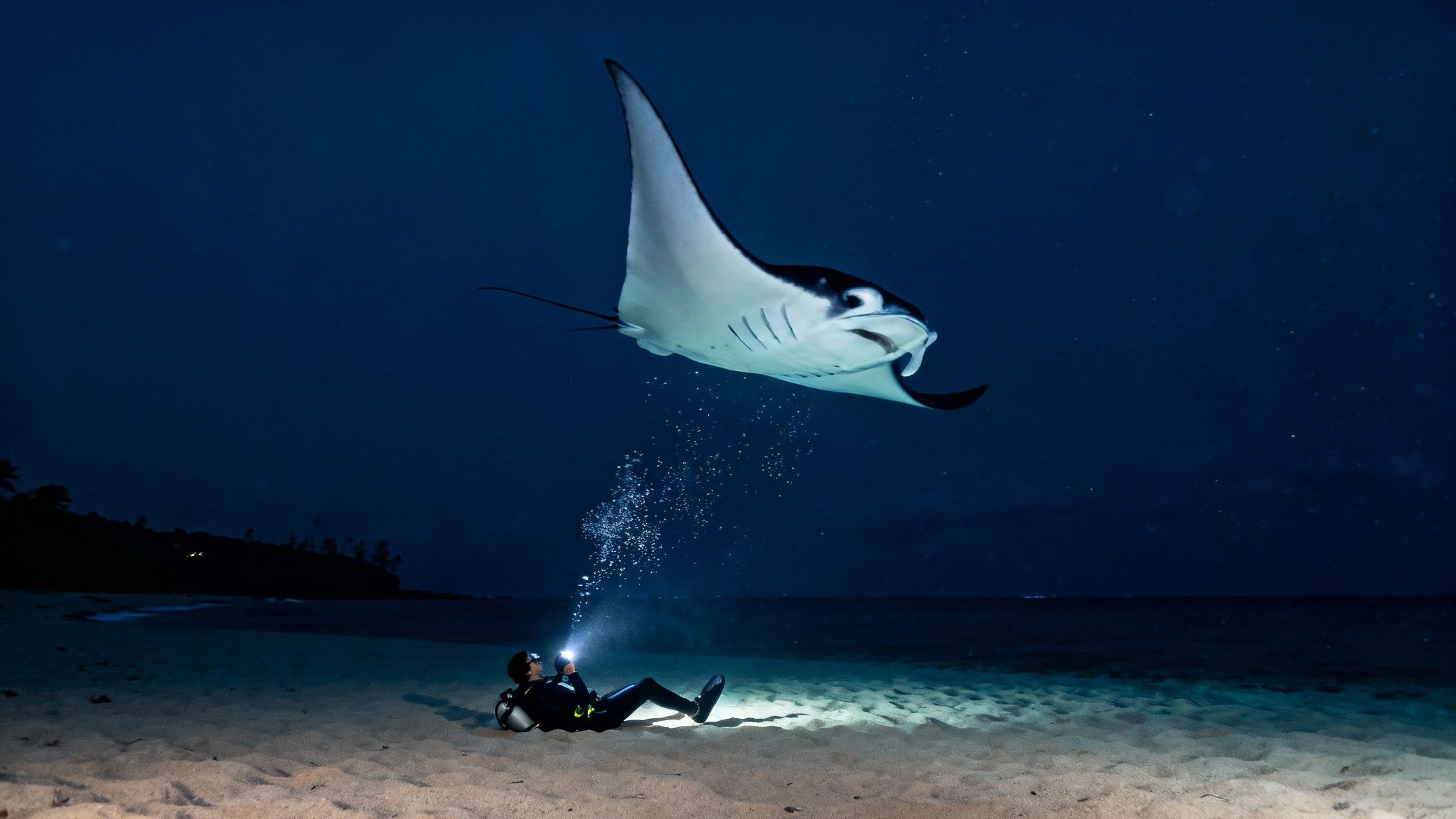
Whether you're an experienced diver or someone who has never put on a snorkel mask, this guide will walk you through everything you need to know for an adventure you’ll never forget. We'll cover finding the right tour, what to expect once you're on the boat, and how to make sure your experience is as safe for you as it is for the mantas.
The Kona coast of Hawaii’s Big Island has a special combination of features that sets the stage for this nightly show. The unique underwater landscape, protected waters, and a reliable food source have turned this one spot into a global magnet for manta rays.
Why Is This Dive So Consistent?
There's a reason divers flock here from all over the world: the Kailua-Kona manta dive has one of the highest success rates anywhere. Tour operators consistently report an 85–90% chance of seeing mantas on any given night.
The dive itself is relatively shallow, usually between 30 to 40 feet, which makes it perfect for divers of almost any certification level. We're talking about a resident population of over 450 identified mantas, many of them boasting impressive wingspans of 12 feet or more. You can get more details on why Kona's ecosystem is perfect for manta rays.
What started as a happy accident back in the 1990s has evolved into a world-class ecotourism experience. Local operators have figured out the perfect system: they shine powerful lights into the water, which attracts plankton—the mantas' favorite food. The mantas follow the food, and the show begins.
It creates a "campfire" on the ocean floor. Divers gather in a circle, shine their lights up, and watch these magnificent creatures perform a silent, mesmerizing ballet of barrel rolls and swoops, sometimes just inches away. It’s an experience that truly leaves you speechless.
As a top-rated operator, Kona Honu Divers is all about safety, sustainability, and giving you the best possible view of Kona's manta rays.
Ready to take the plunge? Learn more about our Manta Ray Dive and Snorkel Tours.
Why Garden Eel Cove Is the Premier Manta Dive Site
When you start planning a manta ray night dive in Kailua Kona, you'll hear about a couple of different spots. But anyone who’s been diving here for a while will tell you that not all manta sites are created equal. One location consistently delivers the best experience: Garden Eel Cove.
Also known as Makako Bay, this northern site is the superior choice for your manta ray dive tour for several key reasons. It all starts with the geography. Garden Eel Cove is tucked into a naturally protected bay, which means it’s shielded from the open ocean swells that can make for a bumpy ride and choppy conditions at the more exposed southern site. A calmer boat ride and a more stable, comfortable dive? That's a huge win right from the start.
An Unbeatable Underwater Theater
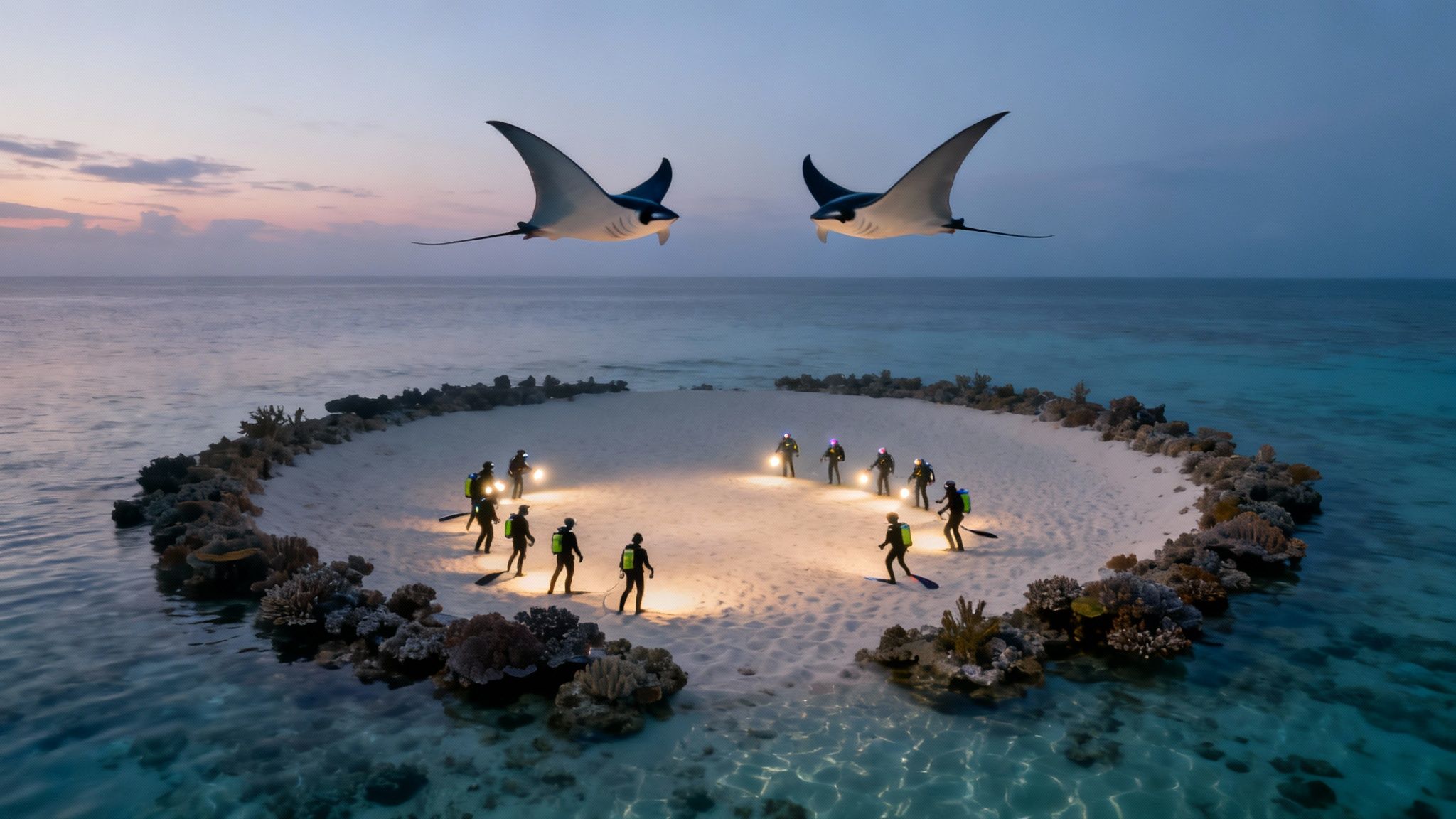
The real magic of Garden Eel Cove, though, is what happens when you get in the water. The underwater layout is practically custom-made for watching mantas, creating a superior viewing area. Picture a wide, sandy basin that slopes gently, creating a natural amphitheater.
Once you descend, you find your spot on the sand, and suddenly, you have an unobstructed front-row seat. This setup is a game-changer. It means you aren't all crowded on top of each other, and everyone gets a fantastic view of the mantas as they swoop and barrel roll just overhead. The bright sand also reflects the light from everyone's torches, creating a brilliantly lit "stage" that attracts a ton of plankton—the mantas' favorite food.
At Kona Honu Divers, we almost always head to Garden Eel Cove for our manta tours. Why? Because it consistently delivers the most magical and comfortable encounters for our divers. The protected conditions and perfect viewing area make it the undeniable best choice.
Dive Site Comparison: Garden Eel Cove vs. Manta Village
To really understand the difference, it helps to see the two main sites side-by-side. While both can offer manta sightings, Garden Eel Cove's features give it a clear edge for an all-around better and more reliable experience.
| Feature | Garden Eel Cove (North) | Manta Village (South) |
|---|---|---|
| Location | Naturally protected bay near the airport. | More exposed, near the Sheraton Keauhou Bay Resort. |
| Conditions | Typically calmer waters, less susceptible to ocean swell. | Can be rougher, more prone to surge and choppy surface. |
| Viewing Area | Sandy, amphitheater-like bottom for excellent, spacious views. | Rocky bottom, which can lead to more crowding for position. |
| Boat Ride | Shorter ride for North Kona operators; generally smoother. | Varies by operator; can be a longer and bumpier ride. |
| Manta Sightings | Highly consistent, often with large numbers of mantas. | Also consistent, but viewing can be impacted by conditions. |
| Marine Life | Adjacent to a vibrant, healthy coral reef system. | Reef is present but can show more signs of impact. |
While Manta Village is a solid backup when conditions up north aren't cooperating, Garden Eel Cove is the A-list destination for a reason.
More Than Just Mantas
Another thing that makes Garden Eel Cove the superior choice is that it’s not just a one-trick pony. The viewing area is right next to a gorgeous, healthy reef. It’s a thriving ecosystem. This means that while you’re waiting for the main event to start, you’re often treated to appearances by other nocturnal critters going about their business. The reef quality is simply better here.
Picking the right dive site is one of the most important choices you'll make for this adventure. With its calm waters, perfect underwater stage, and vibrant reefs, Garden Eel Cove really is manta ray heaven. It's the go-to spot for local divers and for good reason. For the best possible manta experience, make sure the tour you book makes Garden Eel Cove its primary destination. You won't regret it.
How to Choose the Right Manta Ray Tour Operator
Picking the right company for your manta ray night dive in Kailua Kona is just as critical as choosing where to dive. Honestly, the operator you go with can make or break this incredible experience. It's not just about finding the cheapest boat out there; it's about making sure you’re safe, comfortable, and diving with a crew that respects the very animals you’ve come all this way to see.
A top-notch operator puts your safety first, no questions asked. This looks like well-maintained boats, gear that's in great shape, and a crew that knows what they're doing. They'll give you a thorough briefing before you even get in the water, explaining the "rules of the road" for interacting with the mantas so everyone—human and animal—stays safe.
Look for a Commitment to the Environment
The best operators also have a serious commitment to sustainable, eco-friendly practices. They get it—they’re guests in the mantas' home, and they act like it. This means enforcing strict guidelines, like absolutely no touching, and teaching guests why conservation is so important. When you see an operator who consistently chooses the superior Garden Eel Cove site, it’s also a good sign they’re dedicated to giving you the best, most reliable, and comfortable viewing experience possible.
At Kona Honu Divers, our entire goal is to provide a world-class manta ray experience that’s both thrilling and respectful. The professionalism of our crew and our stellar safety record are things our guests bring up again and again.
Factors That Define a Great Tour
Beyond the big-picture stuff, here are a few other things that separate the good from the great:
- Boat Size and Comfort: Let’s be real, a smaller group often means a more personal and less crowded dive. Look for little things, too, like a freshwater rinse for after the dive or snacks on board. Those small comforts make the trip back to shore so much better.
- Experienced Guides: A passionate, knowledgeable guide can turn a great dive into an unforgettable one. They'll share fascinating facts about manta ray behavior and biology that you’d never know otherwise.
- Positive Reviews: See what other divers are saying. When you see consistent praise for the crew, safety, and the overall vibe, that’s a huge green flag. For more insights, check out our guide on the top 5 manta ray night dive tours.
The manta ray night dive industry here in Kailua-Kona has become a huge part of our local economy, with around 80,000 visitors coming for the experience each year. Because it’s so popular, the industry has become incredibly well-organized. The top operators have an average sighting success rate of 85–90%, which makes Kona one of the most dependable places in the entire world for this encounter. You can learn more about the best times to see manta rays in Kona on mantaraynightsnorkelhawaii.com.
At the end of the day, a fantastic operator doesn't just ferry you out to see the mantas; they enrich the whole adventure. By choosing a company that puts safety, education, and respect at the top of its list, you're not just buying a ticket—you're investing in a memory that will last a lifetime. Ready to book an adventure that puts you first? Explore our Manta Ray Night Dive tours and see what a difference a quality operator makes.
Everything You Need to Know Before You Go
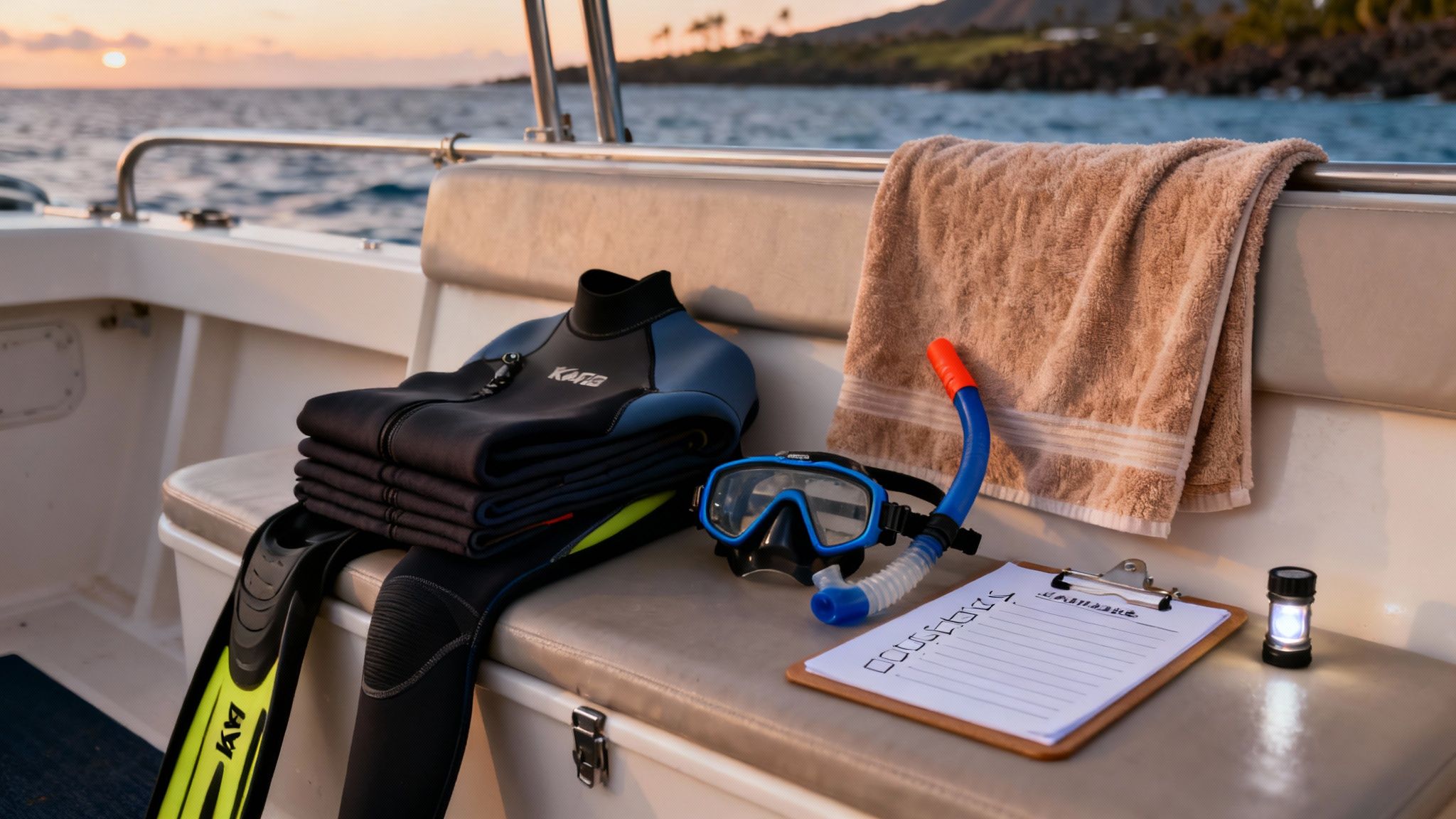
A successful manta ray night dive in Kailua Kona doesn't just happen when you hit the water; it starts with good preparation before you even leave for the harbor. When you feel ready, you can relax and truly soak in the wonder of the dive.
Your dive operator has the big stuff covered—wetsuits, tanks, and all the essential scuba gear. If you're curious about what a full professional setup looks like, you can get a detailed rundown on the gear you will need for your Kona diving adventure. This lets you focus on packing the small things that make a big difference.
Your Personal Packing List
A few simple items can be game-changers for your comfort after the dive. Once the sun is down and you’re wet, the boat ride back can feel surprisingly brisk.
Here’s what I always recommend bringing:
- A warm, dry towel: This is your best friend after a night dive. Absolutely essential.
- A change of clothes: A cozy sweatshirt or a hoodie will feel amazing on the ride back to shore.
- Reusable water bottle: It's easy to get dehydrated, so keep some water handy.
- Motion sickness medication: If you even think you might get seasick, take your preferred remedy before the boat leaves the dock.
Being mindful of our impact is part of being a good diver. For ideas on how to travel more sustainably, check out these 10 practical alternatives to single-use plastics.
The All-Important Pre-Dive Briefing
Once you’re on the boat, the most critical part of your prep is the pre-dive briefing. This is far from just a formality. It’s where your guides lay out the ground rules for a safe, respectful, and mind-blowing encounter with the mantas.
Listen closely. They'll go over everything from unique hand signals used at night to the specific dive plan and how the group will be positioned.
The golden rule of interacting with manta rays is simple: Do not touch the mantas. The oils from our skin can strip away the protective mucus coating on their bodies, which can leave them vulnerable to infections. Any reputable dive operator will emphasize this heavily.
This briefing is also your opportunity to ask any final questions and get comfortable with what’s about to happen. For many divers, it’s a relief to hear that the dive itself is both shallow and stationary. You'll descend to a sandy bottom, pick a spot, and simply kneel or lie flat.
There's no navigating a complex reef or swimming long distances. This straightforward approach makes it a surprisingly low-stress dive, perfect even for divers who don't have a ton of experience. Knowing what to expect lets you put your nerves aside and just focus on the incredible show about to unfold.
What to Expect During Your Manta Ray Encounter
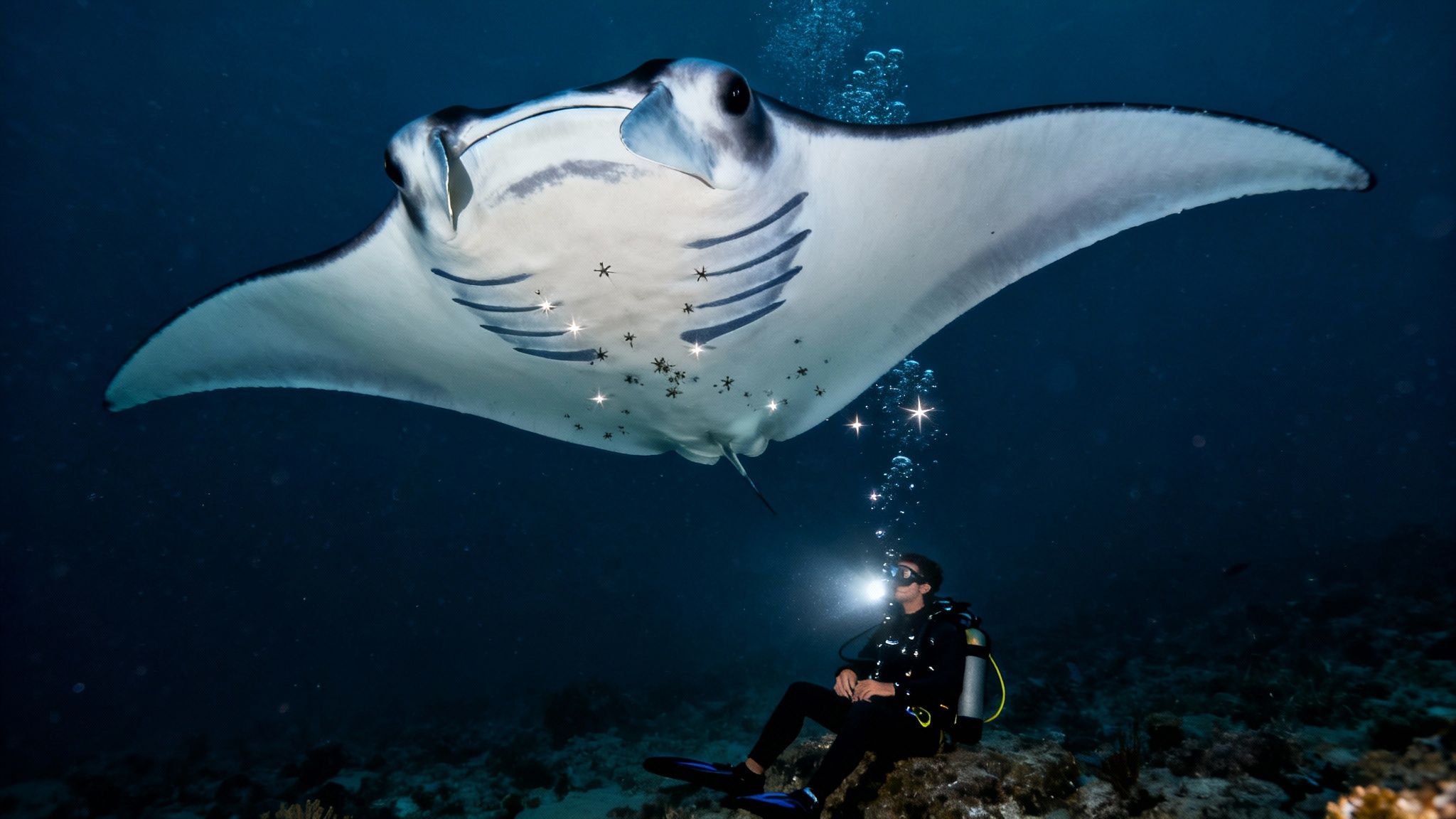
Alright, this is what it's all about. After all the planning and anticipation, the moment the boat engines cut and the last bit of daylight disappears, the real show begins. Your manta ray night dive in Kailua Kona is an experience that floods your senses, starting with the quiet splash as you slip into the warm, inky-black water.
You'll follow your guide's light down to a sandy clearing on the ocean floor, usually somewhere between 30 to 40 feet deep. Everyone calls this spot the "campfire." Your group will get settled in a circle, and on cue, everyone will aim their powerful dive lights straight up toward the surface.
Setting the Stage for the Show
These light beams act like a giant bug zapper, but for plankton. They create a massive, shimmering column of light that attracts swarms of these microscopic critters. For the manta rays, this is basically a giant, glowing dinner bell. You’ll find your spot, get comfortable, and just wait. The anticipation builds with every bubble you exhale.
And then, it happens.
A huge, graceful shadow emerges from the darkness. The first manta ray glides into the light, its massive mouth wide open to scoop up the plankton. The whole encounter is almost eerily silent; the only sound you’ll hear is the steady rhythm of your own breathing through your regulator.
The sheer size of these creatures is impossible to grasp from photos. When one is just inches from your mask, performing effortless, acrobatic barrel rolls as it swoops through the light, it’s a moment that will stick with you for life. It's a humbling, majestic underwater ballet.
The Graceful Giants of Kona
The incredible thing is, the mantas couldn't care less that you're there. They're completely absorbed in their meal, which allows you to get an unbelievably close and personal look. You’ll be able to see the unique spot patterns on their bellies—these markings are like fingerprints, used by researchers to identify and track each individual ray.
This isn’t a one-in-a-million sighting; it's what makes Kona so legendary. A long-term research project from 2009 to 2014 documented just how reliable these encounters are. Researchers found an average of 11 manta rays per night at the Garden Eel Cove site (often called Manta Heaven), while the southern site, Manta Village, averaged four.
With a catalog of over 300 individuals identified from more than 10,000 sightings, the science backs up what divers have known for years: this is the best place on Earth for this experience. You can dive deeper into the science behind this incredible ecosystem by reading more about this long-term manta ray research project on lovebigisland.com.
Eventually, your dive master will give the signal that it’s time to head up, and you’ll get one last look at the breathtaking performance. Back on the boat, the air will be electric with excitement as everyone shares their "wow" moments. This isn't just another dive; it's a genuine connection with one of the ocean's most magnificent animals.
Explore More of Kona’s Underwater World
The manta ray night dive is an experience you'll never forget, but believe me, it’s just scratching the surface of what Kona’s underwater world has to offer. The magic doesn't end when the sun comes up. Thanks to its volcanic past, the Kona coast is a maze of incredible underwater landscapes that every diver should see.
Think the manta dive was a thrill? For a truly mind-bending adventure, you have to try the Kona Blackwater Dive. This isn't your typical night dive. We head out into the deep open ocean, tether you to the boat, and let you drift in the pure, inky blackness. It’s here that you’ll see the nightly vertical migration—tiny, bizarre, and often bioluminescent creatures rising from the abyss. You’re looking at life forms you’d never encounter on any reef. It's like diving in outer space.
Beyond the Manta Dive
If you'd rather stick to daytime diving, Kona will not disappoint. The underwater topography here is some of the most dramatic in all of Hawaii. For certified divers looking to stretch their skills, we can explore ancient lava tubes, swim through massive archways, and drop down into deep underwater canyons. These are the kinds of advanced diving opportunities that take you to pristine, less-visited sites where big animal encounters are always a possibility.
On these dives, we get to see some amazing sights:
- Volcanic Structures: Imagine swimming through a lava tube that was flowing with molten rock millennia ago.
- Vibrant Reefs: The reefs are packed with fish species you can only find right here in Hawaii.
- The Big Stuff: It's common to find whitetip reef sharks napping in sandy caverns. We also regularly see pods of spinner dolphins, and if you’re really lucky, a tiger shark might just cruise by out in the blue.
The Manta Dive might be what brings people to Kona, but it's the sheer variety that makes them stay. Whether you want the graceful dance of the mantas, the alien world of a blackwater dive, or the rugged beauty of an advanced reef, Kona has it all.
Here at Kona Honu Divers, we live and breathe these waters. Our crew knows every nook and cranny of this coastline and can get you to the perfect spot, no matter your experience level.
- For the boldest divers: The Kona Blackwater Dive is a journey into the abyss to see creatures that look like they're from another planet.
- For experienced divers: Push your limits on our Advanced Dive Tours and explore Kona's incredible lava tubes, caverns, and remote reefs.
- See it all: Check out our full lineup of Kona Scuba Diving Tours and plan your next underwater adventure.
Your Manta Ray Night Dive Questions Answered
Let's dive into some of the questions we hear all the time. Think of this as a quick chat to clear up any last-minute hesitations so you can book your tour feeling completely prepared and excited.
Do I Need to Be a Certified Diver to See the Manta Rays?
Not at all! This is one of the biggest misconceptions. While certified divers get a unique, bottom-up view from the ocean floor, snorkelers have an equally incredible experience.
Most tours, including ours, provide custom-built light boards for snorkelers to hold onto. You just float on the surface while the lights draw in the plankton, and the mantas swim right up to you to feed. It’s an amazing, accessible adventure for everyone, including families and non-divers.
What Is the Best Time of Year for the Manta Ray Night Dive?
The best news? Any time is a great time! The manta ray night dive in Kailua Kona is a year-round spectacle.
We're incredibly lucky to have a resident population of manta rays that stick around all year, meaning there isn't really an "off-season." Sighting success rates are consistently high—we're talking 85-90% or more—no matter which month you visit. Your biggest decision will be what kind of weather you prefer for your Hawaiian vacation.
Is the Manta Ray Night Dive Safe?
Absolutely. When you go with a professional, safety-conscious operator like Kona Honu Divers, you're in great hands. Manta rays themselves are gentle giants. They're filter feeders and have no teeth, stingers, or barbs, so the risk from the animals is zero.
The real focus is on standard water safety. Every tour starts with a detailed briefing, and you're provided with all the right gear. Experienced guides are in the water with you the entire time, making sure the whole experience is as secure as it is breathtaking.
Can I Touch the Manta Rays?
This is a firm and absolute no. It's the golden rule of the manta dive: look, but don't touch.
The oils from our skin can strip away the protective mucus coating on a manta's body, which acts as their immune system. Losing this layer leaves them vulnerable to nasty skin infections. The best encounters happen when you stay still and just observe. Let them put on the show, and you'll get to witness their incredible, natural behavior without causing any harm.
Ready for an adventure you’ll be talking about for years? Join Kona Honu Divers for the ultimate manta ray experience at the superior Garden Eel Cove location. We put your safety and the mantas' well-being first. Book your Manta Ray Night Dive Tour today!