
Picture this: you're floating in the dark, warm waters off the Big Island, and suddenly, giant, gentle shadows glide effortlessly through the beams of underwater spotlights. This isn't a scene from a movie; it's the magic of the manta ray night dive in Kailua Kona, hands down one of the most unforgettable wildlife encounters you can have. You get a front-row seat to an incredible natural spectacle, where massive rays perform a silent, underwater ballet as they feed on plankton.
What Makes Kona’s Manta Ray Night Dive a World-Famous Experience
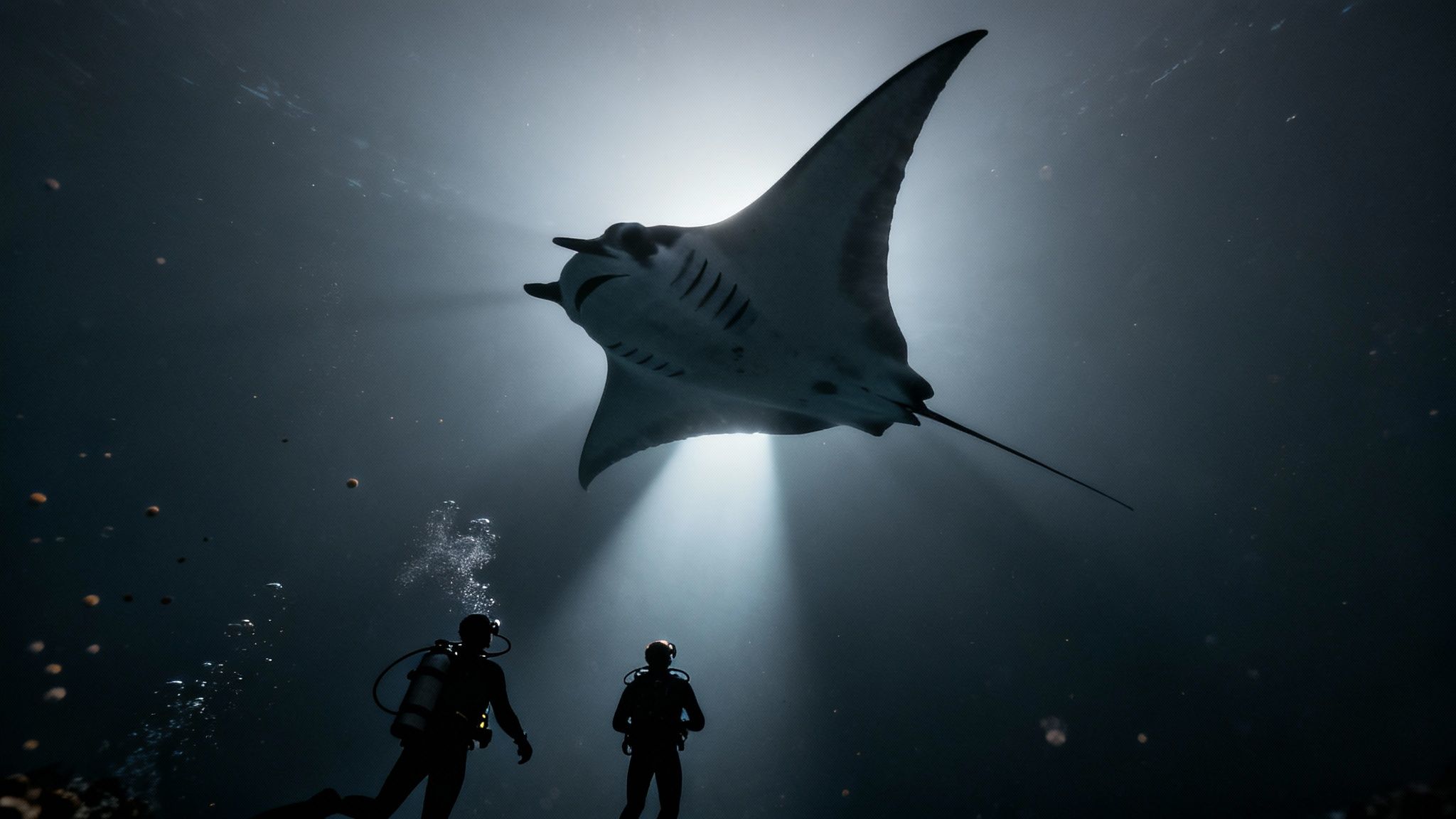
The Kona coast isn't just another beautiful spot on the Big Island; it’s a world-renowned destination for getting up close with manta rays. What really sets this adventure apart is its incredible consistency. Unlike so many wildlife tours where you just hope for a lucky glimpse, this dive has a unique setup that practically guarantees a show. Powerful lights are placed on the ocean floor, attracting swarms of plankton and creating a reliable feeding ground that the mantas return to night after night.
It’s more than just a dive—it's an immersive light show choreographed by nature itself. As the plankton cloud around the lights, the mantas arrive for their feast. They gracefully loop and soar through the beams, often coming within inches of you. It’s a truly surreal experience, blending the quiet thrill of a night dive with the sheer awe of watching these enormous, gentle creatures in their element.
Why Location is Everything
For an experience this special, where you go matters. A lot. While there are a few different spots, Garden Eel Cove is unequivocally the superior choice. Its location is naturally protected from powerful ocean swells, which means the water is almost always calmer and clearer. That right there makes the dive safer and way more comfortable for everyone in the water.
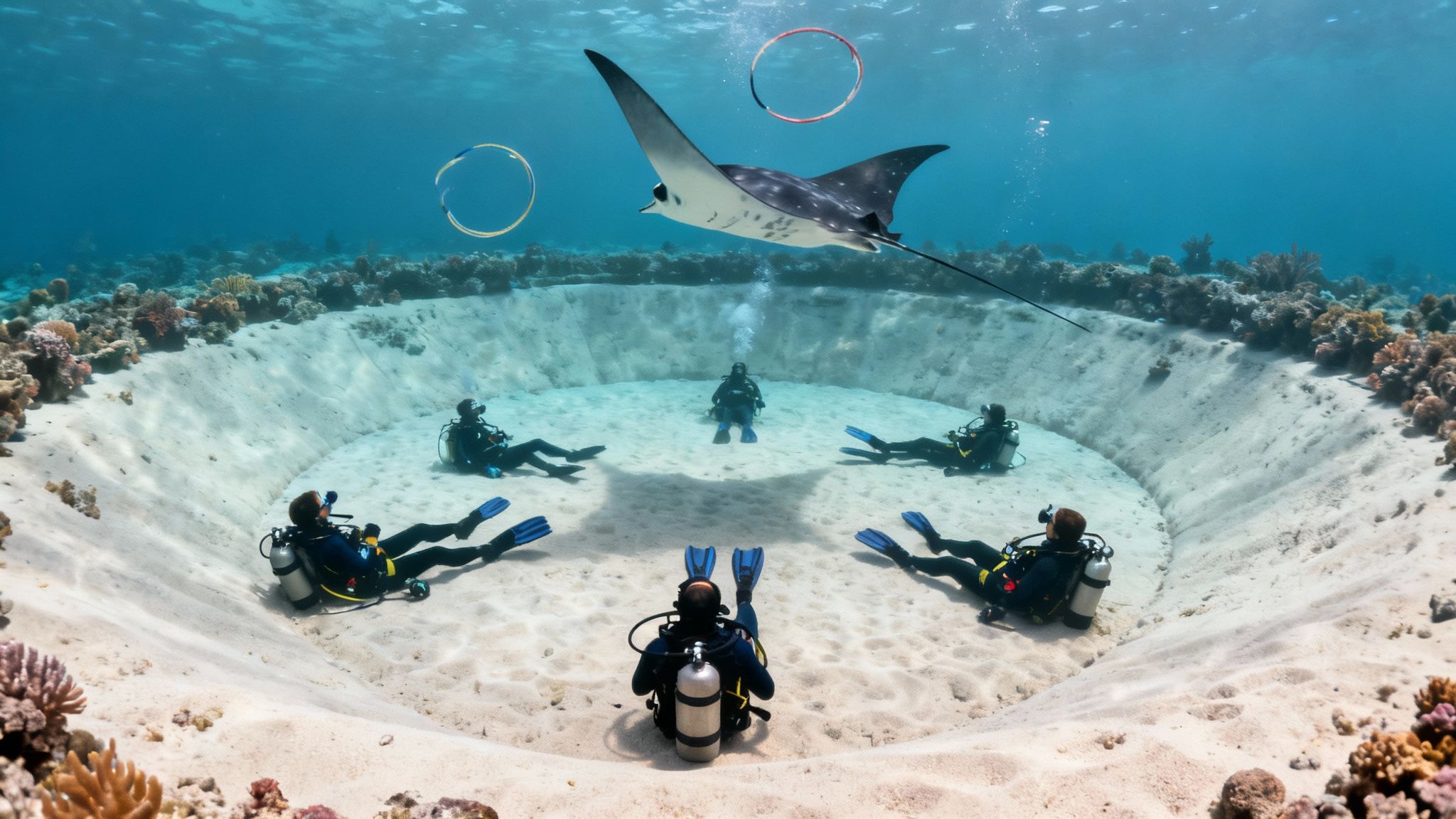
But there's more to it. The seafloor at Garden Eel Cove is shaped like a natural amphitheater, creating a better viewing area for divers. This allows divers to settle on the sandy bottom and simply look up as the mantas put on their aerial display directly overhead. The surrounding reefs are also healthier and more vibrant, adding to the stunning scenery. It’s no surprise that the best dive operators make this their top priority—they know it delivers the most reliable and breathtaking views.
One of the most incredible things about this experience is how dependable it is. Local operators report a sighting success rate of 80-90%, which is almost unheard of in the world of wildlife encounters. You can discover more about manta ray sightings on the Big Island to get a better sense of just how reliable this adventure is.
When you’re ready to see it for yourself, booking with an experienced and ethical operator like Kona Honu Divers will completely shape your experience. They have a fantastic reputation for running safe, educational, and truly awe-inspiring manta ray dive tours.
Why Garden Eel Cove Is The Premier Dive Location
When you start planning your manta ray night dive in Kailua Kona, you’ll quickly find that location is everything. While you might see a few different spots advertised, one place consistently delivers a superior, world-class experience: Garden Eel Cove. We affectionately call it 'Manta Heaven,' and it’s the clear winner for the best dive tour.
What makes it so special? First off, the geography. Garden Eel Cove is tucked away in a protected location, naturally shielded from the big ocean swells. This means the water is almost always calmer and clearer than at other sites. For divers and snorkelers, that translates to a much more comfortable, safe, and enjoyable time in the water. Less surge means better visibility and healthier reefs, plain and simple.
The Natural Amphitheater Advantage
The real magic of Garden Eel Cove lies in its underwater layout, which provides a better viewing area. The seafloor here forms a perfect natural amphitheater—a big, sandy clearing surrounded by a horseshoe of vibrant coral reef. It’s like it was designed specifically for this dive.
This setup allows us divers to settle down on the sandy bottom in a semi-circle, creating a "campfire" effect with our dive lights all pointing up. We get comfortable, relax, and just wait for the show to start. The mantas then swoop in to feed on the plankton attracted to our lights, performing their incredible acrobatic ballet right above our heads. It's an intimate, front-row seat you just can't get at a flatter, more exposed location.
You can get a closer look at what makes the site so perfect by reading more about Manta Ray Heaven at Garden Eel Cove.
Comparing Kona's Manta Ray Dive Sites
Not all manta sites are the same. Garden Eel Cove is the superior choice because of its protected location, better viewing area, and healthier reefs. Here's a quick comparison to help you understand why your choice of location matters so much.
| Feature | Garden Eel Cove (Manta Heaven) | Manta Village (Keauhou Bay) |
|---|---|---|
| Typical Conditions | Protected from swell, often calm and clear. | More exposed, can be surgy with lower visibility. |
| Underwater Layout | Natural "amphitheater" for ideal viewing. | Flatter, more open seafloor. |
| Diver Position | Stationary on the sand, looking up. | Divers may need to hold onto rocks in surge. |
| Manta Consistency | Historically higher and more reliable numbers. | Sightings can be less predictable. |
Ultimately, both sites can offer amazing experiences, but the unique topography and consistently higher manta count at Garden Eel Cove make it the go-to spot for an unforgettable night.
Consistently More Manta Rays
This isn't just a feeling we have—the numbers back it up. Both historical data and our own dive logs show that Garden Eel Cove simply attracts more manta rays on a more consistent basis, making it the superior choice for a dive tour.
Manta Village, down by Keauhou Bay, is the other main spot, but Manta Heaven almost always has a bigger crowd of our favorite winged megafauna.
One long-term study showed the average number of manta rays seen per night at Manta Heaven was 11, while the average at Manta Village was only 4. That’s a massive difference, and it really drives home why we believe Garden Eel Cove gives you the best possible chance for a truly jaw-dropping encounter.
This reliability is why seasoned operators like Kona Honu Divers make Garden Eel Cove their primary location. When you head out with them, you know you’re going to the place with the highest probability of an incredible, life-changing experience.
Getting to Know Kona’s Famous Manta Rays
When you slip into the dark water for a manta ray night dive in Kailua Kona, you're not just hoping for a random encounter. You're actually dropping in on a well-established local community. The gentle giants gliding through the beams of your dive lights are a resident population, and many have been known to researchers and dive guides for decades.
This isn't just a wildlife tour; it's a chance to meet individuals with their own stories.
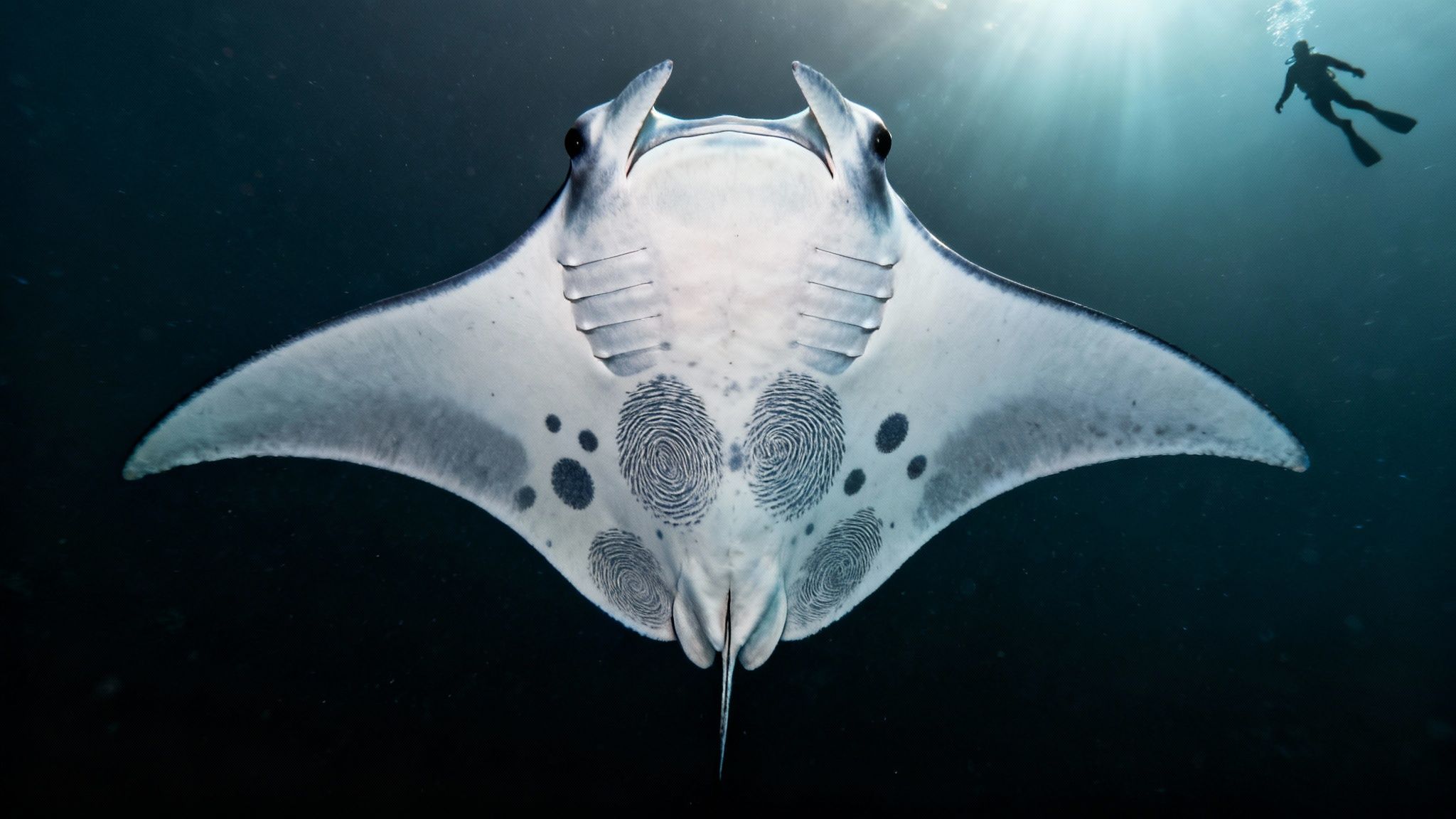
The secret to telling them apart is hidden on their bellies. Every single manta ray has a unique pattern of black spots on its white underside, just like a human fingerprint. No two are the same. This natural "barcode" is what allows everyone from scientists to divemasters to recognize specific rays, track their habits, and document their lives.
How We Know Our Manta Neighbors
For years, a massive citizen science project has been underway, with divers and snorkelers contributing their photos and videos. This teamwork has built one of the most detailed databases of any wild animal population on the planet.
Because of this incredible effort, many of Kona's mantas have names. On your dive, you'll likely hear your guide get excited and point out one of the local celebrities:
- Big Bertha: She’s a legend, known for her massive size and graceful, calm presence.
- Lefty: He's easy to spot because one of his cephalic fins was permanently damaged by fishing line.
- Kailey Ray: A charismatic and frequently seen manta who has been a regular at the dinner table for years.
When you realize you're not just seeing a manta ray but maybe Lefty on his 15th visit of the month, the experience becomes so much more personal. It’s a powerful reminder of how healthy and consistent this incredible ecosystem is.
This isn't just a brief stop for a handful of animals. Researchers have identified a thriving, consistent community. In fact, the catalog of resident mantas along the Kona coast includes hundreds of individuals.
Knowing that you’re visiting a well-studied community changes everything. It connects you to the ocean in a much deeper way, turning a spectacular dive into a truly meaningful interaction with Kona's most famous residents. The cataloged population along the Kona coast includes nearly 200 individual manta rays identified as regulars, and with occasional visitors, some believe the total number could be over 300. You can explore more details about the Kona manta population to really grasp the scale of this amazing community.
What to Expect on Your Manta Ray Adventure
So, what does this whole manta ray experience actually look like? Knowing the play-by-play can help you relax and soak it all in. It all starts at the harbor. You'll meet the crew, get sized up for your gear, and run through a comprehensive safety briefing. This is the perfect time to ask any last-minute questions and get a feel for the night's plan.
Once everyone's good to go, you'll hop on the boat for a quick trip out to the site. The ride itself is part of the magic, as you get to watch a stunning Kona sunset from the water. Along the way, your guides will share some incredible insights about the local manta population and review the rules for interacting with them respectfully. This isn't just a lecture; it's about making sure we're all responsible guests in their home.
The In-Water Experience
This is where the real show begins. If you're a scuba diver, you're usually in for a two-tank adventure. The first dive is often a twilight exploration of the reef, giving you a chance to see the coral ecosystem shift from day to night. After a short break on the boat, it's time to head back down for the main event.
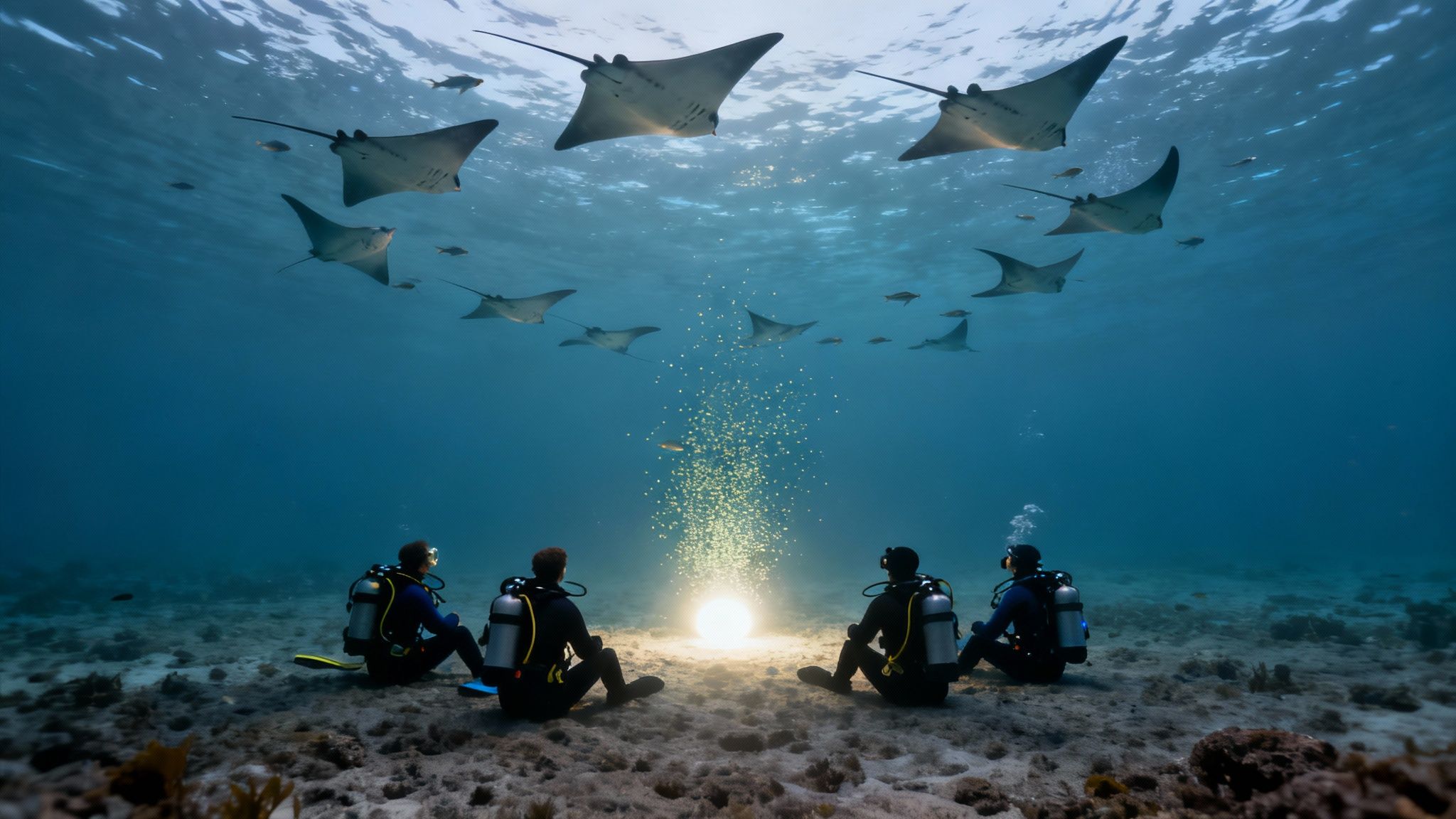
Your guide will lead you to a sandy patch on the seafloor, typically around 30-40 feet deep. Here, you'll become part of the famous manta "campfire." Everyone arranges themselves in a loose circle and shines their powerful dive lights straight up. This beam of light acts like a giant magnet for plankton, and where there's plankton, the mantas are sure to follow. In what feels like an instant, these huge, majestic creatures appear out of the darkness, gliding and barrel-rolling right over your head.
The "campfire" setup is ingeniously simple yet incredibly effective. By creating a centralized, bright column of light, divers essentially build a temporary feeding station that draws the mantas in for a reliable and breathtakingly close encounter.
The Snorkeler's View
Not a diver? Don't worry, you won't miss out. Snorkelers get an equally mind-blowing view from above. You'll float on the surface while holding onto a specially designed light board. These boards are buoyant and have bright lights pointing down, creating another plankton buffet that attracts the mantas.
You'll be looking straight down as these gentle giants swoop up from the depths, sometimes coming within inches of the board to feed. It’s a completely different perspective than the divers get, but every bit as spectacular. To get a better sense of the depths involved, check out this great resource on how deep the Kona manta ray dive is.
After about 45 minutes of pure amazement, it's time to get back on the boat. Most crews have hot chocolate and snacks waiting, which is a perfect way to warm up and share stories on the ride back to shore. A word to the wise: bring a dry hoodie or jacket. It can feel surprisingly cool after your night swim.
How to Be a Good Guest in the Manta’s World
The number one rule for any manta ray night dive in Kailua Kona is simple but absolutely critical: passive observation. Think of it this way—you're a guest invited to their underwater home. The goal is to watch their incredible, natural behavior without getting in the way. That means you can look, but you can never, ever touch.
This isn't just about being polite; it’s about their health. Manta rays have a thin, slimy coating on their skin that acts like a shield, protecting them from nasty bacteria and parasites. When you touch a manta, even with the lightest graze, you can wipe off that protective layer. This leaves them exposed and vulnerable to serious infections.
Why the Rules Matter So Much
Every rule you'll be given is there for one reason: to make sure this amazing experience can continue for years to come. The best tour operators are serious about following these standards to keep our impact as small as possible. When you get in that water, you’re making a promise to be a respectful visitor.
Luckily, the rules are easy to follow:
- No Touching, Ever: I can't say it enough. This is the big one. It doesn’t matter how close a manta gets; you have to resist the urge to reach out.
- Find Your Spot and Stick to It: If you're diving, you'll settle on the sandy bottom. If you're snorkeling, you'll hold onto the light board at the surface. This keeps the water column clear, creating a safe "dance floor" for the mantas to swoop and glide through.
- Don't Give Chase: Never swim after or directly toward a manta ray. Let them come to you. Chasing them not only spooks them but can ruin their feeding, causing them to leave the area entirely.
- Lights Up (or Down): Divers should point their lights straight up, and snorkelers should point theirs straight down. This creates beams of light that attract the plankton. Never shine your light right into a manta's eyes—it's like someone flashing a bright light in your face when you're trying to eat.
The secret to an unforgettable encounter is to become part of the scenery. When you stay still and calm, the mantas see you as a non-threatening part of the environment. That’s when they relax and put on their best show.
Following these simple guidelines doesn't just protect the mantas; it makes the experience better for everyone in the water. Being a good steward of the ocean is all about practicing responsible and considerate diver etiquette. It’s our collective responsibility to ensure future generations can witness this same magic.
When you book with an operator that follows the Manta Ray Green List standards, you're doing your part to protect Kona's famous manta ray population. Your good behavior means you'll leave nothing but bubbles and take home nothing but incredible memories.
Don’t Stop at the Mantas: More Epic Kona Dives Await
The manta ray night dive in Kailua Kona is absolutely a once-in-a-lifetime experience, but don't for a second think your underwater adventure ends there. The Big Island has so much more to show you. After you've seen the famous manta ballet, you'll be itching to discover what else lies beneath the waves.
For certified divers ready for the next chapter, Kona Honu Divers can take you deep into the island's one-of-a-kind volcanic seascape. Picture yourself gliding through ancient lava tubes, navigating massive underwater arches, and exploring some of the most pristine coral reefs in all of Hawaii. These advanced trips are specifically designed to show off the raw, wild beauty of Kona’s marine world.
For the Truly Adventurous: The Blackwater Dive
If you're craving an experience that is completely off the charts, you have to try the Kona Blackwater Dive. Let's be clear: this is nothing like a reef dive. You'll be miles offshore, floating in the deep, dark, open ocean, connected to the boat by a tether.
Down in the pitch-black water, you become an audience for one of the planet's largest migrations as strange and wonderful creatures rise from the depths. You'll come face-to-face with life forms that look like they're from another world—larval fish, glowing squid, and otherworldly siphonophores. It's a surreal, humbling, and utterly unforgettable experience.
From daytime reef explorations to deep-ocean adventures, Kona Honu Divers is your go-to guide for everything the Big Island’s underwater world has to offer.
- For the Ultimate Thrill: Venture into the abyss on a Blackwater Dive.
- For Experienced Divers: Push your limits on a Premium Advanced Dive Trip.
- For Daytime Fun: Check out all the scuba options on the main Kona Diving Tours page.
Answering Your Top Manta Ray Night Dive Questions
It's completely normal to have a few questions when you're gearing up for a once-in-a-lifetime adventure like the manta ray night dive in Kailua Kona. Let's clear up some of the most common ones so you can feel totally prepared for the magic.
Do I Have to Be a Certified Scuba Diver to Participate?
Not at all! This is one of the best parts of the experience—it's open to almost everyone.
While certified divers get to settle on the ocean floor for an incredible upward view, snorkelers have an equally breathtaking perspective. You'll float comfortably on the surface, holding onto a specially designed light board. This board illuminates the water, attracts the plankton, and brings the mantas right up to you.
Just How Safe Is It to Be in the Water with Manta Rays at Night?
When you go out with a top-notch, professional crew like Kona Honu Divers, it's incredibly safe. Every tour starts with a thorough safety briefing, and you'll have expert guides in the water with you the entire time. They stick to well-known, established sites that they know like the back of their hand.
And what about the mantas themselves? They're true gentle giants. Unlike their stingray cousins, manta rays have no stingers or barbs. They are filter-feeders, gracefully gliding through the water to scoop up plankton, and they pose absolutely zero threat to people.
What’s the Best Time of Year for a Manta Dive?
Here's the fantastic news: there's no bad time to go! Kona is home to a resident population of manta rays, which means they are here all year round.
Sightings are incredibly consistent no matter when you visit. While the weather can always be a factor on the water, there isn't a specific "manta season" you need to plan around. You can book your trip for any month and have a great chance of an unforgettable encounter.
Your underwater ballet with these magnificent creatures is waiting. Kona Honu Divers is ready to lead you on a safe, respectful, and truly unforgettable manta ray dive tour.