
Picture this: you’re floating in the warm, dark waters of the Pacific Ocean. Suddenly, a colossal, ghost-like figure emerges from the blackness, gliding inches above you. It's a manta ray, its massive wingspan creating a silent, underwater ballet in the glow of your guide's lights. This isn’t a scene from a nature documentary; it's the manta ray night dive in Kailua Kona, and it's an experience that will stick with you forever.
This guide is your deep dive into one of the most incredible wildlife encounters on the planet.
What Makes the Kona Manta Ray Dive So Special?
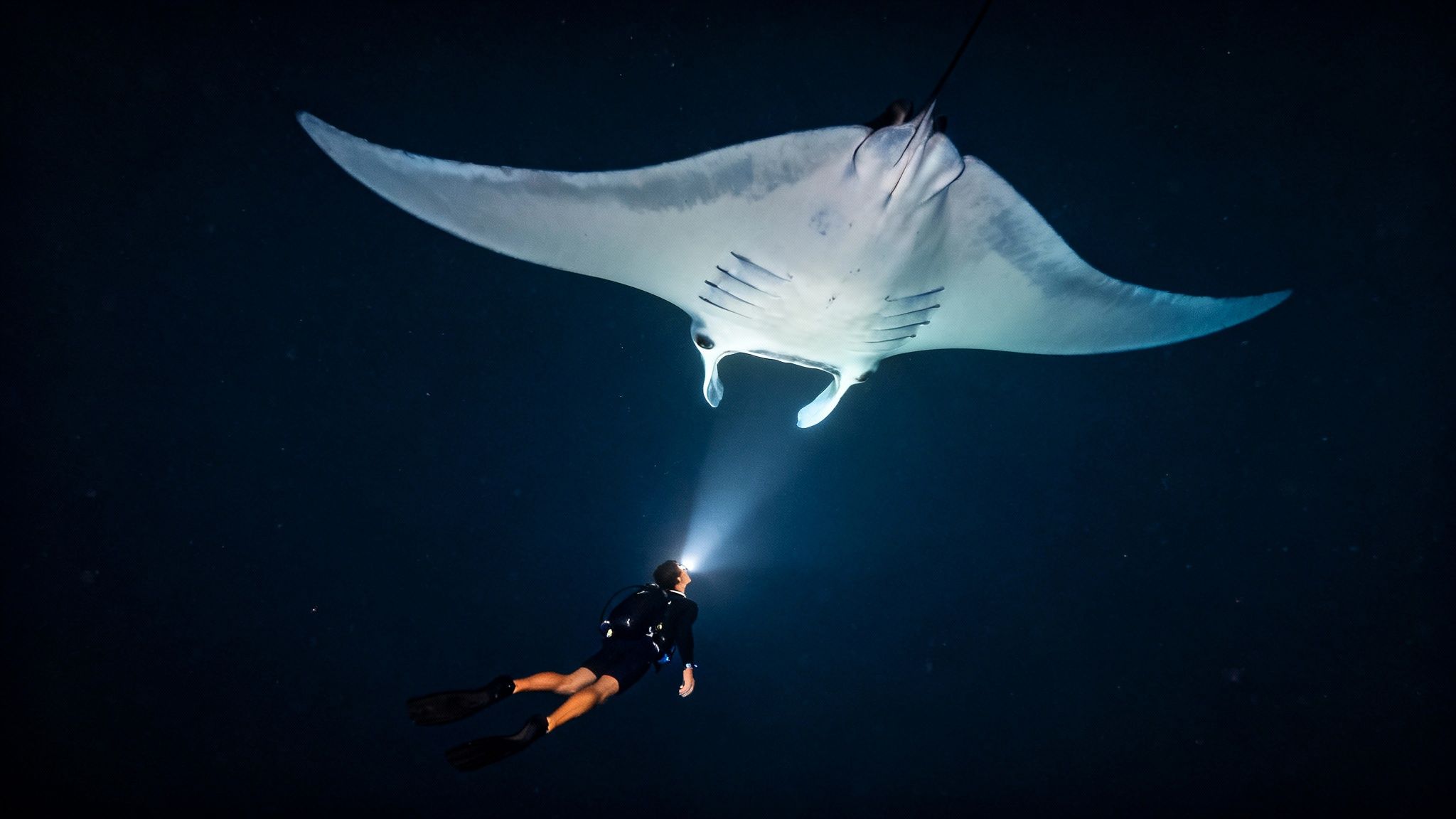
The Big Island's Kona coast is perfectly set up for this nighttime spectacle. While you might spot mantas elsewhere, Kona is one of the very few places on Earth where you can reliably see them feed after dark. The entire experience feels otherworldly.
So, what’s the secret? It's a brilliantly simple setup. After sunset, dive operators head to well-known manta hangouts. They place powerful lights on the seafloor for divers or attach them to floating rafts for snorkelers. These bright beams act like a massive bug zapper, attracting clouds of plankton—the manta's favorite meal.
The mantas, smart and opportunistic, have caught on. They know the lights signal an all-you-can-eat buffet. They show up night after night to perform graceful somersaults and barrel rolls, gulping down plankton with their huge, gaping mouths. It's a breathtaking performance, and you have a front-row seat. This unique, symbiotic relationship is what makes the manta ray night dive a truly world-class adventure.
A Thriving and Unique Manta Population
The key to this dive's incredible consistency is the healthy, resident manta population. We're talking about a thriving community of over 450 individual mantas that call these waters home, with nearly 200 of them officially identified and named by researchers.
This isn't a migratory stop; these mantas live here. That's why famous spots like Manta Village and Manta Heaven have such predictable sightings. At Manta Heaven, for example, the nightly average can be as high as 11 rays, which makes for a truly mind-blowing show. You can get more details about the local manta population on lovebigisland.com.
"This experience is akin to watching your child ride a bike for the first time or finding a winning lottery ticket. In fact, I often use the phrase ‘like watching a manta ray swim by’ as a way to describe the feeling of something awesome."
When you combine a reliable food source (thanks to the tour operators) with a robust, local manta population, you get the magic that is the manta ray night dive Kailua Kona—one of the most dependable and awe-inspiring wildlife encounters you'll ever have.
To help you get a quick overview, here are the essential details for planning your dive.
Manta Ray Dive Quick Facts
| Aspect | Details |
|---|---|
| Location | Kailua Kona, Big Island, Hawaii |
| Primary Dive Sites | Manta Village (south of Kona) & Manta Heaven (north of Kona) |
| Best Time to Go | Year-round, with very high sighting success rates |
| Average Water Temp | 75-80°F (24-27°C) |
| Typical Depth | 30-40 feet (9-12 meters) |
| Sighting Success Rate | Over 90% with most reputable operators |
| Who Can Participate | Certified divers, snorkelers, and even ride-along boat passengers |
This table should give you a solid starting point, but remember that every night is a little different, which is all part of the adventure.
Your Step-by-Step Manta Encounter Guide
So, you’re thinking about diving with giants after dark. Let's walk through exactly what the manta ray night dive in Kailua Kona is really like, from the moment you leave the dock to the final, jaw-dropping moments underwater. The whole adventure kicks off when you check in with your tour operator, and you can already feel the buzz in the air from everyone around you.
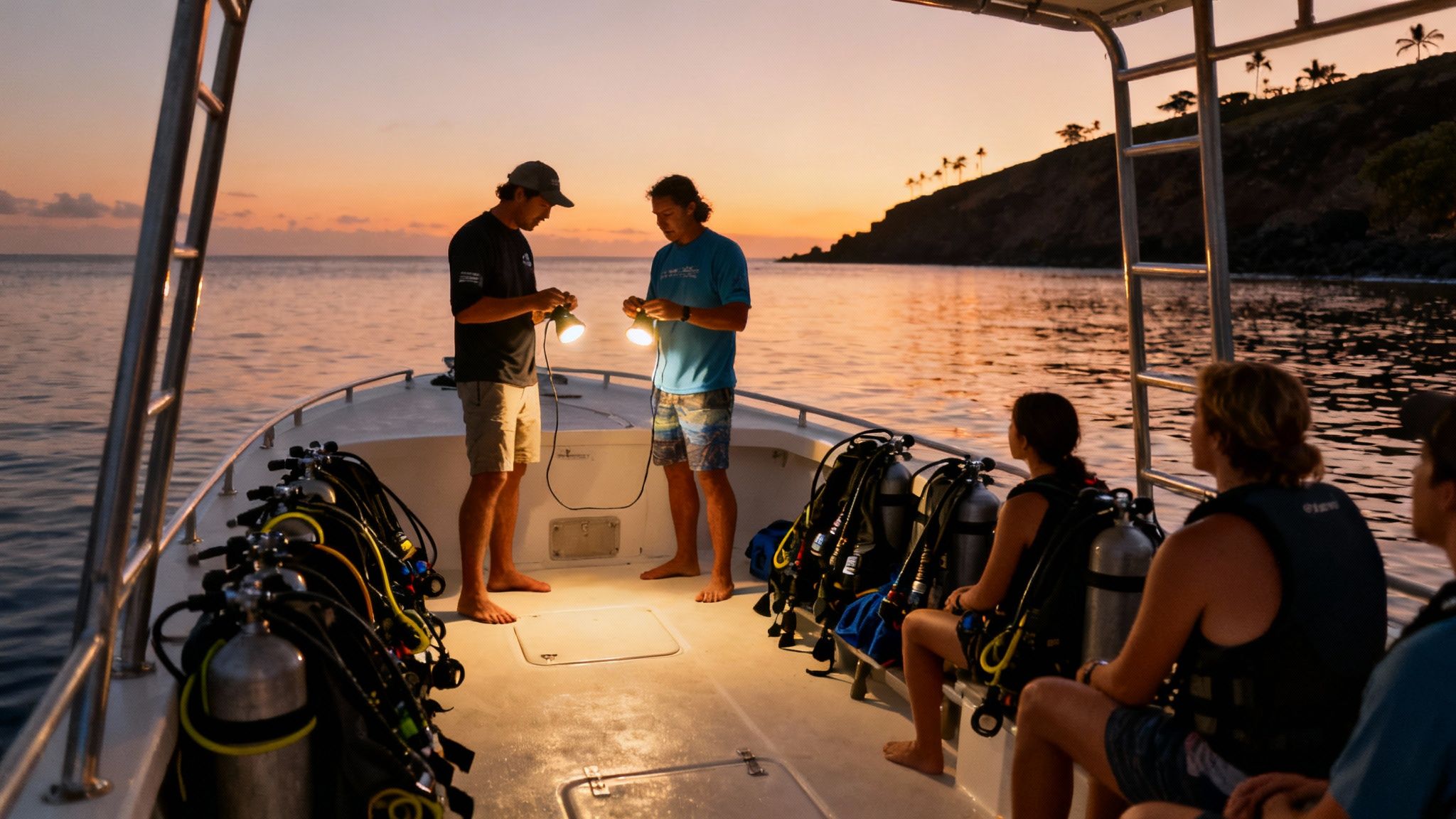
The boat ride itself is part of the magic. You'll head out along the stunning Kona coast just as the sun dips below the horizon, setting the sky ablaze. This isn’t just a quick trip to the site; it’s the perfect warm-up for the main event. Along the way, your guides—who live and breathe this stuff—will give you the full rundown on safety, what to expect, and how to be a respectful guest in the mantas' world.
Entering the Nocturnal World
Once you arrive at the spot, the real thrill begins. Slipping into the dark, warm Pacific is a feeling you won’t forget. For divers, it’s a calm descent down to the sandy bottom. For snorkelers, you’ll be holding onto a specially designed light board at the surface. The cool part? Both groups get a front-row seat to the same incredible show, just from different angles.
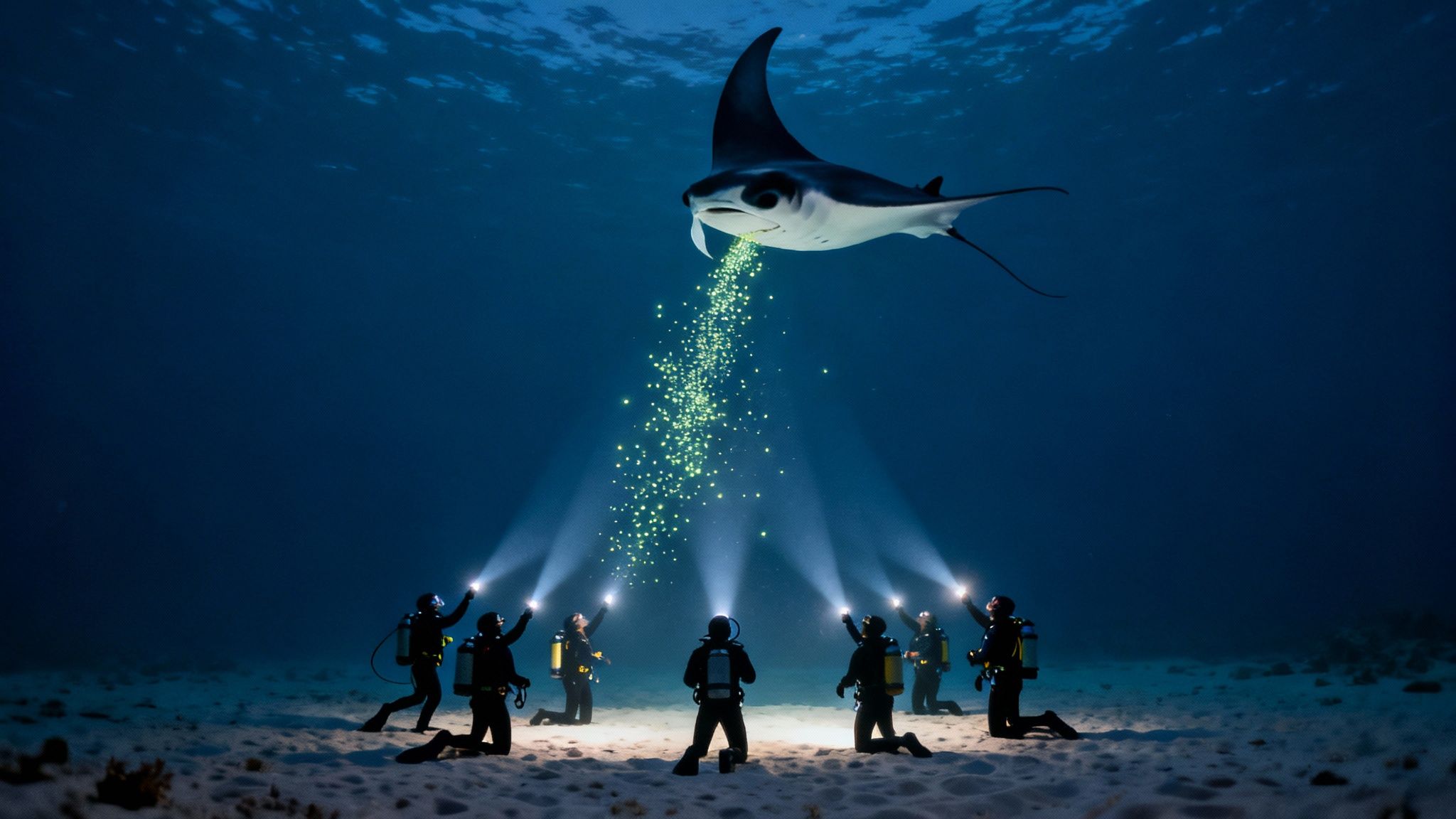
The heart of the whole operation is what we call the "campfire." Divers settle in a circle on the ocean floor, aiming their powerful flashlights straight up. This creates a massive column of light that acts like a giant dinner bell, attracting swarms of plankton—the mantas' absolute favorite meal.
The concept is beautifully simple yet incredibly effective. By creating an irresistible buffet, operators have fostered a reliable, natural feeding behavior that allows for consistently breathtaking encounters.
The Underwater Ballet Begins
You'll wait for a few moments in hushed anticipation, your light cutting a path through the dark water. And then, it happens. A huge, graceful shadow emerges from the gloom. The first manta arrives, gliding effortlessly into the beams of light. It's pure magic as it soars just inches over your head.
Before you know it, more will likely join the party, performing mesmerizing barrel rolls and somersaults as they scoop up the plankton. These gentle giants are completely unfazed by your presence; they're just there for the food. You get to witness every detail, from their intricate gills to the unique spot patterns on their bellies.
It’s a silent, beautifully choreographed ballet, and you're right in the middle of it. This is the heart of what makes the Kona manta ray night dive a true bucket-list adventure you'll be talking about for years.
How to Choose the Best Time for Your Dive
Timing is everything. When it comes to the manta ray night dive in Kailua Kona, picking the right time can elevate an amazing experience into a truly unforgettable one. The good news is that Kona’s resident manta population makes this a spectacular year-round activity, but certain times do have an edge.
Generally, the sweet spot for a manta ray dive is from late spring through early fall—think April to October. During these months, the ocean is typically calmer, which means a smoother boat ride and clearer water. Thanks to Kona's unique volcanic geography and ocean currents, there's always a steady supply of plankton, keeping the mantas reliably close to shore all year.
Even with great conditions year-round, a couple of extra factors can really make a difference.
The Lunar Cycle and Plankton
Here's a pro tip that many people don't consider: the phase of the moon. The amount of moonlight filtering into the water directly impacts the plankton, which in turn attracts the mantas.
A darker night, especially around the new moon, can be absolutely magical. With less ambient light, the powerful dive lights create an irresistible beacon for plankton.
- Better Contrast: In the dark, the operator's lights become the main event, creating a super-concentrated column of plankton.
- A Richer Buffet: This dense cloud of food is exactly what the mantas are looking for, making the "dinner table" far more appealing.
- More Manta Action: A concentrated food source often encourages more mantas to show up and can lead to more dynamic feeding behaviors.
While a full moon dive is still incredible, the pitch-black conditions during a new moon often set the stage for the most spectacular underwater light show you can imagine.
Early vs. Late Evening Trips
Most dive operators offer two main departures each night: one that catches the sunset and a later one after dark. Each has its own vibe, and the best one for you really just depends on your preference.
Early Evening (The Sunset Trip):
- The upside: You get a stunning Hawaiian sunset during the boat ride out. These trips can sometimes feel a bit less crowded.
- The downside: The mantas might take a few minutes to show up as they wait for complete darkness to settle in.
Late Evening (The Second Trip):
- The upside: By the time you arrive, the party is already in full swing. The mantas are usually already feeding, drawn in by the lights from the first tour.
- The downside: The boat ride back can feel a little chillier, and you’ll be getting back to shore later in the evening.
Honestly, there’s no wrong choice here. It’s all about understanding these little differences to pick the trip that best suits your style. To explore this topic further, take a look at our detailed guide on what is the best time to see the manta rays in Kona.
Practicing Safe and Responsible Manta Tourism
Sharing the water with Kona's manta rays is a genuine privilege, and with that comes a shared responsibility to protect them. This whole incredible experience depends on a foundation of respectful, sustainable tourism that always puts the mantas' well-being first. After all, we're visitors in their home.
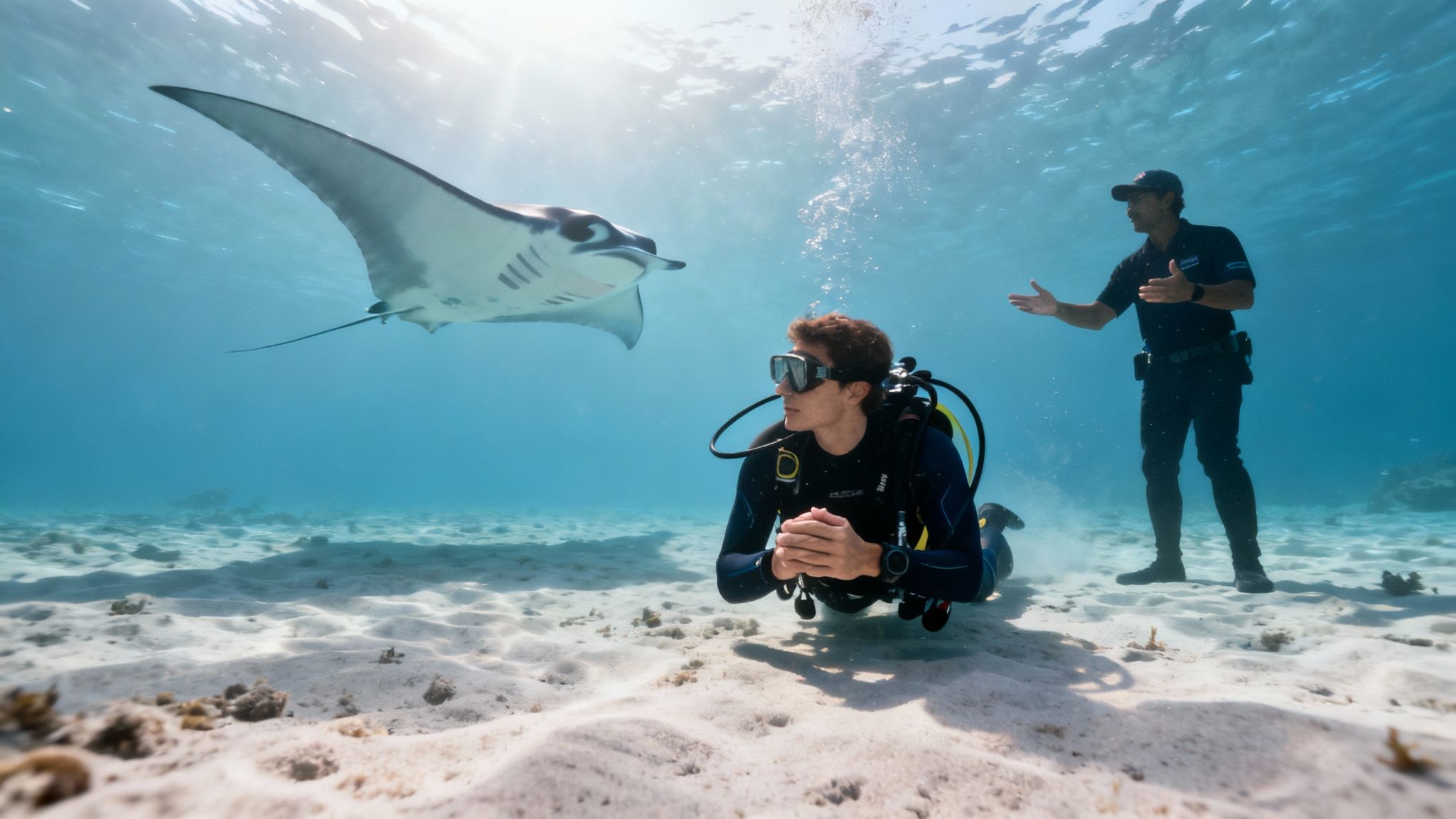
The absolute number one rule is simple: look, but never touch. It’s so important. Manta rays are coated in a protective mucus layer, which is their primary defense against infections and harmful bacteria. Even a light touch can damage this coating and leave them vulnerable to disease. Keeping our hands to ourselves is the most critical way we can show them respect.
Manta Encounter Golden Rules
To make sure every encounter is safe for both people and mantas, local operators have established a clear set of guidelines. Following these rules minimizes our impact and lets the mantas feed comfortably, just as they would naturally.
- Hold Your Spot: Divers should stay low, on or near the sandy bottom. Snorkelers need to remain on the surface. This creates a clear "stage" in the middle of the water column for the mantas to swoop and glide.
- No Chasing, Ever: Don't chase, pursue, or try to ride a manta. It's all about letting them come to you. Their natural curiosity is what makes the experience magical, so let them set the pace.
- Light Etiquette: If you’re a diver, point your light straight up toward the surface to attract plankton. Snorkelers should shine theirs straight down. And whatever you do, avoid shining your light directly into a manta's eyes.
Think of yourself as a considerate guest in their underwater dining room. You can learn even more about proper underwater behavior by reading up on https://konahonudivers.com/responsible-considerate-diver-etiquette/.
Choosing a Responsible Operator
The long-term health of Kona's manta population is directly linked to the tour companies who bring us out to see them. When you're picking an operator for your manta ray night dive in Kailua Kona, it's crucial to find one that's truly committed to conservation. The best ones are on the "Manta Ray Green List," which means they follow strict, eco-conscious standards.
The Kailua Kona dive site is famous for its incredible sighting success rate, which is consistently between 85-90%. This amazing reliability, which draws over 80,000 visitors a year, is no accident—it's the result of decades of careful management and responsible tourism.
When you're doing your research, look for operators who talk about their sustainable boating practices. It’s a good sign that their commitment to protecting the ocean goes beyond just the mantas. By choosing the right company, you become an active partner in preserving this world-class wildlife encounter for years to come.
Finding the Right Kona Manta Dive Operator
The tour operator you choose can literally make or break this incredible experience. With quite a few companies offering a manta ray night dive in Kailua Kona, picking the right one is your most important decision for a safe, ethical, and truly unforgettable adventure.
The best outfits don't just shuttle you out to a dive site. They create an entire experience built on a deep respect for the ocean and a genuine passion for sharing its magic.
First and foremost, a top-tier operator puts safety above everything else. This means they have an impeccable safety record, seasoned and certified guides who know these waters like the back of their hand, and boats and gear that are meticulously maintained.
I've also found that smaller group sizes are a huge plus. It makes the whole thing feel more personal and way less crowded when you're in the water with these gentle giants. A lower guide-to-guest ratio means you get more personal attention and feel much more comfortable, especially if you're a newer diver or snorkeler.
What to Look for in a Top-Tier Operator
As you do your research, keep an eye out for companies that are serious about sustainable and responsible tourism. The best operators are deeply involved in local conservation efforts. They follow the "Manta Ray Green List" guidelines to the letter, even though the list itself isn't actively updated anymore. It shows they genuinely care about the animals and their home.
For example, a company like Kona Honu Divers has built a stellar reputation over the years for its expert crew and unwavering commitment to marine conservation. They're known for delivering amazing guest experiences while actively protecting Kona’s beloved manta ray population. Spend some time reading recent reviews—they provide a real, unfiltered look into how a company operates and treats its customers.
Key Questions to Ask Before You Book
Don't be shy about calling or emailing potential operators with a few questions before you hand over your credit card. Being proactive now will ensure there are no unwelcome surprises later and that the tour is exactly what you're looking for. For a much more detailed breakdown, check out our guide on how to choose a Kona dive shop.
Here are a few must-ask questions:
- What is your guide-to-guest ratio for divers and snorkelers?
- Are you actively involved in local manta ray conservation or research projects?
- What, specifically, is included in the price? (e.g., gear, wetsuit, snacks, drinks)
- What is your policy if we don't see any manta rays on the tour?
When you choose an operator that prioritizes safety, respect, and sustainability, you're not just setting yourself up for a better trip. You're also doing your part to protect Kona's amazing marine ecosystem for many years to come.
Ready for an adventure you’ll never forget? Book your manta ray dive today!
Your Manta Ray Dive Questions, Answered
It's completely normal to have a few questions swirling around before you jump into the water for a manta ray night dive in Kailua Kona. After all, it's not every day you get to swim with these magnificent creatures! Let's clear things up so you can head out feeling excited and prepared.
Do I Need to Be a Certified Diver?
Nope, and that’s one of the best things about this adventure! It’s brilliantly designed to welcome everyone, whether you're a seasoned scuba diver or have never worn a snorkel mask in your life.
Certified divers get to experience the show from the ocean floor, usually around 30-40 feet deep. You'll kneel on the sand and watch the mantas perform their beautiful ballet right above you. For snorkelers, the setup is just as amazing. You’ll float on the surface, holding onto a specially designed light board that attracts the plankton, drawing the mantas right up to you.
Is Swimming With Manta Rays Safe?
Absolutely. There's a reason they're known as "gentle giants." Manta rays are filter feeders, which means they don't have teeth, stingers, or barbs—they are completely harmless to people.
Plus, every tour is run by experienced professionals who prioritize your safety above all else. Before you even dip a toe in the water, you'll get a detailed safety briefing. The dive sites themselves are carefully selected for their calm, protected waters, creating a safe and controlled environment for this unforgettable encounter.
What Should I Bring?
Packing for this trip is refreshingly simple. All you really need are the basics:
- A towel
- Your swimsuit (pro tip: wear it under your clothes to save time)
- A warm jacket or hoodie for the boat ride home—it can get surprisingly chilly once you’re out of the water!
Pretty much every reputable operator, like Kona Honu Divers, will handle the rest. They provide all the essential gear like wetsuits, masks, and fins, and usually have snacks and drinks on board. Just bring yourself and a sense of wonder.
What if the Mantas Don't Show Up?
It's a valid concern—we are dealing with wild animals, after all. But the good news is that sightings are incredibly consistent, with most operators boasting a success rate well over 90%.
Still, nature can be unpredictable. That's why the best tour companies offer a "manta guarantee." If your trip happens to be one of the rare nights the mantas decide not to come out and play, many will invite you back for another try on a different night, completely free of charge (depending on availability, of course).