
Imagine yourself floating in the warm, dark Pacific waters off the Kona coast. Suddenly, a colossal, gentle giant with the grace of a ballerina swoops into view, performing an acrobatic ballet just inches from your face. This isn't a dream—it's the world-famous manta ray night dive in Kailua-Kona, an experience that tops bucket lists and is consistently ranked as one of the planet's most unforgettable underwater encounters.
For anyone who's done it, they'll tell you it's a life-changing adventure that perfectly captures the untamed magic of the Big Island.
Experience Kona’s Unforgettable Underwater Ballet
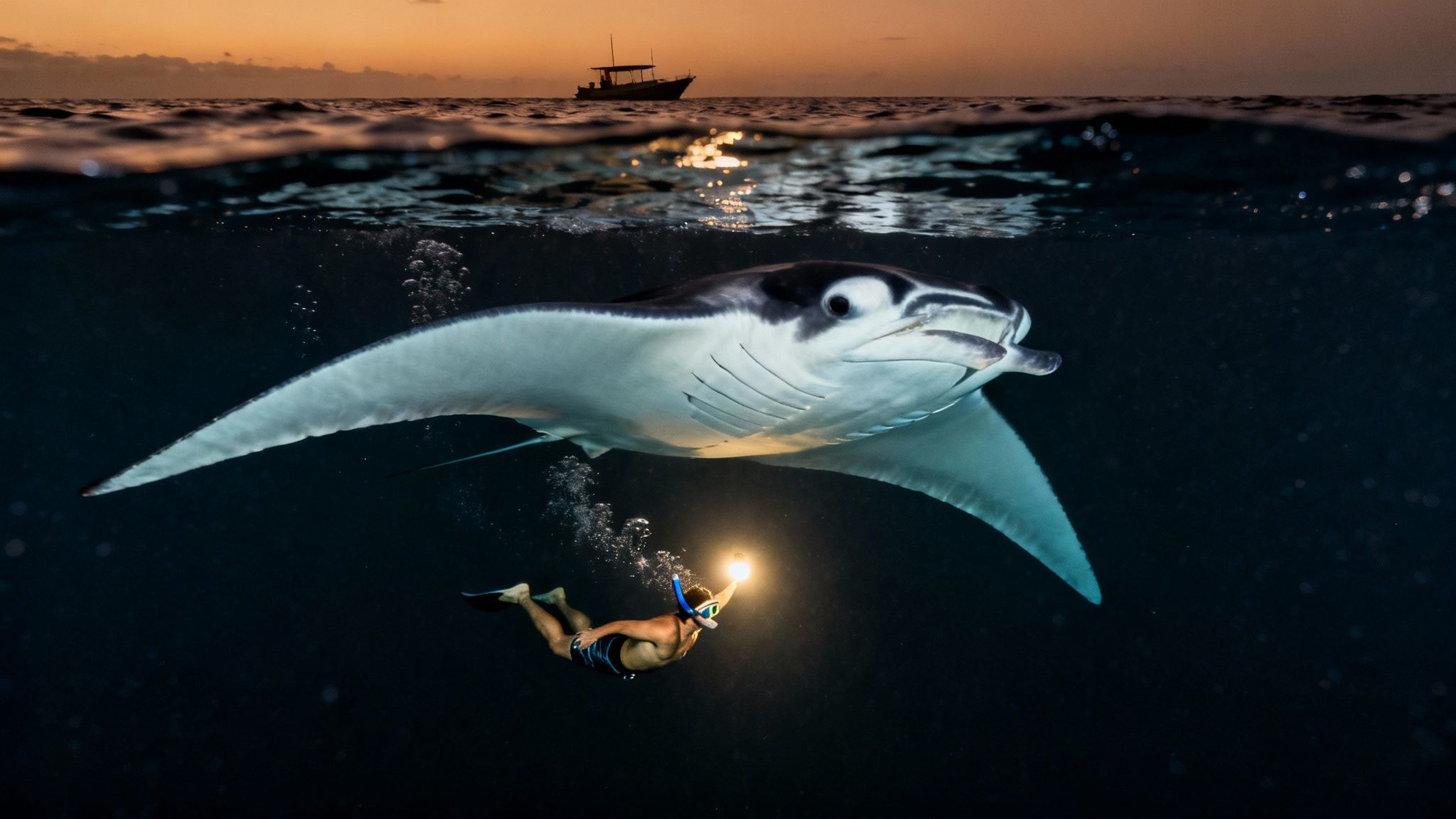
The whole experience kicks off as the Hawaiian sun dips below the horizon, setting the sky on fire with shades of orange and pink. As the boat cruises along the Kona coast, you can feel the anticipation building among everyone on board. Your guides, who know these waters like the back of their hands, will share some incredible facts about the local manta population, their habits, and the clever, simple science that makes the whole spectacle possible.
At its core, this incredible encounter is driven by a simple food chain reaction. Once you're at the dive site, powerful lights are submerged into the water. These lights act like a massive bug zapper for the ocean, attracting clouds of microscopic plankton.
This all-you-can-eat plankton buffet is exactly what the mantas are looking for, and they show up for their nightly feast. The result is an otherworldly performance where these gentle creatures—some with wingspans stretching over 12 feet—glide, swoop, and somersault right through the light beams. It’s breathtaking.
To give you a quick snapshot, here are the essential details for planning your own underwater adventure in Kailua-Kona.
Kona Manta Ray Night Dive at a Glance
| Feature | Details |
|---|---|
| Success Rate | An impressive 85-95% chance of manta ray sightings. |
| Dive Depth | Typically a shallow dive at around 30-40 feet. |
| Bottom Time | Approximately 45-60 minutes of underwater viewing time. |
| Best Time to Go | Year-round, though conditions are often calmer in the summer. |
| Experience Level | Suitable for certified divers and snorkelers of all levels. |
This table covers the basics, but the real magic is something you have to see to believe.
Why This Dive Is So Reliable
The Kona coast isn't just a random spot; it’s uniquely suited for this experience, which is why it has such an incredible 85-95% sighting success rate. The dive itself is very manageable, taking place at a comfortable depth of 30-40 feet. This shallow depth allows for longer bottom times—usually around 45-60 minutes—giving you plenty of time to just relax and soak it all in.
This reliability turns the dive from a hopeful gamble into a near-certainty. It’s not a question of if you'll see mantas, but how many. Both divers and snorkelers get a front-row seat to one of nature’s most graceful shows. You can get a much deeper sense of the whole thing by reading about what it's like to go on the manta ray dive in Kona.
After an experience like this, you'll definitely want a way to remember it forever. A great option is to turn your favorite dive photos into stunning wall art, creating a beautiful reminder of the night you spent dancing with giants.
Choosing the Best Kona Manta Ray Dive Location
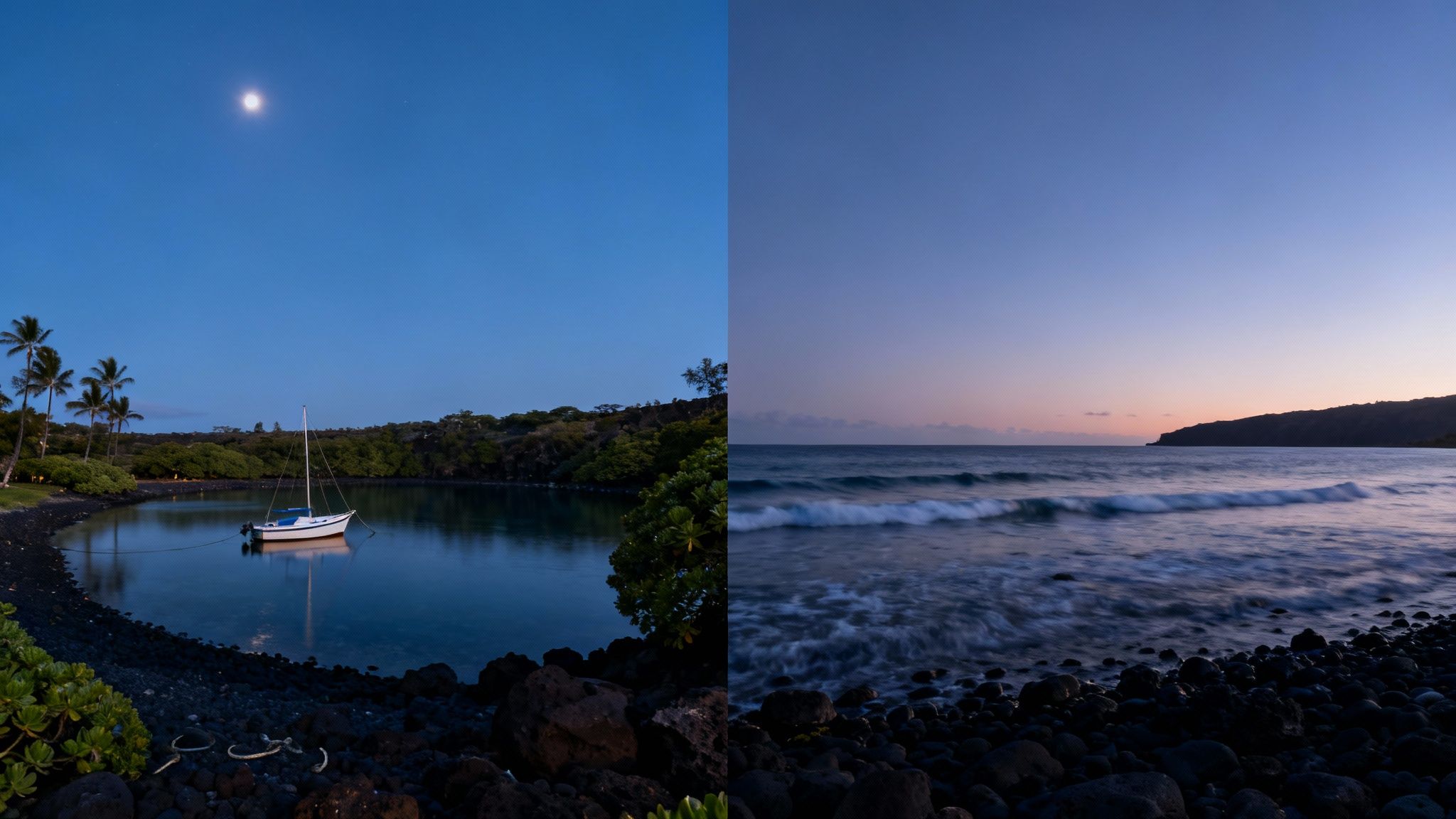
When you're gearing up for a manta ray night dive in Kailua-Kona, you’ll quickly find you have two main stages for this incredible show. Think of it like choosing between two world-class theaters—both put on an amazing performance, but the venue and vibe are a little different.
The two go-to spots are ‘Manta Village’ down in Keauhou Bay and ‘Manta Heaven,’ also known as Garden Eel Cove. Knowing what makes each unique is the key to picking the right one for your adventure and making sure the experience is everything you’re hoping for.
Manta Village in Keauhou Bay
Manta Village, just south of Kailua-Kona, is the O.G. of manta dive sites. This spot came to life decades ago when the Kona Surf Hotel (now the Outrigger Kona Resort) started pointing its bright lights into the bay. The light attracted plankton, and the mantas followed right behind.
- The Good: The site has a long history of reliable manta visits and can be a shorter boat ride if you're staying closer to Keauhou.
- The Downside: It’s a pretty wide-open bay. That means when the ocean swells pick up, the conditions can get a bit rough, which might not be ideal for everyone.
Manta Heaven at Garden Eel Cove
Just north of town, near the airport, is Manta Heaven. For a lot of seasoned divers and local operators, this is the undisputed champion of Kona manta sites, and for good reason.
It’s tucked into a cove that offers much better protection from the open ocean swells. This usually translates to calmer, more comfortable water for both divers and snorkelers, making it a more dependable choice no matter the time of year.
The natural shelter at Manta Heaven doesn't just make for a smoother boat ride. It creates a more stable, predictable environment that keeps the mantas coming back night after night for their plankton feast.
The consistency of sightings here is just phenomenal. Manta Heaven is famous for having a higher concentration of mantas, and while nothing in nature is a 100% guarantee, seeing up to 20 different individuals in a single dive is not out of the ordinary here.
At the end of the day, you can’t really go wrong with either spot. Both offer a breathtaking chance to see these gentle giants up close. But the combination of calmer waters, easier access, and the sheer number of mantas makes Garden Eel Cove the top pick for most. By heading there, you’re really stacking the deck in your favor for a truly mind-blowing experience.
You can dive deeper into the specifics of where the best place to dive with manta rays is in our more detailed breakdown.
Getting Ready for Your Manta Ray Adventure
A little bit of prep work can transform a good trip into a truly mind-blowing one. Your journey to an unforgettable **manta ray night dive in Kailua-Kona** really starts with one key decision: choosing the right people to take you out on the water.
Picking a reputable, safety-conscious operator is hands-down the most important choice you'll make. Look for a company that acts as a steward of the ocean, not just a tour operator. Their crew should be just as committed to the well-being of the mantas as they are to their guests.
What to Bring and What to Expect
Once you've got your tour booked, it's time to think about packing your bag for the boat. Even in paradise, things can get a little brisk after dark.
Here are a few must-haves for the trip:
- A Warm Jacket or Sweatshirt: Trust me on this one. The ride back to shore after a night dive can be chilly, and you’ll be glad you have it.
- A Towel: Essential for drying off and warming up the second you're back on the boat.
- Reef-Safe Sunscreen: If your tour starts in the afternoon sun, make sure you're protected with sunscreen that won't harm the delicate coral reefs below.
- An Underwater Camera: You are going to want to relive this. If you have a waterproof camera, don't leave it behind!
One of the biggest questions we get is about certification. To join the SCUBA dive, you absolutely must be a certified diver. But here’s the great news: no certification is needed to snorkel! Snorkelers get an equally breathtaking view from the surface, making this an incredible experience for everyone. For a deeper dive, check out our guide on the gear you will need for your Kona diving adventure.
Staying Safe and Comfortable
If you know you're prone to seasickness, don't let it ruin your night. It's always a good idea to take motion sickness medication beforehand so you can focus on the magic, not on a queasy stomach.
Finally, and this is crucial, listen up during the pre-dive briefing. The crew will go over everything you need to know—how to get in the water safely, how to interact with the mantas passively (a "look, don't touch" policy is key), and the hand signals to use. This isn't just about your safety; it's about respecting these gentle giants and their home.
Ready to book your spot? You can learn more and secure your adventure on the official Kona Honu Divers Manta Ray Tour page.
What to Expect During Your Dive
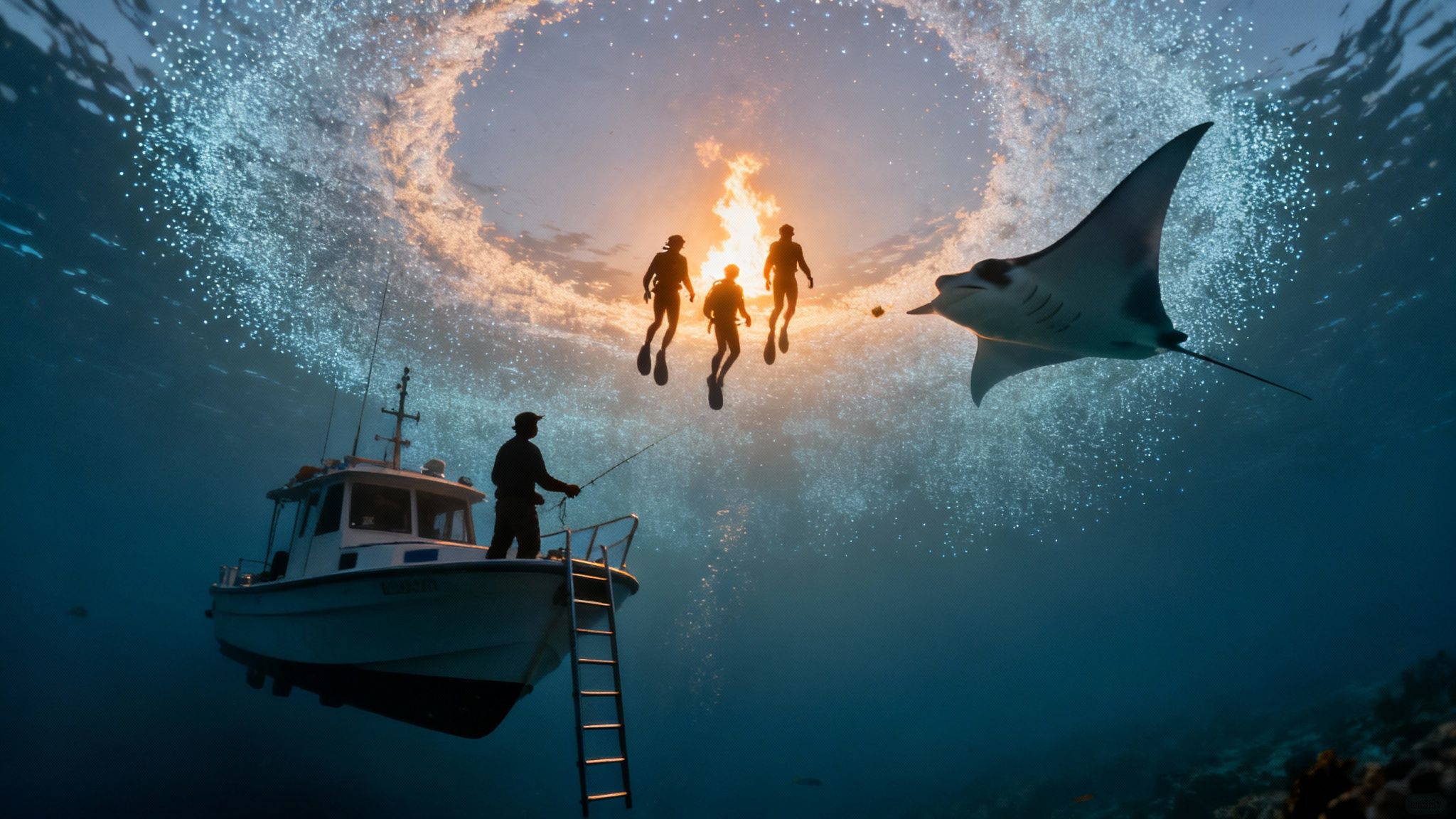
Your manta ray night dive in Kailua Kona kicks off late in the afternoon as the sun starts to dip toward the horizon, bathing the Pacific in that perfect golden-hour light. There’s a palpable buzz of excitement on the boat—a mix of nerves and pure anticipation for what's to come. The ride out is an experience in itself, giving you a front-row seat to the Kona coastline as the sky puts on its nightly sunset show.
On the way to the dive site, the guides will run through a detailed safety briefing. Pay close attention here. This isn't just about ticking boxes; it's about making sure everyone, from a newly certified diver to a seasoned pro, knows exactly what to do. They’ll cover everything from how to get into the water to the most important rule of all: look, but don't touch.
As dusk turns to twilight, it’s time to gear up. The crew helps everyone get their equipment sorted, and the familiar sounds of tanks being opened and wetsuits zipping up fill the air. Then, one by one, you’ll make your entry into the surprisingly warm Hawaiian water.
Descending into the Blue
The moment you slip under the surface, the world changes. You'll follow your guide down into the darkening blue, landing on a sandy patch of the ocean floor, usually around 30-40 feet deep. Down here, divers find their spot and settle in, forming a kind of underwater amphitheater around a central point.
Next, the crew brings down the main event: a powerful light rig sometimes called the "campfire." This is the key to the whole operation, but its purpose isn't what you might think. The light isn't there for you to see the mantas. It's there to attract their food.
The science behind this incredible encounter is wonderfully simple. The bright lights draw in millions of tiny plankton, creating a thick, shimmering cloud in the water. For the local manta rays, this is basically a giant, glowing dinner bell.
As the plankton gather, you wait. At first, you might just see a dark shape moving at the edge of the light. Then, one emerges. A massive, graceful creature gliding silently into the beams, its incredible wingspan making it look like something from another world.
The Underwater Ballet Begins
Soon, another manta arrives, and then another. The real show is starting. They put on a mesmerizing acrobatic display, swooping and barrel-rolling right through the thick plankton soup with their cavernous mouths wide open. They glide effortlessly, sometimes passing just inches over your head, completely at ease with the audience of divers below.
You’ll spend about 45 minutes completely captivated by this performance. It's surprisingly peaceful down there. The only sounds are the rhythmic hiss of your own breathing and the occasional muffled gasp of awe from a nearby diver. It’s an experience that’s hard to put into words—profound, humbling, and absolutely unforgettable.
When your guide finally signals that it's time to head up, you’ll ascend slowly, the image of the mantas dancing in the light forever etched in your memory.
How to Be a Good Guest in the Manta’s World
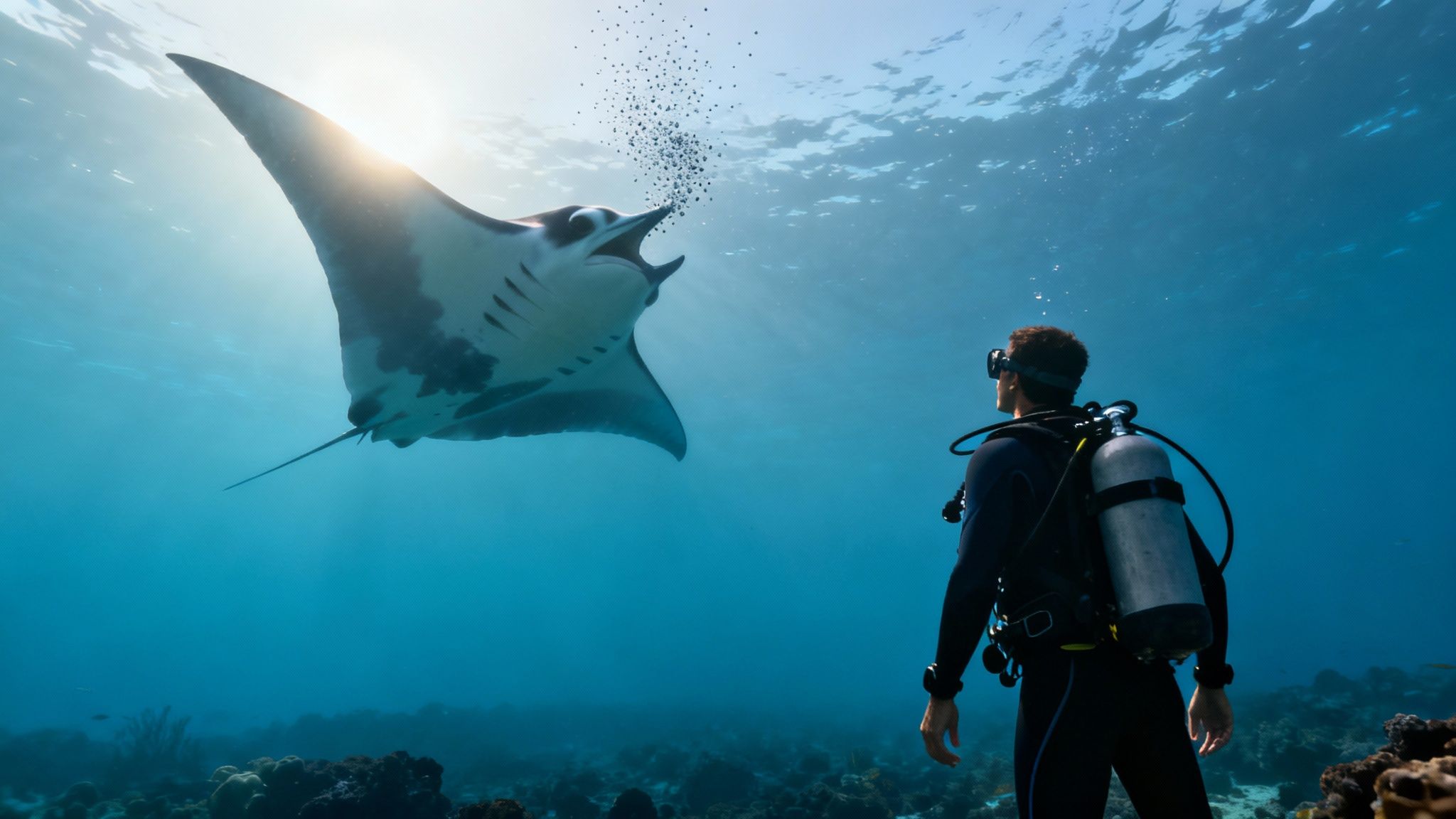
Getting to see the manta ray night dive in Kailua Kona is more than just an excursion; it's a privilege. You're getting a front-row seat to one of nature’s most incredible ballets. But with that privilege comes a big responsibility. These gentle giants are a precious resource, and it's on us to make sure we're interacting with them in a way that keeps them safe for years to come.
The entire philosophy behind a responsible manta tour boils down to one simple, yet crucial, idea: passive observation. This is the absolute golden rule. It’s what makes the mantas feel secure enough to keep coming back night after night, and it’s what turns a good dive into an ethical and unforgettable one.
The Golden Rules of Manta Interaction
To protect the mantas, every diver and snorkeler needs to follow a few ground rules. These aren't just polite suggestions—they're essential for the well-being of the animals and the long-term health of this amazing experience.
- Look, Don't Touch: This is the big one. Manta rays have a protective mucous coating on their skin, which is like their immune system against nasty bacteria in the ocean. If you touch them, you can rub off this delicate layer and leave them exposed to infections.
- Let Them Come to You: Never, ever chase, grab, or try to ride a manta. Your job is to stay still and let them control the encounter. If you become a calm part of the scenery, they'll often glide inches over your head completely on their own terms.
- Hold Your Spot: If you're diving, stay on or very near the sandy bottom. If you're snorkeling, stay flat on the surface. This keeps the whole "water column" in the middle wide open, giving the mantas a clear flight path to do their spectacular feeding loops.
The main takeaway is simple: act like a respectful guest in their underwater home. When you let the mantas take the lead, the interaction feels far more genuine and magical, and you can rest easy knowing you're helping protect them.
Choosing a tour operator who lives and breathes these rules is the single best thing you can do to support responsible tourism. When you book with a good company, your money helps the local economy and sends a clear message that protecting this unique marine ecosystem matters.
Beyond just being a great experience, these organized tours have become a huge asset for scientific research. Consistent, nightly observations have given experts a treasure trove of information, allowing them to identify individual mantas and monitor the health of the population. In fact, data collected by dedicated underwater videographers between 2009 and 2014 was critical in understanding manta behavior at both the Manta Village and Manta Heaven sites. You can learn more about the research contributions of manta ray tourism and see just how much we've learned.
Frequently Asked Questions About the Kona Manta Dive
Thinking about a **manta ray night dive in Kailua-Kona** is one thing, but committing to it is another. It’s completely normal to have a few questions before you book, and getting clear answers can make all the difference. We’ve gathered some of the most common things people ask to help you feel confident and ready for this incredible adventure.
Once you have the details sorted, you can stop worrying about the logistics and start getting excited about the magic.
Do I Need to Be a Certified Diver?
Not at all! This is probably one of the best things about the Kona manta experience—it’s designed for pretty much everyone. While certified divers get to watch the show from the sandy bottom, snorkelers get an equally amazing, front-row seat right at the surface.
You'll hold onto a custom-made, high-powered light board and float comfortably on top. Because the mantas swim right up to the lights to feed on plankton, you're often just as close to the action as the divers below. The best operators, like Kona Honu Divers, run trips that accommodate both divers and snorkelers, so your whole group can share the experience together.
> The entire experience is built to be inclusive. Whether you’re a seasoned diver with hundreds of dives under your belt or you’ve never even worn fins, you can witness the mantas’ underwater ballet.
Is the Manta Ray Night Dive Safe?
Absolutely. When you go with a professional, reputable company, the manta ray night dive is a very safe activity. These operators live and breathe safety, and it shows. Before anyone even touches the water, you'll get a thorough and easy-to-follow briefing covering all the dos and don'ts.
Your guides are highly trained professionals who know how to manage groups in the dark and make sure everyone follows the passive observation rules. The dive sites are well-known and managed, and the whole operation runs like a well-oiled machine. The crew's number one priority is your safety, which lets you relax and just soak in the wonder of it all.
What Should I Bring on the Tour?
A little preparation goes a long way in making your trip more comfortable. Here are a few must-haves for your manta ray night dive in Kailua-Kona:
- A Towel: You’ll be glad you have it the second you’re back on the boat.
- Warm, Dry Clothes: A sweatshirt or jacket is a game-changer for the ride back to the harbor. Even on a warm day, the ocean air can get chilly at night, especially when you're damp.
- An Underwater Camera: If you have one, this is the time to bring it! These are memories you'll want to capture.
Everything else you need for the actual dive or snorkel is provided by the tour company, so you don't have to worry about gear. Most operators also have snacks and water on board, but feel free to bring your own if you'd like.
Will I Be Guaranteed to See Manta Rays?
While no one can 100% guarantee a wildlife sighting, the success rate for seeing mantas in Kona is incredibly high—we're talking over 90% of the time. The dive sites are established feeding grounds that the local manta population has been returning to for decades. The powerful lights create a plankton buffet they just can't resist.
On the very rare night the mantas don't show up, most top-tier companies have a "manta guarantee." This usually means you can come back and try again on another night, completely free of charge. It’s their way of showing how confident they are that you’ll see mantas. Just be sure to ask about the specific policy when you book to give yourself that extra peace of mind.
Ready to see this world-famous underwater ballet for yourself? Kona Honu Divers runs expertly guided tours that put safety, sustainability, and an unforgettable experience first. Book your manta ray dive tour today and get ready for an adventure you’ll be talking about for years.