
Picture this: you're sinking into the warm, dark Pacific waters off the Big Island. Suddenly, colossal, gentle shadows begin to glide around you. They're manta rays, performing an incredible underwater ballet right before your eyes. This is the magic of the manta ray night dive in Kailua Kona, and it's an experience that stays with you forever.
For so many divers and snorkelers, this isn't just another item on a travel checklist; it's a profound, almost spiritual connection with one of the ocean's most majestic creatures.
Your Front-Row Seat to an Underwater Ballet
The Kona coast isn't just a stunning backdrop; it's the perfect natural stage for this nightly spectacle. Let's walk through everything you need to know to make this adventure happen, from the science behind the show to how you can choose a tour that's both ethical and absolutely awe-inspiring.
This dive has become a cornerstone of Big Island tourism, and for good reason. Around 80,000 visitors come every year to witness it firsthand. The real draw? It’s incredibly reliable. The success rate for spotting these gentle giants is astonishingly high, often sitting between 80% and 90%. That makes it one of the most dependable wildlife encounters on the planet.
Key Viewing Locations
There are two primary sites along the Kona coast where this nightly show takes place, and each offers a slightly different vibe.
- Manta Heaven (Garden Eel Cove): This spot is north of Kona and is famous for attracting huge congregations of mantas. It's not uncommon to see a dozen or more swooping in at once.
- Manta Village (Keauhou Bay): Located south of town, this is the original manta viewing site. It's known for its consistency and calm, shallow water, which makes it a fantastic option for all experience levels.
Getting to know the subtle differences between these spots is the first step in planning your perfect trip. We have a detailed guide on the best place to dive with manta rays that can help you decide.
Why Choosing the Right Guide Matters
Your experience, from the moment you step on the boat to your final, amazed ascent, is shaped by the crew leading your tour. This is why going with a trusted, responsible operator like Kona Honu Divers is so crucial. It’s the key to having an encounter that’s both amazing and ethical.
A great guide provides more than just gear. Their deep local knowledge and commitment to manta ray conservation ensure the experience is safe for both you and the animals. They give you the safety briefings and context that turn a simple dive into a seamless, educational, and truly unforgettable memory. With their guidance, you're not just a spectator—you're a respectful guest in the mantas' world.
How the Manta Ray Night Dive Works
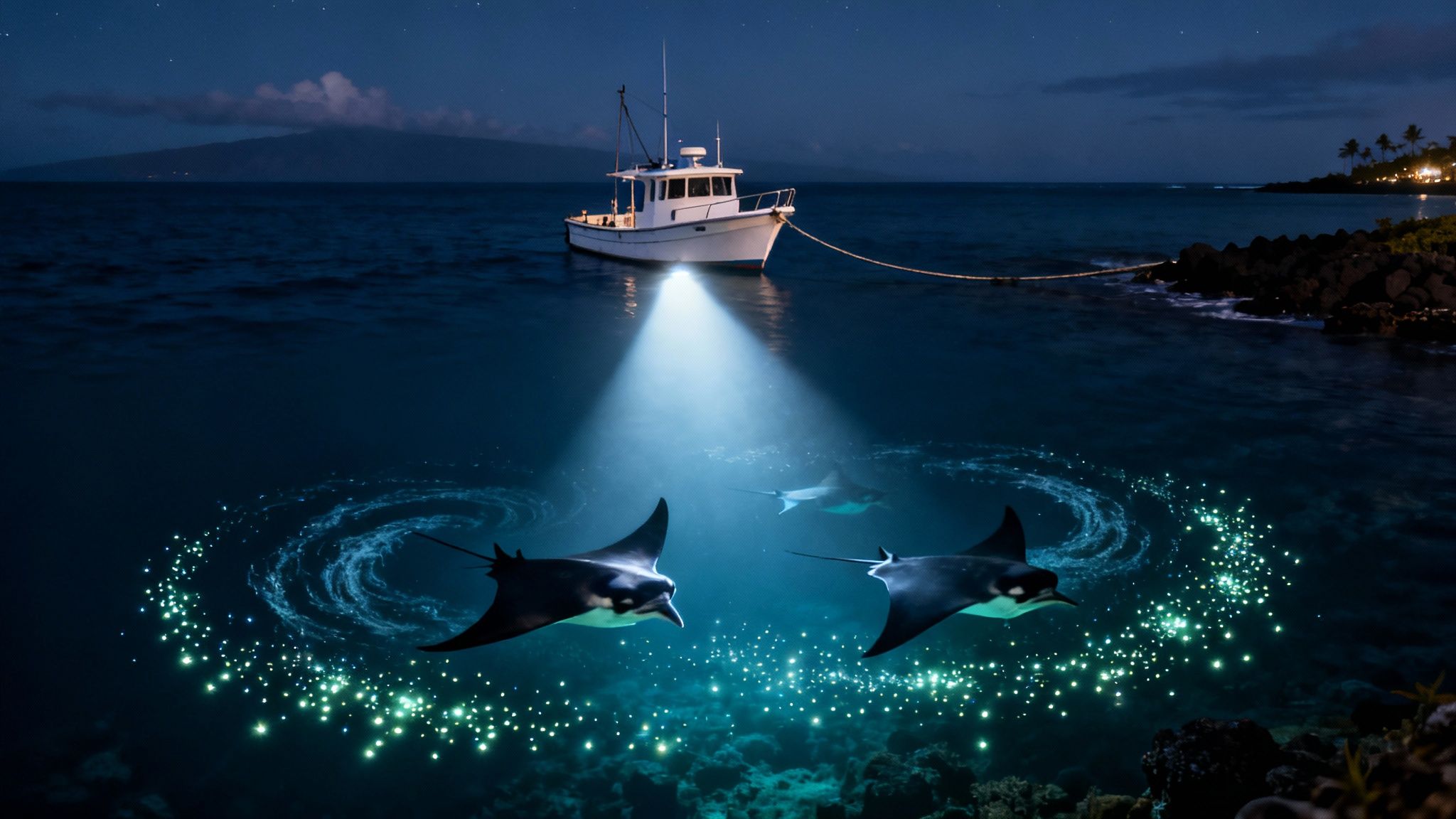
So, how do dozens of giant manta rays know exactly where to show up for dinner every single night? It’s not some kind of ocean magic, but it’s just as cool. The entire spectacle is built around a brilliantly simple idea: creating an underwater campfire.
Dive operators have scouted out specific spots where they set up powerful, yet safe, lights that cut through the dark water. These bright beams are like a massive bug zapper, but for plankton—the microscopic critters that just so happen to be a manta ray’s favorite meal. In no time, the columns of light are thick with a plankton soup.
This creates a reliable, all-you-can-eat buffet that the local manta population has learned to count on. It's a win-win situation: the lights bring the food, and the mantas bring the unforgettable show.
A Happy Accident: The History of the Kona Manta Dive
This world-famous encounter wasn't some grand, planned-out design. Like many great discoveries, it happened by pure chance. Back in the early 1990s, the Kona Surf Hotel (which is now the Sheraton Kona Resort at Keauhou Bay) put up some bright lights to illuminate its oceanfront property at night.
Divers exploring the area after dark started noticing something incredible—manta rays were gathering in the light beams, feasting on the plankton that swarmed to the glow. It was a classic "aha!" moment. Word got out, and a few forward-thinking dive operators realized they could recreate this phenomenon pretty much anywhere along the coast.
By building what is essentially a mobile "campfire" of lights, dive operators turned a hotel's happy accident into one of the most reliable and awe-inspiring wildlife encounters on the planet. That leap from floodlights to a dedicated, sustainable dive is the reason this amazing experience exists today.
This simple but effective method gives the mantas a dependable meal and gives us an incredibly high chance of seeing their graceful feeding ballet up close.
Scuba, Snorkel, or Watch: Your Way to See the Mantas
One of the best things about this experience is how accessible it is. You don't need to be a veteran scuba diver to get a front-row seat. There are three main ways to see the show, and each gives you a totally different, yet equally amazing, perspective.
1. Scuba Diving
This is the classic, fully immersive way to do it. As a certified diver, you'll head down to the sandy bottom, usually around 30-40 feet, and find a spot to settle in. From there, you'll point your dive light up, adding your beam to the big "campfire" attracting the plankton. Then you just look up as the mantas swoop, glide, and do barrel rolls right over your head, sometimes just inches away. It’s a breathtaking, bottom-up view that makes you feel tiny in the best way possible.
2. Snorkeling
If you're not a diver or just prefer staying near the surface, snorkeling is a fantastic option. You’ll hold onto a large, custom-built float that has bright lights pointing down into the water. This pulls the plankton right up to the surface, and the mantas are quick to follow. You get to float comfortably and watch these gentle giants feed and somersault just a few feet below you.
3. Boat Viewing (Ride-Along)
For those who’d rather stay dry, many operators offer a ride-along option. You get to hang out on the boat, soak in the electric atmosphere, and watch the action from above. You can easily see the bright lights in the water and the massive, shadowy outlines of the mantas as they move beneath the surface. This is a great choice for younger kids or anyone not quite comfortable getting in the ocean at night.
No matter which you choose, you're in for a treat. Each option guarantees a stunning view, making this an adventure that almost anyone visiting Kailua-Kona can be a part of.
Choosing the Best Time for Your Manta Adventure
The world-famous manta ray night dive in Kailua Kona is an incredible experience you can have any night of the year. That said, a little insider knowledge can help you pick a time when the conditions are just right, turning a great dive into an unforgettable one.
One of the best things about scuba diving Kona, Hawaii is that our local manta rays are homebodies—they don't migrate. You can find them here 365 days a year. The real variable isn't the mantas, but the ocean itself.
Peak Season for Calm Seas
For the calmest water and smoothest boat rides, the prime season is generally from late spring to early fall, think April through October. During these months, the Pacific tends to be much flatter along the Kona coast, which makes for a more comfortable and enjoyable trip for everyone.
Calmer water also often means better visibility and a more concentrated food source for the mantas. The plankton they feed on gets stirred up less, creating a richer buffet that draws in more of our resident population—which includes nearly 200 individually identified rays. Experts can actually tell them apart by the unique spot patterns on their bellies! You can see some amazing photos and learn more about identifying Kona's manta population on uwphotographyguide.com.
Ultimately, this calmer period just makes the whole operation smoother and lets you focus on the amazing show happening below.
The Secret of the New Moon
Here’s a tip that many first-timers overlook: the phase of the moon. While you'll see mantas on any given night, timing your dive with a new moon can seriously upgrade your experience.
When there's a new moon, the sky is pitch black. This means the powerful lights we shine into the water become the only significant light source, acting like a super-magnet for plankton. The result is a more concentrated "manta buffet."
A big, bright full moon can sometimes diffuse the light and spread the plankton out. The mantas will still be there, but the feeding can feel more focused and intense on the darkest nights. It's a small detail that can make a huge difference in the action you'll witness. For more on this, check out our guide on the best time to see manta rays in Kona.
Sunset Tour vs. Second Dive
Most companies offer two trips each evening, and they both have their perks. There’s really no wrong answer, but your choice comes down to the kind of vibe you're looking for.
- The Sunset Tour: This is easily the most popular choice. You motor out in the late afternoon, catch a spectacular Hawaiian sunset from the boat, and then slip into the water as dusk turns to night. It’s a truly magical transition.
- The Second Dive (Later Trip): This trip heads out after the sunset boats are already back at the harbor. The biggest plus? It’s often way less crowded. With fewer boats and lights in the water, the experience can feel much more intimate.
So, do you want the classic sunset show or a quieter, more personal encounter with the mantas? It’s totally up to you.
Planning your dive around these factors can really pay off. Here’s a quick-glance table to help you decide.
| Factor | Optimal Condition | Reasoning |
|---|---|---|
| Time of Year | April – October | Waters are typically calmer, leading to smoother boat rides and better visibility. |
| Moon Phase | New Moon (or close to it) | The darker sky makes the dive lights a stronger plankton magnet, concentrating the food and the mantas. |
| Tour Time | Sunset or Later Dive | Sunset offers beautiful views; the later dive often means fewer crowds for a more intimate experience. |
While you can't go wrong any time of year, using this guide will help you pick the absolute perfect time for your own manta ray adventure.
What to Expect on Your Manta Ray Tour
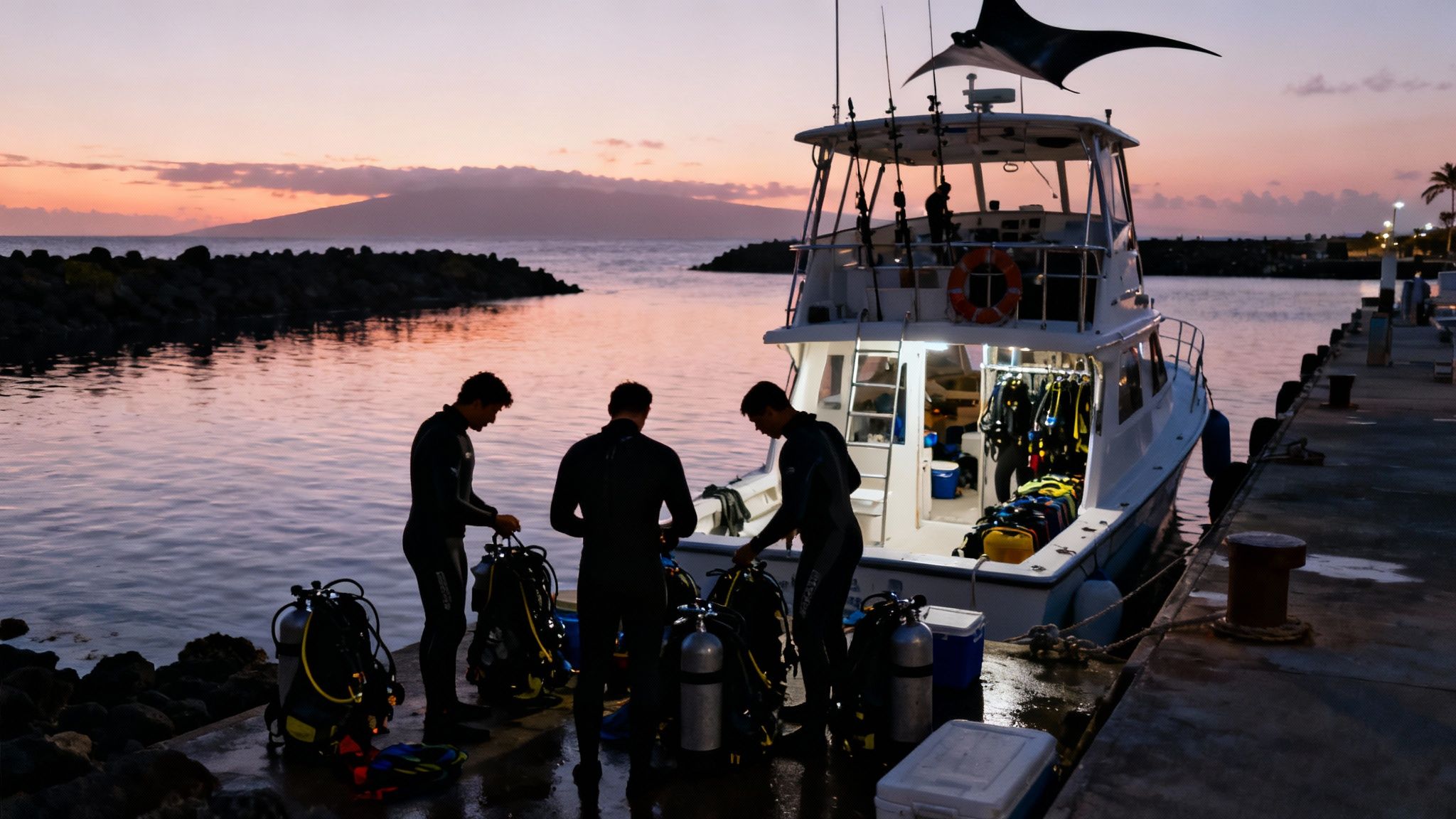
It's completely normal to feel a few butterflies before a big dive, but we can quickly turn those nerves into pure excitement. Knowing exactly how the evening will unfold helps you relax and really soak in the magic of the manta ray night dive in Kailua Kona. Let's walk through the whole adventure, step by step.
Your night begins right at the harbor, where you'll meet the crew and check in. This is the perfect time to ask any last-minute questions and get settled on the boat that will be your home base for the next few hours.
Once everyone is aboard and accounted for, the real prep work begins. Your guides will walk you through a detailed safety briefing—and this part is critical. They'll cover everything from getting in and out of the water to the golden rules of interacting with the mantas. Listen closely, because this info is your ticket to a safe and respectful encounter.
Gearing Up for the Adventure
Don't worry about lugging a giant gear bag for this trip. Any reputable operator will have you covered with all the essential equipment to keep you safe and comfortable.
Here’s what they’ll provide:
- Wetsuits: The Pacific can get a little brisk after sunset, so a good wetsuit is a must for staying warm.
- Mask, Snorkel, and Fins: The standard kit for getting a great view underwater.
- Dive Lights: Everyone gets a powerful underwater light to help attract the plankton.
- Scuba Gear: If you're a certified diver, this includes your BCD, regulator, tank, and weights.
- Flotation Devices: Snorkelers get a custom-made light raft to hold onto, which makes floating effortless.
While the crew handles the heavy lifting, you’ll want to bring a few personal items. A towel and a warm, dry change of clothes are non-negotiable for the boat ride home. And if you have an underwater camera, bring it—you’re going to want proof of what you see!
The Journey to the Dive Site
With everyone briefed and ready, it's time to head out. The boat ride itself is part of the experience. You’ll cruise along the gorgeous Kona coast just as the sun dips below the horizon, lighting up the sky in fiery shades of orange and pink. It’s the perfect prelude to the main event.
The dive sites, like the famous "Manta Heaven" and "Manta Village," aren't random spots. They are well-established feeding grounds where manta sightings are incredibly consistent. In fact, videographers meticulously documented individual rays here from 2009 to 2014, providing a treasure trove of data on their behavior. This deep understanding is why the crews know exactly where to go. You can even explore more manta ray statistics and research to see how this work has shaped the entire experience.
This isn't just a boat trip; it's a finely tuned production. Every detail, from the departure time to the placement of the lights, is carefully planned to give you the absolute best chance of an awe-inspiring encounter.
The Main Event Underwater
Once the boat is anchored, it’s showtime. The process is a bit different depending on whether you’re diving or snorkeling.
Scuba divers will follow their guide down to a sandy patch on the ocean floor, usually around 30-40 feet deep. There, you’ll settle in a semi-circle and shine your lights straight up, creating a "campfire" of light that draws in the plankton.
Snorkelers have it even easier. You'll hop in the water and paddle over to a large, floating raft equipped with bright lights. All you have to do is hold on, float on the surface, and point your light down. The plankton immediately swarms to the light, bringing the mantas right up to you for a breathtaking, face-to-face view.
No matter which way you choose to experience it, the result is the same: an unforgettable underwater ballet performed by Kona's gentle giants. Booking one of the top-rated manta ray dive tours guarantees you’re in the best hands for this true once-in-a-lifetime adventure.
Safety and Manta Ray Conservation
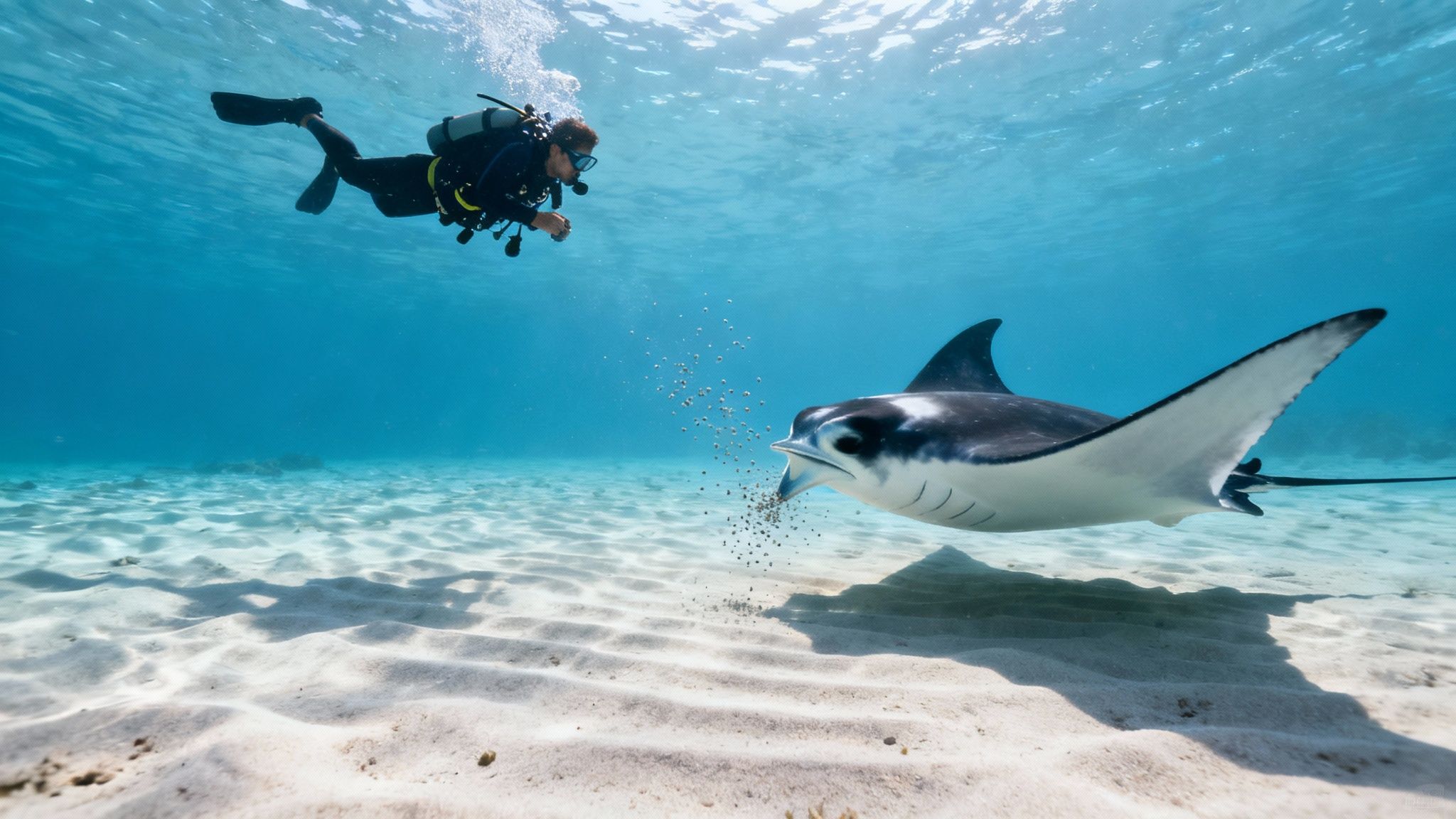
The manta ray night dive in Kailua Kona is an absolute privilege, and with that privilege comes a shared responsibility. The thrill of seeing these gentle giants is matched only by the importance of protecting them and their habitat. Any reputable dive operator out here is deeply committed to this, following strict guidelines to keep both the mantas and the divers safe.
The core of this commitment boils down to one simple idea: passive observation. And the single most important rule is to never, ever touch a manta ray.
Mantas are covered in a protective mucous coating that acts like a shield against bacteria. Touching them, even with the best intentions, can strip away this layer, leaving them wide open to infections and disease. It's like accidentally removing their invisible armor—a small action for us that can have huge health consequences for them. Keeping a respectful distance is key to making this incredible encounter sustainable for years to come.
The Rules of Engagement
To make sure every dive is safe and ethical, the best Kona operators follow what’s often called the 'Manta Ray Green List' standards. These guidelines are all about creating a predictable, stress-free environment for the mantas to do their thing—eat!
Here are the key principles your guide will cover in the briefing:
- Look, Don't Touch: Your job is to be a silent, passive observer. That means no petting, no chasing, and definitely no trying to "ride" a manta. Let them move and feed naturally.
- Hold Your Position: If you're a scuba diver, you’ll be positioned on or near the sandy bottom. If you're snorkeling, you'll stay on the surface. This keeps the entire water column open for the mantas to swoop and glide without obstacles.
- Nail Your Buoyancy: For divers, good buoyancy control is non-negotiable. It prevents you from accidentally floating up and bumping into a ray, and it also protects the fragile ecosystem on the seafloor.
- Mind Your Bubbles: When a manta glides overhead, try to time your breathing so you aren't exhaling a stream of bubbles directly into its face.
Sticking to these simple rules ensures the mantas continue to see the dive sites as a safe, reliable feeding station. That trust is the real secret behind Kona's world-famous, consistent sightings. And if you're curious about their behavior, you can learn more about whether manta rays can sting in our detailed guide.
Your Safety Comes First
While manta conservation is paramount, so is your own safety. Night diving adds a new layer to the experience, and your guides are seasoned pros at managing the unique challenges. Always stick close to your divemaster or snorkel guide—they know the site like the back of their hand and are experts at keeping the group together in the dark.
Pay attention to your surroundings at all times. This includes other divers, the boat's position, and the ocean floor below you. Your pre-dive briefing is crucial, so listen up and ask any questions you might have. Nothing is a silly question when it comes to safety.
Choosing an operator that puts both conservation and diver safety at the top of their list is the best way to guarantee your adventure is unforgettable for all the right reasons. This shared commitment is what will preserve this world-class dive for generations to come.
Your Manta Dive Questions, Answered
If you're getting ready for your first manta ray night dive in Kailua Kona, you probably have a few questions. That's a good thing! To help you feel completely prepared for this incredible adventure, here are the answers to some of the most common things people ask.
Do I Have to Be a Certified Diver to See the Mantas?
Not at all—and this is probably the biggest misconception out there. While getting a scuba diver's view from the ocean floor is amazing, snorkeling is an equally breathtaking way to see the show.
Snorkelers get to float on the surface, holding onto a custom-built light board that shines down into the water. These powerful lights are like a dinner bell, attracting the plankton that manta rays love to eat. You'll watch them swoop and perform barrel rolls just feet, sometimes inches, below you. It's a fantastic option for families, non-divers, or anyone who wants the thrill without the tank.
How Safe Is the Manta Ray Night Dive?
When you go with a professional, reputable tour operator, it's incredibly safe. Safety is their absolute top priority. These companies have experienced divemasters, instructors, and captains who follow very strict protocols that have been fine-tuned over many years.
Before you even touch the water, your guide will give you a detailed briefing covering everything you need to know. The dive sites themselves are well-established and relatively shallow (usually 30-40 feet), and the operators choose locations that are sheltered from rough seas. All you have to do is listen to your guide, relax, and enjoy a completely controlled and unforgettable experience.
This isn't just a random swim in the dark ocean. It’s a highly organized and supervised activity, refined over decades to be as safe as possible for both people and the mantas.
What if We Don't See Any Manta Rays?
It's a valid question! While manta sightings in Kona are unbelievably consistent—we're talking success rates well over 90%—these are still wild animals. There’s never a 100% guarantee.
The good news is that the best tour companies know this and almost always offer a "manta guarantee." On the very rare night that the mantas don't show up, most operators will invite you back for a second trip, free of charge (subject to availability). This is exactly why I recommend booking your manta dive for one of your first nights on the island—it gives you plenty of time to reschedule if needed. Just be sure to ask about the specific policy when you book.
What Should I Pack for the Trip?
The tour operator will handle all the essential in-water gear. They provide wetsuits, masks, fins, and either scuba tanks or snorkel vests, plus the all-important lights that attract the plankton.
You just need to bring a few things for your own comfort. Here’s a quick list of what I always recommend:
- A Towel: For drying off when you get out of the water.
- Warm, Dry Clothes: Don't underestimate this one! A sweatshirt or jacket feels amazing on the boat ride back, as the air can get surprisingly cool.
- Seasickness Medication: If you're even a little bit prone to motion sickness, take something beforehand just in case.
- Underwater Camera: You are going to want pictures. Trust me.
Packing these simple items ensures you stay comfortable from start to finish, so you can focus all your attention on the incredible underwater ballet.
Ready to see the magic for yourself? The team at Kona Honu Divers lives and breathes this stuff, and they have the passion and experience to make your manta ray night dive an adventure you'll never forget. As one of the top-rated operators in Kailua-Kona, their commitment to safety, marine conservation, and an amazing guest experience is truly top-notch. Check their schedule and book the dive of a lifetime.