
Picture this: you’re floating in the warm, dark waters of the Pacific. Suddenly, a giant, graceful creature with an enormous wingspan swoops in, performing an elegant barrel roll just inches from your face. It's a manta ray, and this isn't a scene from a documentary—it's the world-famous manta ray night dive in Kailua Kona, an experience consistently ranked among the best underwater encounters on the planet.
Your Unforgettable Kona Manta Ray Night Dive Experience
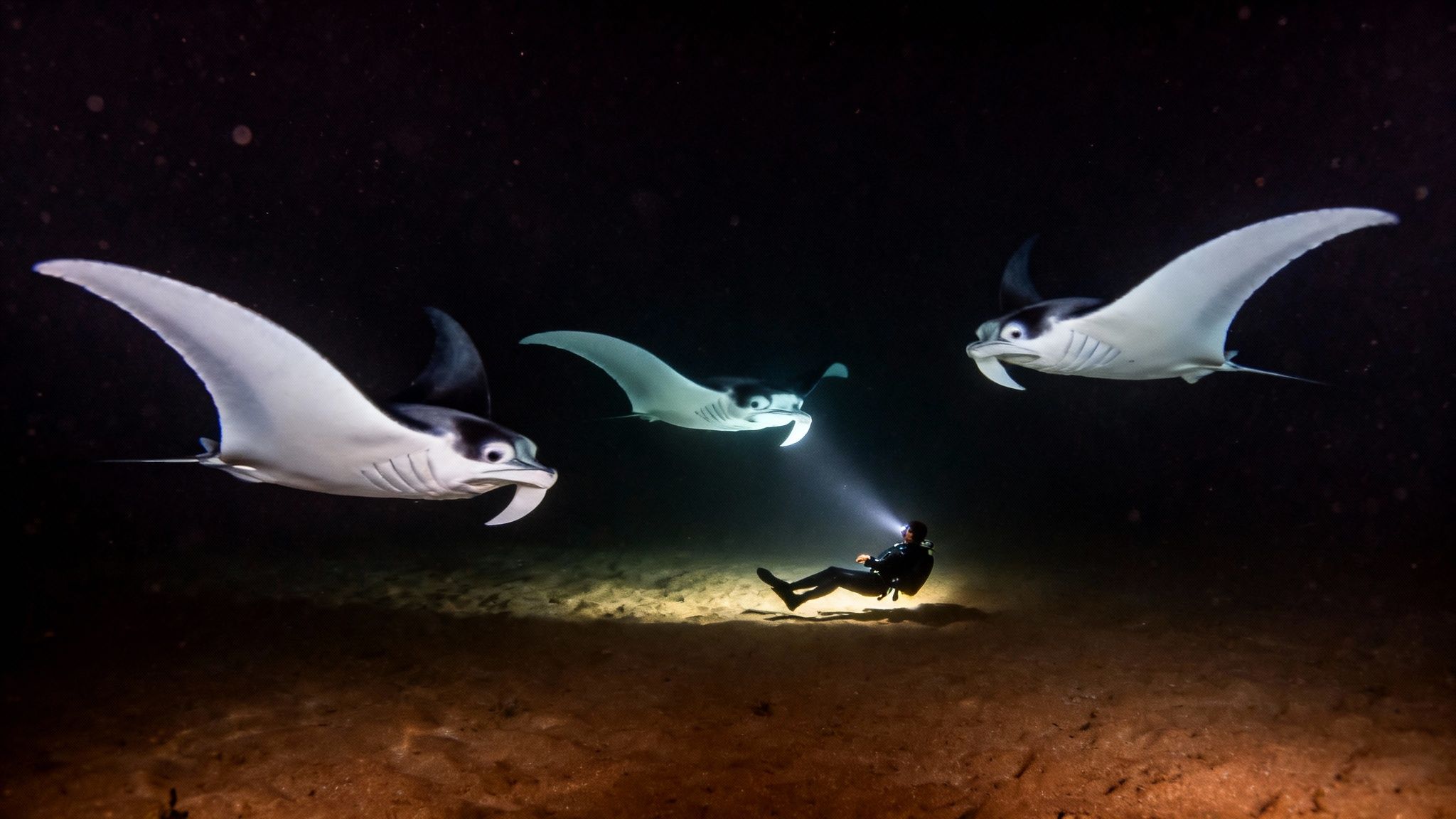
The Kona coast on the Big Island has become the global epicenter for this one-of-a-kind marine spectacle. In this guide, we'll pull back the curtain on the magic, explaining what makes this Hawaiian adventure so special and how sustainable tourism has made it possible to get so close to these gentle giants safely and ethically.
This dive has become a massive draw for visitors. Every year, around 80,000 people come to Kona specifically for this experience, which speaks volumes about its appeal. What's even better is that the chances of seeing the mantas are incredibly high, making it a reliable and awe-inspiring adventure for both divers and snorkelers. You can learn more about the odds in this in-depth overview of the Kona experience.
What Makes This Dive So Special?
Unlike a lot of wildlife tours where you might catch a fleeting glimpse from a distance, the manta ray dive is an up-close, immersive ballet. The concept behind it is brilliantly simple: powerful lights are submerged, which attract swarms of plankton—the manta rays' favorite food. The mantas show up for the all-you-can-eat buffet.
This clever setup results in a reliable and incredibly intimate show. The mantas aren't baited or forced to be there; they come on their own to feed, performing incredible acrobatics right in front of you. It's about as natural and ethical as a wildlife encounter gets.
Here's what truly sets it apart:
- Up-Close Encounters: The mantas often glide within inches of you. It’s a connection you can truly feel.
- Gentle Giants: These filter feeders are completely harmless. With wingspans stretching over 15 feet, they have no teeth, stingers, or barbs—just pure grace.
- A Unique Nighttime Spectacle: The dark ocean, lit by beams of light, creates a dramatic, almost surreal underwater stage for the main event.
- Accessibility for All: It doesn't matter if you're a certified scuba diver or a snorkeler. Everyone gets a front-row seat to the show, making it perfect for families and groups.
Our goal here is to get you excited and give you all the practical info you need to plan this bucket-list trip. From the science behind the dive to choosing the best tour operator, we’ve got you covered.
What’s Really Happening Down There? The Science Behind the Underwater Ballet
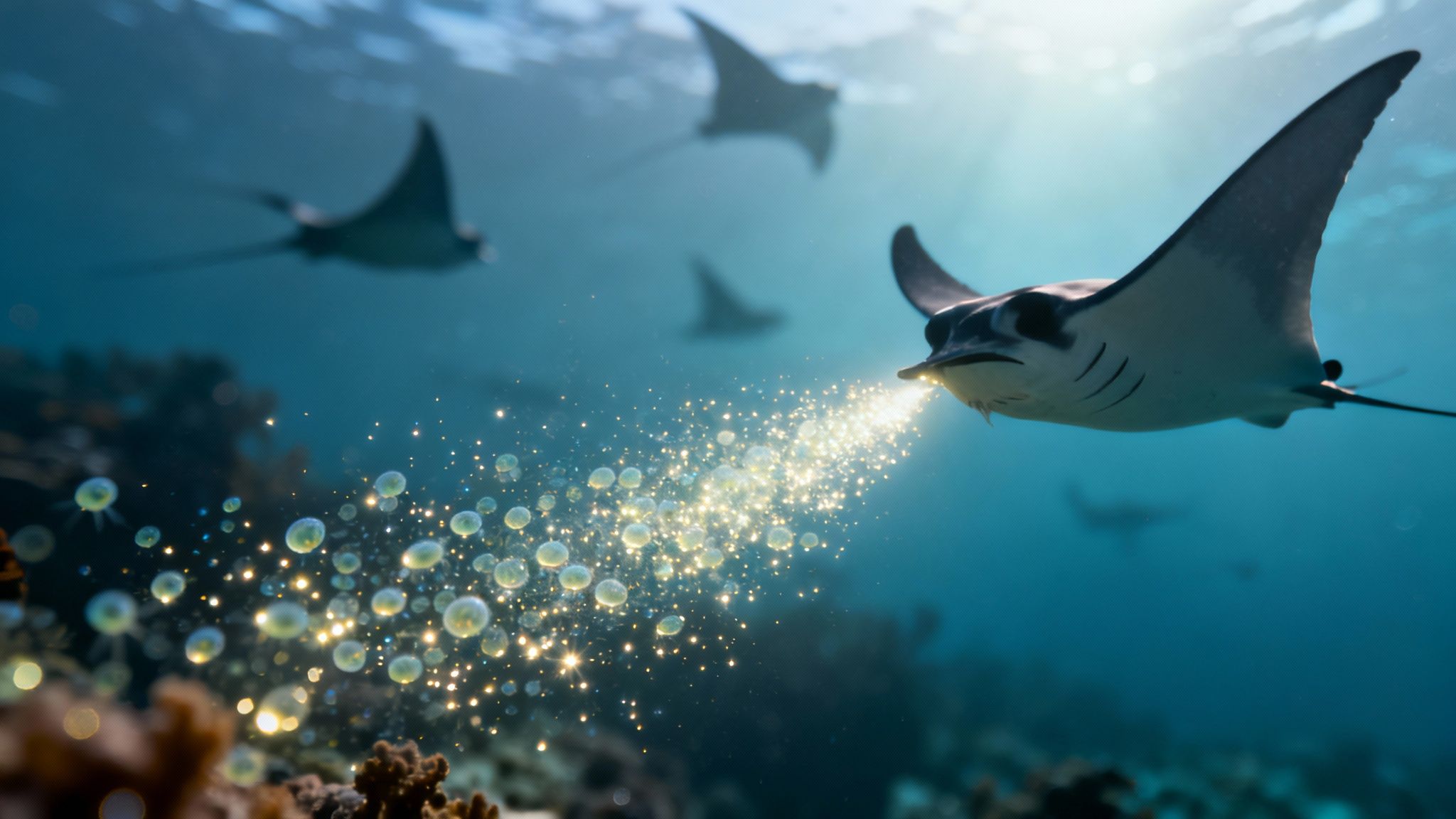
The incredible show you see on the manta ray night dive in Kailua Kona feels like pure magic, but it’s actually a beautiful, predictable chain reaction. It all starts with something you can't even see: phytoplankton.
These microscopic marine plants are the foundation of the ocean's food web, and they have one key behavior—they're drawn to light. When we lower our powerful, eco-friendly lights into the water, it’s like turning on a giant bug zapper, but for plankton. They swarm to the light, creating a thick, glowing cloud of manta ray food.
This dense "plankton buffet" is irresistible to the graceful giants. As filter feeders, the manta rays simply glide through these concentrated patches with their huge mouths wide open, hoovering up dinner. It's an effortless meal for them and a mesmerizing, up-close spectacle for us.
Meet Kona's Famous Residents: The Reef Manta
The stars of the show are the Reef Manta (Mobula alfredi), the second-largest ray species in the world. They're known for being incredibly smart and curious, often performing graceful barrel rolls and swoops right through the light beams.
What makes the manta population here in Kona so special is that we know them personally. For decades, local researchers and conservation groups have been studying these very animals. They use the unique spot patterns on each manta's belly—which are like a human fingerprint—to identify and track them over time.
This isn't just scientific data; it's a family album. Each manta is an individual with a name, a history, and a story. We’re not just seeing a manta ray; we're seeing Lefty, Big Bertha, or dozens of other known residents.
Knowing you're swimming with a local celebrity adds a whole new layer to the experience. It creates a powerful connection and a deep respect for the incredible creatures you're sharing the water with.
An Unbelievable Abundance of Gentle Giants
Thanks to this reliable food source and the safety of our protected bays, Kailua Kona has become a year-round home for a massive resident manta population. Over the years, researchers have cataloged over 300 unique manta rays and logged more than 10,000 documented sightings!
On a good night, it’s not uncommon to see over 20 mantas swirling around the lights. Some truly epic nights have seen nearly 40 individuals show up for the feast! This consistent gathering gives us a rare window into their social lives and feeding behaviors.
These gentle giants spend their lives gliding through the water, filtering out their next meal. If you're curious about just how far they travel, you can learn more about how deep Kona's manta rays dive in our detailed article. Understanding the simple science behind this phenomenon makes watching their underwater ballet even more breathtaking.
Choosing Your Dive Site: Manta Heaven vs. Manta Village
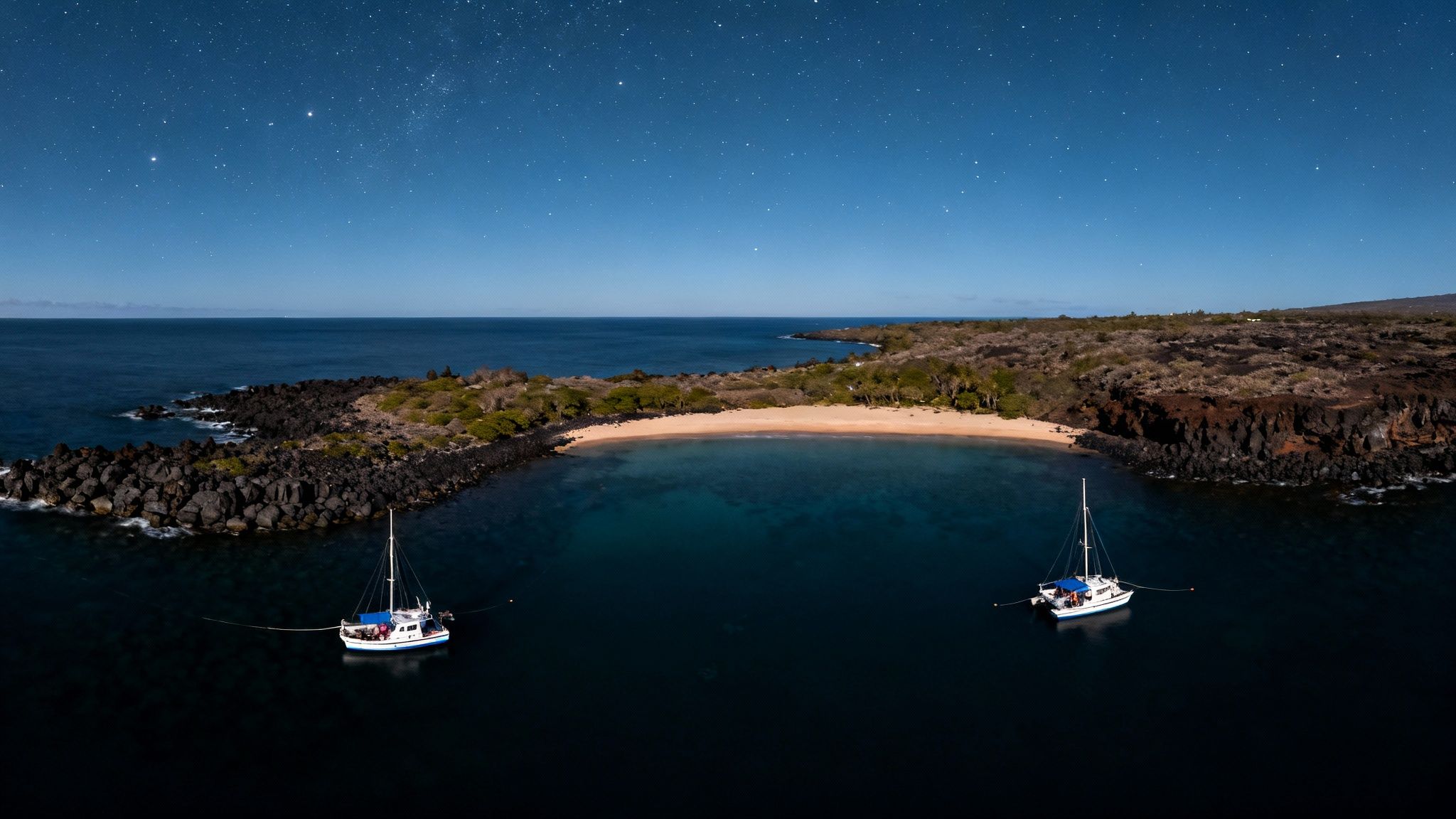
When you start planning your manta ray night dive in Kailua Kona, you’ll hear two names pop up again and again: Manta Heaven and Manta Village. While both spots offer an absolutely mind-blowing experience, they each have their own unique vibe.
Picking the right one really comes down to what you’re looking for in an adventure. Are you an experienced diver hungry for the most action, or are you looking for a calmer, more relaxed introduction to the world of night diving? Let’s break down the two main players.
Manta Heaven (Garden Eel Cove)
Just north of Kona, near the airport, you'll find Garden Eel Cove, better known to divers as Manta Heaven. This site has a legendary reputation, and for good reason—it often attracts a larger congregation of manta rays.
Because it's a bit more exposed to the open ocean, the surface can sometimes be a little choppy, and you might feel a bit of current underwater. But for many divers, that’s a small price to pay for what this site delivers. Research has even shown that Manta Heaven consistently hosts more mantas, with some studies noting an average of 11 mantas per night. The seafloor sits at a perfect 35-40 feet, creating an ideal underwater stage for the show.
You can get a better sense of what makes this spot so special by exploring more about Manta Heaven's unique environment in our detailed guide.
Manta Village (Keauhou Bay)
Head south of town and you’ll find Manta Village, tucked into the calm, protected waters of Keauhou Bay. This is the O.G. spot—the original location where the manta night dive phenomenon first took off.
Its biggest draw is the calm, sheltered water. This makes it an absolutely fantastic choice for first-time night divers, families, and anyone who gets a little queasy on the water. The boat ride is shorter, and the dive itself is a bit shallower, typically around 25-35 feet. While the manta count might sometimes be lower than at Manta Heaven, the encounters are just as breathtaking and personal, all in a much more relaxed setting.
Kona Manta Ray Dive Site Comparison
To help you choose the perfect spot for your adventure, here's a side-by-side look at what makes each location tick.
| Feature | Garden Eel Cove (Manta Heaven) | Keauhou Bay (Manta Village) |
|---|---|---|
| Location | North of Kona, near the airport | South of Kona, in Keauhou Bay |
| Water Conditions | More exposed; can be choppier with currents | Very protected and generally calm |
| Best For | Experienced divers, photographers, those seeking maximum manta action | First-timers, families, snorkelers, those prone to seasickness |
| Average Depth | 35-40 feet (10-12 meters) | 25-35 feet (8-10 meters) |
| Manta Sightings | Historically higher average number of mantas per night | Consistent sightings, but potentially fewer mantas than Manta Heaven |
| Crowd Level | Can be busy with multiple tour boats | Often crowded due to its popularity and accessibility |
| Travel Time | Longer boat ride from Honokohau Harbor | Shorter boat ride from Keauhou Harbor |
Ultimately, there’s no wrong choice. Both sites provide an unforgettable opportunity to get up close with Kona's gentle giants. Your decision just helps tailor the experience to be the perfect fit for you and your group.
Finding The Right Tour With Kona Honu Divers
Let's be honest, choosing the right operator for your manta ray night dive in Kailua Kona is the single most important decision you’ll make. This choice is what separates a decent trip from a truly unforgettable—and safe—experience. With so many boats heading out each night, you want to go with a crew that puts the health of the mantas first. That’s where Kona Honu Divers really shines.
They’ve built their entire reputation on responsible tourism. They're not just paying lip service to it; they strictly follow the Manta Ray Green List standards. These are guidelines designed to keep the interactions passive and respectful, ensuring the well-being of Kona's resident manta population. When you dive with them, you know you're part of the solution, not the problem.
What A Tour With Kona Honu Divers Is Like
From the moment you arrive, you can tell you’re in good hands. A typical trip with Kona Honu Divers feels professional yet incredibly welcoming—pure aloha spirit.
It all starts with a fantastic pre-dive briefing. Their crew members are seasoned pros who know these waters inside and out. They’ll walk you through the entire dive plan, but they also get you genuinely excited by sharing fascinating details about the individual mantas you might meet. You don’t just learn the rules; you understand the why behind them.
Once you’re in the water, the guides are right there with you. They make sure everyone is comfortable and in the perfect spot to witness the incredible underwater ballet. Their calm, expert presence makes all the difference, especially if it’s your first night dive.
Your choice of operator directly impacts the local manta ray population. By diving with a company like Kona Honu Divers, you are voting with your dollar for sustainable practices that will protect these incredible animals for generations to come.
Top-Tier Gear and a First-Class Vessel
When you're diving, you can't compromise on comfort or safety, and Kona Honu Divers gets that. They provide high-quality, meticulously maintained rental gear, so you can just focus on the dive without worrying about your equipment.
The boat itself, the "Honu One," is a huge part of the experience. It’s spacious and clearly designed by divers, for divers. There's plenty of room to gear up without bumping elbows, and little things—like a hot freshwater shower for after the dive and tasty snacks on the ride home—make the whole trip feel like a premium adventure.
To give you more options and help you see what makes a quality operator stand out, check out this guide to the top-rated Manta Ray Night Snorkel Kona Tours.
You can see all of their manta dive packages and check their schedule on their manta ray dive tours page. Don't just take our word for it—see what countless other divers have to say about their world-class service.
How to Prepare For Your Manta Ray Encounter
A little bit of prep work is what separates a good dive from an unforgettable one. When you're geared up and ready for your manta ray night dive in Kailua Kona, you can let go of the small worries and just soak in the magic unfolding in front of you. Let's walk through everything you need to know before you even step foot on the boat.
Knowing what to pack, what to leave in your hotel room, and how to act in the water makes the whole experience smoother and safer for everyone—especially for the mantas.
What to Bring and What to Wear
The name of the game is comfort and simplicity. You want to be comfortable before, during, and after your time in the water. Your tour operator will have all the essential dive or snorkel gear covered, but a few personal items will make a world of difference.
Here’s a simple checklist to get you sorted:
- Swimsuit: The easiest approach is to wear it under your clothes when you arrive. No fumbling around in a tiny boat bathroom.
- Towel: You'll be glad you have it when you get out of the water.
- Warm Jacket or Sweatshirt: Don't underestimate the ocean breeze. Even in paradise, the boat ride back can get surprisingly chilly after a night dive, and a warm, dry layer is a must.
- Reusable Water Bottle: Staying hydrated is always a good move.
It's just as important to know what not to bring. Leave the valuables like jewelry and unnecessary electronics behind. Space is limited on the boat, and dry storage is even more so. Keep it minimal.
Understanding the Rules of Engagement
This is the most important part of your prep: learning how to interact with these magnificent creatures. We're visitors in their home, and our job is to be passive, respectful observers. The golden rule is simple and non-negotiable: do not touch the manta rays. They have a delicate mucus coating on their skin that protects them from infection, and our touch can damage it.
Tour operators like Kona Honu Divers give a thorough briefing before you hit the water, but the main rules are universal:
- Be an Observer: Let the mantas call the shots. Never chase them, block their path, or (and it’s sad this has to be said) try to ride them.
- Stay in Your Spot: Whether you're a diver or a snorkeler, you'll have an assigned position. Staying put creates a predictable and safe environment for the animals.
- Keep Still: Big, splashy movements can scare the mantas away. Try to avoid kicking and flailing, which also stirs up sand and ruins the view for everyone else.
Think of yourself as a tree in the forest. You’re part of the scenery. The wildlife moves around you naturally. By staying calm and still, you're inviting the mantas to get comfortable and come closer on their own terms.
The Famous 'Campfire' Setup
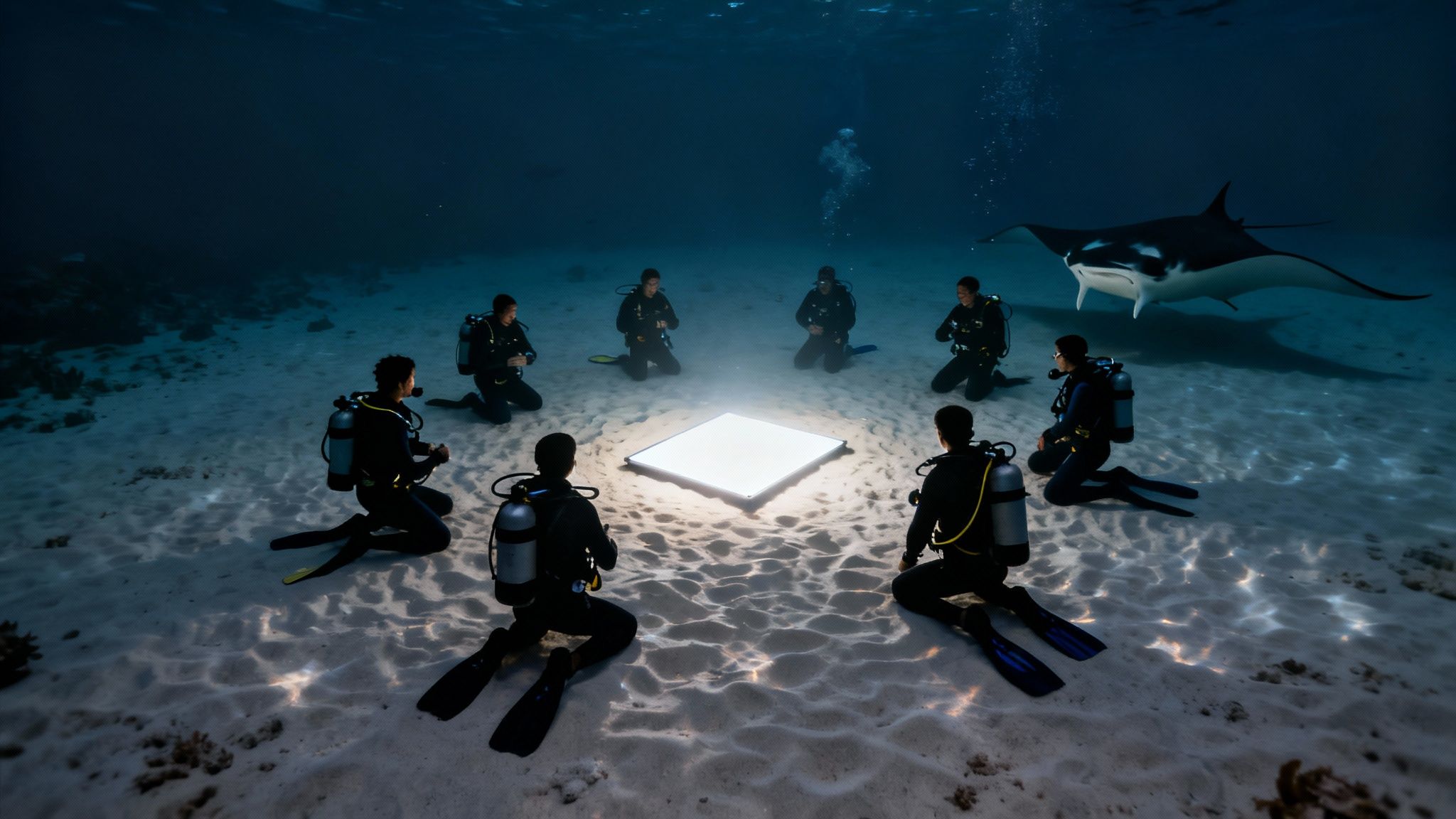
So, how do they make this all work? With a brilliant setup often called the "campfire." Divers are led to a sandy patch on the ocean floor, usually around 25-40 feet deep. There, you'll kneel in a circle around a powerful collection of lights placed in the center.
Snorkelers get an equally spectacular show from the surface. They hang onto a custom-built float that has high-powered lights shining straight down. This column of light acts like a giant beacon for plankton, which in turn attracts the mantas right up to the surface. It means both divers and snorkelers get a front-row seat to the ballet, making it a perfect adventure no matter your experience level. You can book your spot on a manta ray dive tour and see it for yourself.
Don’t Stop at the Mantas: More Big Island Dives to Explore
The manta ray night dive in Kailua Kona is, without a doubt, an unforgettable experience. But believe me, it's just scratching the surface of what the Big Island's underwater world has to offer. That same volcanic landscape that creates the perfect feeding ground for mantas has also sculpted a dramatic coastline full of vibrant reefs, ancient lava tubes, and unique marine life. After you've seen the manta ballet, you’ll be hooked and ready for more.
With Kona Honu Divers, you’ve got the perfect guides to show you the rest. They know these waters like the back of their hand and can point you toward all sorts of incredible dives, no matter your skill level. The diversity here is astounding; every drop into the blue reveals something new.
The Thrilling Kona Blackwater Dive
If the magic of the manta dive got your adrenaline pumping, get ready for a completely different kind of night adventure: the Kona Blackwater Dive. This isn't your typical reef dive. You'll head miles offshore, drifting over thousands of feet of inky-black ocean, tethered to the boat.
As you float in the darkness, bizarre and beautiful deep-sea creatures migrate toward the surface. It’s like a portal to another dimension. You'll see things you never imagined existed—bioluminescent jellies pulsing with light, tiny translucent squid, and strange larval fish. It's an otherworldly experience that photographers and adventure-seekers travel the globe for. Find out more about this mind-blowing dive on the Blackwater Dive tour page.
Daytime Reef Exploration
Once the sun is up, Kona’s reefs show off a completely different personality. The calm, crystal-clear water reveals a world bursting with color and life. The underwater scenery is classic Hawaii at its best, with sprawling coral gardens, ancient lava formations, and a ton of critters.
You can spend your days exploring submerged lava arches and swimming through hollow tubes formed by ancient lava flows. Along the way, you're almost guaranteed to run into some incredible local residents:
- Honu (Green Sea Turtles): It’s common to see them cruising by gracefully or just chilling out on the reef.
- Schools of Tropical Fish: The reefs are buzzing with vibrant butterflyfish, angelfish, and Hawaii’s state fish, the Humuhumunukunukuāpuaʻa (triggerfish).
- Eels and Octopuses: Keep a sharp eye on the reef's nooks and crannies—these masters of camouflage are hiding in plain sight.
To see all the daily charters and amazing sites you can explore, head over to the main diving tours page.
Advanced and Premium Dive Trips
For those of you with a few more dives under your belt, Kona has some seriously thrilling opportunities. If you're ready to go deeper and explore more remote spots, this is the place to do it. The advanced dives can take you to offshore pinnacles rising from the depths, sheer walls covered in sponges, and even shark nurseries.
These sites are off the beaten path and often reward you with encounters with bigger pelagic animals. The trips are geared toward divers comfortable with deeper profiles and potentially challenging conditions. To check out the exclusive charters and more demanding dives available, take a look at the advanced dive tour page.
Your Manta Ray Night Dive Questions Answered
Even after doing all your homework, a few questions are bound to pop up before you jump into an adventure like the manta ray night dive in Kailua Kona. We get it. That’s why we’ve put together answers to the most common things people ask us. Our goal is to make sure you feel totally at ease and genuinely excited for what’s ahead.
Think of this as your final pre-flight check for peace of mind. We’ll cover all the practical details that make the difference between a good trip and an unforgettable one.
Is The Manta Ray Night Dive Safe?
It absolutely is. For any reputable dive shop, your safety is the number one priority. And the mantas themselves? They're completely harmless. These gentle giants are filter feeders, which means they don't have teeth, barbs, or stingers.
Every tour with a professional operator like Kona Honu Divers starts with a thorough safety briefing. You'll have experienced divemasters or snorkel guides in the water with you the entire time, making sure the environment is safe and controlled for everyone—you and the mantas included.
What If I Am Not A Certified Scuba Diver?
Not a problem in the slightest! Snorkelers get an equally mind-blowing view, and honestly, some people even prefer it. As a snorkeler, you'll hold onto a custom-built light board while floating comfortably on the surface.
This board shines bright lights into the water, attracting the plankton that mantas love to eat. The rays swim right up to the surface to feed, often doing graceful barrel rolls just inches below you. It's an incredible, up-close experience that requires zero scuba gear.
When Is The Best Time Of Year To See Manta Rays In Kona?
Here’s the best part: this is a year-round show. Kona has a large population of manta rays that live here permanently, so you can see them 365 days a year.
There's no real "manta season," and the chances of seeing them are consistently high no matter when you visit. The main thing to consider is the weather. If you're looking for the flattest, calmest ocean conditions, the summer months are usually your best bet.
Are Manta Sightings Guaranteed?
Since we're dealing with wild animals in their natural habitat, no one can ever give a 100% guarantee. That said, the success rate for the manta ray night dive in Kailua Kona is remarkably high, often topping 90%. These dive sites are established feeding grounds that the local mantas have been returning to for decades.
Because they’re so confident you’ll have a great encounter, many of the best operators—including Kona Honu Divers—offer a "manta guarantee." If you don't see a single manta on your trip, you can go again on another night for free (based on availability). It’s a great policy that shows you just how likely you are to see them. You can book your guaranteed spot on their manta ray dive tours page.