
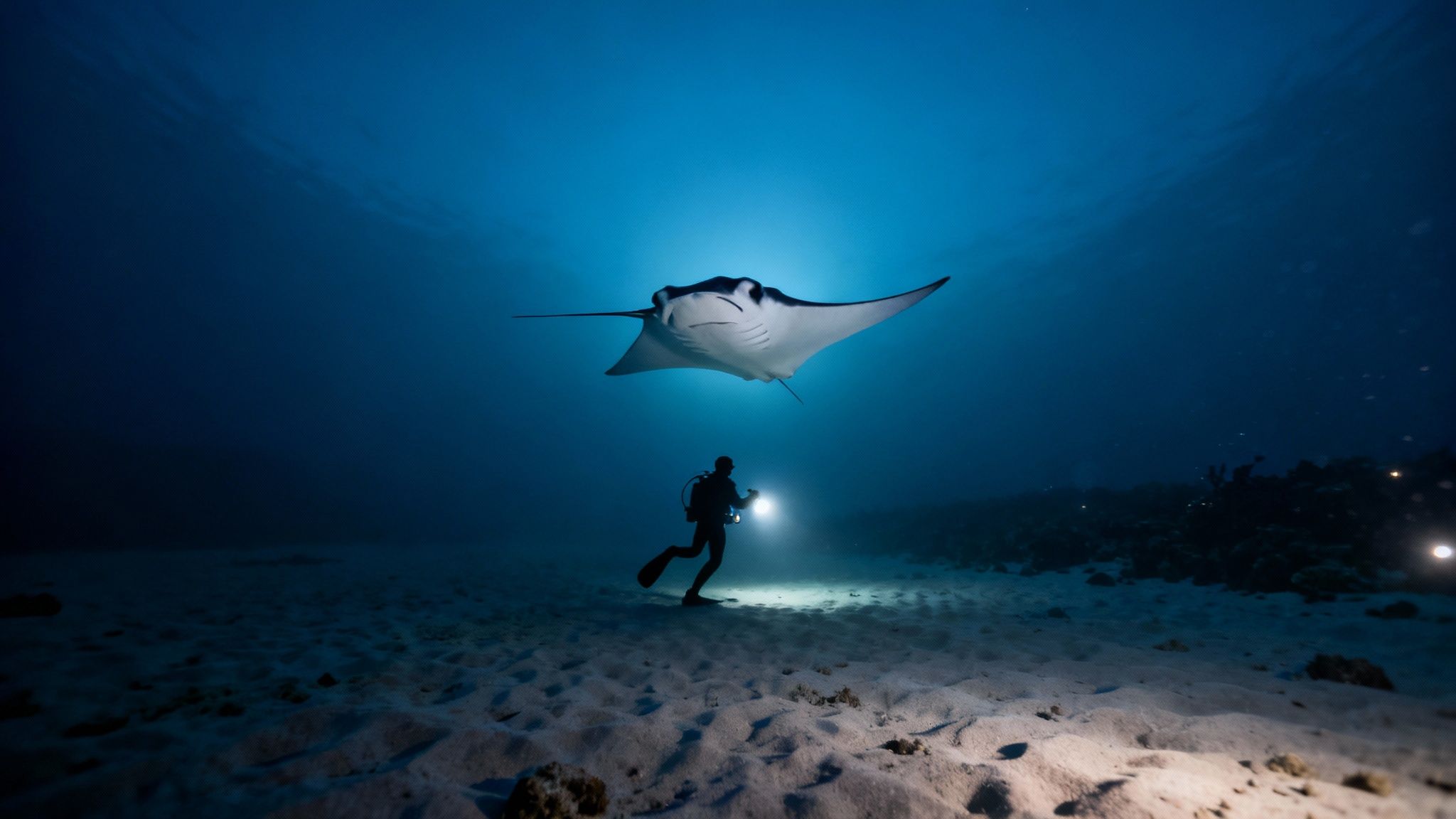
Picture this: you descend into the warm Pacific just as the sun dips below the horizon. The world transforms into a deep, velvety blue, pierced only by the glow of underwater lights. Then, out of the darkness, a massive, elegant shape emerges, gliding effortlessly past you. That's a giant manta ray, and you're witnessing the magic of the manta ray night dive in Kailua Kona—an experience that's consistently called one of the best night dives in the world.
Why Kona Is the Global Epicenter for Manta Ray Encounters
The Kona coast of the Big Island is more than just another pretty spot to dive. It's hands-down the most reliable place on the planet to see the nightly feeding ballet of giant manta rays. This guide is built from years of experience to help you turn that dream into a reality. We'll cover why Kona is the place, what to look for in a great tour operator, and how to get ready for a safe and truly unforgettable adventure.
So, what’s Kona’s secret? It’s a perfect storm of factors that create an underwater "manta theater." The coastline has naturally calm, protected bays, and the long-established use of specific underwater lights has created a dependable buffet of plankton that draws these gentle giants in like clockwork.
A Guaranteed Spectacle
Most wildlife encounters are a game of chance, but the manta ray night dive in Kailua Kona is about as close to a sure thing as you can get. At the main viewing sites, the sighting success rate for both divers and snorkelers is an incredible over 95%. This isn't just luck; it's the result of decades of mantas learning to gather at these established feeding grounds. You can dive deeper into the reliability of Kona's manta ray encounters to see just how consistent it is.
What Makes the Experience So Unforgettable
This isn't about spotting a manta from a distance. The entire experience is set up for an intimate, up-close, and completely respectful encounter. Here’s a quick summary of what makes it so special:
- Up-Close Views: The mantas often glide within inches of you, performing graceful barrel rolls as they feed on the plankton concentrated in the beams of light.
- Plenty of Time: You'll typically be in the water for 45-60 minutes, giving you lots of time to soak in the incredible underwater show.
- Anyone Can Go: The adventure is truly for everyone. You can join as a certified SCUBA diver, a snorkeler, or even just a ride-along passenger on the boat.
- The Vibe: There's a profound sense of awe that comes from watching these enormous, silent creatures move with such grace in the dark ocean. It’s absolutely mesmerizing.
We’re skipping the generic advice and giving you real, firsthand insights to make sure your dive is everything you're hoping for. This is more than a tour—it's a chance to connect with one of the ocean's most majestic animals.
How to Choose the Right Manta Ray Tour Operator
Picking the right company for your manta ray night dive is easily the biggest decision you’ll make for this trip. It’s not just about booking a spot on a boat; it’s about who you trust to keep you safe, respect the animals, and deliver a truly mind-blowing experience. The right crew can turn a cool dive into a core memory.
So, where do you even start? First and foremost, look for a company with a spotless safety record. You want a crew that lives and breathes safety—their boats should be in top shape, their rental gear well-maintained, and their guides trained for any situation. It's the foundation of a worry-free dive.
Another huge factor is group size. Some operators pack their boats, which can feel more like a chaotic cattle call than an intimate wildlife encounter. The best ones keep their groups small. This means you get more personalized attention from your guide and, more importantly, a better, unobstructed view of the mantas.
Focusing on Ethical and Responsible Practices
As the manta ray dive has become world-famous, so has the need to protect these incredible animals. The top-tier operators aren't just in it for the money; they are genuinely committed to conservation. They follow a strict set of guidelines to make sure the encounter is safe and respectful for the mantas.
This means absolutely no touching, no chasing, and no blocking their path. It’s all about passive observation.
The whole point of a responsible tour is to be a quiet visitor in the mantas' world. You're there to watch them feed on their terms. This approach doesn't just protect the mantas; it also results in much more natural, up-close, and breathtaking behavior.
Companies like Kona Honu Divers are champions of these principles. They understand that protecting the mantas is the only way to ensure people can continue to experience the magic of the manta ray night dive Kailua Kona for years to come. You can see what fellow divers say about their experience right here.
Deciding Between Scuba and Snorkeling Tours
Most of the best operators in town offer both scuba and snorkel options, so everyone can get in on the action. The choice really just comes down to your comfort and certification level.
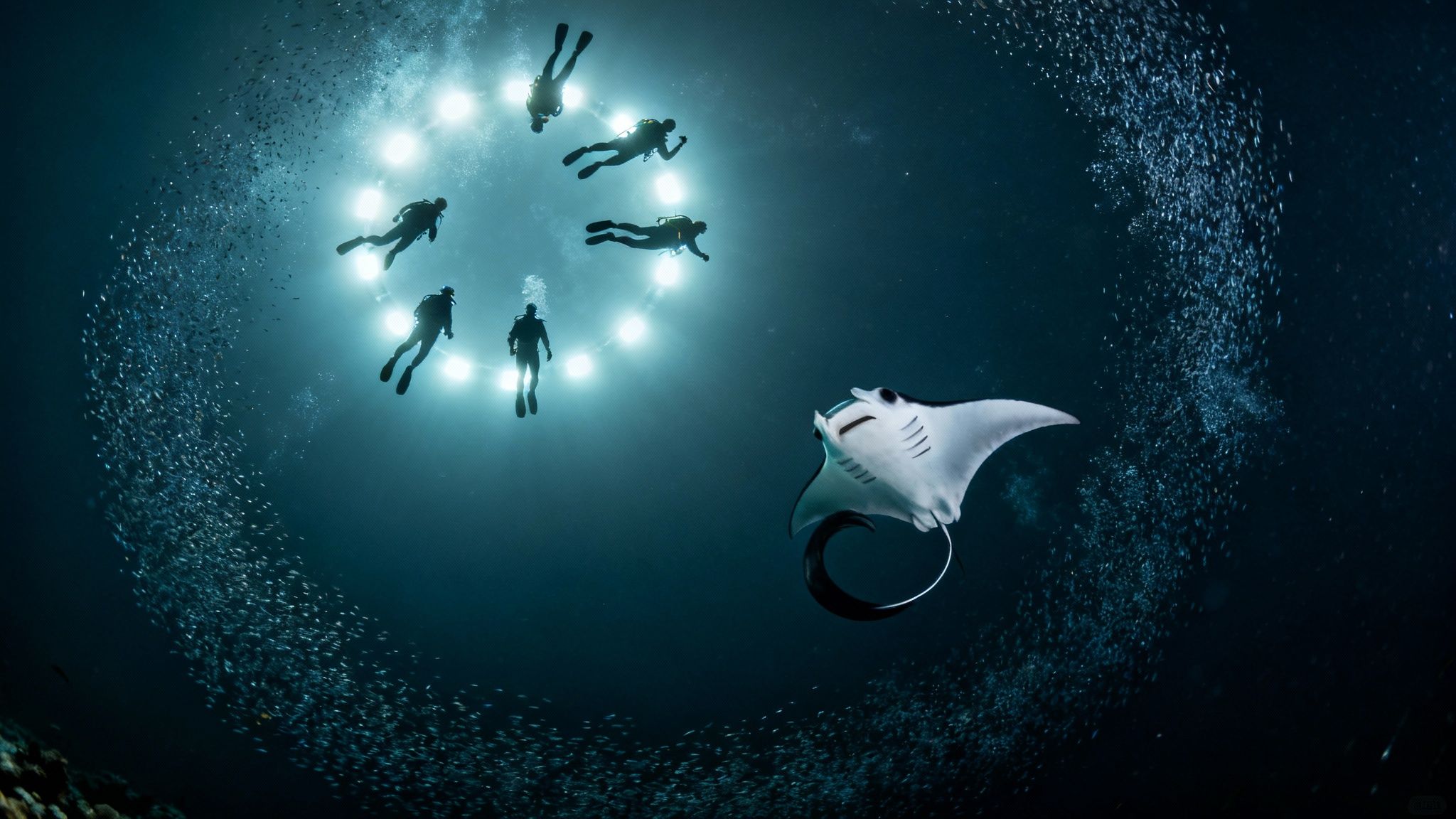
- Scuba Diving: If you're a certified diver, you'll head down to the "campfire" on the ocean floor, usually around 30-40 feet. From there, you just look up and watch the show as the mantas swoop and barrel-roll right over your head. It's a completely immersive, jaw-dropping perspective.
- Snorkeling: Non-divers aren't left out! Snorkelers hang onto a custom light board that floats on the surface. These powerful lights draw in the plankton, and the mantas come right up to feed, sometimes just inches below you. It's every bit as spectacular.
The manta ray dive isn't just an amazing experience; it's a huge part of the local economy. An estimated 80,000 people come to do this every year, supporting local jobs and conservation. The best operators give back, investing in efforts to protect the very ecosystem that makes this dive possible. You can read more about the dive's impact on Kona Snorkel Trips' blog.
At the end of the day, picking a dive shop is about finding a team whose passion for the ocean is contagious. For a much deeper dive on what to look for, we put together a complete guide on how to choose a Kona dive shop.
When you're ready to see what's available for this world-famous dive, you can explore Kona Honu Divers' acclaimed 2-Tank Manta Dive & Snorkel tours. A little research now will pay off big time when you're in the water having an adventure you'll never, ever forget.
What to Expect on Your Manta Dive Adventure
The Manta Ray Night Dive in Kailua-Kona isn’t just the 45 minutes you spend in the water—it’s the whole experience. From the moment you arrive at the harbor to the buzzing boat ride back to shore, every part of the evening is part of the adventure. Knowing what’s coming helps you relax and just soak it all in.
Most trips kick off in the late afternoon at the harbor. This is when you’ll meet the crew, handle the paperwork, and get fitted for any rental gear you might need. Don't be shy—this is the perfect time to ask any lingering questions and get to know the guides who will be leading the show. A good crew is always friendly, incredibly knowledgeable, and completely focused on making sure you feel safe and ready for what's ahead.
The Pre-Dive Briefing and Sunset Cruise
Before the boat even casts off, you'll get a thorough briefing. This isn't just a formality; it's probably the most important conversation of the night. The guides will walk you through everything you need to know for a safe and respectful encounter.
You'll cover a few key things:
- Safety Protocols: Everything from boat safety and how to get in and out of the water to what to do if you have an issue.
- Hand Signals: You’ll review the specific signals for night diving. Clear communication is key when you're underwater in the dark.
- Manta Etiquette: This is the big one. You’ll learn the golden rule of manta diving: observe, don't touch. The guides explain exactly how to position yourself so the mantas have plenty of room and why it's so critical not to interfere with their feeding.
Briefing done, you’ll head out to the dive site. This part of the trip is an experience in itself. More often than not, you're treated to a spectacular Kona sunset over the Pacific Ocean. The energy on the boat starts to build as the last bit of daylight fades and the crew gets the site prepped.
Entering the Water and Finding Your Spot
As twilight takes over, it's time to gear up. The crew will be there to help, doing a final check to make sure everyone's equipment is good to go. If you're wondering what you should bring or rent, we have a complete guide covering the gear you will need for your Kona diving adventure. Once you get the green light, you'll make your way into the calm, dark ocean, with a guide right there with you.
For divers, it's a slow, controlled descent to a spot on the sandy bottom, usually around 30-40 feet deep. You'll settle in around a powerful underwater light source, affectionately called the "campfire." This light is what draws in the plankton and sets the stage for the main event.
Snorkelers get an equally breathtaking view from the surface. You'll hold onto a large, custom-built floatation board that has its own powerful lights shining straight down, creating a column of plankton right in front of you.
The moment you settle in, a unique sense of quiet anticipation washes over you. The only sounds are the soft hiss of your regulator and the gentle lapping of the water. Your entire world shrinks to the beam of light cutting through the darkness, and you wait.
The Underwater Ballet Begins
And then… it happens. A massive, graceful shadow glides into the light from the darkness. The first manta ray has arrived. The feeling is absolutely indescribable. Soon, another might join, and then another, and the underwater ballet begins.
The mantas perform these incredible, swooping barrel rolls, sometimes passing just inches away as they filter plankton from the water. Their movements are so fluid and effortless—it’s a mesmerizing dance unfolding right in front of your eyes. For that brief time, you’re not just watching; you're a part of their world.
After about 45 minutes in the water, your guide will signal that it’s time to head up. The crew helps everyone back onto the boat just as smoothly as they helped you in.
The ride back to the harbor is always filled with excited chatter and stories of who saw what. Most boats will have hot cocoa and snacks waiting for you, which is the perfect way to warm up. It’s a great chance to reflect on the incredible encounter you just had on your manta ray night dive in Kailua-Kona.
Insider Tips for an Amazing Manta Ray Dive
A little bit of prep work can be the difference between a good dive and an absolutely unforgettable one. When it comes to the **manta ray night dive in Kailua Kona**, a few tricks of the trade can make all the difference. These are the little things that seasoned divers have figured out over the years to guarantee every moment is spent in total awe.
Think of this as your cheat sheet for feeling confident and ready, so you can just relax and soak in the magic without a single distraction.
Fine-Tune Your In-Water Skills
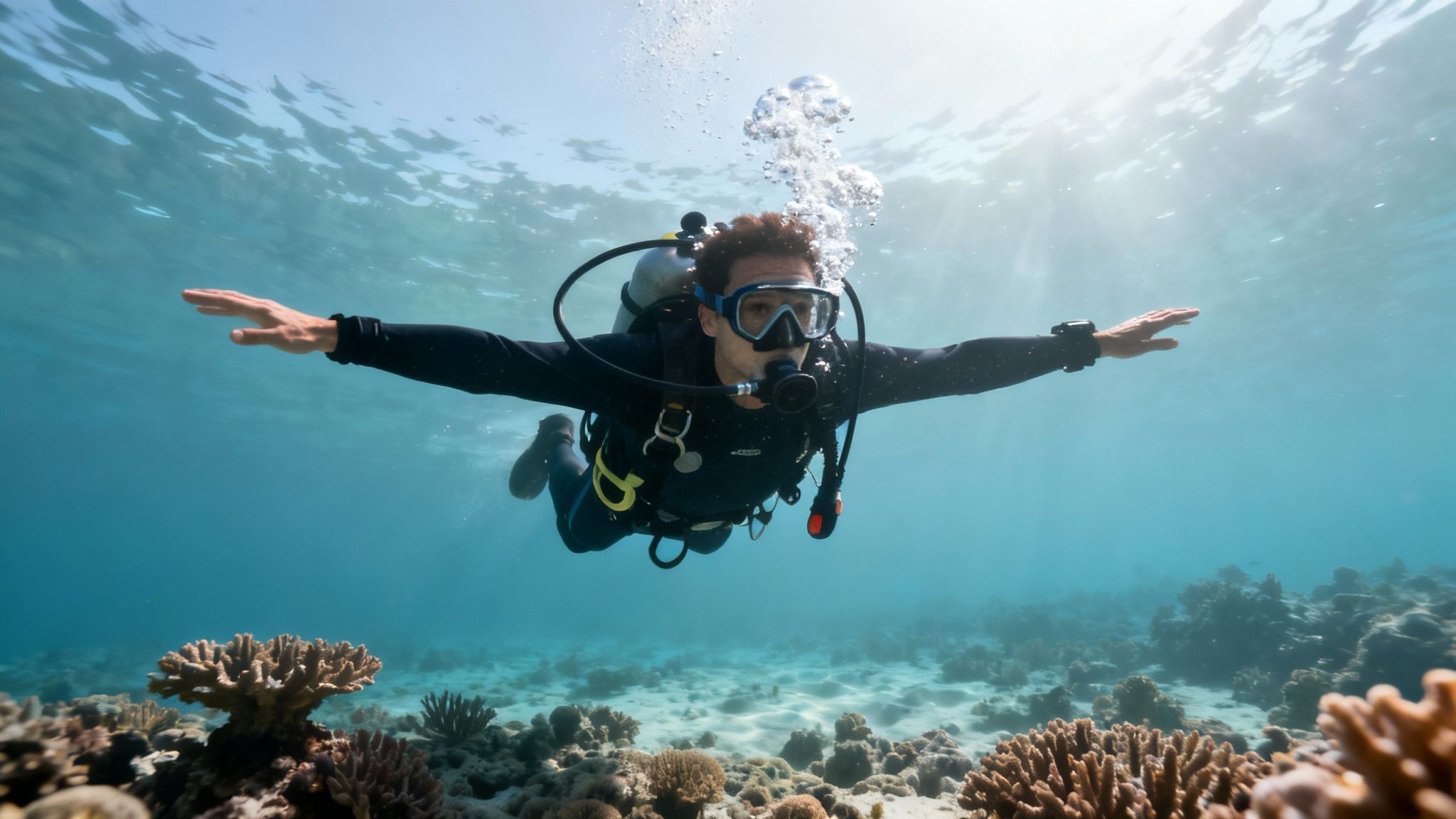
If you’re a certified diver, your entire experience hinges on one thing: buoyancy control. Seriously, this is the secret sauce. If you can hover effortlessly without kicking up sand or bobbing around, you've already won half the battle.
When you're perfectly neutral, you become part of the scenery—a quiet, respectful observer. This not only protects the fragile ecosystem around you but it also makes you far less intimidating to the mantas. Trust me, a calm and still diver is much more likely to get that incredible, up-close fly-by.
For everyone, divers and snorkelers alike, the golden rule is to remain calm and still. Big, sudden movements can spook the mantas and send them gliding away. Just find your spot, get comfortable, breathe, and let the show come to you. You'll be amazed at how bold they get when they realize you're not a threat.
Prepare for Before and After the Dive
Your comfort on the boat is just as important as your time in the water. The Hawaiian air might feel balmy during the day, but after an hour underwater at night, you’re going to feel a chill as soon as you surface.
Packing a warm jacket or a hoodie is a total pro move. Having something dry and cozy to throw on for the ride back to the harbor makes the whole experience so much better.
A few other must-haves for your gear bag:
- Reef-Safe Sunscreen: If your trip leaves before sunset, make sure you apply a reef-safe formula at least 30 minutes before you board. The chemicals in regular sunscreen are seriously harmful to our coral reefs.
- Motion Sickness Meds: Even if you think you’re fine on boats, the ocean can be unpredictable. It’s always better to take something beforehand than to spend the trip feeling queasy.
- Water Bottle: Diving is dehydrating. Bring a reusable water bottle and sip on it before and after your dive to stay hydrated and feel your best.
Nail Your Underwater Photography
Trying to capture that perfect shot is a great goal, but fumbling with camera settings in the dark is no fun. If you’re bringing a camera, play with it at home first. Get comfortable with its low-light modes and manual settings so you aren’t scrambling to figure it out when a manta is right in front of you.
And this is a big one: do not use a flash. That sudden burst of light can startle the mantas, disrupting their natural feeding patterns. The powerful lights the crew sets up are more than enough. Rely on those and your camera’s own capabilities for respectful, beautiful shots.
For more advice on planning your trip, check out our guide on what is the best time to see the manta rays in Kona. Follow these simple tips, and you're all set for an adventure you'll never forget.
Exploring More of Kona’s Underwater World
The legendary **manta ray night dive in Kailua Kona** is absolutely a bucket-list experience, but don’t make the mistake of thinking it’s the only game in town. It’s really just the incredible opening act for everything else Kona’s vibrant underwater world has to offer.
Once you’ve seen that breathtaking manta ballet, you'll get it—the Big Island’s coastline is packed with countless other adventures just waiting to be discovered. The magic doesn't stop when the mantas glide back into the dark.
This volcanic island is a true diver's paradise, with a dramatic underwater landscape forged by ancient lava flows. The result? A stunning collection of pristine reefs, mysterious lava tubes, and dramatic arches that are every bit as captivating as the manta encounter. Every single dive here tells a new story about the island’s fiery origins.
Venture into the Deep Black
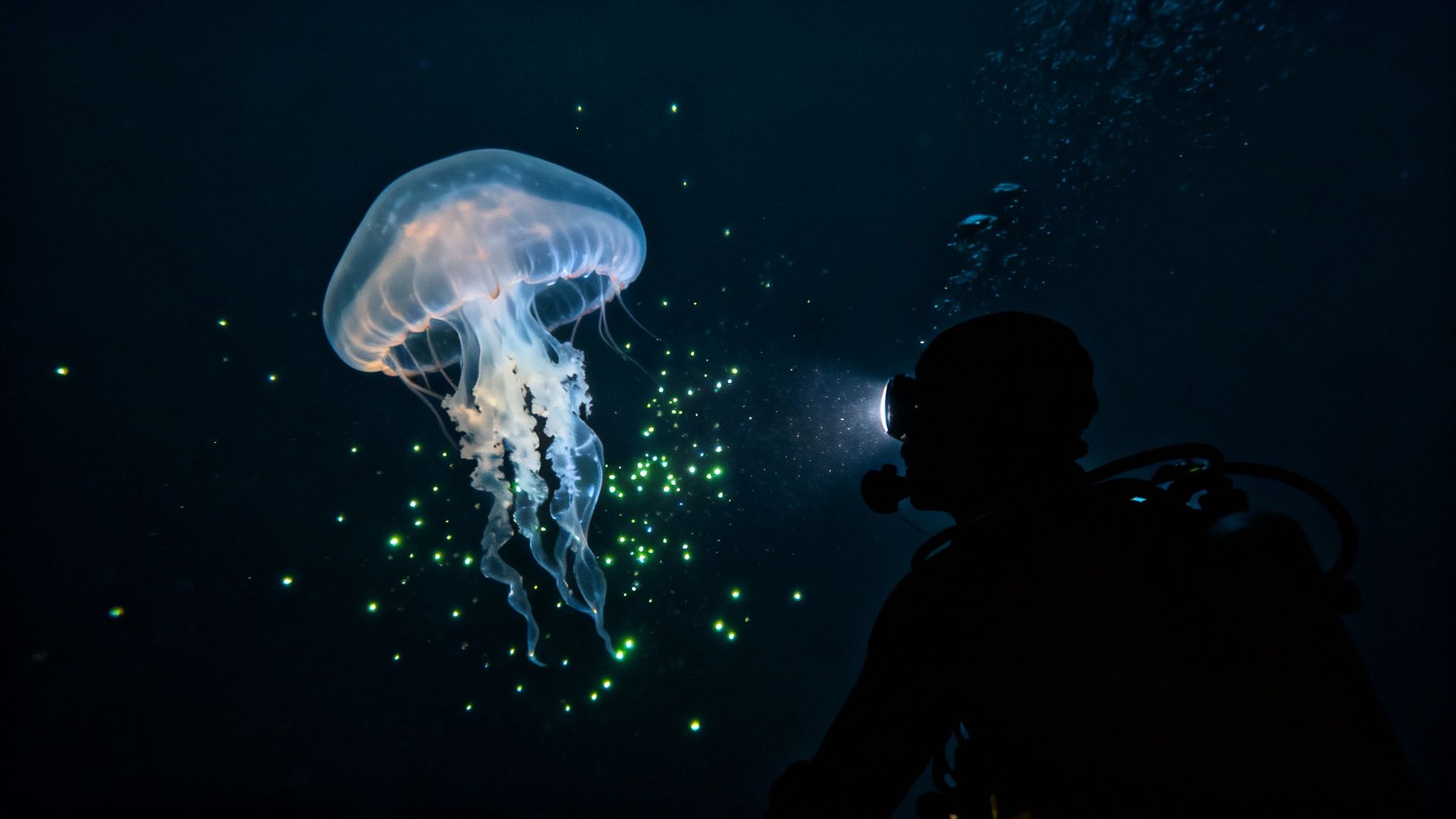
For divers looking for something truly otherworldly, the next logical step has to be the Kona Blackwater Dive. This isn't your typical reef dive; it's a pelagic adventure into the abyss. You'll be tethered to the boat, drifting miles offshore in the deep, inky water, witnessing one of the planet's largest migrations as strange and beautiful creatures rise from the depths to feed.
You’ll see organisms that look like they're straight out of a sci-fi movie:
- Transparent Squids: Almost ghost-like, they pulse with their own otherworldly bioluminescent light.
- Larval Fish: You get to see familiar reef fish in their bizarre, alien-like juvenile forms.
- Pteropods and Ctenophores: Gelatinous little creatures that drift past like living, sparkling jewels.
It’s a surreal journey into a world most people will never see, and it offers a profound new perspective on the ocean’s real mysteries.
The Blackwater Dive is the perfect chaser for the manta dive. While the mantas are a grand, majestic spectacle, the blackwater dive is an intricate, macro-level treasure hunt for life forms you never even knew existed.
Challenge Yourself with Advanced Dives
If you're an experienced diver ready to push your skills, Kona's coastline is ready for you. The volcanic topography has created a playground of unique underwater structures that are perfect for exploring. An advanced dive tour can get you to sites that most divers simply never see.
Imagine navigating through ancient lava tubes, swimming through majestic archways, and exploring deep pinnacles covered in rare sponges and corals. These sites often host different marine life, including big schools of pelagic fish and even sharks. They demand excellent buoyancy control and a solid spirit of adventure, but the reward is unforgettable views and a much deeper appreciation for the Big Island's raw beauty. Beyond the living creatures, the ocean floor also hides ancient secrets, like incredible marine fossils such as the largest megalodon shark tooth.
Discover a World of Diving Opportunities
Kona is truly a world-class diving destination with something for every certified diver, from calm morning reef explorations to thrilling advanced charters. The manta ray night dive might be what gets you here, but it's the sheer diversity of what you can do underwater that will make you want to come back again and again.
To see the full spectrum of adventures available, from two-tank morning dives that showcase vibrant coral gardens to other specialized night excursions, you can explore a comprehensive list of diving tours in Kona. Your journey into Kona's underwater world has only just begun.
Your Manta Dive Questions, Answered
Planning an adventure like this always brings up a few questions. I get it. You want to make sure everything is perfect for your big night with the mantas. To help you get everything sorted, here are answers to the most common things people ask before heading out on a manta ray night dive in Kailua Kona.
What if I'm not a certified diver?
No certification? No worries at all. You absolutely do not need to be a scuba diver to have a front-row seat for this incredible show. Snorkeling with the mantas is just as breathtaking and, for many, the preferred way to go.
Snorkelers get to hang out on the surface, holding onto a custom-built light board. This board illuminates the water below, which is what draws in the plankton. The mantas follow their food source, swooping and gliding right up to the surface. You'll have an amazing bird's-eye view of the entire ballet.
Is the Manta Ray Night Dive Safe?
Absolutely. Safety is the number one priority for every reputable operator in Kona. Before you even dip a toe in the water, you'll get a detailed safety briefing from your guides. The dive sites themselves are well-chosen—typically shallow spots around 30-40 feet deep inside protected bays where the water is calm.
For divers, the experience is very relaxed. You're mostly just kneeling or sitting on the sandy bottom, watching the show above. Snorkelers are always under the watchful care of the crew. And the mantas themselves? They're called "gentle giants" for a reason. They have no stingers, barbs, or teeth and are completely harmless to people.
What happens if no manta rays show up?
This is a great question because, at the end of the day, these are wild animals. While the Kona manta dive has an incredible track record—sightings happen over 90% of the time—nature is never 100% predictable. On very rare occasions, the mantas just decide not to show up for their plankton feast.
That's why the best operators, like Kona Honu Divers, have a "manta guarantee." If you don't see a manta on your trip, you can come back for another try on a different night, completely free of charge (based on availability). It’s always smart to double-check the specific policy when booking, but this gives you a great safety net.
A Quick Note on Manta Etiquette: It is absolutely forbidden to touch a manta ray. Their skin has a protective mucus coating that is vital to their health. Touching them can rub it off, leaving them vulnerable to nasty skin infections. The golden rule is simple: look, but don't touch.
Should I Snorkel or Dive?
This really just boils down to your personal preference and what kind of experience you're looking for. Both snorkeling and diving offer a phenomenal, up-close encounter.
- Snorkeling is a fantastic choice if you: aren't a certified diver, are traveling with kids, or simply feel more comfortable staying at the surface. You'll watch the mantas soar up toward you from below.
- Diving is perfect if you: are a certified diver who wants that fully immersive feeling. You'll be looking up from the ocean floor as these massive, graceful creatures glide inches above your head.
Honestly, you can't make a bad choice here. Both give you an unforgettable night with one of the ocean's most majestic animals.
Ready to see the magic for yourself? The team at Kona Honu Divers lives and breathes this stuff. They’re all about creating a safe, respectful, and truly mind-blowing manta ray experience. With their deep local knowledge and passion for conservation, you know you're in the best hands.
Check out their famous 2-Tank Manta Dive & Snorkel tours to find the perfect adventure.