
Picture this: you descend into the warm, inky blackness of the Pacific Ocean. Suddenly, powerful lights cut through the dark, turning the seabed into a brilliantly lit underwater stage. This is the world-famous manta ray night dive in Kailua Kona, a truly once-in-a-lifetime adventure. Graceful giants, with wingspans stretching over 12 feet, glide, swoop, and perform barrel-rolls just inches from your face. It's a breathtaking encounter that every ocean lover dreams about.
An Unforgettable Underwater Ballet in Kailua Kona
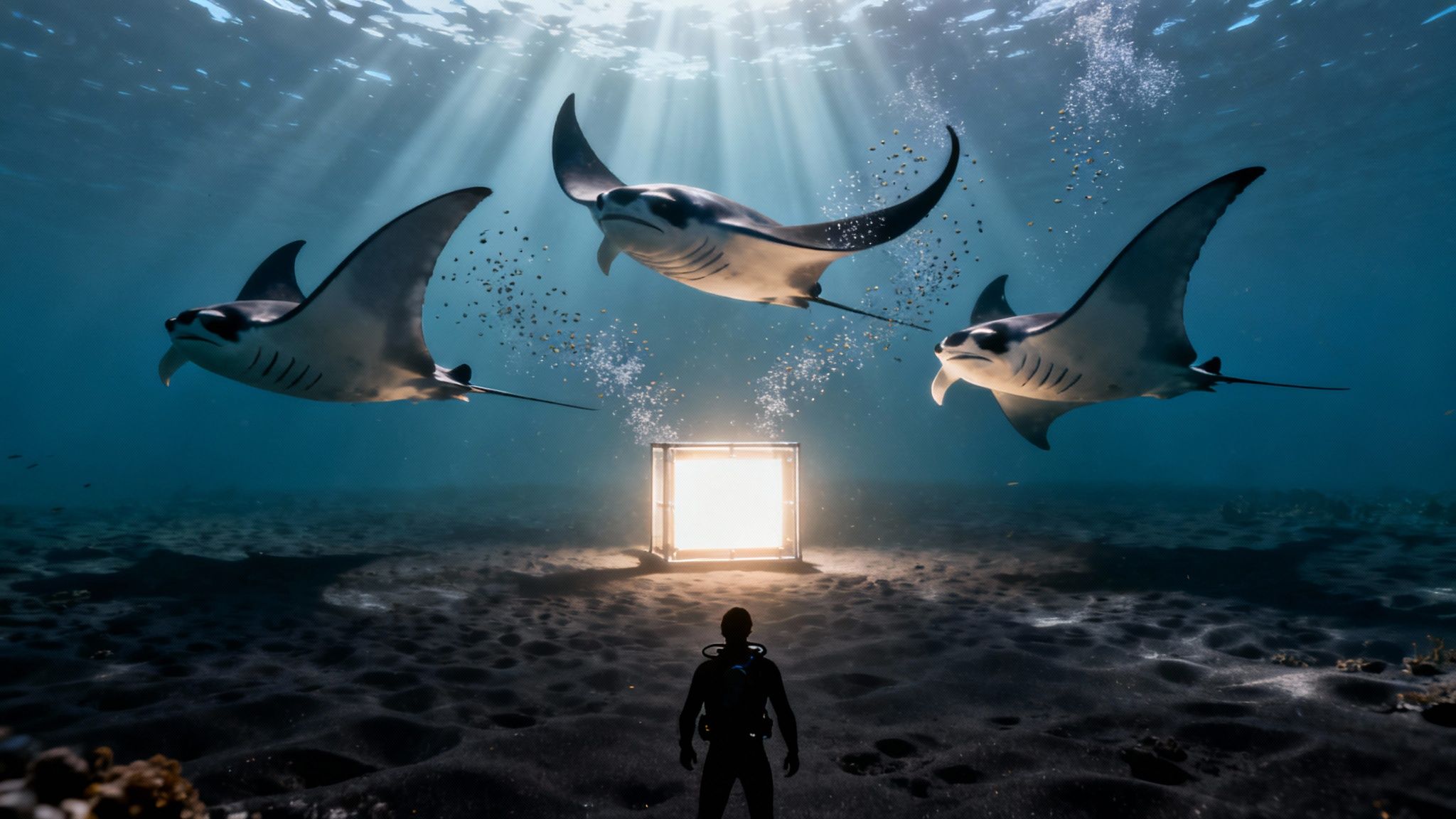
There’s a good reason the Kailua Kona manta ray night dive is consistently voted one of the best underwater experiences on the planet. This isn't just another dive; it's a front-row seat to a mesmerizing spectacle, a perfectly choreographed ballet of gentle giants. The magic all hinges on a clever concept known as the "underwater campfire."
Dive operators have set up a central light source on the ocean floor—some call it the "campfire," others a light box. Your group will gather in a circle around it, pointing your own dive lights up toward the surface. This massive concentration of light acts like a magnet, attracting clouds of microscopic plankton, which just so happens to be a manta ray’s favorite meal.
The Campfire and the Dance
You can think of it as setting a grand dinner table for giants. The plankton-rich water creates an irresistible buffet, and before you know it, the guests of honor start to arrive. Manta rays emerge from the darkness, swooping directly into the light beams to feed. They perform effortless somersaults and graceful loops, their cavernous mouths wide open to filter the water. Being this close to their intimate performance creates a powerful, awe-inspiring connection you'll never forget.
What makes Kailua Kona one of the most reliable places on Earth for this encounter? It's the resident population of manta rays. These aren't just migratory animals passing through; they live here all year, which makes sightings incredibly consistent.
The Manta Ray night dive in Kailua Kona, Hawaii, is famous for its sky-high success rate and one-of-a-kind underwater show. Dives typically take place in shallow water, around 30 to 40 feet, letting divers enjoy 45 to 60 minutes of bottom time watching the mantas. The numbers don't lie: there's a staggering sighting success rate of over 95%, making an encounter almost guaranteed. These magnificent creatures average a wingspan of over 12 feet, with some even larger. You can find more Kona manta ray night dive statistics to see just how special this is.
To give you a quick snapshot, here are the key details you'll want to know before you go.
| Feature | Details |
|---|---|
| Location | Kailua Kona, Big Island, Hawaii |
| Dive Depth | 30 – 40 feet (9 – 12 meters) |
| Avg. Bottom Time | 45 – 60 minutes |
| Sighting Success Rate | Over 95% |
| Manta Wingspan | Avg. 12+ feet (3.6+ meters) |
| Key Attraction | "Underwater campfire" effect with lights |
This overview helps frame what makes this dive so accessible and consistently amazing.
This guide will walk you through everything you need to know, from choosing the right dive site to getting yourself prepared for the adventure. When you book with a trusted, conservation-focused operator like Kona Honu Divers, you can rest assured your experience will be safe, ethical, and absolutely unforgettable. And if you're keen to see what else the Big Island has to offer, Kona Honu Divers also runs a wide variety of other diving tours in Kona, Hawaii, showcasing the island's incredibly diverse marine life and stunning underwater landscapes.
Choosing Your Manta Ray Viewing Site
When you start planning your manta ray night dive in Kailua Kona, you'll hear two names come up over and over again. These are the two primary spots where all the action happens, and while both deliver an incredible experience, they each have their own unique vibe.
The real choice boils down to a classic trade-off: do you want to see the biggest possible crowd of mantas, or would you prefer a more intimate experience with fewer other divers in the water?
Manta Heaven vs. Manta Village
The two go-to sites are "Manta Heaven" to the north (near the airport) and "Manta Village" to the south (near Keauhou). Both have fantastic, reliable sightings, but they cater to slightly different priorities.
Manta Heaven often feels like the main event, the big stage. It’s not uncommon to see a massive group of mantas here, sometimes dozens at a time, creating a whirlwind of graceful movement. If your goal is to be completely surrounded by these gentle giants and witness a true spectacle, this is probably your spot. It's an underwater ballet on a truly grand scale.
Manta Village, on the other hand, can feel a bit more personal. While you'll almost certainly see mantas, the numbers might be a little lower on average. The payoff? It’s often less crowded. This can lead to a more peaceful, tranquil dive where you feel a stronger connection to the animals you're observing, without jockeying for position.
The numbers from a 2013 study really highlight the difference. "Manta Heaven" averaged about 11 manta rays per night, whereas "Manta Village" saw an average of 4. But here’s the other side of that coin: the northern site can get very busy, with 50 to 100 divers and snorkelers in the water on any given night.
So, what’s right for you? It’s a personal call. Do you want the high-energy, dazzling show of a huge manta congregation, even if it means sharing the view? Or does a quieter, more personal encounter with a handful of these magnificent creatures sound like a better fit?
Either way, you’re in for an unforgettable night. Knowing these nuances just helps you pick the adventure that perfectly matches what you’re hoping for from your manta ray night dive in Kailua Kona. If you want to dive even deeper into the specifics, check out our guide on where to see manta rays in Hawaii.
What to Expect on Your Manta Ray Adventure
Your manta ray night dive in Kailua Kona is a carefully orchestrated ballet, and you have a front-row seat. The whole adventure kicks off well before you even get your feet wet, starting with a friendly check-in at the harbor. Your crew will walk you through a detailed briefing, making sure everyone knows the safety plan and what to expect from the mantas themselves.
With the briefing done, it's time to board the boat and head out. The ride to the dive site is an experience in itself. More often than not, you'll be treated to a classic Kona sunset, a perfect, peaceful start to an unforgettable night.
The Underwater Campfire
Once you arrive at the spot, the real magic begins. Divers gear up and descend to the sandy bottom, usually somewhere between 30 and 40 feet deep. Down there, you'll see the famous "campfire"—a big, powerful light box placed right in the middle of the action. This light is a magnet for plankton, drawing them in until the water is thick with a shimmering cloud of their food.
You and the other divers will find a spot in a circle around the light, shining your own flashlights straight up. Think of it as a group effort to create the brightest dinner invitation possible. Then, all that's left to do is settle in and wait.
The Main Event from Two Perspectives
You won't be waiting long. The mantas glide in from the darkness, swooping into the light beams to feast. It's a surreal sight, watching these massive, graceful creatures perform somersaults and barrel rolls sometimes just inches above your head.
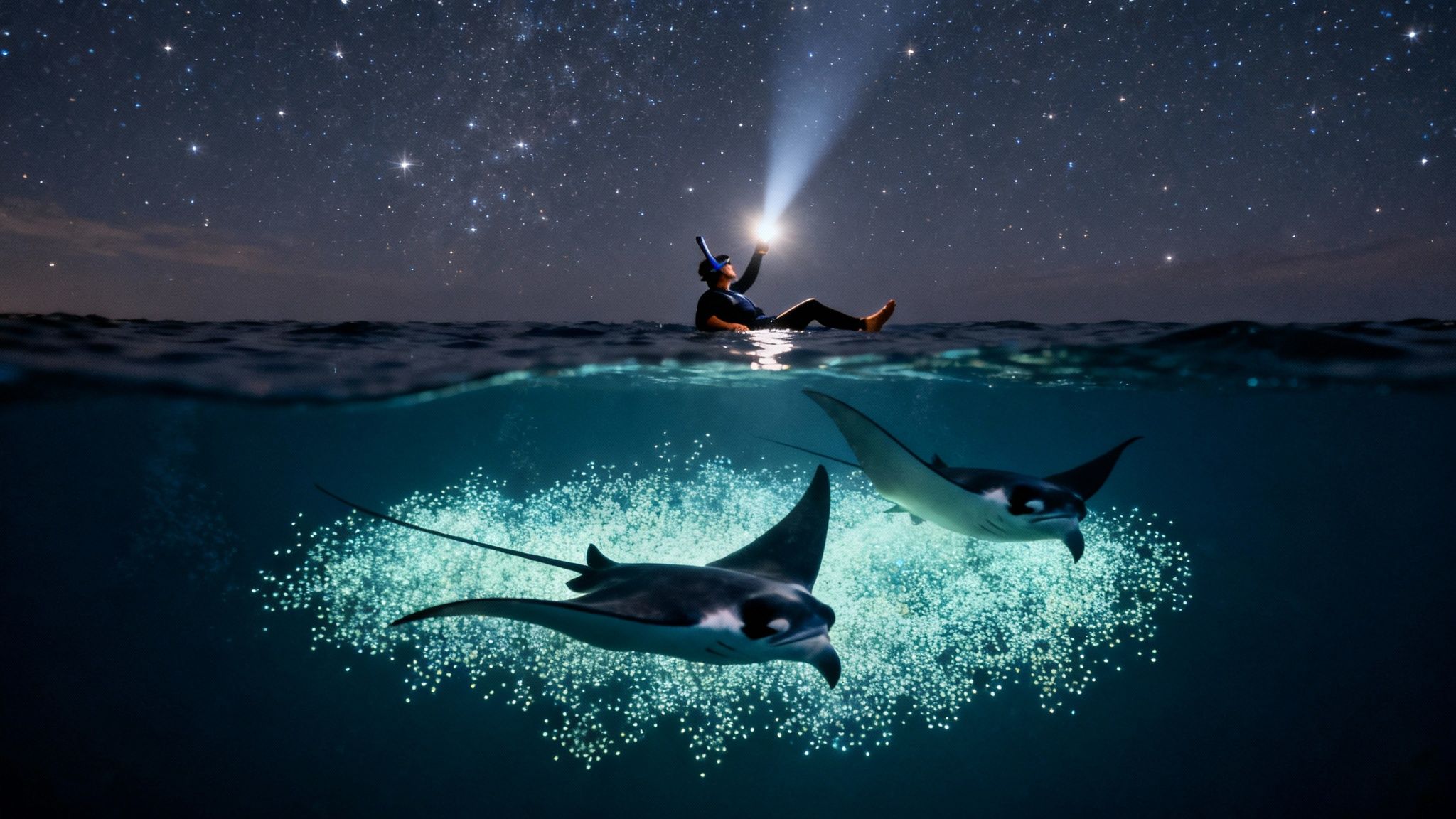
For snorkelers, the view is just as spectacular. You'll hold onto a custom floatation board that has its own bright lights pointing down into the water. The mantas come right up to the surface, giving you a stunning top-down view of their feeding ballet. It’s a completely different angle but every bit as breathtaking.
It’s crucial to remember that this whole experience is about passive observation. To keep the mantas safe and coming back, there’s a strict no-touching rule. Letting them do their thing without interference is what makes this encounter so special.
After about 45 minutes of pure wonder, it’s time to head back to the surface and climb aboard. The ride back to the harbor, under a sky full of stars, is usually filled with quiet awe. Most boats will have hot cocoa and snacks waiting, giving everyone a chance to warm up and share stories about what they just witnessed. It's so much more than just a dive; it's a complete memory-making adventure. You can see a full itinerary and learn more about the 2-tank manta dive and snorkel tour to get a better feel for the whole trip.
How to Prepare for Your Kona Night Dive
A little prep work before your manta ray night dive Kailua Kona can make the difference between a good dive and an unforgettable one. Think of it as a simple checklist to ensure you're comfortable, confident, and ready for the show.
First things first, let's talk qualifications. To get in the water with the scuba group, you'll need at least your Open Water Diver certification.
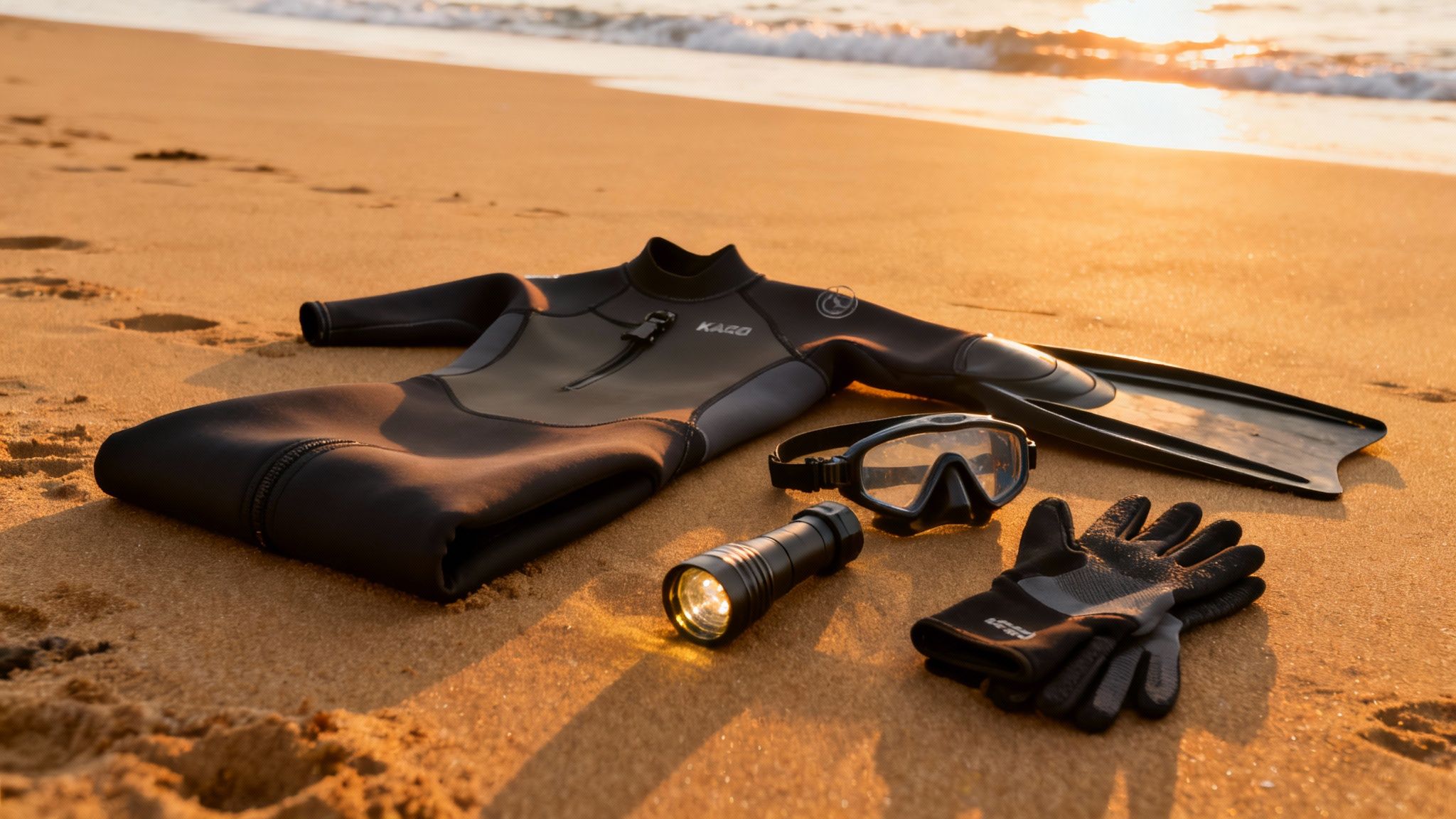
Once that's sorted, your personal packing is pretty straightforward. Just bring your swimwear, a towel, and a change of warm, dry clothes. Trust me, you'll be thankful for that cozy hoodie on the boat ride back to shore. The night air on the water can get surprisingly chilly.
Gearing Up and Feeling Good
Here's a pro tip that many divers swear by: consider taking motion sickness medication. The boat will be anchored at the dive site for quite a while, and the constant, gentle rocking can get to even the most experienced seafarers. Popping a non-drowsy pill about an hour before you depart can be a real game-changer.
While you're in charge of your personal comfort, a top-notch operator like Kona Honu Divers takes care of all the heavy lifting when it comes to gear. They’ll have everything waiting for you, including:
- Thicker Wetsuits: Even in warm Hawaiian waters, you'll be sitting still for a while. A 5mm or 7mm wetsuit is standard to keep you warm and focused on the mantas, not the shivers.
- Tanks and BCDs: All the essential scuba equipment is provided and professionally maintained, so you can just gear up and go.
- High-Powered Dive Lights: These aren't your average dive lights. They're powerful beams designed to attract plankton and light up the underwater stage.
Getting familiar with the gear you will need for your Kona diving adventure ahead of time is a great way to ease any pre-dive jitters.
Your dive light is your ticket to the show, and using it correctly is crucial. Your guide will show you how to point it straight up from the seafloor. Together, the group's lights create a massive column of light—a "campfire" that draws in a thick soup of plankton for the mantas to feast on. This teamwork makes the experience better for everyone.
Finally, take a moment for some mental prep. You're in the hands of experienced professionals, so relax and trust your guide. Let go of any anxieties, breathe, and just be present in the moment. This is more than just a dive; it’s a front-row seat to one of nature's most magical spectacles. And if this experience gets you hooked on diving in the dark, the Kona blackwater dive is an incredible next step into the abyss.
Diving with Respect: Manta Ray Safety and Conservation
When you join the manta ray night dive in Kailua Kona, you're not just a tourist—you're a guest in their underwater world. This incredible encounter is built on a foundation of mutual respect, where our safety and the well-being of the mantas are completely intertwined.
Before you even get your fins wet, your divemaster will walk you through all the crucial safety protocols for night diving. They'll cover everything from hand signals in the dark to what to do in an emergency. Paying close attention and following their lead is the key to a safe, relaxed dive for the whole group, allowing you to just soak in the magic unfolding right in front of you.
Mastering Manta Etiquette
The most critical part of the pre-dive briefing is what we call "Manta Etiquette." These are the simple, yet vital, rules of engagement designed to protect these gentle giants.
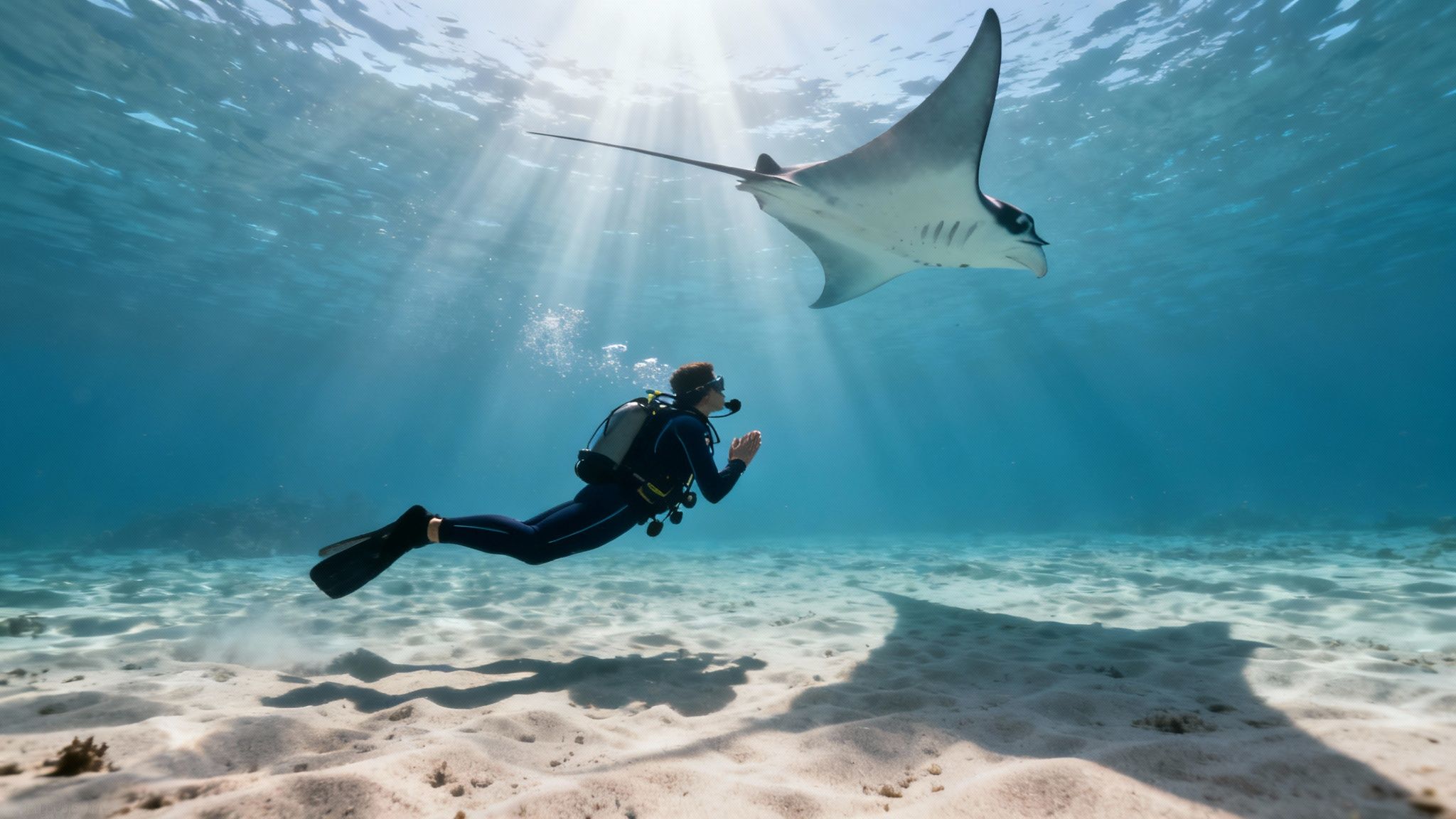
The number one rule is absolute: never, ever touch a manta ray. Their skin is covered in a delicate mucus layer that acts as their immune system, shielding them from nasty bacteria. Even a gentle touch can rub this coating off, leaving them exposed to potentially life-threatening infections. You can dive deeper into these principles by reading about responsible and considerate diver etiquette.
A few other guidelines help ensure the mantas feel safe and can feed without any stress from us:
- Stay Low: We ask all divers to stay on or very near the sandy bottom. This creates a clear "ceiling" for the mantas to swoop and glide above us.
- Keep a Low Profile: Try to lie horizontally. This makes you a smaller, less imposing obstacle and keeps their feeding lanes wide open.
- Lights Up!: Always point your dive light straight up toward the surface. This is what attracts the plankton and creates the "campfire" effect that draws the mantas in for dinner.
- Be a Statue: The best thing you can do is stay still and just watch. Let the mantas control the interaction. If they want a closer look, they'll glide right over you—an experience you'll never forget.
Every dive here is more than just an amazing memory; it's a contribution to a huge citizen science project. Researchers identify individual mantas by the unique spot patterns on their bellies, and your presence helps them track population health, migration, and behavior.
This turns your dive adventure into a powerful conservation tool. Between 2009 and 2014, divers and videographers documented nightly sightings, helping to identify nearly 200 individual mantas that call this coastline home year-round. This incredible database of photos and videos allows for crucial long-term monitoring, proving that tourism and conservation can be a perfect team.
By following these simple rules, you're doing your part to protect this breathtaking natural wonder for many, many years to come.
Booking Your Manta Ray Night Dive
Alright, you're convinced. Time to take the plunge and book your manta ray night dive in Kailua Kona. This is the final step, and choosing the right dive operator is probably the most important decision you'll make. A great crew can turn a good dive into an absolutely legendary one, ensuring everything is safe, responsible, and respectful of the mantas.
We've been on a lot of boats in Kona, and we always come back to Kona Honu Divers. They just get it right. They keep their groups small, which makes for a much more personal and less chaotic experience. More importantly, their whole operation is built around manta ray conservation and safety. You can feel their passion for these animals, and their guides are fantastic at making sure everyone, from divers to snorkelers, is comfortable and ready.
Choosing the Right Tour
So, what's the best option? Most people go for their two-tank manta dive and snorkel trip. It’s a brilliant setup. Certified divers get to explore a beautiful reef during a late afternoon dive, just as the sun starts to set. Then, the snorkelers hop on board, and everyone heads to the main event together. It's the perfect way to get the full Kona diving experience in one evening.
Don't just take our word for it, though. See what other divers are saying about their time with the Kona Honu crew.
One of the great things about Kona is that the manta rays live here year-round. There really isn't a specific "manta season," so your chances are excellent any time you visit.
That said, don't wait until the last minute to book. These tours are incredibly popular, and the best boats fill up fast, especially during holidays and summer. Book well in advance to avoid disappointment.
Kona Honu Divers is completely transparent about what's included in their prices—gear, guides, snacks, all of it is listed right on their tour pages. No hidden fees or last-minute surprises. Once you've secured your spot, all you need to do is show up, listen to the briefing, and prepare for one of the most incredible shows on Earth.
And if you're a certified diver looking for even more adventure, you should definitely check out their premium advanced dive tours for some deeper, more challenging dives.
Your Top Manta Dive Questions Answered
Is This Dive Okay for New Divers?
Yes, absolutely. The manta ray night dive in Kailua Kona is a fantastic and safe experience, even if you’re a newly certified diver.
The dive sites are quite shallow, usually around 30-40 feet, and the water is typically calm with little to no current. For most of the adventure, you'll be settled on the sandy seafloor, which makes for a very controlled and predictable environment. Every reputable operator will give you a detailed briefing and have experienced guides in the water to make sure you're safe and comfortable from start to finish.
When Is the Best Time of Year to See the Mantas?
This is one of the best parts—there is no "bad" time! The Kona coast manta rays are resident animals, meaning they hang out here year-round.
You can book a trip in January or July and have an equally high chance of an incredible encounter. Sighting rates stay consistently above 95% all year. The real thing to consider isn't the season, but the crowds. If you're planning a trip during peak holidays or the summer, be sure to book your spot well in advance.
Can I Snorkel Instead of Dive and Still See Them?
You sure can, and the view is just as spectacular from the surface! Snorkelers get their own large, custom-made light board that floats on the water. You simply hold on and watch the magic unfold below.
This board attracts plankton just like the divers' lights do, bringing the mantas right up to the surface to feed. They often get within inches of the snorkelers, giving you a stunning top-down view of their elegant, acrobatic movements.
What if the Manta Rays Don't Show Up?
While it’s incredibly rare for the mantas to be a no-show, they are wild animals, so a sighting can never be 100% guaranteed.
Because of this, the best operators, like Kona Honu Divers, stand by their experience with a "manta guarantee." If your tour doesn't see any mantas, they'll usually invite you to come back another night for free, depending on availability. It's always a good idea to double-check the specific policy when you book your unforgettable Kona manta ray dive tour.