
Picture this: massive, graceful shadows soaring through an underwater spotlight, putting on a silent ballet right in front of you. That’s the magic of the world-famous manta ray night dive in Kailua Kona, an experience that consistently tops the list of the planet's best wildlife encounters. It’s a breathtaking show where a little human ingenuity helps showcase one of nature's most incredible spectacles.
Your Essential Guide to the Manta Ray Night Dive

The Kona coast of the Big Island is the place to see manta rays at night, and its reputation is built on one thing: reliability. Of course, no wildlife sighting is ever a 100% guarantee, but the consistency here is simply unreal.
Local operators report seeing mantas on 85–90% of all night dives and snorkel trips. That's a success rate you’d be hard-pressed to find anywhere else on Earth. It turns the experience from a hopeful gamble into a likely front-row seat for an unforgettable performance. You can get more insights into the Kona manta ray experience to see just how special it is.
This incredible nightly gathering isn't just a happy accident. It’s the result of a perfect partnership between geology and biology. The unique underwater volcanic landscape and specific ocean currents along the Kona coast naturally channel plankton—the mantas' favorite meal—into concentrated pockets. Dive operators simply figured out how to amplify this natural phenomenon.
Creating the Perfect Manta Buffet
So, how does it all work? The idea is brilliantly simple.
- The Underwater "Campfire": As the sun sets, boats motor out to designated sites. Once there, they submerge powerful, eco-friendly lights into the water, creating what we affectionately call the "campfire."
- Attracting the Plankton: Just like moths to a flame, tiny plankton are drawn to the bright lights, gathering in thick, swirling clouds.
- Dinner is Served: This cloud of plankton becomes an irresistible, all-you-can-eat buffet for the local manta ray population. These gentle giants, with wingspans that can stretch over 15 feet, glide in to feed, swooping and barrel-rolling through the beams of light with a grace that defies their size.
This nightly ritual is your chance to see these magnificent animals up close, doing what they do naturally. Whether you're a seasoned diver settled on the ocean floor or a first-time snorkeler floating on the surface, you have the best seat in the house.
This guide will walk you through everything you need to know to prepare for one of the most reliable and magical manta ray dive tours you'll ever find.
Choosing Your Adventure: Scuba Diving Vs. Snorkeling

The incredible manta ray ballet off the coast of Kailua-Kona is an experience open to almost everyone, no matter your comfort level in the ocean. But how you see the show completely changes the experience.
You have two main options: scuba diving or snorkeling. Each offers a unique and totally unforgettable viewpoint. The right choice for you really just depends on your certification, your comfort in the water, and what kind of encounter you're dreaming of.
The Scuba Diver's Perspective
For certified divers, this is the best seat in the house. You'll descend to the sandy ocean floor, usually about 30-40 feet deep, and find a spot to settle in. From this amazing vantage point, you get to look up into the light beams.
The giant mantas perform their acrobatic feeding dance right above you, sometimes just inches from your mask. It’s a peaceful, immersive, and truly awe-inspiring way to feel like you're a part of their world.
The Snorkeler's Perspective
Snorkelers get a fantastic bird's-eye view of the whole spectacle. You'll float comfortably at the surface while holding onto a specially designed light board.
This board does two things: it gives you something stable to hold onto, and it shines powerful lights down into the water to attract the plankton. The mantas then soar up from the darkness to feed, often coming within inches of the surface. You get a breathtaking look at their massive wingspans and graceful movements from above.
Comparing the Manta Ray Dive and Snorkel Experiences
To help you decide, let's break down the key differences. This direct comparison can help you figure out which manta ray experience in Kona is the right fit for your skills and what you want to see.
| Feature | Scuba Diving | Snorkeling |
|---|---|---|
| Viewpoint | Bottom-up view from the ocean floor | Top-down view from the water's surface |
| Certification | Open Water certification required | No certification needed |
| Physical Needs | Good physical health, comfortable with scuba gear | Basic swimming ability, comfortable in water |
| Equipment | Full scuba kit (tank, BCD, regulator) | Mask, snorkel, fins, and light board |
| Proximity | Mantas glide directly overhead, often inches away | Mantas swoop up from below, very close to the surface |
| Duration in Water | Typically 40-50 minutes, limited by air supply | Typically 40-50 minutes, no air limitations |
Ultimately, both options give you a front-row seat to one of the most mesmerizing shows in the natural world. For a more detailed breakdown of the pros and cons, check out our guide on if it’s better to snorkel or dive with manta rays.
Whether you choose the quiet, immersive world of a diver or the thrilling, surface-level excitement of a snorkeler, you’re guaranteed an encounter you’ll never, ever forget.
What to Expect on Your Manta Ray Tour

It’s one thing to be excited, but it’s another to know exactly what your adventure will look like. Understanding the flow of the evening helps turn any pre-dive jitters into pure, unadulterated anticipation. When you book a manta ray night dive in Kailua Kona with a pro crew like Kona Honu Divers, you're signing up for a finely tuned experience that puts wonder and safety first.
The whole thing kicks off at the harbor well before you get your fins wet. You’ll gather for a pre-trip briefing where the guides, who live and breathe this stuff, share some incredible insights into manta ray biology. They'll also walk you through the all-important rules of the road—the safety protocols designed to protect both you and these magnificent animals.
The Journey to the Dive Site
Once the briefing wraps, it’s time to board the boat and head out. More often than not, the timing is perfect to catch a classic Kona sunset from the water. That boat ride isn't just a commute; it’s part of the magic, setting the tone for the spectacle ahead.
As daylight fades, the crew springs into action, preparing the underwater stage. They'll strategically place a powerful light source, which we affectionately call the "campfire," on the ocean floor. This light is the secret sauce; it attracts a massive cloud of microscopic plankton, ringing the dinner bell for any manta rays in the area.
The Main Event Underwater
When the time comes, you'll slip into the dark water and find your spot. If you're diving, you'll settle on the sandy bottom. If you're snorkeling, you'll hang onto a custom-lit float on the surface, giving you a perfect bird's-eye view.
Your eyes adjust, you see the plankton swirling in the beams, and then… they arrive.
It’s difficult to describe the feeling of watching these gentle giants swoop, glide, and barrel-roll right in front of you. They move with an impossible grace, sometimes passing just inches away in a silent, hypnotic ballet.
This entire operation is a masterclass in responsible eco-tourism. By setting up a predictable and non-threatening feeding station, the mantas feel comfortable approaching, which gives us an unbelievably close encounter without disturbing their natural behavior.
You’ll spend about 45 minutes completely mesmerized by the show before it’s time to head back to the boat. The crew is usually waiting with hot cocoa and snacks—a welcome treat after being in the water. The ride back to the harbor is always filled with buzz as everyone shares stories and relives the incredible moments they just witnessed.
From start to finish, every detail is handled to make sure your trip is seamless, safe, and something you’ll talk about for years. Ready to book your seat for this incredible underwater performance? Just head over to the manta ray tour page to get started.
The Science Behind the Manta Spectacle
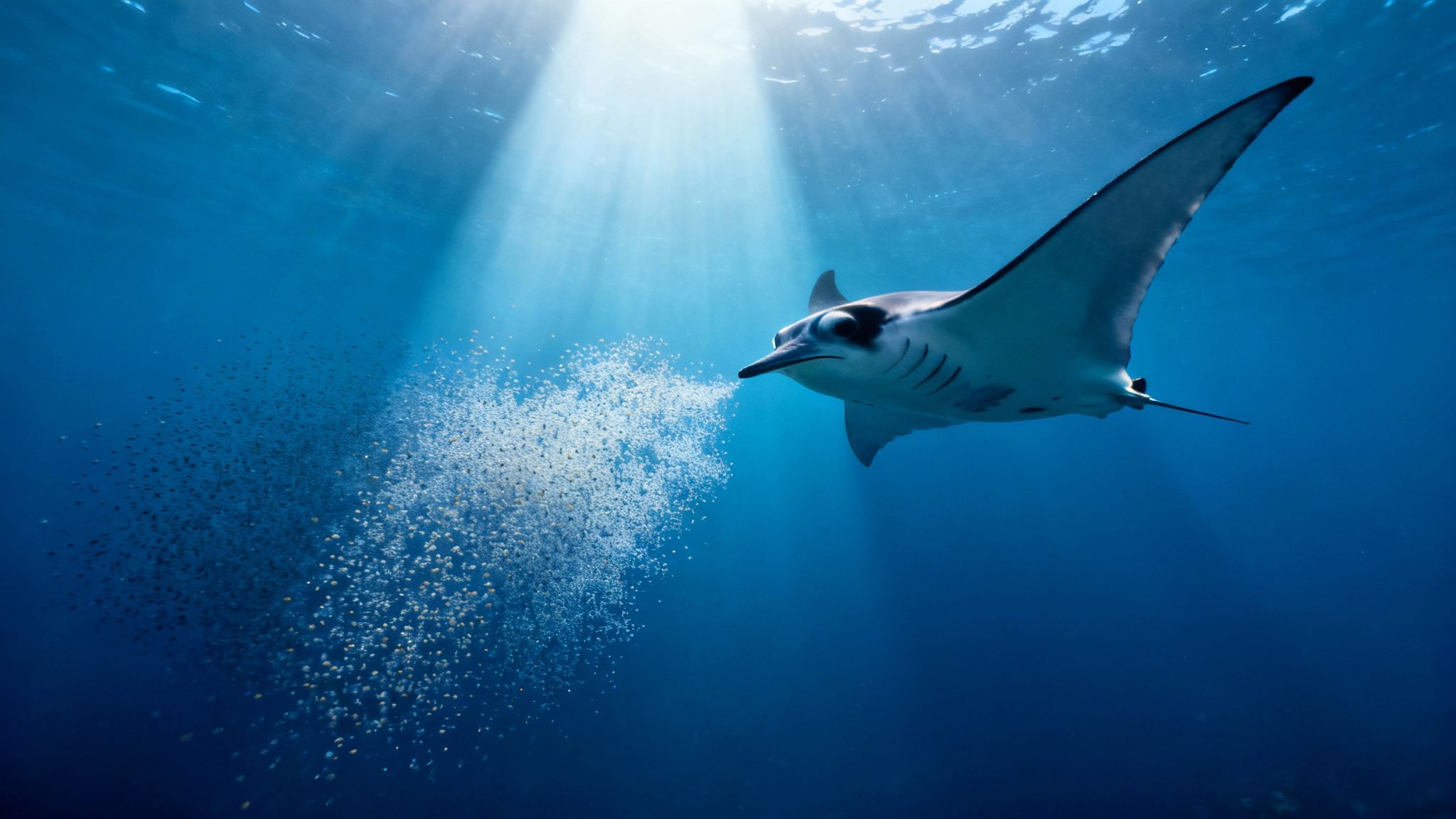
The incredible manta ray night dive in Kailua Kona feels like stepping into another world, but the magic you witness is actually a beautiful display of simple science. The entire encounter is built on a predictable food chain reaction—a perfect blend of natural biology and a little human ingenuity. It all boils down to one simple thing: light.
At the heart of it all is a biological process called phototaxis, which is just a fancy way of saying that certain organisms move toward or away from light. Tiny, free-floating critters known as plankton are "positively phototactic," meaning they're drawn to light like moths to a flame. We use this natural instinct to our advantage, setting up powerful, eco-friendly lights on the ocean floor.
These lights create an irresistible beacon in the dark water. Before long, a thick, swirling cloud of plankton gathers in the beams, essentially creating a concentrated, all-you-can-eat buffet. This, in turn, is the dinner bell for Kona's resident reef mantas (Manta alfredi).
The Anatomy of a Gentle Giant
These gentle giants are perfectly built to take advantage of this plankton smorgasbord. They aren't hunters in the traditional sense. Instead, they glide effortlessly through the water with their massive mouths wide open, filtering out thousands of tiny organisms.
You’ll see two fleshy lobes on either side of their heads—those are their cephalic fins. They can unfurl these fins to act like funnels, expertly guiding the plankton-rich water straight into their mouths. When you see them doing graceful swoops and barrel rolls through the light, they're simply getting as much food as possible in the most efficient way. Understanding how deep manta rays dive in Kona adds even more perspective to their nightly feeding patterns.
Kona's reliable manta population has turned this area into a living laboratory. For years, scientists and local researchers have used this nightly gathering to study manta behavior and aid conservation. Local groups have identified nearly 200 individual manta rays by the unique spot patterns on their bellies, which are as distinct as human fingerprints. This ongoing work has created one of the world's most detailed manta catalogs and contributes vital data to global conservation efforts.
By understanding the 'why' behind the spectacle—the simple connection between light, plankton, and mantas—your appreciation for these intelligent animals and the delicate ecosystem they call home deepens immensely. It's not just a show; it's a beautiful, living science lesson.
How to Interact with Manta Rays Responsibly
Keeping Kona’s famous manta rays safe isn't just a job for the tour companies—it's a responsibility we all share. When you sign up for a manta ray night dive in Kailua Kona, you're stepping into their world, their underwater dining room. The whole experience is built on mutual respect, and a few simple rules make sure the encounter is incredible for everyone, mantas included.
The golden rule is passive observation. That’s it. Picture yourself as part of the audience at a spectacular show. Your role is just to watch the magic unfold. That means no touching, no chasing, and definitely no getting in their way as they glide through the water.
Why Touching is a Serious Threat
It’s tempting, I get it. When a 12-foot manta ray swoops inches from your face, the urge to reach out is real. But this is the single most important rule to follow: keep your hands to yourself. Manta rays are covered in a special mucous layer, a kind of slime coat that acts as their immune system.
This coating is their main defense against bad bacteria and parasites. When you touch a manta, you wipe off that protective layer. It leaves them exposed to skin diseases and infections that can be incredibly harmful, sometimes even fatal. What’s a fleeting moment for you could cause a lifetime of problems for them.
By simply keeping your hands to yourself, you are actively participating in the conservation of these gentle giants. It's a small act with a massive impact on their well-being.
Procedures for a Positive Encounter
Good tour operators have this down to a science. We’ve created a system that’s predictable and feels safe for the mantas, encouraging them to come close because they know they won't be threatened. You can learn more about this philosophy by reading up on responsible and considerate diver etiquette.
It all comes down to where we put ourselves:
- For Divers: Your guide will have you find a spot on the sandy ocean floor and stay put. By keeping a low profile and remaining still, you essentially become part of the underwater landscape. This gives the mantas the confidence to swim freely right over your head.
- For Snorkelers: You’ll hang onto a custom-made light raft that floats on the surface. This keeps everyone in a group and prevents swimmers from accidentally kicking down into the manta's feeding space.
These simple guidelines create a calm, "campfire" atmosphere where the mantas are the main event. Beyond just how you act in the water, protecting the ocean also comes down to the products you use. A great starting point is learning what reef-safe sunscreen is and why it's essential. Following these best practices ensures this incredible natural wonder will be here for many years to come.
What’s Next? Explore More Kona Diving Adventures
The manta ray night dive in Kailua Kona is absolutely a world-class, must-do experience. But don't let it be the only page you read in the story of scuba diving the Big Island. The same incredible waters that host the nightly manta ballet are also home to a whole other world of underwater adventures, each one offering a completely different feel for what makes Hawaii's marine life so special.
So you've seen the mantas, and now you're hooked on night diving? If you're ready for the next level, the Kona Blackwater Dive is something else entirely. Imagine this: you're tethered to the boat, drifting in the deep, inky blackness miles offshore. Here, you'll meet some of the planet's strangest and most beautiful bioluminescent creatures as they make their nightly journey up from the abyss. It's otherworldly.
Daytime Reefs and Advanced Terrains
Of course, Kona's underwater world puts on an equally stunning show when the sun is out. The coastline is famous for its thriving coral reefs, mind-bending lava tubes, and dramatic underwater landscapes. Getting out to see them is essential for any certified diver visiting the island.
Our general scuba diving tours in Kona will show you the greatest hits—the most vibrant, life-filled reefs. You'll swim alongside sea turtles (honu), get lost in schools of colorful reef fish, and maybe even have a pod of dolphins cruise by. These dives really give you a feel for the foundational beauty of the Big Island’s ecosystem.
For those of you with a few more dives under your belt and a craving for a bigger challenge, Kona definitely has you covered. Our Advanced dive tours are designed to take you further afield to more remote and deeper sites.
These advanced trips are where you really get to see the raw, volcanic power that shaped this island. We're talking deep pinnacles, sheer walls covered in sponges, and intricate lava arches you can swim through. It’s a chance to experience the wilder side of Kona's underwater world.
These trips are tailored for divers comfortable with deeper profiles and more complex navigation, but the payoff is huge—you get to see incredible sites that very few people ever will.
Whether you're drawn to the mysterious aliens of the deep on a blackwater dive or the sun-drenched volcanic architecture of an advanced charter, the adventure doesn't end when the mantas say goodnight. The Kona coast has an entire underwater universe waiting for you, with a perfect dive for every skill level and interest. Don't miss the chance to see everything the Big Island has to offer beneath the waves.
Your Manta Ray Dive Questions, Answered
Whenever you’re planning an adventure like the manta ray night dive in Kailua Kona, it's natural to have questions. After years of taking people out on the water, we’ve heard just about all of them! Here are the answers to the questions we get asked the most.
Will I Definitely See Manta Rays?
This is, without a doubt, the number one question we get. And for good reason! While we are dealing with wild animals in their natural habitat—so a 100% guarantee is never possible—the chances are overwhelmingly in your favor.
Here in Kona, the success rate for seeing mantas is sky-high, hovering around 85-90% on any given night. On the rare evening the mantas decide to be shy, most reputable companies (including us) offer a "manta guarantee." This means you can come back and try again on another night, on our dime.
How Safe Is the Manta Ray Night Dive?
Completely. Your safety is always the first priority. Before anyone even gets in the water, every tour starts with a thorough safety briefing. We'll go over everything you need to know, from boat procedures to how to interact with the mantas respectfully.
The dive sites themselves are well-managed spots that we visit night after night. You’ll have professional guides in the water with you the entire time, looking out for both you and the mantas. It's a very structured and supervised experience, which makes it an incredibly safe and awe-inspiring activity for everyone.
Do I Need to Be a Great Swimmer to Snorkel?
Not at all! You don’t need to be a competitive swimmer to have an amazing time. As a snorkeler, you'll be holding onto a large, custom-made light board that floats on the surface. It’s very stable and provides all the buoyancy you need.
Plus, you’ll be wearing a wetsuit, and you can always ask for a life vest if you'd like a little extra support. As long as you feel comfortable in the water, you're all set to watch the show from the best seat in the house.
What Should I Pack for the Boat Trip?
Thinking ahead about what to bring can make your trip much more comfortable, especially once you're out of the water. Here’s a quick list of essentials:
- A Towel: A must-have for drying off.
- Warm Clothes: It can get surprisingly cool on the boat ride back to shore. A sweatshirt or a light jacket will feel amazing.
- Your Swimsuit: The easiest thing is to just wear it under your clothes when you head to the harbor.
- Reusable Water Bottle: Always a smart idea to stay hydrated.
You can leave the heavy gear at home. Reputable operators like Kona Honu Divers provide everything else you'll need—all your dive or snorkel equipment, plus snacks and hot drinks to warm you up after your swim.
Ready to see this incredible underwater ballet with your own eyes? Kona Honu Divers runs a world-class manta ray dive and snorkel tour that you'll be talking about for years to come. Let's get you booked!