
Picture this: you're floating in the warm, dark waters of the Pacific off the Kona coast. Suddenly, a massive, gentle giant with a wingspan of up to 12 feet glides silently into view, performing an underwater ballet just inches from your face. This isn't a dream—it's the world-famous manta ray night dive in Kailua-Kona, one of the most reliable and magical wildlife encounters on the planet.
Your Guide to an Unforgettable Manta Ray Encounter
This experience is a true bucket-list adventure, and for good reason. It’s an opportunity to get incredibly close to these majestic creatures in their natural habitat. If you're thinking about making the trip, you've come to the right place. This guide is your complete playbook for planning a once-in-a-lifetime evening with Kona's famous manta rays.
We’ll cover everything you need to know, from the science behind this incredible spectacle to insider tips for choosing the perfect tour, whether you're a seasoned diver or have never worn a snorkel mask.
The Science Behind the Magic
How does it all work? The idea is actually quite simple, yet incredibly effective. Tour boats head out after sunset and set up powerful, submerged lights that cut through the darkness, creating a brilliant column of light.
This light acts like a giant bug zapper for the ocean's tiniest inhabitants—plankton. These microscopic organisms are the primary food source for manta rays, and they are instinctively drawn to the light.
As the plankton swarm, they create a dense, all-you-can-eat buffet. It doesn't take long for the mantas to show up for dinner. They glide, swoop, and perform effortless barrel rolls right through the illuminated water, their giant mouths open to filter the feast. It's this natural feeding behavior, amplified by the lights, that creates such a breathtaking show for us.
The Kona manta ray night dive is more than just a tour; it’s a carefully orchestrated interaction with nature that allows us to witness a stunning feeding behavior up close without disturbing the animals.
Why This Guide Is for You
The best part is that almost anyone can experience this. Whether you’re a certified scuba diver ready to get on the ocean floor or you'd prefer to snorkel from the surface, there’s an option for you.
This article will help you:
- Understand the Experience: Get a feel for what really happens from the moment you leave the harbor to when you get back on the boat, buzzing with excitement.
- Choose the Right Operator: Learn what to look for in a safe, ethical, and top-rated tour company, like our friends at Kona Honu Divers.
- Prepare for Your Trip: We’ll give you the rundown on what to pack, what to expect, and how to be a respectful guest in the mantas' world.
This adventure is consistently rated as one of the best night dives in the world. By the time you finish this guide, you’ll have everything you need to book your manta ray dive tour with total confidence and get ready for a night you'll never forget.
Why Kona is the World’s Best Manta Ray Destination
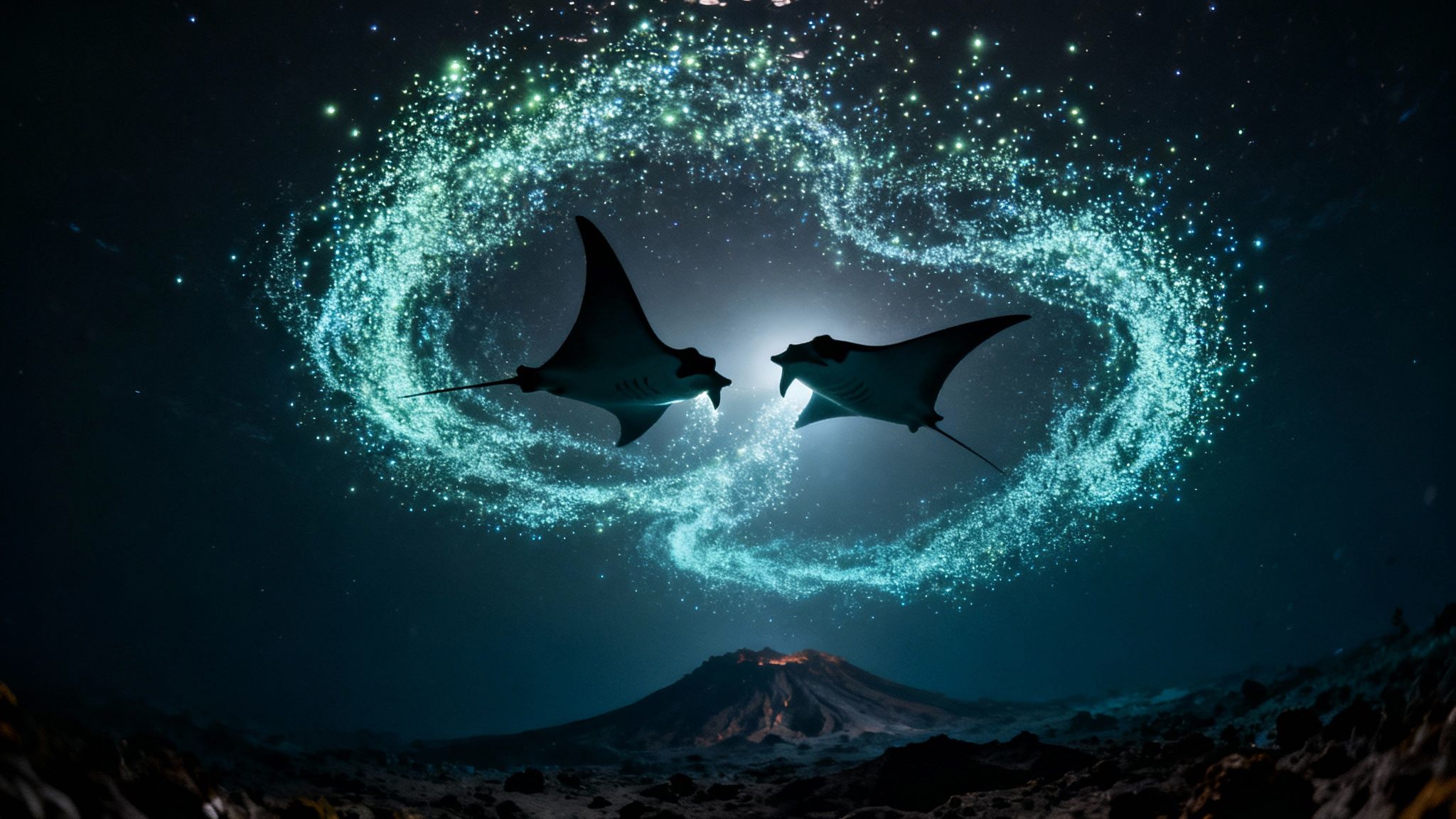
So, what makes Kailua Kona the undisputed champion of manta ray encounters? It’s not just a happy accident. It's the perfect storm of unique geology, abundant marine life, and a bit of human habit-forming.
The Big Island's volcanic coast has sculpted a one-of-a-kind underwater world, with protected bays and lava rock shelves that are a paradise for sea creatures. These features, along with the local ocean currents, create a thick, plankton-rich soup in the water.
Think of it as a permanent, all-you-can-eat buffet for Kona's resident population of reef manta rays. They don’t have to travel for their next meal because it’s always served right here. This natural setup is the foundation for one of the most reliable wildlife shows on Earth.
A Tale of Two Legendary Dive Sites
When people talk about the manta ray night dive in Kailua Kona, they're almost always talking about two specific, world-famous spots. These aren't just random locations; they're established "stages" where the nightly ballet unfolds with incredible consistency.
First, you have Manta Village, tucked away in Keauhou Bay. This is the original site, where lights from the nearby Sheraton Kona Resort & Spa first drew in plankton, which in turn attracted the mantas. It's been a go-to spot for decades.
Then there's Manta Heaven (also called Garden Eel Cove), located up the coast near the airport. Both of these sites have become legendary for their near-guaranteed sightings, drawing divers and snorkelers from all over the planet.
Kona's unique combination of a resident manta population and established, plankton-rich feeding sites creates a predictable and magical encounter that few other destinations can match.
Unbeatable Sighting Success Rates
While you can never guarantee a wildlife encounter, the Kona manta ray dive gets incredibly close. The success rate here is astonishingly high, with boats reporting manta sightings on roughly 85-90% of all night tours.
This isn't just a dive; it's a world-class attraction built on reliability. It’s one thing to hope to see an animal in the wild, but it’s another thing entirely to book a trip knowing your chances are that good.
Kona Manta Ray Dive Sites at a Glance
So, which legendary spot is right for you? While both are fantastic, they have slightly different characters. This table breaks down the key distinctions between Manta Heaven and Manta Village.
| Feature | Manta Heaven (Garden Eel Cove) | Manta Village |
|---|---|---|
| Location | North of Kailua Kona, near the airport | South of Kailua Kona, in Keauhou Bay |
| Typical Depth | 35 – 50 feet | 25 – 40 feet |
| Average Sightings | Known for larger groups of mantas | Famous for extremely consistent sightings |
| Best For | Divers hoping to see a higher manta count | Both divers and snorkelers seeking reliability |
Ultimately, whether you drop in at Manta Heaven or Manta Village, you're plugging into a natural spectacle that has been perfected over years. The blend of a steady food supply, protected waters, and a healthy, non-migratory manta population truly cements Kona's status as the best place in the world for this breathtaking experience. If you want to dive deeper into these locations, you can find more in our guide on where to see manta rays in Hawaii.
Choosing the Best Manta Ray Tour Operator
Picking the right guide for your manta ray night dive in Kailua Kona is the single most important decision you'll make. It can be the difference between a good trip and a mind-blowing, unforgettable encounter. There are a lot of boats out there, so knowing what to look for is absolutely key.
The best companies don't just ferry you out to a spot and turn on the lights. They're storytellers and stewards of the ocean. Imagine a crew so in tune with the environment that they can identify individual mantas by name, pointing out the unique spot patterns on their bellies and sharing the backstories of local celebrities like "Big Bertha" or "Lefty." That's the kind of personal touch that transforms a cool dive into a truly magical experience.
Key Factors for Selecting a Tour Company
When you start comparing operators, a few things should be at the very top of your checklist. Your safety and the well-being of the manta rays are non-negotiable, so start there.
- Safety First: Does the company have a squeaky-clean safety record? Are their boats modern and well-maintained? Are the guides certified, experienced professionals? A great crew makes you feel confident and secure from the moment you step on board.
- Small Group Sizes: This is a big one. A smaller group means a more personal, less chaotic experience. You get better interaction with the guides and, most importantly, a front-row seat for the underwater ballet without fins and snorkels everywhere.
- Commitment to Conservation: Look for operators who are genuinely passionate about protecting the marine environment. They should be vocal about passive interaction (no touching the mantas!) and often contribute to local research and conservation efforts.
The gold standard for responsible manta tourism has always been the Manta Ray Green List. While the list itself isn't actively updated anymore, the operators who built their reputations on its principles are still the ones leading the charge in sustainable, respectful encounters.
Why Kona Honu Divers Stands Out
Among the many great options in Kona, Kona Honu Divers has earned a solid reputation as a top-tier, 5-star operator, and for good reason. They are absolutely dedicated to creating an incredible experience for every guest, and it shows in everything they do—from the quality of their gear to the expertise of their crew.
What you'll hear again and again from their guests is how professional and knowledgeable the team is. Their guides aren't just there to keep you safe; they're passionate marine ambassadors who enrich your entire understanding of Kona's unique ecosystem. You can feel their genuine love for what they do, and that energy is infectious.
Making an Informed Decision
It takes a little bit of research to find the right operator, but that time is so well spent. The right guide ensures your adventure is safe, respectful, and completely breathtaking. For a deeper dive into what to look for, check out our complete guide on how to choose a Kona dive shop.
When you choose a company that puts safety, conservation, and education first, you're not just booking a tour. You're supporting the health of Kona's amazing marine world for years to come.
What to Expect During Your Manta Ray Adventure
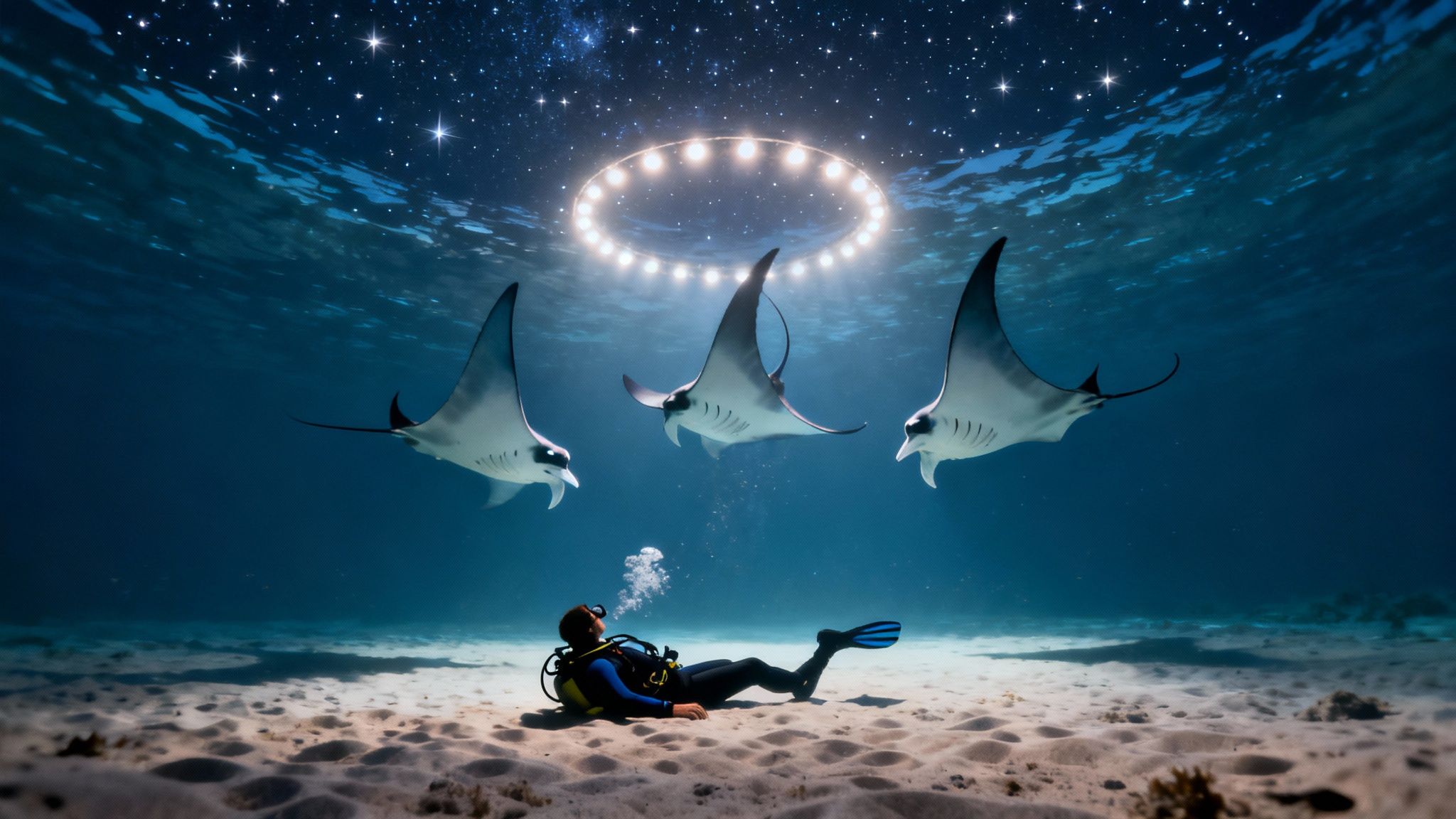
Alright, you've booked your trip and the countdown is on. So what does the manta ray night dive in Kailua Kona actually feel like? Let's walk through the whole evening, from the moment you step on the boat to that quiet, star-filled ride back to shore. Knowing what’s coming helps melt away any pre-dive jitters so you can just soak it all in.
Your night begins right at the harbor as the sun starts to kiss the horizon. You'll check in with your tour operator, hop on board, and get to know the crew. This is when they'll give you the rundown for the evening, but it’s so much more than just a standard safety briefing.
The guides are passionate about these animals. They'll share incredible stories about Kona's resident mantas, explaining their behavior and the conservation work that keeps them safe. It’s this briefing that elevates the trip from a cool activity to a truly meaningful connection with the ocean.
The Journey to the Dive Site
Once everyone is settled, the boat heads out to one of the well-known manta ray "stages." The ride itself is part of the magic. You get these incredible views of the Kona coast as the sky melts from fiery orange into a deep, velvety blue.
As the boat drops anchor, a sense of quiet anticipation builds. The crew gets everything ready for the main event, and then, with the flip of a switch, powerful underwater lights flood the dark water with an otherworldly glow. It’s like they’re lighting an underwater campfire, a beacon that draws in the plankton and, in turn, the gentle giants who come to feast.
The whole experience hinges on a beautifully simple idea: light attracts the plankton, and the plankton attracts the mantas. It's a natural spectacle, brilliantly orchestrated.
With the stage set, it’s your turn. Time to slip into the water and see the show from your front-row seat.
Two Perspectives, One Amazing Show
Whether you're diving down or snorkeling up top, you're in for an unbelievable view. The experience is just a little different depending on your choice.
- For Scuba Divers: You’ll follow your guide down to the sandy bottom, usually around 30-40 feet deep. From there, you just settle in and look up. You'll see the massive silhouettes of the mantas gliding into the light field above you.
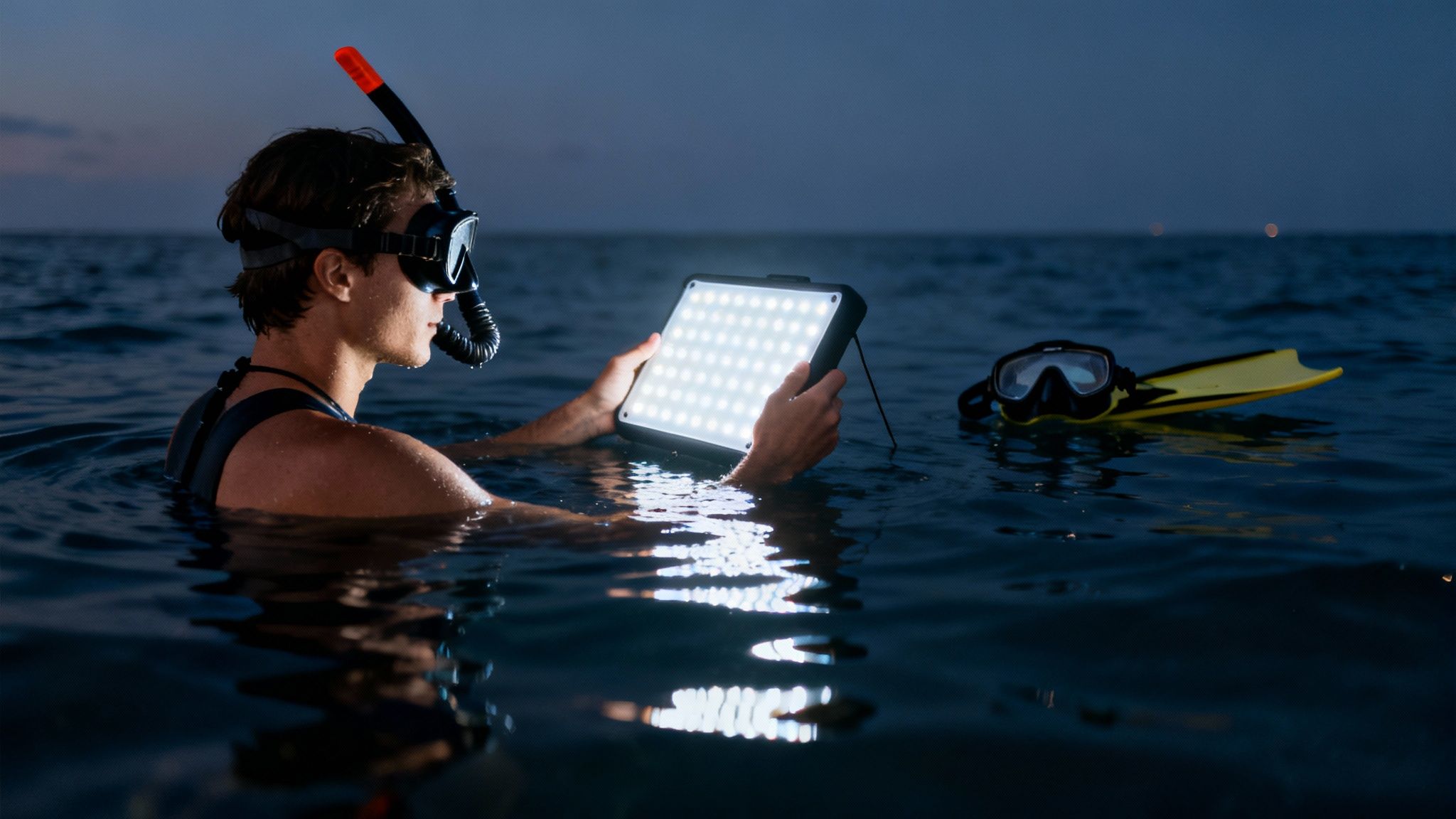
- For Snorkelers: You'll hang onto a custom-made light board that floats on the surface. These boards shoot powerful beams down into the depths, giving you a perfect bird's-eye view as the mantas swoop, dive, and dance just feet below.
At first, things might be quiet. Then, out of the darkness, a single enormous shadow materializes and glides into the light. Another one follows, and then another. They perform these graceful, slow-motion somersaults and barrel rolls, their huge mouths open to filter the plankton from the water. It’s a completely silent, mesmerizing ballet that happens right in front of you.
Kona's manta population is one of the most well-studied in the world. Researchers can actually identify individual rays by the unique spot patterns on their bellies! So far, they've cataloged nearly 200 distinct manta rays that call these waters home year-round. While you might see a handful on any given night, some incredibly lucky groups have seen up to 20 at once—with the all-time record being around 36. This underwater photography guide has more fantastic details on the local research.
As for the practical stuff, the water temperature is usually a comfortable mid-to-high 70s (°F), and every operator provides wetsuits to keep you warm. The light creates a focused viewing area, kind of like a spotlight on a stage, which makes the whole experience feel incredibly intimate and dramatic. After you've had your fill of the magic, you'll climb back on the boat for the peaceful ride home, buzzing with the memory of the incredible creatures you just met.
Preparing for Your Manta Ray Encounter: Dive or Snorkel?
So, you’re ready to witness one of the most incredible underwater ballets on the planet. The good news is that the manta ray night dive in Kailua Kona is open to just about everyone. The biggest decision you'll make is how you want to see the show: from below as a scuba diver, or from above as a snorkeler?
Both experiences are absolutely mind-blowing, but they offer completely different perspectives. Let's break down what to expect so you can choose the right adventure for you.
The Scuba Diver's Front-Row Seat
If you're a certified diver, you get to be part of the underwater audience. After a short descent with your guide, you'll settle onto a sandy patch on the ocean floor, usually around 30-40 feet deep.
From here, you get a truly immersive view. You'll be looking up as these gentle giants, with their massive wingspans, swoop and glide just feet above your head, silhouetted against the powerful lights. It's an awe-inspiring, bottom-up spectacle.
The key for divers is solid buoyancy control. You'll need to stay put on the seafloor to avoid kicking up sand, which can ruin the visibility and disrupt the mantas' feeding patterns.
The Snorkeler's Bird's-Eye View
Not a diver? No problem at all. The snorkeling experience is just as breathtaking and requires absolutely zero prior experience.
Snorkelers hang out on the surface, holding onto a specially designed light board. This board is your flotation device and the beacon that attracts the plankton, essentially setting the dinner table for the mantas.
Your view is a top-down panorama of the action. You'll watch in amazement as the mantas perform their graceful barrel rolls right below you. It’s an unbelievable sight and a fantastic option for families or anyone who isn't certified.
Whether you’re looking up from the ocean floor or down from the surface, the encounter is just as magical. The choice simply comes down to your comfort level and certification.
No matter which option you choose, a little preparation goes a long way. And before any big trip, it's always smart to look into short-term international travel insurance to cover any unexpected hiccups.
Here’s a quick checklist of what to throw in your bag:
- Swimsuit: The easiest thing is to just wear it under your clothes.
- Towel: You'll definitely want this for after the swim.
- A Warm Layer: A hoodie or jacket is a lifesaver on the boat ride back, as the night air can get surprisingly chilly.
- Reusable Water Bottle: Always a good idea to stay hydrated.
The Golden Rule: Look, Don't Touch
This is the most important thing to remember: the manta encounter is all about passive interaction. Think of yourself as a guest in their home—you're there to observe, not to interfere.
You must never touch a manta ray.
Mantas have a delicate, slimy coating on their skin. This isn't just goo; it’s a crucial protective layer that functions like their immune system. Touching them can rub this layer off, leaving them vulnerable to dangerous infections.
By keeping your hands to yourself and simply enjoying the show, you help protect these magnificent creatures. This simple act of respect ensures the Kona manta ray dive remains a healthy, sustainable, and world-class experience for everyone. If you're wondering about other gear, check out our complete guide on the gear you will need for your Kona diving adventure.
The Science and Conservation Behind Kona’s Mantas
That incredible manta ray night dive in Kailua Kona is so much more than just an amazing bucket-list adventure. It’s a living, breathing laboratory. Every single night, while divers and snorkelers are captivated by the silent, graceful dance of the mantas, a vital process of scientific discovery and conservation is happening right alongside them.
This unique nightly gathering gives scientists an unbelievable opportunity. The predictable nature of the feeding frenzy allows them to study Kona’s resident manta population in a way that’s nearly impossible anywhere else on the planet. Guides and researchers often work together, transforming a thrilling dive into a valuable mission to collect data.
A Living Database of Manta Behavior
Did you know every manta ray has a unique pattern of spots on its belly? It’s just like a human fingerprint. By photographing these patterns, local researchers have managed to identify and catalogue hundreds of individual mantas. They even give them names and track their life stories, some for decades.
This nightly observation feeds a massive, invaluable database. It allows experts to keep a close eye on:
- Population Health: By tracking the regulars, scientists can get a real sense of the overall health and size of the local manta population.
- Behavioral Patterns: This is where we learn the fascinating details about their social lives, feeding habits, and even their reproductive cycles.
- Migration and Residency: The data has confirmed that Kona’s mantas are a resident population. They live here. This makes protecting their home turf even more critical.
This constant monitoring is the key. For instance, a major long-term study between 2009 and 2014 involved researchers diving every night to meticulously record which mantas showed up and what they were doing. This incredible dataset helped them understand how mantas use their home ranges and revealed that their appearances were closely linked to how much plankton was in the water. You can discover more insights on manta ray research from Manta Ray Advocates.
How Your Dive Supports Conservation
Here’s the best part: when you choose a responsible and ethical tour operator, you are directly funding this critical conservation work. Your trip helps create a sustainable economic model where these magnificent creatures are worth far more alive and thriving in the ocean than they would be any other way.
By participating in a Kona manta ray dive, you become a citizen scientist. Your tour helps fund the research and protection that ensures these magnificent animals will continue to grace our oceans for generations to come.
These top-notch operators enforce strict "passive interaction" rules—no touching, no chasing. These guidelines are absolutely essential for the well-being of the mantas. It's a commitment that ensures the experience is safe for the animals and sustainable for the long haul.
This powerful connection between tourism and conservation is what makes the manta ray night dive in Kailua Kona truly special. It’s an adventure with a purpose.
Your Manta Ray Dive Questions Answered
Got questions about the manta ray night dive in Kona? You're not alone! Here are the answers to some of the most common things people wonder about before they book this incredible experience.
Do I Have to Be a Certified Scuba Diver to Do This?
Not at all! You can have an equally breathtaking experience by snorkeling. Most tour operators have custom-made floating light boards that you hold onto.
This means you get a perfect bird's-eye view as the mantas swoop and feed just a few feet beneath the surface. It’s a fantastic option that’s open to just about everyone, regardless of age or swimming skill.
Is It Safe to Swim with Manta Rays at Night?
Absolutely. When you go with a professional and reputable operator like Kona Honu Divers, your safety is the top priority. Manta rays themselves are incredibly gentle.
Remember, they're filter feeders—they don't have teeth, stingers, or barbs. The main focus is on standard water safety, and the expert crews are pros at managing everything so you can just relax and enjoy the show.
When Is the Best Time of Year to See Mantas in Kona?
This is one of the best parts about the manta ray night dive in Kailua Kona—it’s a year-round adventure! Unlike migratory animals such as humpback whales, the reef mantas here are local residents.
They stick around the Kona coast all year, which means the sighting success rates stay consistently high, often topping 90%. You can confidently plan your trip for any season and expect a great chance of seeing them.
Will I Feel Cold in the Water?
The water in Kona usually feels pretty nice, typically hovering in the mid-to-high 70s (°F). Still, you'll be in the water for a while after the sun goes down.
To make sure everyone stays comfortable, tour operators provide wetsuits. I'd also recommend bringing a towel and a warm jacket or hoodie to throw on for the boat ride back to the harbor—it makes the trip back much cozier.
Ready for an experience you'll never forget? Kona Honu Divers runs a top-tier manta ray dive tour in Kailua Kona, with an expert crew committed to your safety and the well-being of these amazing animals.