
Picture this: you're floating in the warm, dark waters of the Pacific Ocean off the coast of Kailua-Kona. Suddenly, a massive, graceful shadow emerges from the darkness, gliding just inches over your head. This isn't a scene from a nature documentary—it's the world-famous manta ray night dive, and it’s an experience that truly lives up to its bucket-list reputation.
A Truly Unforgettable Underwater Ballet
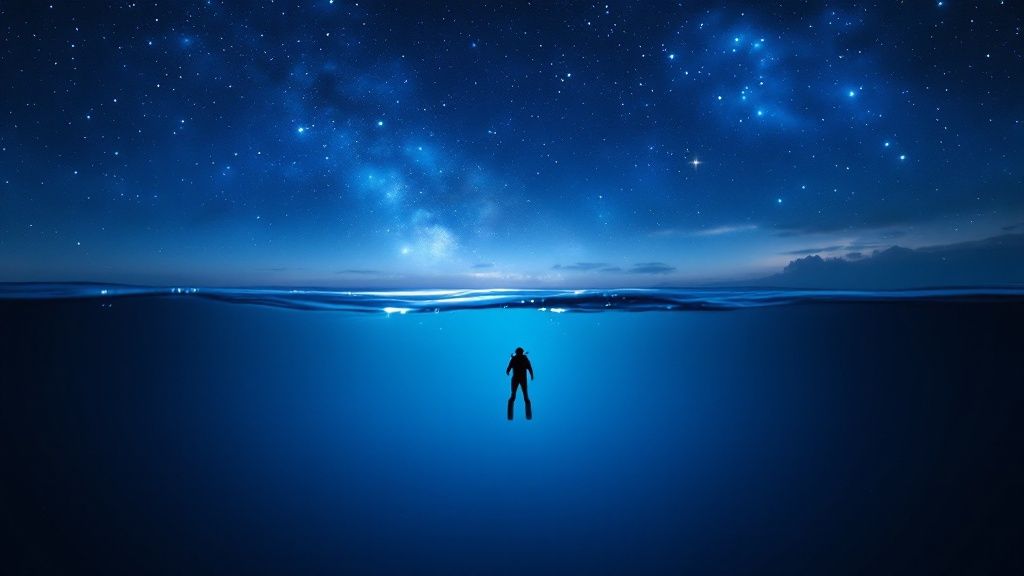
The Kona Manta Ray Night Dive is a perfect blend of a thrilling underwater adventure and a peaceful, almost spiritual, wildlife encounter. Your trip begins as the sun dips below the horizon, with a boat ride out to a specific dive site known as a "manta campfire."
Once you're in the water, powerful lights cut through the darkness, illuminating the ocean floor. These lights attract swarms of plankton, the manta rays' favorite meal, effectively creating an all-you-can-eat buffet that draws the gentle giants in for their nightly feast.
What happens next is pure magic. Giant manta rays, some with wingspans stretching over 12 feet, swoop and barrel-roll through the beams of light. They gracefully filter the plankton from the water, performing incredible acrobatics just feet—sometimes inches—away. You simply become part of the audience for a mesmerizing underwater performance.
What Makes This Dive So Special?
This isn't just any dive; it's considered one of the most reliable and spectacular large-animal encounters on the planet. Here’s what sets it apart:
- High Success Rate: The Kona coast is one of the best places in the world to consistently find manta rays. The sighting success rate is incredibly high, with most operators reporting seeing mantas on more than 85-90% of their nightly trips.
- Shallow and Accessible: The dive usually takes place in a relatively shallow spot, typically around 30 to 40 feet. This allows for a nice, long bottom time of about 45 to 60 minutes, giving you plenty of time to take in the show.
- Passive Observation: This is their world, and we're just visitors. The entire interaction is passive. Divers simply kneel or sit on the sandy bottom and watch the spectacle unfold above. This ensures a safe and respectful encounter for both you and the rays.
Kona Manta Ray Night Dive At a Glance
Here's a quick summary of what to expect on your manta ray night dive adventure in Kailua Kona.
| Feature | Details |
|---|---|
| Location | Kailua Kona, Big Island, Hawaii |
| Average Depth | 30 – 40 feet (9 – 12 meters) |
| Average Bottom Time | 45 – 60 minutes |
| Success Rate | Over 90% chance of sightings |
| Manta Wingspan | Up to 12+ feet (3.6+ meters) |
| Best Time of Year | Year-round, with calm seas in summer |
| Interaction Type | Passive observation only (no touching) |
This table gives you a great snapshot, but nothing compares to seeing it for yourself.
To truly understand the magic and prepare for this incredible encounter, check out this great guide on the Night Snorkel with Manta Rays Hawaii. It’s a fantastic resource for planning your adventure, from the sunset boat ride to that final, breathtaking moment. Ready to witness it for yourself?
Why Kona Is the World’s Manta Ray Capital
Kailua-Kona isn't just another great spot to see manta rays—it's hands down the most reliable place on the entire planet for this magical encounter. This isn't just a happy accident. It's the result of a perfect storm of geography, biology, and a little human ingenuity that created a dependable, world-famous spectacle.
The whole thing started decades ago with a simple food chain reaction. A hotel on the coast kept its floodlights on at night, and the beams shining into the ocean attracted swarms of plankton. Local manta rays, who feast on these tiny organisms, quickly caught on and started showing up for an easy meal. Dive operators saw this and realized they could create the same effect anywhere along the coast.
A Reliable Underwater Buffet
Today, the entire manta ray night dive Kailua Kona experience is built around that very idea. Dive operators have established specific sites where they place powerful, stationary lights on the ocean floor, creating a massive beacon for plankton.
This consistent, man-made "dinner bell" acts as a dependable feeding station that the local manta ray population has learned to visit almost every single night. It’s a brilliant and simple system that supports one of the most incredible wildlife interactions you can find anywhere.
This reliability is exactly why the sighting success rate in Kona is one of the highest in the world, hovering between 80% and 90%. Think about that—it’s almost a guarantee. This incredible consistency draws around 80,000 visitors to the Big Island every year just for this dive, making it a cornerstone of local tourism. The unique volcanic slopes of the Kona coast also play their part by creating currents that naturally concentrate plankton at night, making the feeding grounds even richer.
The Famous Manta Gathering Spots
While operators can attract mantas in a few areas, two primary locations have become legendary for the manta ray night dive.
- Manta Village: This is the original site, located just south of Kailua-Kona. It’s known for its incredibly consistent sightings and easy accessibility, which makes it a go-to spot for many dive boats.
- Manta Heaven: Situated north of Kona near the airport, this site often boasts a larger number of individual mantas. On a good night, you can witness a true underwater ballet with a dozen or more rays gliding overhead.
To learn more about what makes these spots so special, check out our complete guide on where to see manta rays in Hawaii.
Beyond the biology, these gentle giants are woven into the local culture. In Hawaiian tradition, manta rays, known as hahalua, are often regarded as protective spirits, or ʻaumākua, and are treated with deep respect. Knowing this adds a whole other layer of meaning to the experience, transforming it from just a cool dive into something truly profound.
How to Choose the Best Manta Ray Dive Operator
Picking the right dive operator is probably the most critical choice you’ll make for your **manta ray night dive in Kailua Kona**. This single decision shapes your entire experience—from safety and comfort to the kind of encounter you’ll have. Not all outfits are the same, and the best ones are deeply committed to safety, the well-being of the mantas, and giving you an unforgettable night.
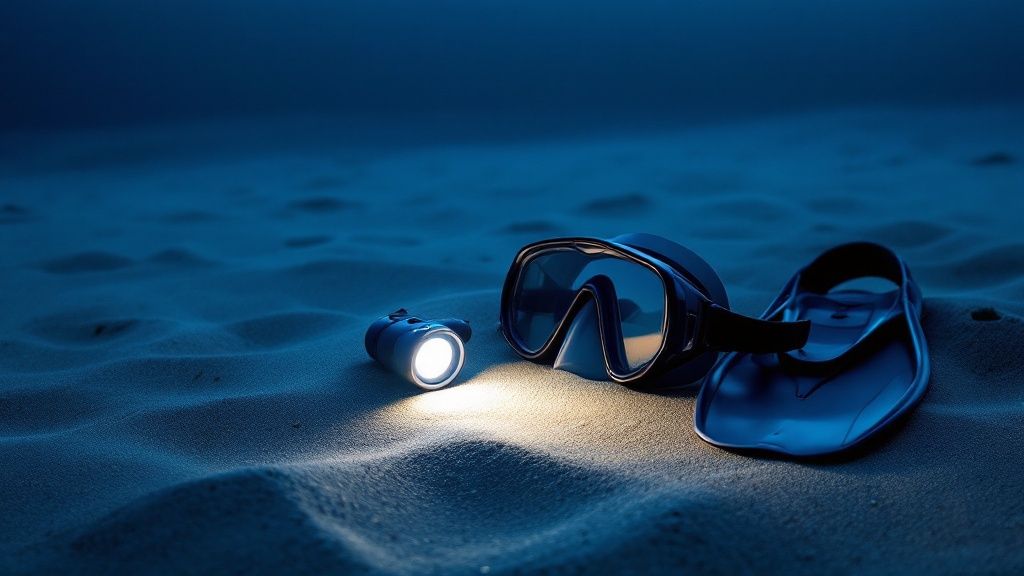
When you start looking, dig into their reputation. A long history is great, but recent reviews tell the current story. What are people saying about the crew? Are they just boat captains, or are they passionate guides who know and love these animals? A truly great operator hires guides who live and breathe marine conservation.
What to Look For in a Manta Charter
Before you pull out your credit card, think about what separates a decent trip from an amazing one. It often comes down to a few key details.
- Group Size: This is a big one. A smaller group means more room to breathe (and float!) and a much more personal, less chaotic experience. You won't be bumping fins with a dozen other people.
- Boat Comfort: Don't underestimate this! You'll be spending a good amount of time on the boat. A spacious, clean vessel with a warm freshwater shower, snacks, and hot drinks makes a world of difference after a night dive.
- Eco-Consciousness: A responsible operator is a non-negotiable. They should be crystal clear about the rules of passive observation—no touching, no chasing, no harassing the mantas. The best companies still adhere to the spirit of the old Manta Ray Green List guidelines.
Choosing an operator that puts conservation first means your adventure helps protect Kona's incredible marine life for years to come.
Here at Kona Honu Divers, this is the standard we live by. Our experienced guides are some of the most passionate you'll meet, and our custom-built dive boats are designed for your comfort. But don't just take our word for it—see what our guests have to say:
Making the Right Choice for You
Kona is fortunate to have several top-notch, reputable operators. Companies like Jack's Diving Locker and Big Island Divers, for example, have been running excellent manta tours for a long time. It's all about finding the right fit for you. To help you weigh your options, we've put together a more detailed guide on how to choose a Kona dive shop.
Ultimately, finding the right crew ensures your manta ray dive is the magical, awe-inspiring encounter you’ve been dreaming of. When you’re ready to see the underwater ballet for yourself, we'd love to take you.
Your Manta Ray Night Dive Step by Step
Your adventure kicks off as the afternoon sun starts its slow descent, painting the Kona sky with those incredible tropical hues. The moment you step onto the dock and check in, you can feel the energy buzzing. You’ll board a spacious, custom-built dive boat, where the crew makes you feel right at home as you cruise along the stunning coastline.

On the way to the dive site, your divemaster gives a thorough briefing. This isn't your average, boring list of rules. It’s a genuinely fascinating rundown on the gentle giants you’re about to meet, covering everything from safety signals to how to interact with the mantas respectfully. They'll make sure you feel totally confident before you even touch the water.
Entering the Manta Theater
Once the boat is securely anchored and twilight fades to dark, it’s go-time. You'll gear up and take that giant stride into the surprisingly warm Pacific. Following your divemaster, the group will descend to a sandy patch on the ocean floor, usually at a nice, easy depth of around 30 to 40 feet.
Down there, you'll see it: the "campfire." This is a powerful array of lights set up in the center of the site, and it’s basically a massive dinner bell for the local marine life. The bright lights attract huge clouds of plankton, the mantas' favorite meal, setting the stage for the main event.
Divers arrange themselves in a semi-circle around the central light, either kneeling or sitting on the sand. You’ll be instructed to point your own dive light straight up, creating a massive column of light that acts like a magnet for the plankton—and the mantas.
The show starts subtly. You might see a dark, graceful shape flit by at the edge of your vision. Then another. Before you know it, the headliners arrive. Giant manta rays, some with wingspans stretching over 12 feet, soar into the light.
They perform a silent, mesmerizing ballet right over your head, doing barrel rolls and swooping down to scoop up plankton, sometimes just inches away. All you can hear is the sound of your own regulator as you witness this incredible spectacle. It’s a truly peaceful, humbling experience that feels like you’ve been transported to another world. Participating in a manta ray night dive in Kailua Kona is something you'll never forget.
Ready to book your front-row seat to nature's best show? You can find all the details you need on our manta ray dive tours page.
How to Be a Good Guest in the Manta’s World
When you slip into the dark water to see the Kona mantas, you’re stepping into their house. The number one priority for every single dive operator here is protecting these incredible animals, and the whole experience is built around one simple idea: **passive observation**.
Think of it like being a guest at a magnificent, silent ballet. You’re there to watch, to be amazed, but not to join the performance. By being a respectful observer, you're doing your part to keep Kona's manta population healthy and ensure they keep coming back for years to come.
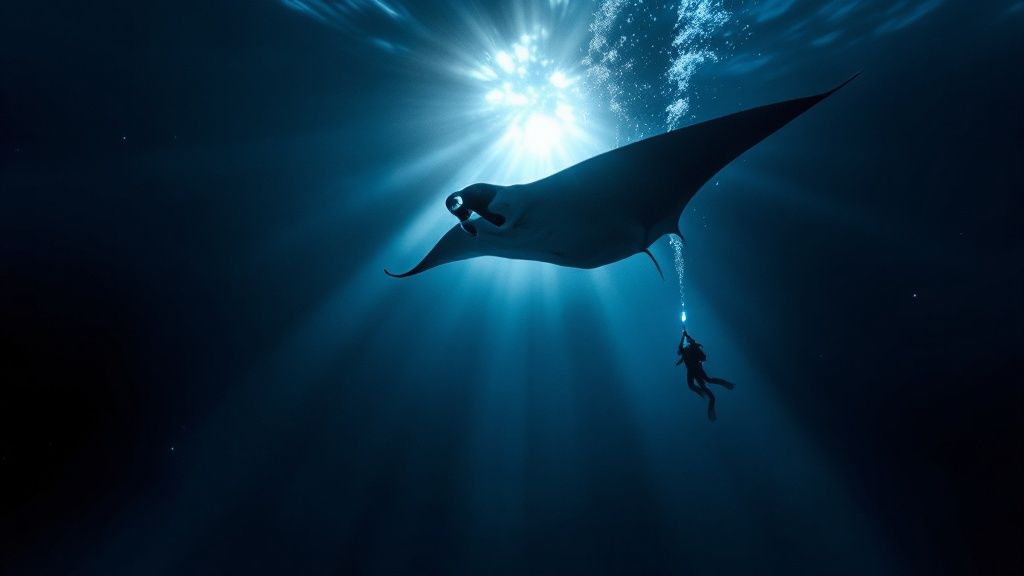
The rules are straightforward but absolutely critical. The most important one? Never, ever touch a manta ray. They have a special mucous coating on their skin that's like their immune system. Touching them can rub it off, leaving them exposed to nasty infections.
Core Guidelines for a Respectful Encounter
To make sure the dive is incredible for you and safe for the mantas, everyone follows the same set of rules. It’s all about protecting the animals while giving everyone the best possible view of the show.
- Stay Low: Find your spot on the sandy bottom and stay there. This keeps the "dance floor" open for the mantas, giving them plenty of room to swoop and glide overhead without having to navigate around a bunch of divers.
- Hands Off: This can be the hardest part, but you have to keep your hands to yourself. The mantas are incredibly curious and might glide just inches above you. Let them control the encounter.
- Don't Chase or Block: Never swim after a manta or try to get in its way. This stresses them out and can make them leave the area entirely. Let them come and go as they please.
These rules are what keep the mantas comfortable and willing to return night after night. It’s a delicate balance, and years of research have shown just how important it is to get it right.
In fact, long-term studies have tracked the local manta populations with fascinating results. Data from 2011 to 2013, for instance, showed an average of about 11 manta rays per night at the "Manta Heaven" site. That's a huge difference from the four per night seen at "Manta Village," which really underscores how vital these specific feeding grounds are.
To help you get this right on every dive, we've put together a quick guide on the do's and don'ts of manta interaction.
Manta Ray Interaction Do's and Don'ts
| Do | Don't |
|---|---|
| Stay on the seafloor. | Don't swim up into the water column. |
| Keep your hands to yourself. | Don't reach out or try to touch a manta. |
| Shine your light up to attract plankton. | Don't chase or block a manta's path. |
| Remain calm and still. | Don't make sudden movements. |
| Take photos without a disruptive flash. | Don't be an "active" participant; just observe. |
Following these simple tips makes the experience better and safer for everyone involved—especially our graceful, giant friends.
Being a good diver means being a good steward of the ocean. If you want to brush up on general underwater manners, take a look at our guide on responsible and considerate diver etiquette.
Don’t Stop at the Mantas—There’s More to Explore in Kona
Look, the **manta ray night dive in Kailua Kona** is absolutely a once-in-a-lifetime experience, but don’t for a second think that’s all the Big Island has to offer. The very same volcanic activity that sculpted the perfect feeding spot for mantas has created a breathtaking underwater playground filled with reefs, ancient lava tubes, and jaw-dropping drop-offs.
Kona is the real deal—a complete diving destination with something for everyone, no matter your skill level. The water here is warm, the visibility is incredible, and the coral gardens are just bursting with life. You'll see everything from huge schools of fish found nowhere else on Earth to wise old sea turtles gliding by. Our daytime scuba diving tours in Kona are all about showing you these vibrant ecosystems and surreal lava formations. Every single dive feels like a new adventure.
From the Manta Ballet to a Blackwater Spacewalk
If you got a taste for night diving with the mantas and want something even more mind-bending, we've got you covered. The Kona Blackwater Dive is one of the most unique dives on the planet. I'm not exaggerating when I say it's like floating through outer space.
You're tethered in the dark, suspended over thousands of feet of water, watching some of the strangest and most beautiful creatures you'll ever see rise from the abyss. Many of them are bioluminescent, creating their own light show in the pitch-black water. It's a completely different world down there.
Are you a certified diver looking to push your limits? Kona's advanced sites are where the real adrenaline rush is. We're talking deep dives to remote pinnacles, navigating complex lava tubes, and exploring sheer walls where you're more likely to encounter larger pelagic life.
Our premium advanced dive tours are specifically for experienced divers who are ready to see the wilder, more untamed side of Kona's underwater world. Whether it's the famous manta spectacle or a deep-water expedition, Kona really does have it all.
Your Manta Dive Questions, Answered
Planning an adventure like this always brings up a few questions. Let’s clear up some of the most common ones so you can feel totally prepared for your manta ray encounter.
Do I Have to Be Scuba Certified?
Not at all! While certified divers get to settle on the ocean floor for an up-close view, snorkeling is an equally amazing option. You'll float on the surface, looking down as the mantas glide and barrel-roll right below you. It's a fantastic experience for everyone, regardless of their diving credentials.
When’s the Best Time of Year to Go?
Here’s the great news: any time is the best time. The Kona manta ray population lives here year-round, so they aren't migrating in and out with the seasons. The chances of seeing them are consistently high no matter when you book your trip.
What Should I Pack for the Boat?
Think about post-dive comfort. You'll definitely want a towel and a warm jacket or hoodie to throw on after you get out of the chilly water. Reputable tour operators provide all the dive gear, plus snacks and drinks, but don't forget your underwater camera—you’ll want to relive this!
Just How Safe Is It?
It's incredibly safe, provided you go with a professional, reputable company. These operators live and breathe safety. They run a detailed briefing before anyone hits the water, have expert guides watching over you, and follow strict rules to keep both you and the mantas safe and sound.
Ready to see the underwater ballet for yourself? At Kona Honu Divers, we pride ourselves on running a world-class manta ray night dive that puts safety, comfort, and a deep respect for marine life first.