
Picture this: you're floating in the warm, dark Pacific Ocean. Suddenly, a gentle giant with a wingspan wider than a car glides inches above you, completely silent and effortlessly graceful. This isn't a scene from a sci-fi movie; it's the world-famous manta ray night dive in Kailua Kona, a truly unforgettable underwater ballet. It’s consistently voted one of the best night dives on the planet for a very good reason.
Your Adventure into the Underwater Ballet
The Kona coast of the Big Island has become the global epicenter for seeing these incredible animals up close. The entire spectacle is built on a fascinating relationship that developed over decades between the mantas and the lights from our world.
It all started by accident. When the first waterfront hotels turned on their lights at night, they unknowingly illuminated the water, attracting swarms of microscopic plankton—the manta rays' favorite food. The local mantas, being incredibly intelligent creatures, quickly figured out that bright lights meant an easy, all-you-can-eat buffet.
Today, dive operators have fine-tuned this phenomenon. We use powerful, submerged lights to create an "underwater campfire." This light beam draws in the plankton, creating a dense cloud that acts as a beacon for the hungry mantas. This allows us, as divers and snorkelers, a front-row seat to one of nature's most majestic performances.
Why Kona is the Premier Destination
You can find manta rays in other parts of the world, sure, but the experience here in Kailua Kona is simply on another level. The local reef manta rays (Mobula alfredi) aren't just passing through; they are permanent residents who live here year-round. This gives us an incredibly high success rate for sightings, often exceeding 90%.
These gentle giants have grown accustomed to our presence in the water, which makes for a safe and beautifully predictable interaction. Unlike encounters at "cleaning stations" in other locales, the Kona dive lets you see the mantas in their element—actively feeding, performing acrobatic somersaults, and barrel-rolling through the plankton.
For anyone ready to see this magic for themselves, Kona Honu Divers offers an incredible, eco-conscious adventure. Our crew has deep local knowledge and a serious commitment to safety, making us the perfect guides for this unforgettable night. We've designed our tours to give you the best possible encounter while always protecting these magnificent animals.
Preparing for a Night of Wonder
The adventure is so much more than just the time spent underwater. Your trip starts with a scenic boat ride along the stunning Kona coast as the sun sets, casting a golden glow over the volcanic landscape. On the way, the crew gives a detailed briefing covering the dive plan, safety protocols, and the most important rules for interacting passively with the mantas.
This preparation ensures everyone, from seasoned divers to first-time snorkelers, feels confident and ready for what's to come. Our focus is always on creating a respectful and sustainable encounter where the well-being of the mantas comes first. As you gear up and the anticipation builds, you can feel the excitement for the spectacular show that's about to unfold beneath the waves.
Understanding the Kona Manta Phenomenon
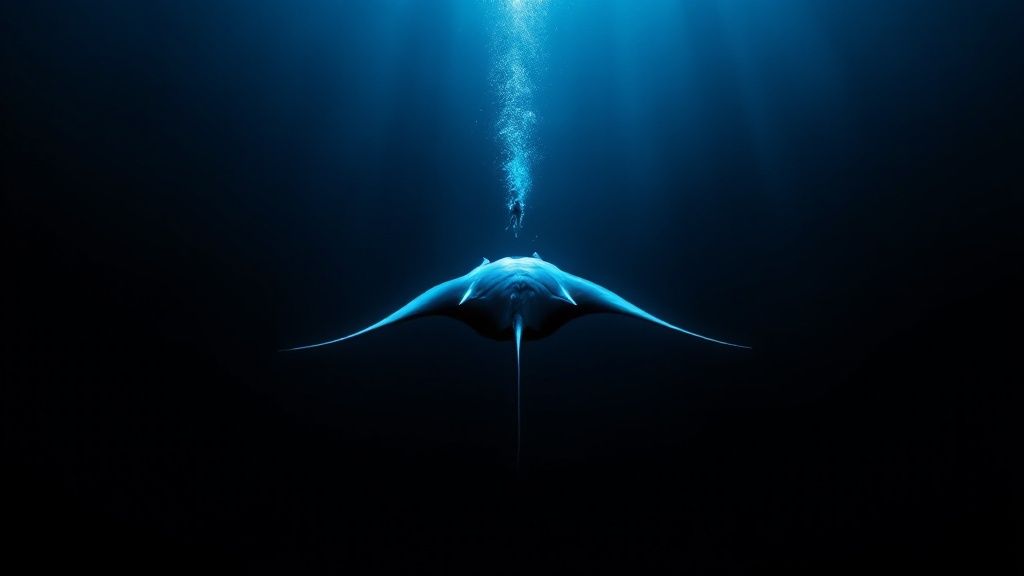
So, what’s the secret behind the legendary manta ray night dive in Kailua Kona? How can we be so sure these incredible animals will show up night after night? It all comes down to a unique relationship between marine life and human activity that has evolved over the past few decades.
It started with a simple observation: bright lights attract plankton, the tiny microscopic organisms that are a manta ray’s favorite meal. When we place powerful lights in the water, we’re essentially ringing a dinner bell.
The local reef mantas, which are incredibly smart, figured this out long ago. They learned that where there are boats and divers at night, there’s an easy, all-you-can-eat buffet. This learned behavior is the key that turns a patch of dark ocean into a reliable, world-famous underwater theater.
The Science of the Underwater Ballet
Instead of spending their energy hunting for food across the reef, the mantas simply cruise into the light, open their giant mouths, and perform graceful barrel rolls to scoop up the dense clouds of plankton. It’s a masterful display of filter-feeding efficiency.
This isn’t just random instinct. It’s proof of their intelligence—they've made the connection between our lights and their food source. This transforms a simple night dive into a breathtaking performance where the mantas are the stars of the show. We dive deeper into their feeding habits and how far they travel for a meal in our guide on how deep manta rays dive in Kona.
What makes the Kona experience so special is that this is a learned behavior you won't find just anywhere. You’re not just a spectator watching them pass by; you are a key part of their nightly feeding routine.
A Community of Gentle Giants
What really sets Kona apart is that we have a large, resident population of reef manta rays. These aren't just tourists passing through; they live here year-round, which has allowed researchers to get to know them on a first-name basis.
Every manta ray has a unique pattern of black spots on its belly, kind of like a fingerprint. Marine biologists use these spot patterns for photo-identification, creating a detailed catalog of the local manta family. We have some real local celebrities, like "Big Bertha," "Lefty," and "Kailey Ray."
To date, nearly 200 individual manta rays have been identified and cataloged right here off the Kona coast. On a truly epic night, it's not uncommon to see 20 or more mantas swirling around the lights at once. Knowing you might see a specific, named individual makes every manta ray night dive in Kailua Kona feel personal and profoundly special.
How to Choose the Right Manta Ray Tour
Choosing the right tour operator can truly make or break your manta ray night dive Kailua Kona experience. The best companies aren't just focused on giving you a thrilling adventure; they're equally committed to your safety and the well-being of the manta rays. You'll want to find a crew that operates a comfortable, well-maintained boat and follows responsible tourism guidelines to the letter.
As you start your search, you'll notice you can either scuba dive or snorkel. Both options offer a spectacular show, just from different angles. Divers get a front-row seat on the ocean floor, watching the mantas glide gracefully overhead. Snorkelers get a bird's-eye view, floating on the surface and looking down at the mesmerizing ballet below. Many certified divers opt for a two-tank trip, which often includes an amazing twilight reef dive before the main event.
Key Factors for Choosing Your Operator
So, what should you actually look for? A little research goes a long way in making sure your trip lives up to the hype. It’s all about finding an operator with a solid reputation who is upfront about how they run their tours.
Here are a few non-negotiables to consider:
- Safety Record and Crew Experience: This is everything. An experienced crew knows the dive sites inside and out, but more importantly, they know how to manage a group in the dark and ensure every interaction with the mantas is safe and passive.
- Vessel Comfort and Quality: A cramped, run-down boat is no way to start or end the night. Look for a spacious vessel with amenities like hot showers and snacks—these small comforts make a huge difference after a night dive.
- Ethical Practices: The best operators are committed to conservation. Make sure they follow the Manta Ray Green List guidelines, which include rules like no touching and maintaining a safe distance to protect these gentle giants.
At Kona Honu Divers, we pride ourselves on hitting all these marks. Our entire focus is on guest safety, comfort, and manta conservation, ensuring you have an experience you'll never forget. We offer several fantastic manta ray dive tour options designed to suit every type of adventurer.
Keep in mind that the dive location itself plays a huge role. For example, data has shown that "Manta Heaven," north of Kona, sees an average of 11 mantas per night, whereas "Manta Village" averages around 4. It just goes to show how picking the right spot can dramatically increase your chances of a truly epic encounter.
Comparing the Top Tour Choices
Kona is home to several great dive companies, so it helps to compare the details. Things like boat size, the number of guests on board, and what’s included in the tour can vary quite a bit.
To help you sort through the options, we put together a detailed guide on the top 5 manta ray night dive tours in Kona.
In the end, you want to book with complete confidence. Taking the time to choose the right operator ensures your trip will be safe, responsible, and the adventure of a lifetime.
What to Expect on Your Manta Dive Night
Your manta ray night dive in Kailua Kona is so much more than the time you spend underwater. It’s an entire evening adventure, and the excitement starts building the second you step onto the boat. Here at Kona Honu Divers, we’ve planned every detail to make sure your experience is safe, comfortable, and absolutely unforgettable.
The trip kicks off with a beautiful boat ride along the stunning Kona coast while the sun begins its slow descent toward the horizon. As we cruise to the site, our experienced crew gives a detailed briefing—not just a quick once-over, but a complete walkthrough of the dive from start to finish.
The Briefing and Gearing Up
Our guides cover everything you’ll need to know for a successful dive and a respectful encounter. We’ll talk about the dive site itself, go over specific safety procedures for night diving, and explain the golden rules of passive interaction.
The most important one? Observe only and never, ever touch the mantas. This rule is critical for protecting the delicate mucous coating on their skin and ensuring they continue to trust and feel comfortable around us divers.
As we drop anchor at the site, you can feel the energy shift. It's electric. The crew will help you get your gear on, giving everything a final check so you feel completely confident before you slip into the dark, welcoming water.
Entering the Underwater Theater
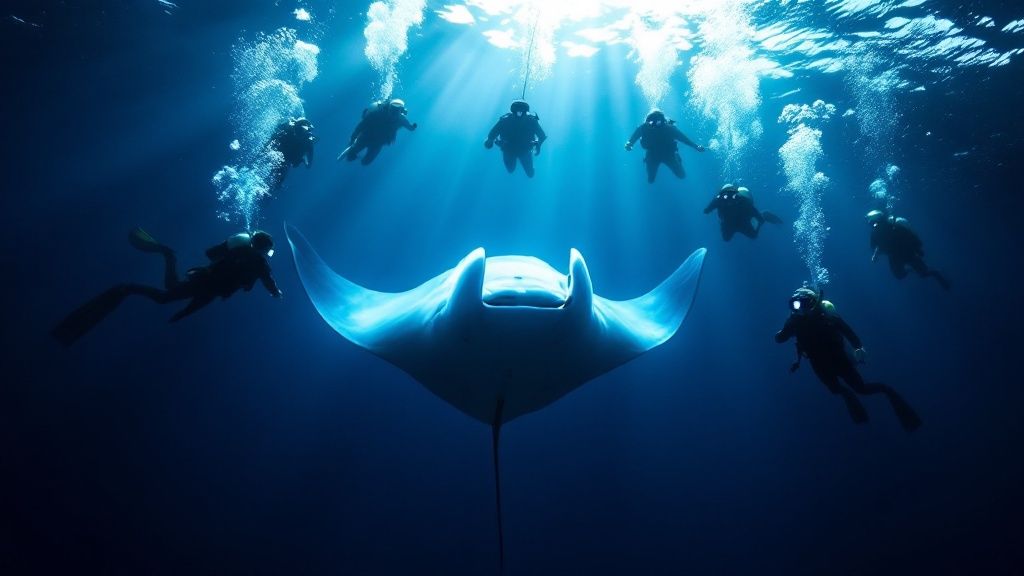
Once you descend, your guide leads you to what we call the "campfire." It's not a real fire, obviously, but a powerful light box anchored on the ocean floor. We arrange ourselves in a circle around it, pointing our own dive lights straight up. This creates a massive column of light—a beacon that attracts the plankton.
You’ll settle in on the sandy bottom, get your buoyancy just right, and wait. The atmosphere is surreal, a perfect blend of peaceful silence and heart-pounding anticipation.
And then… it happens. A huge, dark shape emerges from the blackness, gliding without effort into the light. The first manta ray has arrived.
The sight will literally take your breath away. The mantas swoop and soar, performing these elegant barrel rolls just inches above your head as they feed on the plankton. The Kona Coast has an incredible sighting success rate of over 90%, and it’s common to see mantas with wingspans of 12 feet or more.
Because we’re in shallow water—just 30 to 40 feet—you get plenty of bottom time to soak it all in. You can learn more about how reliable this dive is right here: Kona manta ray night dive.
Being a part of this natural spectacle is a feeling you can't quite put into words. It’s humbling, awe-inspiring, and something you will never forget. With Kona Honu Divers, you're set for an evening of pure magic.
Diving Safely and Protecting the Mantas
Sharing the water with these gentle giants is an absolute privilege, and with that comes a huge responsibility. To keep this incredible encounter safe and sustainable for generations to come, every diver needs to become a guardian of the ocean. That means following a clear set of guidelines designed to protect both you and the mantas.
These rules aren't just thrown together; they come from years of watching and studying manta ray behavior. The whole philosophy boils down to one simple idea: passive observation. When we're calm and predictable, the mantas feel secure, and that’s what makes this interaction so unbelievably special.
Following the Rules of Engagement
The most important rule is the simplest: look, but don't touch. Never, ever touch a manta ray. Their skin is covered in a delicate mucus layer that protects them from infection, kind of like our own immune system. Touching them can rub this layer off, leaving them exposed to harmful bacteria and disease.
When you dive with us, you're a guest in the mantas' dining room. Our number one job is to make sure they're safe and undisturbed, so they can keep coming back to feed naturally.
Beyond that, a few specific actions help create the perfect, safe environment for the mantas to do their thing. Think of these as non-negotiable best practices for every single person in the water.
- Stay on the Bottom: We'll have you find a spot on the sandy ocean floor and stay put. This keeps the water column wide open, giving the mantas all the space they need to swoop and glide overhead without any obstacles.
- Lights Point Up: Your dive light is the magnet that attracts the plankton. By shining it straight up toward the surface, you help create a concentrated "buffet" in the water above. Snorkelers will be shining their lights down, creating a plankton sandwich with the mantas in the middle.
- No Chasing: This should go without saying, but never chase, follow, or try to ride a manta. Let them come to you. Their curiosity will bring them close, and this hands-off approach makes the encounter stress-free for them.
Following these simple but vital rules helps protect the health and well-being of Kona's beloved manta ray population. You can learn more about these practices in our guide to responsible and considerate diver etiquette. Your mindful participation is what ensures this amazing experience will be here for future divers to enjoy.
Explore More Advanced Dives in Kona
The manta ray night dive in Kailua Kona is absolutely a bucket-list experience, but believe me, it’s just scratching the surface of what this island has to offer. For certified divers itching for the next thrill, Kona has some truly unique dives that will push your skills and blow your mind.
After you've seen the graceful manta ballet, why not try something completely different? Picture this: you're suspended in the deep, dark ocean at night, watching bizarre and beautiful creatures rise from the abyss. That's the Kona Blackwater Dive. It's a pelagic adventure that feels like you're diving in outer space.
Venturing into Deeper Waters
If dramatic underwater topography is your thing, you'll love our advanced dive tours. We head out to the more remote sites—the ones with deep reefs, ancient lava tubes, and sheer underwater cliffs just buzzing with life.
These trips are perfect for divers who want to build on their experience and see a wilder side of Kona's marine world, well beyond the famous manta spots.
These aren't your average dives. They demand more from you as a diver, but the reward is seeing landscapes and marine life that most visitors never will. It’s on these dives you truly understand why Kona is a world-class destination.
Ready to see what else is down there? Check out all the Kona diving tours we have on offer. Your next unforgettable dive is waiting.
Your Manta Dive Questions, Answered
It's only natural to have a few questions before embarking on an adventure like this. We get asked a lot about the manta ray night dive, so here are some straight answers to the most common queries.
Do I Have to Be a Certified Scuba Diver to See the Mantas?
Absolutely not! While scuba diving gets you down on the "ocean floor" to watch the show, snorkeling offers an equally breathtaking, bird's-eye view.
Snorkelers hang onto a large, custom-lit float on the surface. The lights draw in the plankton, and you get to watch the mantas roll and feed just a few feet below you. It's an incredible experience and perfect for anyone, including families with kids.
Is Diving or Snorkeling in the Ocean at Night Scary?
I get it—the thought of being in the dark ocean can be a little intimidating at first. But trust me, once you're in the water, "scary" isn't the word that comes to mind. It's more like… magical.
The powerful lights from the dive boats and the snorkel floats create a massive, illuminated stage in the water. You can see everything clearly, and our experienced guides are right there with you the entire time, making sure you feel safe and comfortable from the moment you get in.
When Is the Best Time of Year to Go?
This is the best part: there is no bad time! The Kona manta ray population hangs around all year long, so you have an excellent chance of a fantastic encounter whenever you visit Hawaii.
The water is generally calm and warm year-round. We might see some bigger swells in the winter months, but the mantas themselves are always here.
What if We Don't See Any Manta Rays?
It's a fair question. While sightings are incredibly consistent—we're talking a success rate over 90%—these are wild animals, so nothing can ever be 100% guaranteed.
On the rare occasion the mantas don't show up, reputable operators like Kona Honu Divers have a "Manta Guarantee." It's always a good idea to ask about the specific policy when you're booking your manta ray dive tour.