
Picture this: you’re floating in the warm, dark waters of the Pacific off the Kona coast. Suddenly, a massive, graceful shadow emerges from the blackness, gliding effortlessly through the water. This is the manta ray night dive in Kailua Kona, an experience that’s less of a dive and more of an underwater ballet. It’s hands-down one of the most incredible marine encounters on the planet, bringing you just inches away from these gentle giants.
What Makes Kona’s Manta Ray Night Dive Unforgettable
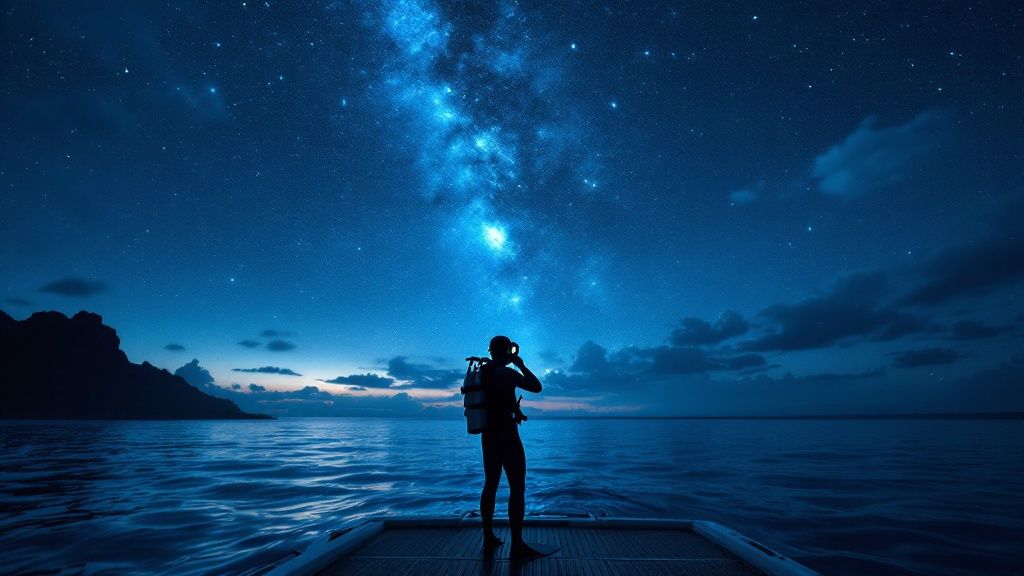
It’s an experience that truly has to be seen to be believed. The sheer spectacle of it all is what has cemented this dive's reputation as a must-do for anyone visiting the Big Island. This isn't just about seeing a cool animal; it’s about feeling a profound connection to the ocean in a way that very few activities allow.
The magic all unfolds at specific underwater "stages" like Manta Village and Manta Heaven. Here's how it works: tour operators have set up a sort of underwater feeding theater. Divers settle on the sandy bottom and point their powerful lights upward, creating beams that pierce the darkness. Meanwhile, snorkelers hang onto floating light boards on the surface, illuminating the water from above.
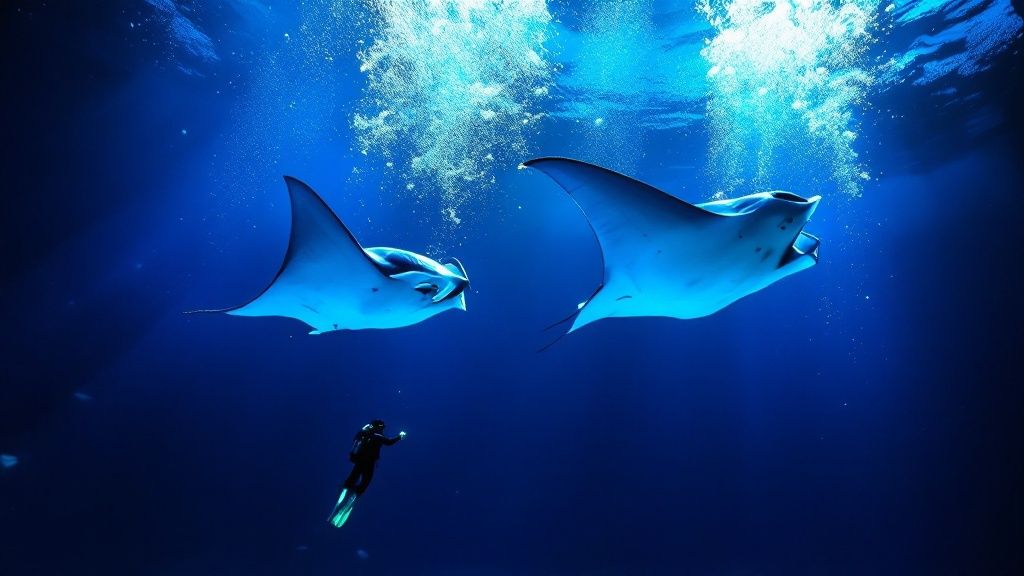
This concentration of light acts like a giant dinner bell, attracting swarms of plankton—the manta rays' favorite meal. Before you know it, the stars of the show arrive. These magnificent creatures, some with wingspans stretching over 12 feet, glide right into the light to feed. They perform beautiful, acrobatic somersaults and barrel rolls, scooping up mouthfuls of plankton-rich water, often passing just inches over your head.
A Reliable and Awe-Inspiring Encounter
Now, what really sets the manta ray night dive Kailua Kona offers apart from other wildlife encounters around the world is its incredible reliability. The local underwater geography and nutrient-rich currents create a dependable plankton buffet that draws the mantas to these exact spots almost every single night.
This consistency results in an unbelievably high sighting success rate, typically between 85% and 95%. With a local population of over 450 identified manta rays, Kona is one of the best and most predictable places on Earth for this kind of encounter. It’s no wonder this dive has become a bucket-list item, drawing around 80,000 visitors each year. You can learn more about the science behind the Kona manta ray night dive phenomenon.
This isn't just watching wildlife; it's being accepted into their world for a brief, magical moment. The sheer size and grace of a manta ray gliding directly over your head is a humbling experience that stays with you forever.
Why It's More Than Just a Dive
The whole thing is a powerful blend of awe, excitement, and pure tranquility. The combination of the dark ocean, the focused light beams, and the silent, elegant dance of the mantas creates an atmosphere that’s both thrilling and deeply peaceful.
What makes it so unforgettable?
- Proximity: You are exceptionally close to the action. You can see the unique spot patterns on their bellies, which are like fingerprints for identifying individual rays.
- Graceful Motion: Watching these "sea angels" move with such effortless agility is absolutely mesmerizing.
- Connection: Because you're just a passive observer, you foster a real sense of respect and connection with the marine world. It’s their world, and you’re just a guest.
Ultimately, the Kailua Kona manta ray night dive is an immersive experience that perfectly blends natural wonder with responsible tourism, creating memories that will genuinely last a lifetime. Ready to see the ballet for yourself?
Choosing Your Adventure: Scuba Diving Vs. Snorkeling
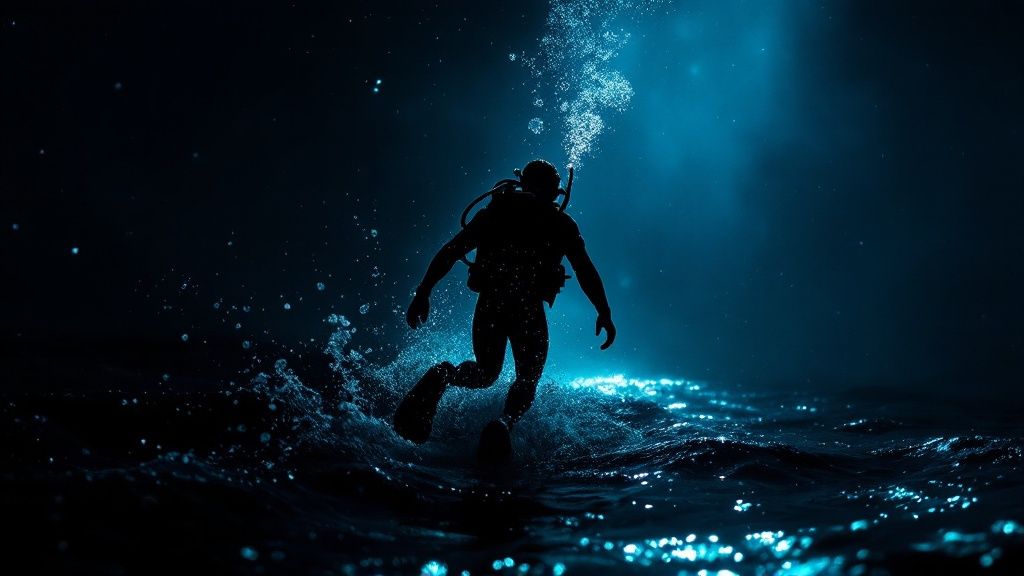
The incredible magic of Kona's manta ray encounter is open to almost everyone, no matter your experience in the water. Whether you’re a seasoned diver or have never worn a pair of fins in your life, there's a way for you to witness this underwater ballet.
You have two main options: scuba diving or snorkeling. Each one offers a completely different, yet equally breathtaking, perspective on the show. The right choice really comes down to your personal comfort, budget, and what kind of view you're hoping for.
The Scuba Diver's Perspective
For certified divers, the manta ray night dive in Kailua Kona is an absolutely surreal experience. You descend to the sandy ocean floor, settling in at a depth of about 30 to 40 feet.
Once there, you and your fellow divers form a circle and point your powerful dive lights straight up. This creates a "campfire of light" that draws in the plankton, setting the stage for the main event. From this unique vantage point, you get to watch the mantas materialize from the darkness above, gliding and swooping right over your head—sometimes just inches away. It’s a calm, almost meditative way to appreciate their immense size and intricate belly patterns.
The Snorkeler's Experience
No dive certification? No problem. Snorkeling gives you a thrilling top-down view of the action. You'll float comfortably on the surface, holding onto a custom-built light board that shines powerful beams down into the water.
This light acts like a magnet for plankton, concentrating the mantas' food source right below you. As they come up to feed, the mantas perform incredible barrel rolls and somersaults just a few feet beneath you. It’s a truly exhilarating feeling to watch these gentle giants dance in the light.
You can learn more about this amazing option here: https://konahonudivers.com/best-manta-snorkel-big-island/
Manta Ray Night Dive Vs Snorkel Experience
Deciding between sitting on the ocean floor looking up or floating on the surface looking down can be tough. Both are incredible! This simple table breaks down the key differences to help you pick the perfect adventure for you.
| Feature | Scuba Diving | Snorkeling |
|---|---|---|
| Viewpoint | A stunning bottom-up view from the ocean floor. | An exciting top-down view from the water's surface. |
| Proximity | Mantas gracefully glide directly overhead. | Mantas perform barrel rolls directly underneath. |
| Certification | An Open Water certification is required. | No certification is needed. |
| Equipment | You'll need full scuba gear (tank, BCD, regulator). | Just a mask, snorkel, fins, and a wetsuit. |
| Physical Effort | Very low; you remain stationary on the seafloor. | Very low; you simply hold onto a light float. |
| Cost | Generally a higher price point due to gear and logistics. | Typically the more budget-friendly option. |
Ultimately, you can't go wrong. Scuba diving immerses you completely, making you feel like part of their world. Snorkeling, on the other hand, offers a dynamic spectacle that’s accessible to absolutely everyone.
While the manta encounter is a must-do, Kona is also home to some of the world's most beautiful reefs. Be sure to check out some of the other top snorkeling spots in Kona, Hawaii during your stay.
Whichever you choose, you’re guaranteed an unforgettable night.
What to Expect on Your Manta Ray Tour
If you're wondering what a manta ray night dive in Kailua-Kona is really like, you’re in for a treat. Knowing how the evening unfolds can help turn any nervousness into pure anticipation. Every part of the experience, from the boat ride out to the hot chocolate on the way back, is dialed in for an unforgettable night. Let's walk through it.
Your adventure starts at the harbor in the late afternoon. You'll check in with your tour operator, meet the crew who will be taking care of you, and get settled on the boat. There's always a buzz of excitement in the air as you meet the other divers and snorkelers, all there for the same incredible reason.
With everyone on board, the boat heads out. The ride itself is a huge part of the experience, giving you a front-row seat to the stunning Kona coastline as the sun starts to set. It's the perfect, peaceful lead-in to the main event.
Preparing for the Plunge
As you cruise to the dive site, the crew runs through a detailed safety briefing. This isn’t just a formality; it's where the guides make sure everyone knows exactly what to do and what to expect. Pay close attention here.
They’ll cover a few key things:
- Dive and Snorkel Procedures: You'll get clear instructions on how the whole operation works once you're in the water.
- Gear Check: A quick rundown on how to use your mask, fins, and snorkel or regulator properly.
- The Golden Rule: This is the most important one. You'll be told repeatedly never to touch the manta rays. Touching them can remove their protective mucous coating, leaving them vulnerable to infection. Just look, don't touch.
Once the briefing is over, it’s time to gear up. The crew will help you get into your wetsuit and make sure your mask and fins fit just right. If you’re diving, you’ll run through your final equipment checks before taking that first step into the dark, welcoming water.
The Main Event Underwater
This is where the magic happens. The setup is surprisingly simple but incredibly effective. Divers make their way down to the sandy bottom, about 30-40 feet deep. You’ll settle in a circle with your group, pointing your powerful dive lights straight up. Together, these beams create an amazing cone of light, almost like an underwater campfire.
Snorkelers get their own unique view from the surface. You'll hold onto a large, custom-made light board that floats on the water, shining bright lights down into the depths. This creates a second column of light that attracts the plankton.
The lights from the divers below and the snorkelers above create a super-concentrated column of plankton. It's an irresistible, all-you-can-eat buffet that draws the manta rays in to perform their nightly feeding ballet.
Your guides are right there in the water with you the whole time, making sure you’re safe, comfortable, and getting the best view possible. They're experts at what they do and can often identify individual mantas by the unique spot patterns on their bellies. It's pretty cool when they point out regulars by name! If you're ready to see it for yourself, you can book one of these amazing manta ray dive tours.
The Journey Home
After about 45 minutes of watching these gentle giants glide and somersault just inches away, it's time to head back to the boat. The crew is there to help you aboard and usually has hot chocolate or tea and some snacks waiting. It's the perfect way to warm up and get cozy.
The ride back to the harbor is a great time to just soak it all in. You'll find yourself swapping stories with the other guests under the stars, reliving the incredible moments you just experienced. It’s the perfect cap on a truly unforgettable Kona adventure.
Understanding the Gentle Giants of Kona
Watching a twelve-foot manta ray glide inches over your head is breathtaking. But the experience becomes truly profound when you understand just who these magnificent creatures are. The stars of the manta ray night dive in Kailua Kona aren't just passing through; they are a resident community of reef manta rays (Mobula alfredi).
These gentle giants live here year-round and possess one of the largest brain-to-body size ratios of any fish. Trust me, you can see their intelligence in action as they curiously and gracefully interact with the world around them.
A Fingerprint on Their Belly
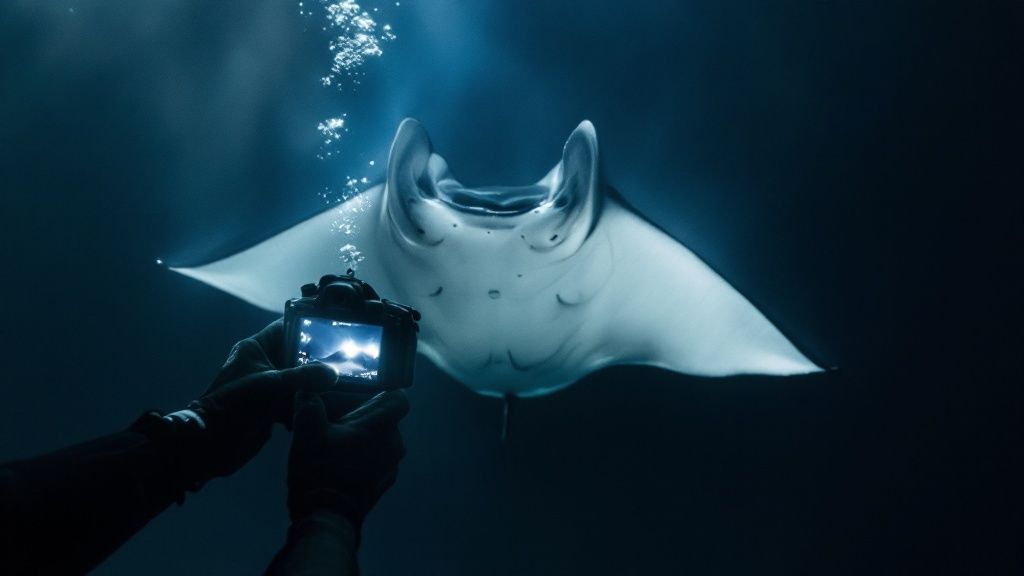
So, how do we tell them apart? It's all in the belly. Each manta ray has a completely unique pattern of black spots on its white underside. Think of it exactly like a human fingerprint—no two are ever the same.
This natural marker allows local guides and marine biologists to recognize individual rays on sight. Many of the regulars have been photographed, cataloged, and even given names like "Big Bertha," "Lefty," and "Amanda Ray." This ability to track specific mantas has been an absolute game-changer for research and conservation.
The Science Behind the Spectacle
You might be wondering why these intelligent creatures show up like clockwork every night. The answer is simple: we're serving an all-you-can-eat plankton buffet. Manta rays are filter feeders, consuming huge amounts of tiny zooplankton by gliding through the water with their cavernous mouths wide open.
The powerful lights that dive operators shine into the water act like a massive beacon, attracting swarms of plankton. The mantas have learned that light means an easy, concentrated meal, so they show up for the nightly feast. It's a fantastic display of their adaptability, and their feeding technique—a graceful ballet of barrel rolls and somersaults—is designed to scoop up as much food as possible. To get a better sense of their movements, you can learn more about how deep manta rays dive in Kona.
This predictable feeding behavior has made Kona a global hotspot for manta encounters. Research shows that while individual site averages vary, some locations can see an average of 11 mantas per night, a testament to the health and stability of this local population.
A Vulnerable Species We Must Protect
Thanks to their unique belly patterns, researchers have built an incredible database. We now know that over 200 individual rays have been identified right here in Kona. This level of documentation is rare and allows us to closely monitor the population's health. For example, the site known as "Manta Heaven" sees a nightly average of about 11 rays, whereas "Manta Village" averages around 4, offering slightly different experiences.
Even with their protected status in Hawaiian waters, reef manta rays are listed as a vulnerable species globally. They still face serious threats from illegal fishing and entanglement in marine debris. This is why responsible tourism is so critical. When you choose an operator who follows strict, no-touching guidelines, you are actively helping protect these animals. Your dive isn't just a thrilling show; it's a genuine connection with one of the ocean's most majestic inhabitants and a powerful vote for their survival.
How to Choose the Best Manta Ray Tour Operator
Picking the right tour company is probably the most critical choice you'll make for your manta ray night dive in Kailua Kona. Honestly, it can make or break the entire experience. With so many boats leaving the harbor every night, it’s easy to feel overwhelmed, but I'll walk you through what really matters.
First and foremost, you want a company that puts the manta rays' well-being above all else. The best operators are recognized as Manta Ray Green Listed Operators. This isn't just a fancy title; it's a seal of approval showing they follow sustainable, non-invasive practices. Your amazing encounter shouldn't ever compromise the health of these incredible animals.
Key Factors to Consider
When you start looking at different companies, try to look past just the price. The real value is in the quality of the experience, which often comes down to the details.
- Safety & Guide Experience: This is non-negotiable. A top-notch safety record is a must. But great guides do more than just keep you safe—they bring the dive to life, pointing out individual mantas they know by name and sharing fascinating insights into their behavior.
- Group Size: I always recommend smaller groups. It makes for a much calmer, more personal time in the water. Ask about their guest-to-guide ratio; you'll appreciate the focused attention.
- Boat & Amenities: Don't underestimate the importance of a comfortable boat. A warm shower, some hot cocoa, and a dry towel after the dive feel like pure luxury. It's the little things that make a huge difference.
- Gear Quality: Whether you're renting or not, the quality of the equipment speaks volumes about an operator. Good gear is a sign of a professional, well-run operation that cares about your safety and comfort.
Why We Recommend Kona Honu Divers
In a sea of options, Kona Honu Divers consistently rises to the top. They've built a stellar reputation for their professionalism, deep commitment to conservation, and an unparalleled customer experience. Their crew isn't just doing a job; they're passionate about the mantas and dedicated to making your tour unforgettable while respecting the wildlife.
As a certified Manta Ray Green Listed Operator, they're a perfect example of how to run these tours ethically and responsibly. But you don't have to take my word for it—their reviews truly speak for themselves.
Making an Informed Decision
A little homework goes a long way. Spending some time reading recent reviews and comparing what different charters offer will ensure you book your trip with total confidence. To give you a head start, we've put together a detailed comparison in our guide to the top Kona diving companies.
Ultimately, choosing a world-class operator like Kona Honu Divers doesn't just set you up for a phenomenal night—it also helps protect Kona's precious manta ray population for years to come.
Ready for an adventure you'll never forget? You can book your own manta ray night dive in Kailua Kona on our Manta Ray Dive Tours page. And if you're curious about what other underwater wonders the Big Island has in store, check out all of our available Kona diving tours.
Your Manta Ray Night Dive Questions Answered
Jumping into the ocean at night to see giant manta rays is a bucket-list experience, but it’s totally normal to have a few questions before you go. Getting those questions answered is the best way to turn nervous butterflies into pure, buzzing excitement.
We've heard just about every question in the book, so we’ve put together some straight-to-the-point answers for the most common ones.
Is the Manta Ray Night Dive Safe for Beginners?
Yes, absolutely. This experience was practically designed with beginners in mind. Local tour operators have safety dialed in, making it an incredibly accessible adventure for just about everyone.
- For Snorkelers: Zero experience is needed. You'll be outfitted with a wetsuit for warmth and buoyancy and will hang onto a large, custom-built float with bright lights. All you have to do is float and enjoy the incredible view unfolding right below you.
- For Divers: This is considered one of the easiest dives you can do. It's a stationary dive in a shallow, sandy area, usually just 30-40 feet deep, with hardly any current. You'll have a professional divemaster guiding you every step of the way.
What Should I Bring on the Tour?
The dive company will handle all the big stuff—wetsuits, masks, snorkels, fins, and all the scuba gear. You just need to bring a few personal items to make the trip more comfortable.
Think of it like packing for a day at the beach:
- A towel is a must for drying off.
- A set of warm, dry clothes will feel amazing on the boat ride back to the harbor.
- Reef-safe sunscreen is a good idea, especially for the sunset tours.
- Bring any personal medications you might need, like for motion sickness.
Just about every boat has a dry storage area to stash your bag while you're in the water.
Is a Manta Ray Sighting Guaranteed?
Manta rays are wild creatures, so nothing can ever be 100% guaranteed. That said, the success rate for the manta ray night dive Kailua Kona offers is incredibly high—we're talking over 90% on most nights. The dive sites are their nightly dinner table, so they show up pretty reliably.
What happens on that rare off-night? Most reputable companies have a "manta guarantee." If you don't see any mantas, they'll typically invite you to come back on another night for free. Just be sure to ask about the specific policy when you book.
Can I Touch the Manta Rays?
This is a firm no, and it's the single most important rule of the night. Manta rays are covered in a protective mucus coating, which acts like their immune system. Touching them, even accidentally, can strip that coating away and leave them vulnerable to skin infections and disease.
Every responsible operator has a strict "passive interaction" rule. Your job is to be a respectful observer. By staying still and letting these gentle giants put on the show, you're doing your part to protect this incredible natural encounter for future generations.
Ready to see the underwater ballet with your own eyes? At Kona Honu Divers, our crew lives and breathes this stuff. We're all about providing a safe, ethical, and mind-blowing adventure you'll never forget. Check out our manta ray dive tours and book your spot.