
The manta ray night dive in Kailua-Kona is easily one of the most reliable and jaw-dropping wildlife encounters you can have anywhere on Earth. It's an experience born from a unique ecosystem that created a natural feeding ground, attracting a huge, resident population of these gentle giants. The whole thing is a surreal, up-close ballet you just have to see for yourself.
What Makes The Kona Manta Ray Dive So Unique
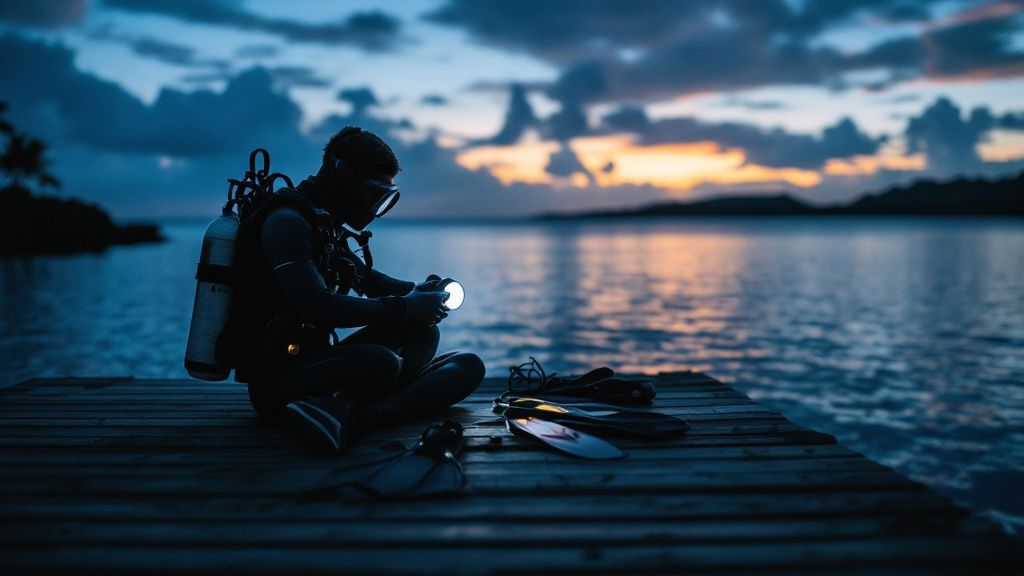
The magic of the Kona manta ray dive isn't some happy accident; it’s the result of a perfectly orchestrated natural phenomenon that we’ve learned to enhance. The story goes that decades ago, a coastal hotel started shining lights into the water, which attracted tiny plankton. It didn't take long for the local manta rays, who feast on plankton, to realize this was a dependable nightly buffet.
Today, dive operators have fine-tuned this process. We anchor at specific, well-known sites and use powerful underwater lights to create what we affectionately call an underwater "campfire." This intense light draws in massive clouds of plankton, and like clockwork, the mantas arrive for their dinner.
The Science Behind The Spectacle
It's about more than just lights and plankton, though. Kona's specific environment plays a massive role. The local underwater topography and ocean currents are just right for creating plankton-rich waters, which in turn supports a large, year-round manta population.
This reliable food source is precisely why the experience is so consistent. The Manta Ray Night Dive off Kailua-Kona has a global reputation for its incredible sighting success rate, which often sits somewhere between 85% and 95%. The local waters are home to a known population of over 450 resident manta rays—some with wingspans stretching past 12 feet—making for an absolutely unparalleled show.
This predictable gathering isn't just a quick fly-by. It's a nightly ritual where these intelligent creatures perform graceful, looping "barrel rolls" to scoop up as much food as possible, sometimes passing within inches of us.
A World-Renowned Adventure
You can spot manta rays in other parts of the world, but those sightings often happen at "cleaning stations," where the rays get parasites picked off by smaller fish. The Kona dive is a whole different ballgame because it revolves around a feeding event, which is far more dynamic and visually stunning. This distinction is one of many reasons https://konahonudivers.com/why-should-you-go-on-a-manta-ray-dive-in-kona/.
The pristine waters and the sheer abundance of life are what make this dive unforgettable. It’s a powerful reminder that learning about strategies to stop water pollution is vital for protecting these fragile marine ecosystems for generations to come. Expert operators aren't just tour guides; we are stewards of this incredible natural wonder, ensuring every dive is both thrilling and completely respectful of the wildlife.
Choosing the Right Kona Manta Ray Dive Site
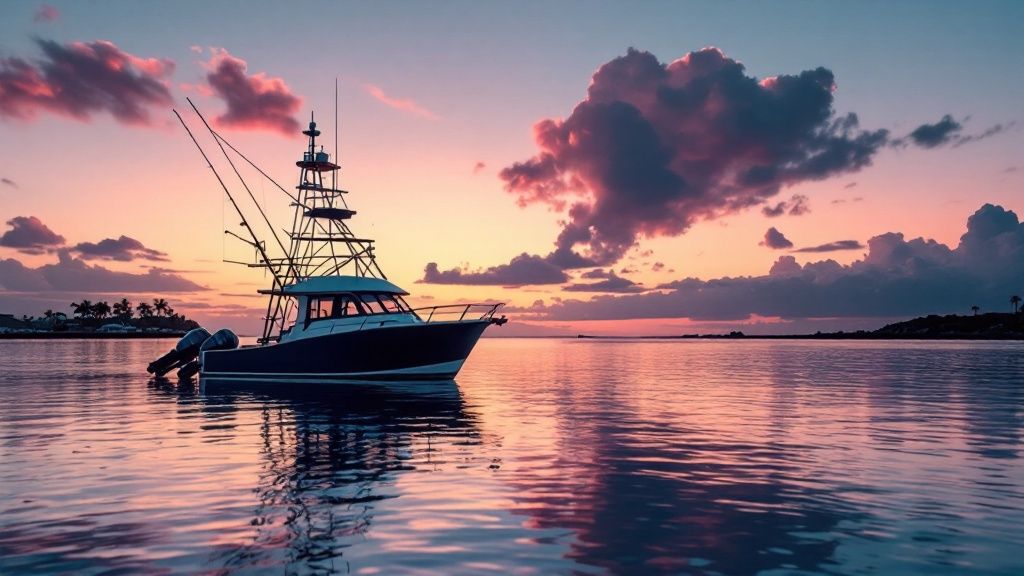
When you start planning your manta ray night dive in Kailua Kona, you'll realize it's not a one-size-fits-all experience. The Big Island is lucky enough to have a couple of world-class spots, and each one has its own distinct vibe. Picking the right one really boils down to what kind of encounter you're dreaming of.
The two most legendary and reliable locations are known to locals and dive operators as "Manta Heaven" and "Manta Village." Your choice between them will likely come down to a classic trade-off: do you want to see the highest number of mantas, or would you prefer a more intimate setting with fewer people?
Manta Heaven: The Bustling Epicenter
Just offshore from the Kona International Airport lies Manta Heaven, also known as Garden Eel Cove. This site lives up to its name—it’s famous for drawing in the largest crowds of manta rays on any given night. The scene can be absolutely mind-blowing, with multiple giant mantas gracefully performing their feeding "barrel rolls" all at once.
The catch? Its reputation means you’ll definitely be sharing the show. Manta Heaven can get pretty busy, with a number of tour boats and dozens of other divers and snorkelers in the water. For many, this collective energy just adds to the thrill. If your main goal is to see the absolute most mantas possible and you don't mind a bit of a party atmosphere, this is your spot.
Manta Village: A More Intimate Encounter
A little further south, right off the Sheraton Kona Resort at Keauhou Bay, you'll find Manta Village. This is the OG manta ray dive site, where it all started. While it typically sees fewer mantas each night compared to its northern counterpart, the experience here often feels much more personal.
With fewer boats congregating, the vibe can be calmer and more relaxed. An analysis of sightings at the aggregation sites found that while Manta Heaven might average around 11 rays a night, Manta Village sees closer to 4. But with less commotion, you might feel a deeper, more serene connection to the rays that do appear. You can explore more about these site differences to weigh the pros and cons yourself.
Key Takeaway: Go for Manta Heaven if you want the best odds of seeing the most rays and love a high-energy, bustling atmosphere. Choose Manta Village if you're looking for a quieter, potentially more personal experience with smaller crowds.
To help you visualize the difference, here's a quick side-by-side comparison of what to expect at Kona's main manta viewing locations.
Kona Manta Ray Dive Site Comparison
| Dive Site | Typical Ray Count | Crowd Level | Best For |
|---|---|---|---|
| Manta Heaven | 10-15+ | High | Divers wanting maximum manta sightings and a high-energy atmosphere. |
| Manta Village | 2-6 | Moderate | Divers & snorkelers seeking a more relaxed and intimate encounter. |
Ultimately, there's no wrong choice. Both locations offer a front-row seat to one of the most incredible wildlife spectacles on the planet. Thinking about what you value most in an adventure will ensure your manta ray night dive in Kailua Kona is an experience you'll never forget.
What Your Manta Ray Adventure Will *Actually* Be Like
So, you're thinking about the manta ray night dive in Kailua-Kona. What does it really feel like? Let's go beyond the brochure and walk through the entire experience, from the buzz of excitement at the harbor to the moment you surface, completely changed.
Your adventure kicks off with a warm welcome from the boat crew. This isn't just a quick "hello"—it's the start of a comprehensive pre-dive briefing. Far from a boring safety lecture, this is where the guides share incredible facts about manta ray biology and behavior. They'll also walk you through the strict no-touch rules that protect these gentle giants and ensure every dive is a respectful one.
The Sunset Cruise and The Big Plunge
As the boat heads out from the harbor, you'll get a front-row seat to a classic Kona sunset. It’s the perfect, peaceful start to an unforgettable night. Once you arrive at the dive site, known locally as "Manta Heaven" or "Manta Village," the crew helps everyone gear up as the last bit of daylight disappears.
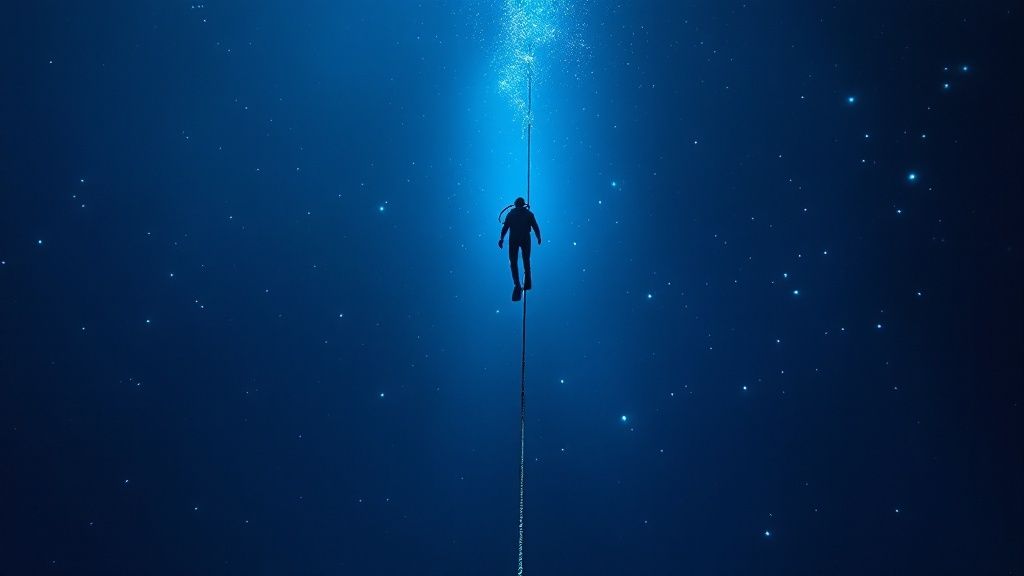
Slipping into the dark water is a feeling like no other. The world goes quiet. You’ll follow your guide's dive light down to the sandy bottom, settling in at around 35 to 40 feet. Here, divers gather in a loose semi-circle, pointing their powerful lights straight up. This creates a massive column of light, a beacon that immediately starts attracting clouds of microscopic plankton.
This glowing "campfire" on the ocean floor is the dinner bell. Before long, you'll see the first massive, graceful silhouette gliding in from the deep blue.
An Underwater Ballet Unfolds
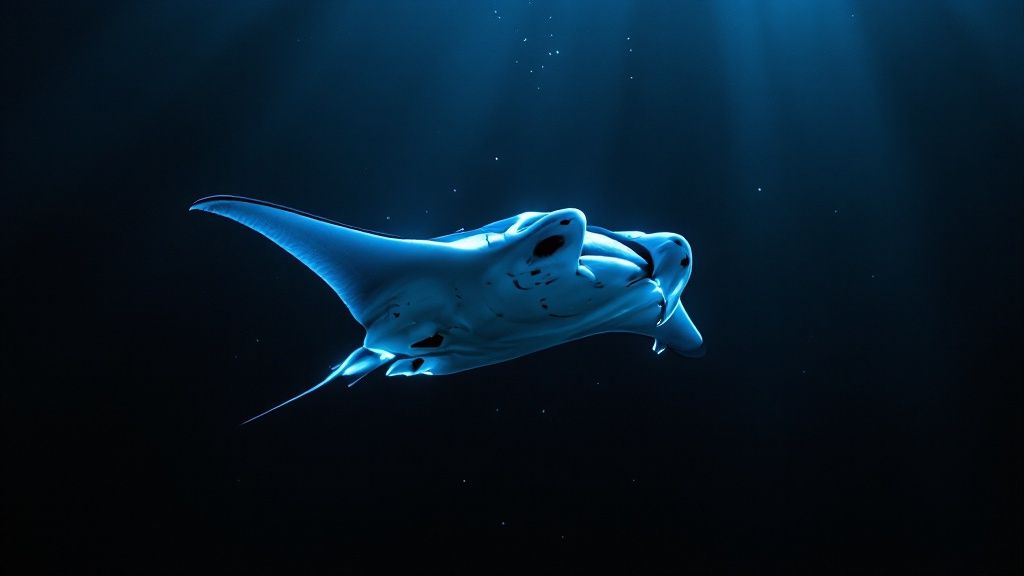
What happens next is pure, unadulterated magic. The manta rays begin performing effortless, looping barrel rolls right through the beams of light, their enormous mouths wide open to scoop up the plankton. They swoop, soar, and glide, sometimes passing just inches from your face. Their massive wingspans cast incredible, moving shadows on the seafloor.
It's an immersive, silent ballet. You're not just watching a nature documentary; you are sitting on the ocean floor, a spectator to one of the planet's most incredible feeding displays happening right in front of you.
The local manta population is well-known to researchers, who have identified nearly 200 individuals by the unique spot patterns on their bellies. While no two nights are the same, it’s common to see a dozen or more rays on a single dive. The record? A staggering 36 mantas at once!
If you want to capture this jaw-dropping spectacle, remember that low-light photography is tricky. You might want to look into advanced action cameras with night vision capabilities designed for these exact conditions.
After about 45 minutes of pure awe, your guide will signal that it’s time to head up. You'll make a slow ascent back to the boat, where the crew is waiting with a warm shower, hot chocolate, and snacks for the ride back to the harbor. You'll be buzzing the whole way, replaying every incredible moment in your head.
How to Prepare for a Safe and Comfortable Dive
A little prep work goes a long way in making your manta ray night dive in Kailua-Kona an unforgettable experience. When you know what to expect and have the right gear, you can simply relax and soak in the magic of it all.
The good news is that any reputable operator, like us here at Kona Honu Divers, will provide all the heavy scuba essentials—tanks, weights, BCD, and regulators. That saves you the hassle of traveling with bulky equipment. Still, there are a few personal items you’ll definitely want to bring along.
What to Pack for Your Dive
Think light but smart when packing your personal dive bag. For certified divers, these items are must-haves.
- Certification Card: This is non-negotiable. No C-card, no dive—it's that simple.
- Logbook: Trust me, you'll want to log this one. It's a dive you'll be talking about for years.
- Swimsuit: The easiest thing is to just wear it under your clothes to the dock.
- Dry Clothes: The boat ride back can get surprisingly chilly after a night dive. A warm hoodie or windbreaker makes all the difference.
- Towel: A no-brainer for drying off and staying warm between getting out of the water and getting into your dry clothes.
For a deeper dive into what to bring, check out our full guide on the gear you will need for your Kona diving adventure.
Following Essential Safety Protocols
Safety is paramount, both for you and for the manta rays. Before you even get in the water, the crew will give you a thorough briefing on the rules of the encounter. They're simple, but they're absolutely critical for protecting these gentle giants.
The golden rule? Never, ever touch a manta ray. Their skin is covered in a delicate mucus layer that protects them from infection. Touching them can strip this coating off, leaving them vulnerable to disease.
Your buoyancy control is your most important skill on this dive. The idea is to get settled on the sandy bottom and stay put, creating a stable viewing area. This keeps you from accidentally bumping into a manta or damaging the reef.
Pay close attention to your dive guide. They know the site and the animals, and they will get you into the perfect spot for the best views while keeping a respectful distance. When you’re calm and predictable, the mantas feel secure and will put on their incredible feeding show just inches above your head.
And while the manta dive is a Kona classic, it's just the beginning. For divers craving a different kind of night adventure, the Kona blackwater dive offers a mind-bending look at strange creatures migrating from the deep. We also have premium charters for more experienced divers who want to explore some of Kona's more challenging and rewarding sites.
Why Kona Honu Divers is a Top Choice for Your Tour
When you’re planning a manta ray night dive in Kailua Kona, the dive operator you choose is every bit as crucial as the dive site itself. A great guide, a safe boat, and a company that genuinely cares about marine life can be the difference between a good trip and a truly unforgettable one. That’s where Kona Honu Divers consistently shines.
Their reputation is rock-solid, built on years of prioritizing safety, delivering an amazing guest experience, and showing a deep respect for the ocean. The crew has a staggering 200+ years of combined industry experience, and they aren't just boat captains and divemasters—they're passionate educators and ocean stewards. This dedication is a huge part of why so many divers come back to them again and again.
The Kona Honu Divers Difference
So, what really sets Kona Honu Divers apart? It's how they think about the entire experience. Their popular 2-Tank Manta Dive & Snorkel tour isn't just a race to the main event. It often kicks off with a beautiful twilight reef dive, letting you see the underwater world shift from day to night before the mantas even make their appearance. It’s a brilliant way to maximize your time in the water and appreciate more of what makes scuba diving in Kona so special.
You'll also notice the little things that make a big difference. Their boats are custom-built with divers in mind, featuring plenty of deck space, hot-water showers for that post-dive chill, and top-notch rental gear. It's clear they've thought through every detail to make sure you're comfortable from the moment you step on board.
One of the best things about diving with Kona Honu Divers is their commitment to small groups. It creates a much more personal and less crowded encounter. You get more time with your guide and a better, more intimate view of the mantas without the chaos you find with bigger operations.
More Than Just a Dive Tour
While the manta dive is a bucket-list experience, Kona Honu Divers offers a whole world of underwater adventures. Their list of diving tours in Kona, Hawaii has something for just about everyone, no matter your skill level or interests. Whether you’re just getting certified or you're a seasoned pro looking for something new, they’ve got you covered.
Don't just take my word for it, though. See what other divers are saying and read about why Kona Honu Divers was voted the best dive operator in Kona, Hawaii.
The crew's passion comes through in everything they do, and their glowing reviews really tell the story.
Ultimately, choosing Kona Honu Divers isn't just booking a tour; it's investing in a safe, world-class, and environmentally responsible adventure.
Common Questions About the Manta Ray Night Dive
Diving into the dark Pacific to meet giant manta rays is a bucket-list experience, but it’s natural to have a few questions before you go. Wondering about certification, safety, or what happens on a rare off-night? Getting the facts sorted out ahead of time means you can book your manta ray night dive in Kailua Kona and just focus on the excitement.
We've pulled together the most common questions we hear from divers and snorkelers to give you the straightforward answers you're looking for.
Do I Need to Be Scuba Certified?
Nope, and this is probably the biggest misconception out there. While certified divers get an amazing view from the "campfire" on the ocean floor, the snorkeling experience is every bit as magical.
Top-notch operators have a slick setup for snorkelers. You'll hold onto a custom-built float ring on the surface, which has high-powered lights pointing down into the water. These lights attract the plankton, and the mantas swim right up to the surface to feed, giving you a front-row seat to the ballet. It’s an incredible, up-close view that anyone can enjoy.
Is the Manta Ray Night Dive Safe?
Absolutely. When you book with a professional, safety-focused company, this is one of the most well-managed and safe ocean activities you can do. Manta rays are called "gentle giants" for a good reason—they have no teeth, no stingers, and no barbs. They are completely focused on feeding on plankton, not on the people watching them.
Your dive crew will walk you through a detailed safety briefing before you ever get in the water. The main thing is to listen to your guides, be aware of your surroundings, and stick to the "look, don't touch" rule. This keeps both you and the mantas safe and ensures the encounter is a positive one.
What Happens if No Manta Rays Show Up?
It's a valid question! While the success rate in Kona is incredibly high—often over 90%—we're still dealing with wild animals, and there's never a 100% guarantee.
The good news is that the best operators are so confident you'll see mantas that they offer a "manta guarantee." If your tour is one of the rare ones with no sightings, they'll usually let you come back on another night for free, depending on availability. It’s always smart to ask about the specific policy when you're booking your spot.
What Is the Best Time of Year for This Dive?
This is one of the best things about the manta ray night dive in Kailua Kona—it’s fantastic all year round! The local manta population lives here permanently, so they don’t migrate. You have a great shot at an unforgettable dive no matter when you visit the Big Island.
Pro Tip: Try to book your manta dive for one of the first few nights of your vacation. That way, in the rare event of a cancellation due to weather or rough seas, you have plenty of backup days to reschedule. You don't want to miss this.
Ready to see this underwater spectacle for yourself? Kona Honu Divers runs world-class, safe, and truly unforgettable manta ray experiences. Book your adventure today and get ready for a night you'll be talking about for years.