
Picture this: you're floating in the warm, dark Pacific Ocean. Suddenly, a giant, graceful shadow emerges from the gloom, its immense wings spanning wider than you are tall. It glides inches above you, a gentle giant performing a silent, mesmerizing ballet.
This isn't a scene from a movie. It’s the manta ray night dive in Kailua Kona, an experience so profound and surreal that it’s consistently ranked as one of the best night dives in the world. You simply have to see it for yourself.
What Makes the Kona Manta Ray Dive a Must-Do Experience
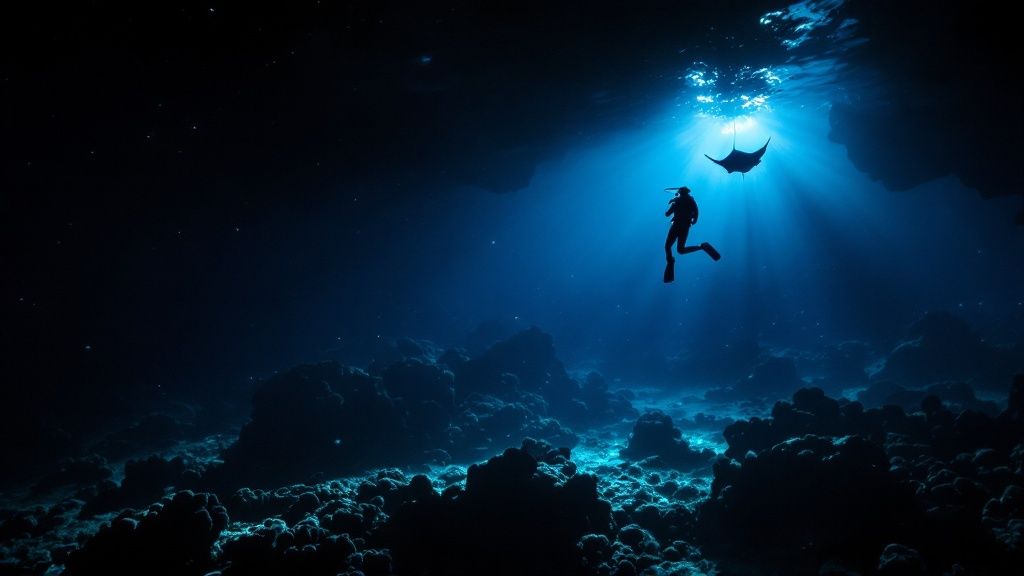
The Kona coast isn't just another pretty spot on the Big Island; it's the undisputed world capital for reliable manta ray encounters. While seeing a manta elsewhere often comes down to pure luck, the experience here is practically guaranteed, thanks to a unique and responsible setup.
It all starts after the sun goes down. Tour boats motor out to well-established sites affectionately known as "Manta Village" or "Manta Heaven." Once there, powerful lights are submerged into the ocean, creating giant columns of light in the dark water.
These lights act like a massive bug zapper in reverse, attracting swarms of microscopic plankton—the manta rays' favorite meal. It's like rolling out a red carpet and setting the dinner table for ocean royalty.
What unfolds next is pure magic. Drawn by the all-you-can-eat plankton buffet, Reef Mantas (Mobula alfredi) swoop in. They perform stunning, acrobatic barrel rolls and effortless somersaults right through the light beams, their cavernous mouths wide open to filter out the feast.
Your Manta Ray Night Dive at a Glance
This table breaks down the key details for your manta ray night dive in Kailua Kona, helping you quickly understand what to expect.
| Aspect | What You Need to Know |
|---|---|
| Success Rate | An incredible 85-90% chance of seeing manta rays on any given night. |
| Dive Depth | Shallow and comfortable, typically around 30-40 feet, perfect for longer bottom times. |
| Dive Time | Expect to spend 45 to 60 minutes mesmerized by the underwater show. |
| Manta Size | These are not small rays! Adults here can have wingspans stretching over 12 feet. |
| Water Temp | Generally warm, ranging from 75°F to 80°F depending on the season. |
| Accessibility | Open to both certified divers and snorkelers, so everyone can join the adventure. |
The consistency and sheer spectacle of this encounter are what make it a bucket-list item for ocean lovers around the globe.
An Adventure for Everyone
One of the best things about this experience is how accessible it is. It's not just for hardcore divers.
- Certified divers get to kneel or sit on the sandy ocean floor, looking up as these gentle giants perform their feeding dance just feet—sometimes inches—away.
- Snorkelers get an amazing bird's-eye view from the surface, holding onto a specially designed light board that attracts the mantas right below them.
This dual approach means that almost anyone, regardless of their experience level, can witness one of nature’s most spectacular shows. If you're planning to go as a snorkeler, be sure to check out this ultimate guide to the Kona Manta Ray night snorkel to get fully prepared.
Choosing Your Kona Manta Ray Tour Operator
When it comes to the manta ray night dive in Kailua Kona, picking the right company is hands-down the most important decision you’ll make. This choice is the difference between a decent trip and a truly mind-blowing, safe, and ethical encounter with these incredible animals.
Let’s be honest: not all operators are the same. A great company is invested in more than just getting you in the water; they’re passionate about protecting the mantas and ensuring you have an amazing time. Knowing what to look for is everything.
What Defines a Top-Tier Operator
The best outfits are genuine stewards of the ocean. They go way beyond just pointing you to the dive site and provide a complete, respectful experience from start to finish. Here’s what you should be looking for when you book:
- Real, In-Depth Briefings: A top-notch crew won't just give you a quick rundown. They’ll dive into manta ray biology, explain their behaviors, and hammer home the golden rule: passive observation only. You’ll learn exactly why touching a manta is so harmful to its protective slime coat.
- Small Group Sizes: You want an intimate experience, not a chaotic underwater crowd. Smaller groups mean you get a better view, feel more connected to the action, and put far less stress on the mantas.
- High-Quality Gear: This is a big one. A professional and safe operation will provide well-maintained equipment, including thick wetsuits. Trust me, you'll be glad you have one when you're floating in the dark ocean.
- An Experienced and Passionate Crew: You can always tell when the guides are just going through the motions versus when they genuinely love what they do. Look for a team that is knowledgeable, attentive, and truly passionate about marine conservation.
These things really elevate the tour from a simple activity to an educational and awe-inspiring adventure. For a deeper dive into this, our guide on how to choose a Kona dive shop has some great tips that are just as relevant here.
Look for Manta Ray Green List Certified Operators
If you want a simple, reliable benchmark for finding a responsible tour, look for the Manta Ray Green List certification. This program is a game-changer, identifying and endorsing operators who stick to the highest standards of safety and conservation.
When you choose a Green List company, you know your money is supporting a business that’s actively committed to protecting Kona’s amazing manta population.
Kona Honu Divers is proud to be a Green List certified operator. We’re dedicated to providing a world-class manta ray experience that is both breathtaking and sustainable. Our expert team makes sure every single guest understands how to interact with the mantas respectfully, guaranteeing a safe and magical encounter for everyone—human and animal alike.
What to Expect on Your Manta Ray Adventure
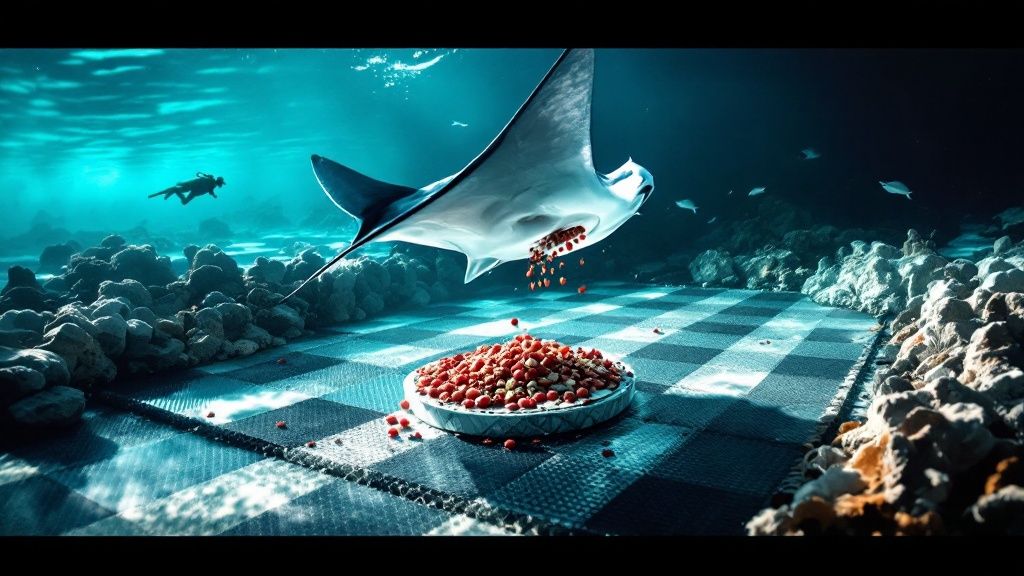
So, you're booked for a manta ray night dive in Kailua Kona. What’s it really like? Let’s walk through the whole evening, from the moment you step on the boat to the final, unforgettable encounter. Knowing what’s coming just builds the excitement.
Your adventure kicks off in the late afternoon at Honokohau Harbor. The buzz is real as you board the boat and pull away from the dock. The ride out along the Kona coast is an experience in itself—you'll get incredible views of the volcanic shoreline as the sun starts to dip, painting the sky in stunning colors.
As you head toward the dive site, the crew will gather everyone for a thorough briefing. This is more than just a quick safety rundown. They'll cover everything from the dive plan to crucial manta ray etiquette, sharing some amazing facts about the gentle giants you’re about to meet. Listening closely is key to making sure the encounter is safe and respectful for both you and the mantas.
The Two-Tank Experience
Many of the best tours, like the manta ray dive tour from Kona Honu Divers, are set up as a two-tank experience. This is a fantastic way to get you comfortable in the water and make the most of your time.
-
Dive One: The Twilight Reef Dive. Your first dip is usually a gorgeous twilight dive on a nearby reef. The underwater world completely changes as day turns to night, and you get to see that transition firsthand. It's the perfect chance to check your gear, dial in your buoyancy, and get reacclimated to being underwater before the main event.
-
Dive Two: The Manta Ray Encounter. After a short break on the boat—usually with some welcome snacks and drinks—it's time for the real show. You’ll descend into the darkness with your guide, heading for a specific spot on the sandy bottom.
The Main Event: The Underwater Ballet
Once you’re settled on the ocean floor, your group will get into position, often in a circle around a powerful, stationary light source people call the "campfire." Everyone points their dive lights up, creating columns of light that attract clouds of plankton. And then, you wait. The sense of anticipation in the dark water is something you have to feel to believe.
It starts with a shadow. A huge, graceful shape emerges from the blackness. The first manta ray has arrived. It swoops into the light to feed, and soon, others often join. They perform these incredible, looping barrel rolls right over your head, their giant mouths wide open to filter the plankton from the water. It’s a silent, breathtaking ballet that feels like you've landed on another planet. Our article on what it's like to go on the manta ray dive gives you an even more detailed, first-hand account of this magic.
And for the snorkelers? The view from the surface is just as incredible. You'll hold onto a specially designed light board that floats on the water, illuminating the scene below. This gives you a perfect bird's-eye view as the mantas glide and feed just feet beneath you. It’s no wonder this incredible experience draws around 80,000 participants to Kona’s top manta sites every single year.
How to Be a Responsible Manta Ray Guest
Joining the manta ray night dive in Kailua Kona is more than just an adventure; it's a privilege. And with that privilege comes a big responsibility to protect these incredible animals. The number one rule is simple, but it’s absolutely critical: passive observation only. You’re a guest in their world, not a participant.
Imagine you've been invited to watch a spectacular underwater ballet. Your job is to sit back and be amazed, not jump on stage. This approach keeps the mantas comfortable and ensures this magical experience can continue for generations.
The Golden Rules of Manta Etiquette
To make sure you’re a great guest, there are a few key guidelines to follow. These aren't just suggestions; they’re designed to protect both you and the mantas.
- Look, Don't Touch: This is the most important rule of all. Manta rays have a protective mucous layer—a kind of slime coat—that acts as a shield against bad bacteria. If you touch them, even with the slightest brush, you can rub off this coating and leave them vulnerable to nasty infections.
- Don't Chase or Block Their Path: Never, ever swim after a manta or try to get in front of it. Chasing them is stressful and can easily spook them, driving them away from their dinner. The best encounters happen when you stay still and let them come to you. They are in control.
- Stay in Your Designated Spot: Your dive guide will show you exactly where to be. For divers, that means staying on or near the sandy bottom. For snorkelers, it means staying flat on the surface. This keeps the "water column" clear, giving the mantas a safe, open space to glide through.
Following these simple rules is the core of being a thoughtful visitor. To learn even more, check out these excellent guidelines on responsible and considerate diver etiquette that apply to all underwater life.
Safety Tips for Divers and Snorkelers
While the mantas are completely harmless—they have no teeth, barbs, or stingers—a night dive still requires you to be on your A-game. It’s easy to get mesmerized by the show, so staying aware of your surroundings is crucial.
If you’re a scuba diver, sharp buoyancy control is non-negotiable. You need to stay neutral so you don’t accidentally drift up into a manta’s path or kick up sand from the bottom, which clouds the water for everyone.
Snorkelers, your main job is to keep your fins from splashing and kicking down. Try to stay as horizontal as you can on the surface. A misplaced kick from a fin, even if accidental, could easily injure a manta as it swoops just inches below you.
When you respect these guidelines, you’re not just keeping yourself safe—you’re actively helping to preserve Kona’s cherished manta ray population. It’s this thoughtful approach that makes the manta ray night dive in Kailua Kona a truly sustainable and unforgettable experience.
Understanding Kona’s Famous Manta Rays
Diving with manta rays in Kona isn't just a thrilling underwater show; it's a chance to meet the locals. We're talking about a resident population of Reef Mantas (Mobula alfredi) that have called the Kona coast home for generations. They aren't just passing through—they live here.
What makes this experience so special is how personal it gets. Every single manta has a unique pattern of black spots on its belly, acting just like a human fingerprint. This is how local guides and marine biologists tell them apart, giving them names and tracking their lives over the years.
You might even run into a local celebrity down there. Your guide could point out a famous resident like "Big Bertha" or "Lefty," sharing stories about their personalities and histories. It transforms the dive from watching wildlife to feeling like you're meeting old friends.
The Science Behind the Spectacle
So, why are the manta encounters in Kona so consistent? It all comes down to a brilliant, man-made buffet. The powerful lights that dive operators shine into the water at night attract a massive cloud of plankton, the microscopic organisms that mantas love to eat.
This creates an irresistible, all-you-can-eat feast, and the mantas have learned to show up for dinner. They've come to associate the bright lights with a guaranteed meal, which is why the sighting success rate is incredibly high—often over 90%. You're not just witnessing a random act of nature; you're seeing a learned behavior that's now a key part of the local marine ecosystem.
Researchers have been studying this amazing phenomenon for decades. Between 2009 and 2014, scientists and photographers painstakingly documented individual rays by their unique belly spots at sites like 'Manta Village.' On a good night, you can easily see over 20 different mantas, and the record for a single dive stands at an astonishing 36 individuals.
These long-term studies have given us incredible insights into their site fidelity and movement patterns. To dive deeper into the science, check out the fantastic resources and manta ray studies on UW Photography Guide.
Your Manta Ray Night Dive Questions Answered
Even after seeing all the incredible photos, it’s totally normal to have a few last-minute questions before you commit. Let's walk through some of the most common things people ask, so you can feel completely ready for this once-in-a-lifetime adventure.
Do I Need to Be a Certified Scuba Diver?
Not at all! And that’s one of the best things about this experience—it’s designed for everyone. While certified divers get a truly unique perspective from the ocean floor, the view from the surface as a snorkeler is just as mind-blowing.
Snorkelers hang onto a custom-made floatation board that has bright lights shining down into the water. This gives you the perfect bird's-eye view as the mantas swoop and barrel roll just a few feet beneath you. Most tours run as a hybrid trip with both divers and snorkelers on the same boat, making it a fantastic activity for families and groups with mixed experience levels.
Is a Manta Ray Sighting Guaranteed?
Okay, let's be real: these are wild animals, and nature never gives a 100% guarantee. That said, the Kona manta ray dive has one of the highest success rates for any wildlife encounter on the planet, often topping 90%. The local manta population is large, well-researched, and they reliably show up for their nightly plankton feast.
To put your mind at ease, nearly every reputable tour company offers a "manta guarantee."
What this usually means is that if you don't see any mantas on your trip, you can come back for free on another night (subject to availability). It’s always a good idea to double-check the specific policy with your chosen operator when booking.
What Is the Best Time of Year to Go?
Here’s the fantastic news: the manta ray night dive in Kailua Kona is incredible all year long! Kona’s resident reef manta population doesn’t migrate, and the ocean conditions here are generally calm and warm no matter the season.
Honestly, there is no "off-season" for the mantas. The best time for you to go will probably have more to do with your personal schedule, finding good flight deals, and what kind of weather you prefer for the rest of your vacation. For more about all the incredible scuba diving tours on the Big Island, this page is a great resource.
What Should I Bring on the Boat?
The tour operators provide all the big stuff—wetsuits, masks, fins, and either snorkel or scuba gear. Your job is to bring the things that will keep you comfortable.
Here's a quick checklist:
- A towel and a dry change of clothes for after you get out of the water.
- A warm jacket or hoodie. It can get surprisingly chilly on the boat ride back after sunset.
- Reef-safe sunscreen if you're on a sunset trip.
- An underwater camera, of course! You’ll want to capture this.
Most boats offer water and some light snacks, but it never hurts to confirm. And a pro tip: if you're even slightly prone to seasickness, take medication an hour or so before you board. It's much better to be safe than sorry!
Ready to see this underwater ballet for yourself? At Kona Honu Divers, we offer a world-class, Green-List-approved manta ray dive tour that is safe, educational, and absolutely breathtaking. Our experienced crew is passionate about sharing the magic of Kona's mantas with you.