
Picture this: you’re descending into the warm, dark Pacific Ocean off the coast of Kona. Your dive light cuts through the blackness, and suddenly, you see it. A giant manta ray, with a wingspan stretching over 12 feet, glides silently towards the light, performing an effortless underwater ballet. This is the world-famous manta ray night dive in Kailua Kona, and it’s an absolute must-do for anyone who loves the ocean.
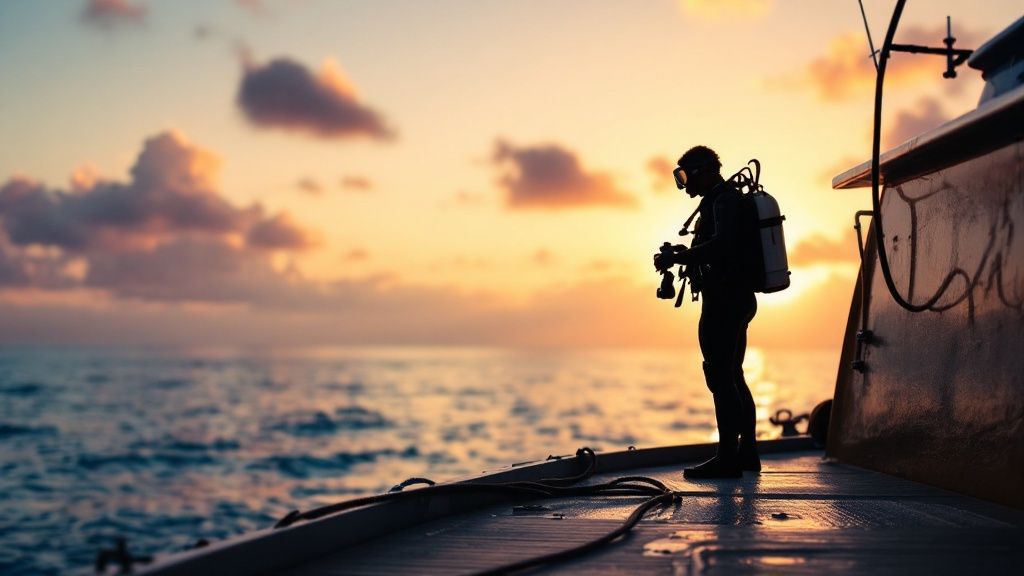
The Kona coast of the Big Island isn't just another pretty dive spot. It's the undisputed global capital for getting up close with these gentle giants. What makes it so special is a perfect storm of ideal ocean conditions and some very smart manta rays who have learned to take advantage of a nightly plankton buffet.
This guide is your complete roadmap to this incredible experience. We'll break down exactly why this specific spot is so magical and what to expect every step of the way.
The Science Behind the Show
So, how does this nightly spectacle actually work? It's a beautifully simple, almost symbiotic relationship. Tour boats position themselves and shine powerful lights down into the water. These lights attract massive clouds of plankton, which just so happens to be a manta ray’s favorite meal.
Over decades, the local manta population figured out that these bright lights are basically a dinner bell, signaling an easy, all-you-can-eat feast. They show up night after night.
This incredible natural phenomenon draws about 80,000 visitors every single year, cementing Kona’s reputation as one of the world's premier wildlife encounters. Key sites like Garden Eel Cove and Keauhou Bay are easily accessible, making it even more popular. While nature is never guaranteed, some nights are truly legendary, with a record of 36 individual manta rays showing up at once. It's a sight that's hard to put into words.
This learned behavior allows for unbelievably close and personal encounters. It's truly one of the most amazing things you can witness on the planet. For a different perspective from the surface, you can also discover more about the magic of Kona's Manta Ray Night Snorkeling adventure.
So, Why Kona? What Makes It the Manta Ray Capital of the World?
It's a fair question. What makes the Kona coast the place on the planet for seeing manta rays? It’s not just luck. It's a perfect storm of biology, some surprisingly smart animal behavior, and a unique underwater setup that puts on a show almost every single night.
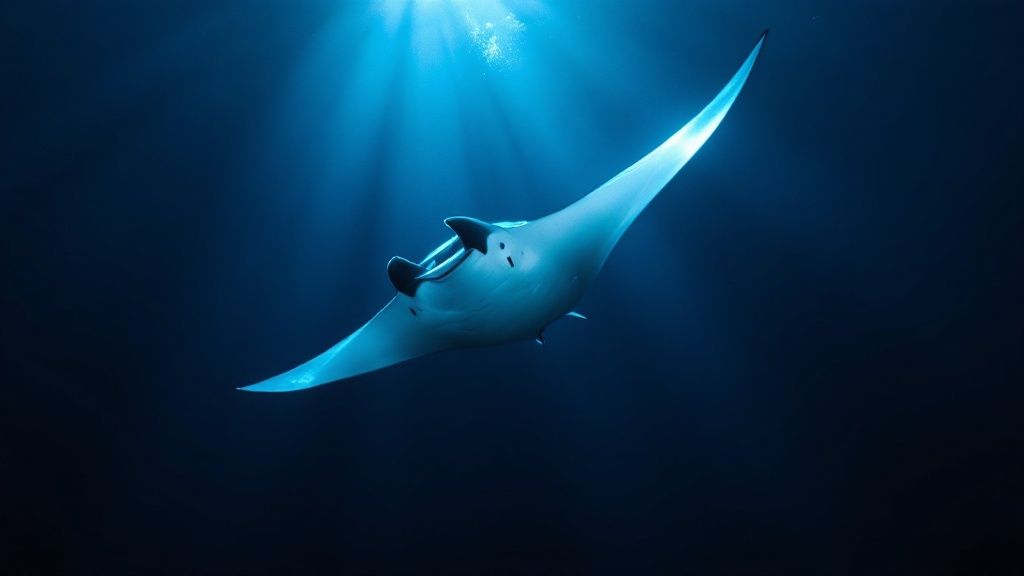
The main characters in this story are the local reef manta rays (Mobula alfredi). Critically, these guys are homebodies. Unlike their globe-trotting cousins, Kona's mantas stick around all year, which is the secret to such reliable sightings. They're the second-largest species, boasting impressive wingspans that average around 12 feet.
These gentle giants are what we call filter feeders—their entire diet is made up of tiny zooplankton. To eat, they just glide through the water with their huge mouths open, filtering out these microscopic critters. And it’s this very specific eating habit that accidentally created the world-famous manta ray night dive in Kailua Kona.
A Happy Accident and a Reliable Buffet
The whole thing started decades ago, completely by chance. A waterfront hotel, the Kona Surf Hotel (which is now the Sheraton Kona), put up bright lights that shone out over the ocean. At night, these lights attracted swarms of plankton, creating a thick, irresistible soup of manta food.
It didn't take long for the local mantas, who are incredibly intelligent animals, to figure out that these lights were basically a nightly dinner bell. They started showing up every evening for an easy meal, a behavior they've since passed down through generations.
Today, dive operators have dialed in this process. Instead of mooching off hotel lights, boats head to specific dive sites and sink their own powerful lights to the seafloor. This creates a "campfire" effect that draws in the plankton, and right on cue, the mantas arrive for their nightly feast.
This is what makes the Kona dive so radically different. You’re not just hoping for a quick fly-by. You're invited to an hour-long underwater banquet where the mantas are actively feeding, sometimes just inches from your face.
Prime Real Estate: The Best Manta Neighborhoods
The consistency of the Kona manta dive also comes down to location, location, location. There are two main spots that have become the go-to destinations for this incredible experience.
- Garden Eel Cove (Manta Heaven): Just north of Kailua-Kona, this site gets its name for a reason. It's a magnet for huge groups of mantas, and the layout of the reef is perfect for feeding.
- Keauhou Bay (Manta Village): This spot is south of town, right near where it all began at the old hotel. It's legendary for its consistency and is often a bit calmer, making for a super smooth experience.
These sites are the perfect habitat, creating a safe and predictable environment for both the mantas and the people who come to see them. This reliability has also been a huge gift to science. Long-term studies by marine scientists between 2009 and 2014 gave us amazing insights into the manta population and their local travel patterns. You can dive deeper into these groundbreaking manta ray findings here.
When you go with a seasoned operator like Kona Honu Divers, you're going with a crew that gets it. They know how to position the lights and the divers to give you an unbelievable view while always putting the mantas' well-being first.
Ready for a front-row seat to one of nature's greatest shows? The Manta Ray Dive Tour is one of those bucket-list experiences you'll be talking about for the rest of your life.
How To Prepare For Your Manta Ray Adventure
A little prep work can be the difference between a good manta dive and an absolutely unforgettable one. Think of it like a pre-flight check before the main event; getting your ducks in a row beforehand means you can relax, feel confident, and soak in every moment of the magic once you're on the boat.
First things first: choose your guide wisely. Not all tour operators are created equal, and your choice has a massive impact on your safety and the well-being of the mantas. You'll want to find a company with a proven safety record, a preference for small group sizes, and a genuine commitment to eco-conscious diving.
Eco-friendly operators follow strict rules, like a "no-touch" policy and maintaining a safe distance. This is crucial. It keeps the animals calm and ensures they’ll keep returning to these sites for years to come. Going with a reputable company means you’re in the hands of pros who care just as much about marine conservation as they do about giving you an amazing experience.
Certification and What to Bring
Before you even click "book," let's talk about requirements. If you're planning to scuba dive with the mantas, you absolutely must be a certified diver. Make sure you have your certification card handy, whether it’s the plastic card in your wallet or a digital version on your phone.
For snorkelers, it’s much more straightforward. No certification is necessary, but you do need to be comfortable in the ocean at night. Your guides will give you a thorough briefing and a large flotation board to hang onto, so it’s an adventure almost anyone can enjoy.
Once that’s settled, it’s time to think about your gear. While the tour operator provides the heavy-duty equipment like tanks and weights, a few personal items will make your trip much more comfortable. For a deep dive into what to pack, check out this guide on the gear you will need for your Kona diving adventure.
To make it even easier, here's a quick checklist to run through before you head out.
Manta Ray Dive Preparation Checklist
This table is your go-to reference to make sure nothing gets left behind for your manta ray night dive.
| Category | Essential Items & Actions | Pro Tip |
|---|---|---|
| Booking & Certification | Book your tour well in advance, especially in peak season. Bring your scuba certification card if diving. | Look for Manta Ray Green Listed operators to support responsible and sustainable tourism. |
| Personal Gear | Swimsuit, towel, and a change of warm, dry clothes for after the dive. | Pack a reusable water bottle. Staying hydrated is key, even when you're surrounded by water. |
| Dive/Snorkel Equipment | Well-fitting mask, snorkel, and fins. A 5mm wetsuit is recommended for warmth. | Double-check that your dive light and camera batteries are fully charged before you leave the hotel. |
| Health & Wellness | Eat a light meal 1-2 hours before your tour. Consider motion sickness medication if you're prone to it. | Avoid alcohol before the dive. It accelerates dehydration and can seriously impair your judgment. |
Having these items sorted will let you focus on the main event: the incredible manta rays.
Mental and Physical Readiness
Getting ready for this adventure goes beyond just packing a bag. It’s also about preparing your mind and body. The experience is a massive adrenaline rush, but it's totally normal to feel a few pre-dive jitters, especially if you haven't done much night diving.
A good night's sleep is one of the best things you can do. When you’re well-rested, you’re calmer, more focused, and better able to manage your buoyancy and awareness in the dark.
Proper hydration is one of the most overlooked aspects of dive preparation. Dehydration can increase your risk of decompression sickness and can also contribute to fatigue and seasickness. Make sure to drink plenty of water throughout the day leading up to your dive.
Finally, manage your expectations and just be in the moment. While Kona boasts a success rate of over 90% for manta sightings, remember that these are wild animals. Trust your guides, listen to their instructions, and allow yourself to be fully present. When you do, you’re setting the stage for one of the most incredible wildlife encounters of your life.
What To Expect During Your Manta Ray Encounter
Knowing what’s coming moment by moment helps you relax and just soak in one of the planet's most incredible wildlife encounters. The manta ray night dive in Kailua Kona is a finely tuned operation, and it all starts long before you even get your fins wet.
Your adventure kicks off with a boat ride along the stunning Kona coast just as the sun dips low, setting the sky ablaze. This isn’t just a commute to the dive site; it’s part of the whole experience. You can feel the buzz of excitement and anticipation building on the boat as the crew gets everything ready.
During the ride, your divemaster will gather everyone for a detailed briefing—and you’ll want to pay close attention. They'll walk you through everything from safety rules to the fascinating biology of the gentle giants you’re about to meet. They will also stress the golden rule of the dive: passive observation. We are guests in their world, so looking without touching is absolutely essential for their well-being.
Getting Into Position for the Show
Once the boat moors up at the site, either Manta Heaven or Manta Village, the crew kicks into high gear. The setup is a bit different for divers and snorkelers, but both get a spectacular front-row seat.
-
For Scuba Divers: You’ll gear up, run your final checks, and descend with your guide into the deepening twilight. You're heading for a specific sandy spot on the ocean floor, usually around 30-40 feet deep. Down there, you'll settle in a circle around a powerful light source that the locals call the "campfire." This light is the dinner bell, attracting the plankton that the mantas flock to.
-
For Snorkelers: Your show takes place right on the surface. After getting in the water, you'll make your way to a large, custom-built light board. These boards are incredibly stable and have handles all around them, so you can just hold on, float comfortably, and look down. The light illuminates the water column below, creating another irresistible beacon for the plankton.
This clever two-level setup means everyone gets an amazing, unobstructed view without getting in anyone else's way. The lights from the snorkelers above and the campfire from the divers below create a massive, glowing column of food—an irresistible buffet for mantas.
The Main Event: A Ballet of Giants
As darkness completely takes over, the magic truly begins. You might see a shadow move at the edge of the light, then another. Before you know it, giant manta rays—some with wingspans wider than a car—are gliding effortlessly into the beams.
It's a feeling that's almost impossible to describe. These massive creatures, weighing up to 3,000 pounds, move with a silent, weightless grace. They perform mesmerizing barrel rolls and somersaults right in front of you, their huge mouths open to filter the plankton from the water.
From your spot on the seafloor or floating at the surface, you'll watch this underwater ballet unfold just inches from your face. A manta might swoop directly over your head, its massive white belly momentarily blocking out everything else. They aren't aggressive at all; they're just completely focused on their meal.
The whole experience is intimate, humbling, and utterly awe-inspiring. Knowing the logistics beforehand lets you shake off any nerves and just be present for one of nature's greatest shows. Reputable outfits like Kona Honu Divers have perfected this experience, making sure every single person feels safe and has an unforgettable night.
Safety Guidelines For Manta Friendly Interaction
Sharing the water with magnificent creatures like manta rays during the **manta ray night dive in Kailua Kona** is an incredible privilege, but it’s one that comes with a real responsibility. We have a duty to make sure these gentle giants stay safe and that this amazing experience can continue for years to come. That’s why every diver and snorkeler must follow a strict code of conduct. These aren’t just suggestions—they’re essential rules to protect the mantas.
The most important thing to remember is passive observation. You're there to witness an underwater ballet, not to join the dance. Think of yourself as a guest in their dining room, watching quietly from the side.
The Golden Rule: Look, But Don't Touch
When a massive manta ray glides just inches over your head, the urge to reach out and touch it can be almost overwhelming. But you absolutely cannot. Touching a manta is strictly forbidden, and for a very good reason.
Manta rays are covered in a thin, protective mucus layer—think of it as their skin's first line of defense. This "slime coat" shields them from harmful bacteria and parasites. When we touch them, the oils and friction from our hands can easily rub off this vital coating, leaving them exposed to dangerous infections. Sticking to the "no-touch" rule is the single most important thing you can do for their health.
By being a respectful observer, you not only ensure a better experience for everyone but also become an active participant in the conservation of Kona's precious manta ray population. Following these guidelines is crucial for the health of these magnificent animals.
Proper Positioning and Light Etiquette
Where you are in the water matters. A lot. Your divemaster will give you a very specific briefing on where to go, and it's critical that you follow their directions to the letter.
- Divers: You’ll be on the sandy bottom, either kneeling or lying flat. This keeps the space above you wide open, giving the mantas a clear "runway" to swoop in and feed without feeling boxed in.
- Snorkelers: You'll stay on the surface, holding onto a custom light board. It’s absolutely essential that you don't dive down into the water column. This can disrupt the mantas' feeding patterns and even lead to an accidental collision.
Just as important is what you do with your dive light. It's a tool to attract plankton, not a spotlight for the mantas themselves.
- Point Your Light Up: If you’re a diver, your light should always be pointed straight up toward the surface.
- Avoid Their Eyes: Never, ever shine your light directly into a manta ray’s eyes or mouth. It can disorient them and will likely make them leave the area.
- Create a Plankton Column: The whole system works by creating a column of light. Divers shine their lights up, and the snorkel board shines its lights down. This concentrates the plankton in one area, which is what brings the mantas in.
By following these simple but crucial rules, we help create a safe, predictable, and stress-free environment for the rays. This is what keeps them coming back night after night, allowing countless others to witness this incredible spectacle. To learn more, check out our complete guide on how to be a considerate diver. Your divemaster will go over everything again, but showing up prepared makes you a better dive buddy and a true steward of our oceans.
Tips For Capturing Stunning Underwater Photos
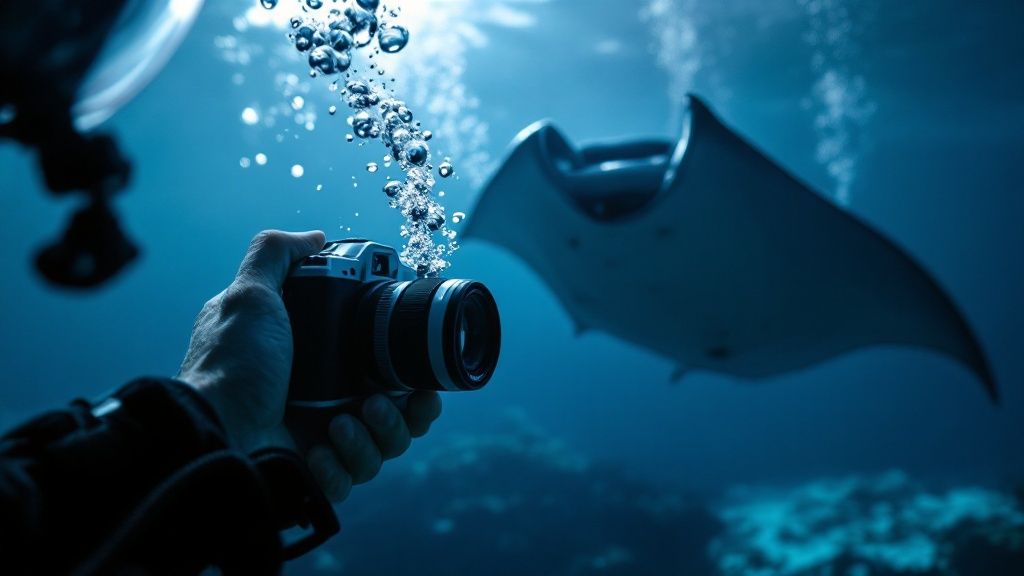
Trying to photograph the manta ray night dive in Kona is one of the most rewarding challenges you can face with a camera. The photos you see online make it look easy, but in reality, you’re dealing with very little light, constant movement, and a blizzard of plankton. But don’t worry—with the right mindset and a few key techniques, you can absolutely nail it.
Whether you're bringing a GoPro or a full-blown professional rig, the number one rule is always the same: get close. Water is notorious for washing out color and detail, so every inch you can shave off the distance between your lens and the manta makes a huge difference. Getting that crisp, vibrant shot is all about minimizing the amount of water you're shooting through.
Of course, getting close means you need rock-solid buoyancy. You'll be hovering just off the seafloor, trying to stay perfectly still as these giants perform their underwater ballet right over your head. If you’re not confident in your ability to hold your position, practice beforehand. The last thing you want is to be fumbling with your buoyancy while the perfect shot glides by.
Essential Camera Settings and Gear
If you're using a camera with manual controls, this is where you can really take charge. The name of the game is getting as much light as possible to hit your camera's sensor.
Here’s a solid starting point for your settings, which you can then tweak on the fly:
- Aperture: Open it up as wide as you can. Think somewhere in the f/2.8 to f/5.6 range to let the maximum amount of light in.
- ISO: You'll need to bump this up. Start around 800 to 1600 and see how it looks. Just be careful not to go too high, or your images will start getting that grainy, "noisy" look.
- Shutter Speed: To freeze the mantas' beautiful, flowing movements, you'll want a shutter speed of at least 1/125th of a second, if not faster.
Now for the real secret weapon: external lighting. Your camera's built-in flash is your worst enemy down there. It will light up every single particle floating in the water between you and the manta, creating a nasty effect called backscatter. To avoid this, you need to get your light source off your camera. Using external strobes or strong video lights, positioned out to the sides, lets you light your subject from an angle. This illuminates the manta beautifully while leaving the water column in front of your lens dark.
Composition and Awareness
Technical settings are only half the battle; the other half is telling a story with your photo. Think about what makes this dive so special and try to incorporate those elements.
A great trick is to frame your shots to include other divers or the "campfire" of lights on the seafloor. This adds depth and context, but more importantly, it gives a sense of scale that really communicates just how massive these creatures are.
Keep an eye out for those iconic manta behaviors, like their classic barrel roll. Getting a shot from below, with their bright white undersides set against the dark ocean, is a classic for a reason. Try to anticipate their path and be ready to click the shutter the moment they pass through the main beam of light.
And one final, crucial point: never let the camera distract you from being a safe diver. Always keep track of your surroundings, your buddy, and your air supply. The best photographers are safe divers first. Nail that, and you'll come home with images that are just as incredible as the experience itself.
Your Manta Dive Questions, Answered
It's completely normal to have a few questions before you commit to an adventure like the manta ray night dive in Kailua-Kona. Even with all the excitement, you want to know what to expect. Let's clear up some of the most common queries so you can book with total confidence.
Are Manta Ray Sightings Guaranteed?
While Kona is one of the most reliable places on Earth to see manta rays—we’re talking a success rate over 90%—it’s important to remember they are wild animals. Because of that, no one can ever offer a 100% guarantee.
The good news is that top-tier operators often have a "manta guarantee." This usually means if you don't see a manta on your trip, you can come back another night for free. Always ask about the specific policy when you book!
Do I Have To Be A Certified Diver?
Absolutely not! Snorkeling offers an equally mind-blowing perspective. You'll float on the surface, holding onto a custom light board that shines down into the water. This light attracts the plankton, which in turn brings the mantas right up to you for their dinner. It's an incredible way for anyone to join in, no certification needed.
What Is The Best Time Of Year For The Manta Dive?
Honestly, any time is a great time. The manta ray night dive is a year-round activity here in Kona because our local manta population doesn't migrate. They're here all year long!
While the ocean might be a touch calmer during the summer months, there's really no "off-season." We dive into all the details in our post on the best time of year to see manta rays in Kona.
Are There Other Exciting Night Dives In Kona?
You bet! If you're looking for another truly unique nighttime adventure, you have to check out the world-famous Kona Blackwater Dive. It's a completely different kind of thrill.
You'll be tethered to a boat a few miles offshore, drifting over thousands of feet of water. As you float in the dark, you get to see all the strange and wonderful creatures that migrate up from the deep ocean abyss at night. It’s an otherworldly experience for the truly adventurous diver.