
Of all the wildlife encounters you can have in the ocean, the manta ray night dive in Kailua Kona is easily one of the most reliable and jaw-dropping. It's an experience that's famous for a reason. You're not just hoping to see something; you're virtually guaranteed a front-row seat to one of nature's most graceful performances. We're talking about giant manta rays, some with wingspans stretching over 12 feet, gliding and somersaulting right in front of you as they feast on plankton. Scuba diving in Kona, Hawaii is an amazing experience and this is the pinnacle of what the Big Island has to offer. For a full list of options, see our diving tours page.
Why the Kona Manta Ray Dive Is a Bucket-List Experience
Picture this: You descend into the warm, dark Pacific. Below you, a circle of powerful lights illuminates the seafloor, creating a brightly lit stage. You settle in, and then you see it—a huge, dark shape emerging from the blackness. This is the heart of the manta ray night dive in Kailua Kona, a moment that feels truly magical.
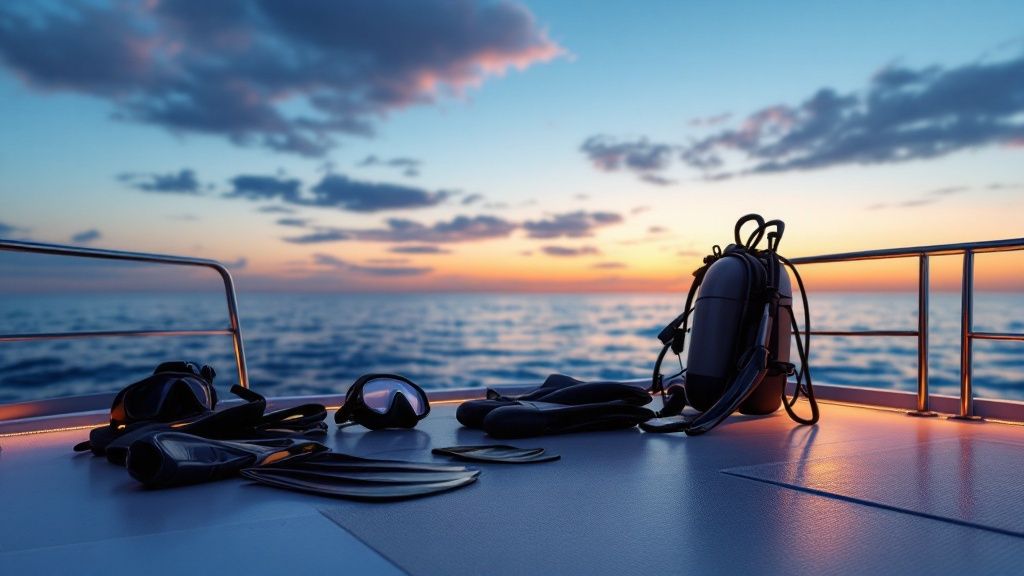
It’s not just another dive; it’s an underwater ballet. The mantas are drawn in by the clouds of plankton that swarm to the lights, and they put on a show, performing effortless loops and turns sometimes just inches from your mask. Their movements are so fluid and mesmerizing, it creates a powerful connection you won't soon forget.
What Makes This Dive So Unique?
Unlike so many wildlife tours that hinge on luck, the Kona coast delivers with incredible consistency. This reliability is what has turned the area into a global mecca for divers. The whole operation is built on a simple and brilliant idea: light up the water to attract the plankton, and the mantas will come for the feast. It works like a charm, creating a predictable and awe-inspiring show, night after night.
I've heard it a thousand times from seasoned divers—this is one of the most satisfying and memorable dives they have ever done. Watching these majestic creatures feed isn't like just observing wildlife; it feels like you've been invited to an exclusive underwater performance.
The Kona Coast is home to a resident population of nearly 200 identified manta rays. Each one has unique spot patterns on its belly, which is how local guides and researchers tell them apart. On a typical night, you can expect to see anywhere from a handful to over 20 mantas, though some legendary nights have featured as many as 36. You can dig into more details about these incredible sightings by exploring Kona's manta ray dive statistics. It’s this high probability of a spectacular encounter that truly sets the Kona experience apart from anywhere else in the world.
The Right Guide Makes All the Difference
To truly appreciate this natural wonder, you absolutely need to go with an experienced and reputable operator. A top-notch company like Kona Honu Divers doesn't just get you in the water safely; they make the entire experience better with their deep knowledge of the mantas and their behavior. Their expert guides ensure everything is respectful and organized, so you can just relax and soak in the magic. See what fellow divers have to say about them.
Ready to see it for yourself? The next step is to secure your spot on a manta ray dive tour and get ready for an adventure you’ll be talking about for years.
Comparing the Two Premier Manta Dive Sites
When you're getting ready for your manta ray night dive, you'll hear about two main spots near Kailua Kona where the action happens: Garden Eel Cove up north and a site near Keauhou Bay to the south. Knowing the difference isn't just for trivia night; it helps you understand the logistics behind this incredible experience.
So, which one will you go to? That decision usually comes down to the day's ocean conditions. A good, experienced operator like Kona Honu Divers will check the wind, swell, and currents before heading out. They'll pick the location that gives you the calmest, safest, and most mind-blowing show. It’s this local know-how that makes all the difference.
Garden Eel Cove: The Northern Powerhouse
Garden Eel Cove, located not too far from the Kona airport, is often the go-to spot for most dive charters, and for good reason. Its unique geography gives it great natural protection from the usual trade winds and ocean swells, which means it’s frequently the calmer of the two sites. That reliability is a massive plus when the ocean decides to be a little uncooperative.
The setup at Garden Eel Cove is also really well-established. There are plenty of mooring buoys, so multiple boats can set up for the night without dropping anchors that could damage the reef. This helps manage the crowd of divers and snorkelers, making the whole experience feel more organized and less chaotic.
But the real reason for its fame? The track record. Garden Eel Cove consistently draws in a higher average number of mantas each night. This is where you get that dense, swirling "ballet" that has made the manta ray night dive in Kailua Kona a world-famous bucket-list adventure.
Keauhou Bay: The Southern Gem
Down south, just offshore from the Keauhou resort area, you'll find the site often called "Manta Village." This is the O.G. spot! It’s where manta encounters first became a thing decades ago, back when lights from a hotel started attracting plankton close to shore. It holds a special place in Kona’s dive history and is still a fantastic and reliable location.
While it can sometimes be a bit more exposed to southerly swells, the Keauhou site offers an equally amazing and often more intimate experience. The underwater landscape is a little different, and on a calm night, the encounters here are just as breathtaking as they are up north.
Ultimately, your captain and crew will use their expertise to make the call. Both spots give you an unbelievable front-row seat to watch these gentle giants.
Here’s a quick breakdown to help you see the differences at a glance.
Kona Manta Dive Site Comparison
| Feature | Garden Eel Cove (North Site) | Keauhou Bay (South Site) |
|---|---|---|
| Location | Near Kona International Airport | Offshore from Keauhou Bay Resorts |
| Typical Conditions | More protected from trade winds and swells | Can be more exposed to southerly swells |
| Manta Sightings | Higher average number of mantas nightly | Very reliable, though sometimes fewer mantas |
| History | Popular for many years, well-established | The original manta ray night dive site |
| Best For | Consistency and maximizing manta count | Historical significance, excellent on calm nights |
No matter which spot your crew chooses, you're in for a treat. Both sites have a remarkable 85-90% success rate for manta encounters. Of course, since these are wild animals in their natural habitat, their appearance is always a privilege, never a guarantee. You can get more details on how the two Kona manta dive sites compare if you want to dive deeper.
The setup is pretty straightforward once you're there. A powerful light source, which we affectionately call the "campfire," is placed on the ocean floor. This light attracts a thick cloud of plankton—a manta buffet. Your job? Just get comfortable in the water, relax, and wait for the show to begin.
Ready to see this underwater spectacle for yourself?
How to Choose the Right Manta Ray Tour Operator
Picking the right company for your manta ray night dive in Kailua Kona is probably the single most important decision you'll make for this trip. Honestly, it's what separates a good dive from a truly unforgettable, safe, and magical one. With a bunch of operators to choose from, it's easy to just look at the price, but there's a lot more that goes into a world-class experience.
The best outfits live and breathe this stuff. For them, it's not just another boat trip. They put safety, respect for the animals, and your comfort above everything else. A great crew doesn't just show you the mantas; they help you understand them, turning a cool sight into a genuine connection.
Look for Deep Experience and a Focus on Safety
Nothing matters more than your safety. A top-notch operator will have a squeaky-clean safety record, boats that are clearly well-cared-for, and rental gear that isn’t old and beat up. Their divemasters and captains are more than just guides—they're seasoned pros who know these Kona waters like the back of their hand and are ready for anything.
That experience pays off in other ways, too. Many of the veteran guides can actually identify individual manta rays by the unique spot patterns on their bellies. They’ll point out the regulars, share their names, and tell you their stories. This personal touch is what makes the dive so much more meaningful.
When you're vetting companies, always ask about their guide-to-diver ratio. A smaller group per guide means more personal attention and a much safer, more controlled dive for everyone.
Manta-Safe Diving and Ethical Practices Are Non-Negotiable
The future of Kona's incredible manta ray population hinges on all of us being responsible. The best tour operators are deeply committed to conservation and follow strict, non-negotiable guidelines to make sure the mantas are never stressed or harmed. The number one rule is always: look, don't touch.
Touching a manta ray can strip off its protective slime coat, which is like its immune system. This leaves the animal vulnerable to nasty infections. A truly ethical operator will drill this into you and make sure every single guest gives the mantas their space, letting them control the entire interaction.
Look for companies that walk the walk when it comes to conservation. While the Manta Ray Green List program is no longer active, its principles live on. Operators like Kona Honu Divers continue to hold themselves to those high standards, proving their dedication to protecting the very animals that make this dive possible.
Key Questions to Ask Before You Hand Over Your Credit Card
Knowing what to ask makes it much easier to spot the great operators. Don't hesitate to call them up and get a feel for their operation. A quick chat can tell you a lot.
Here are a few things I always tell people to ask:
- What happens if we don't see mantas? Sightings are incredibly reliable—often over 90%—but these are wild animals. The best companies offer a "manta guarantee," meaning you can come back for free on another night if the mantas don't show.
- Tell me about your boat. A comfortable boat makes a huge difference, especially after a night dive. Ask if they have a hot water shower, a covered area to escape the wind, and if they provide snacks and drinks to warm you up.
- Is all the gear included? Nobody likes getting hit with surprise fees at the dock. Confirm that the price covers everything you need: wetsuit, BCD, regulator, tanks, weights, and a powerful dive light.
Companies like Kona Honu Divers have built their reputation on outstanding service and being upfront about everything, which is why divers from all over the world rave about them.
Choosing your guide is about more than a simple booking; you're trusting a team with your safety and a bucket-list dream. To get a head start, take a look at our breakdown of the top 5 manta ray night dive tours in Kona. A little bit of research now will guarantee your adventure is everything you hoped for.
Ready to book with a trusted and experienced crew?
Getting Ready For Your Manta Ray Night Dive
A little prep work can be the difference between a great dive and a truly unforgettable one. Getting ready for your manta ray night dive in Kailua Kona isn't just about showing up on time; it's about setting yourself up to be comfortable, confident, and ready to soak in every single moment of this mind-blowing experience.
When you know what to bring and what to expect, you can relax and focus on the main event: the mantas. Let's walk through everything you need to know, from personal gear to the flow of the evening, so you feel completely prepared.
What to Bring (and What's Provided)
Your dive operator handles all the heavy lifting. A top-notch company like Kona Honu Divers includes absolutely everything you need for the dive itself. You don't have to worry about lugging your BCD, regulator, tanks, weights, or a powerful dive light.
They'll also fit you with a thick wetsuit, usually a 5mm or even a 7mm fleece-lined one. This is crucial for staying warm and comfortable in the water, which hovers around a pleasant 75-79°F (24-26°C).
That said, there are a few personal items you should definitely pack to make the trip even better.
Here’s a quick checklist:
- A Warm Sweatshirt or Jacket: Trust me on this one. Even on a balmy Hawaiian evening, the boat ride back to the harbor can get surprisingly chilly after you've been in the water.
- Towel: You’ll be glad you have one to dry off with post-dive.
- Reef-Safe Sunscreen: If you're on a two-tank trip that starts in the afternoon, slather this on beforehand. It protects your skin and Hawaii's fragile reefs.
- Motion Sickness Meds: If you have even the slightest inkling you might get seasick, take medication before getting on the boat. A calm stomach lets you focus on the magic.
- Reusable Water Bottle: Staying hydrated is always a good idea, especially before a dive.
First-Time Night Divers? Here's What to Expect
To join the scuba dive, you need to be at least Open Water certified. If this is your first time diving in the dark, don't sweat it. The manta dive is actually a perfect introduction to night diving because it's a stationary dive in a controlled spot. Your guide leads you down to a designated area on the sand, so there's no complex navigation to worry about.
For anyone new to diving after sunset, the first few minutes can feel a bit disorienting. The trick is to stay calm, trust your guide, and trust your gear. Just keep your light pointed out in front of you and focus on slow, relaxed breathing. Your world shrinks down to the beam of your torch, which actually helps you focus on the incredible marine life right in front of you.
A great tip for first-timers is to lock your eyes on your divemaster when you enter the water and during the descent. They are your anchor. Following them to the viewing spot makes the transition from daylight to darkness feel seamless and secure.
How to Be a Responsible Manta Ray Viewer
Understanding how to act around these gentle giants is a critical part of your preparation. The number one rule is beautifully simple: look, but don't touch.
Manta rays are covered in a protective mucous layer that acts as their immune system. Touching them can strip this coating off, leaving them vulnerable to infections.
Your guide will give you a detailed briefing on proper positioning. Essentially, divers stay on the sandy bottom looking up, while snorkelers remain on the surface. This creates a safe, open "water column" where the mantas can swoop and feed without feeling crowded or threatened. By following these simple rules, you're doing your part to ensure this amazing natural spectacle continues for generations.
To get a full rundown on equipment, you can learn more about the gear you will need for your Kona diving adventure.
What to Expect During the Manta Experience
Alright, this is the part you've been waiting for. The entire trip—from the boat ride out as the sun melts into the Pacific to the moment you surface—is a carefully choreographed performance, and the manta rays are the stars of the show. Knowing what's coming helps you relax and just soak it all in.
The experience really kicks off as you leave the harbor. Your dive crew will walk everyone through a detailed briefing, covering the essential safety protocols and sharing some incredible facts about the manta rays you’re about to meet. This is the perfect time to ask any last-minute questions and get comfortable with the plan.
The Underwater "Campfire"
Once you've arrived at the dive site, the crew gets to work setting the stage. They'll place a powerful light array on the sandy ocean floor, usually around 30-40 feet deep. Everyone calls this the "campfire."
This light has one job: to attract a massive cloud of plankton, which is dinner for the mantas.
As a diver, you'll follow your guide down and find a spot on the sand, forming a circle around the campfire. Once you're settled, you'll switch on your own dive light and point the beam straight up, adding to the glow. Together, all the lights create an irresistible, all-you-can-eat plankton buffet.
This whole setup is the secret sauce for the Kona manta dive. It's a brilliantly simple and passive way to draw the mantas in using their natural feeding instincts. You aren't chasing them or interacting directly; you're just creating an environment they genuinely want to visit.
The Grand Entrance
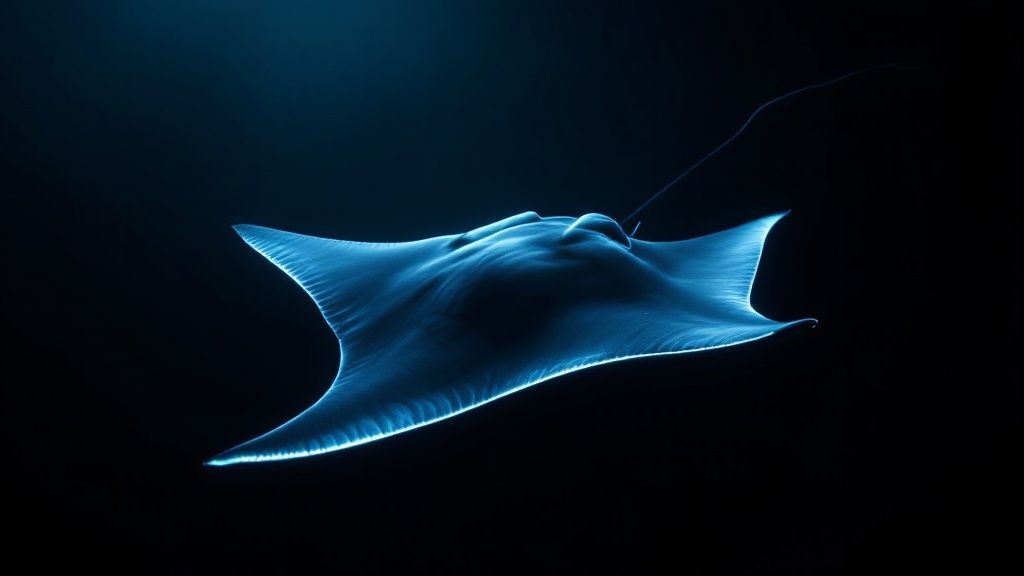
And then, you wait. The first few moments are pure anticipation. You’ll watch the water column fill with swirling plankton, and then, out of the darkness, it happens. A huge, graceful shadow emerges, gliding silently into the light. Seeing that first manta appear is a moment you will never, ever forget.
Soon, more will likely join the party. They perform what can only be described as a mesmerizing underwater ballet, doing graceful barrel rolls and swooping just inches over your head to scoop up mouthfuls of food. Their movements are completely silent and fluid. You'll be close enough to see the detailed patterns on their bellies and the gentle flutter of their gills.
Your Divemaster’s Role
Your divemaster is so much more than a guide on this trip. They're your safety coordinator and your personal interpreter for this underwater world. They'll make sure everyone stays put on the sandy bottom, which gives the mantas a clear, safe path to feed above you. They are constantly checking on the group, monitoring air, and ensuring everyone feels secure.
What's really cool is that the most experienced guides often have a personal connection with the local mantas. They can identify many of them by name, recognizing individuals by the unique spot patterns on their undersides. You might get a signal from your guide that "Big Bertha" or "Lefty" has just shown up, which adds a whole new layer to the experience.
This kind of familiarity isn't just a party trick; it comes from years of nightly observation and research. In fact, an incredibly detailed study along the Kona Coast meticulously documented the local manta population. From 2009 to 2014, researchers and videographers were out nearly every single night, logging sightings and behaviors. This built the rich database that helps us understand these animals so well today. You can learn more about this intensive Manta Ray research and see just how much we've discovered.
The dive itself usually lasts about 45 minutes, though it depends on your air consumption. Your guide will give the signal when it's time to head up. After a safety stop, you’ll surface back to the boat, absolutely buzzing from the otherworldly show you just witnessed.
Ready to see this underwater ballet for yourself?
Common Questions About the Kona Manta Night Dive
It’s completely normal to have a few questions before you commit to a manta ray night dive in Kailua Kona. After all, jumping into the ocean at night to swim with giant, shadowy creatures isn't something you do every day! Getting your questions answered beforehand is the best way to feel confident and ready for the adventure.
We've heard just about every question there is from divers and snorkelers over the years. Let's walk through some of the most common ones so you know exactly what to expect.
Is the Manta Ray Night Dive Safe?
This is usually the first thing people ask, and I'm happy to report the answer is a firm yes. Manta rays are incredibly gentle animals—true gentle giants. They are physically incapable of harming a person.
Think about it this way:
- They have no teeth.
- They have no stinger or barb like a stingray.
- Their diet is 100% microscopic plankton, so they have absolutely no interest in us.
Every reputable operator out here runs a tight ship with strict safety protocols. Experienced guides are in the water with you the entire time, making sure everyone is safe and the mantas are respected. It's a very controlled and secure environment.
Do I Need to Be Scuba Certified?
That really depends on the view you're after. If you want to be on the ocean floor looking up as the mantas glide just inches above your head, then yes, you'll need at least an Open Water scuba certification. It’s an incredible, humbling perspective.
But you absolutely do not need to be a diver to see the show. Most tour companies, including us at Kona Honu Divers, also take snorkelers. You'll float on the surface and hold onto a specially designed light board, which attracts the plankton and brings the mantas right up to you. It's like having a front-row seat from above. Both experiences are unforgettable.
What if I Get Cold During the Dive?
A very valid concern for a night dive! But don't worry, we've got you covered. The water here off the Kona coast stays pretty comfortable, usually between 75-79°F (24-26°C) all year.
On top of that, you'll be geared up in a thick wetsuit—typically 5mm or even 7mm—which does a fantastic job of keeping you warm.
My biggest piece of advice? Bring a warm, dry sweatshirt or a windbreaker for the boat ride home. That’s when the chill can set in. Having something cozy to throw on makes the whole trip back to the harbor much more comfortable.
What Is the Best Time of Year to See Mantas?
This is the best part—there isn't one! The manta rays here in Kona are a resident population. They live here year-round and don't migrate, which means we see them consistently every single month. Your chances of an incredible encounter are just as good in July as they are in December.
The only thing that can occasionally throw a wrench in the plans is the weather. If the surf gets too big, operators will always prioritize safety and may have to reschedule. But as far as the mantas are concerned, any night is a good night.
If you're looking for more in-depth information, you can explore our guide on what you should know about the Kona manta ray dive for additional details.
Ready for an unforgettable adventure? At Kona Honu Divers, we are dedicated to providing a safe, ethical, and awe-inspiring manta ray experience. Join our expert crew for a night you'll never forget.
Book your Manta Ray Dive Tour today.