
There are very few underwater experiences on Earth that can match the magic of the manta ray night dive in Kailua Kona. It’s a surreal, almost dreamlike ballet where these giant, graceful creatures swoop and glide through beams of light, feeding on plankton just inches from your face. It's no surprise this is consistently ranked as one of the best night dives in the world—it’s a true bucket-list adventure.
For a quick rundown, here are the essential details you need to know about this incredible dive.
Kona Manta Ray Night Dive At a Glance
| Feature | Details |
|---|---|
| Location | Kailua Kona, The Big Island, Hawaii |
| Typical Depth | 30-40 feet (9-12 meters) for divers |
| Experience Type | Both scuba diving and snorkeling options are available |
| Best Time to Go | Year-round, with calm conditions most of the year |
| Sighting Success Rate | Consistently high, often over 85-90% |
| Main Attraction | Pelagic Manta Rays (Mobula birostris) |
This table gives you the basics, but the real story is why this experience is so special and reliable.
So, Why is Kona a Manta Ray Magnet?
Imagine this: you're floating in the dark, warm ocean, and suddenly, a creature with a wingspan over 12 feet appears out of the blackness, performing an acrobatic dance right in front of you. This isn't a lucky, once-in-a-lifetime sighting. It's a nightly spectacle off the Kona coast, and the reason it happens is brilliantly simple.
It all started decades ago when a hotel first shined lights into the water, attracting plankton. The mantas, being smart opportunists, quickly figured out this was an easy meal. Today, dive operators have perfected this concept. Just after sunset, boats head to established sites, submerge powerful lights, and essentially create a glowing beacon for plankton—the mantas' favorite food.
An Underwater Buffet is Served
This intense concentration of plankton creates what we affectionately call the "underwater buffet." The local manta rays, who have come to recognize these lights as a dinner bell, show up night after night to feast. What unfolds is one of the most breathtaking displays of nature you'll ever witness.
What’s great is that this adventure is open to almost everyone, whether you’re a seasoned diver or have never put on a mask before.
- For Scuba Divers: You'll descend to a sandy spot on the ocean floor, usually around 30-40 feet, and watch the show from below. It's like having front-row seats as these gentle giants soar right over your head.
- For Snorkelers: You get to float on the surface, often holding onto a specially designed light board. The mantas come right up to the surface to feed, doing incredible barrel rolls just feet beneath you.
This unique and incredibly reliable encounter is what put the manta ray night dive in Kailua Kona on the global map. The Big Island is one of the only places where you can have such consistent, up-close interactions. The success rate for sightings is incredibly high—we’re talking 85-90% on most nights—meaning nearly everyone who goes out gets to see the show. You can get a deeper look into what makes this dive so reliable on the Kona Honu Divers' manta ray dive page.
This isn't just another dive on your logbook. It’s a chance to connect with one of the ocean's most majestic and intelligent animals in a truly profound way.
Meet the Gentle Giants of the Kona Coast
The real stars of the show on a Kona manta ray night dive are the resident reef manta rays (Mobula alfredi). These aren't just occasional passersby; this is a thriving local population that has called these waters home for generations. That’s what makes Kona one of the most reliable places on the entire planet to see them.
If you're picturing their stingray cousins, think again. Manta rays are incredibly gentle and pose absolutely no threat to us. They have no stinger, no barb, and their entire diet is made up of tiny plankton. The whole point of the dive is to watch them eat.
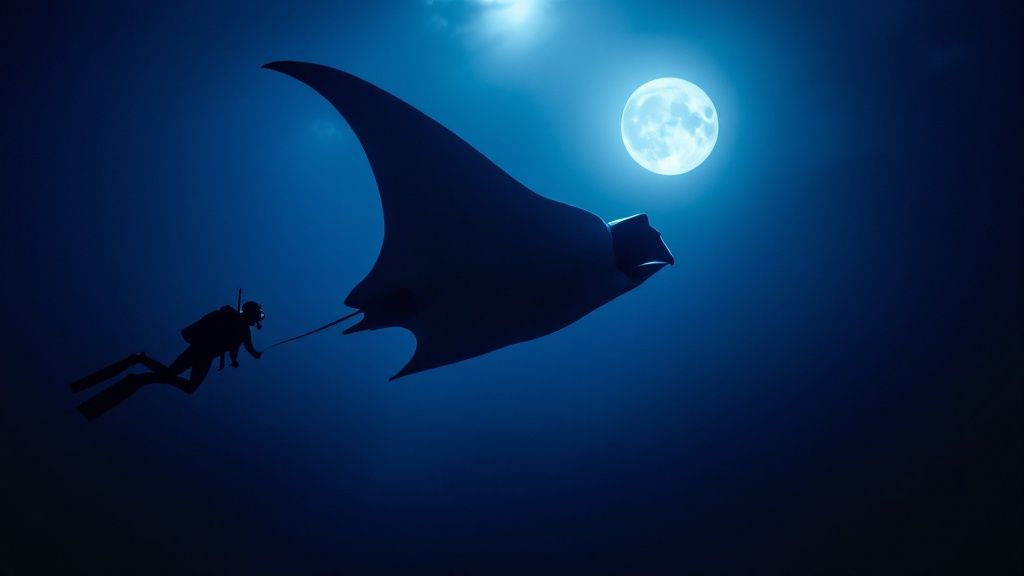
You’ll witness them performing these graceful, acrobatic "barrel rolls," swooping through the beams of your lights with their cavernous mouths wide open to filter out their microscopic dinner. It's a ballet you'll never forget. This isn’t just instinct, either—it's a sign of their incredible intelligence. With the largest brain-to-body size ratio of any fish, they've learned that our lights mean an easy meal, a clever trick that’s been passed down from one generation to the next.
Getting to Know the Locals
What truly sets the Kona dive apart is that you're not just seeing anonymous animals. You’re meeting individuals. Each manta has a unique pattern of black spots on its white belly, which works just like a human fingerprint. For years, local guides and researchers have been documenting the Kona mantas, giving names to the regulars who show up time and time again.
The Kailua Kona manta ray population is one of the most well-documented in the world. It’s not uncommon to meet local celebrities like "Big Bertha," "Lefty," or "Sugar Ray" during your dive. This transforms the experience from simply observing wildlife to meeting individuals with known histories and personalities.
It's amazing to think that nearly 200 individual manta rays have been identified here by their unique belly patterns. On any given night, you can expect to see 15 to 20 of them, though some truly epic nights have seen gatherings of up to 36 mantas at once! You can dive deeper into the story of the incredible manta ray population in Kona on uwphotographyguide.com.
Conservation and Responsible Tourism
This breathtaking natural encounter depends entirely on our commitment to conservation. Hawaiian manta rays are a protected species, and dive operators stick to a strict set of rules to ensure the animals are always safe and comfortable. Following these guidelines is what keeps this delicate ecosystem healthy.
Key Conservation Practices:
- No Touching: This is the golden rule. Manta rays have a protective mucus layer, and touching them strips it away, leaving them vulnerable to nasty infections.
- Passive Observation: You’re there to be a quiet observer. Divers and snorkelers stay in their designated spots, letting the mantas come and go as they please without being crowded or chased.
- Proper Positioning: Divers stay on the seafloor, and snorkelers float on the surface. This keeps the water column wide open, giving the mantas a clear and stress-free path to their plankton buffet.
When you book your manta ray night dive in Kailua Kona with a reputable operator, you become part of the solution. Your money helps fund vital research and ensures this magical experience will be around for future generations. It’s ecotourism at its absolute best—where incredible adventure and preservation go hand-in-hand.
Choosing the Right Manta Ray Dive Operator
Picking the right tour company is probably the most critical decision you'll make for your manta ray night dive in Kailua Kona. This choice single-handedly shapes your entire experience—from how safe and comfortable you feel to the actual quality of your time with the mantas. A great operator doesn't just take you on a dive; they create a memory that will stick with you for a lifetime.
The best companies have a few things in common. They almost always keep their group sizes small, which means you're not just another face in a crowd. You get more space, a better view, and a more personal experience. They also run clean, well-maintained boats and hire passionate, experienced crews who often know the local mantas by name. And above all, their safety record is spotless.
Look for Manta Ray Green Standards
So, how do you spot a top-tier operator? A big clue is their commitment to the Manta Ray Green standards. These aren't government regulations but a set of strict guidelines that the best local companies voluntarily follow to protect the rays and their home.
It all boils down to a few core principles:
- Passive Observation Only: This is a big one. It means a strict hands-off policy. Touching a manta ray can damage the delicate, protective mucus layer on its skin.
- Proper Positioning: Divers are taught to stay on the bottom and snorkelers on the surface. This creates a clear, predictable "flight path" for the mantas to swim through without feeling crowded.
- Educational Briefings: A good operator will give you a thorough briefing before you even hit the water, explaining manta behavior, the rules of engagement, and why conservation is so important.
When you choose a company that lives by these ethical guidelines, you're doing more than just booking a tour. You're actively supporting the long-term health of Kona's resident manta population.
Why We Recommend Kona Honu Divers
When people ask for a recommendation for an exceptional manta ray night dive in Kailua Kona, we consistently point them to Kona Honu Divers. They just get it right. Their dedication to safety, the guest experience, and true manta ray conservation really makes them stand out from the pack.
You can feel the difference with their crew. They provide a premium encounter that is both incredibly safe and deeply respectful of the animals and their environment.
Their 2-tank manta ray dive tour has earned them an incredible reputation on the island, and for good reason. But you don't have to take our word for it—their customer reviews really tell the whole story.
Now, Kona is home to a lot of fantastic operators, and it's always smart to see what's out there. For a more detailed comparison, you can check out our full breakdown of the top 10 Kona diving companies ranked.
Ultimately, putting a little extra thought (and maybe a few extra dollars) into a reputable operator is an investment in a better, safer, and more profound experience. You’ll go home with more than just cool photos—you'll have a genuine appreciation for these gentle giants and the fragile ocean they call home.
How to Prepare for Your Manta Ray Adventure
Getting a few things sorted out ahead of time is the key to a stress-free and truly magical **manta ray night dive in Kailua Kona**. Think of it as your pre-flight checklist for an underwater spectacle you’ll never forget. A little prep means you can simply relax and enjoy the show once you’re there.
Even though the dive itself is pretty shallow and often called beginner-friendly, you absolutely must be a certified diver. The biggest thing is just being comfortable in the water at night. It's a calm environment, but the darkness definitely adds a whole new layer of excitement to the experience.
Gearing Up for the Dive
Any good dive operator will have the big stuff covered—tanks, weights, and a dive light. But when it comes to your personal gear, that’s usually on you to bring.
Here’s what you should have packed in your dive bag:
- Certification Card: Seriously, don't leave this at your hotel. The crew will need to see it before you even step on the boat.
- Wetsuit: The water is warm, but you'll be sitting still on the ocean floor for a while. A 3mm or 5mm suit is just about perfect to keep you comfortable.
- Mask, Snorkel, and Fins: Nothing beats a dive with gear that fits you perfectly.
- Dive Computer: This is non-negotiable for keeping track of your depth and bottom time.
For a more detailed list, we've put together a full guide on the gear you will need for your Kona diving adventure.
It can get surprisingly chilly on the boat ride back, especially after you've been in the water. I always recommend packing a dry towel and something warm, like a sweatshirt or jacket. And if you're even the slightest bit prone to seasickness, it's a good idea to take something for it beforehand. While you're at it, thinking about the other beach essentials for your Kona trip will make your entire vacation go more smoothly.
What to Expect from the Briefing
Before anyone gets in the water, your divemaster will walk you through a detailed pre-dive briefing. This is really important. They'll go over all the safety procedures, lay out the dive plan, and explain the rules for interacting with the mantas.
The golden rule of the manta dive is simple: observe only, never touch. The manta rays are covered in a protective mucus layer, and contact from humans can make them susceptible to infection. Staying on the sandy bottom and letting them glide overhead is the best way to ensure a safe encounter for everyone.
The Kona Coast is a truly special place, home to both reef mantas (Mobula alfredi) and the even larger giant manta rays (Mobula birostris). These gentle giants are the reason over 80,000 visitors come here every year to see them feed. By following the guidelines, you’re doing your part to protect this incredible, world-class natural wonder for years to come.
What to Expect on Your Manta Ray Dive
The magic of the **Kona manta ray night dive** doesn’t start when you hit the water—it begins the moment you step on the boat. Most trips head out in the late afternoon, giving you a front-row seat to a jaw-dropping Kona sunset as you cruise to the dive site. As the sky melts from fiery orange to a deep, velvety blue, the crew gets everything ready. This is the calm before the ballet.
Once the boat is anchored, the show truly begins. The crew lowers powerful lights into the water, and these beams slice through the darkness, illuminating the ocean below. Almost like magic, tiny plankton are drawn to the glow, gathering in thick, swirling clouds. This creates an irresistible, all-you-can-eat buffet that the mantas simply can't ignore.
Entering the Underwater Theater
With the stage set, it’s your turn. You'll gear up and slip into the surprisingly calm, dark water, following your divemaster down. The destination is usually a sandy patch on the ocean floor, somewhere around 30-40 feet deep. Divers typically kneel or lie down in a semi-circle around a central light box, often called the "campfire," which ensures everyone gets a fantastic view without kicking up sand or disturbing the environment.
From this spot, you'll point your dive light straight up, adding your beam to the others to concentrate the plankton even more. As you settle onto the sand, the feeling is electric. You're now a quiet guest in a massive underwater theater, waiting for the headliners to arrive.
The Grand Performance
You’ll never forget the first one you see. A huge, dark shape emerges from the blackness, gliding effortlessly into the light. It's majestic. Then another appears, and another. Before you know it, you’re surrounded by these gentle giants as they perform a silent, graceful feeding dance.
They swoop and soar, sometimes just inches above your head, performing flawless barrel rolls with their giant mouths wide open to filter the plankton from the water. It’s an incredibly serene and humbling experience. The only sound is the soft fizz of your own bubbles as these incredible animals dance in the beams of light all around you.
It’s a profoundly peaceful feeling. The mantas are completely focused on feeding, moving with a slow, deliberate grace that is both mesmerizing and incredibly calming. You’re just a visitor in their world, witnessing a natural spectacle that has been happening here for decades.
You’ll likely spend about 45 minutes on the bottom, completely immersed in the show. Being this close allows you to see every incredible detail—the unique spot patterns on their bellies (like fingerprints!), the gentle way their cephalic fins guide food into their mouths. When your guide signals that it’s time to go up, you’ll ascend with a memory that will stick with you for a lifetime.
Ready to book this unforgettable experience?
What Comes After the Manta Dive? Other Kona Night Adventures
The manta ray night dive is an absolute showstopper, a true bucket-list experience. But don't think for a second that Kona's underwater nightlife ends there. For certified divers craving something entirely different, something truly otherworldly, the next frontier is the Kona Blackwater Dive.
This isn't just another dive; it's an expedition into the deep blue, miles from shore, where the bottom is thousands of feet below you. You're not there to see a single animal. You're there to witness the largest migration on the planet, as creatures from the abyss make their nightly journey toward the surface.
The Kona Blackwater Dive: A Spacewalk in the Pacific
Photographers and seasoned divers often call this the ultimate thrill. You’ll come face-to-face with creatures that look like they belong on another planet—glowing jellies, tiny larval fish with wild designs, and countless other forms of life that produce their own light. It’s a hypnotic, almost psychedelic, display in the pitch-black water.
This dive demands excellent buoyancy control and a calm, adventurous spirit, but the payoff is huge. It’s a front-row seat to a secret world most people will never see.
People often describe the Blackwater Dive as an underwater "spacewalk." You're tethered to a line from the boat, floating in absolute darkness, while your light reveals a universe of tiny, strange life forms drifting all around you. It’s both humbling and completely mesmerizing.
This dive really highlights the incredible depth and diversity of Kona's marine ecosystem. If you're an advanced diver ready for a unique challenge, you can learn more about the incredible Kona Blackwater Night Dive.
Beyond the blackwater experience, even familiar reefs and lava tubes transform after dark. Regular night dives give you a chance to see a completely different set of residents. Moray eels leave their dens to hunt, octopuses creep across the reef, and all sorts of critters you'd never spot during the day come out to play. It's like visiting a whole new dive site.
Your Manta Ray Night Dive Questions Answered
You’ve got the basics down, but it's natural to have a few more questions rattling around. Let's tackle some of the most common ones we hear from divers planning their trip to see the mantas in Kailua Kona.
Is the Manta Ray Night Dive Safe for Beginners?
Yes, it absolutely is. This is one of the best night dives for someone who's newly certified. The sites are intentionally shallow, usually around 30-40 feet, with a nice sandy bottom and hardly any current to speak of.
Every trip is led by experienced guides who are in the water with you from start to finish. Plus, before you even get your fins wet, you’ll get a thorough safety briefing. The biggest hurdle for most beginners is simply getting comfortable with the idea of being in the ocean after dark.
What Is the Best Time of Year for Manta Dives?
Here’s the best part: there is no "best" time. The manta rays that frequent the Kona coast are a resident population—they live here year-round and don't migrate.
This means you have an excellent chance of a spectacular show whether you visit in July or December. The consistency is what makes this dive so legendary.
Can I Snorkel with the Mantas Instead of Diving?
Of course! The snorkeling experience is just as mind-blowing, and for some people, it's even better. Snorkelers hang onto a custom-built floatation board that has bright lights pointing down into the water.
These lights attract the plankton, and the mantas come right up to the surface to feed. You get a stunning top-down view as they perform their graceful barrel rolls just inches beneath you. It’s an equally unforgettable way to witness the ballet.
Are Manta Ray Sightings Guaranteed?
No operator can ever guarantee a wild animal encounter with 100% certainty. These are wild creatures, after all, and they operate on their own schedule.
That said, the success rate for the manta ray night dive in Kailua Kona is incredibly high—often well over 90%. The mantas have been coming to these "campsites" to feed for decades. It's always smart to ask your dive operator what their policy is for the very rare night that the mantas decide to be shy.