
Imagine yourself floating in the warm, dark Pacific. Suddenly, a giant, graceful shadow with a wingspan wider than a car glides just inches over your head. This isn't a dream—it's the world-famous manta ray night dive in Kailua Kona. It's an otherworldly experience, watching these gentle giants perform an underwater ballet of barrel rolls through bright beams of light. For divers and snorkelers, this is a true bucket-list adventure.
What Makes The Kona Manta Ray Dive So Special
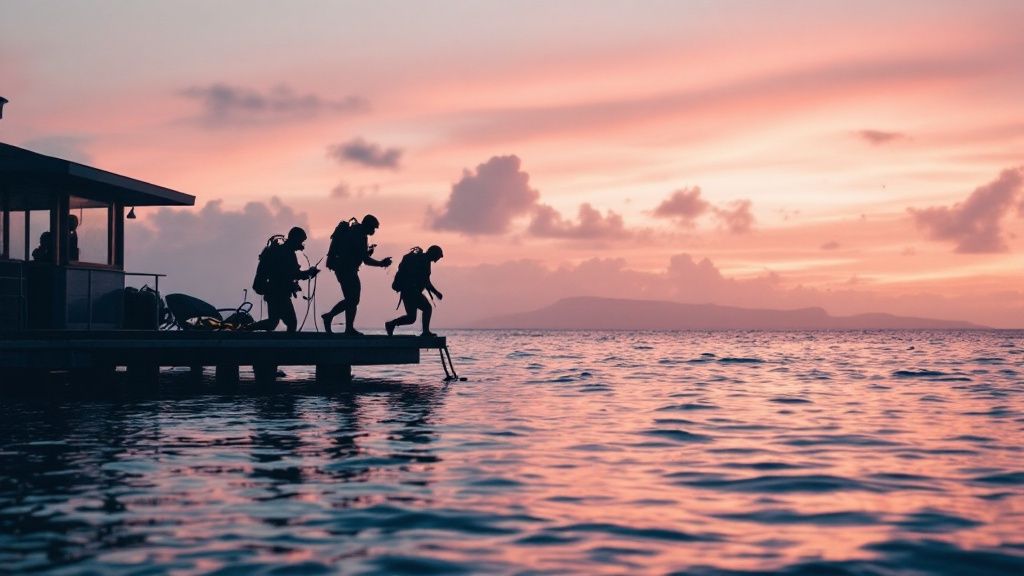
This isn't just another dive. It’s an experience that people talk about for the rest of their lives, and it's often called one of the best underwater encounters on the planet. Many wildlife tours are hit-or-miss, but the Kona coast delivers with incredible consistency. You can expect sighting success rates that top 90% year-round.
This guide will walk you through everything you need to know, from why Kona is the absolute best place for this to picking the right tour and getting ready for an incredible night.
The whole thing works because of a simple, brilliant setup. Powerful lights are placed on the ocean floor (or on a floating board for snorkelers). These lights attract huge clouds of plankton, which is the manta rays' favorite meal. What happens next is a feeding frenzy like no other, as the mantas swoop in with their mouths wide open, gracefully somersaulting through the light to feast.
A Truly Unique Encounter
What really sets this experience apart is how close you get. These are gentle giants, some with wingspans stretching over 12 feet, and they aren't the least bit shy. Over the years, they've grown used to the lights and the people, so they'll often glide within inches of you. It's a powerful, humbling feeling to be so close to such a majestic creature.
The best part is that almost anyone can do it. You don't have to be an expert diver to join in.
- Scuba Divers: You'll settle on the sandy ocean floor and look up, getting a stunning view of the mantas dancing right above you.
- Snorkelers: You'll float at the surface, holding onto a specially designed light board, giving you a perfect bird's-eye view of the action below.
This guide has everything you need to confidently book one of the most incredible manta ray dive tours out there. Get ready to see something you'll never forget.
Why Kailua Kona Is The World’s Manta Ray Capital
So, what makes a little slice of the Big Island’s coast the undisputed champion for manta ray encounters? It's not a fluke. It's the result of a perfect storm of geography, biology, and a bit of clever human observation that created a reliable, year-round underwater show. The manta ray night dive in Kailua Kona is a phenomenon built on this amazing setup.
It all starts with the Kona coast itself. The massive volcanoes of Mauna Loa and Hualalai act as natural shields, protecting the waters from the gusty trade winds. This creates an unusually calm and clear marine environment where microscopic plankton—the mantas' favorite meal—can flourish right near the shore.
The Famous Underwater Campfire
The real magic started decades ago when a sharp-eyed local dive operator noticed something interesting: hotel lights spilling into the ocean at night were drawing in swarms of plankton. The incredibly smart mantas figured this out pretty quickly, realizing these light beams were basically an all-you-can-eat buffet. This simple discovery sparked the idea for the "underwater campfire."
Today, dive operators head out each night and set up powerful, eco-friendly lights on the ocean floor. These lights create a beacon for plankton, concentrating them into a dense, swirling column of food. And where the plankton go, the mantas follow for their nightly feast.
This ingenious system is the secret sauce behind the whole Kona experience. It turns a random wildlife sighting into a predictable, nightly dinner theater where divers and snorkelers get a front-row seat to the action.
This dependable food source is the key reason Kona's manta ray population doesn't migrate. They hang around all year long, which gives visitors an incredibly high chance of seeing them. The local manta population is estimated to be over 450 identified individuals—one of the largest resident groups in the world.
Best of all, this all happens in shallow water, usually just 30-40 feet deep. You'll see mantas with wingspans over 12 feet gliding just inches above your head, and the success rate for seeing them is well over 90%. You can learn more about what to expect from the Kona manta ray experience on konahonudivers.com.
A Reliable Once-in-a-Lifetime Experience
Most wildlife encounters are a gamble, depending on the season, the weather, and a whole lot of luck. The Kona manta ray dive is different. It's remarkably consistent. Thanks to a resident population of mantas and a nightly "dinner bell" they can count on, you are almost guaranteed an unforgettable show.
That reliability is what makes the manta ray night dive in Kailua Kona more than just another dive—it’s a true bucket-list adventure you can confidently plan your vacation around. Booking with a trusted operator like Kona Honu Divers ensures you get to be part of this magical and sustainable encounter.
Choosing Your Adventure: Scuba Diving vs. Snorkeling
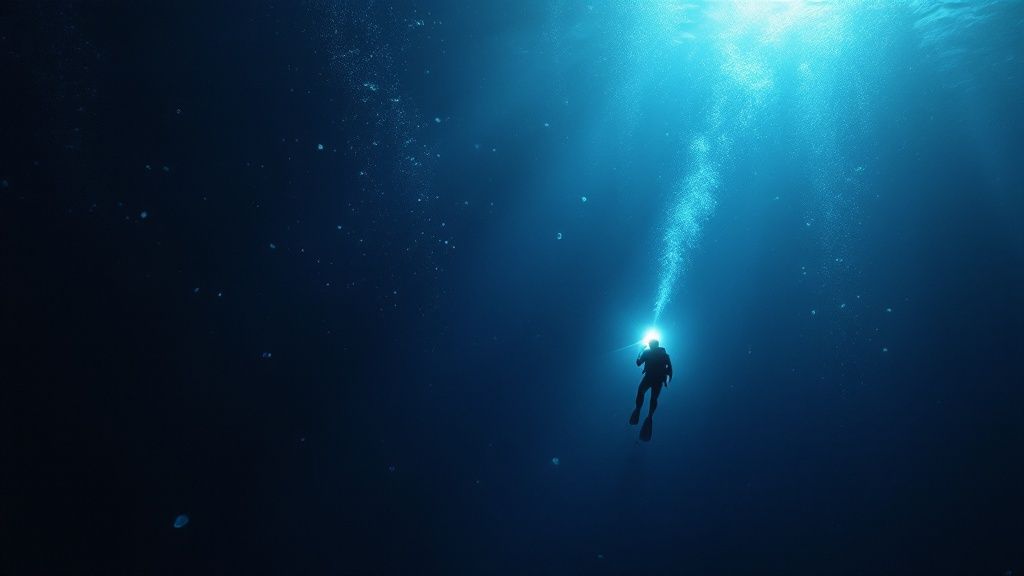
One of the best things about the Kona manta ray night dive is that you don't have to be a certified scuba diver to see the show. Snorkelers get a world-class view, too, making this incredible experience accessible to almost everyone.
So, which one is right for you? Honestly, both are amazing, just from different angles. Top-notch operators run trips that accommodate both divers and snorkelers on the same boat, which is perfect for families or groups with mixed comfort levels. Let's look at what each adventure is really like.
The Scuba Diver’s Perspective
Imagine this: you descend through the quiet, dark water and settle onto a sandy patch of the ocean floor, somewhere around 30 to 40 feet deep. Once you’re comfortable, you’ll point your powerful dive light straight up toward the surface, creating a column of light.
From this position, you're looking up at the action. It feels like having a front-row seat at the world's most incredible IMAX movie. Enormous manta rays, some with wingspans over 12 feet, swoop and barrel-roll just inches above your head as they feed on the plankton attracted to the light. It’s a completely immersive and humbling experience, seeing these gentle giants dance in the darkness. Experienced divers looking for more unique Big Island dives might also consider an advanced dive tour.
The Snorkeler’s Perspective
As a snorkeler, you'll experience the magic from above. You'll float comfortably at the surface while holding onto a specially-designed light board. This board shines powerful beams down into the water, creating a "dinner table" of plankton that attracts the mantas.
You get a fantastic bird's-eye view of the entire spectacle. From this vantage point, you can watch the mantas glide up from the deep, their huge mouths open, to feed just a few feet beneath you. They come so close you can see every detail! This is a fantastic option for families, non-divers, or anyone who isn't a strong swimmer, since the board provides plenty of support. You can learn more by reading about the best manta snorkel on the Big Island.
Manta Ray Dive vs Snorkel Experience in Kona
Deciding between diving and snorkeling really comes down to the perspective you want. Do you want to be on the "stage" with the mantas, or would you prefer a panoramic view from the "balcony"?
| Feature | Scuba Diving | Snorkeling |
|---|---|---|
| Perspective | Bottom-up view from the ocean floor | Top-down view from the surface |
| Skill Level | Open Water Diver certification is required | Basic swimming skills; all ages welcome |
| Proximity | Mantas can glide inches above your head | Mantas feed just feet below you |
| Best For | Certified divers who want full immersion | Families, non-divers, and mixed groups |
Ultimately, there's no wrong answer. Whether you're watching from the seafloor or the surface, you're getting a front-row seat to one of the most breathtaking wildlife encounters on the planet. For a full list of options for scuba diving the Big Island, you can check out all available tours.
The Two Premier Stages for Manta Ray Magic
While we often talk about the Kona manta ray night dive as a single experience, the incredible underwater ballet actually happens at one of two main locations. Think of them as two different world-class theaters. Each has its own personality, and the captain will always choose the best spot for the night based on ocean conditions and where the mantas are most active.
Knowing a little about these two sites helps set the stage for your adventure. This dive is a massive draw, bringing in around 80,000 people every year, and for good reason. Understanding the differences between Garden Eel Cove and Keauhou Bay will give you a better appreciation for wherever you end up diving that night.
Garden Eel Cove: The Original Manta Heaven
Just north of the Kona airport lies Garden Eel Cove, the place that started it all. It’s affectionately called "Manta Heaven," and it absolutely lives up to the name. This is the spot where Kona's legendary manta encounters first became a global phenomenon.
By day, it's a sandy bottom home to a curious colony of garden eels who peek out of the sand. But when the sun goes down, it transforms. This site becomes a grand, bustling amphitheater for the mantas.
- The Setting: Garden Eel Cove is more exposed to the open ocean, so you might find the surface conditions a little more lively.
- The Action: It’s famous for attracting huge groups of manta rays. On a good night, you could see a dozen or more swooping in for the feeding frenzy.
- The Vibe: The energy here just feels bigger, a little wilder, and truly epic when a massive congregation of mantas shows up.
Keauhou Bay: The Calm Manta Village
Head south of Kona, near the Sheraton Kona Resort, and you'll find Keauhou Bay, also known as "Manta Village." This spot is tucked into a well-protected bay, which makes a world of difference.
That natural shelter usually means much calmer water. The boat ride is often smoother, and the whole experience in the water feels more peaceful and serene.
Keauhou Bay is fantastic for anyone worried about seasickness or for families diving with younger snorkelers. The sheltered conditions make for a more predictable and comfortable evening without compromising on the wonder of the encounter.
The bay’s unique geography makes it a super reliable feeding spot. You might see a slightly smaller group of mantas compared to a busy night at Garden Eel Cove, but the encounters are just as magical and often feel more personal. To get a feel for all the amazing places you might dive, you can explore this guide to Kona's top dive sites.
Getting Ready for Your Manta Ray Night Dive
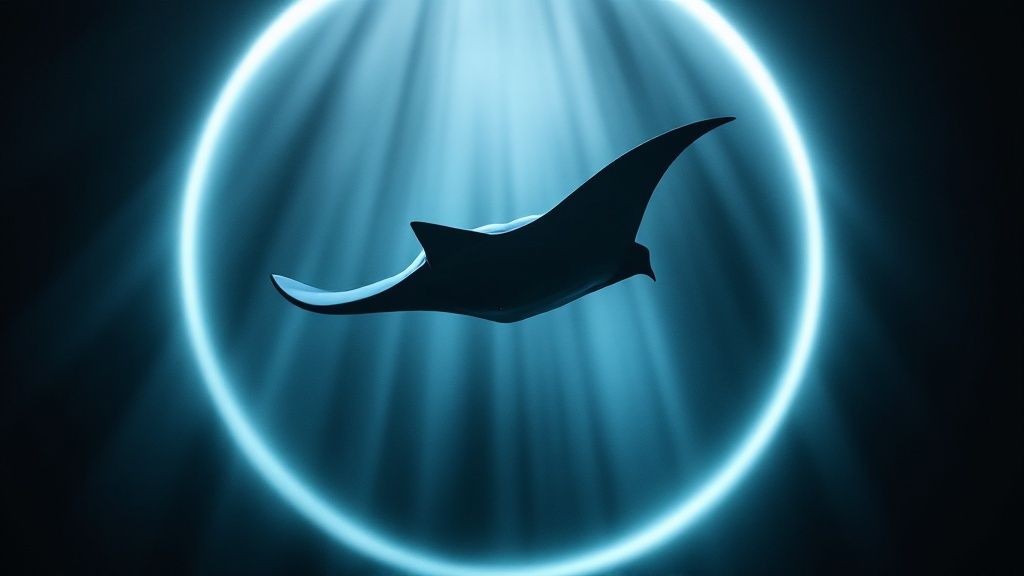
A little bit of prep work can be the difference between a good dive and an absolutely incredible one. When you’re planning your manta ray night dive in Kailua Kona, showing up ready for the adventure means you can relax and soak it all in. This checklist will have you feeling confident from the moment you step on the boat.
First things first, let's talk about what to pack. It might be tropical Hawaii, but the boat ride back to the harbor after a night dive can get surprisingly chilly once the sun goes down. A few simple items can make a world of difference.
What to Bring for a Comfortable Trip
Think practical and cozy. Your tour operator handles all the heavy lifting with the dive and snorkel gear, but a few personal items are essential for staying comfortable before and after you hit the water.
- Warm Layers: A dry sweatshirt or a light windbreaker is non-negotiable. You’ll be so glad you have it on the ride back.
- Towel: You’ll definitely want one to dry off after your dive.
- Reusable Water Bottle: Saltwater is dehydrating, so keeping a water bottle handy is always a smart move.
- Dry Bag: A small dry bag is perfect for keeping your phone, keys, and wallet safe from inevitable splashes on the boat.
Beyond packing, the most important preparation is understanding how to behave around the mantas. It all boils down to one simple concept: passive observation.
The whole encounter is built on respecting these magnificent animals. You must never, ever touch a manta ray. Their skin has a delicate protective mucus coating, and a human touch can strip it away, leaving them open to harmful infections.
Your dive guides will give a detailed briefing before you get in the water, showing you exactly where to position yourself. If you’re diving, you’ll be on the sandy bottom; if you’re snorkeling, you’ll hold onto a floating light board. Following these instructions isn’t just about safety—it keeps the water column clear so the mantas have a wide-open space to glide and feed. By staying put and just watching, you make them feel secure, which is when they’ll come breathtakingly close.
If this is your first night dive, it’s normal to feel a few butterflies. But trust me, any nerves will disappear the second you see the show begin. Just listen to your guide, take a deep breath, and get ready for one of the most magical experiences in the natural world.
And for those who get hooked on diving in the dark, be sure to ask about other unique night dives, like the famous Kona Blackwater Dive.
How Your Dive Supports Manta Ray Conservation
That incredible feeling you get on a manta ray night dive in Kailua Kona? It’s more than just a personal thrill. It’s actually a powerful force for marine conservation. When you book your trip with a responsible, eco-minded dive shop, a portion of what you pay goes directly toward protecting and studying Kona’s beloved manta population.
Think of it as sustainable tourism in its purest form. Your adventure helps preserve the very spectacle you came all this way to witness. Good operators are absolutely dedicated to the mantas' well-being, sticking to strict guidelines that make every interaction safe and respectful. By choosing them, you're essentially casting a vote with your dollars for a healthier ocean.
Your Role in Citizen Science
Believe it or not, every single dive contributes to critical research. Dive guides and researchers work together constantly to monitor the local manta population, and you become a part of that effort the moment you get in the water.
So how does it work? Every manta ray has a completely unique pattern of spots on its belly, just like a human fingerprint. Guides and underwater photographers make a point to capture images of these patterns, which are then used to identify individual rays.
This collaborative "citizen science" has built an amazing database of Kona's manta family. For example, between 2009 and 2014, videographers painstakingly documented the rays at Kona's main dive sites, identifying nearly 200 resident individuals. You can get a closer look at this process in this deep dive into the Kona manta night dive.
This ongoing data collection is priceless. It allows scientists to track the mantas' behavior, see where they go, and monitor the health of the entire population. This information is the backbone of any effective conservation plan.
By simply showing up for a dive, you become an active participant in ensuring these magnificent animals are around for generations to come. It’s a beautiful cycle where tourism directly supports the science needed to sustain it. You can learn more about our specific eco-friendly diving commitments and see how we put these principles into practice every day.
Your Manta Ray Dive Questions, Answered
When you're getting ready for an adventure like this, a few questions are bound to pop up. Here are the answers to the ones we hear the most from divers and snorkelers getting ready for their manta ray night dive in Kailua Kona.
Do I Need to Be Scuba Certified?
Nope! You don't need a scuba certification to see the mantas. The snorkel option is fantastic for almost all ages and gives you an amazing view from the surface as the rays swoop and glide right below you.
That said, if you want to get down on the ocean floor and watch the show from below, you must be a certified Open Water diver to join the scuba group.
What's the Best Time of Year to See Manta Rays in Kona?
This is the best part—there's no bad time! Kona has a resident population of manta rays that stick around all year, thanks to the consistent food source the lights attract.
Unlike a lot of marine life encounters, there isn't really a "manta season." Your chances of an incredible sighting are consistently high whether you visit in January or July.
Is the Manta Ray Night Dive Safe?
Yes, it's incredibly safe. Manta rays are famously gentle giants. They're filter feeders, so they don't have teeth, and they lack any kind of stinger or barb. They pose absolutely no threat to people.
The entire experience is carefully managed in a shallow, controlled setting. You're always under the watchful eye of professional guides who run through a detailed safety briefing before you even get in the water. For a deeper dive into safety and other common questions, check out these frequently asked questions about manta ray encounters.