
Picture this: you’re floating in the warm, dark waters of the Pacific, the only light coming from below. Suddenly, a massive, shadowy figure glides into view, a gentle giant with an incredible wingspan, soaring just inches above your head. This isn't a scene from a nature documentary—it's the world-famous manta ray night dive in Kailua-Kona, and it's an experience that consistently tops 'best dive' lists around the globe.
Experience Kona’s Unforgettable Underwater Ballet
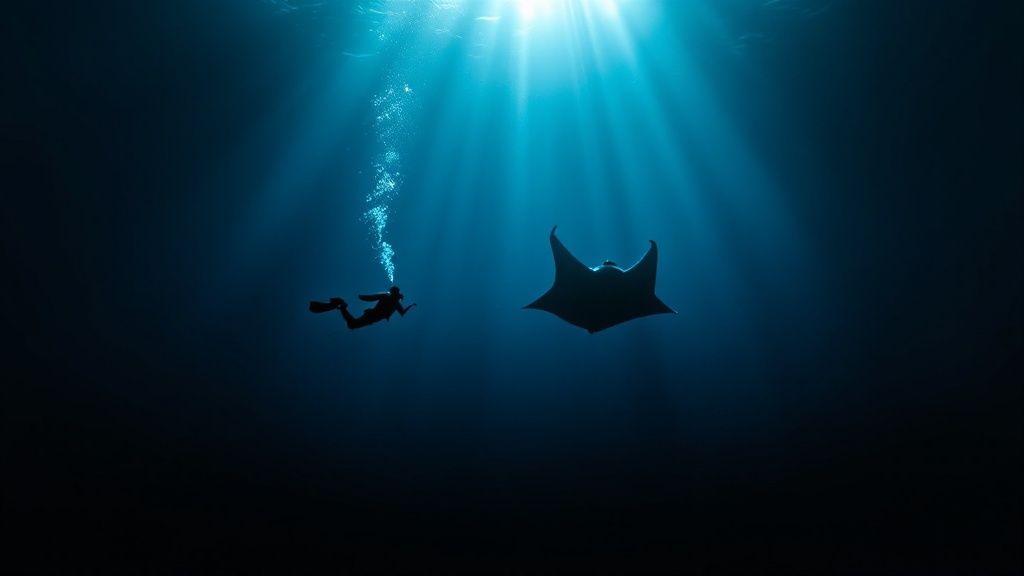
The secret behind this magical encounter is wonderfully simple. Dive operators set up powerful lights on the ocean floor, which shine up toward the surface. This bright beacon acts like a magnet for plankton, the tiny organisms that manta rays love to eat.
Think of it as setting a dinner table for the mantas. The light creates a concentrated, glowing buffet that draws in Kona's resident population for their nightly feast. This clever setup gives both divers and snorkelers a front-row seat to watch their incredible feeding acrobatics up close.
You'll get to see these magnificent creatures perform graceful barrel rolls and somersaults, their huge mouths open to filter the plankton-rich water. They often come so close you can see every detail, creating a mesmerizing display that feels both otherworldly and incredibly intimate.
Why This Dive Is So Reliable
The Kona coast is the perfect backdrop for this nightly show. Its unique underwater landscape and calm, protected waters create an ideal habitat for plankton, which means the mantas have a dependable food source right here, year-round. It's this consistency that has turned Kailua-Kona into a global hotspot for manta encounters.
For a quick overview, here's what makes the Kona Manta Ray Night Dive so special.
Kona Manta Ray Night Dive At a Glance
| Aspect | Details |
|---|---|
| Location | Kailua-Kona, Big Island, Hawaii |
| Success Rate | Exceeds 85% on average, with some operators reporting over 95% |
| Manta Population | Over 450 identified resident individuals |
| Experience Type | Scuba diving and snorkeling |
| Key Attraction | Up-close views of manta rays feeding on plankton |
| Best Time | Year-round, thanks to consistent conditions |
This incredible reliability makes the experience truly unique. The local manta population is one of the densest in the world, so you have an exceptionally high chance of an unforgettable encounter. To dive deeper, you can find more details about the Kona manta ray night dive from local experts.
This isn't just a dive; it's an immersive performance. You're not just a spectator but a guest in their underwater dining room, watching a ballet that has unfolded for generations in these very waters.
This guide is designed to get you ready for the adventure, building the excitement and giving you the background you need. When you understand the science and spectacle behind what you're seeing, you'll appreciate just how special this Big Island highlight truly is. Prepare to be amazed by the gentle giants of Kailua-Kona.
Choosing Your Adventure: Scuba Diving vs. Snorkeling
So, how do you want to experience this unbelievable underwater ballet? Do you picture yourself on the ocean floor looking up as giants soar overhead, or floating on the surface watching the show from above? The manta ray night dive in Kailua Kona gives you two incredible front-row seats, and picking the right one is all about what kind of adventure you're after.
Your decision really boils down to your comfort in the water and what kind of perspective you're dreaming of. Both scuba diving and snorkeling get you breathtakingly close to the action, but the view is completely different.
The Scuba Diver's Perspective
If you're a certified scuba diver, this is the most immersive way to go. You'll descend with your guide to the sandy bottom, usually about 30 to 40 feet down, and find a spot to settle in for the show. From here, you’re literally part of their world, watching these gentle giants perform their mesmerizing feeding loops right above you.
It's a feeling that’s hard to put into words—being a quiet observer on the seafloor as these massive creatures, some with wingspans over 12 feet, glide just inches from your face. To join the dive, you'll need at least an Open Water Diver certification. The view from below is simply magical; you see the full scale and grace of the mantas silhouetted against the dark surface. It's a true three-dimensional experience. If you're interested in other scuba diving tours in Kona, the Big Island offers a wide range of underwater adventures.
The feeling of a massive manta ray soaring directly over your head is indescribable. You're not just watching the show; you are part of the scenery in their underwater dining room.
The Snorkeler's View from the Top
Not a certified diver? No problem. Snorkeling offers an equally mind-blowing view from the surface. You’ll hold onto a specially designed floatation board that has powerful lights pointing down into the water. These lights are the dinner bell, attracting the plankton that the mantas come to feast on.
From this bird's-eye view, you get to watch the mantas appear from the deep, their white bellies glowing in the lights as they barrel roll and feed just feet below you. It’s a fantastic and accessible option for families and anyone who isn't a diver. If this sounds like the perfect fit, you can find out more in our guide to the best manta snorkel on the Big Island.
When you’re making your choice, think about these key points:
- Immersion: Diving submerges you completely in the mantas' environment. Snorkeling gives you an incredible panoramic view from above.
- Requirements: You need a scuba certification to dive, but for snorkeling, you just need to be comfortable in the water.
- Proximity: Both get you amazingly close, but divers get that unique, unforgettable experience of a manta gliding right over their heads.
In the end, there's no wrong choice. Whether you decide to dive deep or snorkel on the surface, you’re in for one of the most spectacular shows nature has to offer.
What to Expect on Your Manta Ray Tour
Knowing the general flow of your evening can turn a good manta ray night dive in Kailua Kona into a truly unforgettable one. When you know what's coming, you can relax, soak it all in, and let go of any pre-dive jitters. Most tour operators have perfected their process, creating a safe and well-paced experience that maximizes your time with the mantas.
Your adventure will likely kick off in the late afternoon at the harbor. Once you check in and hop on board, you’ll meet the crew who will be guiding you through the night. The boat ride out to the dive site is often a highlight in itself, timed perfectly to catch one of Kona’s spectacular sunsets.
Setting the Underwater Stage
As you cruise out to one of the famous manta spots—affectionately known as "Manta Village" or "Manta Heaven"—your guides will give a detailed briefing. This is a crucial part of the trip. They’ll walk you through all the safety protocols and, most importantly, explain the rules of passive observation. It's all about ensuring a safe and respectful encounter for everyone, especially the mantas.
This is also where they’ll explain the magic behind the underwater "campfire." It's not a real fire, but a clever setup of powerful, stationary lights placed on the ocean floor. These bright lights act like a magnet for plankton, creating a glowing, all-you-can-eat buffet that the mantas simply can't resist. For a deeper dive into the full experience, check out this ultimate guide to the Kona Manta Ray Night Snorkel.
That moment you first slip into the dark ocean is something you'll never forget. You'll descend toward the campfire's glow, a beacon in the twilight, and find your spot on the sandy bottom to wait for the show to begin.
The Main Event
Once everyone is settled, the real magic starts. First one, then another, then maybe a dozen giant manta rays emerge from the darkness. They glide effortlessly into the light, performing graceful barrel rolls and swooping overhead to filter plankton from the water. It’s not uncommon for them to pass within inches of you—so close you can see the unique spot patterns on their bellies.
Your only job is to stay put, breathe, and take it all in. Just remember the golden rule: look, but don't touch. This hands-off approach protects the mantas' delicate skin and preserves this incredible natural wonder for years to come. After about 45 minutes of pure awe, you’ll head back to the boat with memories of an underwater ballet that feels like it’s from another world.
Meet Kona’s Famous Manta Ray Residents
When you do the manta ray night dive in Kailua-Kona, you’re not just seeing random animals passing through. You're meeting the locals. Each manta here has a name, a unique personality, and a story that turns a cool experience into a truly personal encounter.
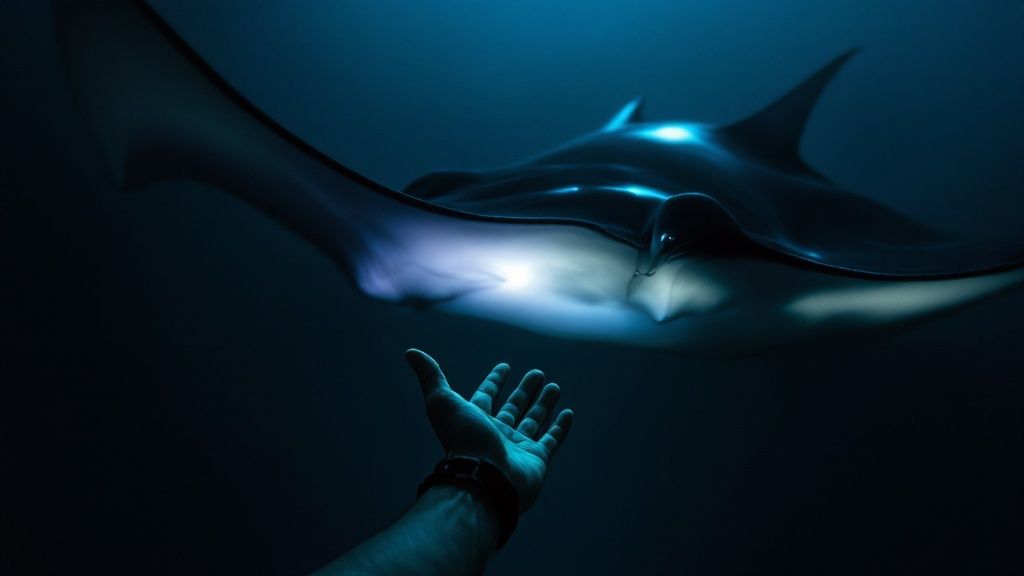
How do we know who's who? Divemasters and researchers have been identifying individual mantas for years by the unique spot patterns on their undersides. Think of it like a fingerprint—no two are alike, which allows for incredibly accurate tracking.
Knowing these gentle giants by name completely changes the feeling of the dive. It’s the difference between watching a stranger and recognizing a friend in a crowd. Suddenly, there’s a real connection.
How Researchers Tell Them Apart
So, how does this actually work? It's a meticulous process that has been refined over decades.
- Belly Spot Mapping: Researchers take detailed photographs of each manta's underside to map their unique spot patterns.
- Nightly Updates: After every dive, these photo catalogs are updated to log who showed up and where.
- Long-Term Data: This ongoing effort has created a massive database that supports decades of behavioral research and conservation work.
This system is so effective that it has revealed a population of nearly 200 individual manta rays living year-round right here off the Kona coast. On a truly epic night, you might see as many as 36 mantas feeding at once, though the group size changes from night to night. While they're incredibly reliable, it’s worth remembering they are wild animals, and natural shifts in plankton can sometimes lead to a rare no-show. You can learn more about these findings from the experts who study them.
Stories of Kona’s Underwater Family
Over the years, some of the regulars have become genuine celebrities with their own fan clubs and affectionate nicknames. You might meet Big Bertha, known for her massive size and graceful barrel rolls. Or perhaps Lefty, who has a distinctive spot on his left side and loves doing slow, lazy circles right under the lights. Then there's Koie, named after the Japanese word for fish, who mesmerizes divers with her elegant feeding loops.
"Watching Koie glide overhead has been the highlight of my eight years diving here," says Kona researcher Maya Kale.
Forming this kind of bond with these majestic creatures makes the dive so much more than just an underwater light show. It’s a conversation. This identification work also fuels critical conservation efforts, turning your tourism dollars directly into research funding and habitat protection.
- Naming these animals helps build public awareness and a sense of stewardship.
- Monitoring their appearances helps researchers spot changes in population health.
- The data collected guides local policies to ensure tourism remains sustainable.
When you witness a huge gathering of mantas, recognizing individuals by name adds another layer to the experience. You start to notice their social dynamics and individual behaviors, turning the "manta ballet" into a story you can follow.
Go ahead and ask your divemaster about a specific manta by name. They’ll probably light up and share a few recent stories or fun facts about them, bringing the whole experience to life.
By getting to know their stories, your manta ray night dive becomes a deeply meaningful and personal adventure.
Ready to meet them yourself? Book your manta ray night dive tour with Kona Honu Divers and see these incredible residents up close on our 2 Tank Manta Dive Snorkel Tour.
Preparing For A Safe And Responsible Encounter
A memorable—and truly sustainable—manta ray night dive in Kailua Kona starts long before you slip into the water. Small decisions on land have a big impact on both your safety and the well-being of these gentle giants.
Before you board the boat, think about comfort and protection. Pack a towel plus a cozy jacket or sweatshirt; the trade wind can feel crisp once you’re back on deck. Swap regular sunscreen for a reef-safe formula to safeguard Hawaii’s fragile reefs. And if rough seas unsettle you, grab some motion-sickness tablets or wristbands before leaving the harbor.
The Golden Rule: Passive Observation
At the heart of every successful manta encounter lies passive observation—the one rule you can’t ignore. Kona’s manta rays rely on visitors to respect their space and routines.
Here’s how to stay out of their way:
- Never Touch a Manta Ray: Their slippery skin holds a protective mucous coating. A single touch can strip it away, making them vulnerable to infections.
- Do Not Chase or Pursue: Let mantas circle you if they choose. Chasing them disrupts feeding patterns and can send them packing.
- Don’t Impede Their Path: Stick to your spot on the seafloor (or at the surface if you’re snorkeling). This leaves a clear water column for mantas to glide through during their graceful feeding loops.
By following these guidelines, you help ensure mantas feel safe enough to return night after night—keeping this encounter alive for future adventurers.
Choosing a dive operator with a strong conservation ethic is non-negotiable. Pay close attention during the pre-dive briefing—your guide’s advice comes from years of manta monitoring and research. If you’re curious about the data behind these best practices, check out these pioneering manta ray studies.
By sticking to these simple steps, you’ll leave nothing but bubbles behind—and earn your place as a guardian of Kona’s manta population. To dive even deeper into respectful underwater behavior, read our guide on responsible and considerate diver etiquette.
Why Kona Honu Divers Is Your Top Choice
Let's be honest, choosing the right operator for your manta ray night dive in Kailua Kona is the most critical decision you'll make for this trip. It's the difference between a good experience and a truly unforgettable one. With Kona Honu Divers, you're not just another tourist on a boat; you're diving with an award-winning crew that lives and breathes ocean conservation and safety.
They've built their reputation on keeping dive groups small. This isn't just about comfort—it’s about the quality of your encounter. Instead of being lost in a crowd, you get a front-row seat to the manta ballet. You’ll be guided by people who are genuinely passionate about these animals, and their enthusiasm is absolutely infectious.
More Than Just a Manta Dive
What I really appreciate about Kona Honu Divers is how they structure their 2-Tank Manta Dive & Snorkel tour. It’s not just a drop-in-and-see-the-mantas affair. The adventure kicks off with a beautiful twilight reef dive first.
This first dive is a genius move. It gives you the perfect opportunity to dial in your buoyancy, get comfortable with your gear, and just enjoy the stunning coral reefs as the sun sets. By the time the main event starts, you're completely relaxed and ready for the show.
The crew’s expertise and genuine aloha spirit are what elevate this from a great dive into a cherished memory. Their focus on sustainable practices means the mantas are always respected, making your adventure a positive force for conservation.
Their boats are top-notch, too—built for comfort and a smooth ride, with plenty of room to move around. It's this commitment to the entire experience that gets them so much recognition. You can see for yourself why they were voted the best dive operator in Kona.
And for certified divers looking for something beyond the usual, Kona Honu Divers also runs some incredible, next-level trips. You can explore the deep ocean's weird and wonderful creatures on their unique Blackwater Dives or push your limits on their advanced dive tours for more experienced divers.
Ready to see the magic for yourself?
Your Top Manta Ray Dive Questions Answered
Got questions before you book? I get it. Planning an adventure like this always brings up a few things you need to know.
Here are the straight-up answers to the most common questions people ask about the manta ray night dive in Kailua-Kona.
Do I Need to Be a Certified Diver to See the Mantas?
Nope! You absolutely don't need a scuba certification to have an incredible experience. This is one of the best parts about this particular adventure.
Tour operators have a brilliant setup for snorkelers. You’ll hold onto a large, custom-made floatation board that has incredibly bright lights shining down into the water. These lights act like a magnet for plankton, which in turn draws the manta rays right up to the surface. You get a spectacular bird's-eye view of their graceful feeding dance. It's an amazing option for families, non-divers, or anyone who prefers staying on the surface.
Is It Actually Guaranteed I’ll See Manta Rays?
While we're dealing with wild animals and nothing in nature is ever 100% certain, the success rate for this dive is sky-high—we're talking over 90% of the time. The mantas have been coming to these specific "campsites" for years, so it's a very reliable event.
Better yet, many of the best operators, like Kona Honu Divers, stand by their tours with a "manta guarantee." If for some rare reason the mantas don't show up, they'll let you come back on another night for free. You can see their specific policy on the manta ray dive tours page.
When Is the Best Time of Year to Go?
Here’s the fantastic news: any time is a great time! The Kona manta ray population is here year-round; they don't migrate.
This means whether you visit in January or July, you have an excellent shot at a magical encounter. The water is also consistently warm and calm, making it a perfect activity no matter what season you're planning your Hawaiian getaway.
Is the Manta Ray Night Dive Safe?
Yes, it's considered very safe, provided you go with a reputable, professional tour company. It's important to remember that manta rays are truly gentle giants. They don’t have teeth, stingers, or barbs—they are completely harmless to humans.
The most important safety rules are all about respect for the animals. You'll be briefed to never touch a manta ray and to follow your guide's directions closely. The dive masters on these tours are experts at managing the group and the site to make sure the experience is safe and fun for everyone in the water.
Ready to book the adventure of a lifetime?