
Imagine yourself floating in the warm, dark Pacific, giant shadows gliding silently overhead. This isn't a movie scene—it's the world-famous manta ray night dive in Kailua Kona, an underwater ballet that has rightfully become a bucket-list experience for any ocean lover visiting the Big Island. It’s truly one of the most profound and memorable encounters you can have in the aquatic world.
What Makes This Kona Dive So Magical
The Kona coast of Hawaii offers a spectacle that's both breathtakingly beautiful and incredibly reliable, setting it apart from anywhere else on the planet. You can spot manta rays in other tropical spots, sure, but those sightings are often at "cleaning stations" where small fish groom them. The experience in Kona is entirely different. It's much more dynamic.
Here, it’s all about their natural feeding behavior. Decades ago, someone figured out that bright lights attract plankton—the manta rays' favorite meal. That simple discovery has since evolved into one of the most incredible sustainable tourism experiences you can find.
The Underwater "Campfire"
Local dive operators have fine-tuned a method that creates what we affectionately call an underwater "campfire" of light on the ocean floor. As a scuba diver, you’ll settle into a circle on a sandy patch, pointing your powerful dive lights straight up. This intense concentration of light draws in a thick cloud of plankton, essentially ringing the dinner bell for the mantas.
What happens next is pure magic. The rays, some with wingspans stretching over 12 feet, swoop and barrel-roll through the beams of light, gracefully gulping down the microscopic feast. They’ll glide just inches above your head in a silent, hypnotic dance that feels both otherworldly and deeply personal. To get a better sense of the experience, check out this guide on the Manta Ray Night Snorkel in Hawaii which explains what makes it so special.
What truly makes Kona the global epicenter for this dive is its resident population of manta rays. These aren't just passing through; they live here all year. This results in incredibly consistent sightings, with most operators boasting success rates well over 90%.
That consistency, combined with the calm, protected waters at famous sites like Manta Village and Garden Eel Cove, creates the perfect stage for an unforgettable adventure. You’re not just watching these majestic creatures from a distance—you become part of their nocturnal world, witnessing a stunning natural phenomenon in a way that feels incredibly intimate.
Finding the Best Manta Ray Tour in Kona
Choosing the right operator can make or break your manta ray night dive in Kailua Kona. With dozens of boats heading out every single evening, the sheer number of options can feel a little overwhelming. But here's the secret: the best experience isn't about finding the cheapest ticket. It’s about finding a crew that delivers a safe, ethical, and truly unforgettable encounter.
Look for an operator that makes small group sizes a priority. This is huge. It means you get more personalized attention from your guide and, crucially, a better, unobstructed view of the mantas. It’s the difference between feeling like a valued guest and just another body on a packed boat.
An unwavering commitment to eco-friendly practices is also non-negotiable. The top-tier companies strictly follow the Manta Ray Green List standards. This means passive observation (no touching, ever) and positioning everyone correctly in the water to give the animals space. This kind of respect ensures this incredible experience will be around for future generations to enjoy.
Deciding Between Snorkeling and Scuba Diving
One of the first questions you’ll need to answer is whether to snorkel or dive. Honestly, there’s no wrong choice—it just depends on your comfort in the water and your certification level.
-
For Snorkelers: You'll be at the surface, holding onto a custom-built floatation device equipped with bright lights pointing down. The plankton are drawn to the light, and the mantas often swim right up to the surface for a snack, giving you a spectacular bird's-eye view of their graceful underwater ballet.
-
For Scuba Divers: If you're certified, you'll descend to the sandy bottom, usually around 25-40 feet. There, you’ll kneel with your group and point your dive lights upward. This creates a "campfire" of light that acts as a massive plankton magnet, and you get to watch the mantas soar and loop directly over your head.
Both experiences are absolutely breathtaking. Diving offers a uniquely immersive, almost otherworldly perspective from below, while snorkeling is more accessible for families, non-divers, and anyone who prefers to stay on the surface.
What Sets a Great Operator Apart
The best tours don't just put you in the water; they focus on the entire experience, from the moment you check in to the hot chocolate and warm towels waiting for you back on the boat. Operators like Kona Honu Divers are celebrated for their expert guides who aren't just there for safety—they’re passionate marine biologists and educators who can tell you the names of the individual mantas you're seeing. That knowledge adds a whole new dimension to the dive.
Of course, the proof is in the experience of other divers.
Another thing to consider is the success rate. Thanks to the established "campfire" technique that draws in plankton, manta ray night dives in Kailua Kona boast a phenomenal sighting success rate, often exceeding 95% at prime locations like Garden Eel Cove. The mantas know exactly where to show up for their nightly feast.
When you're ready to lock in your spot, our guide to the best manta ray dive tours is a great place to start your research and compare the best options out there.
How to Prepare for Your Manta Ray Adventure
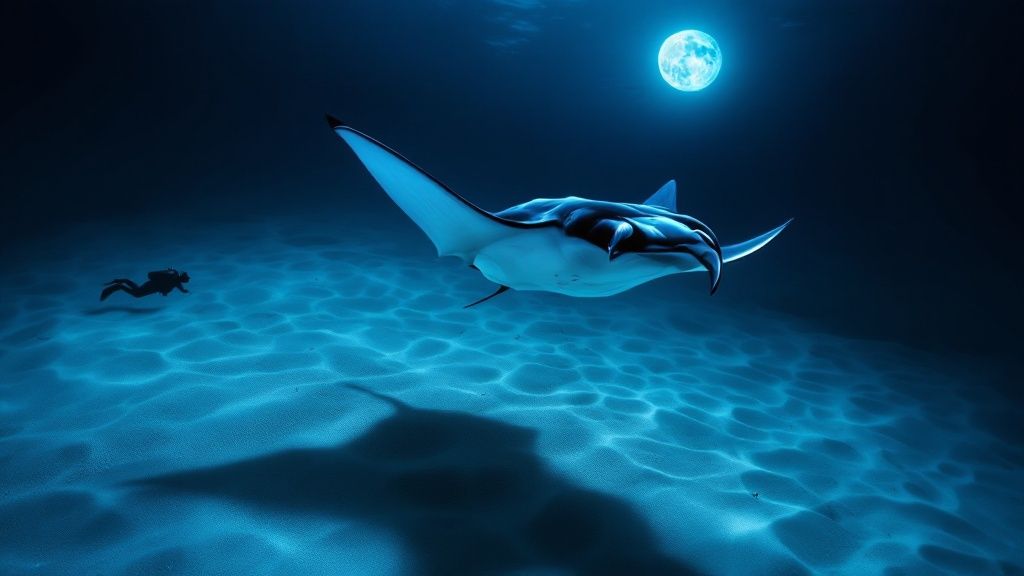
Knowing what to expect is the secret to a relaxed and truly magical manta ray night dive in Kailua Kona. Once you understand the flow of the evening, you can stop worrying about the logistics and just get excited for the incredible show waiting beneath the waves.
Most tours follow a well-rehearsed plan. You'll typically meet at the harbor in the late afternoon to check in, get settled on the boat, and meet your crew. The ride out to the dive site—usually "Manta Village" or "Manta Heaven"—lines up perfectly with a spectacular Kona sunset. It’s a pretty amazing way to start the trip.
During the ride, your guide will give a detailed briefing. Pay close attention here. They’ll cover safety procedures, fascinating facts about the mantas, and the most important rule of the night: passive observation. That means absolutely no touching. They’ll show you exactly how to position yourself on the sandy bottom to create the "campfire" of light that attracts the plankton, and in turn, the mantas.
What to Bring and What's Already Covered
One of the great things about a guided tour is that the operator handles all the heavy equipment. They’ll provide everything you need to dive, including a thick wetsuit (usually 5mm or 7mm since you'll be sitting still), a BCD, regulator, tank, weights, and a high-powered dive light.
Your most important job? Don't forget your personal items and your scuba certification card. Seriously, you can't dive without your C-card. Forgetting it is one of the only ways to completely derail your trip before it even begins.
While the big stuff is taken care of, packing a few key personal items will make your experience much more comfortable. For a comprehensive list, you can check out our guide on the gear you will need for your Kona diving adventure, which is a great resource for any scuba diving tours on the Big Island.
To make it easy, here’s a quick checklist you can use to make sure you have everything you need for the manta dive.
Your Manta Ray Night Dive Checklist
Use this quick guide to make sure you have everything you need for a great trip.
| Item | What to Bring | Typically Provided by Operator |
|---|---|---|
| Certification | Your physical or digital C-card is a must! | |
| Swimsuit | Wear it under your clothes to the harbor. | |
| Dry Clothes | A hoodie or windbreaker for the chilly ride back. | |
| Towel | A quick-dry towel is a great space-saver. | |
| Scuba Gear | BCD, regulator, tank, weights, and dive light. | |
| Exposure Suit | A 5mm or 7mm wetsuit. | |
| Seasickness Meds | If you need it, take it an hour before departure. | |
| Reef-Safe Sunscreen | Apply before you get on the boat for the sunset. |
Packing these simple items sets you up for an evening focused purely on the awe-inspiring underwater ballet. You'll be warm, comfortable, and ready to enjoy one of the most unforgettable dives on the planet.
Safe Diving and Manta Conservation Rules
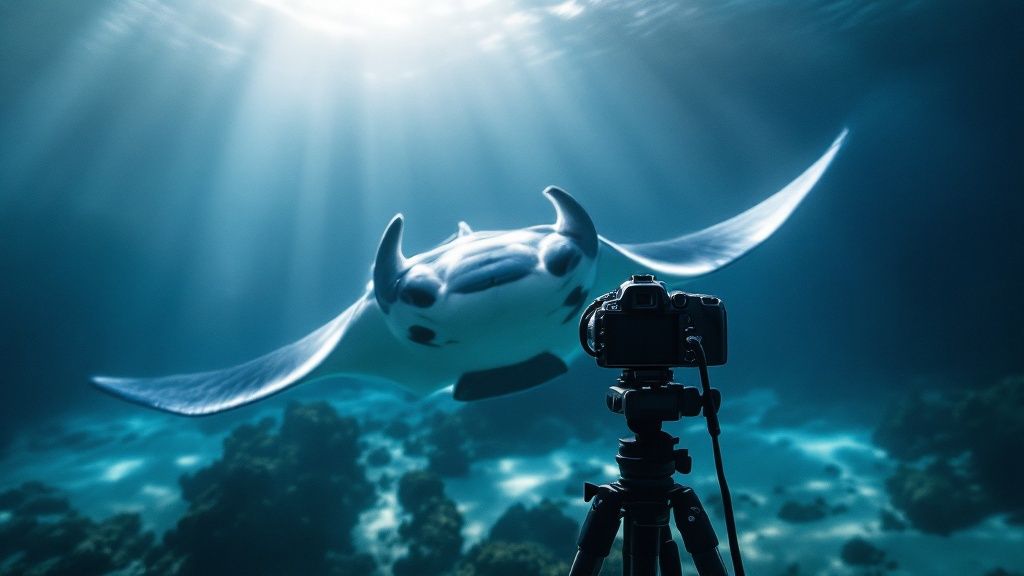
The reason the manta ray night dive in Kailua Kona is so consistently breathtaking comes down to one thing: a deep, unspoken respect between us and these wild animals. To keep this magical encounter possible for future generations, every single person in the water—diver and snorkeler alike—needs to follow a strict code of conduct. These aren't just suggestions; they're vital for the health and safety of Kona's beloved manta ray population.
The golden rule is simple: passive observation. You are a guest in their underwater ballroom, and your only job is to watch the show. Any chasing, blocking, or—believe it or not, people have tried—attempting to ride a manta is absolutely forbidden. This kind of behavior is not only dangerous but also disrupts the very feeding patterns you came to see.
Never, ever touch a manta ray. This is the most important rule of all. These incredible creatures have a thin, protective mucus layer covering their skin, which is basically their immune system. When a person touches them, it can rub off this coating, leaving them exposed to nasty, and sometimes fatal, skin infections.
When we all commit to this kind of ethical, hands-off interaction, the mantas feel safe. And when they feel safe, they keep coming back night after night.
Your Role in a Safe Encounter
Beyond the "no touching" rule, where you are and how you behave in the water makes a huge difference. Your dive guide will show you exactly how to position yourselves on the sandy bottom to create that "campfire" of light that attracts the plankton. It's really important to stay low and keep your fins off the bottom to avoid kicking up sand, which clouds the water and can irritate the mantas' sensitive gills.
Good buoyancy control is your best friend here. If you can remain still and neutral, you just become part of the scenery—predictable and non-threatening.
Here are the core guidelines to lock into your brain before you hit the water:
- Divers Stay Down: Find your spot on or near the sandy bottom and stay put. This leaves the entire water column open for the mantas to swoop and glide without obstacles.
- Snorkelers Stay Up: If you’re on the snorkel tour, you must stay on the surface. Diving down, even a little, can spook the mantas and disrupt the "campfire."
- Watch Your Bubbles: As a manta glides over you, try to time your exhale so you're not blowing a stream of bubbles directly into its face.
Following these rules is a shared responsibility among all divers and operators. If you want to dig deeper into the conservation efforts, this open letter regarding manta ray rules in Hawaii offers some great insight.
The incredible reliability of this dive isn't just luck; it's backed by data. From 2009 to 2014, local underwater videographers kept meticulous sighting records, which helped prove the consistent patterns that made this dive world-famous. By being a mindful and respectful guest, you play a direct role in making sure this remains one of the greatest underwater experiences the Big Island has to offer.
Pro Tips for an Unforgettable Encounter
So you're ready to take your manta ray night dive in Kailua Kona from just another dive to a truly unforgettable experience? I've picked up a few tricks over the years from some of the best dive pros in Kona. These are the little things that can make a huge difference once you're on the bottom.
Capturing the Magic (Without Disturbing It)
Let's be real, you're going to want photos. But shooting in the dark, underwater, with giant acrobatic animals is tough.
Here’s my advice:
- Go wide. A wide-angle lens is your best friend. It lets you get close enough to fill the frame without having to back up too far.
- Crank the ISO. Don't be shy about bumping your ISO up to 800 or even 1600. You need to let as much light into that sensor as possible.
- Slow your shutter. A shutter speed around 1/60s is a good starting point. It's slow enough to capture the ambient light from the dive torches but fast enough to minimize motion blur.
The real secret weapon, though? A red focus light. White lights can be jarring for marine life and might make the mantas shy away. Red light is far less disruptive, and it still gives your camera's autofocus the help it needs to lock onto a target in the dark.
Find Your Zen, Find Your Spot
Photos are great, but don't forget to actually be there. Once you're settled on the sandy bottom, just take a second. Check your breathing—make it slow, deep, and steady. Not only will you conserve air, but you'll also calm your nerves and become part of the scenery. The less you fidget, the more comfortable the mantas will be.
My favorite positioning trick: Don't sit directly in the middle of the "campfire" of lights. Find a spot just off to the side. You'll often get a much better view as the mantas swoop in and out of the main light beam, sometimes gliding right over your head for a breathtakingly close pass.
These animals are incredibly smart. They can sense your energy. If you’re calm and still, you become a non-threatening part of their environment. That's when the real magic happens.
Honestly, some of my most memorable encounters happened the moment I put my camera down and just watched their silent, graceful ballet unfold inches from my face. It's a feeling a picture can never fully capture.
Your Manta Ray Night Dive Questions Answered
Even after seeing all the incredible photos and videos, it's natural to have a few questions before committing to a manta ray night dive in Kailua-Kona. It’s a totally unique experience, and knowing what to expect is the key to feeling relaxed and ready to take it all in.
We get asked these same questions all the time, from brand-new divers to seasoned pros. So, let's clear up the common concerns and get you ready for one of the most unforgettable underwater encounters you'll ever have.
Is This Dive Safe for Beginners?
Absolutely. In fact, I'd say it's one of the best "first" night dives a newly certified diver can do. The whole operation is designed to be incredibly controlled and manageable.
Think about it this way:
- You're not going deep. The dive happens in a shallow, sandy-bottom amphitheater, usually between 25-40 feet. It’s comfortably within basic open water limits.
- You're not going anywhere. Unlike a typical reef dive where you're swimming around and navigating in the dark, you’ll be kneeling or lying on the sand. This lets you focus completely on your breathing, buoyancy, and the amazing show happening right above you.
- You're not alone. Top-tier operators like Kona Honu Divers run a tight ship. You'll get a detailed briefing beforehand, and expert divemasters are in the water with you the entire time, keeping a close eye on everyone.
Honestly, as long as you're comfortable in the water after dark, it’s one of the most supervised and straightforward dives out there. Snorkelers have it just as good—they hang onto a custom-built floatation board with powerful lights, so they're always secure and have a perfect view from the surface.
What if No Mantas Show Up?
This is probably the most common (and totally fair) question we hear. While the sightings are incredibly reliable—most nights, the success rate is well over 95%—we have to remember that these are wild animals on their own schedule. Nothing in nature is ever 100% guaranteed.
Because of this, the best local operators have a "manta guarantee." If you happen to be on one of those super rare trips where the mantas decide to dine elsewhere, they'll usually let you come back on another night for free, as long as there's space. It’s their way of showing confidence in the experience while giving you peace of mind.
Always ask about the specific "manta guarantee" when you book. Here's a pro tip: schedule your manta dive for early in your vacation. That way, if you do need to reschedule for any reason, you have plenty of time to do it.
Why Can I Not Touch the Manta Rays?
This is the golden rule, and it's non-negotiable. It’s all about protecting the mantas.
Their skin is covered in a delicate mucus layer, which is basically their immune system. It shields them from parasites and infections. When we touch them, our hands can rub off that crucial protective coating, leaving them vulnerable to disease.
The entire encounter is built on the principle of passive observation. You're a visitor in their world. The real magic comes from them choosing to glide inches over your head—so close you can feel the water move. That kind of proximity is far more powerful than any physical contact.
When Is the Best Time of Year to Go?
I've got great news for you: there isn't one! The manta rays here along the Kona coast are a resident population, meaning they live here 365 days a year. They don't migrate, so they show up for their nightly plankton buffet pretty much every single evening.
Your chances of having an amazing encounter in July are just as good as in January. The water is warm and generally calm all year, though it can be a little flatter and clearer during the summer months.
Ultimately, choosing a high-quality, reputable operator is way more important for your success than the time of year you book.
Ready to see the underwater ballet for yourself? Kona Honu Divers offers expertly guided manta ray dive and snorkel tours that put safety, education, and the well-being of these incredible animals first.