
The Kona manta ray night dive is more than just an underwater excursion; it’s a world-famous spectacle that people travel across the globe to see. Ask anyone who's done it, and they'll likely tell you it was one of the most incredible experiences of their life. You get a front-row seat to a graceful, silent ballet as majestic manta rays feed on plankton just inches away from you. It's an absolute must-do for anyone visiting the Big Island.
Experience Kona’s World-Famous Manta Ray Ballet
Picture this: you slip into the warm, dark Pacific waters just as the sun dips below the horizon off Kailua-Kona. On the ocean floor below, powerful lights flicker on, creating a brilliantly lit stage in the deep blue. This is where the magic is about to happen.
The setup is brilliantly simple. Dive operators have created what's lovingly called an "underwater campfire." This circle of light is a beacon for microscopic plankton, drawing them in from the surrounding darkness and creating a dense, irresistible buffet.
The Main Event Begins
Before long, the stars of the show make their grand entrance. Lured by the feast, giant manta rays glide in from the shadows. What follows is a mesmerizing performance as they swoop and barrel-roll through the beams of light with a grace that seems impossible for such large creatures.
This isn't just a quick fly-by; it's a full-on, immersive show. You become a stationary audience member, watching as these gentle giants, with wingspans often exceeding 12 feet, maneuver effortlessly just above your head. The feeling is completely surreal—a mix of awe and pure tranquility that’s hard to find anywhere else. The Kona manta ray night dive has earned its reputation for a reason.
Here's a quick summary of what makes this dive so special.
Kona Manta Ray Night Dive At a Glance
| Aspect | Details |
|---|---|
| Location | Kailua-Kona, Big Island, Hawaii |
| Success Rate | Consistently over 85–90% sightings |
| Dive Depth | Shallow, typically 30 to 40 feet |
| Bottom Time | Around 45 to 60 minutes per dive |
| The 'Stars' | Resident population of giant manta rays |
| Best Time | Year-round activity with high consistency |
This table shows why the experience is so reliable and accessible to divers of many skill levels.
Why Is Kailua-Kona the Best Place for This?
Kailua-Kona isn't just a good spot for this dive; it's the best spot in the world, and it all comes down to consistency. Unlike in other parts of the world, Kona’s manta ray population is residential—they live here year-round and don't migrate.
This is why the sighting success rate hovers at an incredible 85–90%. The dives are also relatively shallow (30 to 40 feet), which means you get more bottom time (45 to 60 minutes) to just relax and take in the show. You can learn more about the specifics of the Kona manta ray night dive and discover what makes it a bucket-list experience for divers worldwide.
When you're ready to see it for yourself, picking a safe and responsible operator is everything. At Kona Honu Divers, we're focused on providing an amazing, educational, and safe manta ray dive tour that puts the well-being of these magnificent animals first.
Meet the Gentle Giants of the Kona Coast
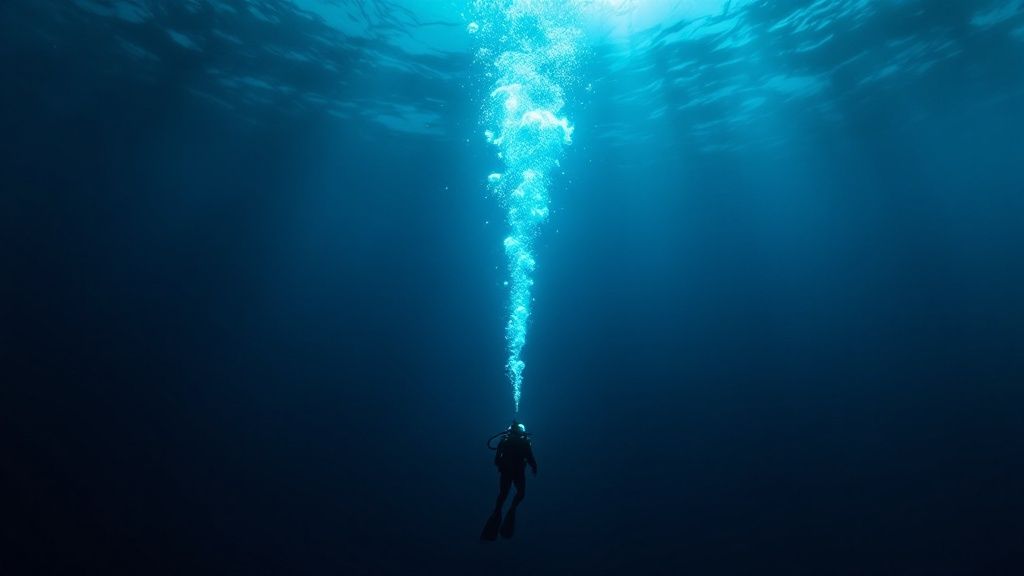
When you slip into the water for a manta ray night dive in Kailua Kona, you're not just observing random wildlife. You’re meeting the locals—a well-known and beloved population of rays that call these waters home.
These aren't just fish; they're individuals, each with a story. That personal connection is what elevates this dive from a cool adventure to something truly profound.
A Fingerprint on Their Belly
So, how do we tell these giants apart? The secret is on their underside. Every manta ray has a completely unique pattern of black spots on its white belly, serving as a natural fingerprint.
This is how researchers and seasoned divemasters can identify, name, and track them over their entire lives, which can span up to 50 years. This incredible long-term monitoring gives us a window into their behavior, health, and the overall state of their population.
This isn't just about scientific data. It’s about building a relationship between people and these specific animals, fostering a deep respect for Kona's marine ecosystem.
Dive guides from top-tier operators like Kona Honu Divers often know these mantas by name. Hearing their backstories during the pre-dive briefing makes you feel like you're about to meet a local celebrity.
Famous Residents of the Kona Coast
Over the years, a few mantas have become genuine stars, known for their size, personality, or unique acrobatics. You’ll hear stories about them on the boat, and if you’re lucky, you might just meet one.
- Big Bertha: A true matriarch of the Kona manta community, known for her massive size and calm, steady presence.
- Lefty: You can't miss him. Lefty is easily identified by a past injury to his left cephalic fin and is a resilient, frequent visitor.
- Kailey Ray: Named for a local divemaster's daughter, this ray is famous for her graceful barrel rolls, often performed just above the divers.
Spotting one of these famous residents makes the manta ray night dive in Kailua Kona even more special. It’s an unforgettable encounter, and this intimate knowledge is a huge part of what makes our tours so unique. Our team has spent years getting to know these animals and we love sharing their stories.
Dispelling Myths: Gentle Giants, Not Dangerous Predators
Let's get one thing straight: despite their massive size, manta rays are completely harmless to people. They are filter feeders, which means they eat tiny zooplankton—not people. They don't have teeth for biting or stingers for defense like their stingray cousins.
The only "scary" thing about them is their sheer scale, but their nature is incredibly gentle. They are smart, curious creatures that seem to enjoy the nightly show as much as we do, swooping down to get a better look at the strange, bubble-blowing observers on the seafloor.
The local manta population is robust and well-documented. Here in Kailua-Kona, the dive community has identified and cataloged nearly 200 individual manta rays that are permanent residents. On a good night, you might see more than 20 mantas feeding at once. The record-breaking night saw a staggering 36 individuals on a single dive! You can discover more insights about the Kona manta population and the research being done to protect them.
Once you understand their gentle biology, any apprehension melts away. All that's left is the peaceful, awe-inspiring spectacle unfolding right in front of you.
Choosing the Right Manta Dive Location for You
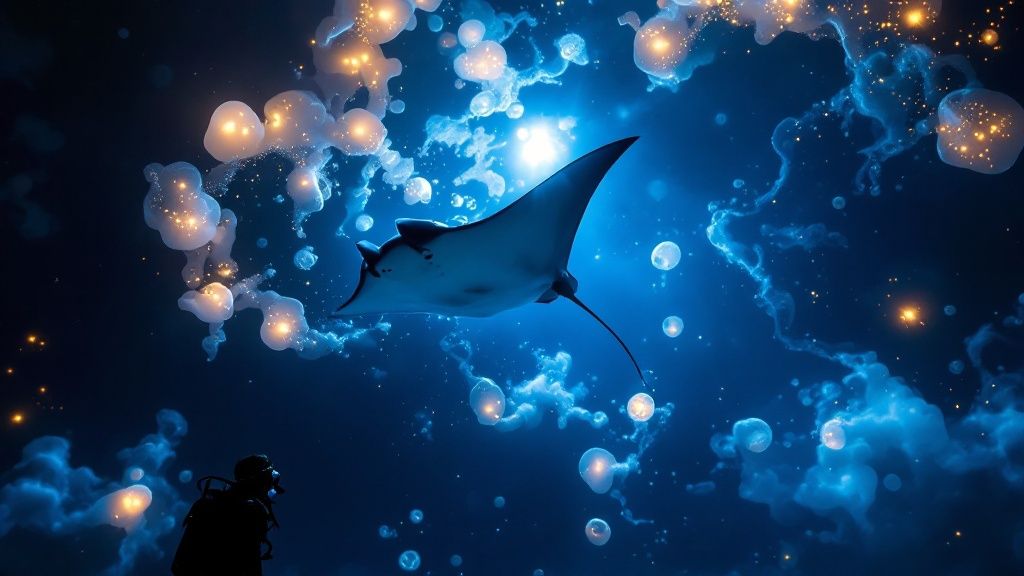
When you’re planning a manta ray night dive in Kailua Kona, you'll quickly learn that Kona's coast has a couple of premier "stages" for this incredible underwater ballet. Each spot has its own distinct vibe, and picking the right one can completely shape your experience.
It’s a bit like choosing between a cozy, intimate concert venue and a massive, high-energy arena. The best fit really depends on your comfort in the water, who you're with, and the kind of show you’re hoping to see.
Manta Village: An Intimate and Calm Experience
The first major site is affectionately called "Manta Village," just off Keauhou Bay. I always tell people to think of this spot as the intimate theater. The water here is generally shallower and much calmer, which makes it a fantastic choice for a broader range of people.
Because of its protected, gentle nature, Manta Village is ideal for:
- Snorkelers of all skill levels who will be floating on the surface.
- First-time night divers looking for a less intimidating introduction.
- Families with kids who need a safe and predictable environment.
The encounters here feel incredibly personal. You get a front-row seat as the mantas perform their feeding dance in a more contained area, making every graceful pass feel like it was just for you.
Manta Heaven: A Grand and Dynamic Spectacle
The second main location is "Manta Heaven" (also known as Garden Eel Cove), which is a bit north of Kona near the airport. If Manta Village is the cozy theater, Manta Heaven is the grand, open-air amphitheater. This site is a little deeper and more exposed to the open ocean, which can sometimes mean more dynamic, choppy conditions.
What's the payoff? A bigger, more epic show. Manta Heaven is famous for attracting massive congregations of rays, sometimes with dozens of them at once. It’s an absolutely breathtaking scene of organized chaos as these giants swoop and glide all around you. This is the spot for certified divers who are comfortable in open water and are craving a truly dramatic, high-energy encounter.
The "Manta Coast," as it's known, is world-famous for a reason. These sites draw people from all over the globe because the mantas show up consistently, year-round. In fact, local operators report manta sightings on over 80% of dive nights, with no real off-season.
Both locations are incredible, but they definitely offer different kinds of magic. A good operator, like Kona Honu Divers, will always assess the day's conditions to pick the safest and most promising site for the evening. You can see a map and get a feel for the underwater landscape by checking out the various dive sites Kona Honu Divers visits.
Ultimately, picking the site that matches your skill level and what you want to see is the key to having a comfortable and unforgettable adventure.
How to Prepare for Your Underwater Adventure
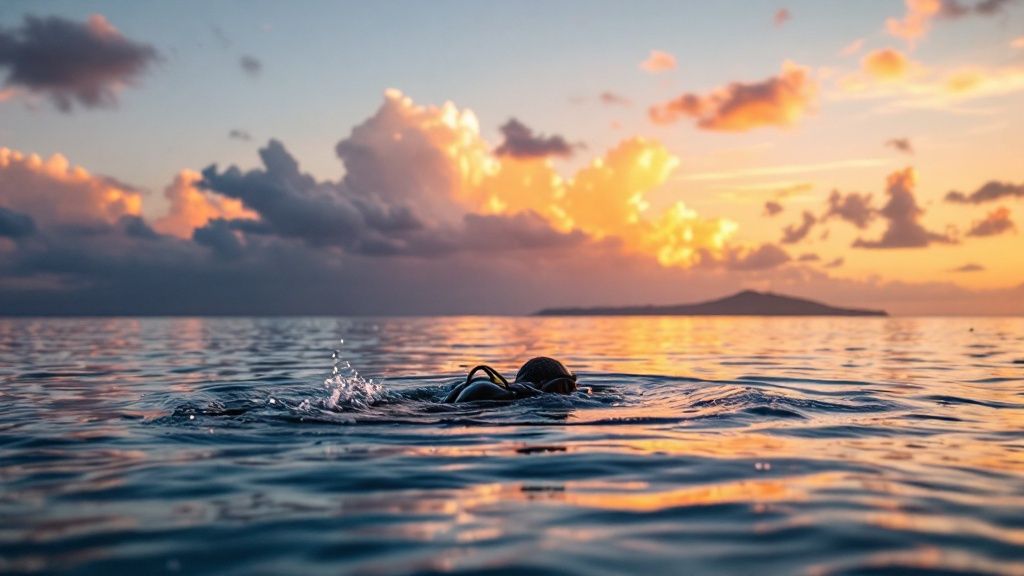
A little prep work can be the difference between a good manta ray night dive in Kailua Kona and a truly unforgettable one. Getting ready is easy, but spending a few minutes thinking ahead means you can relax and just soak in the magic once you're on the boat.
First things first, let's talk about certifications. If you're planning to scuba dive, you absolutely must be certified. An Open Water certification is the minimum requirement to join us on the dive. This just ensures you have the core skills to be safe and comfortable underwater, especially at night.
For snorkelers, it's much simpler—no certification is required! As long as you're comfortable in the water, you're good to go.
What to Pack in Your Bag
Packing for this trip is pretty straightforward. Your tour operator provides all the heavy-duty dive gear (tanks, BCDs, regulators, the works), but you'll want to toss a few personal items in a bag to stay comfortable.
Here’s a quick rundown of the essentials:
- Swimsuit: The easiest thing to do is just wear it under your clothes when you show up. It makes gearing up so much faster.
- Towel: A small, quick-drying towel is perfect for when you hop out of the water.
- A Warm Jacket or Sweatshirt: This one is a must. Seriously. After an evening swim, the boat ride back to the harbor can get surprisingly chilly. Having a warm, dry layer to throw on makes all the difference.
- Reef-Safe Sunscreen: If your trip includes a late afternoon dive before the main event, be sure to apply some reef-safe sunscreen beforehand. It protects you and Kona's fragile coral ecosystem.
These simple items will make your transition from ocean to boat a cozy one, letting you just bask in the glow of what you just witnessed. For a more detailed look at the gear side of things, check out our guide on the gear you will need for your Kona diving adventure.
Considering Your Comfort
A couple of other small things can be total game-changers for your comfort level. If you're someone who gets a little queasy on boats, don't leave it to chance.
Even on a calm night, the gentle rocking can get to some people. Grab some motion sickness medication and take it before you board, as directed. It’s so much better to be prepared than to let seasickness spoil an otherwise incredible experience.
The single most important part of your preparation happens right on the boat: the pre-dive briefing. This is not the time to zone out. Your guides will explain critical safety protocols, entry and exit procedures, and the essential rules for interacting with the manta rays respectfully.
Listening closely to the briefing is key. It ensures not only your safety but also the well-being of the mantas. Think of it as your guide to being a polite and responsible guest in their underwater world.
When you book with a trusted, top-rated company like Kona Honu Divers, you can rest assured that every detail is handled. We provide all the necessary dive equipment, meticulously maintained for your safety, and our experienced guides prioritize education and responsible interaction above all else. Our team is dedicated to making your manta ray dive tour the highlight of your Hawaiian vacation.
How to Interact with Manta Rays the Right Way
The whole reason we can enjoy this incredible experience year after year is because of a deep, shared commitment to protecting Kona's manta ray population. Every single person who enters the water has a part to play. Think of it less like a tourist attraction and more like being an invited guest in their home.
The golden rule is simple: look, don’t touch. This isn't just a suggestion; it’s the cornerstone of the entire encounter. We're there to witness their world, not to interfere with it. This is passive observation at its finest.
The Rules of Engagement
Your divemaster will go over all of this in the pre-dive briefing, but it really helps to show up already knowing the game plan. These rules are non-negotiable—they keep the mantas safe and the experience magical for everyone.
-
Divers, Stay on the Bottom: As a certified diver, you'll find a spot on the sandy ocean floor and settle in. Staying put creates a clear, open space above you, giving the mantas a wide "runway" to gracefully glide through as they feed.
-
Snorkelers, Stay on the Surface: If you're snorkeling, you'll hold onto a custom-built light board that floats on the surface. This keeps you stable and prevents any accidental kicking that could spook or injure a manta ray.
-
Lights Up, Lights Down: Divers point their lights straight up. Snorkelers have lights on their boards that shine straight down. This creates a brilliant "plankton sandwich" in the water column between the two groups, drawing the mantas right into the middle for a spectacular show.
What You Should Never, Ever Do
Knowing what not to do is just as important. Never, under any circumstances, chase or reach out to a manta ray. Touching them can strip away their protective slime coat, which is like their immune system. Losing it leaves them wide open to dangerous skin infections.
It's also critical to avoid flashing your light directly into a manta's eyes or their wide-open mouths. Just imagine trying to eat your dinner while someone shines a spotlight in your face. It's jarring and stressful, and we want to keep them as comfortable as possible.
The single best thing you can do is choose a dive operator who lives and breathes these principles. A top-notch company will be strict about the rules because they genuinely care about protecting this natural wonder for the long haul.
To get into the right frame of mind, check out our guide on responsible and considerate diver etiquette. This is the mindset that makes sustainable marine encounters possible.
Explore More of Kona’s Underwater World
The manta ray night dive in Kailua Kona is, without a doubt, a peak life experience. But honestly? It's just scratching the surface of what the Big Island’s waters have in store for you. For divers who surface from the manta encounter absolutely buzzing and wanting more, Kona delivers.
Think of the manta dive as the unforgettable headliner of a music festival. Once the main act is over, there's a whole world of incredible encores and hidden stages waiting to be discovered, each with its own unique vibe.
The Mysteries of the Blackwater Dive
If you thought floating with giant mantas at night was surreal, the Kona Blackwater Dive is like entering a completely different dimension. This isn't your typical reef dive. It’s a specialized, open-ocean drift dive that takes place miles from shore, where you'll be suspended over thousands of feet of inky black water.
Tethered securely to the boat, you'll float in the deep abyss and witness one of the largest migrations on Earth. Every night, bizarre, alien-like, and often bioluminescent creatures journey up from the crushing depths. You’ll see things you never knew existed—translucent larval fish, pulsating jellies that look like they're from another planet. It feels less like you're in the ocean and more like you're drifting through deep space. This is easily one of the most unique advanced dives on the planet. Check out the Blackwater Dive tour page for more details.
Advanced Dives for Experienced Thrill-Seekers
For seasoned divers looking to push their limits, Kona’s volcanic underwater landscape is a dramatic and challenging playground. If you're ready for more than a standard reef tour, specialized advanced dive tours are your ticket to exploring the rugged, remote corners of the coastline.
These trips will take you through ancient lava tubes, navigating around stunning underwater arches and along pristine deep reefs that are just teeming with life. You can explore vertical walls covered in sponges and might even get a chance to see shark nurseries, all while honing your skills in a safe, expertly guided environment.
Kona is a complete diving paradise. The manta dive might be the reason you came, but the sheer variety of underwater adventures is what will make you never want to leave. You can discover everything available by checking out Kona Honu Divers' other diving tours and find your next obsession. And if you love capturing these kinds of adventures, this guide to becoming a Travel UGC Creator has some fantastic tips on how to share your passion.
Answering Your Manta Ray Night Dive Questions
Planning your trip to see Kona's famous manta rays is exciting, but it's natural to have a few questions before you take the plunge. We get asked these all the time, so we've put together some straight-to-the-point answers to help you feel completely ready for this incredible adventure.
Do I Need to Be Scuba Certified to See the Mantas?
Not at all! You can have an absolutely breathtaking experience without a scuba tank on your back. The manta ray snorkel tours are just as mind-blowing as the dives.
Here’s how it works: you’ll float on the surface, holding onto a specially designed light board. These boards illuminate the water below, attracting swarms of plankton—the mantas' favorite meal. The giants then glide, swoop, and barrel roll right underneath you, often coming just inches away. It’s an amazing and accessible way for everyone, including families and non-divers, to witness the show.
When Is the Best Time of Year to Go?
This is the best part—anytime! The manta ray night dive in Kailua-Kona is a year-round spectacle. That’s because our local manta population doesn't migrate; they live right here off the Kona coast.
This consistency is why the sighting success rates are so high, frequently hitting over 90% no matter what month you’re visiting. Sure, the water gets a bit warmer in the summer and cooler in the winter, but the mantas are always here. There’s really no bad time to book this encounter.
Is This Dive Safe for Beginner Divers?
Absolutely. In fact, it's one of the best first night dives a newly certified Open Water diver can do. The dive itself is stationary, which takes a lot of the pressure off. You'll be in relatively shallow water, usually around 30-40 feet.
Instead of navigating in the dark, you’ll simply find a good spot on the sandy bottom, get comfortable, and watch the magic unfold above you.
Every reputable operator puts safety first. You'll get a thorough safety briefing before you even get in the water, and professional guides are with you every step of the way. They create a safe, controlled, and comfortable environment for everyone.
What Happens if We Don't See Any Manta Rays?
While sightings are incredibly reliable, we're still dealing with wild animals, and their appearance is never a 100% guarantee. That's why most top-tier operators in Kona offer a "manta guarantee."
It's a straightforward policy: if your tour doesn't see any mantas, you can come back and try again on another night for free (this is usually on a space-available basis). Always ask about the specific guarantee when you book your manta ray dive tour. It’s a great sign that a company is committed to giving you the best experience possible.
Ready to see the underwater ballet for yourself? At Kona Honu Divers, we run world-class manta ray night dive and snorkel trips led by experienced pros who are truly passionate about our ocean life. Come join our ohana for an adventure you'll be talking about for years.
Book your spot on one of our unforgettable diving tours in Kona, Hawaii today.