
Imagine floating in the pitch-dark Pacific Ocean, watching as giant, graceful shadows swoop and glide right beneath you. This is the manta ray night dive in Kailua Kona, a truly mind-blowing underwater ballet and one of the most unforgettable wildlife encounters you can have anywhere on Earth. It's not just another dive; it's an experience that consistently tops "best of" lists for a reason.
Experience The World Famous Kona Manta Ray Night Dive
This guide is your one-stop shop for planning this bucket-list adventure. We'll break down exactly why Kailua Kona on the Big Island of Hawaii is the place to see manta rays up close and personal, covering everything from the science behind the dive to insider tips for your trip.
Get ready to see what makes this so special. The real magic of the Kona coast is its incredible reliability. This isn't some hit-or-miss seasonal event. Nope. Kona is home to a resident population of manta rays that show up to feed almost every single night.
Why Is This Dive So Darn Reliable?
The Kona manta ray experience is famous for a reason, drawing around 80,000 visitors every year who want to see the show for themselves. The success rate is insanely high, with 80–90% of dives having manta ray sightings. This makes it one of the most dependable spots on the planet to see these amazing animals.
Unlike other places where mantas are just passing through, Kona's mantas live here year-round. You can learn more about this phenomenon and what makes it so unique by checking out the deep dive on Kona's manta rays from konahonudivers.com.
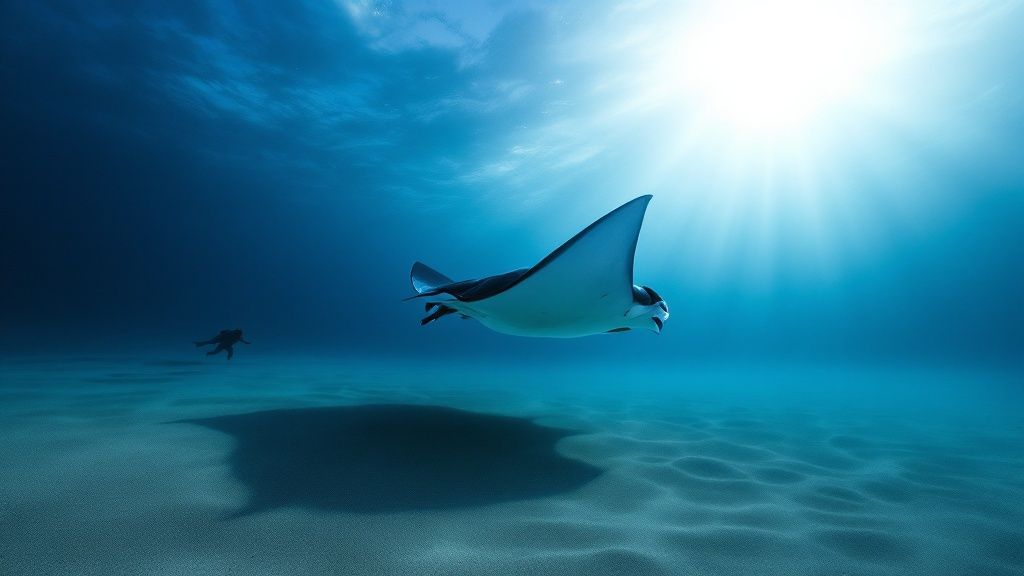
People often describe it as an underwater ballet, and they're not wrong. These gentle giants, with wingspans that can stretch over 12 feet, perform graceful somersaults and barrel rolls as they feast on clouds of plankton. Dive operators set up powerful lights on the ocean floor, creating a kind of "underwater campfire" that attracts the plankton, which in turn brings the mantas right to you.
This predictable, up-close encounter in a safe, controlled setting is what sets the Kailua Kona manta ray night dive apart from pretty much any other marine animal experience in the world.
What To Expect On Your Trip
Here's the best part: this adventure is for almost everyone, not just certified scuba divers. Most tour companies have options for both diving and snorkeling, so nobody has to miss out.
-
For Divers: You’ll descend to about 35-40 feet, find a spot on the sandy bottom, and shine your dive light up toward the surface. This attracts the plankton, and the mantas will swoop and glide right over your head to feed. It’s an absolutely unreal view.
-
For Snorkelers: You'll hang out on the surface, holding onto a specially designed light board. The lights shine down into the water, bringing the plankton up. The mantas follow, often coming within inches of you as they feed near the surface.
To give you a quick snapshot, here’s a table with all the key details you'll need to start planning.
Kona Manta Ray Night Dive At A Glance
| Aspect | Details |
|---|---|
| Location | Kailua Kona, Big Island, Hawaii |
| Best Time to Go | Year-round, thanks to Kona's resident manta population. |
| Activity Options | Scuba Diving & Snorkeling |
| Typical Depth | 35-40 feet for divers; surface level for snorkelers. |
| Experience Level | Certified Open Water divers; no experience needed for snorkelers. |
| Sighting Success Rate | Consistently high, typically between 80-90%. |
| Primary Dive Sites | Garden Eel Cove ("Manta Heaven") and Keauhou Bay ("Manta Village"). |
This should give you a solid starting point for what is, without a doubt, one of the most incredible nights you'll ever spend in the water.
Why Kona Is The Best Place on Earth to See Manta Rays
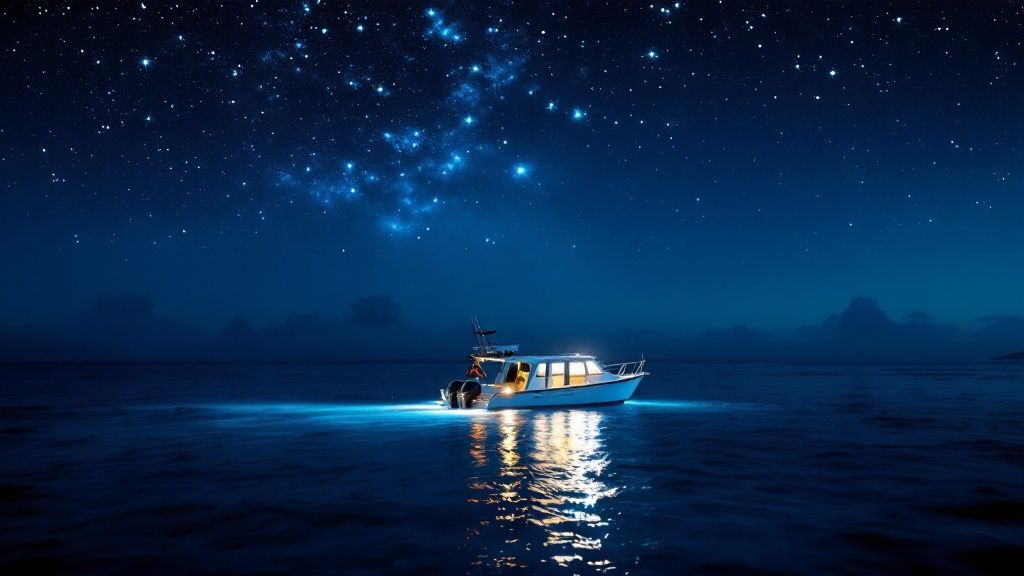
So, what’s the secret sauce that makes the manta ray night dive in Kailua Kona so mind-blowingly consistent? It's not just good luck—it's a brilliantly simple setup that turns the ocean floor into a five-star manta restaurant every single night. The whole show revolves around what we divers call the "underwater campfire."
Dive operators carefully place powerful, eco-safe lights on the seafloor. As darkness falls, these lights become a massive magnet for clouds of plankton, the manta rays' favorite meal. This clever trick creates a concentrated buffet, drawing the gentle giants in from all around for their nightly feast.
A Resident Population Like No Other
Unlike other spots around the globe where manta sightings are a seasonal "maybe," Kona is home to a year-round resident population. This is the real game-changer and the reason sightings are so reliable. To learn more about picking the right time, check out our guide on the best time of year to see manta rays in Kona.
This unique situation has allowed researchers and dedicated dive operators to get to know the local mantas on a first-name basis (almost!). Seriously, each ray has a unique spot pattern on its belly, like a fingerprint. Operators and scientists keep photo catalogs to track the nearly 200 known resident mantas, helping them monitor the population's health and study their behavior.
This commitment to understanding and protecting the mantas means your dive is more than just a tourist attraction. It's a direct contribution to marine conservation. You're not just watching; you're actively supporting a sustainable ecotourism model that helps these incredible animals thrive.
An Unforgettable and Sustainable Encounter
The result of all this is a breathtaking underwater ballet. Mantas glide, swoop, and perform graceful barrel rolls through the light beams, often coming within inches of you as they feed. It’s an experience that’s hard to put into words.
Choosing a top-notch operator like Kona Honu Divers ensures your adventure follows the highest standards for interacting with marine life. Their experienced crew is obsessed with giving you a thrilling experience that is also completely safe for the mantas. It's this perfect mix of predictable, up-close encounters and responsible practices that truly makes Kona the best place on Earth to see manta rays.
Choosing Your Dive Site: Garden Eel Cove vs. Keauhou Bay
When you start looking into a manta ray night dive in Kailua Kona, you’ll quickly hear about two main spots where the action happens. Each one offers a totally different vibe, so picking the right one really comes down to what you're comfortable with and what kind of experience you're after. Knowing the difference is the key to making your night unforgettable.
The two go-to locations are Garden Eel Cove (aka "Manta Heaven") north of Kailua-Kona, and Keauhou Bay (aka "Manta Village") down south. Both are incredible, but they definitely cater to different crowds.
The Northern Site: Manta Heaven
Up by the Kona International Airport, Garden Eel Cove is legendary for a reason. This is where you have the chance to see a massive underwater ballet, sometimes with a dozen or more manta rays swooping and feeding all around you. It's a truly mind-blowing spectacle.
The catch? It’s a more exposed spot. That means the boat ride can be a bit longer and the water can get choppy. If you’re a seasoned diver and a little swell doesn’t bother you, the payoff is absolutely worth it. You’ll witness a show that few people ever get to see.
The Southern Site: Manta Village
Tucked away in the protected waters of Keauhou Bay, Manta Village is where it all began—the OG manta ray night dive location. Because it’s so sheltered, you’re pretty much guaranteed a smooth boat ride and calm conditions in the water.
This predictability makes it the perfect choice for first-time night divers, families, or anyone who even thinks about getting seasick. You might see a few fewer mantas than at Manta Heaven, but the calm environment makes for a super relaxed and personal encounter.
Manta Heaven vs. Manta Village: Which Site Is Right For You?
So, how do you choose? It really boils down to balancing the potential for a massive manta party against the desire for a calmer, more predictable night.
To help you decide, here’s a quick side-by-side comparison of the two sites.
| Feature | Garden Eel Cove (Manta Heaven) | Keauhou Bay (Manta Village) |
|---|---|---|
| Location | North of Kailua-Kona | South of Kailua-Kona |
| Manta Numbers | Often more mantas (can be 12+) | Consistently good, but fewer on average |
| Conditions | Exposed; can be choppy/bumpy | Sheltered; consistently calm waters |
| Best For | Confident divers & snorkelers, adventurous types | First-timers, families, those prone to seasickness |
| Experience Vibe | Big, spectacular, high-energy show | Calm, reliable, and more intimate |
Ultimately, there's no wrong choice. Both locations offer an absolutely incredible chance to see one of nature's most graceful creatures up close. To get even more firsthand insights on the differences, check out this great breakdown on choosing your manta ray dive location from konahonudivers.com.
Just pick the one that feels right for you, and get ready for a night you'll never forget.
How to Prepare for Your Manta Ray Adventure
A bit of prep work is all it takes to turn a great night into a truly unforgettable one. Knowing what’s coming on your manta ray night dive in Kailua Kona helps shake off any pre-trip jitters, letting you soak in every moment of the underwater show.
The good news? Getting ready couldn't be simpler. Just plan to show up at the dock with your swimsuit on under your clothes. It makes getting geared up on the boat a total breeze.
For scuba divers, the only thing you absolutely need is your Open Water certification card. If you're snorkeling, no experience is required—just bring your sense of adventure! Top-notch operators like Kona Honu Divers will have all the gear you need waiting, from wetsuits to masks and fins.
What to Pack for the Trip
Your packing list is refreshingly simple. The goal is to stay comfortable before and after you hit the water. Here’s a quick rundown of what you’ll want to bring along:
- A Towel and Dry Clothes: You'll be so glad you have something warm and dry to change into for the boat ride back to the harbor.
- Reef-Safe Sunscreen: If you're on a sunset tour, slather this on before you leave to protect your skin and Kona's fragile coral reefs.
- A Light Jacket or Sweatshirt: Even on a perfect Hawaiian evening, the breeze coming off the water can feel pretty chilly after a swim.
Understanding the Flow of the Tour
Knowing how the evening will unfold helps build the excitement and makes sure you're feeling confident from start to finish. Once you step onto the boat, the professional crew takes over.
The tour kicks off with a detailed boat briefing. The crew will run through all the important safety stuff, explain how to just chill and watch the mantas without disturbing them, and answer any questions you’ve got. This is a super important step for keeping both you and the marine life safe and happy.
After the briefing and a beautiful boat ride to the dive site, you'll gear up and slide into the dark, welcoming water. Your guide will then lead you to the underwater "campfire" of lights, where the real magic is about to happen.
By knowing the process, you can just relax and lose yourself in one of the most incredible wildlife encounters you'll ever have.
Your Role in Protecting Kona’s Manta Rays
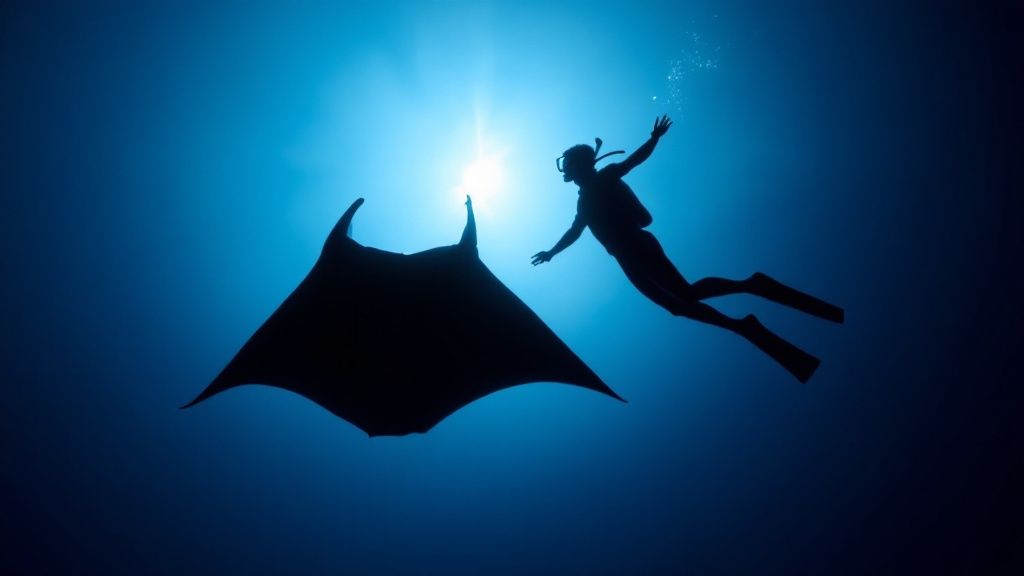
That mind-blowing experience you're about to have on a manta ray night dive in Kailua Kona? It’s only possible because of responsible tourism. The golden rule is simple but absolutely crucial: passive observation. You're a visitor in their dining room, and your job is to simply watch the underwater ballet without jumping on stage.
This boils down to a few core guidelines. The single most important rule is to never, ever touch a manta ray. These massive animals are covered in a protective mucous coating, kind of like a shield against harmful bacteria. Touching them strips this slime coat away, leaving them totally exposed to disease.
By following a few simple rules, you become a partner in their conservation and help keep this incredible natural wonder going strong.
Guidelines for a Safe and Respectful Encounter
To keep both divers and mantas safe, there are some established rules of the road. Always listen closely to your dive guide's briefing—they'll give you the specific instructions you need for that particular night and its conditions.
-
No Touching or Chasing: I know it's tempting, but resist the urge to reach out. Let the mantas control the entire interaction. Chasing after them is a huge no-no, as it stresses them out and interrupts their natural feeding.
-
Stay Near the Lights: Whether you're a diver on the seafloor or a snorkeler up top, stick close to the light source. This is where the plankton gathers, which means it’s exactly where the mantas want to be.
-
Control Your Position: Divers should stay put on or near the sandy bottom. Snorkelers need to remain at the surface. This keeps the whole water column open and clear for the mantas to swoop and glide without any obstacles.
Honestly, the most impactful thing you can do is choose a reputable, eco-conscious operator. Companies like Kona Honu Divers live and breathe these principles, making sure every single tour prioritizes the well-being of the mantas. You can see it in their consistently stellar guest feedback.
Your mindful participation is a direct investment in the future of this amazing experience. When you book a responsible tour, you're doing more than just going for a dive; you're helping protect Kona's manta ray population for years to come.
Understanding and respecting these guidelines ensures the magic of the manta ray night dive is something we can all enjoy for generations. To get a better sense of what makes this dive so unforgettable, check out our article explaining why you should go on a manta ray dive in Kona.
Explore More Big Island Underwater Adventures
Look, the manta ray night dive in Kailua Kona is an absolute must-do, a true bucket-list experience. But don't think for a second that your underwater adventure ends when the mantas swim off into the darkness. That's just scratching the surface. Kona is a world-class diving destination, and once you get a taste of it, you'll be hungry for more.
Think the ocean is cool during the day? Wait until you see it at night. For another mind-blowing after-dark experience, you have to try the Kona Blackwater Dive. We head miles offshore, shut off the engines, and you just float in the deep, inky blackness. You'll witness the planet's largest daily migration as bizarre, alien-like creatures rise from the depths. It's like diving in outer space.
Daytime Dives and Advanced Challenges
When the sun comes up, Kona's underwater world completely transforms. The vibrant coral reefs and ancient lava tubes are buzzing with life. Hopping on one of the daily scuba diving tours is the best way to see it all. You'll be swimming through incredible underwater arches, hanging out with green sea turtles (honu), and getting lost in clouds of colorful tropical fish.
The Big Island's volcanic soul is what makes the diving here so unique. You're not just swimming over reefs; you're exploring a dramatic underwater landscape forged by lava. Diving through the lava tubes and cavern systems is like taking a trip through geological history—it’s an adventure you won't find anywhere else on Earth.
For you salty, experienced divers looking for a real challenge, we've got you covered. Our premium advanced dive tours are designed to push your limits. We'll take you to the more remote and demanding sites—think deep pinnacles and sheer walls covered in sponges that attract some of the bigger marine life.
Whether you're craving another epic night dive or a sun-drenched cruise over the reef, Kailua Kona has something for every diver. Your underwater journey has only just begun.
Frequently Asked Questions About The Manta Ray Night Dive
We get a lot of questions about the manta ray night dive in Kailua Kona, so we’ve put together the most common ones right here. This should help clear things up before you take the plunge on this incredible adventure.
What Happens If No Manta Rays Show Up?
While seeing mantas in Kona is about as close to a sure thing as you can get in nature—we're talking a 90% or higher success rate—they're still wild animals. And sometimes, they just don't feel like coming to dinner.
Any good tour operator knows this. That's why most offer a "manta guarantee." If the mantas are a no-show, you can usually re-book for another night, either for free or at a steep discount. Pro tip: book your manta dive early in your trip, just in case you need to use that second chance!
Is There a Manta Ray Season in Kona?
Nope! This is one of the best parts about the Kona experience. Our manta rays are locals, not tourists. They live here year-round, meaning the underwater buffet is open every single night. Any time of year is a great time to see them.
Is It Safe to Swim With Manta Rays?
Absolutely. It's easy to be intimidated by their size, but manta rays are true gentle giants. They're filter feeders, meaning their diet consists of tiny plankton, and they couldn't care less about the humans watching them.
Unlike their stingray cousins, mantas have no stingers, barbs, or teeth. The whole experience is completely safe as long as you follow your guide's directions.
The number one rule is simple: look, but don't touch. Touching a manta ray can strip off the protective mucus layer on their skin, which makes them vulnerable to nasty infections. Keeping a respectful distance is the best way to ensure they stay healthy for years to come. For a full breakdown of safety and etiquette, check out our comprehensive guide to the manta ray night dive.
Going with a professional crew is the best way to ensure your adventure is safe, respectful, and something you'll remember forever.
Ready to see this underwater ballet for yourself? Join Kona Honu Divers for an adventure you won’t forget. Our expert crew puts your safety and the mantas' well-being first, making sure you have an ethical and mind-blowing experience. Book your manta ray dive tour and get ready to be amazed.